“Are we selling candles or are we selling light?”

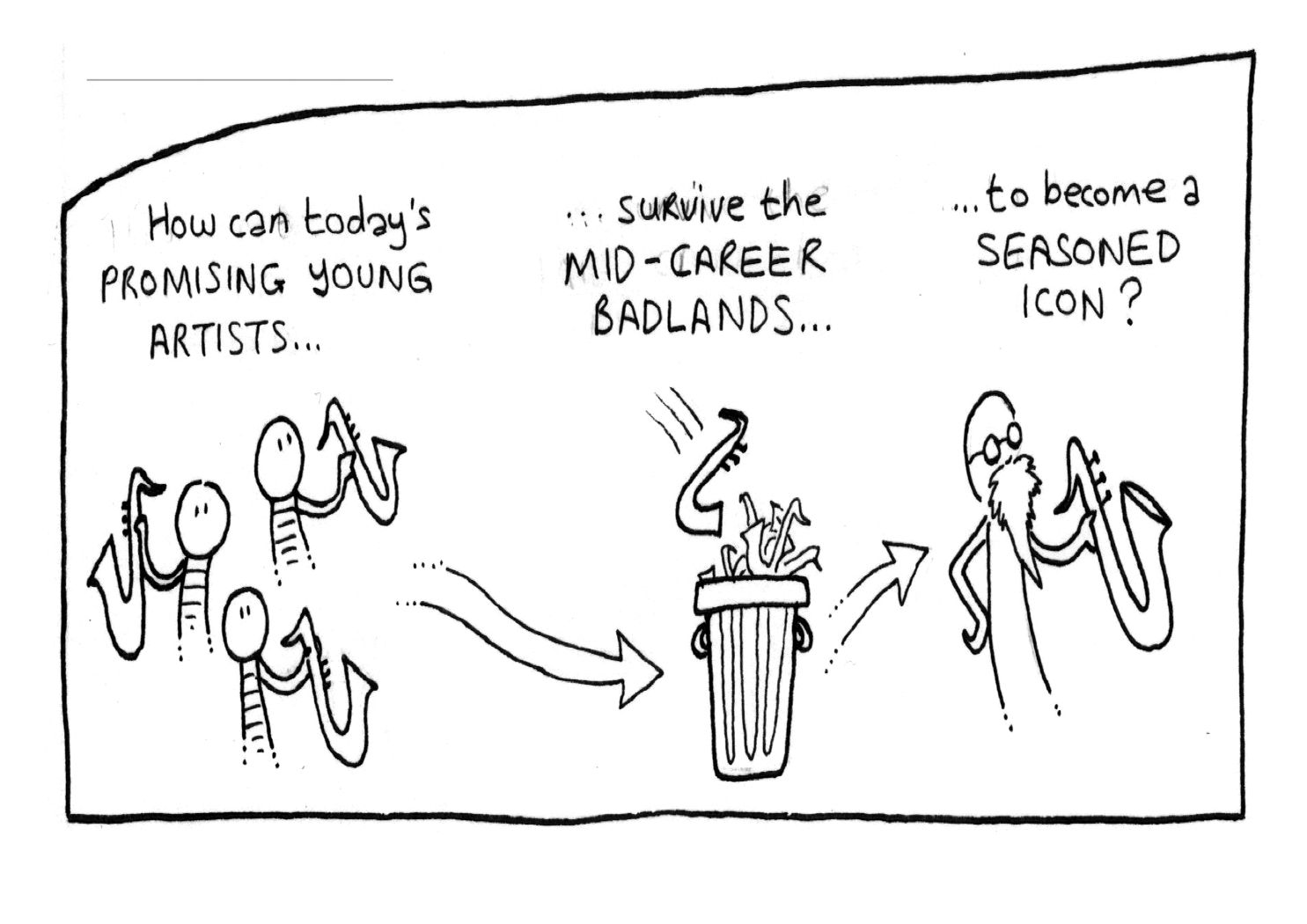
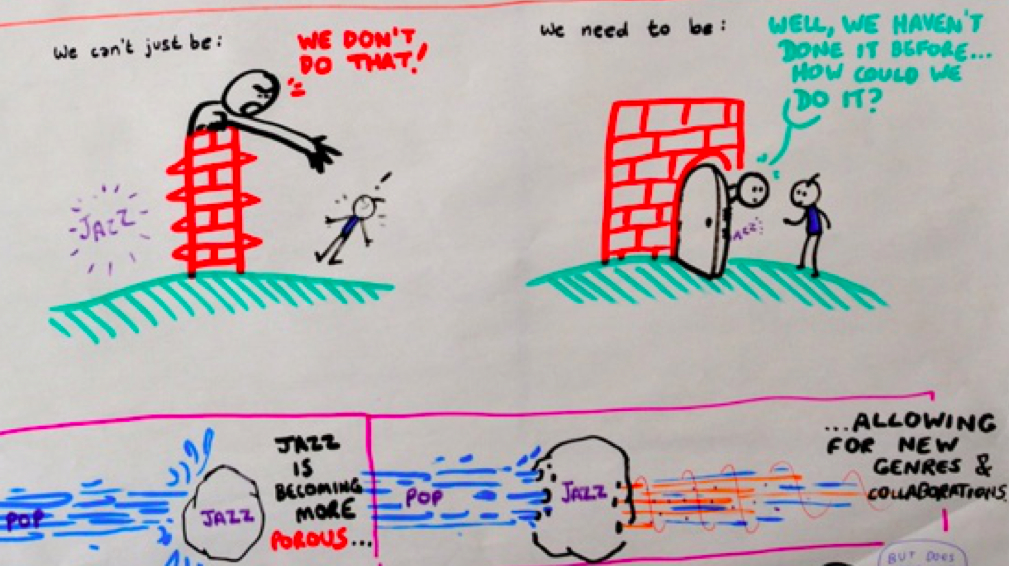
When I reviewed the Schaffhausen Jazz Festival, questions emerged – is Rusconi‘s new album, jazz? What should jazz be in 2014? Gerry Godley of the Improvised Music Company and 12 Points festival worked with cartoonist Patrick Sanders on a presentation that made some vital points for the industry. I particularly liked the analogy – are we selling candles or are we selling light? Put crudely if we carry on focusing on traditional forms of jazz we may go out of business.
© Patrick Sanders Let's be more open to innovation, especially as jazz has become  more porous and collaborative ©Patrick Sanders
© Patrick Sanders
Let’s be more open to innovation, especially as jazz has become more porous and collaborative ©Patrick Sanders

Godley referred to America’s major arts survey of 2012 and although I don’t see Europe in the same grip of the “heritage” of jazz, it’s probably a similar picture here: audience numbers are declining and they are growing older (as I saw at Schaffhausen and see in London). As Terry Teachout of the Wall Street Journal wrote, “Jazz musicians who want to keep their own…beautiful music alive…have got to start thinking hard about how to pitch it to young listeners.”

“What is jazz about & who is it for? – grows unclear.” Phil Johnson

To be frank, jazz has lost its hipness. Young urban ‘gunslingers’ are more likely to listen to new folk or the myriad forms of electronica. Last year journalist Phil Johnson wrote in the The Independent, “The essential narrative and context – what is jazz about and who is it for? – grows unclear. An increasing lack of visibility in the mainstream media contributes to a growing credibility gap…” This is an issue; print and radio (let’s not even go there with TV) influence tastes and with diminishing support it’s difficult for promotors to take risks. The respected critic, John Fordham commented on the lack of press coverage for jazz in 2010, “…the most routine performances by an orchestra, or the most mundane gigs by fading pop stars will usually grab the space from innovative jazz artists who may well be shaping the future of music…”
 

©Patrick Sanders
©Patrick Sanders


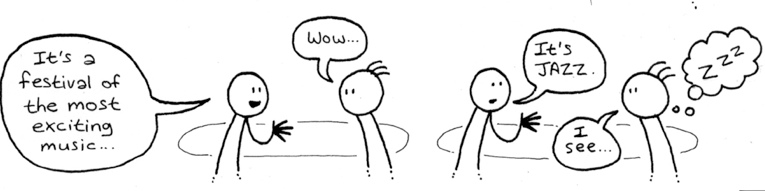
Godley also addressed the “J” word and whether it’s doing music a dis-service. I don’t feel overarching terms such as jazz, classical or rock are relevant in the age of the internet. My favourite phrase is ‘music for curious ears’ and London’s Cafe Oto bills itself as a venue for “creative new music”. Phil Johnson suggests Oto could be a good model for other European clubs as it’s found success by, “building an audience from the bottom up through artist-run co-ops and club-nights.” They are managing to attract a mix of ages, at least.

BBC Radio 3 (plays classical music and some jazz) is rightly obsessed with the phrase “replenishing audiences” as their core listeners age. Attracting new audiences requires new marketing tones. Rusconi have been so successful at building an online rapport with their fans that they won the voted-for ECHO Jazz Award for Best Live Act 2012. But the music itself needs to be relevant.

Build on traditions, but break the rules

Some promotors I spoke to felt Rusconi were being gimmicky – maybe they haven’t quite hit the right spot (as they did with Alice in the Sky) but I’m more engaged by them than I am by clever musicians desperately trying to re-create a time that has gone. Build on traditions, but break the rules, or at least put in your own life, your emotion. My musical axis has been informed by being a DJ where it’s all about the new, and I’ve always admired pioneers who faced enormous criticism but changed things up; as much as I adore Miles Davis’ Kind of Blue I’m glad he heard Hendrix and got re-inspired.

A band who is getting the balance right is Hildegard Lernt Fliegen. They played a triumphant set at Moods a few weeks ago. The music builds on traditional jazz and improvisation and yet is modern. They’ve got a strong look going on and their video for the track Don Clemenza  is perfectly pitched. OK, not everyone has to (or can) wear a breadstick on their head, but what brings it all together is that it feels utterly genuine, it’s ‘authentic’. And that’s the word Godley finished his talk with and it’s an important one.

Labels like ECM are “borders-blind”

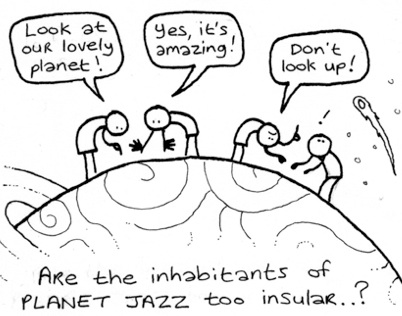
What I’d like to see is European countries co-operating at supporting talent from a wide spectrum of ‘jazz’ and from regions beyond their own. Labels like ECM are “borders-blind”, venues could be better at this too. I believe: “If it ain’t broke, change it!” Or it dies. Keep jazz relevant, think about new ways to package it and consider who we want to promote it to. There are audiences out there who are missing out on heart-pounding, incredible music.

 

©Patrick Sanders
©Patrick Sanders


OY: “Life is like a mobile phone your unit comes, your unit goes…”


Unknown

Akwaaba! Welcome to the  “No Problem Saloon”, the second album from OY, (previously released under the name “Kokokyinaka” last year on Creaked Records), this time repackaged on the Belgian label, Crammed Discs and featuring some extra tracks.

OY are a Berlin-based duo composed of Swiss-Ghanaian vocalist, story-teller, musician, sound sampler Joy Frempong and mysterious drummer & producer Lleluja-Ha. This album is a refreshing, improvised breeze of African-influenced electronica based on a road trip that absorbed sounds and experiences from Ghana, Mali, Burkina Faso and South Africa. Tales, proverbs and folklore were gathered along the way to be retold in an experimental, kaleidoscopic style, at times dark and mercurial, other times as joyful as walking through an African market place. As OY sings: “Life is like a mobile phone your unit comes, your unit goes”…

 A charmingly beguiling, left-of-centre, musical adventure

The slam of a taxi door becomes a drum, an antiquated washing machine provides a bass sound, conversation and street noises drift in and out of songs, the lyrics naturally develope from the stories and fragments of popular African wisdom encountered along the way. It makes for a charmingly beguiling, left-of-centre, musical adventure told in Joy’s elegant, playful voice that is as ease in English and French as it is in the numerous regional dialects.

Full of observational delight

Songs about bizarre name choices “My name is Happy” and the sexual politics of afro hair Halleluja Hair” are pure poetry in motion full of observational delight, colourful local custom and Joy’s own personal fire. Her velvety speaking voice entertains us with tales of how you should never run to a funeral of the man who stumbled and died (“Don’t Run Run”) and should you ever find yourself in a village where snoring is a crime punishable by death just start singing instead (“I don’t snore”).

Compassionate observation of humanity

Unknown-2Graced with ambidextrous talents, Joy is mistress of many synths and sound machines, often distorting her voice and playing it back as haunting accompaniment or backing vocals. An impressive wall of sound is at times created between herself and partner as in “Doondari”, where dark voice effects and heavy synth rhythms clash with swirling drum beats as menacing as a locust storm. Contrast this with a playful singing voice that combines rare soothing sweetness and reassuring confidence. ‘No Problem Saloon’ exudes compassionate observation of humanity and wraps it up in multi-textured, exhuberant electronic soundscapes.
 

OY are a wonderful live experience, catch them on stage here!

OY: “No Problem Saloon” (Crammed Discs)


Roman Nowka, Jazz Master à sa manière

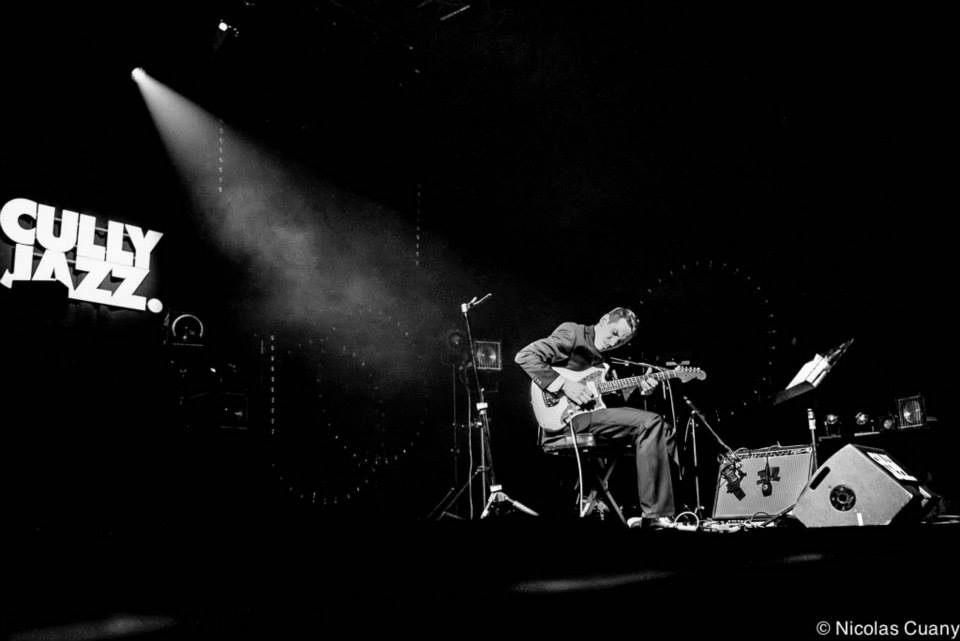
1907597_10152074424737712_93029093_nLa soirée « guitare » du CullyJazz Festival nous a révélé un magnifique musicien : avant Marc Ribot et Medeski Martin & Wood avec le guitariste de Wilco Nels Cline, jouait le jeune Biennois Roman Nowka, en solo.

On le savait alors bassiste dans le fameux Lucien Dubuis Trio, guère plus. Curiosité et impatience de voir une nouvelle figure sur cette belle grande scène, devant un parterre noir de monde. Tout sourire, accent fleuri en prime, Roman Nowka nous dira ensuite : « La musique, ça me plaît quand il y a de l’espace et que c’est fragile. » Nous étions donc tous au bon endroit.


“Il faut être présent, jouer ce qu’on aime, et ne pas avoir peur”

Nonchalant et jovial, il a entonné de petites ritournelles sympathiques, assez techniques et décalées, avant de nous happer dans un univers d’une belle intensité. Prendre le temps de bien rajuster son micro, de trouver ses mots pour dire peu mais bien, de modifier un réglage sans se presser. Un peu drolatique car « normalement on doit toujours montrer qu’on est fort ; mais moi ce qui m’intéresse c’est le concert : simple, joyeux, honnête. » Peu à peu le public s’est tu, avant de littéralement flotter avec lui, très attentif. « C’était prévu, je savais – enfin ! je ne savais pas si ça allait marcher –  mais c’est l’effet que je recherchais. »

En avril sortaient simultanément deux albums : un solo nommé Jazzmaster – « c’est juste parce que c’est le nom de la guitare Fender que j’utilise, elle était tellement cher ! c’est un peu nul comme nom » – mais aussi un très beau disque de reprise de Duke Ellington en trio, Do Da Ellington, avec Thobbias Schramm à la batterie et Samuel Kühn à la basse. Avant, il y a encore eu Me Myself and I en solo « parce que j’aime bien être seul avec ma guitare n’importe où, c’est comme ça que j’ai commencé. »

“J’écoutais à fond Michaël Jackson, David Hasselhof”

Boire un café avec Roman Nowka, c’est aussi parler pêle-mêle de souvenirs de la Californie où il a grandi, de son père guitariste classique, de sa mère vendeuse de sandwiches à Venice Beach, des thérapies d’Arthur Janov, de sa formation en haute école de musique et de son amour de la pop – « J’écoutais à fond Michaël Jackson, David Hasselhof, . Le jazz pas tellement en fait, à part Monk ou quelques trucs. »

Comme avec la poule et l’œuf, on ne sait jamais trop si c’est la candeur qui fait le grand musicien, ou l’inverse. Roman Nowka est de ces gens-là, qui donnent au monde une musique presque céleste. Il travaille aujourd’hui à un autre album solo, à sortir en 2015 probablement. Un bel artiste à surveiller, car « on s’améliore toujours ».

www.romannowka.com

The Schaffhausen Jazz Festival 2014

As I walked into the ex-yarn factory, Kulturzentrum Kammgarn, it was clear the organisers put passion and care into their festival. The place was warm and intimate with candlelit tables and there was a relaxed, convivial vibe. Over four evenings the audience was treated to a variety of Swiss improvised music and there was a day of professional talks.

Without doubt, this is an ambitious festival

I missed the compelling Elina Duni Quartet who opened the event, but was there to experience BASH. I’m getting to know Lukas Roos through his outfit, pommelHORSE, but here the clarinetist/saxophonist played with guitarist, Florian Möbes, Domi Chansorn on drums and Samuel Gfeller on graphic novel, literally. A massive screen behind the band showed the story of a prisoner drawn into increasingly twisted events that lead to his end. The style of Gfeller’s drawings, Robert Crumb in feeling, are so powerful that at times, I tuned out their sensitive and minimal music. On speaking to Roos he explained that cutting the set to 40 minutes affected the balance – a point echoed by Andreas Schaerer and Rusconi on appearing at this festival.
Arte Quartett

Schaerer’s vocal noises ran amok

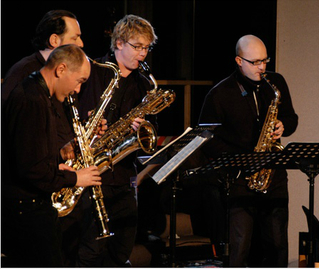
Andreas Schaerer was performing Perpetual Delirium, his composition for the saxophonists, the Arte Quartett with Wolfgang Zwiauer on electric bass. It had the quartet interlacing with a naturalness that was almost child-like in it’s fun and freedom. There were fascinating textures as soprano sax took over from alto, or tenor had a furious and thrilling exchange with the baritone, whilst Schaerer’s vocal noises ran amok adding sparkle, or hiding within their vibrant sound.

For pianist Gabriel Zufferey the time limit was perfect. His music was fluid with notes as sweet as fluttering butterflies yet underpinned by such knowledge and skill that he came across as an eccentric wizard. I liked the echoes of classical music and he incorporated an Eric Satie piece – it might sound tacky, but in his hands it lifted the hearts of the audience who then demanded two encores.

Is Rusconi’s music, jazz, or not?!

I was recently critical of Rusconi‘s gig at the Cully Jazz festival, but at Schaffhausen they were more confident in their ideas and I totally got into the groove of Hits of Sunshine and am warming to the strangeness of Change Part 1. However, on talking to some of the European promotors invited to the festival, questions emerged – is Rusconi’s music, jazz, or not? Is it gimmicky or authentic? I felt some answers were suggested by Gerry Godley of 12 Points who tackled the issue of the future(s) of jazz in his presentation with cartoons from Patrick Sanders, at the festival. But I’ll go into that more in my next Swiss Vibes’ blog, ‘How is Jazz?’

In the meantime I’ll leave you with the Bill Evans‘ quote that Godley used, “Jazz is not a what, it is a how. If it were a what, it would be static, never growing. The how is that the music comes from the moment, it is spontaneous, it exists at the time it is created.” If the Schaffhausen Jazz Festival has its sights set on being a relevant platform for jazz then it needs to continue putting on bands that question our perception of this rich and challenging music, as well as, those that celebrate it.

Cartoon by Patrick Sanders

Bad Bonn Kilbi 2014

k2Das Programm der 24. Ausgabe der Bad Bonn Kilbi in Düdingen versprach eine Wundertüte – und das Versprechen wurde gehalten. So gab es etwa den 62-jährigen Lo-Fi-Pop-Visionär R Stevie Moore zu bestaunen, wie dieser sich mitsamt Rockband durch seinen Katalog, der über 400 Alben zählt, spielte. Man blinzelte in die Sonne, während der Brasilianer Rodrigo Amarante – einst Gefährte von Devendra Banhart, seine traurigen Lieder anstimmte. Und man tanzte, viel sogar, dank der surrealen Space-Latin-Spielart der kolumbianischen Meridian Brothers und dank Larry Gus, der seine tropisch flirrende und sehr perkussive Electronica mit Stimmen, Vintage-Soul-Samples und Trommelschlägen anreicherte.

Die Bad Bonn Kilbi streifte die Extreme

Während den drei Tagen streifte die Bad Bonn Kilbi einmal mehr die Extreme mit Bands wie den Däninnen Selvhenter oder den Baslern Mir, tauchte in schwere Psychedelia ab – allen voran der Auftritt der kalifornischen Wooden Shjips und zelebrierte leichtfüssig den Welt-Pop. Natürlich gab es auch viel Schweizer Musik – beispielsweise vom Zürcher-Duo Wolfman, von Puts Marie und von den Monsters rund um Reverend Beat-Man.

Das Festival, das sich immer noch allen Kategorien entzieht

k1Und dann gibt es noch eine Erscheinung zu vermelden, die etwas Heiliges ausstrahlte, und die sich den herkömmlichen Kategorien entzieht. Es war der Auftritt von Jeff Mangum, der mit seiner Band Neutral Milk Hotel aus seiner ganz eigenen Welt zurückgekehrt ist, und am letzten Festivalabend mit tieftraurigen und doch tröstend-euphorischen Liedern alle Dämme brechen liess. Es war der Höhepunkt einer wunderbaren Ausgabe der einzigeartigen Bad Bonn Kilbi, dem Festival, das sich immer noch allen Kategorien entzieht.

Die 24. Bad Bonn Kilbi fand vom 29.05 bis 31.05 2014 statt.

Record of the month (June): Delaney Davidson “Swim Down Low”

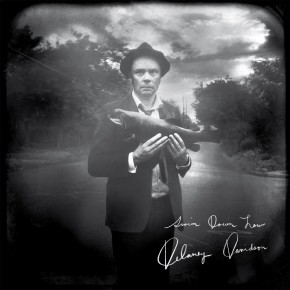
Delaney_Davidson_Swim_Down_LowAlbum_Cover-290x290Roll up, roll up to Delaney Davidson’s old curiosity shop. Make way for big ugly fish, swampy rivers, bloodied stilettoes, fog, dogs, worms and old bones – it ain’t all pretty but it sure is fun. ‘Swim Down Low’ is Davidson’s 5th solo album and heralds the New Zealander’s return to Outside Inside Records. Having lived in Switzerland from 2002 to 2008, he is considered an adopted son of the Swiss folk/blues scene and is highly respected for his previous releases on labels like Voodoo Rhythm.

A magical collection of sepia-tinged vignettes

Captured on fabulous analogue during a week of down time, it’s a magical collection of sepia-tinged vignettes from the supernatural, macabre, dark-side-of-town. The lo-fi country rock genre is amply stretched to encompass flashes of vaudeville cabaret, blues and gothic folk-noir; as a result the album reads like a book of short stories by Edgar Allen Poe meets Tom Waits on a cocktail of whiskey, cigarettes and ketamine.

A slow work of seduction

It’s a work of slow seduction where the 10 perfectly crafted songs permeate their way into your psyche so that you begin to miss them when they’re not on. Take the Big Ugly Fish that ‘Swim Down Low’, one listen to the twangy, foot-stomping guitar riff and you’re hooked on wanting to know what horrors grandpa done did saw at the bottom of the sea.

Balancing the creepy with the beautiful

Let’s remember that Davidson is an old Dead Brothers pro, hence a flair for making the funereal grim and ghastly seem reluctantly joyful and frankly quite hilarious. Dead Brother, Pierre Omer, quotes him as being a “multi-talented musician who played everything from drums and trombone to the lap steel guitar, and even wore a dress on stage”. His poetic songwriting skills exel at balancing the creepy with the beautiful, aided by his penetrating, elastic vocals that can stretch, growl and whine to fit all the desperate nooks and crannies. Many lines are as quoteable as Oscar Wilde, especially the plaintive numbers like ‘It’s all Fun’ (“life is a dog and you are the bone”) and ‘Poor White Trash’ (“I’d rather be lucky than good”).

Thigh-slappingly good

Davidson creates a dramatic persona who enjoys letting the darkness in like a weather-beaten, weary, wandering minstrel. Yet despite the theatrical mask of fatigue and cynicism, it’s a work brimming with pretty melodies, harmonies and incisive wit. The banjoes, slide guitars, harmonicas and fiddles make sure that all toes are tapping in true Roy Orbison fashion not only on to the uptempo numbers such as ‘Farewell’ and ‘Dogs of Love’, but even on the suicidally slow numbers where an alluring rhythmic tension is always maintained. For maximum joy, listen on headphones to catch all the humouristic harmonies, backing vocals and theatrical sound effects. Thigh-slappingly good and un-turn-off-able once the fish bites.

Delaney Davidson,  “Swim Down Low” (Outside Inside Records)

Forthcoming live gigs with Pierre Omer guesting in the band:

15th July: Fribourg (Les Georges Festival)
8th August: St Gall (Graben Halle)
9th August: Vinelz (Bielersee Festival)
10th August: Zürich (El Lokal).

Delaney Davdison is also touring Italy, France and Germany this summer. List of gigs here!