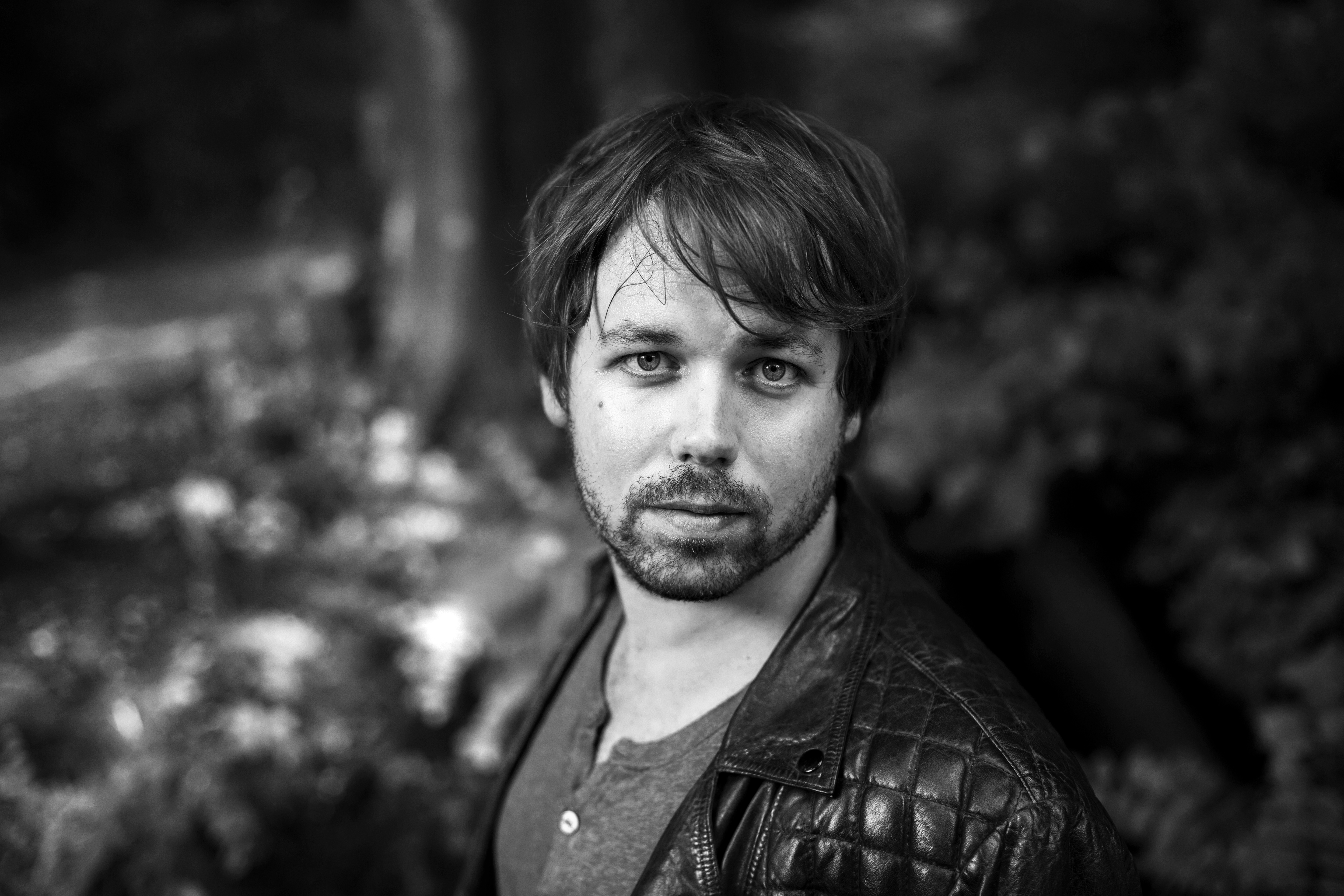
Mathieu Mastin, concepteur et réalisateur de la série de mini-documentaires Jazzed Out a posé ses valises en Suisse pour y orchestrer des sessions live improvisées.
Swiss Vibes vous propose de (re)découvrir ces quelques minutes de musique hors norme tout au long de l’été. Après le duo lausannois de Stade, le piano suspendu de Malcolm Braff, la balade continue dans les entrailles du club bee-flat de Berne avec la chanteuse Elina Duni et le pianiste Colin Vallon.
Mathieu Mastin, concepteur et réalisateur de la série de mini-documentaires Jazzed Out a posé ses valises en Suisse. Il y a rencontré Suzanne Abbuelh & Matthieu Michel, Plaistow, Rusconi, Grand Pianoramax, Malcolm Braff, Erik Truffaz, Werner Hasler & Jan Galega Brönnimann, Lucien Dubuis, Pierre Favre, Nik Bärtsch et Stade.
Swiss Vibes vous propose de (re)découvrir ces quelques minutes de musique hors norme tout au long de l’été. Après le duo lausannois de Stade, la balade continue et retrouve le piano de Malcolm Braff suspendu à la Dent de Jaman.
Depuis 2010, la chaîne de télévision française Mezzo a rendu célèbre une série de mini-vidéo intitulée Jazzed Out. Leur auteur, Mathieu Mastin, a eu une idée aussi simple que surprenante: donner un aperçu d’une scène ( de New York à Oslo), en filmant une dizaine de musiciens en extérieur, dans des lieux inhabituels. Une expérience inédite à mi-chemin entre le mini-documentaire musical et le clip.
En 2012, Mathieu Mastin a sillonné la Suisse à la poursuite de Suzanne Abbuelh & Matthieu Michel, Plaistow, Rusconi, Grand Pianoramax, Malcolm Braff, Erik Truffaz, Werner Hasler & Jan Galega Brönnimann, Lucien Dubuis, Pierre Favre, Nik Bärtsch et Stade.
Swiss Vibes vous propose de (re)découvrir ces quelques minutes de musique hors norme tout au long de l’été. La balade commence aujourd’hui avec le duo lausannois Stade, aux prises avec sa malle aux trésors.
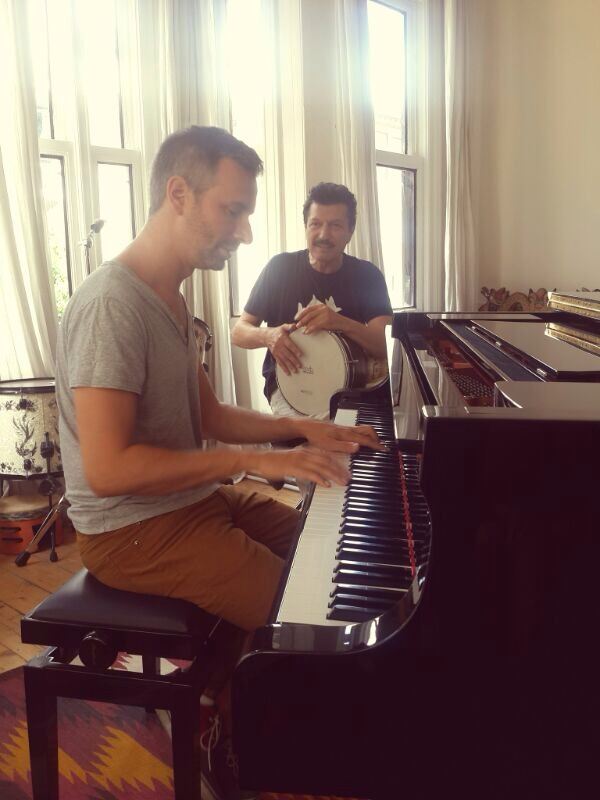
In the run up to his performance at Chateau de Chillon for Montreux Jazz on 13th July, Leo Tardin talks about his live project with Turkish percussionist Burhan Oçal, his latest solo LP Dawnscape and his band Grand Pianoramax
Leo Tardin I got introduced to Burhan Oçal by the drummer of Grand Pianoramax, Dom Burkhalter, who’s a good friend of his. Burhan had been trying to get the band to play with him in Istanbul and we finally managed to organise it this time last year, so that’s how I first met him. Apart from being an amazing percussionist, he’s also an actor who often plays the villain in Turkish B movies. He’s a real character, full of mad stories, really quite unique. After the gig, the Montreux Jazz organisers and producers of Dawnscape heard that we’d played with him in Turkey and asked if we’d like to perform togther in Switzerland. It’s actually very similar to the early stages of Grand Pianoramx where it was only piano and percussion. It’s pretty easy to integrate percussion with piano because you can look at the piano as a percussion instrument that can afford space and freedom.
How does your album lend itself to being played in a duo format?
Leo Tardin Let’s see! We’re going to try this out in Istanbul for the first time. I know Burhan often plays as a duo with other pianists, sometimes even classical, I’m sure he’s going to blend in pretty easily into my music because it’s fairly rhythmical. There will be pieces where it’s only going to be me or bits with just him, then we’ll meet together on some others. I’m very flexible and confident that it will be a success.
Has the Dawnscape album done what you wanted it to do?
Leo Tardin It’s too early to reflect on this but it has definitely opened a lot of doors. One of the reasons for this is that it’s very flexible and light compared to a band that needs a lot of equipment, sound system, backline, hotel rooms and plane tickets. With Dawnscape live gigs can be organised fast and easily. This kind of freedom and flexibility is one of the great things about this project. Also the fact that this LP was co-produced by Montreux Jazz is helping a lot. It’s bringing a lot of credibility and making people take this project seriously. This is a very new project that needs to be established after having made a name for myself with Grand Pianoramax.
Leo Tardin
What was the reaction to you bringing out this new solo project that’s so different from Grand Pianoramax?
Leo Tardin It took a while for people around me to accept this, not just the other band members who worried that it might signify me wanting to deprioritise the group, but also the music journalists. I was surprised by the press’s reaction, it was at times very extreme – they either loved it or hated it. The music in this solo project is less radical than with Grand Pianoramax, but the reaction to the music has been more radical. I feel that the journalists were comfortable to put me in a box as the piano guy who does hip hop, so when I came out with this romantic, dreamy, poetic stuff they were confused. Not all of them appreciated or understood the move. I was pleased when a few realised that it was something that took guts to do. But I’m happier this way because there are some things I can finally do with my solo project that I couldn’t do with the group, so I’m more relaxed in the context of the group and it brings a better vibe to GP as well.
When and what might we expect from Grand Pianoramax in the imminent future?
Leo Tardin We’re going to play the Paléo Festival, followed by Cosmojazz which is a really nice festival in Chamonix, open air at the foot of a dam. Then on the days off we’re going to work on some new music, a new EP that should be out in the first half of next year. The last LP, “Till There’s Nothing Left”, only came out a year and a half ago so it still has a bit of life in it, but we’re already working on new music and this has helped my band members realise that GP is as much a priority as my solo piano project.
You are known as being a very polyvalent musician with different styles and projects. Do you agree?
Leo Tardin I’m not really doing so many different things, I’m just doing two VERY different things. but that’s about it. I think it has to do with my slightly schizophrenic personality. I can’t find one just project that covers the full spectrum of what touches me and the emotions I feel. That’s why I have these 2 very different projects. If you listen carefully you can hear some of my solo project in GP in some of the very emotional epic pieces, and little bits of GP in my solo project. I felt limited just sticking to one project, but I’d say that I’m more dual than polyvalent.
Do you consider yourself a jazz pianist?
Leo Tardin That’s tricky. Calling me a ‘jazz pianist’ is a bit reductive and with GP we’re trying to get away from the jazz tag. We rarely play at any jazz festivals, (last year we played mostly rock festivals!) Jazz is where I came from but I don’t know how relevant it is today to what I do. When people ask me if I’m part of the Swiss jazz scene, I say I’m part of a group of musicians who are making noise and have some visibility outside of Switzerland, so in that regard I’m part of the Swiss music scene. The solo project has a few jazz overtones, but it’s far more influenced by classical, ambient and crossover music. It could be the soundtrack to a movie. I want people to be inspired and travel in their minds when they listen to it. A lot of the pieces are very simple but with a rich emotional content that can reach people. Sometimes I find that jazz musicians are a little bit too focussed on what they can do with their instrument and rather than what they can make the audience feel.
Dawnscape is a co-production with the Fondation Montreux Jazz 2 & Balik Studios Physical distribution by Irascible www.irascible.ch
Le batteur Julian Sartorius et le pianiste Marc Perrenoud confronteront leur art du solo au Château de Chillon le 11 juillet. Tous deux ont accepté de livrer à Swiss Vibes quelques-uns de leurs secrets de fabrication.
@Reto Camenisch
Pour le plus grand malheur de ses parents et pour le plus grand bonheur de nos oreilles, Julian Sartorius a la fâcheuse habitude de taper sur tout ce qui l’entoure depuis qu’il est en âge de marcher. Quelque trente ans plus tard, il a fait de cette pulsion profonde son fonds de commerce. Pendant toute une année, il s’est astreint à la délicate mission de réaliser un beat par jour où qu’il soit. D’abord publié sur son blog, son « beat diary » est sorti l’an dernier sous la forme de 12 vinyles accompagnés d’un livre de photos. Depuis l’homme à la batterie écume les scènes les plus diverses. Il joue au milieu du public au Festival Onze plus, tape sur les murs du Musée Rietberg lors de l’inauguration d’un nouveau pavillon et se risque sur la grande scène du Cully Jazz Festival.
« Le plus important c’est l’espace »
Le 11 juillet prochain, il investira un haut lieu historique, le Château de Chillon, dans le cadre du Montreux Jazz Festival. « Le plus important c’est l’espace », explique Julian Sartorius au bout du fil alors qu’il attend un avion pour Copenhague. Le jour du concert, je vais tester l’acoustique de la salle avec ma batterie. Selon la façon dont elle sonne, je prépare des accessoires différents, acoustiques ou non ». Dans sa tête les plans des morceaux s’enchaînent, mais la prestation n’est jamais deux fois pareille. L’homme-orchestre peut à tout moment changer de direction, imprimer d’autres couleurs, d’autres harmonies à son set.
« C’est juste toi et le public »
Après s’être fait connaître comme batteur de Sophie Hunger, Julian Sartorius est devenu un amoureux de liberté d’improvisation, même si et surtout si ce travail est plus accaparant. « Quand tu accompagnes quelqu’un, tu peux compter sur l’autre ou le suivre, quand tu es seul, c’est juste toi et le public.». Julian Sartorius propose également dans le cadre du Montreux Jazz festival un duo « totalement improvisé » avec Benoît Delbecq (Montreux Palace, mardi 8 juillet).
« Je préfère travailler sur les mouvements »
Forcément l’exercice du piano solo est plus connu que celui de la batterie solo. Marc Perrenoud le conjugue pourtant à sa manière. « Plutôt que de travailler en improvisant sur un base de 32 mesures comme cela se fait dans le jazz, je préfère travailler sur plusieurs mouvements, à l’instar dans la musique classique ».
Solo de batterie versus solo de piano
Pour pousser l’exercice plus loin, le pianiste, dont le dernier CD en trio « Vestry Lamento » a séduit les critiques de New York à Paris, aime prendre pour point de départ une technique ou une texture. Il peut ainsi choisir d’improviser à partir d’octaves ou s’amuser à retranscrire au piano un solo de batterie. A chaque son – la grosse caisse, la caisse claire, les cymbales – il associe des notes, créant ainsi d’autres formes rythmiques sur son instrument. Le but étant bien sûr de prendre un maximum de risques, de chercher à ce que le résultat soit à chaque fois différent.
« Ne pas se laisser dépasser par ce qui est entrain de se passer »
« Lorsque tu joues en groupe, tu cherches d’abord la résonnance, l’osmose. Le groupe trouve alors sa propre énergie et se met à fonctionner de façon autonome, un peu comme une meute. En solo, tu dois entrer en connexion avec toi-même sans aller trop loin. Tu ne dois pas te laisser dépasser par ce qui est entrain de se passer, garder un temps d’avance, garder le contact avec le public. Tu dois être en permanence ultra-concentré. Il ne peut y avoir que très peu de déchets. »
Les pierres millénaires du Château de Chillon et la féérie du lac au crépuscule ne pourront qu’inspirer la batterie insolite de Julian Sartorius et le piano expansif de Marc Perrenoud. Ne ratez pas ce moment d’exception !
« Claude Nobs aimait comparer le jazz à un bouquet de fleurs. Plus les fleurs rassemblées étaient d’origines et de couleurs différentes, plus il appréciait le bouquet. Le jazz suisse est lui aussi particulièrement intéressant parce qu’il s’abreuve à de multiples sources culturelles». Stéphanie-Aloysa Moretti (directrice artistique de l’Artists Fondation du Montreux Jazz Festival)
L’édition 2014 du Montreux Jazz Festival fait la part belle aux Helvètes. Ouverture des festivités avec Leonzo Cherubini et sa composition « Flora » pour trois batteries et trois percussions (dimanche 6 juillet à 17 :00) et clôture avec « Ivresse » de Jérôme Berney, une création mêlant classique et jazz (vendredi 18 juillet à 17 :00). Le pianiste François Lindemann, qui avait joué en son temps à Montreux, est également de retour en quartet (mardi 8 juillet en première partie de Tigran Hamasyan). Quant à Julian Sartorius, il improvisera en duo avec le pianiste Parisien Benoît Delbecq (mardi 8 juillet, 21 :00).
Un week-end de folie dans les différents espaces du Festival
Leo TardinMarc Perrenoud
Du 11 au 13 juillet, les artistes suisses investissent la plupart des salles du Montreux Jazz Festival. Jugez plutôt: Le 11 juillet, Julian Sartorius – encore lui, mais en solo cette fois – tapera sur tout ce qui bouge dans le somptueux décor du Château de Chillon, victime du succès de son « beat diary » (un coffret de 12 vinyles qui compte 365 beats, soit 1 beat composé chaque jour pendant une année).
Le même soir, Marc Perrenoud fera aussi voler en solo les touches de son piano. Un coucher de soleil musical inédit et intriguant en perspective au Château de Chillon.
Et pour ceux qui sont doués du don d’ubiquité, signalons qu’au même moment, les inclassables Plaistow se produiront au Club juste avant la pianiste japonaise Hiromi.
Ne manquez surtout pas de découvrir ou de re-découvrir cette scène suisse en pleine expansion !
Concours
Inscrivez-vous ici, à la newsletter de Swiss Vibes (ça prend une minute) et gagnez une des dix invitations pour la soirée du 11 juillet (Sartorius et Marc Perrenoud) ou pour la soirée du 13 juillet (Leo Tardin et Burhan Oçal).
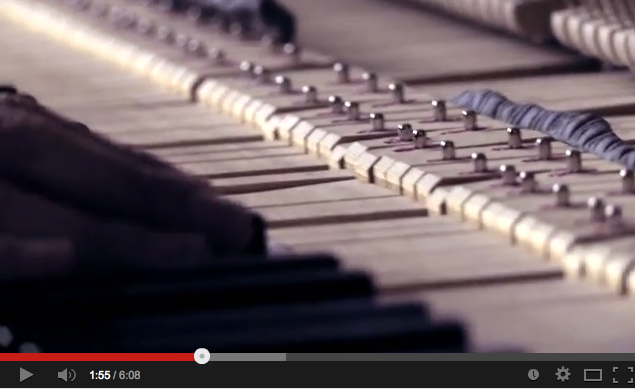
 Mathieu Mastin, concepteur et réalisateur de la série de mini-documentaires Jazzed Out a posé ses valises en Suisse pour y orchestrer des sessions live improvisées.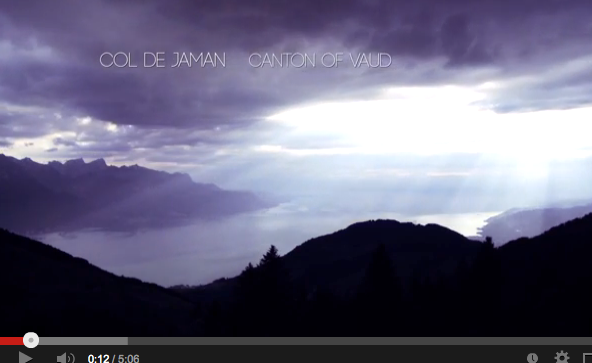
 Mathieu Mastin, concepteur et réalisateur de la série de mini-documentaires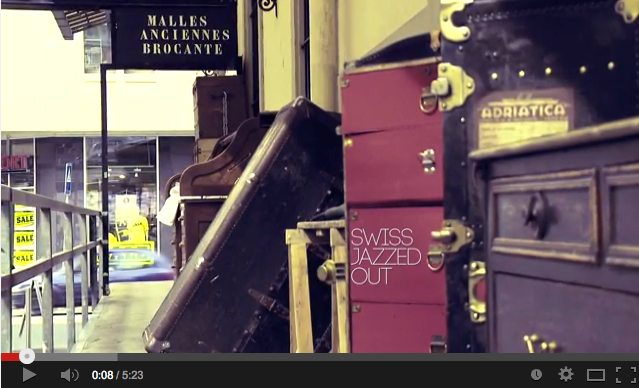
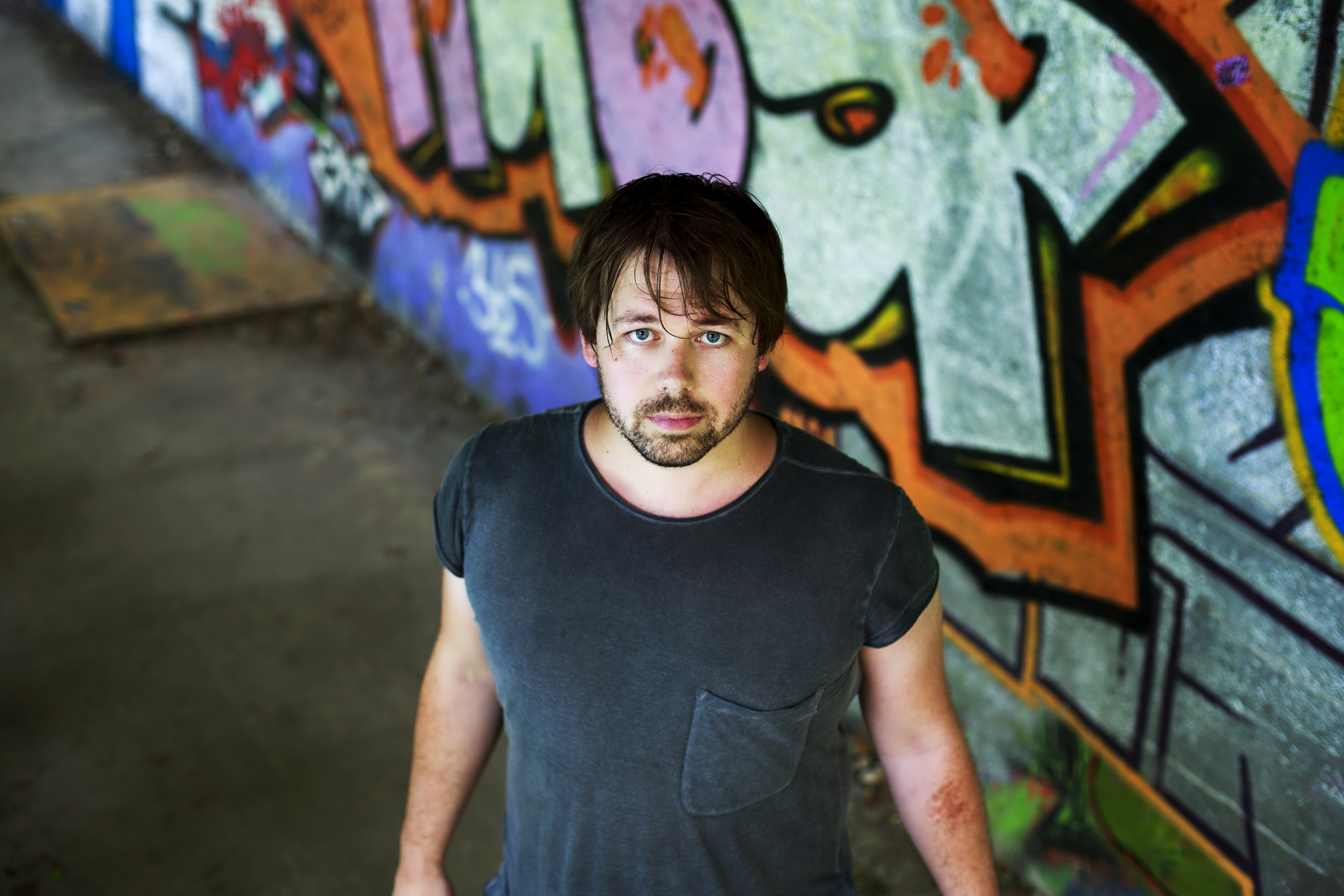 Forcément l’exercice du piano solo est plus connu que celui de la batterie solo. Marc Perrenoud le conjugue pourtant à sa manière. « Plutôt que de travailler en improvisant sur un base de 32 mesures comme cela se fait dans le jazz, je préfère travailler sur plusieurs mouvements, à l’instar dans la musique classique ».