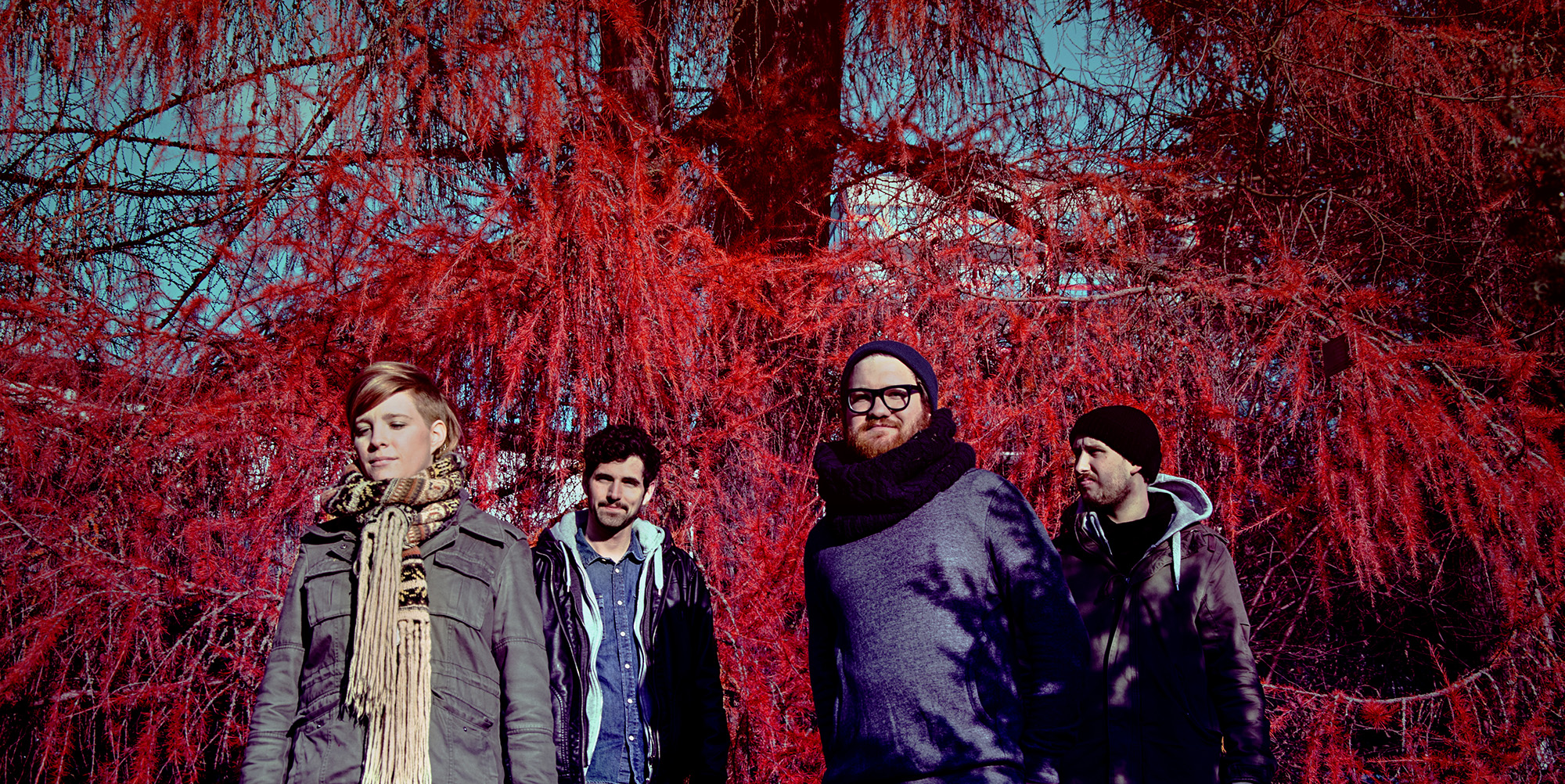
Interview: Johann Bourquenez of Plaistow

©Janice Siegrist
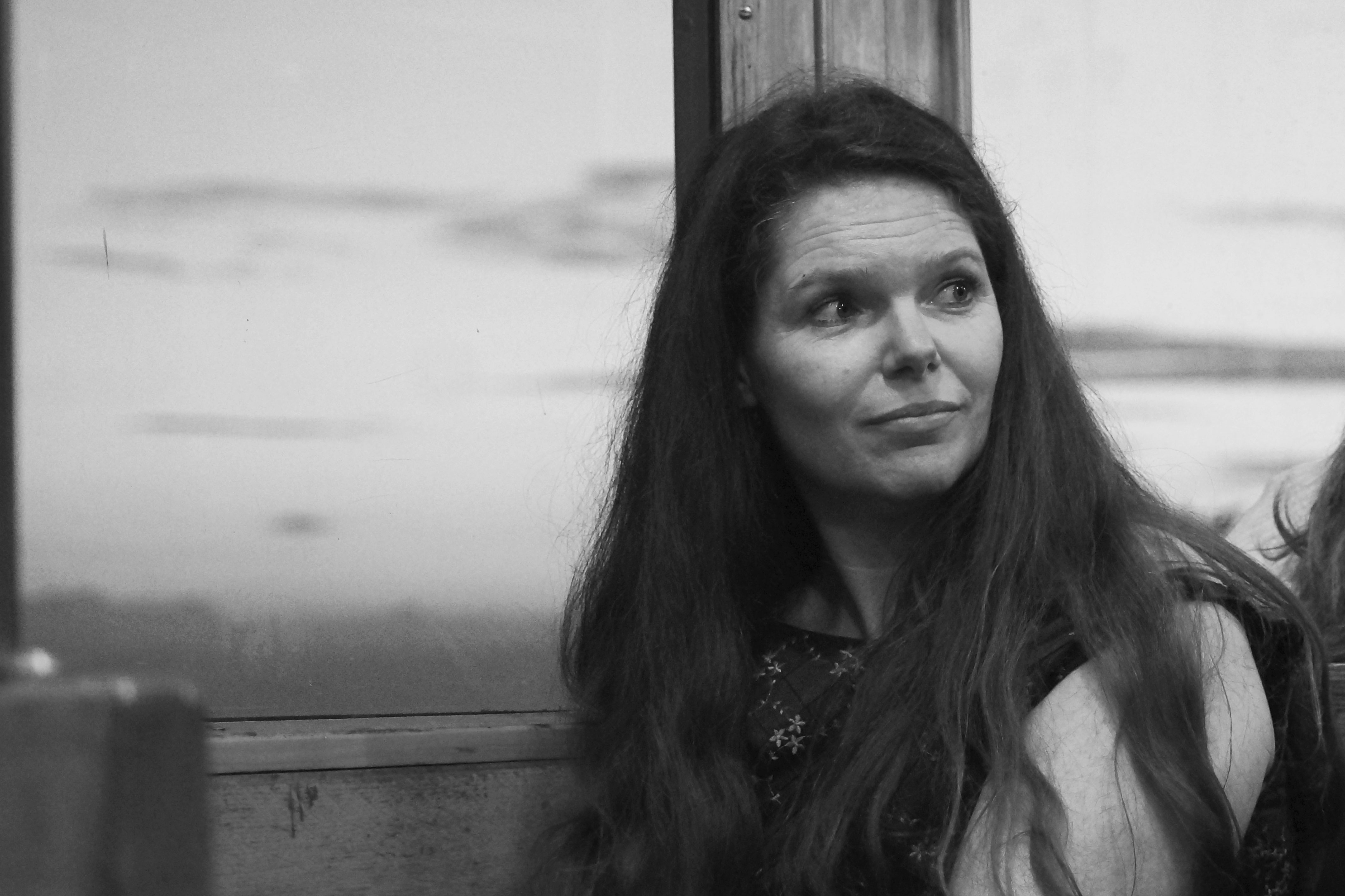
©Janice Siegrist
Johann Bourquenez is hardcore

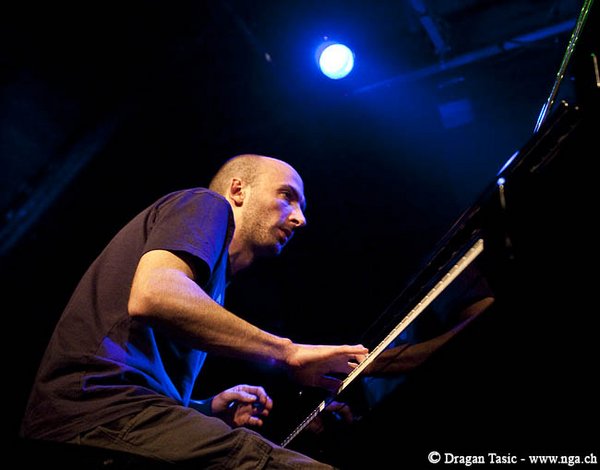
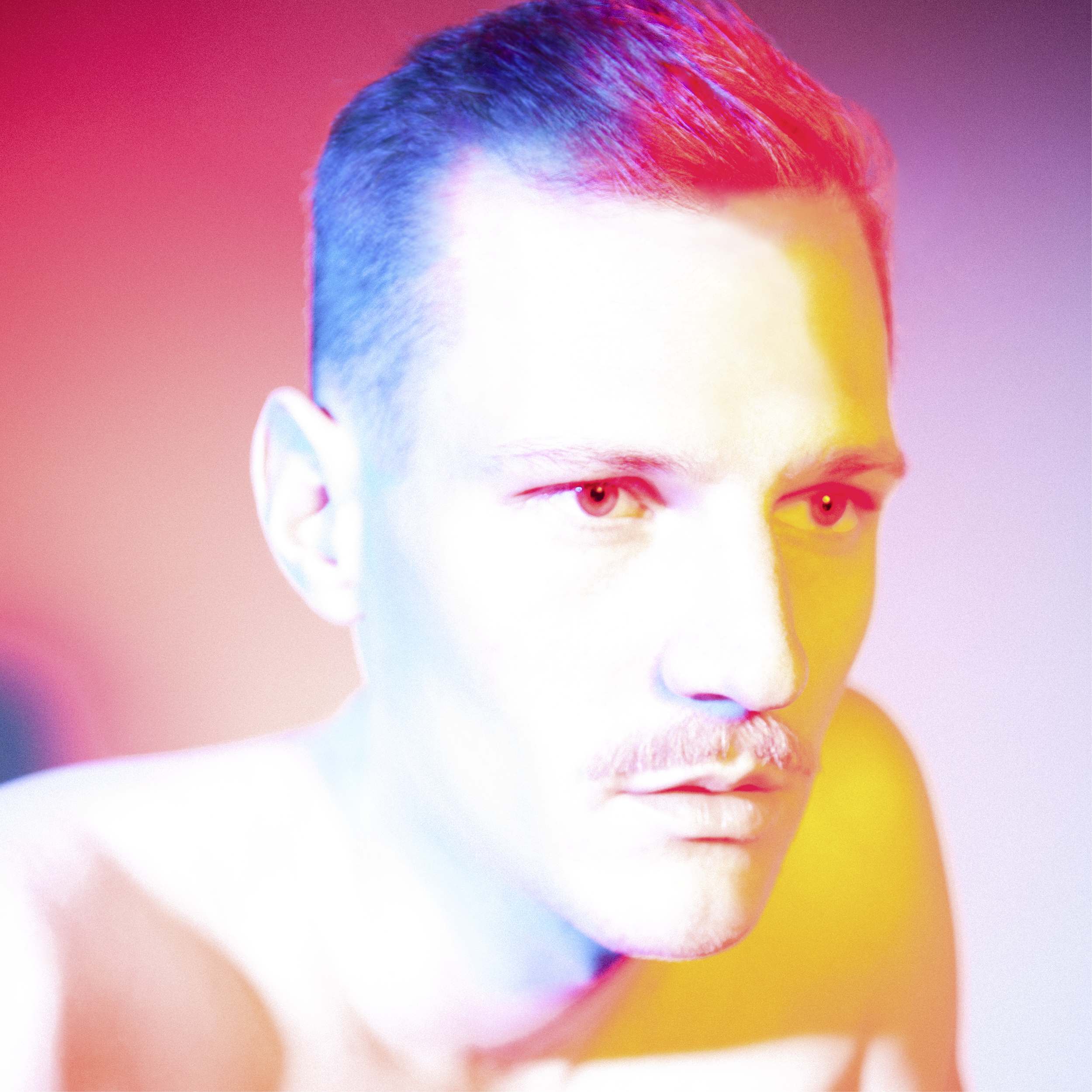
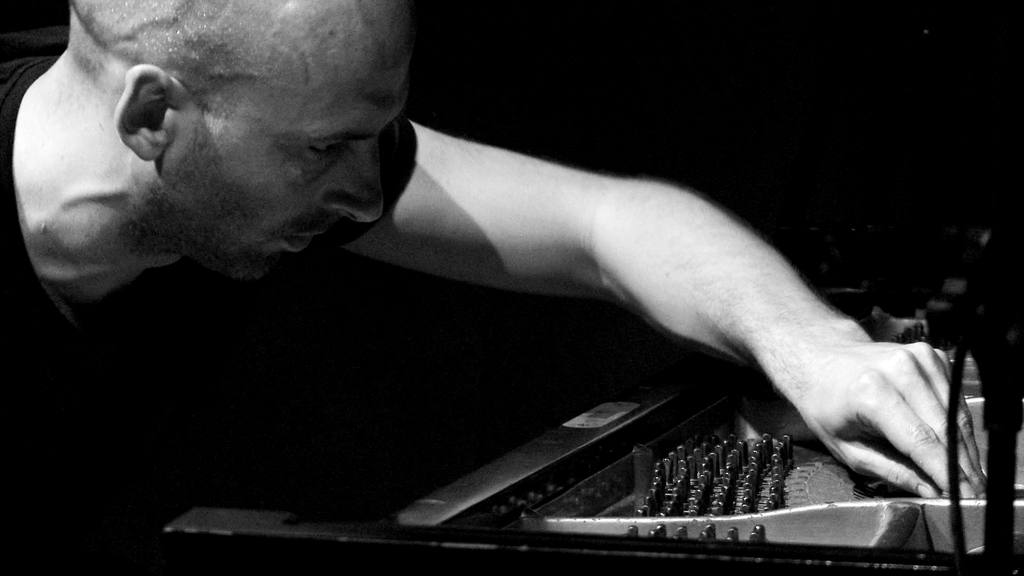
As Johann walked into the hotel for our first meeting, I got Plaistow‘s music. Dressed in black, head shaved, lean – he is stripped back. There’s an aroma of smoke and an intensity quivering a hair’s breadth beneath the surface, a rapid rhythm. The albums, Citadelle and Lacrimosa, with their trance-inducing repetition, microscopic detail and Johann’s rounds of claustrophobic piano notes, feel driven by a desire for the raw and pure. It didn’t surprise me when he said in preparing for the next album (due out in April 2015) he woke at 6am, worked 8 hours at the piano, then took a bike ride in the evening…every day for a month. It could be said Johann Bourquenez is hardcore.

‘…maybe it’s better not to go too far with this’

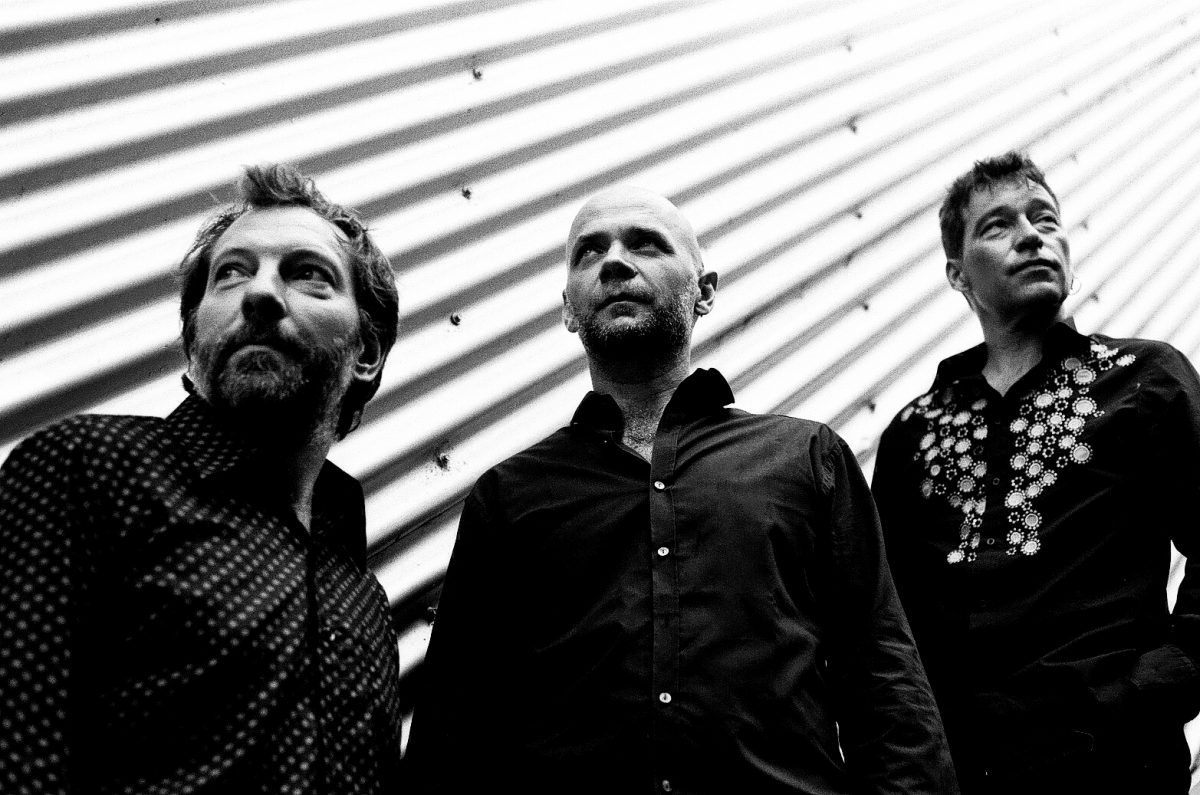
French-born and studying jazz in Toulouse, he met drummer Cyril Bondi doing a gig in Geneva. Their connection is the cornerstone of Plaistow, you can hear it on the albums. Johann moved to a squat in Geneva (‘a big house full of crazy people’) and he played regularly with Cyril, but not seriously (‘I was partying a lot.’). Eventually they felt there was something worthwhile, ‘I said to Cyril, OK but I’m a very crazy guy so if I do a band…I will do it very seriously, very deeply, and I will expect people around me to do the same, so maybe it’s better not to go too far with this, and he said, ‘No, no, no, no, you don’t know me, if I do a band it’s going to be a mother******.’ So we decided to do it.’ That was in 2007 when they recruited, Raphaël Ortis on bass, though more recently, Vincent Ruiz on double bass.

johann_bourquenez_feat_plaistow‘You have to be physically be in the present’

Their musical angle comes from Johann’s early years of immersing himself in drum ‘n’ bass and techno (he has currently got Rrose on rewind), using machines and synths, ‘I had many years of this kind of experimentation with electronics…and computer noise stuff.’ At one gig, pre-Plaistow, fed up of lugging equipment around, Johann decided to play acoustic piano – opening it up to use the strings to create a more powerful sound. ‘I can play this piano the way I played all those machines, but I found the significance of every move I make is very important , if I don’t move there is nothing, if I do a very small thing it is very meaningful…The movement – that is very important…you have to be physically be in the present. So, I said with Plaistow let’s pretend we are just a jazz trio but we actually are filled with techno and noise walls…let’s make that music but with acoustic instruments.’

‘I will take your brain, trust me…’
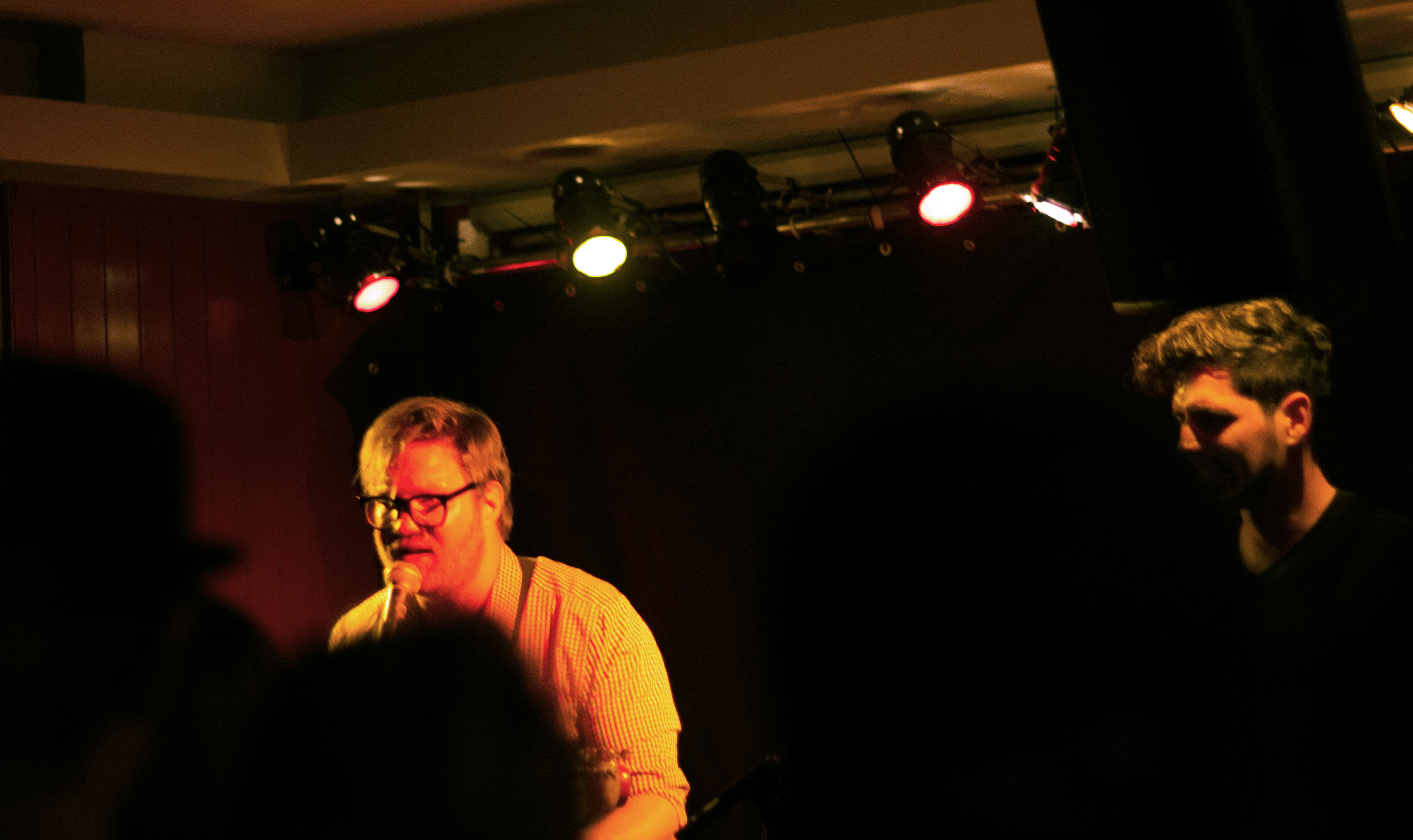
Plaistow au Centre Culturel Suisse (Paris) ©Simon Letellier

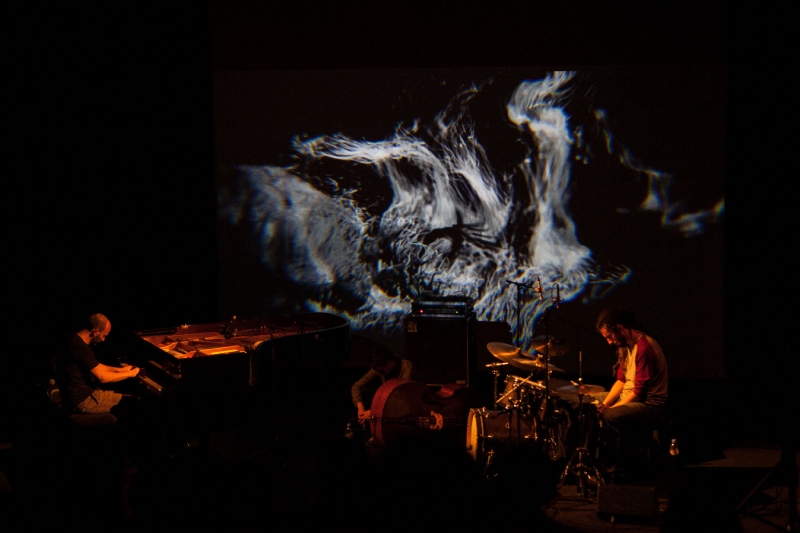
To take these ideas further the art and animations of Nicolas Berger will be integral to the new album. Johann understands that visuals [on a cinema-sized screen] can divert attention from the music so they need to be justified by making the performance an immersive experience. ‘It’s an old fantasy of mine, I would like to have a two hour concert the way you would do with a DJ set – I will take your brain, trust me, and then I give it back to you at the end.’ This best sums up Plaistow’s raison d’être, it reminds me of the theatre of Artaud or Stravinky’s Rite of Spring – primal yet with a care for the concept of ceremony, event, people.

In fact Johann’s next project is the Great Noise Choral which will debut in December. It will feature, ’20 to 30 people only using voice and making some noise’. I’m certain it will be something pretty hardcore.

Plaistow live @ London, Pizza Express, 20 November (London Jazz Festival)
Liepaja (Latvia), Hiks Hall, 27 nov
Cesis (Latvia), Vidzeme Concert Hall, 28 novembre
Daugavpils (Latvia), Mark Rothko Art Center, 29 novembre

The Great Noise Choral at AMR Jazz Club in Geneva, 19 & 20 December

 
“Lacrimosa” to be released on vinyl, November here!
Plaistow on Facebook

Plaistow on YouTube:

http://youtu.be/ctoFHbz8wWY

Marc Perrenoud Talks on the Eve of his US Tour

2014 has been a good year for Marc Perrenoud and his trio of Cyril Regamey on drums and Marco Müller on double bass. They’ve toured China, Taiwan, Europe and are off to the US this month to play five cities and cover about 20,000 kilometres of American soil.

The gigs have followed their well-received third album, Vestry Lamento (released October 2013-April ’14). Frank Alkyer of Downbeat magazine crucially wrote, ‘Would someone please book this band for a tour of the States? We want to see them live!’


MarcPerrenoudUSAI spoke to Marc Perrenoud about his feelings on the eve of the trio’s US tour.

Marc Perrenoud I’m very excited. US people are very open, I’m not nervous, I just feel pleasure to go there…Playing in New York is always a big thing, but I am very excited to discover New Orleans, it must be an incredible place…and it’s the birthplace of jazz. There’s so much music there and I’m really looking forward to that, to ‘feeling’ Louisiana.

Sometimes it can be hard to be from a little country but sometimes it makes you more curious…you have to be because we have to leave Switzerland and that’s very stimulating. I am very honoured that these guys invited me, a Swiss guy, to play jazz there – it’s crazy. It’s so cool.

Do you think Vestry Lamento was particularly suitable for US audiences?

Marc Perrenoud There is a very big difference between Two Churches [his previous album] and this one. I was a little bit, not bored, but tired of the top, classical jazz, European style…so I tried to think about what I love about this music – and that is American jazz from the ’60s and even earlier. I tried to put some musical ideas like the energy and the swing style into this CD but with my European culture too, to make a mix of these two cultures.

In this album I was more confident in my partners. I was a control freak before, so I had an idea and would be like – you have to play that and that. Now the ideas are more precise and I can give more liberty to the musicians…It gave more pleasure and more energy to the drummer and bass-player and they had more fun playing because their ideas are in there too. It really grew together.

When will you work on a new album and what direction will it take?

Marc Perrenoud When we finish the US tour we are working for the month of December on the new repertoire and the new trio CD for 2015. I think recording will take place in February or March. After the US we’ll be full of ideas, I think it will be a good moment to write new things. We had a very exciting year, but it will be good to calm down and write.

The direction: you can never say exactly what it is, but I am sure about the manner with which to work and write together with the trio – it will be the same way and same kind of energy as with Vestry Lamento.

With the new album I will try to have a longer release time to focus on a new country every month with good PR. It’s good to have big festivals [to play] but it’s always important to meet people in smaller clubs. At Ronnie Scott’s we jammed til 3.30am…it was nice to meet the London jazz scene and have a real bebop jam session. Then I went straight to the Gatwick Express at 5am [to get to the airport – proper jazz stylee].

What have you found inspiring recently?

Marc Perrenoud I try to often go to concerts but also to theatre – I saw a very good theatre piece of Dostoyevsky, I go to opera, rock, jazz concerts. It’s very important to me to go to live music and performance. I’ve seen Roy Hargrove, a cool concert of Brad Mehldau solo and Joe Lovano.

I have a project next year with actors, poetry and music – trying to make something new. I think jazz is made from these things, we need improvisation in jazz and to do that we need to look everywhere. It’s why it’s unstable and moving because we have to continually find ideas and, sure, other arts are very inspiring.

18/11 Somethin Jazz Club, New York
20/11 Snug Harbor, New Orleans, Louisiana
21/11 The Jazz Station, Eugene, Oregon
23/11 Upstairs at Vitello’s, Los Angeles, California
24/11 Lobero Theatre, Santa Barbara, California

Insights into the 1st edition of the Montreux Jazz Academy

NB-DSC02809Stéphanie-Aloysia Moretti, artistic director of the Montreux Jazz Academy, talks about the first edition of this exciting, pedagogical project where 12 young winners of the prestigious Montreux piano, voice and guitar prizes are further coached by 14 world-renowned mentors at the Sylvia Waddilove musical centre.

How did the idea of musical pedagogy evolve at Montreux Jazz ?


Stéphanie-Aloysia Moretti I’ve been working for the Montreux Jazz Festival for over 25 years, primarily as artistic co-ordinator, but also as educational co-ordinator ever since Claude Nobs began the idea of informal musical workshops. Before my arrival in 1989, Claude had always asked key musicians to extend their stay in Montreux in order to talk, teach and interact with the audience, students and fellow musicians. He would announce the workshop details at the end of a concert for the following day, but this meant that only people present at the concert would know what, where and with whom it was happening. I started organising these workshops in advance, incorporating them into the official programme, which gradually made the workshops an important feature of the festival highlighting the importance we gave to the interaction between master and pupil. This eventually led to the 1st official Montreux Jazz Solo Piano Prize in 1999 where a selection of young pianists from all over the world came to Montreux be coached by professionals in the field. Voice and guitar prizes soon followed.

What was the approach to the Montreux prizes?

Stéphanie-Aloysia Moretti We wanted to structure these prizes in such a way to avoid the competitiveness you might find in a sporting event, and instead create a nice atmosphere for the candidates. The young musicians coming to Montreux were treated as a group, made to feel comfortable, lucky to meet and work together, mostly of the same age and level but coming from different countries. At that time it was also an excellent way to bridge the gap between eastern and western Europe of the late 90s. It was important that the contestants be real, complete musicians, not just able to reproduce or repeat music, each had to submit their own composition or arrangement and give a lot of themselves.

When did you realise that musical coaching was not enough?

Stéphanie-Aloysia Moretti Year after year, we began to notice a reoccurring problem. Despite the winners receiving money, a recording contract and a live show the following year at Montreux Jazz – a few months after winning the prize, they would call us up asking for help: “can we have the names of a good agent, manager, how can we find gigs, labels, PR, etc..?” It was clear that being a young virtuoso is not enough in the world of jazz and music, many of our young winners had no idea what direction to go in and how to follow up their prize-winning achievements. We soon realised that the chosen candidates coming from over 40 different countries needed a more practical form of training alongside their musical coaching. Hence the idea of the Montreux Jazz Academy was born – to help young musicians take advantage of the experience and connections of the Montreux Jazz Artists Foundation, the Festival’s pedagogical wing, in order to maximise their self expression as artists and also help them build their career toolkits.

Describe how the Montreux Jazz Academy is set up.

Stéphanie-Aloysia Moretti There are 14 mentors and 12 candidates, or ‘laureates’ as we like to call them. Nine of them are made up of the first, second and third place winners of this year’s piano, voice and guitar competitions. The remaining three are made up of the first prize winners of the previous year. The Academy lasts just over a week from 30th October to 5th November where the young laureates live, work, perform and learn during an intensive week of exchanges with international musicians and music-business professionals. Masterclasses are given on a daily basis on useful topics such as “Understanding the music business/ How do I get signed to a label? / Managing your online presence”. There’s no competitive atmosphere or prize at the end of the Academy, just learning, sharing and a big gala show on the last evening overseen by Lee Ritenour. What’s very precious for me is to have the laureates express themselves freely and get into the habit of risk-taking with ideas and possibilities, this is less present when there’s a competition at stake. After the Academy I know something will change in how they make music as individuals – and not just the laureates, the mentors have also been affected by what they’ve shared here. They didn’t all know eachother beforehand and it was wonderful to see the cross-fertilisation bubbling up between them during the duologs, live gigs and workshops.

http://youtu.be/7XVXOUIlVoA

How did you go about chosing the mentors?

Stéphanie-Aloysia Moretti I chose mentors who already have a strong relationship to Montreux, first of all because it’s easier to have direct access to them, secondly because I needed to know their resources, what they’re capable of and how curious they are. For example, I chose guitarist Lee Ritenour as musical director of this edition because he has always taught in his career, he has a good relationship with the younger generation and knows how to raise everyone’s level. He’d already been president of a previous Montreux Jazz Guitar prize and had done an amazing job. From the USA we invited drummer Sonny Emory from Earth, Wind and Fire who has an amazing energy but is very different from the classical jazz drummer; saxophonist Charles Lloyd, who opened the first Montreux Jazz Festival in 1967 – a kind of godfather figure; star vocalist Patti Austin, president of the Voice competition a few years ago. We also had the pianist Yaron Herman from Israel, electronic genius Bugge Wesseltoft from Norway, Hammond B3 giant Macoto Ozone from Japan, singer Sebastian Schuller from France and our very own Eric Truffaz. Their interaction made it feel more like a laboratory than an academy, anything could happen! The relationship between instruments and machines was really explored which was very important to me as I wanted new musical territories to be looked at as much as geographical ones. Even Charles Lloyd got to experiment with the power of electronic music.

Does the Academy have a particular involvement with Swiss artists?
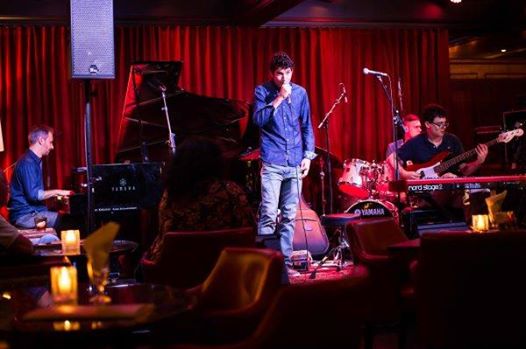
1459961_862670483754534_356142560921368328_nStéphanie-Aloysia Moretti The Academy is essentially aimed at aspiring jazz musicians on an international basis, but obviously we are happy to nurture Swiss young talent as much as we can. The exceptional singer/songwriter/guitarist Patrick Rouiller, (one of the star contestants on The Voice Switzerland 2013), was the only Swiss laureate selected for the Academy this year. However we were graced with some top Swiss musicians who took part in our live sessions in the evenings, among which vocalists Anna Aaron, Billie Bird, and pianist Léo Tardin – who was so enraptured with his jam session that he missed his train back to Geneva and ended up with all the other laureates back at the Waddilove centre. Léo, a Montreux solo piano prize winner himself, was blown away to see the high standard of practical teaching, backline equipment and tools on offer. “The best of the best in an informal setting” is how he described his time spent at the Academy.

What will the laureates take away with them? 

Stéphanie-Aloysia Moretti Firstly, all the laureates have said that the practical learning has been crucial: how to get a gig, consider yourself a brand, understand the workings of the music business, etc… They feel more confident to go into the world as a musician and handle their lives. No school normally talks about the practical side but now at last they know what to expect. Secondly, they’ve all mentioned the importance of experimentation and improvisation as a group. They have been stretched beyond what they thought were their capacities, forced to explore new territories and been made to find new ways of expressing their art.

How will the Montreux Jazz Academy be next year?

Stéphanie-Aloysia Moretti I could be a bit more audacious next year regarding styles of music from further afield than just the western world. Maybe bring in mentors from India or the Orient and see what new musical perspectives they could share with us, teach us to feel music more with our guts and less with our brains perhaps…? But for sure the goal will remain the same: to maximise self-expression, risk-taking in each young musician and to teach them the practical tools for succeeding in their music careers.
Platte des Monats: Fai Baba «The Savage Dreamer»

FAIBABA_TheSavageDreamer_Cover_2500px_PromoEtwas unerwartet kam die Ankündigung seines aktuellen Albums, denn der Vorgänger «She‘s My Guru» erschien unlängst im Frühling 2013. Ein kurzer Blick auf die Statistik zeigt aber, dass Fabian Sigmund, besser bekannt als Fai Baba, noch nie lange Schaffenspausen eingelegt hat. Sein viertes Album seit 2010 nennt sich «The Savage Dreamer» und ist – ein weiteres Mal – grandios.

50 Minuten Genialität

Abgeklärter und erwachsener kommt das neue Album daher, ohne dass dabei die Leidenschaft und Rohheit abgetötet werden, welche Fai Babas Musik neben seiner charakteristischen Stimme kennzeichnen. Wer all die Feinheiten der Songs erfassen möchte, dem sei empfohlen, sich in ein ruhiges Eckchen zu begeben und sich während knapp fünfzig Minuten ganz der Welt von «The Savage Dreamer» hinzugeben. Auch nach dem zehnten Hördurchgang entdeckt man noch Tonspielereien, die einem vorher nicht aufgefallen sind – was für kleine Glücksmomente sorgt, als hätte man in einem Wimmelbild Walter entdeckt.


[soundcloud url=”https://api.soundcloud.com/playlists/47516516″ params=”auto_play=false&hide_related=false&show_comments=true&show_user=true&show_reposts=false&visual=true” width=”100%” height=”450″ iframe=”true” /]


Aus der Ferne heulende Gitarren und warnende Orgel- und Basstöne werden beispielsweise bei «Not That Simple» zu einer akustischen Leckerei aufgeschichtet. Auf dem achteinhalb-minütigen «New York City» verkündet Fai Baba eindringlich, dass er nicht nochmals in die Weltmetropole reisen möchte, weil er sich dort einsam fühlte. Der eindrucksvolle Instrumentalteil, der den Grossteil des Songs ausmacht, könnte meinetwegen ewig weitergehen. Ein weiteres Highlight auf dem Album ist der Opener «The Savage Dream»: Fragil und untermalt mit Piano-, Flöten- und Geigenklängen bietet der Song einen wundervollen Kontrast zu den reissenderen Stücken.

Schöner warten

Blues, Folk und Psychedelic Rock verschachtelt Fai Baba gekonnt zu einem faszinierenden Werk, das es sich ausgiebig zu erforschen lohnt. Dem Tatendrang der letzten Jahre nach zu urteilen, schreibt Fai Baba womöglich bereits fleissig neue Songs für das nächste Album. Bis dahin beschert uns «The Savage Dreamer» die wohl schönste Wartezeit auf Erden.

«The Savage Dreamer» ist am 19. September 2014 erschienen (A Tree In A Field Records).

Die nächsten Konzerte:
14.11.2014, Alte Kaserne, Zürich
06.12.2014, L’Écurie, Genève
20.12.2014, Eisenwerk, Frauenfeld

Hell’s Kitchen “Red Hot Land”

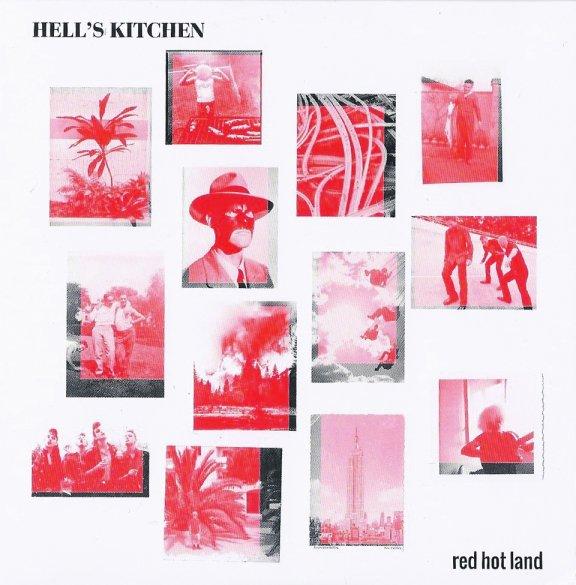
HELLS-KITCHEN-Red-Hot-Land« Laisse moi essayer quelque chose de neuf » entend-on, d’une voix plaintive, au détour du cinquième album des Hell’s Kitchen, « Red Hot Land ». Passé de Dixiefrog à Moi J’connais, le label des amis de Mama Rosin, les vétérans du blues genevois, quinze ans de scène au compteur, ont voulu aller voir ailleurs si le Delta y était. Ho, bien sûr, les acteurs de base sont toujours en place, Bernard Monney et sa voix broussailleuse au dessus du bottleneck, Cédric Taillefert et sa batterie faussement déphasée, Christophe Ryser et sa basse foudroyante.
Mais, à l’inverse du blues classique, identifiable à l’enfer guindé où des serveurs coincés débitent mécaniquement leurs syncopes précises et prévisibles, le trio genevois semble s’être mué en garçon de rade prêt à faire trembler les assiettes sur son bras tatoué : on croit s’attendre à un plat, un plan, une attitude, et c’est toute autre chose qui arrive.

[youtube https://www.youtube.com/watch?v=SNYPHp7xfpM&w=560&h=315]

« Red Hot Land » rompt un peu plus avec leur goût du blues minimaliste. Là un rythme de marche militaire dérisoire, ici un banjo qui parle tout seul, une corde un peu aléatoire répond à une mélodie précise, un vrai refrain fait contrepoint à un yaourt rockab, une ambiance New Orleans laisse la place à un accès de cris sauvages. Et s’il s’entend encore, leur blues sauvage des alpages s’efface derrière des balancements folkpop. A qui la mue ? À Robin Girod de Mama Rosin, à la fois producteur et compagnon d’entrain, venus apporter sa gouaille échevelée sur certains morceaux. A Matt Verta-Ray, à plus forte raison : la moitié de Heavy Trash, qui a mixé l’album à New York tout en s’invitant lui aussi sur certains titres, a contribué à trouver le son juste. Celui qui relie les énergies primales de Hell’s Kitchen à ses meilleures idées.

Disque
Hell’s Kitcehn “Red Hot Land” (Moi J’Connais/Irascible)

Concerts en France:
Paris, Mécanique Ondulatoire, le 12 novembre 2014
Lyon, bar des Capucins, le 13 novembre 2014
Annecy, Le Brise Glace, le 14 novembre 2014

Fontaine, La Source, le 15 novembre 2014


Le projet Soriana s’helvétise…

“C’est comme lorsque l’on s’exprime dans une langue, il faut maîtriser l’accent. Je connais les mots et la grammaire, mais je ne sais pas comment les prononcer…”

(Nicolas Masson, à propos de son travail avec Basel Rajoub à mi-chemin entre musiques orientales et du jazz)

 
Nicolas Masson et Basel Rajoub

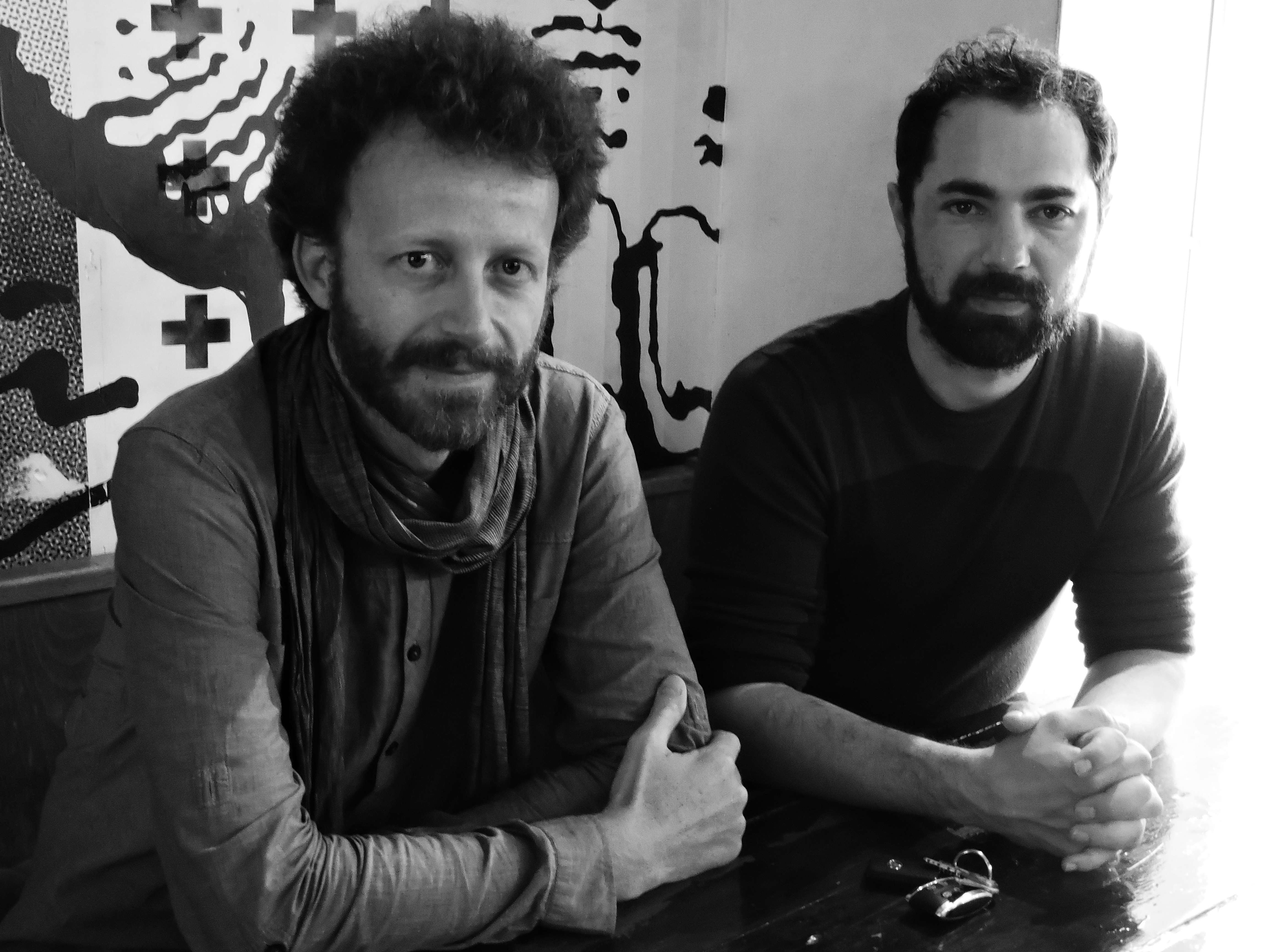
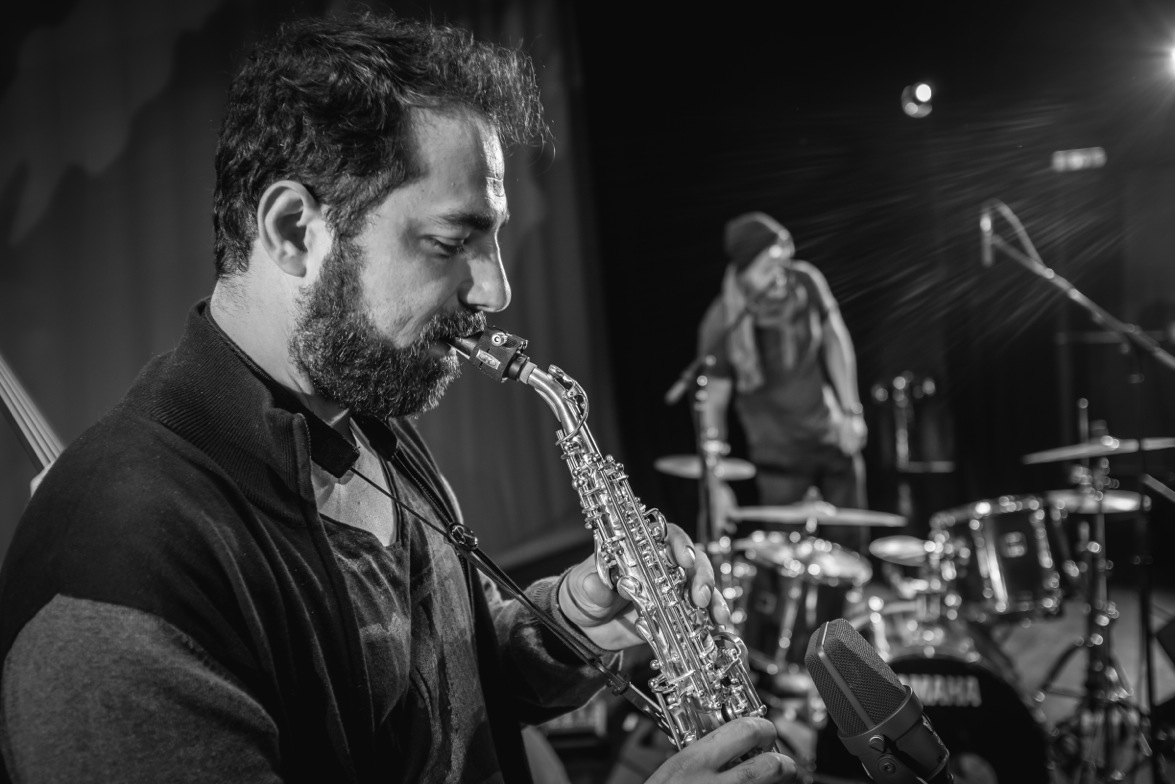
Depuis quelques mois le saxophoniste genevois, Nicolas Masson, s’immerge dans le monde des musiques orientales en compagnie de son nouvel ami Basel Rajoub.

Ce saxophoniste syrien, établi en Suisse est à la tête d’un trio de musique contemporaine orientale. Entre improvisation et composition, ce projet est un sublime mélange de spontanéité et de contrôle. Depuis peu, Basel Rajoub l’a baptisé Soriana (« notre Syrie »).

Au contact de la Suisse, en discutant avec Nicolas Masson au Sud des Alpes où tous deux répètent, l’idée a germé de revisiter les thèmes de ce Soriana avec des musiciens de la place et des instruments modernes. Pour ce faire Basel a passé quelques nuits à préparer des partitions à partir d’une musique qui s’ancre dans une tradition d’improvisation millénaire.

 
Première à Jazz Contreband

Basel RajoubLe 4 octobre 2014, le travail des saxophonistes soprano et ténor est enfin écoutable et visible  “pour de vrai” au Sud des Alpes dans le cadre de la 18è édition du Festival Jazz Contreband, cette manifestation qui rassemble 50 concerts en 20 lieux pendant 24 jours, en France voisine et en Suisse romande.
A leur côté une rythmique de choc constituée de Vincent Ruiz (Plaistow) à la contrebasse et Maxence Sibille à la batterie, tous deux anciens élèves de Nicolas Masson. Timide de prime abord, le quartet prend vite son essor.

Helvetica

A peine a-t-on le temps de reconnaître les thèmes de « Asia », le dernier opus de Basel Rajoub, que ceux-ci s’émancipent porté par un vent de liberté nouveau. « Cet ensemble me donne plus d’espace et de place. La musique se transforme. Elle est plus puissante, centrée sur l’énergie » explique Basel Rajoub quelques jours plus tard. « Quand je joue avec les instruments traditionnels orientaux (le qanun et le tambourin) l’accent est donné au son et à l’instrument. Ce sont deux choses complètement différentes. »

Travaillant à partir du répertoire de Basel Rajoub, ce « Swiss Soriana » s’émancipe déjà des originaux qu’il est censé revisiter. Un morceau de Nicolas Masson « So long » est inclus dans le répertoire et un nouveau titre de Basel Rajoub, le bien nommé « Helvetica » témoignent de l’émergence d’un véritable nouveau projet dans lequel Basel Rajoub ne tient pas être l’unique compositeur.

Connu pour son travail sur les micro-intervalles qu’il arrive à reproduire en soufflant dans son sax sans l’aide d’aucun artifice, Basel Rajoub se réjouit d’enseigner ses techniques à Nicolas Masson qui ne rêve que de ça… Quant à nous, on attend la suite impatiemment !

Le site Internet de Basel Rajoub et Le site Internet de Nicolas Masson

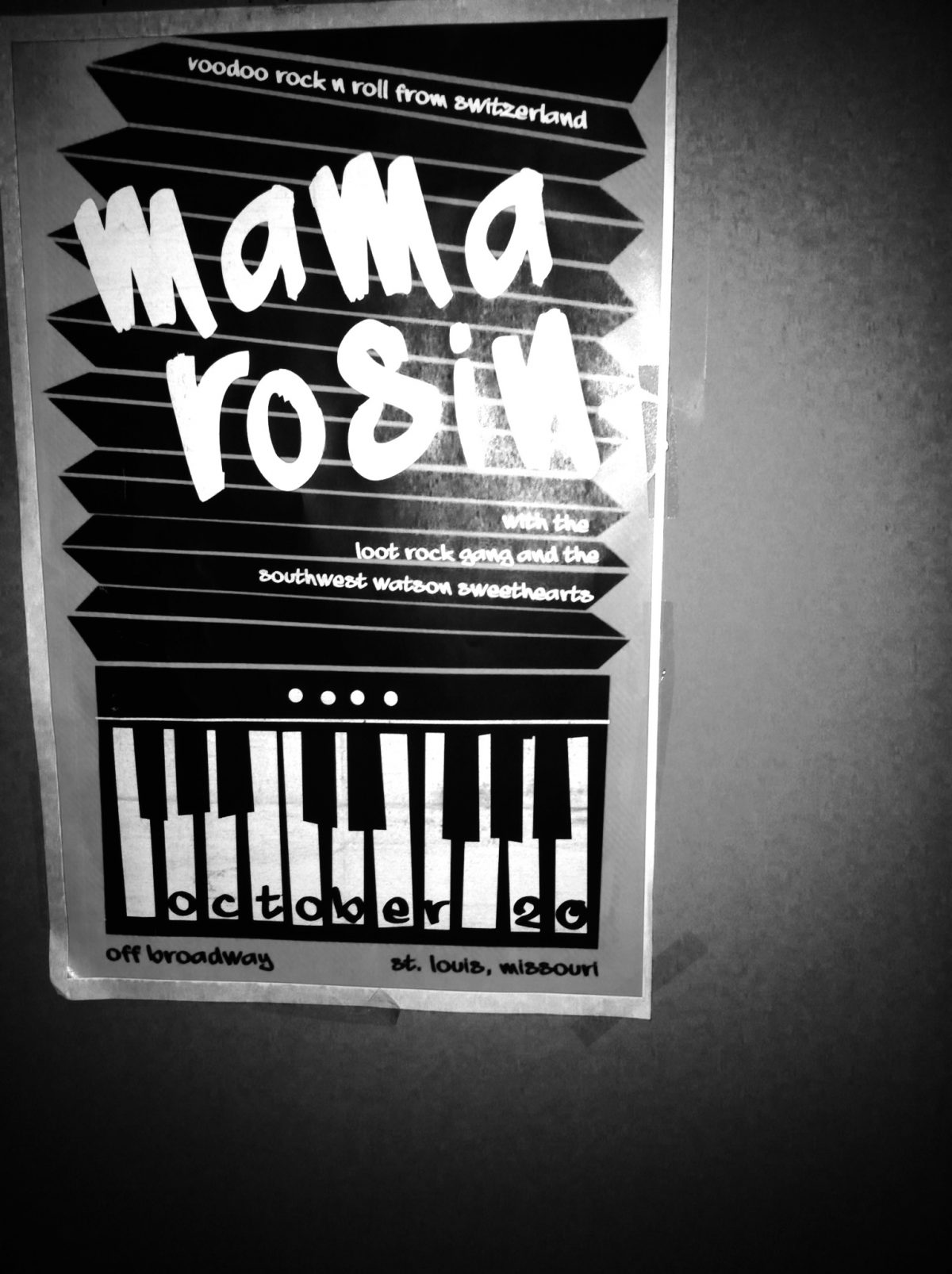
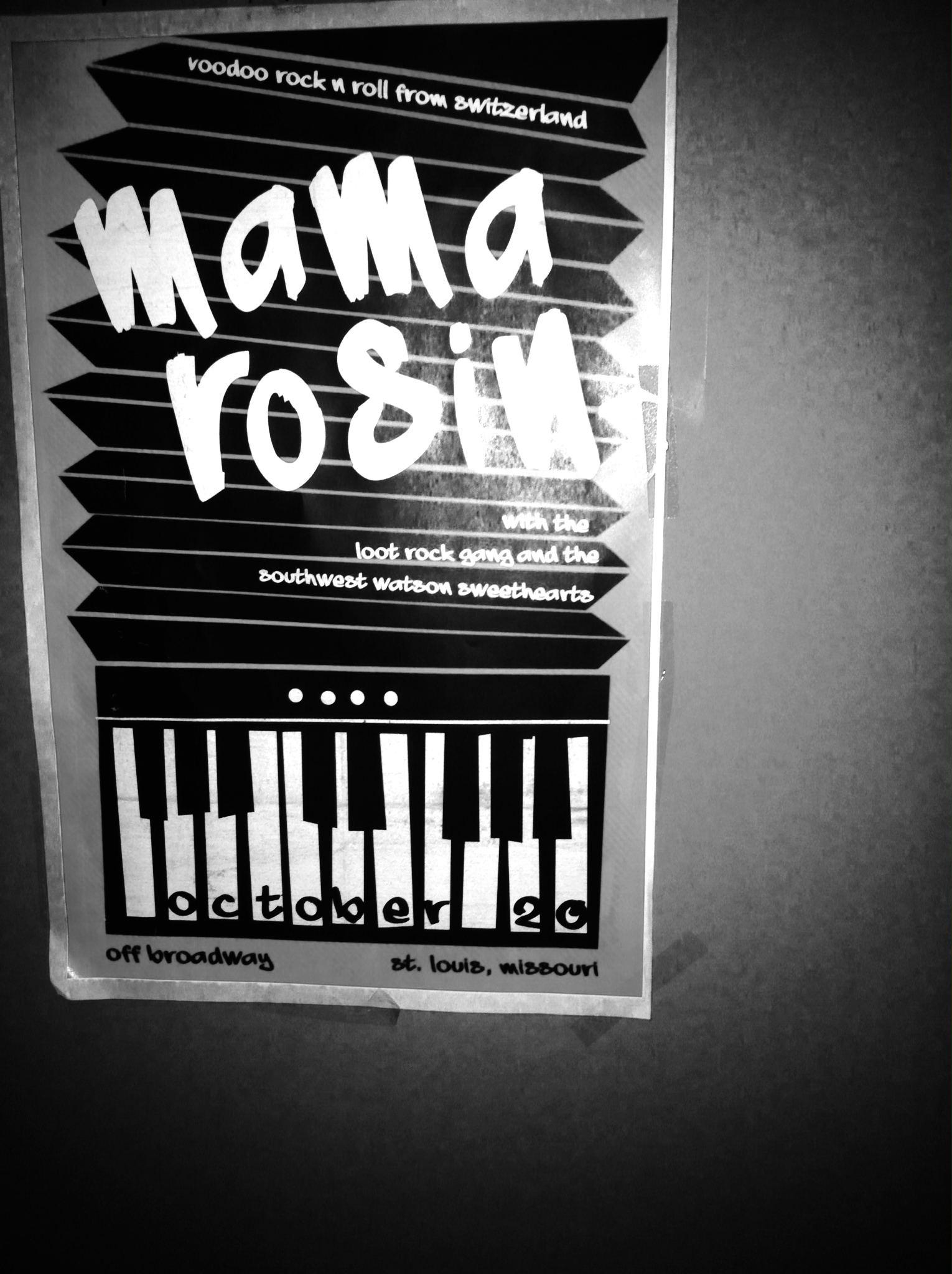
Mama Rosin on the road to Mississipi!

image(1)On n’est pas parti là-bas avec en tête le rêve américain, oh non ! On les connaît bien les histoires des groupes européens qui se cassent les dents dans les bars US. Mais la tournée de 10 jours (dont 2 jours en studio sur la fin) qui s’amorcent nous a déjà emporté très très loin. Sur la carte mais surtout dans nos têtes. D’abord St Louis, Missouri puis Memphis, Tennessee ! On longe le Mississippi jusqu’à La Nouvelle Orléans puis on tourne à l’ouest jusqu’au Texas.

Sous jetlag violent et extrêmes burgers

Des salles pleines, des promoteurs (musiciens, ou disquaires locaux) ravis et concernés … Rares et précieux.

Un lundi et un mardi américain qui se passent à merveille. Sous jetlag violent et extrêmes burgers. Les quartiers des clubs sont en voix de gentrification, donc burgers avec pousses de soja ! Les mêmes qu’on se refuse à manger à Genève dans ces nombreux lieux qui fleurissent partout !

Une fleur sur la tombe de Jessie Mae Hemphill

image(2)Mais s’il y a quelque chose à retenir de ces premiers jours, c’est le niveau de classe ahurissant des groupes avec qui on joue. Juste des gens de n’importe quel âge, shootés au son des radios locales et aux LPs par milliers, pour qui la musique est une seconde nature. Deux baffes dans la gueule monstrueuses ! En deux soirs. Au point où ça devient gênant de jouer après eux … Et de recevoir leurs compliments … Et de vendre autant de disques. Ce soir c’est le Siberia à New Orleans où deux groupes ouvrent pour nous. Autant de baffes en perspective.
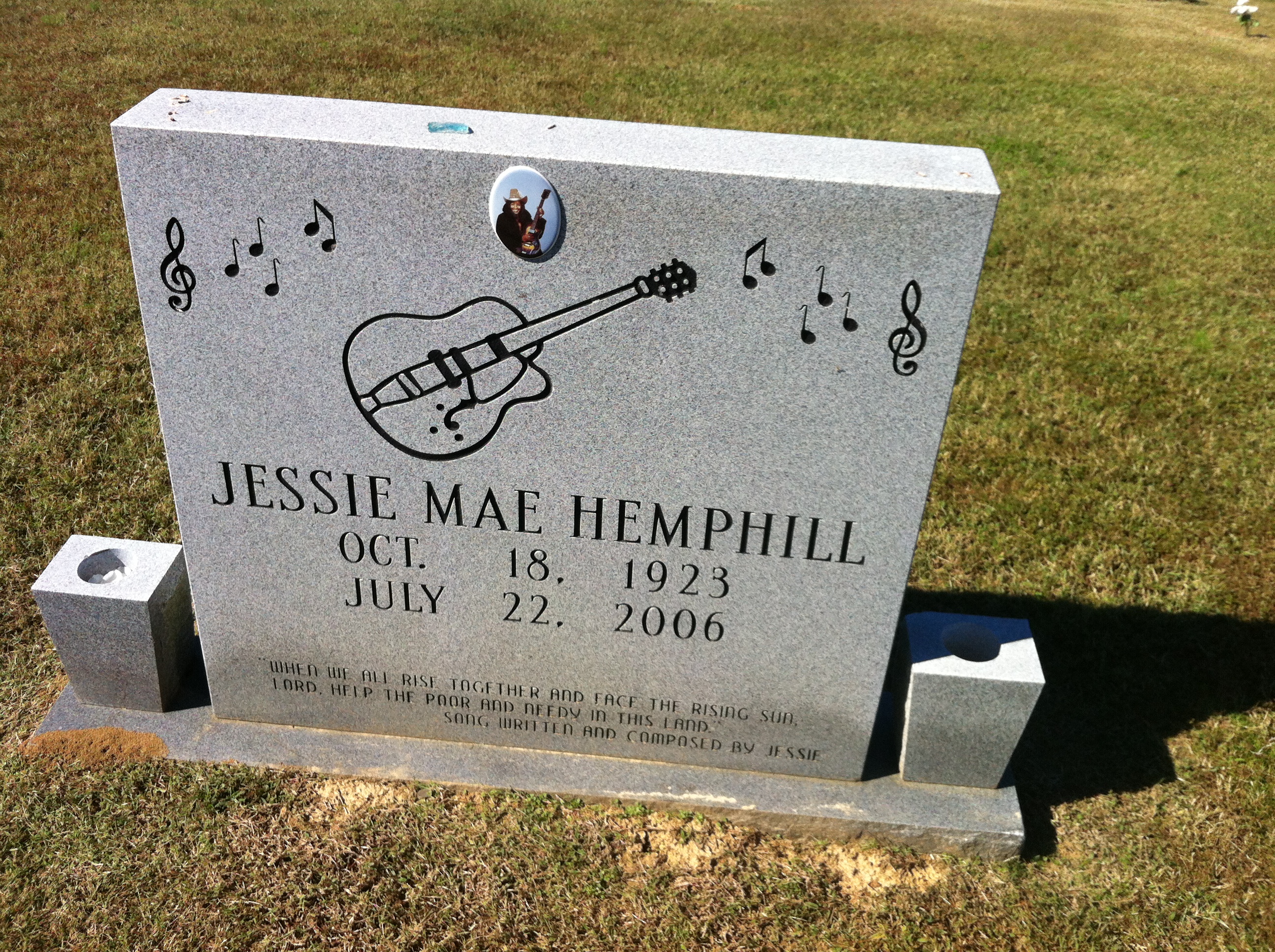
imagePeu de dodo. Et des kilomètres sur les routes sans virage, excepté peut-être celui qu’on a fait aujourd’hui pour aller poser une fleur sur la tombe de Jessie Mae Hemphill, une de nos déesses à Como, Mississippi.”

Mama Rosin

The Who Trio presents “The Who Zoo”

The Who ZooFrom the opening, assured double bass note and urgent cymbal tapping to piano notes peeking shyly out, the quality of The Who Zoo is apparent. The acoustic side of this limited release, double album uphold the trio’s aim: to respectfully work on the art of improvisation.

It sounds like a whale singing of unrequited love

The track Rembellarun stands out for feeling like an actual composition, all be it a dreamlike one with Michel Wintsch at his melancholic best and Gerry Hemingway providing an edge by literally scraping the side of a cymbal. It sounds like a whale singing of unrequited love. Just when the percussive ideas begin to dominate, in rides a piano rebuff – a few notes delivered with confidence and defiance.

Hemingway is a constant imaginative presence sensitively patting out ideas and allowing cymbals to whisper sweet nothings around the hook line in Demmpa. Bänz Oester tunes in, but asserts his own ideas with an intimate knowledge of strokes, caresses and pulls of his bass strings. The inventiveness of his playing borders on the magical.

I like it when they get raw and primal

I didn’t like Sloeperr to begin with, then at nine minutes in, on maybe the third listen, I got goosebumps and almost tears in my eyes as the warped hymn lines and piano poundings, bass vibrations and beatings and rattling drum funk entangled me in an emotional net. I like it when they get raw and primal. They can handle it without resorting to cliché. There are times when I’m certain Hemingway could get in chops and licks but he keeps it organic, all three staying riveted to the present moment. This favouring of the integrated ‘group solo’ enables an uninterrupted onslaught.

Hemingway was a name in the ‘loft scene’ of 1970s New York where free jazz had laid the foundation and was developed by new creatives such as Joe McPhee, Don Pullen and David Murray. His presence is powerful but his depth of experience is matched by Oester and Wintsch. Michel embroiders the music with runs that sound like glass beads scattering and exquisite melodies that seem to trickle from a Peter Greenaway film soundtrack.

How I’d love to hear Oester on electric bass

The second CD is mis-titled as ‘Electric’. I was expecting Wintsch on Fender Rhodes and how I’d love to hear Oester on electric bass, but in fact at the core of these longer improvisations are the acoustic instruments with what seems to be decorative strokes of synthesiser, electric sound effects and noodlings. ‘Acoustic Plus’ may have been a better description.

This release has a multitude of textures and thoughts: dry, scraping grief, assertive fury and vulnerable beauty. Although I wouldn’t have complained at even more variety, it’s quite an achievement to capture improvised music as it should be heard – live. The Who Zoo is an exploration of the potency of improvisation and all venues interested in such music should book them now.

The WHO Trio, The Who Zoo (Auricle Records / Nagual Music)
The Who Trio
Auricle Records

Egopusher @ tHBBC, Cully

EgopusherPreisig plays like an anti-violinist with a violin

I have never seen a drum and violin duo before and, despite a set up of delay and reverb pedals, a mini Moog bass synth and samples, Alessandro Giannelli and Tobias Preisig focused on their actual instruments. These are clearly accomplished musicians.

Preisig plays like an anti-violinist with a violin. He attacks his strings with rhythmic stabs and warped slides, sawing his bow across his instrument as if a maniac cutting off his own leg. Notes get higher and higher, searching for an exit for the impending explosion. Such a moment had my spine-tingling, the music slipping and warped as it ascended; it was faintly erotic.

“It gives me energy”

Preisig describes this band as a chance for ‘controlled vomiting’, getting stuff out of his system in the least contrived way possible. He can be more immediate and free than with his quartet purely because the logistics of a duo are simpler. He can also explore influences from rock and electronica. ‘It gives me energy,’ he told me.

Giannelli’s physique (I wouldn’t want to pick a fight with him) gives a clue to his sound. He’s a workhorse who can bang a drum with such force I thought he might gash the skin. But he wasn’t thrashing, his sound was controlled and clean. I could sense him tuning into Preisig and he was able to shape-shift between smashing out a rock line, feeling the funk or neatly tap dancing on a drum rim.

This was only their eighth live appearance

Occasionally Preisig would fall in with the rhythm of the drum to make a powerful coupling, or allow a scrap of melody to emerge before repeating it until he flogged into silence. Sometimes I was even reminded of the melancholic fury of ’80s New Wave bands like Magazine, and I wanted more of that.

This was only their eighth live appearance so these are early days especially in terms of use of sound effects and samples. My note of caution would be that whilst ‘spewing’ is probably fun there could still be space for the exquisite aesthetic the violin is capable of. Preisig does not need to be ‘hard’ or loud to engage a different audience; true power always lies in being open, revealing vulnerability. He could take a note from Giannelli’s seamless moves through texture and colour.

Egopusher played as part of the I Ha Nüt festival at tHBBC in Cully. This club is a one-off. Firstly, there are pebbles (stones) on the floor! It is one of the friendliest venues I’ve been to and most importantly it’s a place where musicians can ‘get down’ – let themselves go, try out new projects. The fact that 15 people make it feel crowded also helps. If you live anywhere nearby, I order you to visit and say hi to the sparkling hosts – Gilliane and Nicolas Rosazza.

[vimeo http://vimeo.com/104851854]

Egopusher website
tHBBC website

14.10.14 La Catrina, Zurich
6.11.14   Kurzfilmtage, Winterthur
6.11.14   Zukunft, Zurich
8.11.14   Up State, Zürich (Vernissage Marianne Müller)
21.12.14 Trabant Echo LP Release, Hive Zurich


Ein heisser Abend mit Me, Valentin & You

mvy_2014_1_big_01

Bereits durch die schweren, sperrigen Vorhänge hört man, dass im Innern vom Eldorado mehr los ist als auf der menschenleeren Strasse an diesem Sonntagabend. Kaum drinnen zieht mich sogleich eine markante Stimme in den Bann. Auf der Bühne steht die Berner Band Me, Valentin & You – das Konzert hat bereits begonnen. Die Menschen in der vollen Bar in Zürich bewegen sich kaum, was vermutlich an der Hitze liegt – oder am fiesen Kater vom Vorabend. Zumindest auf mich wirkt das abwechslungsreiche Set belebend.

MVY_eldorado_2014Anfänge als Strassenmusiker

Frontmann Valentin Kugler war auf den Strassen von Bern als Solomusiker unterwegs, als er dort auf seine zukünftigen Bandmitglieder traf. So hat man manchmal das Gefühl, dass die Songs durchaus auch ohne Band funktionieren könnten. Allerdings würden dann die Dynamik und Spannung fehlen, welche das perfekte Zusammenspiel der vier Musiker erzeugt. Die Stimme von Kugler wird dadurch in den richtigen Momenten hervorgehoben – eine Stimme, die live kantiger und echter rüberkommt als auf den Aufnahmen.

Nie hoffnungslos

Als der Song «Heading Home» angestimmt wird, komme ich nicht umhin, an das phänomenale «Spanish Sahara» der britischen Band Foals erinnert zu werden. Die atmosphärischen Klänge werden von Kuglers eindringlichen Stimme in einen Refrain geführt, der Licht in die recht düstere Klangwelt bringt. Überhaupt versinken die Lieder nie in übermässigem Schwermut: Ein wenig Hoffnung schimmert stets durch.

[youtube=https://www.youtube.com/watch?v=TQBUqUz296Y]


Album «If» für das deutsche Publikum

Nächste Woche macht sich Me, Valentin & You auf, auch die Indie-Herzen in Deutschland zu erobern. Das Album «If» wird dort am 10. Oktober 2014 veröffentlicht. Begleitet wird das Album-Release von einer kleinen Deutschland-Tour, welche die Berner Band in sieben deutsche Städte bringt. Idealerweise kommt man pünktlich zum Konzertbeginn; über meine Verspätung habe ich mich nach dem schönen Konzert im Eldorado arg geärgert.

Daten der Deutschland-Tour:
09.10.14   Haldern Pop Bar, Haldern
10.10.14   Auster-Club
, Berlin
11.10.14   Milla – Live Club
, München
13.10.14   Live Club, Bamberg
14.10.14   Blue Shell
, Köln
15.10.14   Prinzenbar
, Hamburg
16.10.14   Ponyhof
, Frankfurt

Das Album «If» (Oh, Homesick) ist in der Schweiz seit dem 28. März 2014 erhältlich.