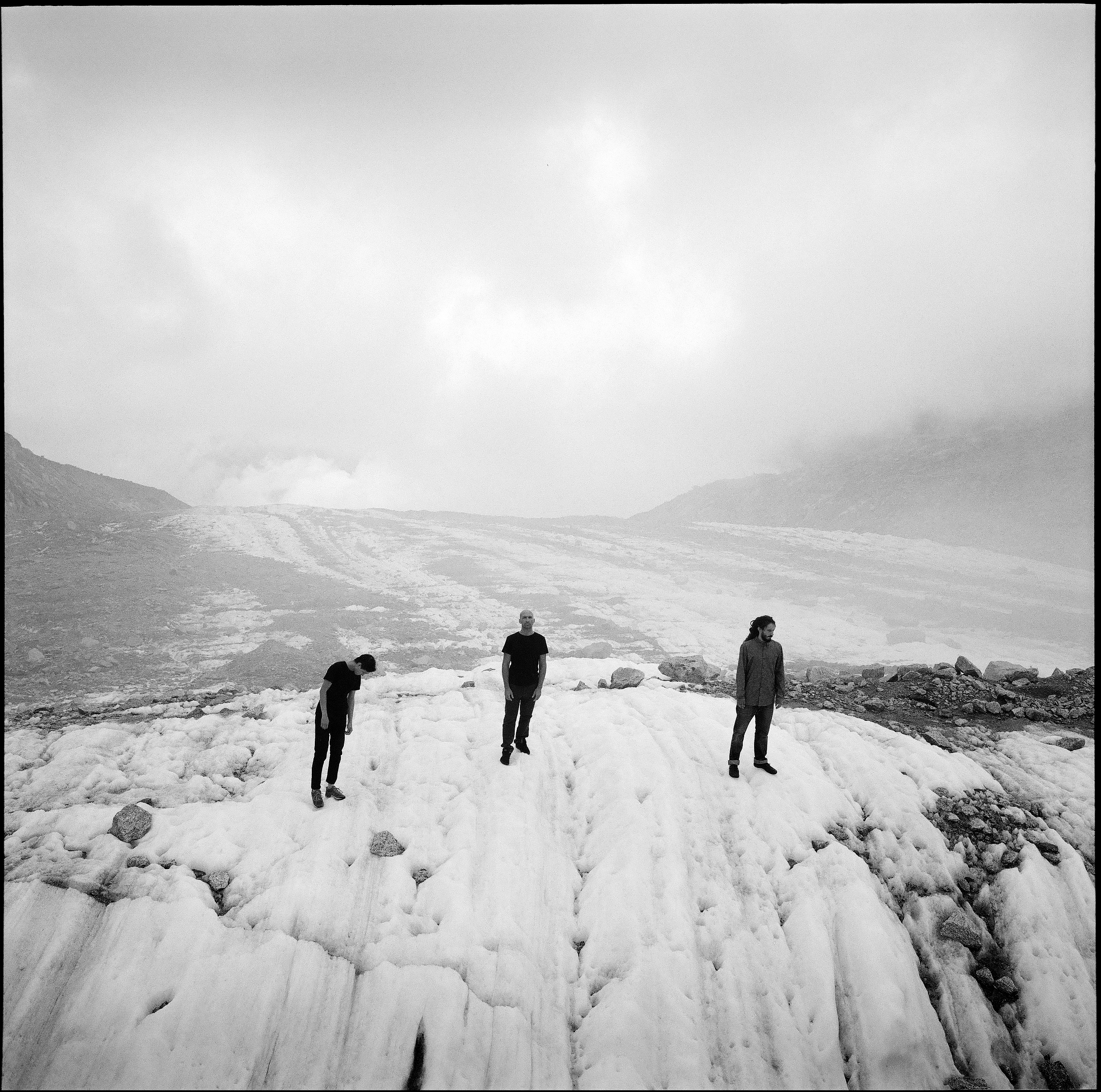
Plaistow present ‘Titan’

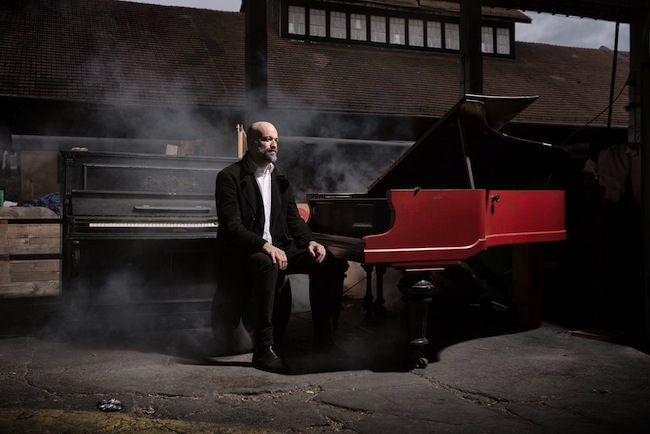
Photo: Mehdi Benkler
Plaistow set the bar high

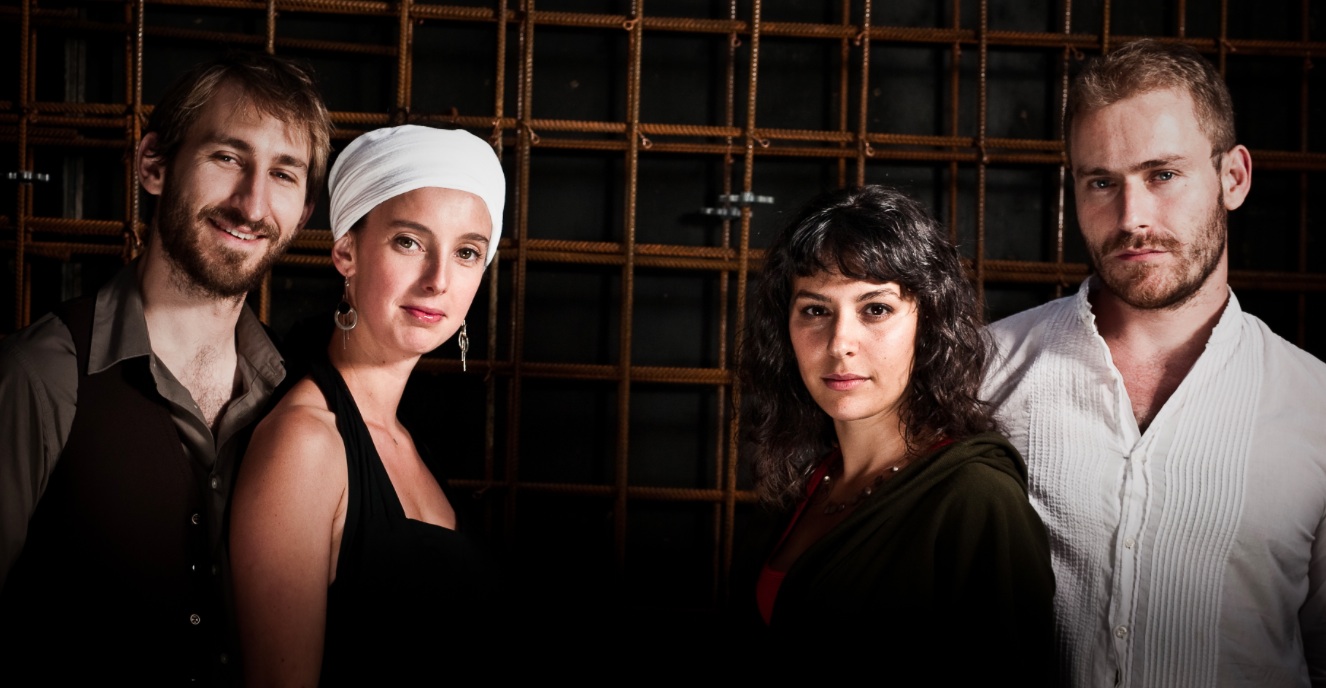
Distilling their sound to its very essence, Plaistow have produced, Titan, a big statement from this piano trio led by Johann Bourquenez. With lofty track titles that have the double aspect of Saturn’s moons, and characters in Greek mythology, Plaistow set the bar high, but do they reach it?

They break their own spell

Very young children like to repeatedly bang a drum until you feel you want to punch them. Plaistow use a similar style with chords stabbed over and again, or single piano keys thumped, as in ‘Phoebe’ where Johann’s low notes are emphasised by Cyril Bondi’s simultaneous, single drum hits. This reiteration goes on, enforcing a sort of hypnosis, on both us and them, before – stop. They break their own spell with a sudden spin-around, taking a new direction in rhythm or melody. Plaistow are in control.

Subtle but malevolent bass strings

Often the beats don’t have any slack, or swing, although the deliberate rhythm-shifting and off-beats work well. ‘Kari’ starts with drama: a rattling snake of percussion, subtle but malevolent bass strings, and brushes of piano wire. Johann launches unapologetic, driving notes and with Cyril’s sparse drums, breaks the mood. There are movements in their compositions; each track becomes a surprising journey within itself.

A drone that cements the music

Cyril Bondi has upped his game with a few, assured themes. There are scuttling creatures, percussive bullet rounds and a cymbal-edge metal whine that’s particularly vital, a drone that cements the music to our ears. Vincent Ruiz’s bass is less confident, but within his subtlety there is a distinctive voice emerging, notably in ‘Pan’.

[soundcloud url=”https://api.soundcloud.com/playlists/85665413″ params=”auto_play=false&hide_related=false&show_comments=true&show_user=true&show_reposts=false&visual=true” width=”100%” height=”450″ iframe=”true” /]

In my interview with Johann last year he explained that Plaistow disguise themselves a jazz trio but are “filled with techno and noise walls”. The tension between these impulses is exciting. Titan is a few tracks too long for me, but Plaistow have avoided an arrogant album by embracing whatever emerged in their improvisations; a genuine range of emotion. Some of these noise walls are woven from elegant melodies; there are romantic glimmers and a veil of Middle Eastern texture.

The piano runs are disturbing and unhinged

As a student I was into Jean Cocteau’s work. He spoke of self-realisation requiring someone to close their eyes, let themselves be taken unawares and follow their dark angel… Bourquenez also follows his light, he taps into his subconscious and gives voice to what he finds. This music has a palpable artistic energy because of that.

In ‘Tethys’ the piano runs are disturbing and unhinged but have the opposite effect in ‘Daphnis’ where the music literally washes wounds with wave after soothing wave. It brings a lump to my throat. ‘Enceladus’ makes my skin crawl, the goosebumps hardening momentarily before the music seems to force open the heart. It feels almost religious, a simple but stunning piece. Much of the album’s impact is physical.

Maybe I’m reading too much into it, or being too personal, but when I first met Johann he looked like he smoked too much and drank too many dark espressos. For this album, he kicked smoking, cycled daily and swam in Lac Leman. Titan is like a discovery of the physical self and of the elation kids feel when they run, climb, roll or bang a drum over and over and over…

New record
Plaistow, ‘Titan’

Plaistow tour dates:
07.11 Jazz Festival, Berlin (DE)
09.11 Jazzdor, Strasbourg (FR)
27.11 Les Murs du Son, La Chaux-de-Fonds (CH)
04.12 Jazz Festival, Jerusalem (IL)
10.12 Paradox, Tilburg (NL)
12.12 State-X Festival, The Hague (NL)
13.12 Jazzdock, Prague (CZ)
22.12 Moods, Zürich (CH)
13.01 2016 Bee-Flat, Bern (CH)
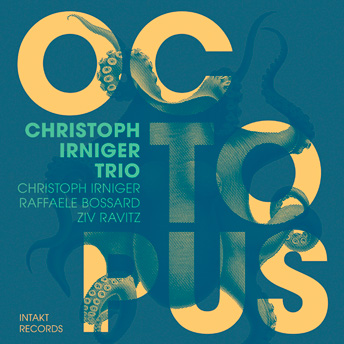
Das unwiderstehliche neue Album „Octopus“ des Christoph Irniger Trios

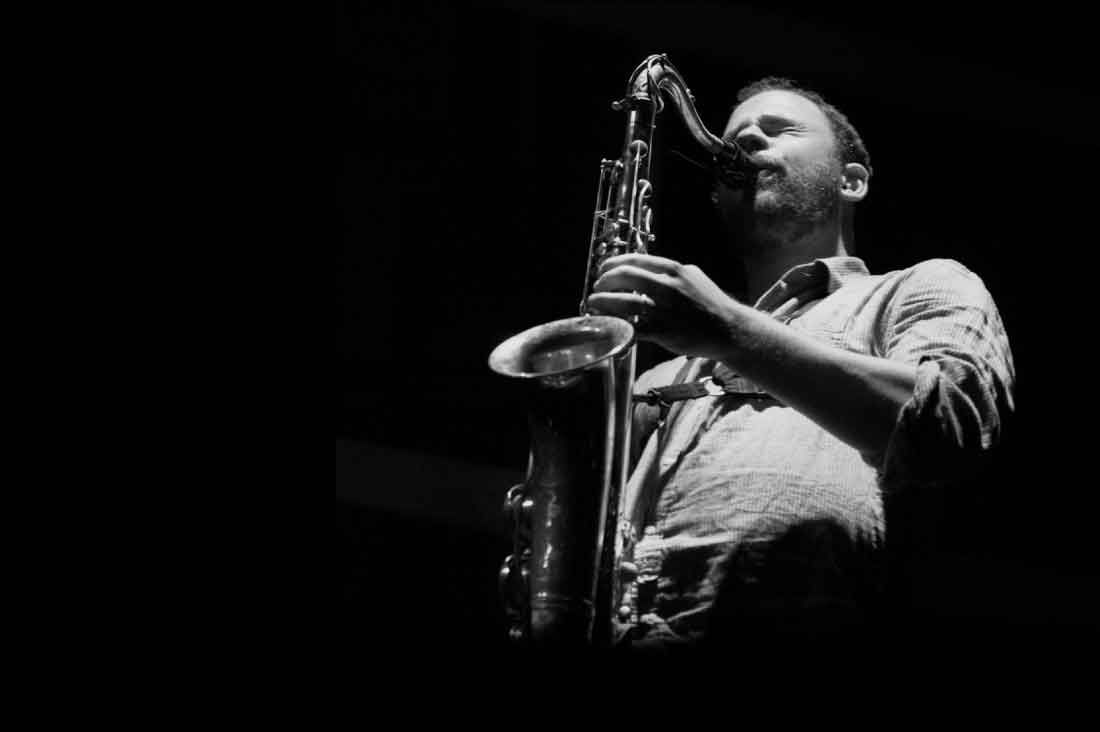
Christoph Irniger_image_lowMit seinen 36 Jahren gehört der Saxofonist Christoph Irniger zur der Generation junger Jazzmusiker, denen buchstäblich die Welt gehört. Mag die frühe musikalische Prägung noch regional verortet sein, die Ausbildung und Arbeit im Jazz ist es heutzutage nicht mehr. Kommilitonen, Dozenten, Bands – der internationale Austausch ist vollkommen, ob in Paris, Boston, Berlin oder Zürich. Man hört das – auch bei Christoph Irniger.
[soundcloud url=”https://api.soundcloud.com/tracks/187495901″ params=”auto_play=false&hide_related=false&show_comments=true&show_user=true&show_reposts=false&visual=true” width=”100%” height=”450″ iframe=”true” /]

Vieles ist bei ihm eingeflossen durch den Unterricht bei Amerikanern wie David Friedman, Mark Turner oder Ari Hoenig, durch Aufenthalte in New York oder Berlin, durch die Arbeit mit Leuten wie Nasheet Waits, Dave Douglas, Nils Wogram, Max Frankl oder Claudio Puntin. Ein normaler Austausch für heutige Profi-Jazzer, trotzdem ist nicht selbstverständlich, was Irniger daraus entwickelt hat: einen eigenen Ton und eine typische Kompositionshaltung.

Spektakulär unaufgeregt

Beides ist wunderbar auf seinem neuen Trio-Album „Octopus“ (erschienen bei Intakt) zu bewundern. Schon den Opener „Air“ – der Titel hat nichts mit Bach oder Ähnlichem zu tun, er rekurriert auf die Luftzirkulation, wie sie ein Saxofonist besonders intensiv wahrnimmt – dominieren Irnigers ganz betont unaufgeregten, noch in stürmischen Passagen lyrischen, ungewöhnlich vibratolos gespielten Saxofonlinien. Stets sind melodische Elemente, vom minimalistischen Motiv bis zum ausgewachsenen Ohrwurm, die Basis von Irnigers Kompositionen.

Ihre oft nur rhythmische Variation und formale Entwicklung ist hier die große Kunst. So kann man sich trefflich darüber streiten, welches Stück am wunderbarsten mitreißenden Drive und unwiderstehliche Kraft aus seinen ganz schlichten Ausgangsmaterialien entwickelt. Das beboppig und mit federndem Schlagzeug startende „Dovescape“; das flinke „VGO“ mit seinen Quartenspielereien; oder doch das shuffelige „Blue Tips“, das mit seinen verzögerten, dann immer kurioser gefüllten Stops ebenso Spannung wie gute Laune aufbaut.

Eine echte working band

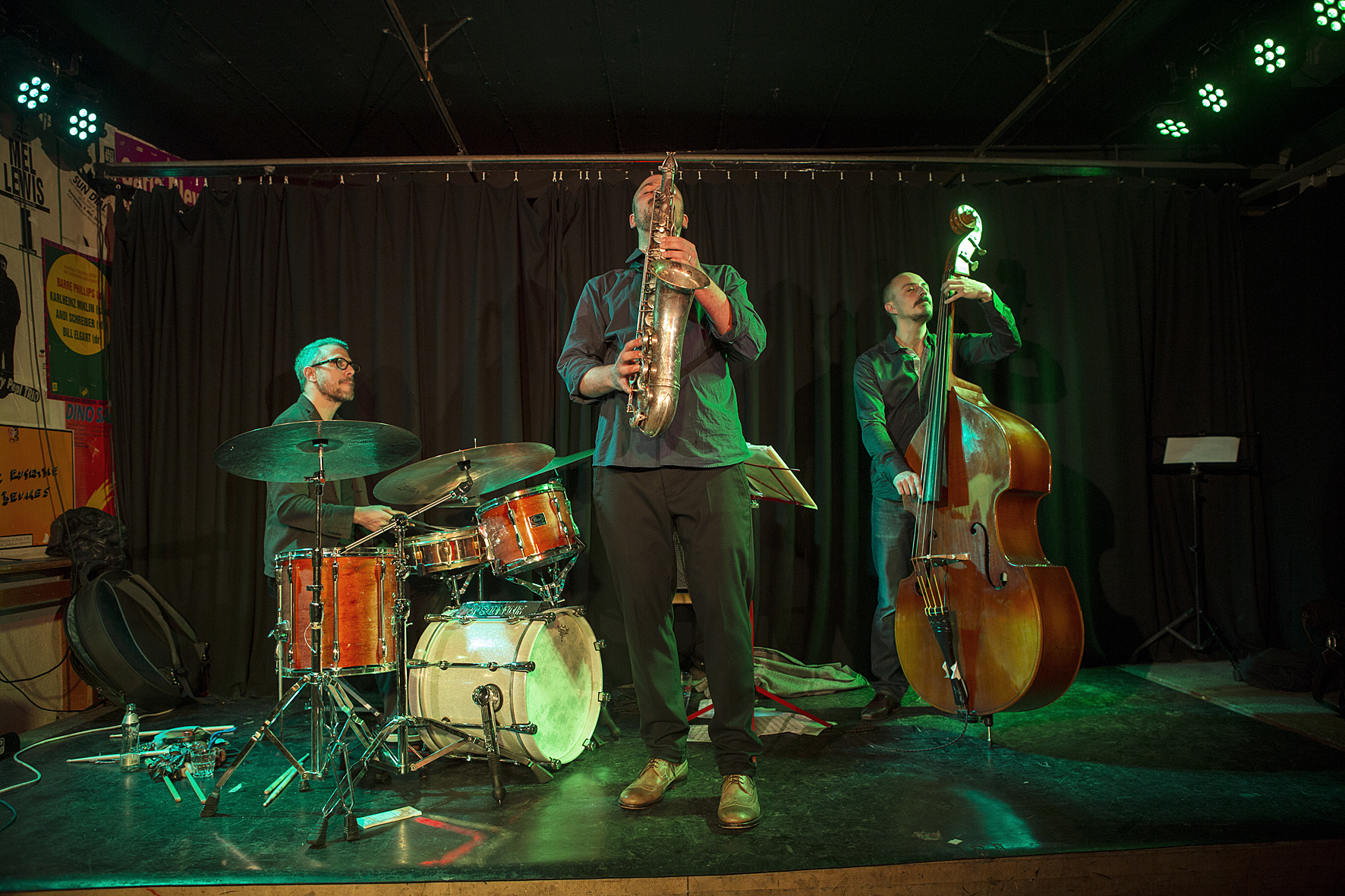
ChristophIrnigerTrio_213„Octopus“ ist nach „Gowanus Canal“ bereits das zweite Album dieses 2011 zusammengefundenen Trios. Irniger hatte in New York den israelischen Schlagzeuger Ziv Ravitz kennengelernt und sofort das Potential einer Zusammenarbeit entdeckt. Der 39-jährige liebt das perkussive, farbintensive Schlagzeugspiel, noch in den verwegensten polyrhythmischen Eskapaden bleibt er swingend. So ist er inzwischen einer der gefragtesten Drummer der New Yorker wie der internationalen Szene geworden, von den großen Alten bis zu den jungen Wilden. So spielt Ravitz unter anderem fest im Lee Konitz New Quartet, aber auch im Shai Maestro Trio, in der Yaron Herman Group oder bei Florian Webers Minsarah. Und eben in Christoph Irnigers Trio.
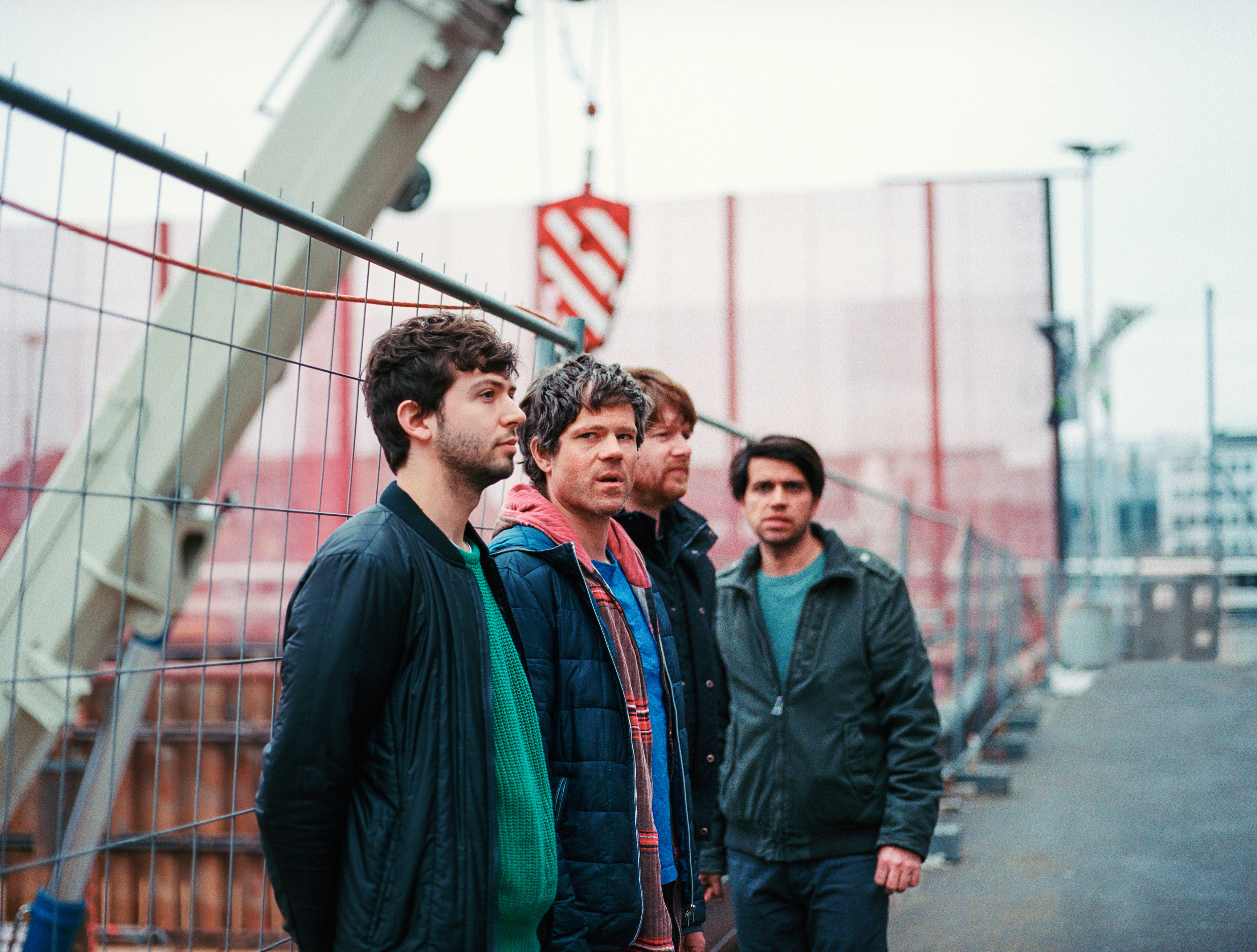
Der Bassist Raffaele Bossard wiederum war quasi gesetzt. Dem Heiri-Känzig-Schüler und Mitglied von Matthias Spillmans Mats-Up vertraut Irniger auch schon in seinem Quintett Pilgrim, bei dem es viel wilder zur Sache geht. Es handelt sich also hier in der Tat um eine working band mit drei gleich talentierten wie orientierten Mitgliedern, die bereits viel Zeit miteinander verbrecht hat. Und so ist jeder nicht nur befugt, sondern auch befähigt, eigene Akzente zu setzen. In besten Fall, etwa bei „Ocean Avenue“ oder „Cripple X“ gelingt es den dreien, dass jeder eine völlig eigene, aus dem Moment geborene Stimme spielt, die sich doch perfekt ergänzen. Mehr kann man von einem Jazztrio nicht verlangen. Irniger wird demnächst beweisen, dass das live mindestens so intensiv klingt wie auf Platte, er ist in den nächsten Monaten sowohl mit seinem Trio wie mit seinem Quintett auf Tour.

Neue Trio-Album

Christoph Irniger Trio: „Octopus“ (Intakt)

Live mit dem Trio

La Chaux-de-Fonds (CH), Le Mur du Son, am 4. Dez
Zurich (CH), Jazzclubs Moods, am 5.Dez

Weitere Konzerte: http://www.christophirniger.com/de/projects/trio/

Live mit Pilgrim

Frankfurt (D), Jazz Initiative, am 8. Okotber
Zurich (CH), Im Mehrspur, am 16.Okt
Altdorf (CH), Im Thater Uri, am 27.Oktober
Nordhausen (D), Cyriaci Kapelle, am 31. Oktober
Prag (CZ), Jazz Docks, am 1.November
Berlin (D), A Trane, am 3.November

Weitere Konzerte: http://www.christophirniger.com/de/projects/pilgrim/


“Hera” by Le Pot

Le Pot“Try out things that are not obvious”
A simple interview with Manuel Mengis of Le Pot turned into a comedy of technology, Skype faltered, then both my landline telephones ran out of battery…twice. No one I asked knew of Le Pot and there was not much information online – it seemed the mystery of this 4-piece band would remain impenetrable. I’d been intrigued since reviewing the first instalment of their trilogy, She-Hera-Zade. It was sparse and tense; lo-fi white noise mingling with indistinguishable instruments, even the trumpet, played by Mengis, was often twisted into animalistic squeals. “We always had a big interest in sounds,” said Manuel (when we managed to speak), “Le Pot is actually a lot of improvised music. One big effect of that is ‘sounds’ – to really try out things that are not obvious, going beyond the normal sound of the instruments.”

“There were things coming together that were really pertinent”

St Roman in RaronThe church of St. Roman in the village of Raron (close to Mengis’ home in Visp) was their recording studio and helped draw out feelings. “It’s a powerful place, a space where there is a lot going on, an energy [‘kraftort’ in German]…There were things coming together that were really pertinent.” Le Pot’s music imagines landscapes that are barren or alien. They use titles such as ‘Hamada’ and ‘Badlands’ meaning dry, eroded earth which they envisage with electric guitar scrapes, lonely trumpet notes and brooding synth drones. Rock, starlight, dusk and distant moons were conjured as I heard tracks like ‘Flint’ and ‘Bubo Bubo’; they seem to hold the natural elements in their hands.

He was unsure whether to follow music or mountaineering
It turns out that mountains have been central to Manuel’s life and at one time he was unsure whether to follow music or mountaineering. The decision was almost forced after an injury, although he’s still a mountain guide. I recently heard about an old book, ‘The Living Mountain’, in which Nan Shepherd writes of her obsessive walks in the Scottish Cairngorms, “One never quite knows the mountain, or oneself in relation to it.” She speaks, not of ‘going up’ a mountain, but ‘going into’ one and in so doing, into herself. As I listened to Hera, its textures and its space drew me in, deeply.

“It’s not that pushing kind of atmosphere, it’s a strong collective”
There is a respect of subtlety and Le Pot seem to revel in holding back so that the played notes gain maximum impact, such as when Lionel Friedli tumbles into a dramatic solo in ‘Ranunkel and Viola’ or his drums eventually sound in ‘Eyrie’. At the end of this track, the quality of touch from Manuel Troller and Hanspeter Pfammatter on guitar and keyboards (respectively) is exquisite. Mengis explains, “I think everybody playing has a lot of experience in improvised music and is not really interested in showing off…everybody has enough experience to see the whole picture and able to feel when its right, it’s not that pushing kind of atmosphere, it’s a strong collective.”

[vimeo 126929648 w=500 h=281]
This album is more profound, musically, than She. The press release quotes Benjamin Britten, ‘Music has the beauty of loneliness and pain,’ and I sensed an exposure of emotion in their playing. “If you ask about the personal, yes, there’s a lot of emotion,” said Manuel, “It’s more than just an idea, it’s emotional too.” He spoke of Britten’s A Midsummer Night’s Dream as a starting point. “The melodies with the harmonics are really interesting. It’s not super obstructive – these are melodies you can sing, but it turns into something unpredictable…more complex. I felt really close to that music somehow.”

‘Meanwhile’…resembles a quick Cubist sketch
There are top moments of sequencing, breaking the worthy moodiness, for instance, with the whimsey of ‘Meanwhile’ which resembles a quick Cubist sketch. Mengis explained, “It was a spontaneous improvisation. Something light, no weight, a little bit innocent. The point is, in that recording is contrast between the dark spaces and the obvious melody or something light and easy…[there’s] ambivalence and counterplay between the two things.” The elegant and moving medley of ‘Thus Gamesters United in Friendship/Ungrateful Macheath!’ from the Beggar’s Opera serves a similar purpose.

When I visited New Zealand this year I played a track from She on an Auckland radio station and a listener texted in asking when I was going to play some music. I took this as an enormous compliment to Le Pot. It’s tough to sculpt a distinctive shape in music these days as so much has already been done. I can’t recommend Le Pot enough. Interestingly, despite being in a very different corner of the music spectrum from Im Sinne Der Zeit by the band Klaus Johann Grobe, Hera fills my heart with just as much joy. I’d ask all promotors to consider booking them so that I can see them play live!

16-19 Sept 2015 – Vevey (CH), L’Oriental (4 nights)

23 Oct 2015 – Sion (CH), Eglise des Jésuites (à l’oeil & à l’oreille)

15 January 2016 – Sierre (CH), Jazz Station

Florian Favre “Dernière Danse”

Florian FavreYou get the sense Florian Favre is wringing as much out of some wood, metal strings, hammers, pedals and keys as he can. Using what he refers to as, ‘his first love’, the grand piano, he works melodies in with rhythmic punches, varying qualities of tone and a rich variety of ideas. His solo album, Dernière Danse (A-Nuk) is an engaging listen and shows off his clear talent and skills, although that could be a point of criticism too.

He has a wonderfully mournful touch
The tracks I favour are those where Florian is getting into a melancholic mood, as in the title track. Maybe it’s the ‘last dance’ in a romantic sense – but as if the affair is over, not beginning. The tempo perfectly captures a dragging feeling of loss, and he broodily uses the deeper end of the piano whilst tinkling high notes almost try to soothe it. ‘Träume Einer Wachspuppe’ (‘Dreams of a Wax Doll’) is just as touching whilst again using this tension between the two ends of a piano to weave a strange and evocative atmosphere. He has a wonderfully mournful touch.

“It was a nice brain training”
When I first met Favre he talked excitedly about his ideas of creating dance-like beats on the piano at the same time as musical tunes. These ideas formed when he was the only member of a backing ‘band’ for a pop singer. Favre says, “I tried the challenge to ‘split the keyboard’ into many different functions, having the end three fingers of my left hand playing bass and the other two playing drum, while my right hand was playing the harmony and melody. It was a nice brain training.” You can hear this clearly when he does a brief cover of Earth, Wind & Fire’s ‘Let’s Groove’ – it’s clever but doesn’t touch me like his original compositions do.

https://youtu.be/EIKEMvGhTr8

Florian’s timing is impeccable
He can definitely pen a tune, as ‘Jambo’ and ‘Comme de J’aimeu’ testify. The latter uses delicate harpsichord stabs to create an unusual texture underneath the bluesy melody. Again Florian’s timing is impeccable, and with his original twists of melody he makes the piece captivating whilst allowing for groove, swing, and feeling. ‘Oh Lord’ expands on his ability to play southern-style blues and I love the drunken and warped ‘Interlude: The Lonely Turntable’ – it reminds me (in a positive way) of the 1970s English comedian, Les Dawson who crafted sophisticated off-key versions of classics. Florian used a quarter-tone piano to create the effect.

In fact throughout the whole of this album there is a sense of exploration, fun and playfulness. It’s just better when he invests a spirituality as opposed to the moments when I feel there is focus on technique. Florian’s trio recently played a coveted gig at Jazzahead, the huge ‘jazz trade fair’ in Bremen, and when Joshua Redman heard him play in Zurich he asked him to join his band onstage for a jam. There is no doubt that this is a musician to watch for – his passion and emotion when he plays are obvious, and that can count for a lot.

Florian Favre, Last Dance, Label ANUK

Link for next concerts


Grand Pianoramax “Big Easy” EP


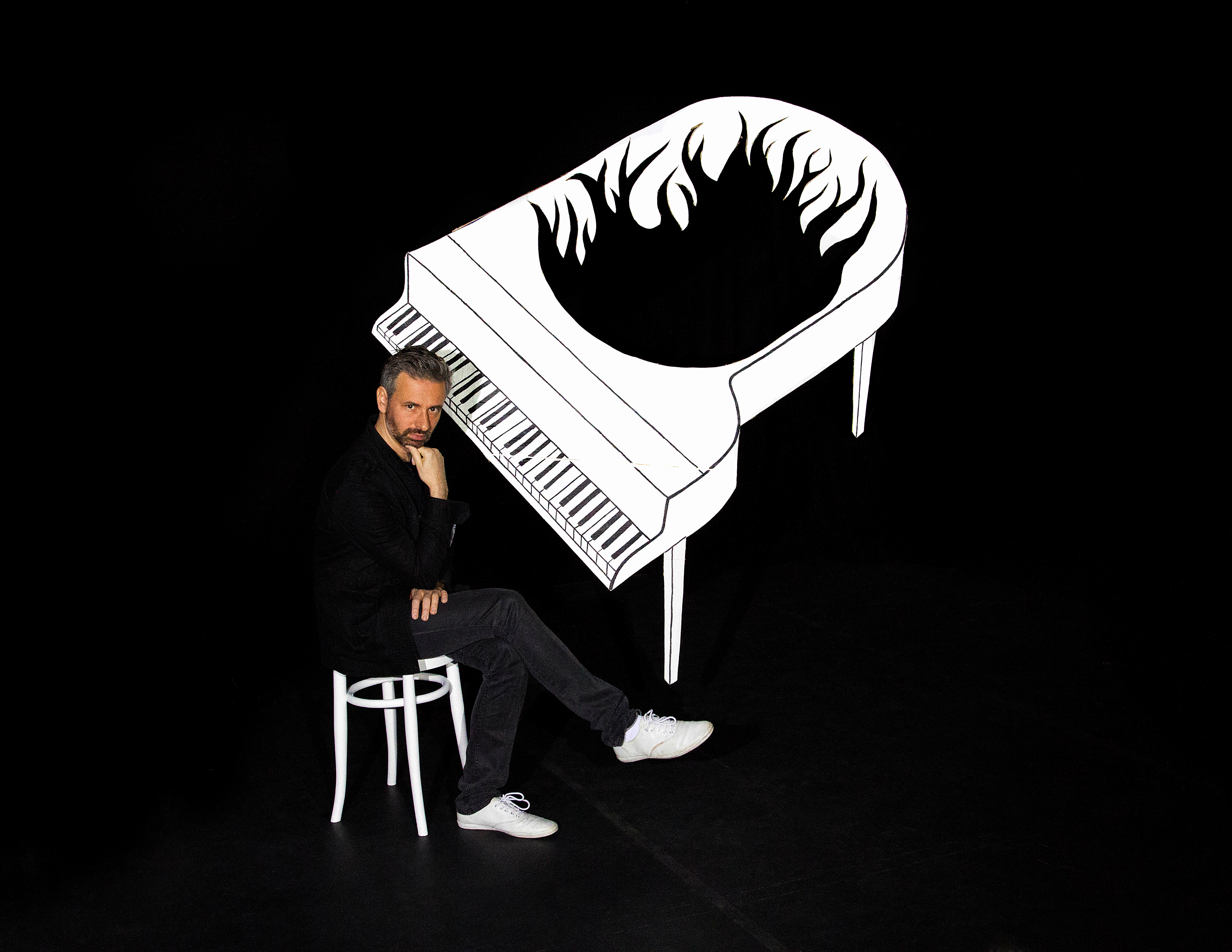
UnknownFor those of you looking for something intelligently springy to tap your feet to, may I suggest wrapping your ears around the new EP from Grand Pianoramax, (Leo Tardin‘s supergroup trio who have been making waves on the alternative post-jazz hip-hop scene for some years now). BIG EASY, released on 8th May on Geneva-based Mental Groove Records, celebrates a new chapter in the band’s progression towards a lighter, brighter, more accessible sound whilst still retaining all of their refinement and crystalline musicality.
Crossover potential

Whilst not exactly madly carefree, the timbre of their 5 track EP is certainly less abstract and heavily-laden compared to previous work released on ObliqSound Records. The title track, Big Easy, is a perfectly balanced interplay between crisp, bouncy beats, a husky poetic rapping style and beautifully pert piano melodies. It’s a track with crossover potential written all over it: elegantly catchy, radio friendly, almost lounge bar appropriate – not that it’s in any way banal, rather infinitely listenable. There are still three big personalities in the room, they are just less frantically busy than before, making way for a more spacious, relaxed production that succeeds in its aim to draw in a potentially wider audience. The “rough-hewn soundscapes” as they were once described have undergone a slight smoothing over. Drummer Dom Burkhalter and vocalist Black Cracker are still tremendous forces of nature, but their coming together is less of an urgent sound grenade going off in your face, more a measured invitation to a modern, urban sound that has time to unfold its magic.

Sleek lines, incisive statements

The accompanying video is an equally clever translation of the Grand Pianoramax world of aesthetics. Sleek lines, incisive statements made with arty humour all in a chiaroscuro setting, peppered with stylish handclaps, head nods and bursts of colour. It sums up all that is great and good about this band : three strong, contrasting elements craftily blended together into a faultless balancing act. Skillful execution prevails in sight and sound. Watch this video carefully – do we see better with our eyes open or shut?

Constantly pushing each other forwards

Leo is used to being asked about his split identity between solo piano career and Grand Pianoramax bandleader. Both projects are of equal importance to him. “With GP we are constantly pushing each other forward into new frontiers. Despite all three members living in different geographical locations, we work incredibly well together and make use of the space between us to develop creative ideas individually. My piano melodies often work as the basic framework around which we then weave our contributions to the form”. He admits to being very positive about the new label and the new releases. “The goal is clearly to touch more people, why hide the fact we’re looking to be more successful?” The EP is out now on vinyl and digital release, followed by an LP in early September this year.

GPX_BigEasy_7

Forthcoming gigs:

20th June: Fête de La Musique, Genève

29th  August: Auvernier Jazz Festival, CH

Akku Quintet “Molecules”

Akku QuintetMaja Nydegger’s delicate piano sets up a repetitive motif
As readers may know, I like space in music. When I first saw a group of Swiss artists jam with the legendary saxophonist, John Surman, the most impressive were those who knew when to ‘shut it’, to avoid an ugly cacophony. Akku Quintet share this sensitivity and aren’t afraid to step away from the mic. Formed by drummer, Manuel Pasquinelli in 2010, Molecules is the quintet’s second release on Pasquinelli’s own label, Morpheus. It’s an EP more than an album and my sense is they are a band in development.

They carefully creep into each track, as in ‘Fluid’ and ‘Schneeman’ when Maja Nydegger’s delicate piano sets up a repetitive motif, almost acting as a mantra for the piece. This is perfectly balanced by the tenor saxophone of Thierry Lüthy who has an assured and warm tone. His notes waft around the piano melody as if the two are in a quiet conversation. When he builds to a sort of circular breathing in ‘Phase Transitions’ it brings a ripple of excitement.

Guitarist Markus Ischer soars through with a woozy-stoned solo
Despite being Pasquinelli’s project he keeps his crisp beats sparse, playing a supportive role and taking time before coming in with off beats, mini-patterns, or simple, unadorned snare and bass drums. Considering the power an electric bass can wield I was rarely aware of it, Andi Schnellmann excels at enmeshing his sound into the others’ like a soft echo of the music.

The best moments come when they suddenly switch the vibe, such as in ‘Schneemann’ when six minutes in, guitarist Markus Ischer soars through with a woozy-stoned solo and Maja subtly responds with low church organ chords and pithy alien-like beeps. Markus Ischer’s guitar is the strongest voice, it resembles Lüthy’s consciousness but with extra drive. He interrupts ‘Phase Transitions’ with a warbling and affected guitar before changing his touch with metallic stabs and long haunting notes, keeping you entranced.

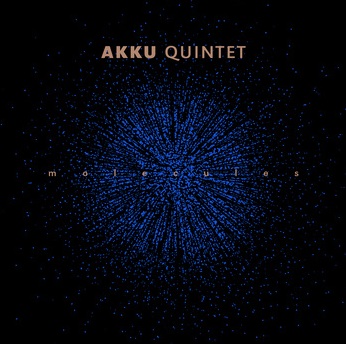
AkkuQuintetMoleculesThere’s a need to develop grit and emotional vulnerability
Akku are creating soundscapes with tracks lasting 10 to 15 minutes (apart from the quirky and jaunty, ‘Freeze’), however, at times I wanted them to turn up the intensity, the music could become so laid back I became disengaged. There’s a need to develop grit and emotional vulnerability in their themes and playing. They are working with media artist Jonas Fehr for their live shows and I liked the cover artwork by Sandro Galli. Pasquinelli has invested in a limited edition of hand-printed covers for the vinyl edition but his next focus should be developing the band’s voice so it stays relevant and is not shy of demanding to be heard.

Akku Quintet website
Akku Quintet Bandcamp

07.04.2015    Freiburg (DE)
08.04.2015    E-Werk – Freiburg (DE)
09.04.2015    Lagerhaus (mediencoop) – Bremen (DE)
11.04.2015    Cafe Fincan – Berlin (DE)
12.04.2015    Stellwerk – Hamburg (DE)
13.04.2015    Jäzzzeit Im Heimathirsch – Köln (DE)
15.04.2015    Immerhin – Würzburg (DE)
16.04.2015    Early Bird – Innsbruck (AUT)

16.05.2015    Orbital Garden  – Bern (CH)  (playing Music By Don Li)

https://youtu.be/58G4kW1YIQs

Great Black Waters: «Glow, Sand & Other Songs»

Björn_Coverfoto_Quer_mediumVerwackelte Bilder eines mehrspurigen Highways, aufgenommen auf dem Armaturenbrett eines Autos, das Meile um Meile der untergehenden Sonne entgegenfährt: Das simple Video zu «Sand» könnte die Verbildlichung des ganzen Albums von Great Black Waters sein. «Glow, Sand & Other Songs» fühlt sich an wie eine ziellose Reise unter einem psychedelisch glühenden Himmel – mit den Haaren im warmen Fahrtwind, mit den Gedanken frei.

Dezent verpackt

Irgendwo zwischen den ekstatischen Gitarrenriffs und den erdigen Drums, Akustik- und Bassgitarren schwebt die Stimme von Great Black Waters gleichmässig und teilweise fast schon flüchtig in das Klanggeschehen hinein. Wo andere Musiker versuchen, in der Tiefe verborgene Gefühle bisweilen plump nach aussen zu tragen, verleiht Björn Magnusson, der hinter dem Pseudonym steckt, den Songs mit dezent verpackten Worten Struktur. Seine zurückhaltende Art ist eine erfrischende Abwechslung zur sonst so beliebten Zelebrierung gekünstelter In-Your-Face-Attitüden.

[youtube https://www.youtube.com/watch?v=OpUn_0b4sRA&w=612&h=459]

Brachial und fesselnd

An der Plattentaufe im Helsinki in Zürich blieb Magnusson unverkrampft wortkarg und spielte mit seinen vier Mitmusikern (u.a. Fai Baba) auf der kleinen Bühne ein mächtiges Set; mächtig, weil die verzerrten Gitarrenklänge sich wie eine massive Klangwand vor einem aufbauten. Wo auf dem Album hier und da eine besonnene Leichtigkeit mitschwingt, war der Auftritt grösstenteils geprägt von brachialer, fesselnder Rohheit. Man fand sich manchmal in einer grossartigen Jam-Session wieder.

Great-Black-Waters-©-by-Danny-Hole_Quer1In den diffusen Melodien von «Glow, Sand & Other Songs» verliert man sich schnell und gerne. Mit trockenem Sand in den Haaren blickt man in den rot-blau glühenden psychedelischen Himmel und weiss für einmal die Schönheit des Ungewissen zu schätzen.

«Glow, Sand & Other Songs» erschien am 6. Februar 2015. Great Black Waters spielt am 28. Februar zusammen mit Fai Baba im Albani in Winterthur.

Orioxy “Lost Children”

OrioxyEvocative storytelling perfectly suits this quartet
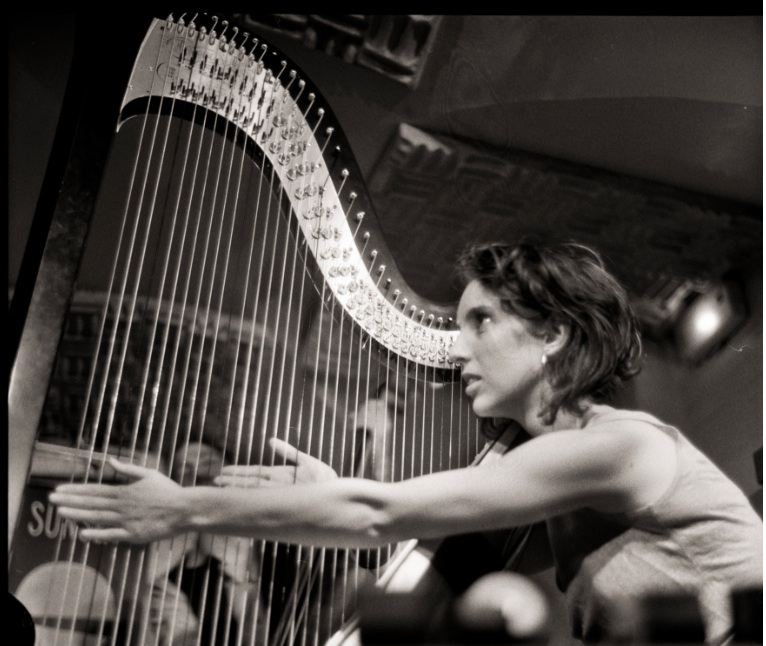
Orioxy’s third album resonates most when it re-imagines the template of simple folk music. Evocative storytelling perfectly suits this quartet of Manu Hagmann on double bass, Roland Merlinc on drums, harpist Julie Campiche and Yael Miller’s voice which at best is pure and unadorned, yet rich with the flavour of her mother tongue, Hebrew.

These stories have a modern accent though. Princeless is Yael’s re-telling of the Cinderella tale, it’s riven with longing and bereft of the happy ending. Soft electronic cries, a melancholic double bass and bare drum taps use a delicacy that binds the whole piece together. Yael Miller’s voice flips between innocence and sensuous knowing throughout, calling on her natural ability for drama. Song of Love is wonderfully accompanied by a percussive typewriter as if the singer is dictating her letter. Some type of squeeze box murmurs sadly and drops of electronica fold into a sympathetic bass solo, all the while the fountain-like harp sparkling light and fresh.

Julie CampicheCampiche’s timing seems to fly directly from her heart
The harp is really the heroine of this album with Julie Campiche’s myriad of subtle colours and styles perfectly placed again and again. Her solo in Isha is spine-tingling. This track is ranging and borderless, a landscape of yearning vocals and grooving rhythms helped by tape rewinds and effects. At first the harp captivates with Middle Eastern vibes amid deep double bass twangs that fall into dark scrapes, before the harp emerges in a solo full of soul and expression. Campiche’s timing seems to fly directly from her heart.

I don’t mind Yael’s rapping or the use of the Sami Darg Team (rappers from Gaza) on Bachour Meshouamam (A Bored Boy) but it does break the spell of the delicate web of lovelorn melodies. As an album, Lost Children does face the danger of its gentle downtempo mood coming to a lethargic halt so I welcome a bit more spit and verve. However, this is best done with their own instruments such as in Old World. Using a bow on the double bass and suitable electronics they bring a free rock track together without a whiff of lead guitar.

There could be a further clarity of the unique Orioxy sound
‘Music doesn’t have a style,’ Yael sings and it’s true this album does not fit into a neat genre. But music does need to have a clear identity, and although this is a decent third album I feel there could be a further clarity of the unique Orioxy sound gained through exploring further musical depth and developing musicianship and songwriting skills.

Interestingly, Orioxy do a captivating interpretation of Paul McCartney’s Blackbird. But in a way that cover serves to show what a truly stunning song can do. It’s the track that has stayed in my head. Orioxy have a good line up of gigs, often a chance for a band to get to know itself on a deeper level. Grab a chance to hear them play as I’m sure there will be some wonderful moments of magic.

Orioxy website and tour dates

[youtube=http://youtu.be/VftefxldpLM]

Ephrem Lüchinger: «Are You Prepared?»

are you prepared

Vor sieben Jahren ging der Pianist Ephrem Lüchinger für zwei Tage ins Studio, improvisierte und experimentierte alleine mit seinem Instrument, das der Zürcher mit allerlei Gegenständen präparierte. Das Material, das in diesen Tagen entstanden ist – zeitweise in Begleitung des Posaunisten Michael Flury – jagte Lüchinger später durch den Laptop, verfremdete und arrangierte die Klaviersounds neu und setzte sie zu 34 Stücken zusammen, die nun, auf der CD-Trilogie «Are You Prepared?» zu hören sind.

[vimeo 56098064 w=500 h=292]

Ephrem Lüchinger – Are you prepared from ephrem lüchinger on Vimeo.

Entstanden ist eine reichhaltige Sammlung an neugierigen Klängen, die wahlweise technoid schimmern, romantisch schillern und auch popnah dahinschlendern können. Soundclips, Tracks und auch Songs sind auf «Are You Prepared?» zu hören – und die Trilogie entpuppt sich mit dieser Formenvielfalt auch als Suche nach den sonischen Grenzen des Klaviers, eine Suche, die allerdings scheitert. Denn Lüchinger, der in zahllosen Bands seine Spuren hinterlassen hat, entdeckt in seinem Instrument zuweilen Sounds, die man auch beim dritten Hördurchgang nicht mit einem Klavier in Verbindung bringt. So ist «Are You Prepared?» eine überaus lohnenswerte Reise in den Saitenkasten eines Instruments der unbegrenzten Möglichkeiten. Möglichkeiten, die Ephrem Lüchinger verspielt und doch konzentriert auslotet.

Ephrem Lüchinger, “Are You Prepared?” (Dist CH Irascible)

[soundcloud url=”https://api.soundcloud.com/playlists/72104018″]


Monoski: «Pool Party»

Monoski (Photo: Mehdi Benkler)

Nichts auf der Welt scheint einfacher zu sein, als lauten, primitiven Garage-Rock zu fabrizieren. Eine schön verzerrte Gitarre und ein minimal gespieltes Schlagzeug reichen scheinbar, um dem Rock’n’Roll in seiner essentiellen, weil dreckigen und lärmigen Form zu huldigen. Doch natürlich: das Einfache ist immer schwieriger zu bewerkstelligen als man annimmt, und so gibt es denn gar nicht so viele Duos, die in der Lage sind, aus dem Minimum das Maximum zu zaubern.

Monoski aus Fribourg gehören zu diesen Duos, die solches schaffen. Auf ihrem zweiten Album «Pool Party», erschienen auf dem Lausanner Label Vitesse Records, spielen Lionel Gaillard an der Gitarre und Floriane Gasser, die früher Violinistin war, am Schlagzeug eine wunderbar lärmige und sperrige Rockform. Getroffen haben sich die beiden im Jahr 2008 in New York City, doch weniger der Grossstadtdschungel als vielmehr die kalifornischen Wüstenlandschaften ist das Zuhause ihrer Musik.

[youtube https://www.youtube.com/watch?v=Z7FQkRVvwLc&w=640&h=360]

Auf «Pool Party» brettern die beiden aber nicht einfach besinnungslos durch eine unwirtliche, psychedelisch schillernde Blues-Rock-Landschaft, sondern begeistern durch ein fein getimtes und dynamisches laut-und-leise-Spiel. Und man merkt dank dieser Platte wieder einmal, dass es nicht viel schwierigeres gibt, als lauten, primitiven und begeisternden Rock’n’Roll zu fabrizieren. Ein Rock’n’Roll, der ganz am Ende von «Pool Party» teuflische Züge annimmt. So soll es sein.

[soundcloud url=”https://api.soundcloud.com/playlists/55826104″]