Le Pot «She»

LePot_She_CoverThe system has crashed and we nervously float through a spiral galaxy
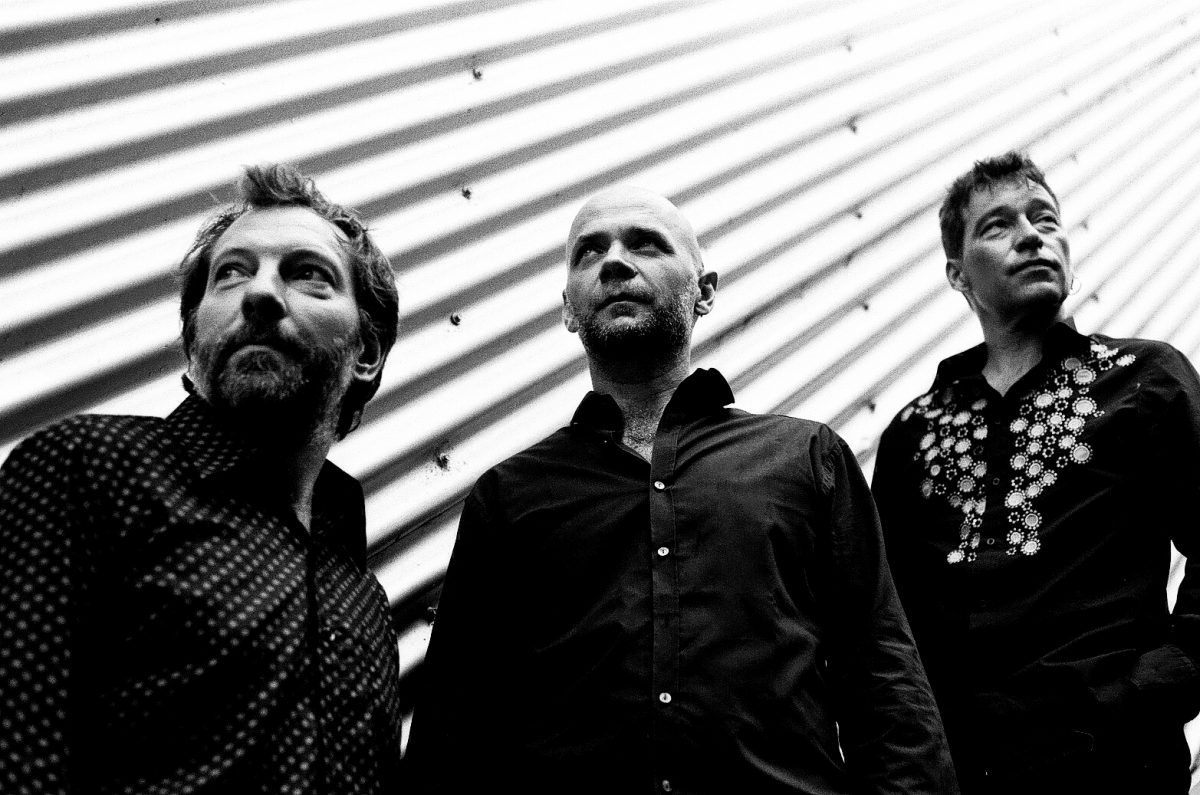
Le Pot’s album is the first of a planned trilogy, SheHeraZade. After crossing paths in outfits such as Manuel Mengis‘ Gruppe 6, they committed to this project with Mengis on trumpet and electronics, Hans-Peter Pfammatter playing Moog and synthesisers, drummer Lionel Friedli and Manuel Troller on electric guitar. This instalment, She, has thrown off the shackles of melody and musical convention and is driven by atmosphere, environment, feeling. The electronics provide a subtle, post-Apocalyptic white noise; the system has crashed and we nervously float through a spiral galaxy.

This interplay creates expansive landscapes

Ariel Alert sets up the ride with its cacophony of smashing cymbals and firing drum rolls, psyched-out guitar and trumpet, part-quivering, part-soaring. It leads into the track I keep re-playing, Part 1 Desert Whale Song. A sublime sound-piece where the ever-present electronics are so subtle you can’t tell where the instruments stop and they begin. This interplay creates expansive landscapes and mysterious visions: here the band appears as a disorientated submarine in the deepest of pitch-black oceans. The denouement escalates to an animalistic attack of Mengis’ braying brass, distorted guitar and drum blows, that had me on the edge of my seat.

Electronics are the threads invisibly sewing it all together

Throughout the album, the trumpet chatters, squeals, cries in pain but rarely sings – there is a sense of skilful playing and a wilful rejection of tradition, although I could sense echoes of ‘electric Miles’ (Davis). It is perfectly matched by the guitar’s imaginings: from fuzzy strums to almost inaudible bending notes and tripped-out chords. The drumming is a-rhythmical, barging into the argument with its own opinions; sparse and jagged, whilst the synths and electronics are the threads invisibly sewing it all together into a dark collage.

LePot_Dec2014

An echoing guitar drives the track off the cliff into freefall

It’s as if their idea is to drag music back in time to primal grunts or break it even further down into fizzing atoms. They are not always successful in this, but what I am taken by is the quartet’s commitment to space in their music; they allow each sound to breathe and exist even when they build to discordant climaxes such as in Part II Phili’s Boat Bursting or Gezinkt Sind Wir Alle. In this piece the instruments intensify their squabbling chatter; bass notes underpinning frantic trumpet squeals and insistent electric loops, before an echoing guitar drives the track off the cliff into freefall. There is almost a sense of post-punk electronica here with keyboards, guitar and drums uniting in a vague melody.

This is what I think should have been developed – a more tangible shape, even if for one track in order to pull the album back from drifting into clever noodling. Having said that, I enjoyed the trip very much and am looking forward to Hera – which the band say will be an acoustic reflection on the motives of the British composer Benjamin Britten. Le Pot are a band we should all be keeping our ears open for.
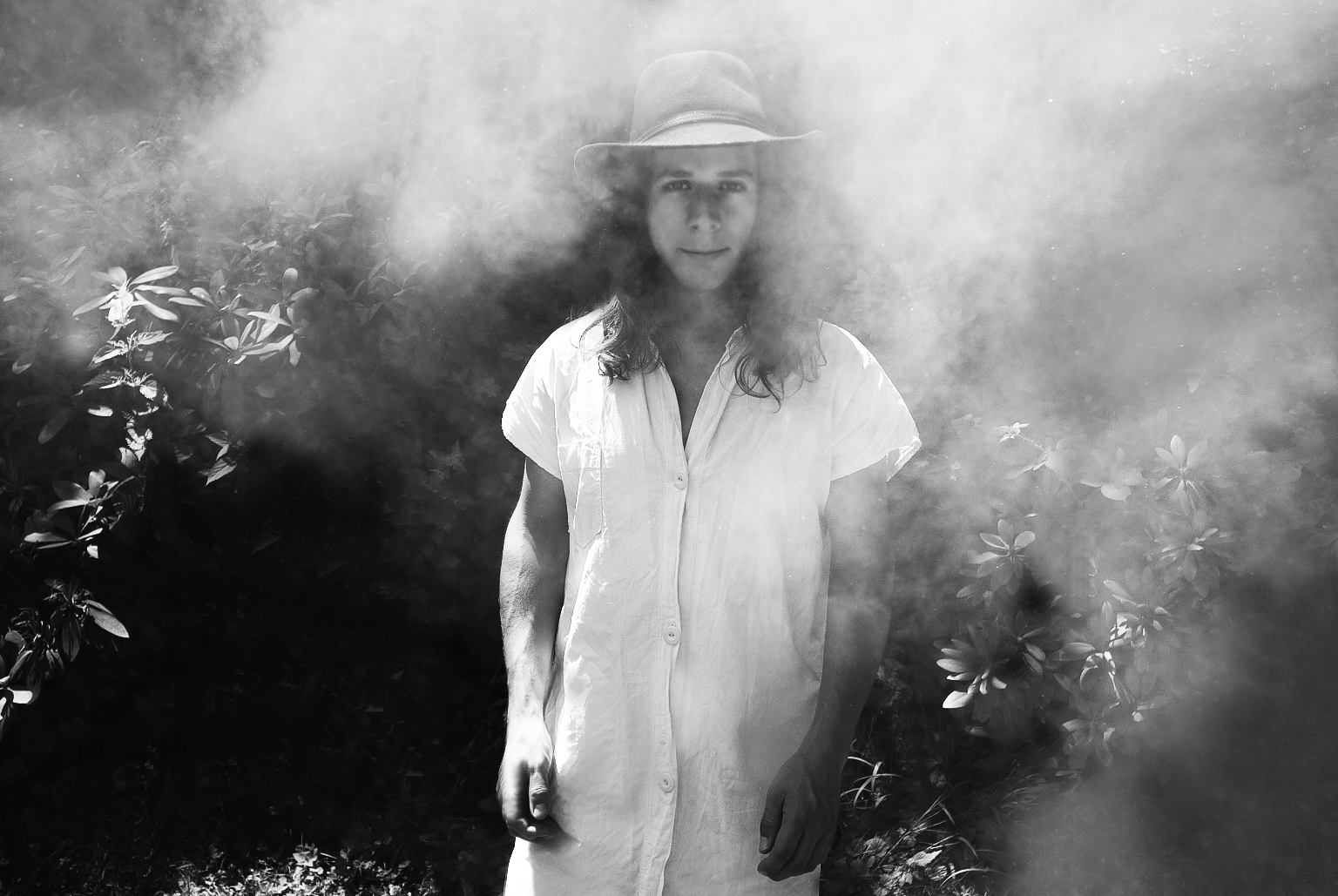
Le Pot             Everest Records


Buvette: «The Never Ending Celebration»

buvette-marie-taillefer-3_WEBDie neugierigste und furchtloseste Musik wird nicht in den Zentren dieser Welt geschaffen, sondern stammt aus den Provinzen. Das ist auch in der Schweiz nicht anders. Ein Beispiel ist Cédric Streuli aus Leysin, der unters einem Alias Buvette im Sommer sein bereits drittes Album «The Never Ending Celebration» veröffentlicht hat. Erschienen auf dem französischen Label Pan European Recordings, geht Buvette den Weg, der vom grellen, enorm lustigen und unterhaltsamen Pop seiner Anfangstage wegführt, weiter. Ein Weg, den er bereits auf seiner zweiten, in sich gekehrteren Platte «Palapa Lupita» eingeschlagen hatte – wie auch auf «Airplane Friendship», das dieses Jahr mit dem «Best Swiss Video»-Award ausgezeichnet wurde.

Neu ist aber die Orientierung hin zum Song: Beispielhaft dafür steht die Single «The Never Ending Party», auf der Buvette die elektronischen Kicks und Sounds behutsam zu einem Song zusammenbaut. Ein Song, der nicht auf den schnellen Effekt zielt, sondern dank dem hell-fröhlichen Refrain lange nachhallt:

[youtube https://www.youtube.com/watch?v=p3z_XUuEzBk&w=640&h=360]

«The Never Ending Celebration» ist auch ein Album, in das man sich reintanzen kann – wie bei «The Sun Disappeared» und bei «Living in a Painting», dem späten Höhepunkt der Platte –, ehe Buvette die Gitarre auspackt und das Album mit dem spanisch gesungenen «El Nuevo Paraiso» endet. So bleibt Buvette – auch dank seinem eigenen Label Rowboat Records – einer der eigenständigsten Popforscher der Schweiz, der immer noch viel zu unbekannt ist.

Hell’s Kitchen “Red Hot Land”

HELLS-KITCHEN-Red-Hot-Land« Laisse moi essayer quelque chose de neuf » entend-on, d’une voix plaintive, au détour du cinquième album des Hell’s Kitchen, « Red Hot Land ». Passé de Dixiefrog à Moi J’connais, le label des amis de Mama Rosin, les vétérans du blues genevois, quinze ans de scène au compteur, ont voulu aller voir ailleurs si le Delta y était. Ho, bien sûr, les acteurs de base sont toujours en place, Bernard Monney et sa voix broussailleuse au dessus du bottleneck, Cédric Taillefert et sa batterie faussement déphasée, Christophe Ryser et sa basse foudroyante.
Mais, à l’inverse du blues classique, identifiable à l’enfer guindé où des serveurs coincés débitent mécaniquement leurs syncopes précises et prévisibles, le trio genevois semble s’être mué en garçon de rade prêt à faire trembler les assiettes sur son bras tatoué : on croit s’attendre à un plat, un plan, une attitude, et c’est toute autre chose qui arrive.

[youtube https://www.youtube.com/watch?v=SNYPHp7xfpM&w=560&h=315]

« Red Hot Land » rompt un peu plus avec leur goût du blues minimaliste. Là un rythme de marche militaire dérisoire, ici un banjo qui parle tout seul, une corde un peu aléatoire répond à une mélodie précise, un vrai refrain fait contrepoint à un yaourt rockab, une ambiance New Orleans laisse la place à un accès de cris sauvages. Et s’il s’entend encore, leur blues sauvage des alpages s’efface derrière des balancements folkpop. A qui la mue ? À Robin Girod de Mama Rosin, à la fois producteur et compagnon d’entrain, venus apporter sa gouaille échevelée sur certains morceaux. A Matt Verta-Ray, à plus forte raison : la moitié de Heavy Trash, qui a mixé l’album à New York tout en s’invitant lui aussi sur certains titres, a contribué à trouver le son juste. Celui qui relie les énergies primales de Hell’s Kitchen à ses meilleures idées.

Disque
Hell’s Kitcehn “Red Hot Land” (Moi J’Connais/Irascible)

Concerts en France:
Paris, Mécanique Ondulatoire, le 12 novembre 2014
Lyon, bar des Capucins, le 13 novembre 2014
Annecy, Le Brise Glace, le 14 novembre 2014

Fontaine, La Source, le 15 novembre 2014


The Who Trio presents “The Who Zoo”

The Who ZooFrom the opening, assured double bass note and urgent cymbal tapping to piano notes peeking shyly out, the quality of The Who Zoo is apparent. The acoustic side of this limited release, double album uphold the trio’s aim: to respectfully work on the art of improvisation.

It sounds like a whale singing of unrequited love

The track Rembellarun stands out for feeling like an actual composition, all be it a dreamlike one with Michel Wintsch at his melancholic best and Gerry Hemingway providing an edge by literally scraping the side of a cymbal. It sounds like a whale singing of unrequited love. Just when the percussive ideas begin to dominate, in rides a piano rebuff – a few notes delivered with confidence and defiance.

Hemingway is a constant imaginative presence sensitively patting out ideas and allowing cymbals to whisper sweet nothings around the hook line in Demmpa. Bänz Oester tunes in, but asserts his own ideas with an intimate knowledge of strokes, caresses and pulls of his bass strings. The inventiveness of his playing borders on the magical.

I like it when they get raw and primal

I didn’t like Sloeperr to begin with, then at nine minutes in, on maybe the third listen, I got goosebumps and almost tears in my eyes as the warped hymn lines and piano poundings, bass vibrations and beatings and rattling drum funk entangled me in an emotional net. I like it when they get raw and primal. They can handle it without resorting to cliché. There are times when I’m certain Hemingway could get in chops and licks but he keeps it organic, all three staying riveted to the present moment. This favouring of the integrated ‘group solo’ enables an uninterrupted onslaught.

Hemingway was a name in the ‘loft scene’ of 1970s New York where free jazz had laid the foundation and was developed by new creatives such as Joe McPhee, Don Pullen and David Murray. His presence is powerful but his depth of experience is matched by Oester and Wintsch. Michel embroiders the music with runs that sound like glass beads scattering and exquisite melodies that seem to trickle from a Peter Greenaway film soundtrack.

How I’d love to hear Oester on electric bass

The second CD is mis-titled as ‘Electric’. I was expecting Wintsch on Fender Rhodes and how I’d love to hear Oester on electric bass, but in fact at the core of these longer improvisations are the acoustic instruments with what seems to be decorative strokes of synthesiser, electric sound effects and noodlings. ‘Acoustic Plus’ may have been a better description.

This release has a multitude of textures and thoughts: dry, scraping grief, assertive fury and vulnerable beauty. Although I wouldn’t have complained at even more variety, it’s quite an achievement to capture improvised music as it should be heard – live. The Who Zoo is an exploration of the potency of improvisation and all venues interested in such music should book them now.

The WHO Trio, The Who Zoo (Auricle Records / Nagual Music)
The Who Trio
Auricle Records

Yellow Teeth: “Night Birds”

yellow_teeth_night_birds_cover_jpegVon Ridgecrest nach Sion

Ridgecrest hiess das Städtchen – eine Kleinstadt in der kalifornischen Wüste. Meine Weggefährten und ich erholten uns dort von einer langen Autofahrt, kochten Supermarkt-Käse-Macaroni auf dem Parkplatz vor unserem Motelzimmer und blickten die lange Strasse hinunter, im Hintergrund die Gipfel der Sierra Nevada. Klingt ein wenig klischeehaft, doch so hat es sich tatsächlich abgespielt. Gefehlt hat einzig die passende Musik. Als ich vor einigen Tagen das erste Mal Yellow Teeths Debütalbum «Night Birds» durchhörte, dachte ich mir: “Ach, wie gut er in diese Szenerie reinpassen würde, wie er auf der Ladefläche eines dreckigen Pickups seine Lieder vorträgt.”

“Night Birds” erzählt Geschichten

Es sind simple Verse, sanftes Gitarren-Picking, die eindringlichen Mundharmonika-Klänge, welche uns die Geschichten lebhaft vor Augen führen. Das wohl beeindruckendste und ergreifendste Element der zehn Folksongs ist aber die Stimme. Manchmal überschlägt sie sich und manchmal werden Wörter fast verschluckt. Die Geschichten erhalten aber gerade dadurch Authentizität. Man glaubt keine Sekunde lang, dass Tiziano Zandonella, der hinter dem Künstlernamen Yellow Teeth steckt, leere Floskeln runterrasselt.

[youtube=https://www.youtube.com/watch?v=41nNrNN-b48]

Ohne Pathos und frei von abenteuerlichen Effekten entfalten die Songs auf dem Album ihre Wirkung vollends. Der Song «Lou Jane» etwa mit dem Mundharmonika-Solo, das einen bis in die Träume verfolgt, ist schlichtweg schaurig schön. Und hätte Yellow Teeth vor sechs Jahren in Ridgecrest von der Ladefläche eines Pickups «Love comes from her heart, love comes from her heart» in die trockene Wüstenluft gerufen, er hätte uns die perfekte amerikanische Idylle beschert.

“Night Birds” wurde am 29.08.2014 veröffentlicht (Vitesse Records)

Yellow Teeth bandcamp

Die aktuellen Konzertdaten findest du hier!

OY: “Life is like a mobile phone your unit comes, your unit goes…”


Unknown

Akwaaba! Welcome to the  “No Problem Saloon”, the second album from OY, (previously released under the name “Kokokyinaka” last year on Creaked Records), this time repackaged on the Belgian label, Crammed Discs and featuring some extra tracks.

OY are a Berlin-based duo composed of Swiss-Ghanaian vocalist, story-teller, musician, sound sampler Joy Frempong and mysterious drummer & producer Lleluja-Ha. This album is a refreshing, improvised breeze of African-influenced electronica based on a road trip that absorbed sounds and experiences from Ghana, Mali, Burkina Faso and South Africa. Tales, proverbs and folklore were gathered along the way to be retold in an experimental, kaleidoscopic style, at times dark and mercurial, other times as joyful as walking through an African market place. As OY sings: “Life is like a mobile phone your unit comes, your unit goes”…

 A charmingly beguiling, left-of-centre, musical adventure

The slam of a taxi door becomes a drum, an antiquated washing machine provides a bass sound, conversation and street noises drift in and out of songs, the lyrics naturally develope from the stories and fragments of popular African wisdom encountered along the way. It makes for a charmingly beguiling, left-of-centre, musical adventure told in Joy’s elegant, playful voice that is as ease in English and French as it is in the numerous regional dialects.

Full of observational delight

Songs about bizarre name choices “My name is Happy” and the sexual politics of afro hair Halleluja Hair” are pure poetry in motion full of observational delight, colourful local custom and Joy’s own personal fire. Her velvety speaking voice entertains us with tales of how you should never run to a funeral of the man who stumbled and died (“Don’t Run Run”) and should you ever find yourself in a village where snoring is a crime punishable by death just start singing instead (“I don’t snore”).

Compassionate observation of humanity

Unknown-2Graced with ambidextrous talents, Joy is mistress of many synths and sound machines, often distorting her voice and playing it back as haunting accompaniment or backing vocals. An impressive wall of sound is at times created between herself and partner as in “Doondari”, where dark voice effects and heavy synth rhythms clash with swirling drum beats as menacing as a locust storm. Contrast this with a playful singing voice that combines rare soothing sweetness and reassuring confidence. ‘No Problem Saloon’ exudes compassionate observation of humanity and wraps it up in multi-textured, exhuberant electronic soundscapes.
 

OY are a wonderful live experience, catch them on stage here!

OY: “No Problem Saloon” (Crammed Discs)


Record of the month (June): Delaney Davidson “Swim Down Low”

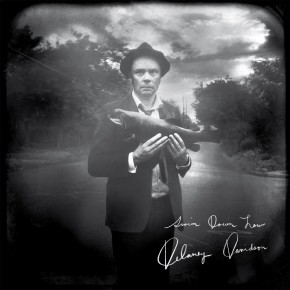
Delaney_Davidson_Swim_Down_LowAlbum_Cover-290x290Roll up, roll up to Delaney Davidson’s old curiosity shop. Make way for big ugly fish, swampy rivers, bloodied stilettoes, fog, dogs, worms and old bones – it ain’t all pretty but it sure is fun. ‘Swim Down Low’ is Davidson’s 5th solo album and heralds the New Zealander’s return to Outside Inside Records. Having lived in Switzerland from 2002 to 2008, he is considered an adopted son of the Swiss folk/blues scene and is highly respected for his previous releases on labels like Voodoo Rhythm.

A magical collection of sepia-tinged vignettes

Captured on fabulous analogue during a week of down time, it’s a magical collection of sepia-tinged vignettes from the supernatural, macabre, dark-side-of-town. The lo-fi country rock genre is amply stretched to encompass flashes of vaudeville cabaret, blues and gothic folk-noir; as a result the album reads like a book of short stories by Edgar Allen Poe meets Tom Waits on a cocktail of whiskey, cigarettes and ketamine.

A slow work of seduction

It’s a work of slow seduction where the 10 perfectly crafted songs permeate their way into your psyche so that you begin to miss them when they’re not on. Take the Big Ugly Fish that ‘Swim Down Low’, one listen to the twangy, foot-stomping guitar riff and you’re hooked on wanting to know what horrors grandpa done did saw at the bottom of the sea.

Balancing the creepy with the beautiful

Let’s remember that Davidson is an old Dead Brothers pro, hence a flair for making the funereal grim and ghastly seem reluctantly joyful and frankly quite hilarious. Dead Brother, Pierre Omer, quotes him as being a “multi-talented musician who played everything from drums and trombone to the lap steel guitar, and even wore a dress on stage”. His poetic songwriting skills exel at balancing the creepy with the beautiful, aided by his penetrating, elastic vocals that can stretch, growl and whine to fit all the desperate nooks and crannies. Many lines are as quoteable as Oscar Wilde, especially the plaintive numbers like ‘It’s all Fun’ (“life is a dog and you are the bone”) and ‘Poor White Trash’ (“I’d rather be lucky than good”).

Thigh-slappingly good

Davidson creates a dramatic persona who enjoys letting the darkness in like a weather-beaten, weary, wandering minstrel. Yet despite the theatrical mask of fatigue and cynicism, it’s a work brimming with pretty melodies, harmonies and incisive wit. The banjoes, slide guitars, harmonicas and fiddles make sure that all toes are tapping in true Roy Orbison fashion not only on to the uptempo numbers such as ‘Farewell’ and ‘Dogs of Love’, but even on the suicidally slow numbers where an alluring rhythmic tension is always maintained. For maximum joy, listen on headphones to catch all the humouristic harmonies, backing vocals and theatrical sound effects. Thigh-slappingly good and un-turn-off-able once the fish bites.

Delaney Davidson,  “Swim Down Low” (Outside Inside Records)

Forthcoming live gigs with Pierre Omer guesting in the band:

15th July: Fribourg (Les Georges Festival)
8th August: St Gall (Graben Halle)
9th August: Vinelz (Bielersee Festival)
10th August: Zürich (El Lokal).

Delaney Davdison is also touring Italy, France and Germany this summer. List of gigs here!


Bit-Tuner: «The Japan Syndrome»

bit-tuner_by_martinrichi_3.jpg__630x400_q80_crop_upscaleMarcel Gschwend ist Bit-Tuner. Seit 1997 produziert der St. Galler, der mittlerweile in Zürich lebt, basslastigen Electro, spannt mit Rappern wie Dani Göldin zusammen, vertont live Stummfilme und spielt Bassgitarre bei Stahlberger, der Band, die mit ihrem dritten Album «Die Gschicht isch besser» auch die Schweizer Hitparaden erobert hat.

Solo veröffentlichte der 36-Jährige zuletzt «The Japan Syndrome», das nun auch auf Vinyl erschienen ist. Es ist nach «The China Syndrome» bereits die zweite Platte, die während seiner Live-Residency im Zürcher Club Helsinki entstanden ist.

[youtube http://www.youtube.com/watch?v=Vz5eC3dKZ2U&w=640&h=360]

Auf «The Japan Syndrome» bringt Bit-Tuner seine Sounds aus seinem stetig anwachsenden elektronischen Gerätepark mit Alltagsgeräuschen zusammen, die er auf seiner Japanreise im Frühling 2013 gesammelt hat. Grossstadtlärm und Vogelgezwitscher treffen auf mächtige Bässe, auf Beats, die sich langsam entwickeln und auf zirpende Höhen.

So entwickelt sich eine eigentümliche Dub-Atmosphäre, die zwischen tiefen Strassenschluchten und Stadtpark und zwischen Club und Schlafzimmer anzusiedeln ist. Bit-Tuner ist auf «The Japan Syndrome» einmal mehr ein überaus einfallsreicher Soundarchitekt, der auch dank seinem Band-Hintergrund weit über die Electro-Landschaft hinausweist.

Bit-Tuner: «The Japan Syndrome» (Hula Honeys)

[youtube http://www.youtube.com/watch?v=VExkiTt_dtg&w=640&h=360]


Bit-Turner Konzerte: 21 May, Rote Fabrik (Zurich), 23 May TabTap (Shaffausen), 24 May, Palace (St.Gallen) und mehr…

Disque du mois d’avril: PommelHORSE “Wintermadness”

1500X1500PIXEL-01Attention! ce jeune groupe de Berne est entrain de bousculer le monde du jazz. PommelHORSE est l’un des cinq groupes suisses (sur les dix-huits groupes européeens) participants à la journée “European Jazz Meeting” de Jazz Ahead le 26 avril à Brême. PommelHORSE est sans aucun doute la manifestation d’une nouvelle génération de musiciens post-Internet, une génération qui assimilé à la vitesse de l’éclair une somme de musiques impressionnantes.

Impossible d’expliquer sinon comment d’aussi jeunes musiciens (bernois) peuvent avoir intégré  autant de styles musicaux différents. Du stadium rock aux musiques de danse électroniques, du jazz aux musiques expérimentales, du heavy metal au classique, ce deuxième poursuit la voie d’un jazz mutant amorcée en 2012 dans son premier opus éponyme.

PommelHORSE a choisi pour nom « cheval d’arçon ». A cet accessoire de gym sur lequel chaque écolier s’est un jour laborieusement escrimé à faire des culbutes, il donne une nouvelle dimension, toujours faite de pirouettes et de sauts, mais désormais ludiques et enjoués. Car PommelHORSE ne cite jamais littéralement, il jongle avec les rythmes, les balises musicales. Il impose son souffle, sa griffe pour évoquer des ambiances, des sensations comme ce « moving sidewalk » dans lequel on s’immerge rapidement en s’imaginant évoluer sur un sol mouvant. Un voyage intérieur faite de sensations et d’impressions à découvrir absolument.

PommelHORSE, Wintermadness (Unit Records)


Record of the month: Tobias Preisig, ‘Drifting’

Tobias Preisig's 'Drifting'

I’ve got Drifting on constant rewind. It’s a spacious album, pulling back to allow an experience of resonance and a sort of quiet mayhem. The musicians don’t hate us: they want to captivate, however, we’re not their only object of desire. There’s a care and deep listening in their interplay that is almost audible. It’s as if they are feeling their way into a new form of being, as a quartet.

Abstract, even animalistic

Tobias Preisig spoke to me of his band working as an ‘integrated instrument’ with ‘spots’ replacing full-blown solos, such as when André Pousaz’s double bass breaks out into a sombre spotlight in Floating Causes amongst low violin stabs and hi-hat shimmers. It’s true that tracks like Out of Reach weave a subtle tapestry of instruments, intensifying in colour as it progresses. But there is no ignoring the quality of Tobias’ violin: rich, assured, respectful of its emotional power yet avoiding sentimentality. It can be abstract, even animalistic, revelling in a purity of sound.

Miniature for Gold is a painfully-gentle vignette painted by Stefan Aeby‘s piano. Preisig’s violin balances the sweetness, plucking as if a tight bass line. The track is like an exquisite kiss. But Searching for Soil is my highlight, a spellbinding piece.

Michi Stulz’s drum rolls… an unrelenting mantra

The opening Rhodes’ chord conjures a translucent pathway out to the Milky Way, there’s the metallic jingle of a cold star, before Michi Stulz’s drum rolls march us on; an unrelenting mantra. It’s the woozy high violin plucks and quivering strokes of the strings that send my goosebumps bumping. It’s a trip, to somewhere magical or possibly, macabre. Piercing violin runs twist the screws tighter whilst a stormy piano bashes at its low notes. A scrap of melody breaks through as if to keep us entwined in the music, before it shudders to a close.

This music has character: it can be moody, sensitive, frustrated yet is often playful – it’s got soul. What I hope to hear from the band in the future is a wider range of textures and themes; an evolution of their emerging and ear-catching language. Look out for this quartet playing live and let me know what you think.

http://www.youtube.com/watch?v=6UpFkg3F_8s


05.04.2014 CH-Zurich, Moods
12.04.2014 DE-Erfurt, Jazzclub
13.04.2014 DE-Dresden, Tonne
15.04.2014 DE-Jena, Cafe Wagner
16.04.2014 DE-Berlin, A-Trane
25.04.2014 CH-Basel, Jazzfestival Offbeat
16.05.2014 CH-Arbon, Kultur Cinema
02.06.2014 CH-Orsière, Fête de la musique
20.07.2014 CH-Gstaad, Menuhin Festival
14.08.2014 CH-Winterthur, Musikfestwochen