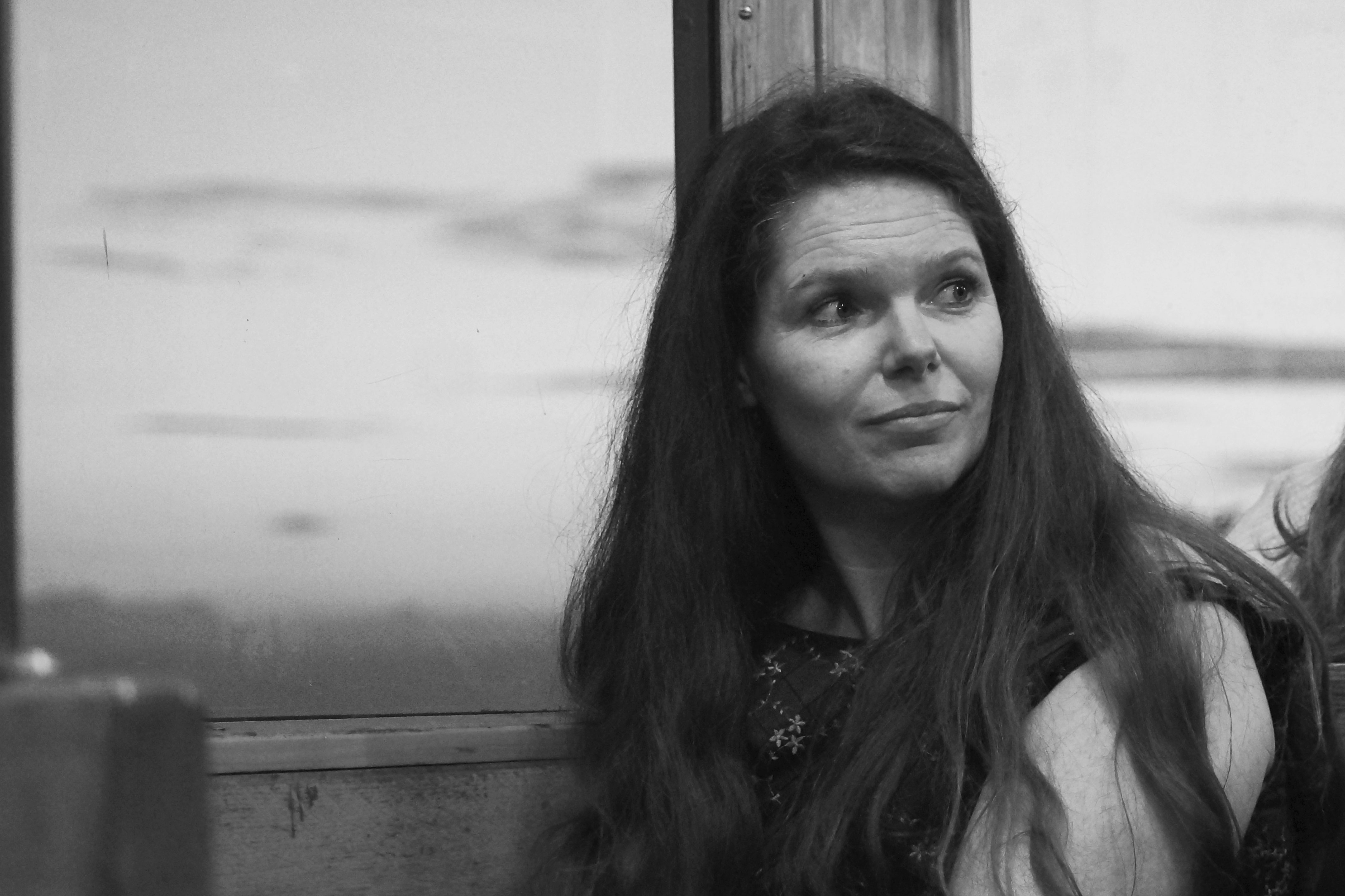
Olivia Pedroli : ” J’ai conçu mes arrangements comme un acrobate évolue sur un fil”

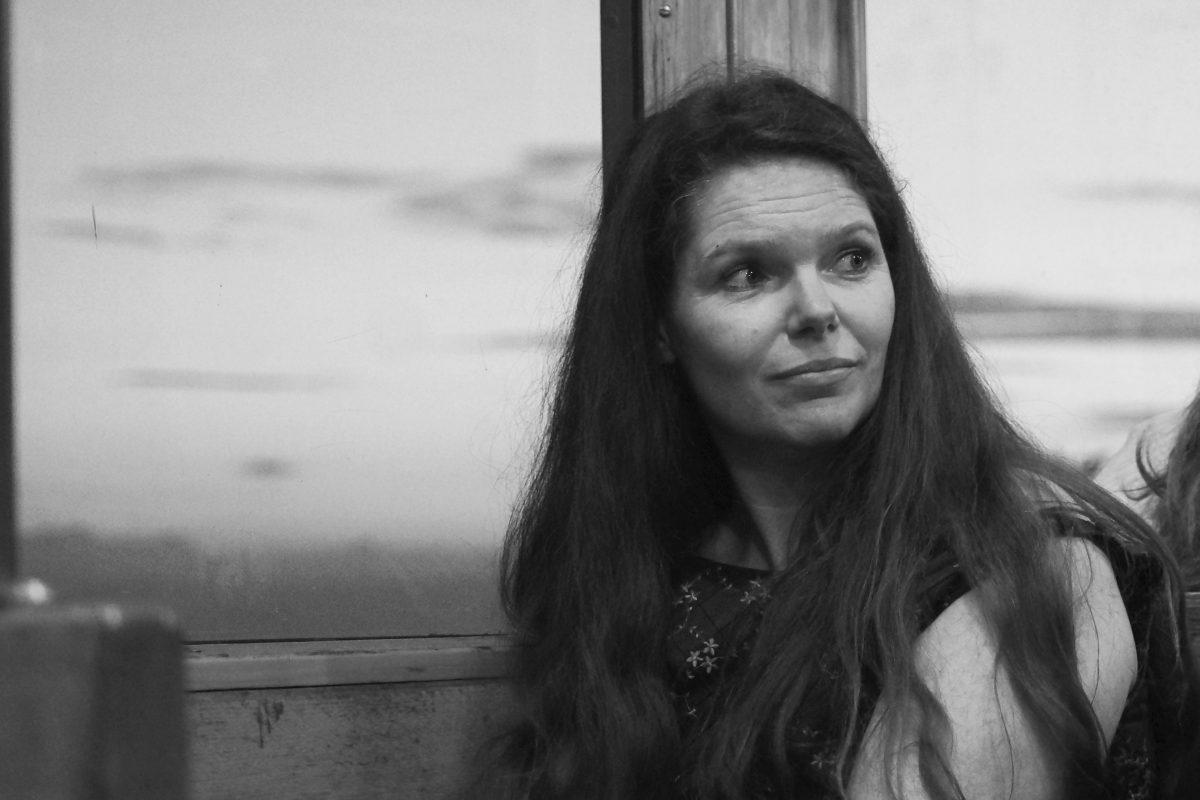
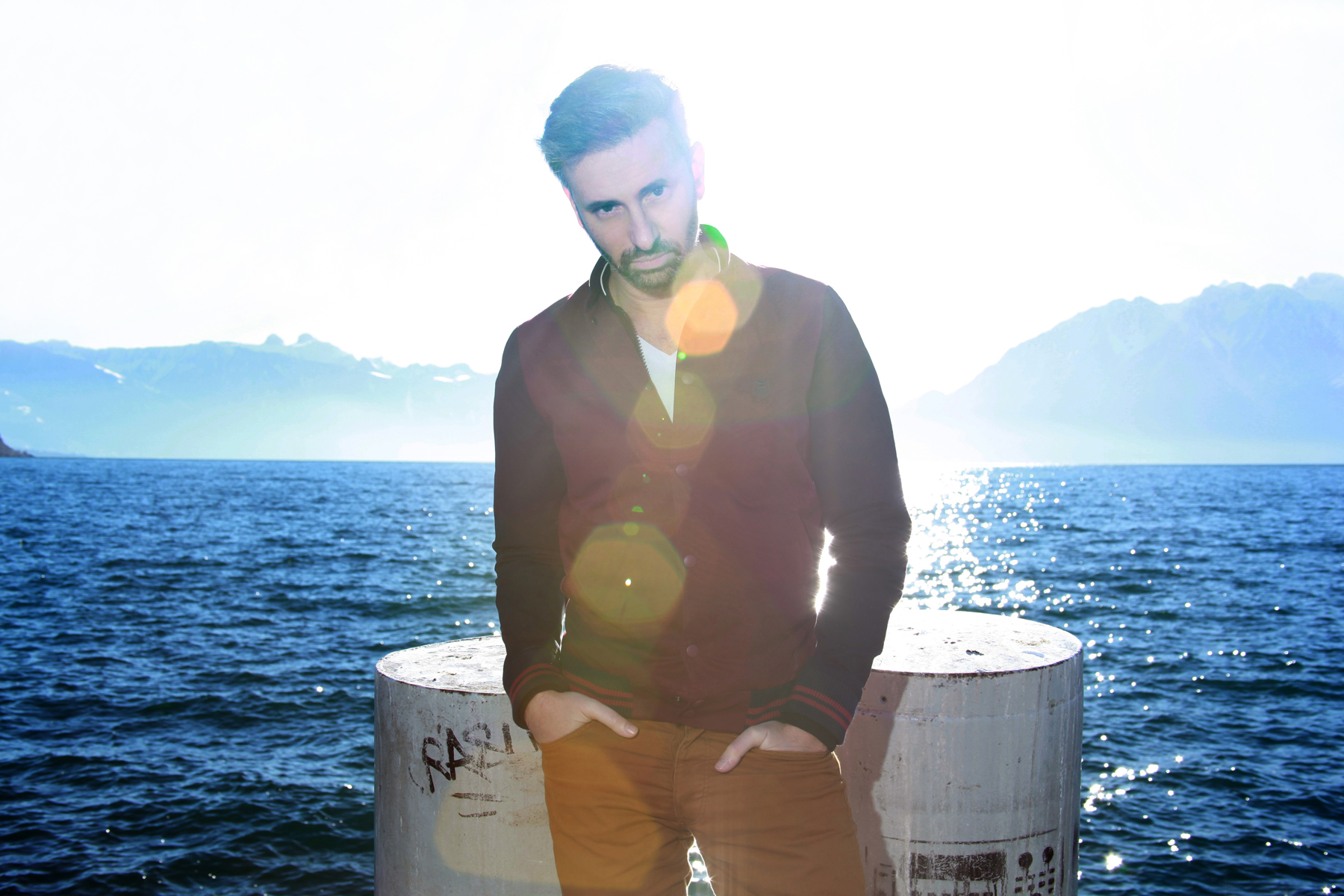
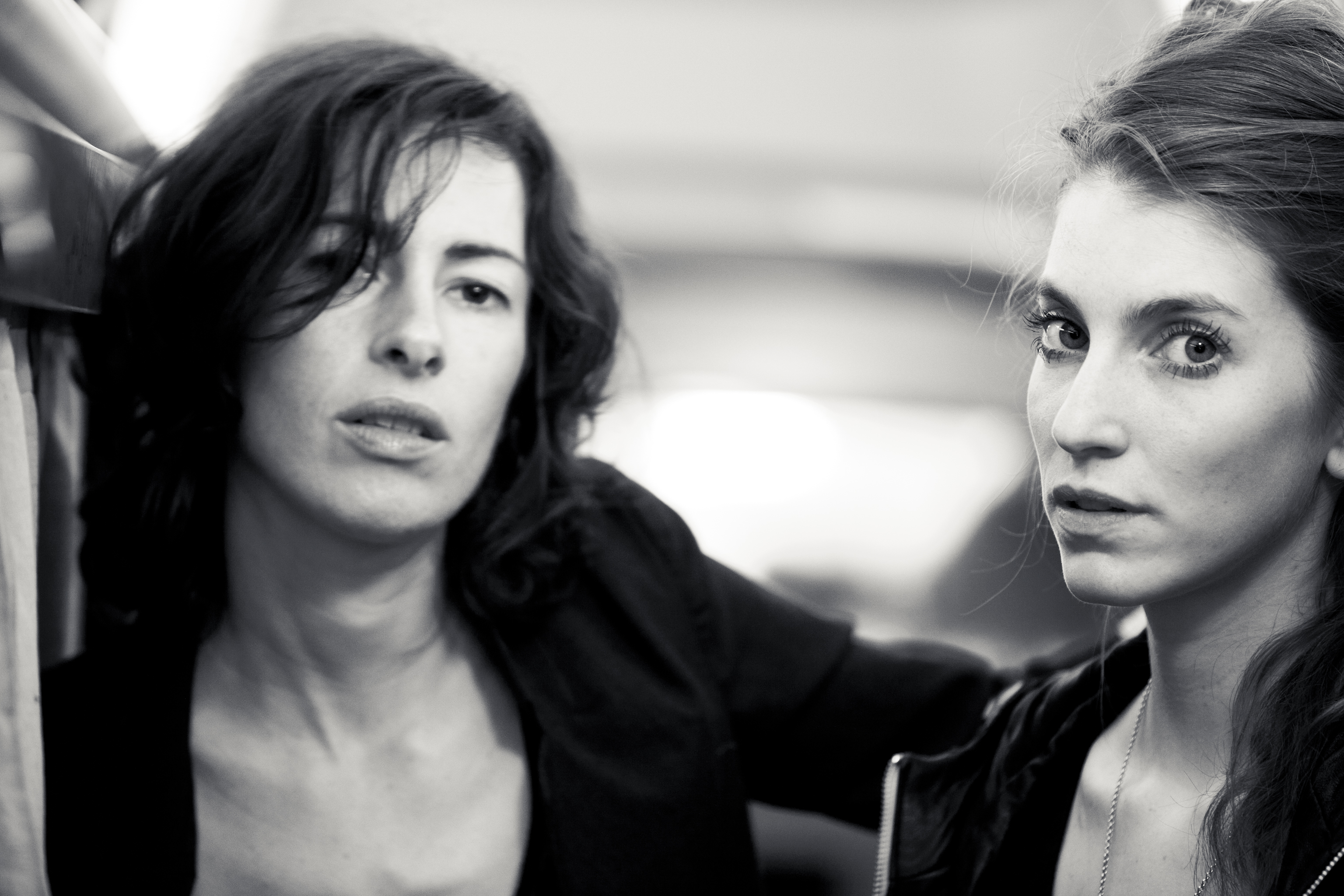
Apologie de la dualité, goût pour le minimalisme contemporain et influences islandaises : de passage à Paris pour la sortie française d”A Thin Line”, la chanteuse et compositrice de Neufchâtel Olivia Pedroli dévoile quelques clés d’entrée dans son univers magnétique…

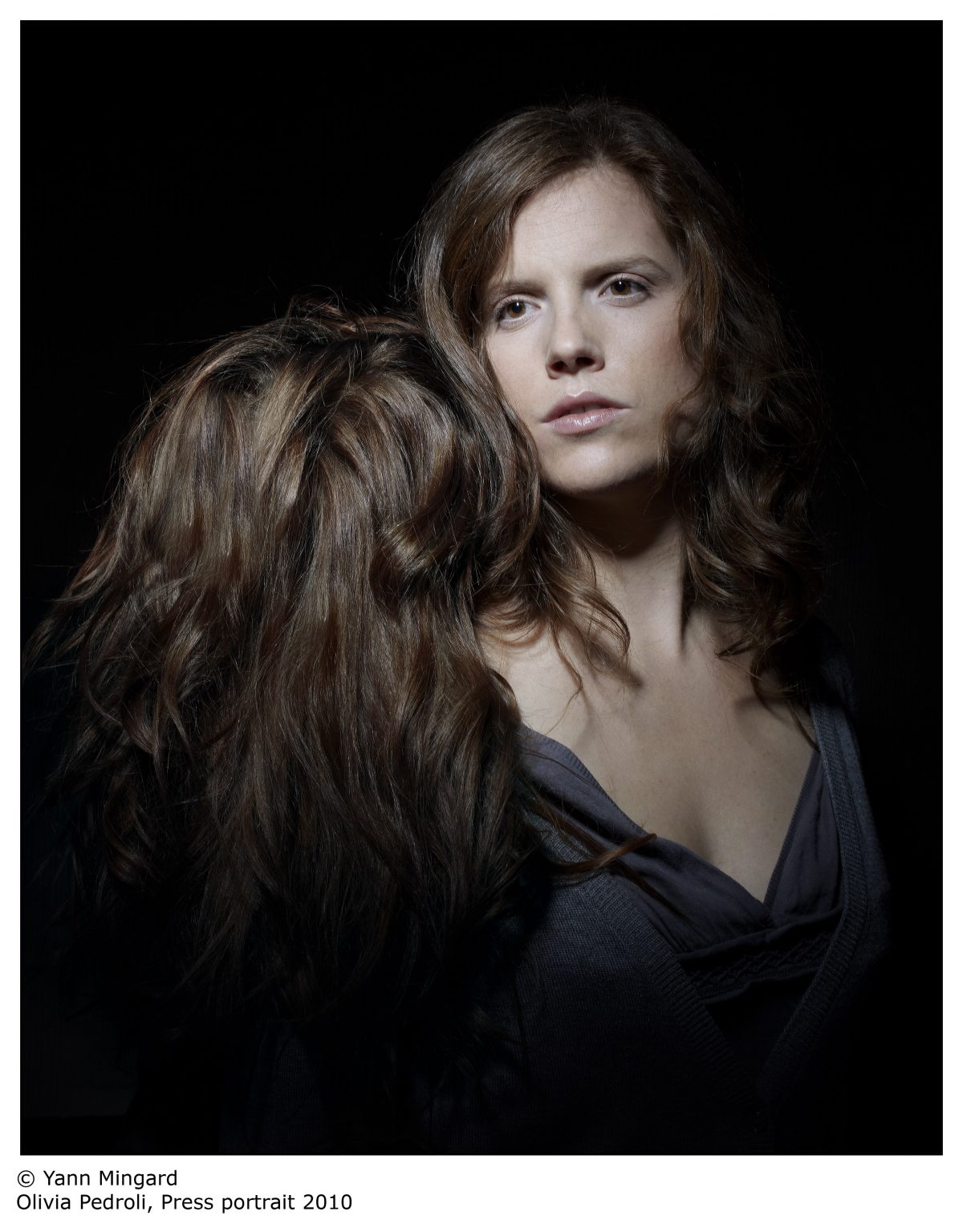
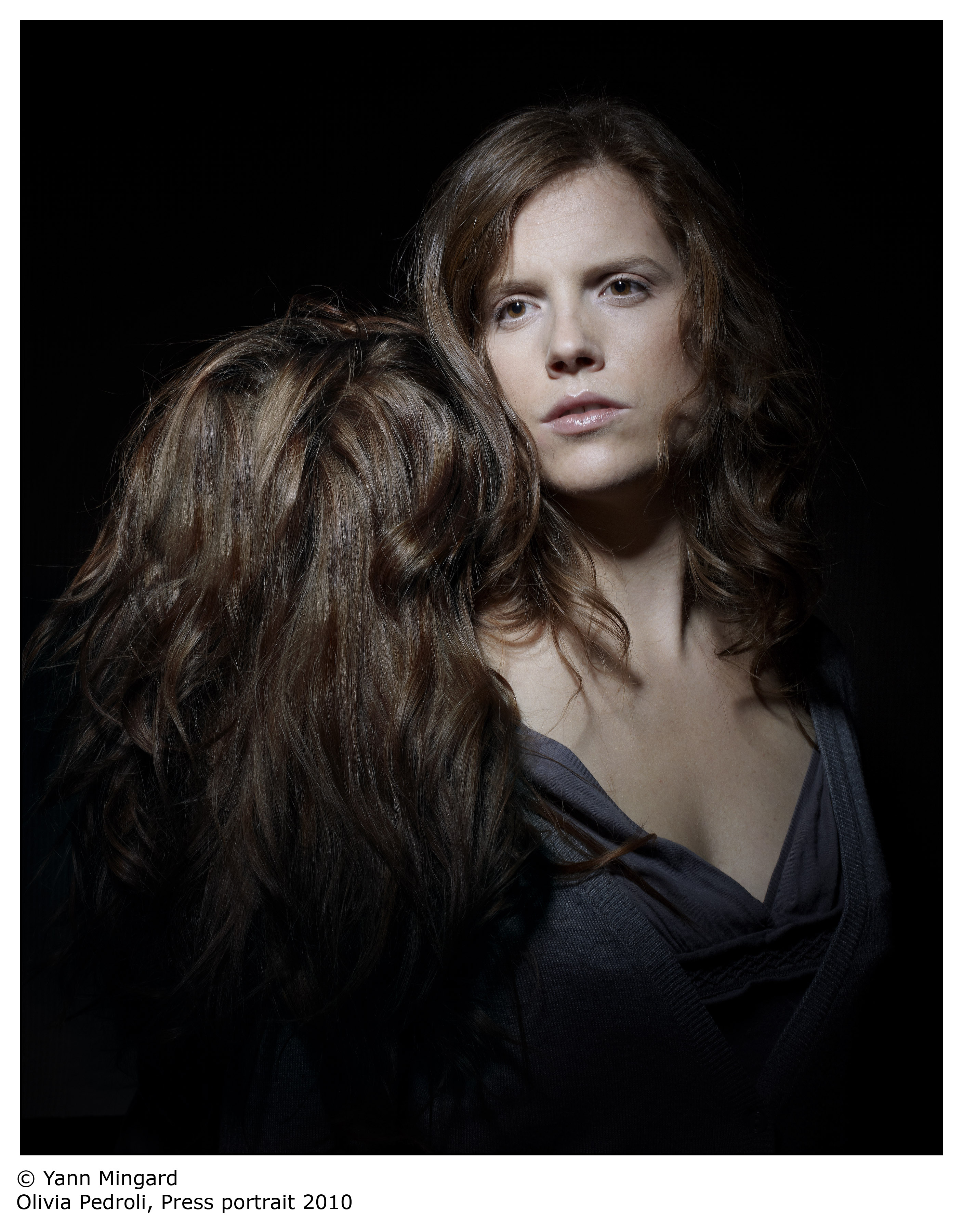
© Yann Mingard Olivia Pedroli, Press portrait 2010Apologie de la dualité, goût pour le minimalisme contemporain et influences islandaises : de passage à Paris pour la sortie française d”A Thin Line”, la chanteuse et compositrice de Neuchâtel Olivia Pedroli dévoile quelques clés d’entrée dans son univers magnétique… 

Si “The Den“  était ce vase clos, dans lequel vous disiez vous être enfermée pour développer votre imaginaire, “A Thin Line“, “la fine ligne“, que sépare-t-elle ?

Olivia Pedroli J’aime développer une thématique pour mon travail. Sur “The Den“, elle s’est imposée en cours de route. Pour “A Thin Line“, je voulais réfléchir à une problématique au préalable, avant même d’écrire une note de musique : il me fallait un concept global qui englobe aussi bien la conception des arrangements que l’écriture des paroles ou la façon de présenter le projet sur scène. Je suis partie sur l’idée des opposés et de l’équilibre. Sans s’intéresser aux extrêmes, mais plutôt sur l’endroit où ces dualités se rencontrent.

Cela se retrouve par exemple dans la composition, où je fais dialoguer les morceaux entre eux – un quintolet de “Mute“ se retrouvera, de manière inversée, sur “Silence“. Certains titres seront axés sur les cordes, d’autre sur les cuivres : j’ai conçu mes arrangements comme un acrobate évolue sur un fil… Même pour le dispositif on retrouve cette dualité, puisque j’ai séparé mes musiciens en deux groupes. D’un côté une formule acoustique à jouer dans les églises, avec un trio de cordes et des percussions légères, dans un travail de dentelle, de fragilité assumée. De l’autre, il y a mon trio amplifié, avec, cuivre, piano et programmations de textures sonores, pour présenter le projet dans les clubs – comme au New Morning, notamment. Nous jouons les mêmes morceaux, mais avec des arrangements très différents.

[vimeo 105333734 w=500 h=281]

Travailler à nouveau avec le même producteur, Valgeir Sigurosson, c’était important pour vous ?

Olivia Pedroli Sur “The Den“, je découvrais une nouvelle manière de collaborer avec Valgeir Sigurosson. Je touchais à quelque chose que j’avais envie de vraiment développer. Pour “A Thin Line“, je considérais qu’il important d’approfondir cette collaboration, reprendre un peu là où nous nous étions arrêtés. Mais ce n’était pas difficile, puisque entre-temps nous sommes devenus amis; nous avons beaucoup échangé ces 5 dernières années. Du coup, en studio, nous allions directement à l’essentiel, ce qui permettait d’affiner mieux notre travail. Quant à son influence… J’ai du mal à dire concrètement comment il opère : je l’appelle “l’Alchimiste“, car il a façon de faire croire qu’il ne fait rien, mais il a une influence énorme, qui passe par des trucs subtil, des sous-couches… Il se fond dans les projets pour nous faire aller plus loin.

Sur “A Thin Line”, sur le plan de la composition, on ressent une influence profonde des compositeurs minimalistes du 20e siècle, Terry Riley, Philip Glass

Olivia Pedroli Oui, sur l’album il y a même un humble hommage à Philip Glass, le morceau “Glassbirds“ étant une variation sur une de ses structures. Plus globalement, j’ai beaucoup la répétition – parfois, un motif m’habite et j’ai envie de le faire évoluer. Quant au minimalisme, il y a effectivement une tendance à l’épure sur “A Thin Line“ : je n’avais pas envie de rajouter de la crème, du sucre, de la meringue… Mais si Terry Riley, Philip Glass ou Gavin Bryars ont eu une forte influence, il ne faut pas oublier mes copains compositeurs islandais du label Bedroom Community : Ben Frost, Daniel Bjarnason… leurs projets m’ont beaucoup touchée. Ce n’était pas certainement un travail solitaire.

A propos de minimalisme… vous partez pour six mois en résidence d’artiste à Londres, où il se dit que vous allez travailler avec Gavin Bryars..

Olivia Pedroli Il s’agit en effet d’une résidence de composition, une vraie bulle créative pour se concentrer sur mon travail. Mais ce n’est pas à proprement parler “une rencontre avec Gavin Bryars“, je vais simplement en profiter pour le rencontrer plusieurs fois. C’est un vrai puits de science, qui a travaillé avec Tom Waits, Brian Eno, Robert Wilson : son expérience m’est précieuse…

Olivia Pedroli en concert le 11 mars au New Morning, à Paris
 “A Thin Line“ Bandcamp (CD paru fin 2014 sur le label d’Olivia Pedroli, Betacorn Records)

Welcome to the world of Heidi Happy

heidi-happy-golden-heart

Singer-songwriter Prisk Zemp, otherwise known as Heidi Happy, is a delightful exponent of today’s Swiss indie music scene, delivering a fresh, cheeky, homemade lo-fi folk/pop with an electronic edge. Her ethereal voice is seductively irresistable and has been entrancing audiences in and around Switzerland for the past 10 years. Her latest LP, Golden Heart (Silent Mode/ Irascible), is a creative project of 14 compact songs that float by like a breeze, each full of deep, beautiful melodies as well as a hint of melancholy and “sonic heartbreak”. The album’s received very warm reviews, has sold out and is currently being re-pressed.

Is the name ‘Heidi Happy’ some kind of strategic Swiss marketing trick?

Heidi Happy Funnily enough no, though I did love the Heidi stories as a kid. It was more a question of visual design because my first ever solo live performance was at a party of some graphic designer friends who wanted my stage name to look good on their flyers. There were many to choose from but they decided that Heidi Happy had a nice symmetry to it.

You’re from a small village outside Lucerne, what kind of music did you grow up listening to?

Heidi Happy Everyone is musical in my family: my father is a choir singer, my mother is a classically trained soprano, all my siblings play instruments, music was always happening in the house. As a teenager I loved everything soulful like Aretha Franklin and the funky jazz sound of Jamiroquai and Incognito. My first group was a funk band, I sang, wrote the lyrics and arranged the horn section. During my exchange year in America at 17, I discovered Jimi Hendrix and got into a dirtier, rockier sound which I still appreciate now. In recent years I’ve been very inspired by singers like Feist and Wallis Bird, at home I usually listen to old vinyl records with big voices and orchestra, like Lee Hazlewood or Nina Simone.

How did your career take off?

Heidi Happy I recorded my first CD with the funk band in 1998. Then in 2003 a producer asked me to do an album with him based on my own material. I learnt a lot about what I can/can’t do, what I really want to do and what I’m best suited to. I did so many things on that record that I’m still deeply ashamed of that I decided to not let others convince me to do things (like rapping!) if I’m not sure about it myself. It helped me to listen to my heart and trust my intuition and hence, I have produced all my subsequent LPs. I’ve been lucky to receive some funding from the city and canton of Lucerne which has allowed me to do my own thing. After having released my records on labels like Little Jig and Two Gentlemen, I set up my own label Silent Mode in 2012 on which I have released my records abroad (often in collaboration with other labels and promotors) and in Switzerland.

You’ve been described as “one of the most influential Swiss voices of the moment”. How would you describe your sound/your voice?

Heidi Happy I had a distinctive folk/pop sound at the start that was rather safe and constructed, but now that I’ve branched out into electronic music things feel freer, more open to surprises. My voice is very precious to me after surgery to remove a polyp on my vocal chords in 2001. The operation has given it a slightly more crackly tone, but I’ve learnt to like it and appreciate it more. I always take care of it nowadays and warm up before going on stage.

SNSN_HEIDIHAPPY_LIVE_SCHUUR_221014_Q3A9796

You are quite a multi-instrumentalist powerhouse on stage.

Heidi Happy Each tour is different. I’ve had duo shows where I sang, played guitars, drums, melodica, piano, glockenspiel and used a loop station, or shows with an entire symphonic orchestra where I just sang and played the guitar. It all depends on the songs, location, audience and financial possibilities. Right now I usually perform with my four-piece band or solo with my loop station, guitars, glockenspiel and a synthesizer.

 How is Heidi Happy received abroad?

Heidi Happy I’ve played the most abroad shows in Germany, Holland, Canada, England and in Russia. People abroad seem to really appreciate our music – we get very enthusiastic feedback. Radio stations in France, Germany, Austria and USA have put my songs on their playlist. Thanks to my collaboration with Yello, some people know me without me ever having played there.  We’ve just been on an Austria tour with Clara Lucia, an Austrian singer very similar in style to me. We’ve been friends for a few years and it was a wonderful, perfectly matched tour.

What are you working on at the moment?

Heidi Happy I’m currently writing some film music which has always been a big love of mine. I’m also rearranging my repertoire for a big show in spring next year where I’ll be playing in my hometown Dagmersellen with the local brass band. I’m constantly gigging, writing and looking for new distribution deals abroad to get my music heard.


Forthcoming gigs:

12.12.2014 Zauberwald Lenzerheide (solo)

24.01.2015 Filmtage Solothurn (band)

29.01.2015 Gaskessel Bern (band)

30.01.2015 Moods Zürich (band)

31.01.2015 Kreuz Nidau (band)

27.02.2015 Kulturkarrousel Stäfa (band)

Interview: Johann Bourquenez of Plaistow

©Janice Siegrist
©Janice Siegrist
Johann Bourquenez is hardcore

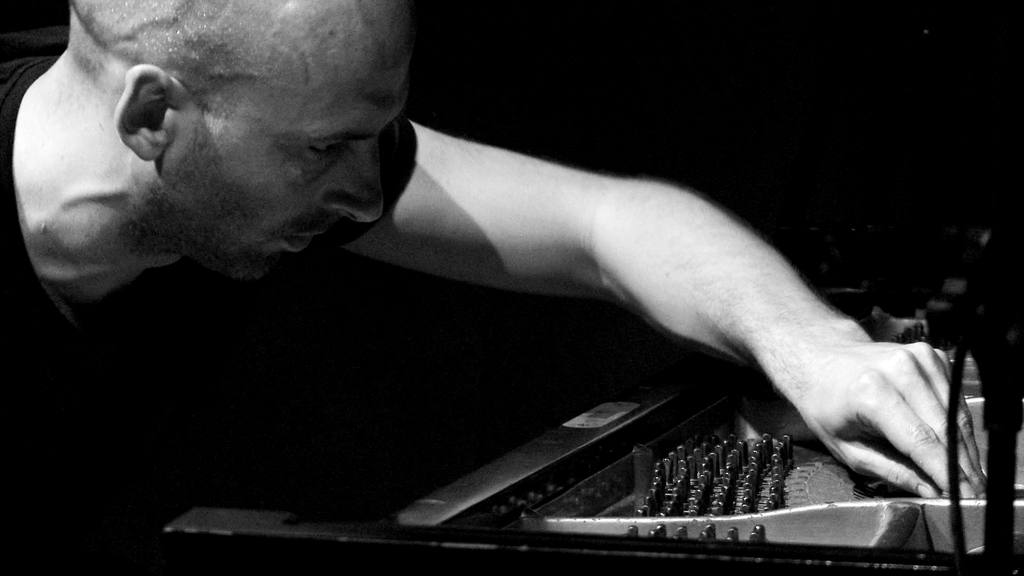
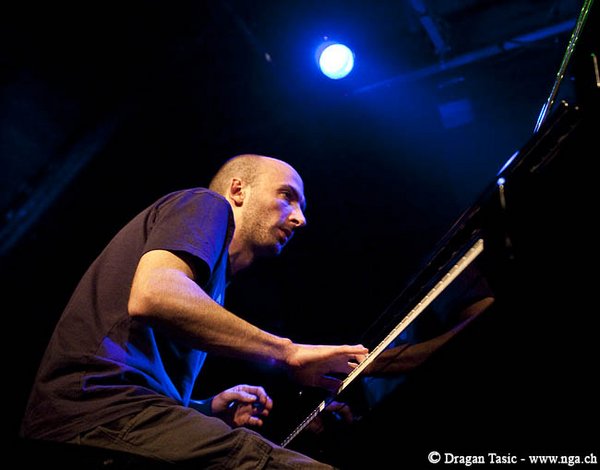
As Johann walked into the hotel for our first meeting, I got Plaistow‘s music. Dressed in black, head shaved, lean – he is stripped back. There’s an aroma of smoke and an intensity quivering a hair’s breadth beneath the surface, a rapid rhythm. The albums, Citadelle and Lacrimosa, with their trance-inducing repetition, microscopic detail and Johann’s rounds of claustrophobic piano notes, feel driven by a desire for the raw and pure. It didn’t surprise me when he said in preparing for the next album (due out in April 2015) he woke at 6am, worked 8 hours at the piano, then took a bike ride in the evening…every day for a month. It could be said Johann Bourquenez is hardcore.

‘…maybe it’s better not to go too far with this’

French-born and studying jazz in Toulouse, he met drummer Cyril Bondi doing a gig in Geneva. Their connection is the cornerstone of Plaistow, you can hear it on the albums. Johann moved to a squat in Geneva (‘a big house full of crazy people’) and he played regularly with Cyril, but not seriously (‘I was partying a lot.’). Eventually they felt there was something worthwhile, ‘I said to Cyril, OK but I’m a very crazy guy so if I do a band…I will do it very seriously, very deeply, and I will expect people around me to do the same, so maybe it’s better not to go too far with this, and he said, ‘No, no, no, no, you don’t know me, if I do a band it’s going to be a mother******.’ So we decided to do it.’ That was in 2007 when they recruited, Raphaël Ortis on bass, though more recently, Vincent Ruiz on double bass.

johann_bourquenez_feat_plaistow‘You have to be physically be in the present’

Their musical angle comes from Johann’s early years of immersing himself in drum ‘n’ bass and techno (he has currently got Rrose on rewind), using machines and synths, ‘I had many years of this kind of experimentation with electronics…and computer noise stuff.’ At one gig, pre-Plaistow, fed up of lugging equipment around, Johann decided to play acoustic piano – opening it up to use the strings to create a more powerful sound. ‘I can play this piano the way I played all those machines, but I found the significance of every move I make is very important , if I don’t move there is nothing, if I do a very small thing it is very meaningful…The movement – that is very important…you have to be physically be in the present. So, I said with Plaistow let’s pretend we are just a jazz trio but we actually are filled with techno and noise walls…let’s make that music but with acoustic instruments.’

‘I will take your brain, trust me…’
Plaistow au Centre Culturel Suisse (Paris) ©Simon Letellier

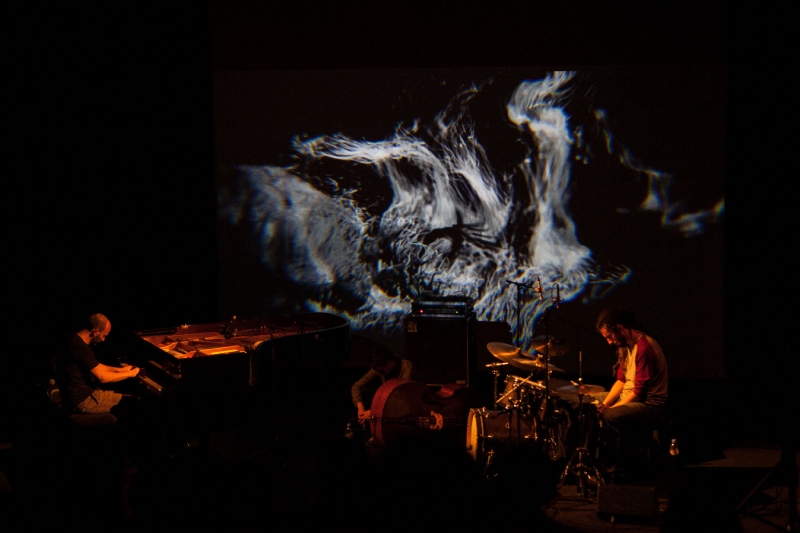
To take these ideas further the art and animations of Nicolas Berger will be integral to the new album. Johann understands that visuals [on a cinema-sized screen] can divert attention from the music so they need to be justified by making the performance an immersive experience. ‘It’s an old fantasy of mine, I would like to have a two hour concert the way you would do with a DJ set – I will take your brain, trust me, and then I give it back to you at the end.’ This best sums up Plaistow’s raison d’être, it reminds me of the theatre of Artaud or Stravinky’s Rite of Spring – primal yet with a care for the concept of ceremony, event, people.

In fact Johann’s next project is the Great Noise Choral which will debut in December. It will feature, ’20 to 30 people only using voice and making some noise’. I’m certain it will be something pretty hardcore.

Plaistow live @ London, Pizza Express, 20 November (London Jazz Festival)
Liepaja (Latvia), Hiks Hall, 27 nov
Cesis (Latvia), Vidzeme Concert Hall, 28 novembre
Daugavpils (Latvia), Mark Rothko Art Center, 29 novembre

The Great Noise Choral at AMR Jazz Club in Geneva, 19 & 20 December

 
“Lacrimosa” to be released on vinyl, November here!
Plaistow on Facebook

Plaistow on YouTube:

http://youtu.be/ctoFHbz8wWY

Marc Perrenoud Talks on the Eve of his US Tour

2014 has been a good year for Marc Perrenoud and his trio of Cyril Regamey on drums and Marco Müller on double bass. They’ve toured China, Taiwan, Europe and are off to the US this month to play five cities and cover about 20,000 kilometres of American soil.

The gigs have followed their well-received third album, Vestry Lamento (released October 2013-April ’14). Frank Alkyer of Downbeat magazine crucially wrote, ‘Would someone please book this band for a tour of the States? We want to see them live!’


MarcPerrenoudUSAI spoke to Marc Perrenoud about his feelings on the eve of the trio’s US tour.

Marc Perrenoud I’m very excited. US people are very open, I’m not nervous, I just feel pleasure to go there…Playing in New York is always a big thing, but I am very excited to discover New Orleans, it must be an incredible place…and it’s the birthplace of jazz. There’s so much music there and I’m really looking forward to that, to ‘feeling’ Louisiana.

Sometimes it can be hard to be from a little country but sometimes it makes you more curious…you have to be because we have to leave Switzerland and that’s very stimulating. I am very honoured that these guys invited me, a Swiss guy, to play jazz there – it’s crazy. It’s so cool.

Do you think Vestry Lamento was particularly suitable for US audiences?

Marc Perrenoud There is a very big difference between Two Churches [his previous album] and this one. I was a little bit, not bored, but tired of the top, classical jazz, European style…so I tried to think about what I love about this music – and that is American jazz from the ’60s and even earlier. I tried to put some musical ideas like the energy and the swing style into this CD but with my European culture too, to make a mix of these two cultures.

In this album I was more confident in my partners. I was a control freak before, so I had an idea and would be like – you have to play that and that. Now the ideas are more precise and I can give more liberty to the musicians…It gave more pleasure and more energy to the drummer and bass-player and they had more fun playing because their ideas are in there too. It really grew together.

When will you work on a new album and what direction will it take?

Marc Perrenoud When we finish the US tour we are working for the month of December on the new repertoire and the new trio CD for 2015. I think recording will take place in February or March. After the US we’ll be full of ideas, I think it will be a good moment to write new things. We had a very exciting year, but it will be good to calm down and write.

The direction: you can never say exactly what it is, but I am sure about the manner with which to work and write together with the trio – it will be the same way and same kind of energy as with Vestry Lamento.

With the new album I will try to have a longer release time to focus on a new country every month with good PR. It’s good to have big festivals [to play] but it’s always important to meet people in smaller clubs. At Ronnie Scott’s we jammed til 3.30am…it was nice to meet the London jazz scene and have a real bebop jam session. Then I went straight to the Gatwick Express at 5am [to get to the airport – proper jazz stylee].

What have you found inspiring recently?

Marc Perrenoud I try to often go to concerts but also to theatre – I saw a very good theatre piece of Dostoyevsky, I go to opera, rock, jazz concerts. It’s very important to me to go to live music and performance. I’ve seen Roy Hargrove, a cool concert of Brad Mehldau solo and Joe Lovano.

I have a project next year with actors, poetry and music – trying to make something new. I think jazz is made from these things, we need improvisation in jazz and to do that we need to look everywhere. It’s why it’s unstable and moving because we have to continually find ideas and, sure, other arts are very inspiring.

18/11 Somethin Jazz Club, New York
20/11 Snug Harbor, New Orleans, Louisiana
21/11 The Jazz Station, Eugene, Oregon
23/11 Upstairs at Vitello’s, Los Angeles, California
24/11 Lobero Theatre, Santa Barbara, California

Insights into the 1st edition of the Montreux Jazz Academy

NB-DSC02809Stéphanie-Aloysia Moretti, artistic director of the Montreux Jazz Academy, talks about the first edition of this exciting, pedagogical project where 12 young winners of the prestigious Montreux piano, voice and guitar prizes are further coached by 14 world-renowned mentors at the Sylvia Waddilove musical centre.

How did the idea of musical pedagogy evolve at Montreux Jazz ?


Stéphanie-Aloysia Moretti I’ve been working for the Montreux Jazz Festival for over 25 years, primarily as artistic co-ordinator, but also as educational co-ordinator ever since Claude Nobs began the idea of informal musical workshops. Before my arrival in 1989, Claude had always asked key musicians to extend their stay in Montreux in order to talk, teach and interact with the audience, students and fellow musicians. He would announce the workshop details at the end of a concert for the following day, but this meant that only people present at the concert would know what, where and with whom it was happening. I started organising these workshops in advance, incorporating them into the official programme, which gradually made the workshops an important feature of the festival highlighting the importance we gave to the interaction between master and pupil. This eventually led to the 1st official Montreux Jazz Solo Piano Prize in 1999 where a selection of young pianists from all over the world came to Montreux be coached by professionals in the field. Voice and guitar prizes soon followed.

What was the approach to the Montreux prizes?

Stéphanie-Aloysia Moretti We wanted to structure these prizes in such a way to avoid the competitiveness you might find in a sporting event, and instead create a nice atmosphere for the candidates. The young musicians coming to Montreux were treated as a group, made to feel comfortable, lucky to meet and work together, mostly of the same age and level but coming from different countries. At that time it was also an excellent way to bridge the gap between eastern and western Europe of the late 90s. It was important that the contestants be real, complete musicians, not just able to reproduce or repeat music, each had to submit their own composition or arrangement and give a lot of themselves.

When did you realise that musical coaching was not enough?

Stéphanie-Aloysia Moretti Year after year, we began to notice a reoccurring problem. Despite the winners receiving money, a recording contract and a live show the following year at Montreux Jazz – a few months after winning the prize, they would call us up asking for help: “can we have the names of a good agent, manager, how can we find gigs, labels, PR, etc..?” It was clear that being a young virtuoso is not enough in the world of jazz and music, many of our young winners had no idea what direction to go in and how to follow up their prize-winning achievements. We soon realised that the chosen candidates coming from over 40 different countries needed a more practical form of training alongside their musical coaching. Hence the idea of the Montreux Jazz Academy was born – to help young musicians take advantage of the experience and connections of the Montreux Jazz Artists Foundation, the Festival’s pedagogical wing, in order to maximise their self expression as artists and also help them build their career toolkits.

Describe how the Montreux Jazz Academy is set up.

Stéphanie-Aloysia Moretti There are 14 mentors and 12 candidates, or ‘laureates’ as we like to call them. Nine of them are made up of the first, second and third place winners of this year’s piano, voice and guitar competitions. The remaining three are made up of the first prize winners of the previous year. The Academy lasts just over a week from 30th October to 5th November where the young laureates live, work, perform and learn during an intensive week of exchanges with international musicians and music-business professionals. Masterclasses are given on a daily basis on useful topics such as “Understanding the music business/ How do I get signed to a label? / Managing your online presence”. There’s no competitive atmosphere or prize at the end of the Academy, just learning, sharing and a big gala show on the last evening overseen by Lee Ritenour. What’s very precious for me is to have the laureates express themselves freely and get into the habit of risk-taking with ideas and possibilities, this is less present when there’s a competition at stake. After the Academy I know something will change in how they make music as individuals – and not just the laureates, the mentors have also been affected by what they’ve shared here. They didn’t all know eachother beforehand and it was wonderful to see the cross-fertilisation bubbling up between them during the duologs, live gigs and workshops.

http://youtu.be/7XVXOUIlVoA

How did you go about chosing the mentors?

Stéphanie-Aloysia Moretti I chose mentors who already have a strong relationship to Montreux, first of all because it’s easier to have direct access to them, secondly because I needed to know their resources, what they’re capable of and how curious they are. For example, I chose guitarist Lee Ritenour as musical director of this edition because he has always taught in his career, he has a good relationship with the younger generation and knows how to raise everyone’s level. He’d already been president of a previous Montreux Jazz Guitar prize and had done an amazing job. From the USA we invited drummer Sonny Emory from Earth, Wind and Fire who has an amazing energy but is very different from the classical jazz drummer; saxophonist Charles Lloyd, who opened the first Montreux Jazz Festival in 1967 – a kind of godfather figure; star vocalist Patti Austin, president of the Voice competition a few years ago. We also had the pianist Yaron Herman from Israel, electronic genius Bugge Wesseltoft from Norway, Hammond B3 giant Macoto Ozone from Japan, singer Sebastian Schuller from France and our very own Eric Truffaz. Their interaction made it feel more like a laboratory than an academy, anything could happen! The relationship between instruments and machines was really explored which was very important to me as I wanted new musical territories to be looked at as much as geographical ones. Even Charles Lloyd got to experiment with the power of electronic music.

Does the Academy have a particular involvement with Swiss artists?
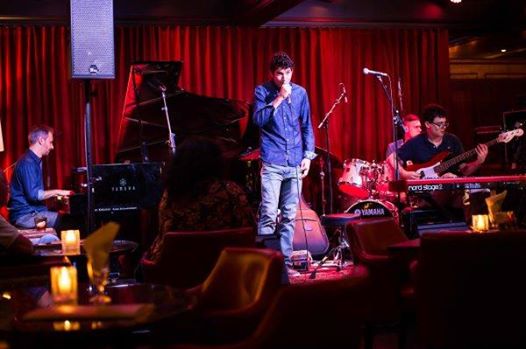
1459961_862670483754534_356142560921368328_nStéphanie-Aloysia Moretti The Academy is essentially aimed at aspiring jazz musicians on an international basis, but obviously we are happy to nurture Swiss young talent as much as we can. The exceptional singer/songwriter/guitarist Patrick Rouiller, (one of the star contestants on The Voice Switzerland 2013), was the only Swiss laureate selected for the Academy this year. However we were graced with some top Swiss musicians who took part in our live sessions in the evenings, among which vocalists Anna Aaron, Billie Bird, and pianist Léo Tardin – who was so enraptured with his jam session that he missed his train back to Geneva and ended up with all the other laureates back at the Waddilove centre. Léo, a Montreux solo piano prize winner himself, was blown away to see the high standard of practical teaching, backline equipment and tools on offer. “The best of the best in an informal setting” is how he described his time spent at the Academy.

What will the laureates take away with them? 

Stéphanie-Aloysia Moretti Firstly, all the laureates have said that the practical learning has been crucial: how to get a gig, consider yourself a brand, understand the workings of the music business, etc… They feel more confident to go into the world as a musician and handle their lives. No school normally talks about the practical side but now at last they know what to expect. Secondly, they’ve all mentioned the importance of experimentation and improvisation as a group. They have been stretched beyond what they thought were their capacities, forced to explore new territories and been made to find new ways of expressing their art.

How will the Montreux Jazz Academy be next year?

Stéphanie-Aloysia Moretti I could be a bit more audacious next year regarding styles of music from further afield than just the western world. Maybe bring in mentors from India or the Orient and see what new musical perspectives they could share with us, teach us to feel music more with our guts and less with our brains perhaps…? But for sure the goal will remain the same: to maximise self-expression, risk-taking in each young musician and to teach them the practical tools for succeeding in their music careers.
Leo Tardin: Mr Gemini, the man with two personalities

IMG_1043

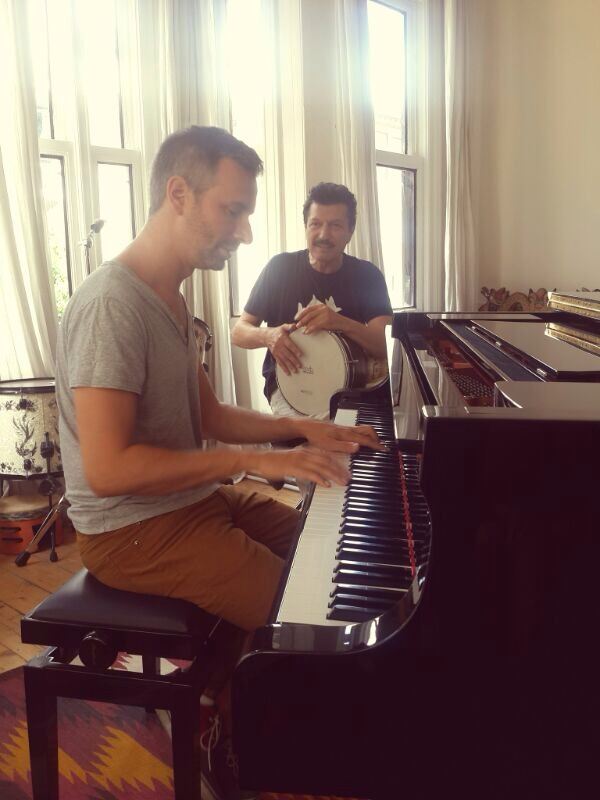
In the run up to his performance at Chateau de Chillon for Montreux Jazz on 13th July, Leo Tardin talks about his live project with Turkish percussionist Burhan Oçal, his latest solo LP Dawnscape and his band Grand Pianoramax   

Leo Tardin I got introduced to Burhan Oçal by the drummer of Grand Pianoramax, Dom Burkhalter, who’s a good friend of his. Burhan had been trying to get the band to play with him in Istanbul and we finally managed to organise it this time last year, so that’s how I first met him. Apart from being an amazing percussionist, he’s also an actor who often plays the villain in Turkish B movies. He’s a real character, full of mad stories, really quite unique. After the gig, the Montreux Jazz organisers and producers of Dawnscape heard that we’d played with him in Turkey and asked if we’d like to perform togther in Switzerland. It’s actually very similar to the early stages of Grand Pianoramx where it was only piano and percussion. It’s pretty easy to integrate percussion with piano because you can look at the piano as a percussion instrument that can afford space and freedom.

How does your album lend itself to being played in a duo format?

Leo Tardin Let’s see! We’re going to try this out in Istanbul for the first time. I know Burhan often plays as a duo with other pianists, sometimes even classical, I’m sure he’s going to blend in pretty easily into my music because it’s fairly rhythmical. There will be pieces where it’s only going to be me or bits with just him, then we’ll meet together on some others. I’m very flexible and confident that it will be a success.

Has the Dawnscape album done what you wanted it to do?

Leo Tardin It’s too early to reflect on this but it has definitely opened a lot of doors. One of the reasons for this is that it’s very flexible and light compared to a band that needs a lot of equipment, sound system, backline, hotel rooms and plane tickets. With Dawnscape live gigs can be organised fast and easily. This kind of freedom and flexibility is one of the great things about this project. Also the fact that this LP was co-produced by Montreux Jazz is helping a lot. It’s bringing a lot of credibility and making people take this project seriously. This is a very new project that needs to be established after having made a name for myself with Grand Pianoramax.


Leo Tardin
Leo Tardin
What was the reaction to you bringing out this new solo project that’s so different from Grand Pianoramax?

Leo Tardin It took a while for people around me to accept this, not just the other band members who worried that it might signify me wanting to deprioritise the group, but also the music journalists. I was surprised by the press’s reaction, it was at times very extreme – they either loved it or hated it. The music in this solo project is less radical than with Grand Pianoramax, but the reaction to the music has been more radical.  I feel that the journalists were comfortable to put me in a box as the piano guy who does hip hop, so when I came out with this romantic, dreamy, poetic stuff they were confused. Not all of them appreciated or understood the move. I was pleased when a few realised that it was something that took guts to do. But I’m happier this way because there are some things I can finally do with my solo project that I couldn’t do with the group, so I’m more relaxed in the context of the group and it brings a better vibe to GP as well.

When and what might we expect from Grand Pianoramax in the imminent future?

Leo Tardin We’re going to play the Paléo Festival, followed by Cosmojazz which is a really nice festival in Chamonix, open air at the foot of a dam. Then on the days off we’re going to work on some new music, a new EP that should be out in the first half of next year. The last LP, “Till There’s Nothing Left”, only came out a year and a half ago so it still has a bit of life in it, but we’re already working on new music and this has helped my band members realise that GP is as much a priority as my solo piano project.

 You are known as being a very polyvalent musician with different styles and projects. Do you agree?

Leo Tardin I’m not really doing so many different things, I’m just doing two VERY different things. but that’s about it. I think it has to do with my slightly schizophrenic personality. I can’t find one just project that covers the full spectrum of what touches me and the emotions I feel. That’s why I have these 2 very different projects. If you listen carefully you can hear some of my solo project in GP in some of the very emotional epic pieces, and little bits of GP in my solo project. I felt limited just sticking to one project, but I’d say that I’m more dual than polyvalent.

 Do you consider yourself a jazz pianist?

Leo Tardin That’s tricky. Calling me a ‘jazz pianist’ is a bit reductive and with GP we’re trying to get away from the jazz tag. We rarely play at any jazz festivals, (last year we played mostly rock festivals!) Jazz is where I came from but I don’t know how relevant it is today to what I do. When people ask me if I’m part of the Swiss jazz scene, I say I’m part of a group of musicians who are making noise and have some visibility outside of Switzerland, so in that regard I’m part of the Swiss music scene. The solo project has a few jazz overtones, but it’s far more influenced by classical, ambient and crossover music.  It could be the soundtrack to a movie. I want people to be inspired and travel in their minds when they listen to it. A lot of the pieces are very simple but with a rich emotional content that can reach people. Sometimes I find that jazz musicians are a little bit too focussed on what they can do with their instrument and rather than what they can make the audience feel.

Dawnscape is a co-production with the Fondation Montreux Jazz 2 & Balik Studios
Physical distribution by Irascible www.irascible.ch

Live dates:

13th July: Montreux Jazz Festival, duo w/ Burhan Öçal, performing Dawnscape: http://www.montreuxjazzfestival.com/fr/artist/leo-tardin
24th July: Paléo Nyon Festival w/ Grand Pianoramaxhttp://yeah.paleo.ch/fr/artist/grand-pianoramax
27th July: Cosmojazz Festival w/ Grand Pianoramaxhttp://cosmojazzfestival.com/fr/programme/artistes/grand-pianoramax
Autumn Swiss solo tour:
24th Sept: Eisenwerk, Frauenfeld
6th Oct: open lecture with students from CEC Emilie Gourd, Genève
11th Oct: Workshop EJMA, Lausanne
11th Oct: Ferme Asile, Sion
14th Oct: Rolex Learning Center, EPFL, Lausanne
25th Oct: AMR, Genève

Roman Nowka, Jazz Master à sa manière

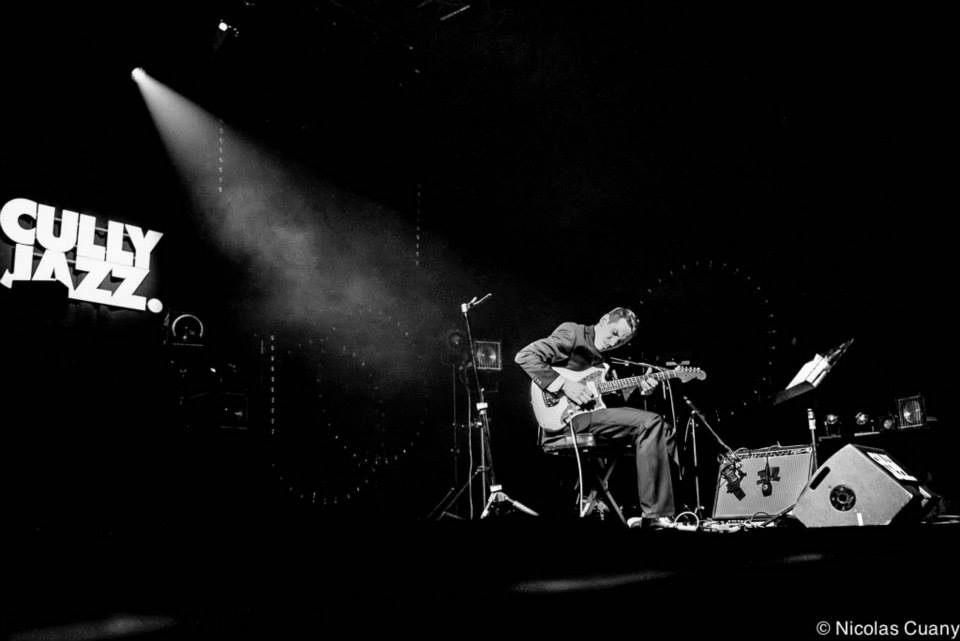
1907597_10152074424737712_93029093_nLa soirée « guitare » du CullyJazz Festival nous a révélé un magnifique musicien : avant Marc Ribot et Medeski Martin & Wood avec le guitariste de Wilco Nels Cline, jouait le jeune Biennois Roman Nowka, en solo.

On le savait alors bassiste dans le fameux Lucien Dubuis Trio, guère plus. Curiosité et impatience de voir une nouvelle figure sur cette belle grande scène, devant un parterre noir de monde. Tout sourire, accent fleuri en prime, Roman Nowka nous dira ensuite : « La musique, ça me plaît quand il y a de l’espace et que c’est fragile. » Nous étions donc tous au bon endroit.


“Il faut être présent, jouer ce qu’on aime, et ne pas avoir peur”

Nonchalant et jovial, il a entonné de petites ritournelles sympathiques, assez techniques et décalées, avant de nous happer dans un univers d’une belle intensité. Prendre le temps de bien rajuster son micro, de trouver ses mots pour dire peu mais bien, de modifier un réglage sans se presser. Un peu drolatique car « normalement on doit toujours montrer qu’on est fort ; mais moi ce qui m’intéresse c’est le concert : simple, joyeux, honnête. » Peu à peu le public s’est tu, avant de littéralement flotter avec lui, très attentif. « C’était prévu, je savais – enfin ! je ne savais pas si ça allait marcher –  mais c’est l’effet que je recherchais. »

En avril sortaient simultanément deux albums : un solo nommé Jazzmaster – « c’est juste parce que c’est le nom de la guitare Fender que j’utilise, elle était tellement cher ! c’est un peu nul comme nom » – mais aussi un très beau disque de reprise de Duke Ellington en trio, Do Da Ellington, avec Thobbias Schramm à la batterie et Samuel Kühn à la basse. Avant, il y a encore eu Me Myself and I en solo « parce que j’aime bien être seul avec ma guitare n’importe où, c’est comme ça que j’ai commencé. »

“J’écoutais à fond Michaël Jackson, David Hasselhof”

Boire un café avec Roman Nowka, c’est aussi parler pêle-mêle de souvenirs de la Californie où il a grandi, de son père guitariste classique, de sa mère vendeuse de sandwiches à Venice Beach, des thérapies d’Arthur Janov, de sa formation en haute école de musique et de son amour de la pop – « J’écoutais à fond Michaël Jackson, David Hasselhof, . Le jazz pas tellement en fait, à part Monk ou quelques trucs. »

Comme avec la poule et l’œuf, on ne sait jamais trop si c’est la candeur qui fait le grand musicien, ou l’inverse. Roman Nowka est de ces gens-là, qui donnent au monde une musique presque céleste. Il travaille aujourd’hui à un autre album solo, à sortir en 2015 probablement. Un bel artiste à surveiller, car « on s’améliore toujours ».

www.romannowka.com

Puts Marie: «Laut, vulgär und skurril sind unsere Konzerte immer noch»

©joelle Neuenschwander

Max Usata, Sänger der Bieler Band Puts Marie, wanderte 2009 kurzentschlossen nach New York aus. Niemand wusste, was aus Puts Marie wird. Und so suchte man neue Perspektiven. Es entstanden sechs Kinder, ein Gitarrenladen, ja sogar eine Broadway-Karriere. Neue musikalische Projekte wurden in Angriff genommen. Die Ankündigung Ende letzten Jahres, dass Puts Marie ihre EP «Masoch» beim Lausanner Label Two Gentlemen veröffentlichen, kam dann auch unerwartet.

Nun sind sie zurück auf der Bühne: Reifer und mit frischen Songs, die eine neue, ernsthaftere Note einschlagen, ohne dabei auf die Energie ihrer früheren Auftritte zu verzichten. Max Usata erzählt uns von den Veränderungen und den Plänen von Puts Marie.

In einem Interview habt ihr gesagt, dass ihr euch während der Auszeit viel musikalisches Know-how angeeignet habt. So konntet ihr bei der Aufnahme von «Masoch» eine andere Qualität in eure Musik einbringen. Inwiefern beeinflusste dies das Songwriting?

Max Usata: Wir redeten damals von zwei verschiedenen Dingen. Einerseits haben wir das technische Know-how gemeint: Unser Gitarrist Sirup hat sich als Sound Engineer immer mehr Wissen angeeignet, indem er sein Tonstudio immer mehr ausbaute und immer mehr Studio-Aufträge an Land zog. Das hatte einen starken Einfluss auf die Soundqualität. Zudem hatten wir das Glück, Leute wie Jeff Stuart Saltzmann und Dave McNair an Bord holen zu können In der Postproduktion hatten beide einen starken Einfluss auf den Sound von «Masoch», auch wenn die Aufnahmen von Sirup schon sehr gut waren.

Anderseits ist die Band über die Jahre durch Tüfteln und durch viel Spielpraxis immer wieder auf neuen Sound gestossen, vor allem was den des Basses, der Gitarre und der Orgel angeht. Das hört man nun auf der neuen Platte. Sicherlich wurde dabei auch das Songwriting beeinflusst. Die Lieder haben viele Instrumental-Parts, was aus dem neuen Sound hervorgeht.

©Jenna Calderari
©Jenna Calderari

Sind die klanglichen Veränderungen in eurer Musik ein Resultat des abrupten Bruchs im Jahr 2009? Wird das Thema in euren aktuellen Songs überhaupt angesprochen?

Max Usata: Nicht direkt, nein. Eher indirekt. Dass sich jeder danach umorientierte und andere musikalische Projekte verfolgte, hatte am Ende wohl am meisten Einfluss, denke ich. Wir und alle um uns herum wurden älter und reifer, was sich auch in einer grösseren Offenheit gegenüber Neuem, Unsicherem und allem, was vor uns liegt, zeigt.

Ihr beschreibt eure neuen Songs als schwerer, ernsthafter, egoistischer. Es ist nicht mehr das oberste Ziel, die Leute zum Tanzen zu bringen oder Party zu machen. Hat das die Art, wie ihr auf der Bühne Musik macht, verändert?

Max Usata: Das ist schwer zu sagen. Es macht ja immer noch unglaublich viel Spass, auf der Bühne Musik zu machen. Was heisst schon Party machen? Ja, vielleicht ist es schwieriger zu den neuen Songs zu tanzen. Laut, vulgär und skurril sind unsere Konzerte aber nach wie vor. Das klingt für mich eher nach Party als bloss wildes Getanze.

Ihr seid in den letzten Jahren sesshafter geworden. Wie sehen eure Pläne aus? Zieht es euch ins Ausland?

Max Usata: Ins Ausland? Ja, bitte! Unbedingt! Das wird nur eine Frage von guter Organisation sein. In der Vergangenheit haben wir sehr oft im Ausland gespielt und uns liegt viel daran, dies auch weiterhin zu tun. Puts Marie gehört ins Ausland. Sowohl was die Musik als auch die Einflüsse anbelangt, fühlen wir uns dort zu Hause. Wir haben viele Freunde ausserhalb der Schweiz und wollen auch für sie spielen. Es gibt dort andere Bühnen, andere Stimmungen und andere Situationen, die wir mit vielen guten Erinnerungen verbinden. Und nach Japan wollen wir auch!

Die EP «Masoch» ist am 10. Dezember 2013 bei Two Gentlemen erschienen. Am 29. Mai 2014 treten sie an der Bad Bonn Kilbi auf.

Und noch: Neuchâtel, Festi’Neuch am 13. Juni. Zurich, Wipkingen Openair am 20.Juni. Pully, For Noise Festival am 23. August. Orprund, PFF, am 29. August. Tavannes, am Le Royal am 7. November


L’Orchestre Tout Puissant Marcel Duchamp prend son envol

Il est la coqueluche de la presse suisse et française. Samedi 26 avril, il est l’invité du des Inouïs du Printemps de Bourges, un concert important qui s’inscrit dans une tournée française et allemande bien remplie.

otpmd_portrait_HD2

Il, c’est L’Orchestre Tout Puissant Marcel Duchamp. Vincent Bertholet, bassiste, fondateur et leader de cette formation, a réuni dans cet intitulé à rallonge deux de ses grandes sources d’inspiration : les big bands postindépendances africaines et l’artiste français inventeur du ready made, connu pour son sens du jeu, de l’humour et de la distance. L’Orchestre Tout Puissant Marcel Duchamp est né il y a huit ans, d’une carte blanche offerte de la Cave 12, haut lieu des musiques expérimentales et alternatives du bout du lac.

C’est grâce à « Rotorotor », son troisième et récent opus, produit par John Parish (PJ Harvey, Eels…) que l’OTPMD fait sensation. Le producteur anglais a su trouver le son juste pour emballer ces drôles de bacchanales rock’n’roll où marimba et groove puissant entrent en collision avec la voix de la chanteuse et poétesse Liz Moscarola. La transe de l’Orchestre Tout Puissant Marcel Duchamp peut désormais prendre son envol.

Comment gérez-vous  ce soudain succès critique et les dates de tournée qui se multiplient ?

Vincent Bertholet Ça nous fait rire… On sait que tout cela est très éphémère, mais on en profite à fond. C’est incroyable, aujourd’hui on pourrait même refuser des concerts….

Comment expliquez-vous cet engouement ?

Vincent Bertholet L’argent y est pour beaucoup. Nous avons reçu une bourse de la ville et de l’état de Genève. Nous avons ainsi pu engager des professionnels qui eux-mêmes ont fait fonctionner leur réseau. Nous nous sommes aussi assagis. Avant on était plus expérimental. Ce nouvel album s’est fait en deux ans ; on a rôdé les titres sur scènes avant d’entrer en studio. Enfin, il y bien sûr l’effet John Parish et son art du mixage. Jusque-là, on ne savait pas faire des disques…

D’où vient ce goût pour le télescopage musical ?

Vincent Bertholet Je peux aussi bien écouter un joueur de guimbarde, que du punk ou des musiques africaines. Je n’ai d’ailleurs jamais compris les gens qui aiment exclusivement une forme de musique. La carte blanche de la Cave 12 m’a donné envie de mettre ensemble des musiciens qui ne se connaissaient pas et de proposer à une danseuse de venir faire la voix. D’autres musiciens ont ensuite remplacé les premiers. A chaque fois, c’était pour aller vers le mieux, mais en gardant la même direction musicale. On pourrait changer tous les membres de la formation sauf Liz Moscarola (la chanteuse). Je partage les mêmes goûts que Liz et si je vois qu’elle croche à un morceau, cela me conforte dans mes choix.

Comment composez-vous ? 

Vincent Bertholet Le plus souvent, je pose un rythme à la contrebasse, parfois un thème. Après on cherche, puis je sélectionne. L’Orchestre Tout Puissant Marcel Duchamp n’a pas du tout un fonctionnement démocratique.

Vos envies ? 

Vincent Bertholet  Je me lasse très vite de tout. Pour le moment nous n’arrivons pas à faire durer nos morceaux. C’est un de nos objectifs. J’aimerais avoir un orchestre de 15 musiciens et remplacer la section de cuivres par un ensemble de cordes. Evidemment Fela est la référence absolue en la matière. Il arrive à faire des morceaux de vingt minutes avec pas grand chose. Le plus difficile c’est toujours de faire simple.

Bandcamp de l’Orchestre Tout Puissant Marcel Duchamp

Dates de la tournée française et allemande du groupe

https://soundcloud.com/banlieues-bleues-1/orchestre-tout-puissant-marcel

“What we saw and experienced in the United States was very inspiring”

BOY_Benedikt Schnermann

Valeska Steiner, the singer of Boy, shared her thoughts with Swissvibes on the band’s recent US.

You just finished touring the US. What were the highlights?

The whole tour was very special to us. It was the first time we toured the US with the whole band. The show at Webster Hall in New York was something extraordinary for us, as it is always special to play in New York. We were very nervous and excited at the same time. People were so nice to us and the atmosphere was great. We were on tour for 4 weeks. We played in big cities and in smaller ones. We sometimes had quieter crowds and sometimes very excited ones. Both experiences were nice. New York was a great crowd, but we also had special shows in Washington DC and in Portland. It was a smaller venue and a very intimate show. We are always very surprised we hear people sing along with us. It’s really fun.

[vimeo http://vimeo.com/79137240]

In New York, quite a few Swiss expats came to see the show. Did you have other “Swiss” crowds during the tour?

We had some Swiss people, but there were more Germans. You can also notice the Germans in the crowd as they make themselves noticed. The Swiss people are quieter. I am the only Swiss member of the band. And we have a big following in Germany.

Did you get a chance to meet US bands during the tour?

Not really. Life on tour can be pretty insulated. You spend a lot of time in your tour bus, going from one city to another. You often don’t see much of the city as you go straight to the club, where you play. But we had Jeremy Messersmith open for us.

You also had a good exposure in the media…

Yes, in Philadelphia, we played at World Cafe (ndlr, the cutting-edge rock show on NPR, the American Public Radio). We also played on KCRW (ndlr, Famous underground rock radio station in Los Angeles) . It was really nice and we got 45 minutes of air time.

You played in some of the best venues in the US, including on a Friday night at Webster Hall in New York. How did that happen?

We have a great booking agency, High Road Touring. We were really impressed with the venues they booked for us.

You drove through the whole United States. How was this experience?

It was beautiful. Denver was one of the highlights of trip. We had a day off and our bus driver drove us to Garden of the Gods in Colorado Springs. He always wanted to go there and we were really happy to discover this incredible place.

Did you get a chance to write some new music while you were in the US?

We are not a band that writes on the bus. But what we saw and experienced in the United States was very inspiring. Hopefully all this will turn into songs. The show in San Diego was the last show of the tour but also of the album. We have been touring for 2 1/2 years. We are looking forward to spending some time at home and recording our new album.

For more info:

Boy’s website

Boy’s Facebook page