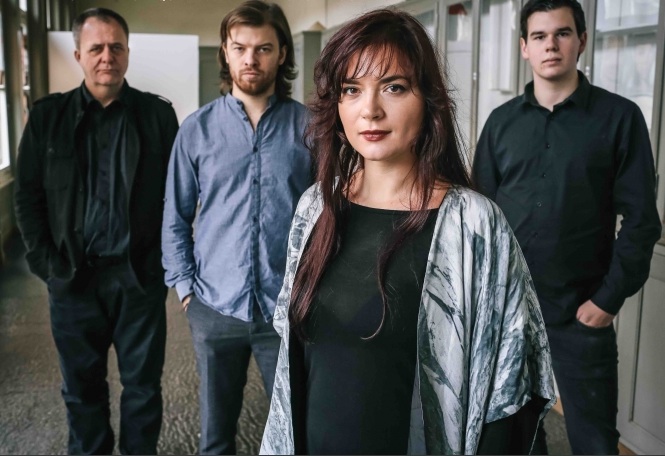
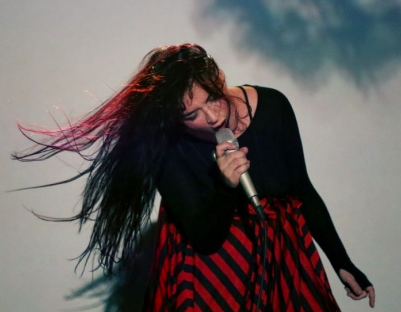
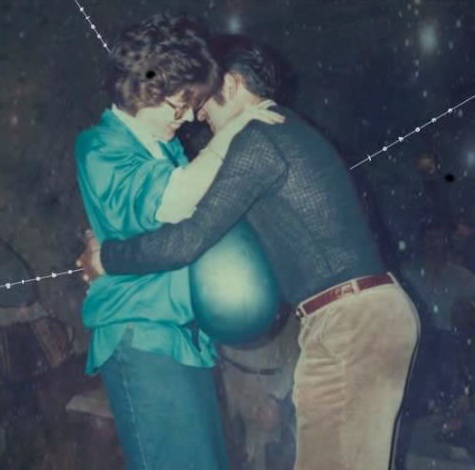
I can’t pay a bigger compliment to Klaus Johann Grobe than to say they make me want to learn German (I’m actually looking at courses in London now). For the moment I freely sing along to their album Im Sinne der Zeit not knowing what on earth I’m saying. When I got the CD I played it every morning, over and over, because it made me so happy.
A minor-key world of melancholy and sensuality
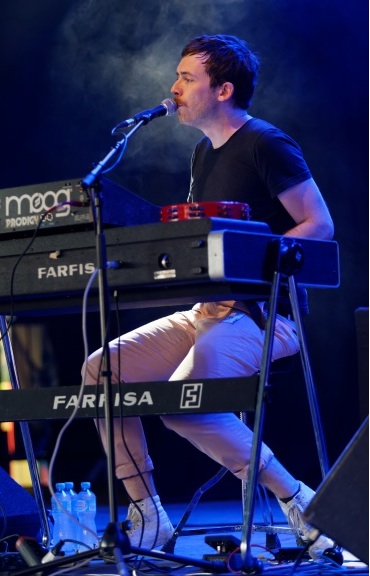
My interest in KJG was immediate. I was due to see them at the Great Escape festival in Brighton in May and so I did some research on YouTube (of course). I found a live version of ‘Traumhaft’ and the very first chords of Moog/Farfisa synths pricked up my ears – the sound was so dandy, almost comical, and yet honest and soulful. The vocals seemed to dwell in a minor-key world of melancholy and sensuality, entwined with a thread of quiet optimism. It sounded nostalgic for DIY culture and a time of simplicity yet was progressive and fresh.
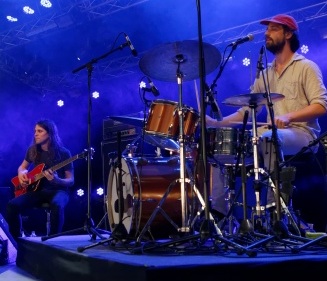
Their show confirmed me as a fan and I literally barged people out of the way so I could be near the front (I avoided the very front row as I was aware my stalker-grin might scare the band). It was the irresistible synth sensibility of Sevi Landolt that drew me to them, but the equally genuine and clever rhythm section of Daniel Bachmann on drums and Stephan Brunner on bass (for the live shows) made this trio greater than the sum of its parts. I cornered their manager (who happens to be a great guy from Liverpool), gushed about how much I liked them and got a CD – then I gushed about how much I loved the CD cover. My gushing hasn’t stopped.
A serious depth of musical knowledge
On the album, tracks such as ‘Koffer’ give a sense of The Doors metamorphosing into The Jam via Herb Alpert. There are wafts of garage band, psychedelia and post-punk outfits like Howard Devoto’s sharp and lyrical, Magazine. Sevi throws us scraps of groove that the keyboard King, Jimmy Smith, would even nod his head to. You sense there is a serious depth of musical knowledge that underpins their unique ideas, but they draw on influences without being derivative.
These guys aren’t afraid of an easy listening sway
‘Les Grecks’ still makes me chuckle as it wafts in memories of Peter Fenn’s music for the TV quiz show, ‘Sale of the Century’. These guys aren’t afraid of an easy listening sway or blowing an unashamedly romantic mist onto tracks like ‘Vergangenes’. If they keep their timing, simplicity and never try to be anything except genuine, I’m sure I will stay hooked. In fact I’m coming all the way to Switzerland to see them play the For Noise Festival in Pully on Thursday 20 August (I’ll be near the front with a big stalker-grin on my face…).
Not a great fan of distorted digital noises of any kind, I was not prepared to like the work of Blaise Caillet – AKA Sknail – the main perpetrator of the nu-electronica subgenre called ‘glitch jazz’. However, one must always be ready to eat one’s hat. In the intelligent hands of Caillet, the Sknail project is carried off with such graceful modernity and beauty that no one could begrudge him a few mechanical distortions here and there.
A mercurial soundscape
« Snail Charmers » is the second LP that spearheads this sci-fi fusion of jazz and the dark side of modern electronics. Listening to the album is like stepping into a mercurial soundscape where drums are replaced by subtle, finely-tuned scratches and digital malfunctions. Thanks to Caillet’s gifted production skills, they actually are made to sound beautiful, sitting perfectly at ease next to six professional jazz musicians and their elegant experimentation. The LP is a seamless work, fabulously suited to the soundtrack of a would-be Nordic thriller set in a misty land of half human, half robotic jazz warriors.
This Mad Max journey of confrontation between man and machine.
The chilly, not-quite-human electronic glitches are woven with great craftmanship into the sinuey hues of voice, trumpet, bass clarinet, piano and double bass. The result is a silvery, thin blanket of sound that is far warmer and more welcoming than expected. ‘Snail Charmers’ and ‘Something’s got to give’ are probably my favourite tracks of the year so far. Rapper/narrator/singer, Nya, works wonders with his languid, lilting vocals, adding the needed human guidance along this Mad Max journey of confrontation between man and machine. This work is cleverly thought-out and studied from every angle: concept, sound and visuals. Glitch jazz is indeed a product of our digital times, proving that the conquering and innovative spirit of jazz can be merged with anything, even “the aesthetic of failure”.
In conversation with Blaise Caillet:
Did you come up with the term ‘glitch jazz’?
Blaise Caillet: Glitch jazz is a subgenre of electronica. When I checked it on google, the term “glitch jazz” already existed. There are mostly DJ productions, in other words an electro beat with jazz samples and some little glitchy sounds thrown in. When I created the “Sknail” project, I wanted to take the word “glitch jazz” quite literally, ie: real glitches with real jazz! It felt really new. Now when you google “glitch jazz”, the first result that appears is sknail.com.
How was your first LP, ‘Glitch Jazz’ received?
Blaise Caillet: Some listeners were shocked and still are now! The first time I heard Alva Noto (pure glitch music) I was shocked too but it’s good to be troubled or affected when listening to new music. Personally, I always look for this sensation when listening to music. The first Sknail LP was generally well received by people looking for these kind of sensations. I prefer developing an original musical project, taking a path where nobody has gone before, even if it’s something shocking or displeasing.
Drums? Is this the role of the glitches?
Blaise Caillet: Yes, you can look at it this way. The glitches are micro samples and micro sounds stemming from machine failures, electronic malfunctions. When these micros samples are cut, clipped, treated, stuck together, you can get a very smart and definite percussion sound. In the end, the way to give a pulse to a track doesn’t matter, the important thing is getting the pulse, feeling the vibe. Also, using glitch rhythms in electronic music gives a different, finer sound than the “classical” electro drum machines. It results in a different aesthetic.
A lot of the tracks on both LPs have a very filmic, soundtracky quality. Do you plan to work in this domain?
Blaise Caillet: Yes I do. I worked last year with a French producer to adapt a Sknail track for a short movie that was featured in the “Nuit des Images” at Lausanne’s Elysée photography museum.
The timbre of the music has a beautiful melancholic quality. Do you think glitch jazz can ever be upbeat and joyful?
Blaise Caillet: I always use minor and modal (without harmonic changes) tonalities in this project. That gives a very specific mood to the music with a melancholic timbre. This timbre is specific to a certain kind of avant-garde jazz and, when it’s mixed with a cold and clinical electronica glitch music, it transcends itself. This is what I’m into: mixing the timbre and the styles, finding new aesthetics. At the beginning, I tried to make some tracks that were joyful and upbeat, but that didn’t work. They had a kitschy side, a kind of a hopping experimental electrojazz house sound which wasn’t what I was after.
Your rapper, Nya, touches on some relevant points about today’s decaying society, (especially in ’Slow Poison’). Is the band more a celebration or an attack on the digital age and what’s it’s brought to the world?
Blaise Caillet: I’ll let Nya answers this question: “It’s neither an attack nor a celebration of the digital age. It’s a balancing act, as with so many things in life. Trying to stay true to our human selves while at the same time evolving and adapting to our environment. Never losing sight of the essential things.”
How important are the visuals to your music? Who’s in charge of them?
Blaise Caillet: It’s very important. When you listen to music, you automatically create images and scenes in your mind. So I think it’s a very smart way to deliver the sound and the image of the music together, to suggest an entire artistic concept to the listener. And the aim is the same as the music: to create something innovative. Online, I met Efrain Becerra from Phoenix, Arizona, I stumbled upon his FB page and was very impressed with his 3D graphical work. I contacted him with the instruction: “Imagine how a jazz club might be in the year 3147 ». We had a lot of brainstorming ideas and exchanges via e-mail, Facebook, Whatsapp but I still haven’t seen, touched or talked to him yet face to face. Welcome to the 2015 dematerialized world!
What’s the Sknail live experience like?
Blaise Caillet: It’s important to understand that my musicians have never met (for both albums!). I recorded each musician one by one and created the tracks layer by layer because I’ve got only one microphone and because I really didn’t know where this project was going at the start. My objective was to realize an entire project by myself: artistic concept, creation, composition, arrangement, recording, mixing, promotion. The only thing I haven’t done myself is the mastering. I’m now working on how to produce the live show. First I have to find the adapted hardware and software, then, figure out how to perfectly synchronize the glitches with the double bass player to make the perfect rhythm section. In a live situation, I want the musicians to be very free like in a “classic” jazz concert, we play the theme and/or the vocal part very straight and arranged, and then the improvisations take off with great interaction between musicians.
Do you have any other music projects outside of Sknail?
Blaise Caillet: I did all the electronic musical arrangements for the last album of Ultra Dieez from Geneva, (Mathieu Delieutraz: composer, singer and guitarist who plays French rock/folk). When we decided to work together, I mixed the electronica glitch timbres to his roots bluesy French rock music and the result was great.
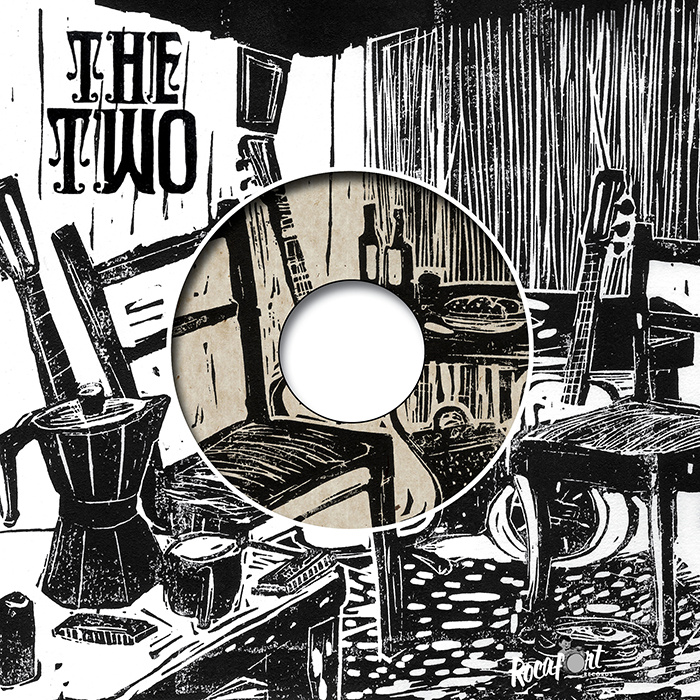
The TWO have been making waves on the Swiss blues scene for the past three years, bringing depth, integrity and colour to what sometimes feels like a long-lost musical tradition. Made up of Mauritian Yannick Nanette (lead vocals, guitar, harmonica) and Swiss Thierry Jaccard (lead guitar, backing vocals), this tight unit is highly thought of in the Swiss blues community and has even caused ripples abroad by reaching the semi-finals of the International Blues Challenge in Memphis earlier this year.
The blues musical tradition has never felt so alive
Watching them play live at La Fête de la Musique at Lausanne’s The Great Escape, I was struck by how authenticity and simplicity are key to their success. Totally committed to their honest, organic sound without a hint of flim-flam to embellish all that is beautiful in its raw and rootsy state. Inhabited by some past life blues ghost once guitars are in hand, The TWO postively levitate with a feel-good factor even when the timbre is plaintive and sombre. The enthusiasm for their musical mission is palpable. The audience are with them, behind them, for them. The blues musical traditon in their hands has never felt so alive. « I’ve got blues in my bones, I’ve got groove in my soul » wails Yannick with a fire-breathing intensity and a voice that bridges the distant Creole with the Delta. It’s a haunting voice that cannot fail to penetrate, transmitting despair in a way that’s more unique than rare, thankfully it is equally uplifting in parts reminding us that the blues is also a music of hope and dreams.
“The blues is an enormous canvas to paint on”
I recently came across this quote from Roger Daltrey talking about his early influences with The Who: « Because it’s so simple and heartfelt, the blues is an enormous canvas to paint on ». Much from little is exactly the tradition that The TWO are carrying forward with effective heart and spirit. Their album ‘Sweet, Dirty, Blues’ was released last November off their own backs and is an honest, raw, relevant work reminding us that all forms of popular music stem from the stripped down simplicity of a nifty guitar riff and a pained, sincere voice. They’ve also just put out an 7-inch single on Lausanne’s Rocafort Records which can only be purchased at their live gigs. I have a hunch that more people will be talking about this vibrant, engaging duo after their first official appearance at Montreux Jazz this summer.
Some questions and answers with The TWO:
How and where did you meet? How long have you been playing together?
The TWO: We met five years ago in Sierre. Thierry was playing at the Hacienda concert hall with the funk band, Brainless. I loved their sound so much that I (Yannick) asked if I could join in for a jam session at the end of the show. They agreed, I rushed home, got dressed nicely, took my harmonica and the story began. Since then I’ve been touring with the Brainless band. Thierry and I quickly saw we had a special feel for the blues and soon decided to work together. Three years have gone by since then and we’ve been grooving restlessly wherever the music takes us.
Name some of the blues inspirations that have impacted on your sound and style of playing.
The TWO: Eric Bibb, Keb Mo, Ray Charles, Eric Triton, Menwar, Zanzak, Baster, Kaya.
There’s not a lot of Swiss blues music around, do you feel like a rare breed?
The TWO: The blues can be everywhere as long as the music is honest, as long as one drives it out from one’s soul, as long as the music is vital, as long as it is an urge to sing or die. What we mean is that the blues is not an aesthetic, some kind of drawer where one is categorised to suit a music market. In the beginning black people were singing to find a light, to cheer up and encourage themselves to bear the conditions of slavery. The blues was a prayer, a cry to come together, to be one, united to face hardship and suffering. Our blues comes from here and we sing with our soul, this same desire to make people come together and move for change. In Switzerland artists like Mark Kelly, Sophie Hunger and many more sing with this fervour, honesty and soul, which for us is the blues.
How did your trip to Memphis affect you?
The TWO: We were really happy to go there, proud to sing our blues where the blues was born. It was some kind of pilgrimage but there in Memphis, many questions came up. We realised that the blues cannot be imprisoned in a place. Music is art and if try to hold it for yourself, keep it in a museum, it withers and dies. The blues is everywhere! No matter where you are, no matter who you are and where you’re from, you can have the blues. It is not an American thing, it is a human thing.
Are The Two always going to be just you two?? Will there be more musicians featured on your forthcoming work?
The TWO: Music is about meeting people and sharing. From time to time we play with a drummer, Felix Bergeron and a violinist, Bastoun. In any case, The TWO is more than just two guys playing their guitars. So many people work behind the scenes, are unseen and these people help our music to be what it is. For now we are touring with our album ‘Sweet, Dirty, Blues’ that came out last year. Time, music and crossroads will tell what happens next.
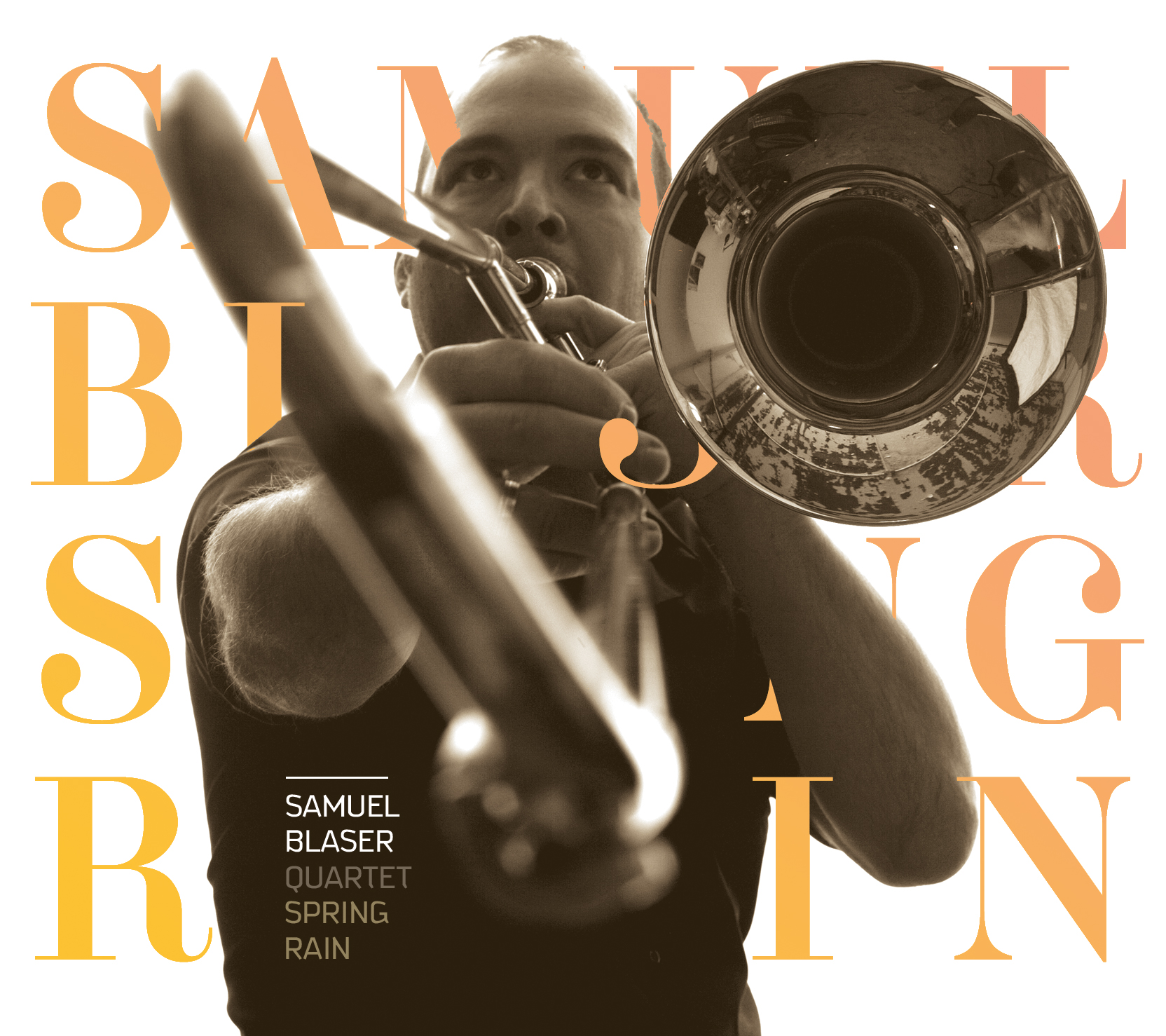
Blaser trills and sways with a wonderful, inebriated tone
Samuel’s opening notes of ‘Jesus Maria’ emit a tone of skewed warmth, imperfect but aglow. What follows is an almost heartbreaking conversation between Blaser, Russ Lossing whose piano notes fall as clear spring raindrops, and the ghostly double bass of Drew Gress. Gerald Cleaver locks into this sensitivity brushing drums or rustling cymbals and I drifted into a meditation that I didn’t want to leave. It’s a gorgeous piece written by Carla Bley and was featured on the Jimmy Giuffre 3‘s album Fusion, 1961. Spring Rain is a tribute to Giuffre, specifically his now-revered, explorative work with Paul Bley and Steve Swallow and combines covers with original compositions in a conducive listen.
Lossing makes the difference in ‘Missing Mark Suetterlyn’: as Blaser trills and sways with a wonderful, inebriated tone, Russ brings the double joy of piano and keyboards (he plays Minimoog, Fender Rhodes and Wurlitzer on this album). His electronic runs and chord stabs funk it up, space it out and take us into a thrilling, lawless landscape. All the time Cleaver is finding off-beats with laudable subtlety; he’s finely integrated but always notable.
A warm ’60s jazz homecoming
This track leads straight into the lucid melody of ‘Temporarily’ (another Carla Bley composition). There’s a sense of the recognisable here, like a warm ’60s jazz homecoming. Blaser hits the spot in the way a trumpet can – with soulful, cool sensibilities. Spring Rain has been directed by Robert Sadin, a classical conductor (a vital point as there are flavours of classical expressionism in Blaser’s playing) who also arranged and produced output such as Gershwin’s World by Herbie Hancock. From the musical themes to the sequencing, this feels a quality production.
I adored Blaser’s short solo ‘Homage’, its romantic grief like a modernist ‘Last Post’. If it was played with Blaser’s late manager, Izumi Uchida in mind, I can’t think of a more touching goodbye. ‘The First Snow’ is a free-for-all improv that again shows how this quartet is greater than the sum of its parts. They entangle themselves yet create space for ideas to breathe a fresh air.
Blaser: “Beautiful melodies and no boundaries” If I’m honest I don’t find the trombone an easy listen, but the combination, especially with Lossing’s exquisite electronic touches, creates both an engaging tension and harmony. Blaser says, “I want people to know that there is jazz, blues, classical music, beautiful melodies and no boundaries,” and maybe that’s why I like this album. However I also think taking Guiffre as inspiration has given Blaser permission to incorporate five interpretative covers as well as provide a fertile direction for composing.
The Giuffre 3 are now recognised for their crucial contribution to free jazz, but disbanded in 1962 after the avant-garde album Free Fall and a gig where they earned 35 cents each. I’m certain there are quite a few musicians out there now who can relate to that.
I met Andreas Schaerer two years ago almost to the day, when he was on a week-long course for jazz musicians in the UK. It was about 10pm and he was the last of seven interviews I was doing, we were both pretty exhausted. There’s a softness to people zapped of the energy to be nervous or erect the usual social barriers. The room was lit only by the evening sky outside and Andreas was slumped forward, his head rested in his hands. “I’m a bit f***ed up,” he said. Lack of planning and things going better than expected meant everything was coming at him at the same time, “Too much work, pressure and expectations,” he explained.
In a way he didn’t need to tell me. When I’d checked his website for my research I could see this was a man who liked to say, ‘Yes’ and play ball with everyone who asked. He wasn’t shy of taking responsibility, but that evening it felt like there was a truly heavy weight on his shoulders.
On May 28th of this year, Andreas will be walking up the ‘red carpet’ of the ECHO Jazz Awards to collect International Vocalist of the Year, a prize won by Gregory Porter in 2014. This is massive, not only for Andreas, but dare I say, for Switzerland. Another building block increasing the country’s reputation for distinctive music of quality. It was just as well Schaerer didn’t take my advice to slim down his commitments! Instead he developed bigger muscles to face the challenges, releasing four albums in just over a year. Admirably he also scheduled in time for a proper long holiday with his young family.
As I write this, Andreas is at home in Bern surrounded by sheets of scores he’s composing for his band Hildegard Lernt Fliegen and the Lucerne Festival Orchestra, no less. That’s music for almost 70 musicians from two harps to eighteen violins and a tuba. “There’ll be some Beatboxing meets classical percussion meets three marimbas,” he told me, “there’ll be fairytale-ish harmonic moments and lots of madness….” That sounds about right. It will be a prestigious, one-off concert in Lucerne on September 5th and I can’t wait.
I know it’s not a Swiss characteristic to ‘blow your own trumpet’ (shout about yourselves) so I like to do it for you. Along with the ECHO Award, Schaerer was nominated for the Swiss Music Prize and voted International Newcomer of 2014 by French magazine, JazzMan. Hildegard Lernt Fliegen won the BMW World Jazz Award – both the jury and the audience prizes (!) and their album, The Fundamental Rhythm Of Unpolished Brains was voted as Best Vocal Release of 2014 by New York City Jazz Record. The album Arcanum with Lucas Niggli won the Deutscher Schallplattenpreis and was chosen as a ‘CHOC’ by JazzMan Magazine in 2014. So not a bad year then. And one that clarifies the importance of originality and drive in a highly competitive and crowded market. I think it helps that Schaerer can have an audience giggling whatever their language, we all need a laugh every so often.
For those of you looking for something intelligently springy to tap your feet to, may I suggest wrapping your ears around the new EP from Grand Pianoramax, (Leo Tardin‘s supergroup trio who have been making waves on the alternative post-jazz hip-hop scene for some years now). BIG EASY, released on 8th May on Geneva-based Mental Groove Records, celebrates a new chapter in the band’s progression towards a lighter, brighter, more accessible sound whilst still retaining all of their refinement and crystalline musicality.
Crossover potential
Whilst not exactly madly carefree, the timbre of their 5 track EP is certainly less abstract and heavily-laden compared to previous work released on ObliqSound Records. The title track, Big Easy, is a perfectly balanced interplay between crisp, bouncy beats, a husky poetic rapping style and beautifully pert piano melodies. It’s a track with crossover potential written all over it: elegantly catchy, radio friendly, almost lounge bar appropriate – not that it’s in any way banal, rather infinitely listenable. There are still three big personalities in the room, they are just less frantically busy than before, making way for a more spacious, relaxed production that succeeds in its aim to draw in a potentially wider audience. The “rough-hewn soundscapes” as they were once described have undergone a slight smoothing over. Drummer Dom Burkhalter and vocalist Black Cracker are still tremendous forces of nature, but their coming together is less of an urgent sound grenade going off in your face, more a measured invitation to a modern, urban sound that has time to unfold its magic.
Sleek lines, incisive statements
The accompanying video is an equally clever translation of the Grand Pianoramax world of aesthetics. Sleek lines, incisive statements made with arty humour all in a chiaroscuro setting, peppered with stylish handclaps, head nods and bursts of colour. It sums up all that is great and good about this band : three strong, contrasting elements craftily blended together into a faultless balancing act. Skillful execution prevails in sight and sound. Watch this video carefully – do we see better with our eyes open or shut?
Constantly pushing each other forwards
Leo is used to being asked about his split identity between solo piano career and Grand Pianoramax bandleader. Both projects are of equal importance to him. “With GP we are constantly pushing each other forward into new frontiers. Despite all three members living in different geographical locations, we work incredibly well together and make use of the space between us to develop creative ideas individually. My piano melodies often work as the basic framework around which we then weave our contributions to the form”. He admits to being very positive about the new label and the new releases. “The goal is clearly to touch more people, why hide the fact we’re looking to be more successful?” The EP is out now on vinyl and digital release, followed by an LP in early September this year.
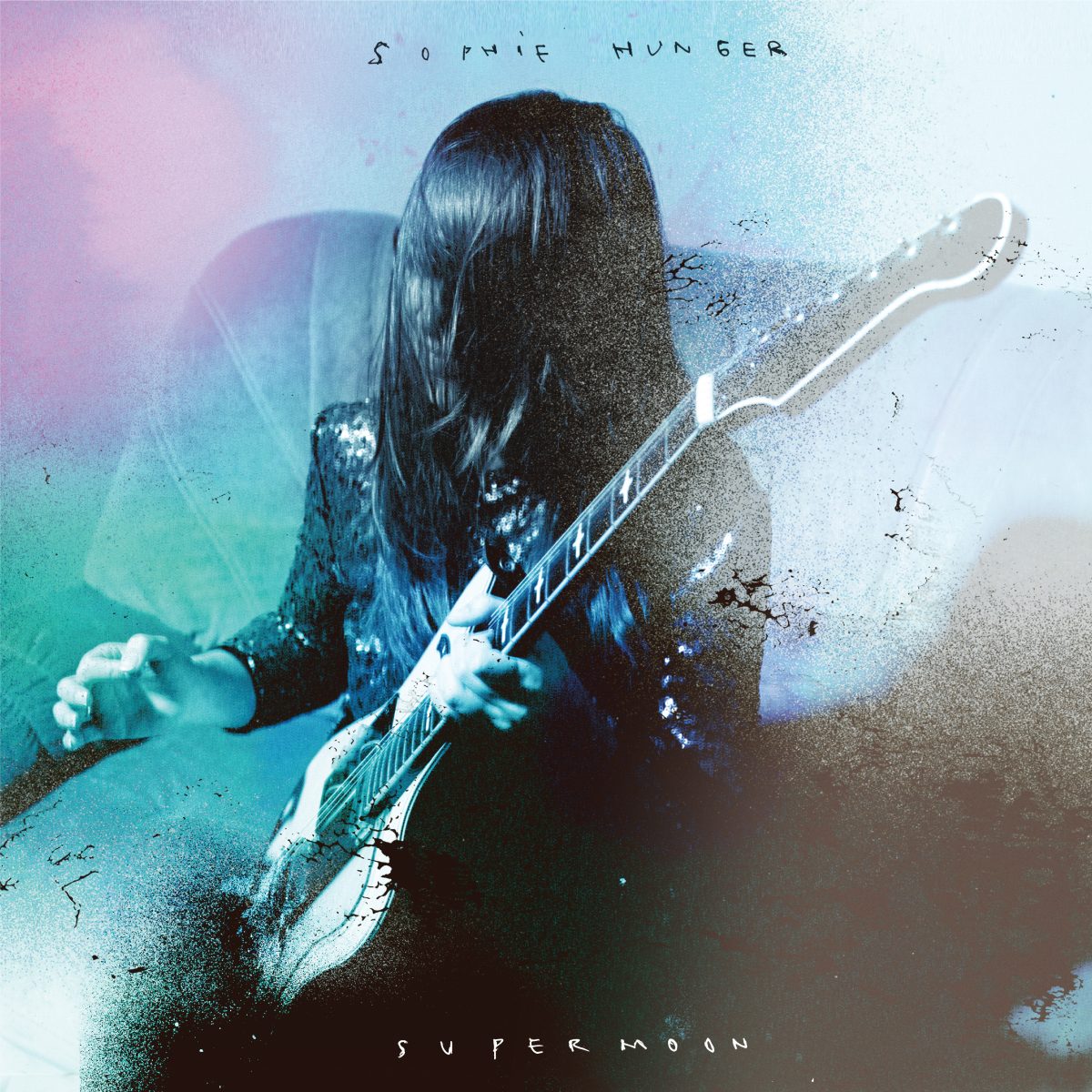
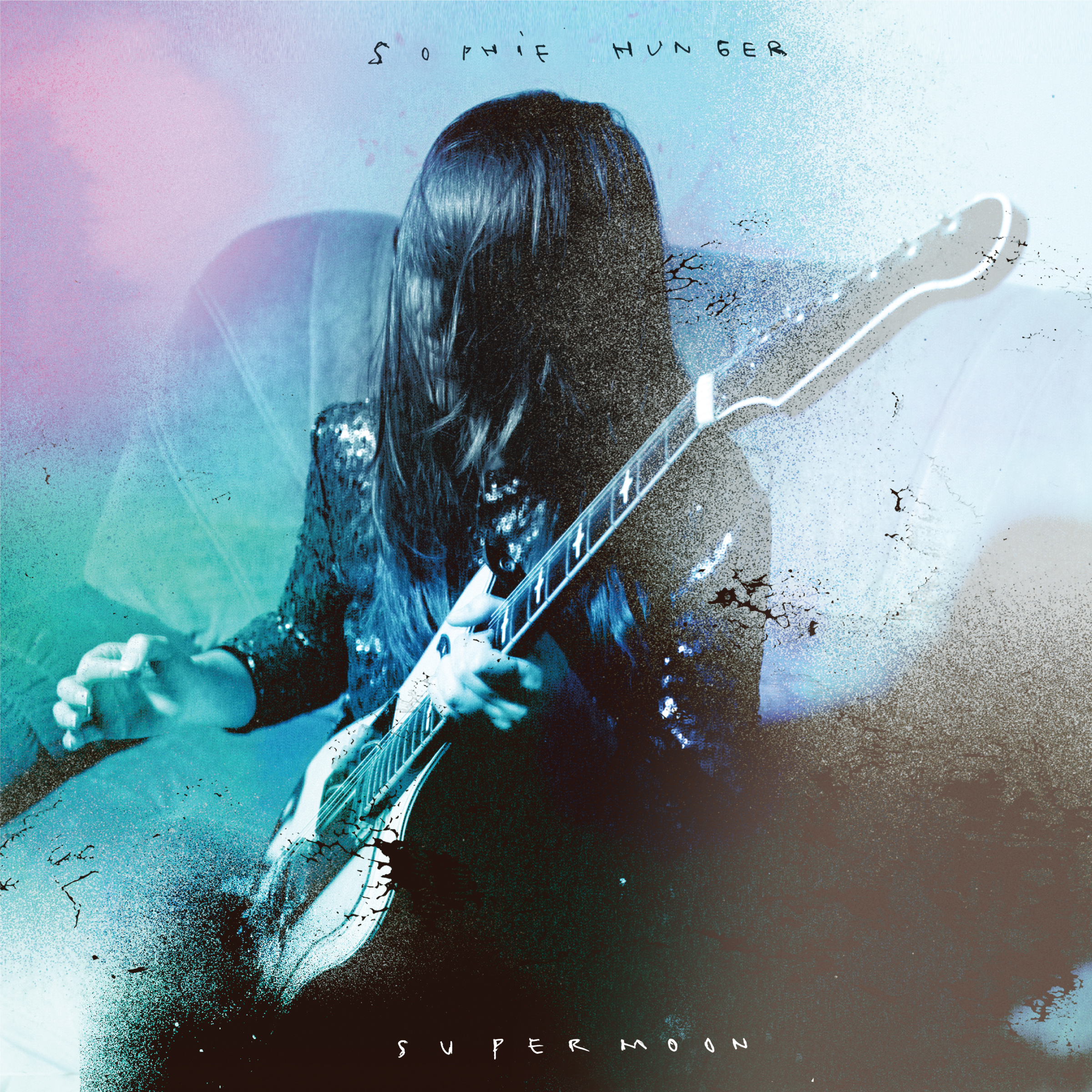
Much has been written about Sophie Hunger‘s stellar credentials: polyglot singer-songwriter, multi-instrumentalist, bandleader, film-maker, the only Swiss artist ever to play Glastonbury, etc… Yet, visually speaking, there’s little hint that she’s one of Switzerland’s most incisive, defiant and successful artists. Watching some of her live footage on YouTube, I was struck by how demure her physical appearance is; she could easily be mistaken for a young graduate turning up for an administrative internship at the local bank. I mention this simply because after listening to her fifth studio album, SUPERMOON just released on Two Gentlemen, I realise that she is indeed establishing herself as a heavyweight on the Swiss alternative pop scene and personally find her lack of super-sized-me visual representation very refreshing. A woman of substance. Like a tough hand in a velvet glove, Hunger’s musical approach often seems understated but is as tough as a big slap when you decide to pay attention.
Uncompromising, intimate, bewitching
The LP was recorded, mixed and mastered in a variety of international locations, hinting at a healthy investment of the part of her record company and a musical confidence of knowing who was going to bring out the best in her sound. SUPERMOON bears many her usual trade marks: uncompromising, intimate, bewitching. Inspired by a trip to the Golden Gate Park museum in San Francisco, the moon takes centre stage as muse in this work and sets the haunting, floaty, echoey tone throughout most of the 12 tracks.
It’s a generally sparse, languid, introspective work that to its credit doesn’t feel over-produced. Space is indeed the place. The title track is all gentle folk guitar and echo-chamber vocals, languid and contemplative with beautiful harmonies that soon seep in and have you looking at the earth from her dark, lunar perspective.
A perfectly lilting, sombre pace
Melodically beautiful and emotionally rich ballads are plentiful. ‘Die Ganze Welt’ being a prime example of a perfectly lilting, sombre pace that is cut through by her sensitive vocal limpidity. ‘Fathr’ is also a stand-out slowie, wonderfully uplifted by divine string arrangements and again a peg on which to hang a silvery vocal delivery full of depth and feeling. Footballer/actor, Eric Cantona makes an unusual appearance as her erstwhile lover in the duet ‘La chanson d’Hélène’ and together they make a decent enough job of this cover version originally done by Romy Schnieder and Michel Piccoli – possibly a strategic move to please Sophie’s large French following.
The potential to be a screaming smash hit single
Thankfully, it’s not all liquid, languid grey tones, there are bursts of great up-tempo rhythms that retain Hunger’s defiant dark edge, adding some fire energy to the moon dance. ‘Mad Miles’, again inspired by her recent trip to California, has the potential to be a screaming smash hit single with its sinister start, big pop chorus, distorted guitar solo middle and tidy end. Similarly ‘Love is not the Answer’, ‘Superman Woman’ and ‘We are the living’ – all examples of perfectly formed, socially-conscious, urgent 3 minute indie wonders.
The question is does Sophie Hunter really want to get into the smash and grab international pop arena that she sometimes hints at? Or is it preferable for her to stay slightly aloof in the shadowy world of underground cult status? A kind of Swiss PJ Harvey full smoldering talent and recalcitrant attitude? SUPERMOON suggests that both options are possible.
Forthcoming live gigs:
17.05 –Zürich, X-Tra 10.07 – Montreux (Montreux Jazz Festival) 25.07 – Lucerne, Blue Balls
Described as “a laboratory of ideas, where you will assist the birth of creation live and direct, public jam sessions, pure sound research”, there’s a sense of anticipation in the air as I wait for The Treichler-Pizzi-Trontin Experience to take to the small stage at the Hundred Blue Bottle Club. It’s the last night of their OFF festival residency in Cully and a tightly-packed crowd of loyal Young Gods fans of all ages are giving off the distinct impression that something thrilling and unique is about the take place. It’s the coming together of well-seasoned, deeply-connected musical partners still capable of enthralling their audience with new ideas and aural concepts. The three musicians share a musical history of almost 30 years, yet everybody present knows that old school nostalgia is not on the menu tonight.
A tight whirlwind of gripping sound
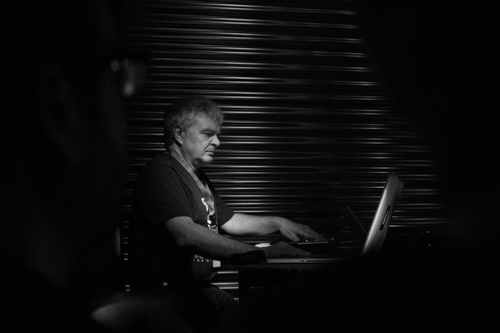
Indeed, for those not familiar with the three-decade towering inferno that are Treichler and company, it might be a surprising sight to see men over 50 producing such a tight, trancy, experimental, head-nodding wall of sound. From the get-go there is a sense of journey, like being yanked onto a rhythmic train moving with pleasant urgency from station to station, hypnotising you with varying degress of intensity and volume along the way. Rhythms are created slowly, electro beats taking their time before coming at you like a whip and ensnarling you into a tight whirlwind of gripping sound.
It’s a technological playground for bedroom rockers
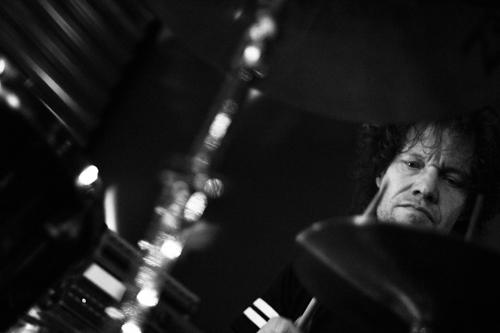
Franz Treichler, the archetypal gum-chewing rock legend, weaves his often unintelligeble vocals in and out of the soundscape tapestry. His words are at times irrelevant and haphasard but serve to add a darker edge to the swirling, dubby rhythms. Interesting effects are used to create echo, reverb, loops and playback – it’s a technological playground for bedroom rockers who like their soundtrack trippy, hypnotic and just that little bit sinister. When things get a little too bouncy, Treichler comes in with a good dose of tough-love guitar to remind us there is beauty in light and shade. However, for me, the greatest of props go to drummer, Bernard Trontin, who steers a tight ship full of funky breakbeats and unparalleled rhythmic structure. Watching his dexterity and joy behind the drumkit is a rare delight.
Four questions to Franz Treichler
What was your reasoning behind “a laboratory of ideas”?
Franz Treichler: We were invited to do a residency at the Hundred Blue Bottle Club as part of the OFF festival at Cully Jazz. It seemed a perfect occasion to try out new ideas without the pressure of having to play Young Gods material. The OFF festival attracts a very open-minded audience at Cully, the atmosphere on stage is very free, basically ‘anything goes’. This felt appropriate for the band. Some ideas were born in the afternoon and played out the same night. Tracks changed every evening. I played guitar in a style I don’t normally use for The Young Gods, the same for my vocals – I couldn’t really call it singing, it was more sound improvisation and throwing things into the mix. There weren’t even any track titles, each piece was considered a session, a one off.
Why didn’t you bill yourselves as The Young Gods?
Franz Treichler: This would have changed the expectations of the audience and would have limited our freedom to experiment. We really wanted to create a mysterious vibe during the residency, encourage the listeners to be curious and progressive with us. Expect the unexpected.
What was happening on stage from a technical point of view?
@J.-Ch.Arav www.sweat-and-tears.ch
Franz Treichler: Cesare and I both had computers loaded with programmes that activate sound, sequencing, loops and pitch. Our computers were synchronised so that I could affect what he was playing and vice versa whilst keeping in rhythm. It was a very free and interactive process, although I must admit that there were times when it was hard to know who was doing what! What we set out to create was a sound of elevation, (music doing the job of the drugs!)
Is this in some way the future sound of The Young Gods?
Franz Treichler: We’d like to do something for the next album that’s in a similar vein, by that I mean not totally sequenced. We’ve always been categorised somewhere between rock and electronic music. It would be good to expand our experimental ambiant side, something less structured, more free.
Band line up:
Franz Treichler – vocals, guitar
Cesare Pizzi – keyboard, sample
Bernard Trontin – drums
“It’s more like being a company than being a musician”
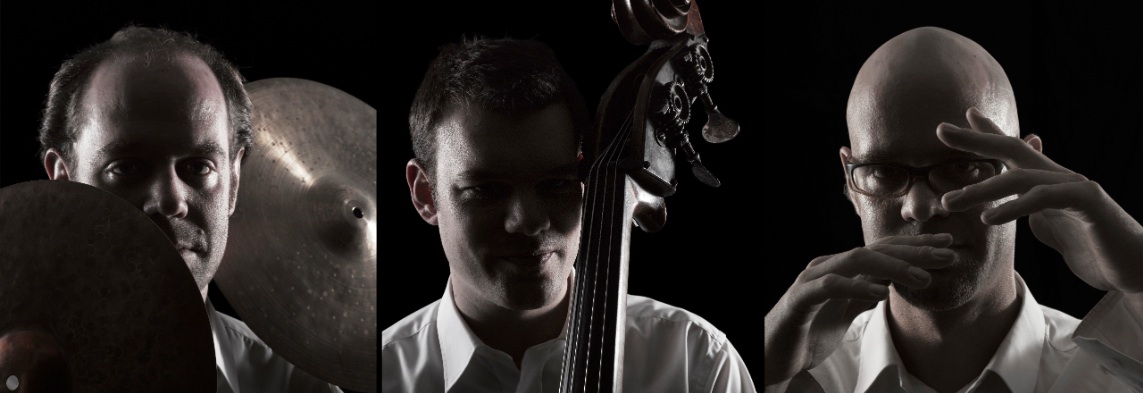
Vein know the business of music. Having met their drummer, Florian Arbenz and pianist, Michael (his twin brother) one thing is clear to me, they have a quiet but effective strategy for being a working band. Stay focused on the goal, don’t be afraid of the dirty work and take risks. Along with double bass player, Thomas Lähns, they also work hard. “Today as a musician you can’t say, ‘I just want to have my fee and that’s it,’ explains Michael, “you have to invest some money sometimes and if you do it right you get it back. It’s more like being a company than being a musician just practising and dreaming – that would be very nice!”
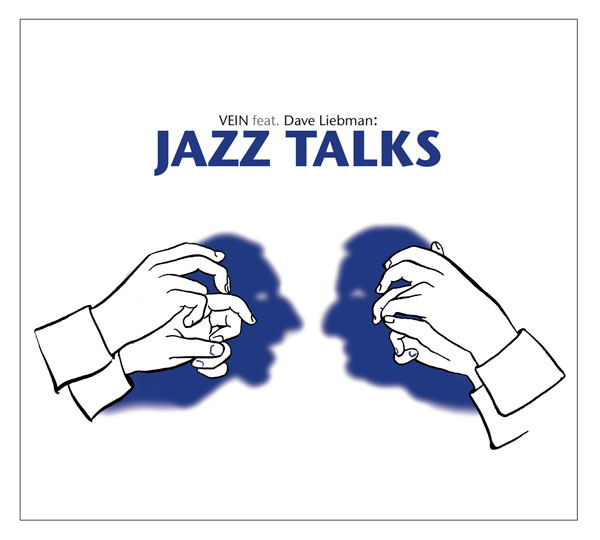
Vein are building their career, brick by brick. Jazz Talks is Vein’s ninth album and features legendary American saxophonist, Dave Liebman. His career includes stints with Miles Davis and Chick Corea – a tangible link to the heritage of jazz of which Vein are clearly so passionate when you hear ‘Walking With a Start’ or ‘Black Tortoise’. Live, Michael ripples with influences from Stravinsky to Bill Evans, but Vein are so steeped in the jazz tradition that they are able to weave in their own voices. Not an overnight achievement. “I think it’s more honest to find something personal and stay with it,” says Michael when we discuss their music style.
Hooking up with celebrated artists has been useful, it nurtures their skills and can connect them to foreign audiences. However, it takes some guts (and talent) to achieve. Greg Osby of the infamous M-Base Collective was the first Michael approached when he was just 23 years old. “It was back in the old days – there was a fax number on the back of one of his CDs and I faxed him and he was very open to play with young musicians, he still is.”
“The good thing was that it was normal to be a musician”
Vein not only make these approaches (a collaboration with a UK saxophonist is next in the pipeline) they also do all the administration and manage themselves. If you check their tour dates below you’ll see what they achieve. Also when you have someone like Liebman in the band, the hotels and travel need to be well organised. Did having parents involved in music (they are both musicians and teachers) help them to understand the business? “The good thing was that it was normal to be a musician,” he says, as musicians can face opposition from their own family, “but it’s more like we’re not afraid to do the dirty work, to call people, it’s a lot of work that’s not nice to do.”
Their curiosity for the piano their father played had them starting music as early as 4 or 5 years old. “The music education was very present but my parents didn’t push us, so it was very natural to get into it.” They also both learnt drums and Michael recalls that making music together was a form of playtime for the brothers, “And after, in our teenage years, it became more serious and it was great to have someone who was the same age and had the same interests.”
“I think we were attracted by the very positive mood of it”
They began listening to their parent’s jazz records and heard Louis Armstrong, Art Tatum and Fats Waller. “I think we were attracted by the very positive mood of it, also it’s kind of virtuoso, and rhythmical with the drums…but I think when we were kids we weren’t analysing it…Louis Armstrong: it’s almost like a celebration or something and we were attracted by that.”
For me, there is almost a telepathy between Michael and Florian onstage but Thomas is an equal member of the crew. “Vein is a collective and this is an important philosophy of the trio…We try to develop to find more possibilities and more freedom on how to play together on an equal level.” The band are always looking for how they can break the traditional roles of a piano trio and be truly multi-dimensional. When I ask what he wants to work on he replies, “Everything…I don’t like to relax and think, ‘Oh now I can do what I want,’ this is dangerous for music. I like to go on and improve everything: to compose better, play better and have more to say – that’s the most difficult”.
16. April VEIN feat. Greg Osby, De Singer, Antwerpen/BE 17. April VEIN feat. Greg Osby, Jazz Celebrations Gorzow/PL 19. April VEIN feat. Greg Osby, Künstlerwerkstatt Pfaffenhofen/DE 20. April VEIN feat. Greg Osby, Jazzkongress Freiburg/DE 21. April St. Ives Jazzclub/UK 22. April Grimsby Jazz/UK 23. April Newcastle/UK 24. April Capstone Theatre. Liverpool/UK 2. Mai Jazzkeller Frankfurt/DE 8. Mai Jazzfestival Schaffhausen/CH 26. Mai VEIN feat. Dave Liebman, Band on the Wall/UK 27. Mai VEIN feat. Dave Liebman, Porgy and Bess, Wien/A 28. Mai VEIN feat. Dave Liebman, Vortex London/UK 29. Mai VEIN feat. Dave Liebman, Jazzlines Birmingham/UK 30. Mai VEIN feat. Dave Liebman, Porgy en Bess, Zeeland/NL 31. Mai EIN feat. Dave Liebman, Platformtheater Groningen/NL 27. Juni Glasgow Jazz Festival/SCO 10. July Montreux Jazz Festival, Château de Chillon
Elina Duni moved to Switzerland when she was ten, five years after she’d first stepped on a stage to sing in her homeland, Albania. Later, studying music in Bern led to a crucial meeting – with pianist and composer, Colin Vallon. It’s Vallon, along with drummer Norbert Pfammatter and now Patrice Moret on bass, who held a mirror up to Elina so she could see who she is and be free to draw on the rich cultural soil of the Balkans.
Elina’s second album for the major label ECM is Dallëndyshe (The Swallow) and listening to it immersed me in a bubble of ancient and distant lives where women call their loves ‘Ylber’ (rainbow) as they watch them leave green hills for work or, war. With titles such as ‘Nënë moj’ (O, Mother) and ‘Kur të pashë’ (When I Saw You), Elina describes them as ‘songs of love and exile’ but somehow the purity of the melodies and simplicity of delivery make them timeless.
What were you driven to express and explore in this album?
Elina Duni I think the word ‘timeless’ is very important in this case…You can feel the songs’ strength because they’ve crossed centuries and the melodies are archaic and deep. It’s this mixture of the contemporary perception each one of us has being a musician living in today’s world and the fact [the songs] are related to something that concerns all of us – we are all migrants, it’s the fate of all human beings: leaving behind something you love, going abroad, going from countryside to city, themes that are universal.
Where and how are did you find these traditional songs?
Elina Duni You may be surprised or maybe not, I found them on YouTube! Albanian friends are always suggesting songs and a friend of mine living in Greece put ‘Fëllënza’ on my wall on Facebook.
‘Fëllënza’ has a melody that has my dopamine triggers firing like Dirty Harry and Elina’s voice is so intimate you feel she’s singing with her head next to yours on a single pillow. Colin Vallon’s tangential arrangement steers it clear of saccharine-slush whilst on ‘Unë në kodër, ti në kodër’ (Me on a Hill, You on a Hill) he hypnotises, plucking piano strings like a cimbalom.
Elina Duni This is one of the songs where Colin wrote the arrangement with the bassline and the ‘mantra’, I had the melody and rhythm but he takes the song to another level…The three of them are wonderful musicians, they never play ‘1st degree music’. For me, art is the distance we take from things, it’s playing or looking at them in the 2nd, 3rd and 4th degree…Balkan music can be so pathetic [evoking pity] and it’s really a trap, somehow this distance from the pathos is the art.
When I started singing these songs Colin told me to imagine how Miles Davis would sing these themes – as simple as possible. When I do an ornament then it’s really thought out, I try not to do too much so when I do something it stands out. It’s the manner for the whole quartet.
You said that we live in a time where there is a need for poetry, say more about this.
Elina Duni Poetry has its own music, you can listen to a poem that you don’t understand and still cry with it… [the language] Albanian has something very interesting, it has a lot of sounds in it and it is a very, very old European language. It has Latin and Turkish words and, they say, also from the Celts, and it has something very deep and at the same time, strange.
Tell me about your childhood in Albania and how you feel about your homeland now.
Elina Duni There is a phrase, ‘there are two tragedies in life: to have a wonderful childhood and to have an awful childhood’. So, I had a wonderful childhood. In Albania it was another time that doesn’t exist anymore, there were no cars, no consumerism, no Coca Cola, no aluminium…we used to be happy when we could eat a chewing gum because it was very rare, or chocolate. We were raised in the neighbourhoods, everybody was going to everybody’s houses…and we were free. We grew up jumping, climbing the trees and running and fighting and being outside all the time…the imagination played a very important role. Everyone was writing poetry and reading…I think this was a golden time.
For me Albania is always inspiring, I go very often, it’s like all the countries that are transforming themselves, they have something alive there. Unfortunately Albanian society is still macho and patriarchal, it’s changing slowly, but there is a lack of models for women…The best thing is to educate women…and to show that being free is not being a sexual object which is hard because the media promotes this – and the singers too. There are so many in Albania, every good-looking girl puts on a mini skirt, makes a video clip and she’s a ‘singer’. I try to do my best to promote another model of woman.
What other projects are you doing?
Elina Duni I’ve been doing a solo project where I sing Albanian songs with guitar but I also did an album a year ago as a singer/songwriter where I wrote songs in Albanian so I’m going on writing, in French and English too…I love the quartet but I am trying to diversify so I’m writing as much as possible to find my way into music – which is not as simple when so many things have been done and you want to find your own original way at looking at things.
I still don’t know where all this is going to lead, the thing is I love acoustic music so maybe this can be a duo with voice and piano, it depends on who your partners are on the adventure, who you find. I would like to go more electric because it is a sound that really attracts me. These days there are no boundaries and you can explore without losing your identity. I love to sing my songs, that’s my biggest dream.
Elina Duni Solo
12.04.15 Cully Jazz Festival – Cully, CH Elina Duni Quartet
21.04.2015 Jazzkaar Festival – Tallinn, Estonia
22.04.2015 Viljandi Folk Music Center, Estonia
24.04.2015 Salle des Fêtes de Carouge – Genève, CH
26.04.2015 Dampfschiff – Brugg CH
29.04.2015 Centralstation – Darmstadt, Germany
09.05.2015 Treibhaus – Innsbruck, Austria
10.05.2015 Bee-Flat im Progr – Bern, CH
27.05.2015 Moods – Zürich, CH
29.05.2015 Paradox – Tilburg, Netherlands
31.05.2015 Rote Salon – Berlin, Germany
13.06.2015 Schloss – Thun, CH
21.06.2015 Bibliothéque Universitaire et cantonale – Lausanne, CH

 These guys aren’t afraid of an easy listening sway

 Not a great fan of distorted digital noises of any kind, I was not prepared to like the work of Blaise Caillet – AKA


 For those of you looking for something intelligently springy to tap your feet to, may I suggest wrapping your ears around the new EP from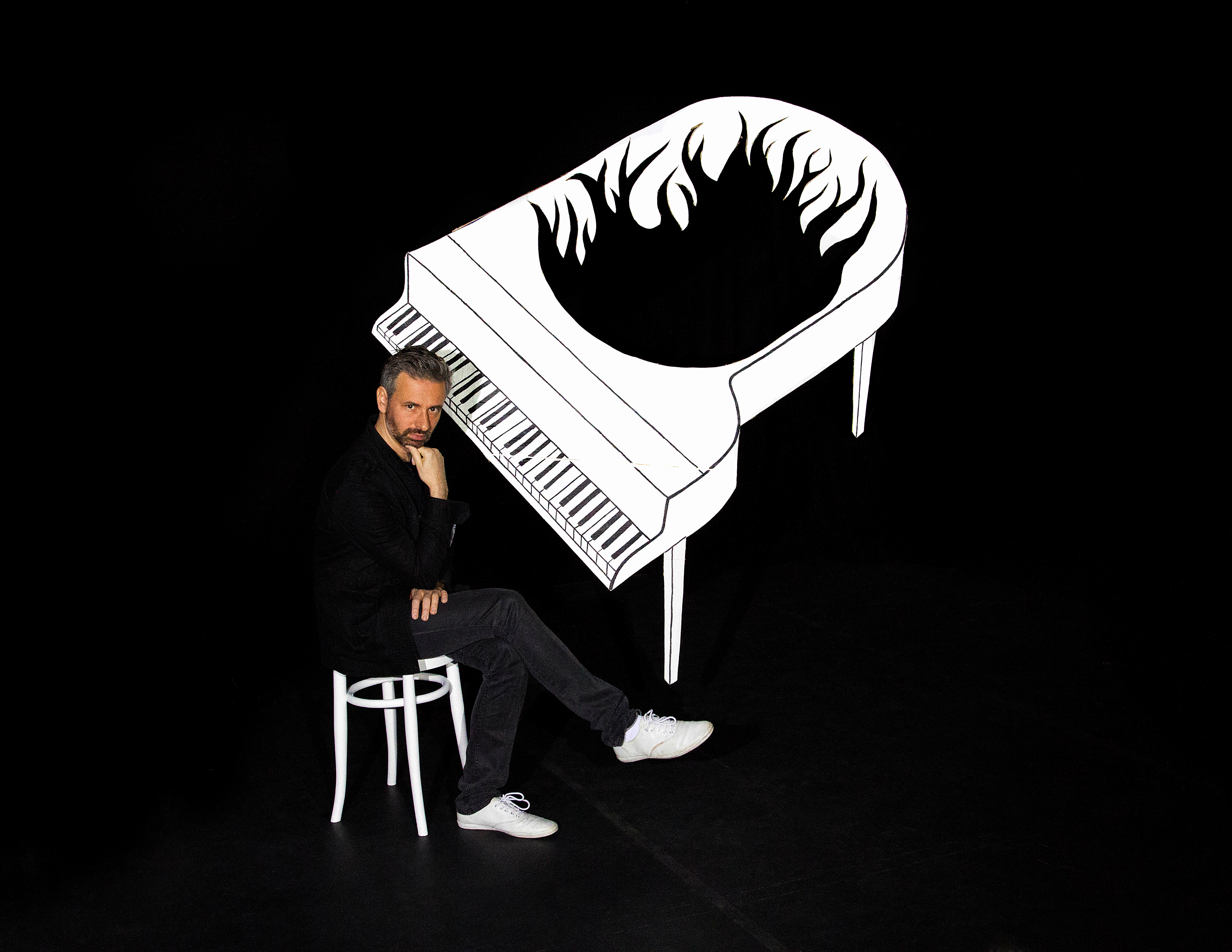
 Much has been written about
 Vein are building their career, brick by brick.