Yilian Cañizares: Cuban colours on the Swiss musical landscape

104-7

Bringing a myriad of verve, elegance and exotic rhythms to the Swiss jazz scene is Havana-born Yilian Cañizares. Classically trained violinist, singer, songwriter, dancer, teacher – there are many feathers to her cap. With a highly acclaimed 2nd album, ‘Invocación’, recently released on Naïve Records and an anticipated live performance at this year’s Cully Jazz festival, Yilian talks about the music that has shaped her and the important role that Switzerland has played in her musical evolution.


How did the violin become part of your life?

Yilian Cañizares: I come from a sporty, musical family and a country where music, singing and dancing are a big part of the cultural identity. As a three year old, singing came first followed by dancing. At music school aged 7, I was directed towards the piano but the minute I saw the violin I felt such a pull towards it that I knew it had to be MY instrument, even though my family thought I was crazy. I still use the piano for composing but then transfer everything to the violin. I’ve had a very strong classical training, but thankfully through the songwriting I’ve been able to develop my own style. At 16, I went to Caracas, Venezuela, to study with the ‘El Sistema’ youth orchestra where violin tuition was more developed than in Cuba. There I had a French violin teacher who told me that Europe was the epicenter for classical violin studies, so I came to Switzerland especially because of Gyula Stuller, (no.1 solo violinist with the Lausanne Chamber Orchestra). The technical and musical level was just of another standard, I benefitted from all the rich musical heritage that had formed Gyula.

How has moving to Switzerland impacted your musical career?

Yilian Cañizares: The impact has been enormous! There is more cultural diversity happening in Switzerland than people think. Geographical centrality is a key element which means that all that’s happening musically and artistically in Europe is within easy reach. Cuba is culturally rich but is locked inwards, not many international artists go there to play, you can’t always hear or get immediate access to what’s happening musically in the world, the learning curve gets cut short. My 15 years in Switzerland have exposed me to so many different styles of playing, listening, learning and teaching. Being here has made me the musician I am today, my style of playing has grown in a way that would have been impossible to imagine in Cuba. There are so many gifted artists in this small country, I feel very lucky to be part of the dynamic Swiss jazz scene. My cultural heritage is respected and welcomed as a richness that can be ploughed back into this multicultural scene. I’m also touched that major Swiss institutions such as Pro Helvetia, La Ville de Lausanne and Swiss Music Export are helping me develop my career, taking me on as a newcomer and helping me transform into a headline act. They believe I am a good ambassador for the young Swiss scene, as well for Cuban music.

How has being in a Francophone environment affected you?

Yilian Cañizares: I once heard someone say that every time you learn a new language you gain a ‘new soul’. Becoming a French speaker has developed a new sensibility in me and a different aesthetic, it’s all part of the person I’ve become. I can now sing and write in French even if it’s harder for me compared to Spanish, but very much part of my musical direction. I feel an affinity with the language and would like to touch as much of the French-speaking audience as possible, so it’s no coincidence that I’ve signed to a French label, Naïve Records in Paris.

 Why did you go to Sweden to record your latest LP?

Yilian Cañizares: Compared to my first LP, I knew I wanted to go onto the next level with regards to my sound.  I noticed that a lot of great current music I’ve been listening to has been recorded in Sweden. They have such great studios, such savoir faire, their culture of sound is really unique. So I was very clear about wanting to use Lars Nilsson at Nilento Studios.

 What are the musical genres that have shaped you and your style?

Yilian Cañizares: I come from a very classical background where Santería music was coming from next door and Cuban jazz from down the street. Then here in Europe I discovered Stéphane Grapelli and what can be done with the violin especially in the jazz context. I’d say that jazz, as opposed to ‘world music’, is what defines me best because of its power of rebirth, improvisation and freedom. I don’t want to be classified as strictly ‘Afro-Cuban’ since musical evolution and transformation is key to what I do and my aim is to be open to many different spheres.

 How would you describe your latest LP, ‘Invocacion’?

Yilian Cañizares: This is my most honest work to date, a real portrait of myself, my lived experiences and all that has shaped me. Above all it’s a homage to loved ones no longer here: my grandfather, family friends, slave ancestors, singers and poets who have taught me so much.  Clearly it’s a very personal, heart-felt work with lots of different influences ranging from a Yoruba traditional prayer to Edith Piaf’s ‘Non, je ne regrette rien’. I hope people can feel the Cuban influence in my work, but also all the other important musical journeys that have helped me evolve. I feel a certain responsibility to represent the ‘new Cuba’, a country with a fragmented population struggling to open up to the world. I am so very Cuban, but for now my place is in Europe.

Band line up:

David Brito (double bass)

Daniel Stawinski (piano)

Cyril Regamey (drums)

Inor Sotolongo (Brasilian percussion)

Forthcoming gigs:

11/04/15 – Cully Jazz (CH)

06/05/15 – Schaffhauser Jazzfestival (CH)

24/06/15 – Basel Off Beat (CH)

25/06/15 – Sunside Sunset (FR)

24/07/15 – Marseille Jazz des Cinq Continents (FR)

15/08/15 – Jazz en Baie (FR)
 

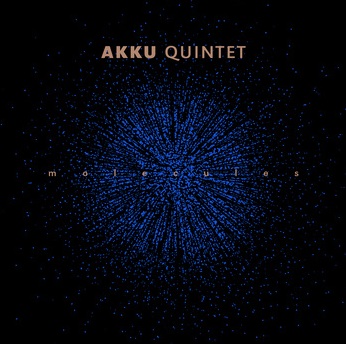
Akku Quintet “Molecules”

Akku QuintetMaja Nydegger’s delicate piano sets up a repetitive motif
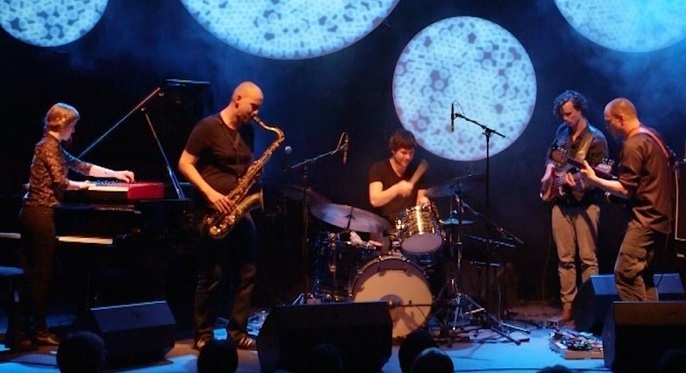
As readers may know, I like space in music. When I first saw a group of Swiss artists jam with the legendary saxophonist, John Surman, the most impressive were those who knew when to ‘shut it’, to avoid an ugly cacophony. Akku Quintet share this sensitivity and aren’t afraid to step away from the mic. Formed by drummer, Manuel Pasquinelli in 2010, Molecules is the quintet’s second release on Pasquinelli’s own label, Morpheus. It’s an EP more than an album and my sense is they are a band in development.

They carefully creep into each track, as in ‘Fluid’ and ‘Schneeman’ when Maja Nydegger’s delicate piano sets up a repetitive motif, almost acting as a mantra for the piece. This is perfectly balanced by the tenor saxophone of Thierry Lüthy who has an assured and warm tone. His notes waft around the piano melody as if the two are in a quiet conversation. When he builds to a sort of circular breathing in ‘Phase Transitions’ it brings a ripple of excitement.

Guitarist Markus Ischer soars through with a woozy-stoned solo
Despite being Pasquinelli’s project he keeps his crisp beats sparse, playing a supportive role and taking time before coming in with off beats, mini-patterns, or simple, unadorned snare and bass drums. Considering the power an electric bass can wield I was rarely aware of it, Andi Schnellmann excels at enmeshing his sound into the others’ like a soft echo of the music.

The best moments come when they suddenly switch the vibe, such as in ‘Schneemann’ when six minutes in, guitarist Markus Ischer soars through with a woozy-stoned solo and Maja subtly responds with low church organ chords and pithy alien-like beeps. Markus Ischer’s guitar is the strongest voice, it resembles Lüthy’s consciousness but with extra drive. He interrupts ‘Phase Transitions’ with a warbling and affected guitar before changing his touch with metallic stabs and long haunting notes, keeping you entranced.

AkkuQuintetMoleculesThere’s a need to develop grit and emotional vulnerability
Akku are creating soundscapes with tracks lasting 10 to 15 minutes (apart from the quirky and jaunty, ‘Freeze’), however, at times I wanted them to turn up the intensity, the music could become so laid back I became disengaged. There’s a need to develop grit and emotional vulnerability in their themes and playing. They are working with media artist Jonas Fehr for their live shows and I liked the cover artwork by Sandro Galli. Pasquinelli has invested in a limited edition of hand-printed covers for the vinyl edition but his next focus should be developing the band’s voice so it stays relevant and is not shy of demanding to be heard.

Akku Quintet website
Akku Quintet Bandcamp

07.04.2015    Freiburg (DE)
08.04.2015    E-Werk – Freiburg (DE)
09.04.2015    Lagerhaus (mediencoop) – Bremen (DE)
11.04.2015    Cafe Fincan – Berlin (DE)
12.04.2015    Stellwerk – Hamburg (DE)
13.04.2015    Jäzzzeit Im Heimathirsch – Köln (DE)
15.04.2015    Immerhin – Würzburg (DE)
16.04.2015    Early Bird – Innsbruck (AUT)

16.05.2015    Orbital Garden  – Bern (CH)  (playing Music By Don Li)

https://youtu.be/58G4kW1YIQs

The beat of Swiss electro pop is TRUE

true_0070-5

Flying the flag for Swiss indie electro pop, TRUE are highly creative Bern-based duo formed by Daniela Sarda on vocals & keys and Rico Baumann on keys, drums, drum machines & sound design. Emerging out of the jazz scene and having cut their teeth on numerous musical projects, the duo came together just over two years ago with the aim of putting their brand of sleek, elegantly-produced synth beats on the European electronica map.

Their sound is deliciously enveloping

True to their aim, the duo have already gained quite a reputation for their sultry, downbeat singles and EPs which are always accompanied by exquisitely made art-house videos directed by film duo Nicole Pfister and Kapuly Dietrich. Their sound is deliciously enveloping due to many strong ingredients: Daniela’s rich sultry voice very apt at carrying emotion, haunting synth arrangements and sparse, compelling beats. As Rico explains, “We like songs that you could play on a guitar or piano, and we put it into an electronic context”. Singles like ‘What I’ve Lost’ and ‘Colors of my Estimation’ are late-night slow-burners that cast shadows on the musical landscape. The lyrics are full of bitter-sweet introspection which hint at the origins of the groups name – “a commitment to unadulterated truth”.

A collectable item in a precious series

Visually, each video and photograph is a studied performance in itself. Not only are True’s videos filmed with a fully live rendition of the song, but each clip has its own particular style, colour and tone, almost as if it were a collectable item in a precious series. The quirky, upbeat ‘Vertyko’ is a seamless take of Japanese 80s-style choreography, blueish hues, mixing up the retro with the futuristic. The timbre of ‘Colors of my Estimation’ is sombre and monochrome to match the moody beats whereas ‘What I’ve lost’ comes at you with dazzlingly bright lights, white attire and a sharp, bouncy rhythm.

Championed regularly by BBC Radio 1 and 6 Music, the duo can be seen at the prestigious M4 festival on the showcase stage at the Moods club in Zurich on 28th March. Keep an eye on this classy Swiss synth pop outfit, released on Mouthwatering Records out of Bern, their name is and their aim is TRUE.

Interesting additional reading: an in depth article entitled “Switzerland: in the creative Spirit” on The Formant blog where TRUEKamikazeSnow GhostsLen Sander among other artists from the Swiss electronic scene are well represented.


Billie Bird’s Session No 3 @ Le Bourg, Lausanne 27/02/2015

1511479_594560730641754_9084482003816325456_o

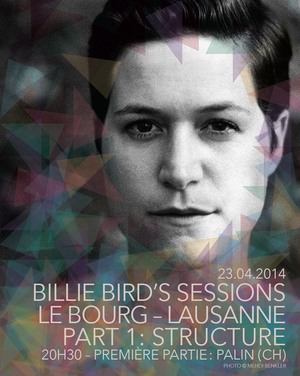
This is Billie Bird‘s third experimental sound session at Lausanne’s cosy Le Bourg theatre. A chance to play out new arrangements and songs that could go on to be used on her forthcoming LP. This intimate, organic musical workshop perfectly suits Bille Bird’s style which is anchored in the folk idiom but is textured with such deep, naked emotion that a close exchange with her audience is an essential part of her live expression. No surprise, it’s a sold out soirée for Lausanne’s finest singer-songwriting talent, her loyal fanbase is out in hoards because once bitten, twice smitten and eager for more.


Immediately you are drawn, tripes and all

Setting the tone is her haunting acoustic version of Bronski Beat’s ‘Smalltown Boy’, (the only cover in her otherwise original repertoire), one that she has made her own by marrying the melancholic dark edges with her sensitive vibrato voice to great emotional and melodic effect. In fact, therein lies Bird’s vocal skill: teasing fragmented, disjointed lines and rhythms with such malleability that everything comes together seamlessly. Immediately you are drawn, tripes and all, into a journey of emotional exorcism helped along the way by the stunning video backdrop of misty landscapes, raging seas and moody skies totally suiting the timbre of her music.

There’s such charming, heartfelt purity in her delivery

Song-by-song a band member joins the stage, so that when it’s time for the bluesy, foot-stomping ‘April’, all hands are on deck for clapping and voices for singing in unison – a change in tone thanks to lightness of Billie’s banjo and the audience’s joyful participation. Another of her great abilities is to blurr the light with the shade: – yes the majority of Billie Bird’s song-writing material is tortured and rueful in colour, but oh, there’s such charming, heartfelt purity in her delivery that one never feels the need to call the Samaritans. Toes are always tapping and fingers eager to snap, even during the darkest lament of love-turned-sour (‘What are we’) or impossible desire (‘Beast’). Hanging emotion on a driving, intricate beat is Billie’s speciality; her original rhythmic patterns are as compelling as her meaningful lyrical content.

She gives difficult emotions a home to go to

It’s a treat to hear her sing in French, (‘Il n’y a rien qui te remplace’), and I would certainly have liked more in her original tongue which to my anglophone ears is made for poetic, romantic suffering. There’s an unexpected afrobeat moment where the entire band fusion together into one deep, hypnotic groove – very refreshing. And then the Tom Jones incident: knickers thrown at her on stage! When I mentioned a loyal fanbase I wasn’t exaggerating. Billie Bird is a blossoming national treasure and audiences are enchanted by her dark, emotive style wherever she performs. It’s as if she gives difficult emotions a home to go to. Her raw, understated delivery has a knack of drawing you in and not letting you go. We were all left wanting more, wishing that the magic of this intimate gig could go on and that her dusky light could shine on us all night.

Line up:

Billie Bird (vocals, guitars, banjo, piano)
Marcin De Morsier (bass, synths, vocals)
Fabio Pinto (guitars, piano, perc, vocals)
Jérémie Duciel (drums)
Giuseppe Greco (live video visuals)

Forthcoming live gigs:

22nd March : Ebullition, Bulle w/ Mister & Mississipi
25th April : Bogen F, Zürich w/ Scott Matthew
19th June : Cully Classique (off festival )

Orioxy “Lost Children”

OrioxyEvocative storytelling perfectly suits this quartet
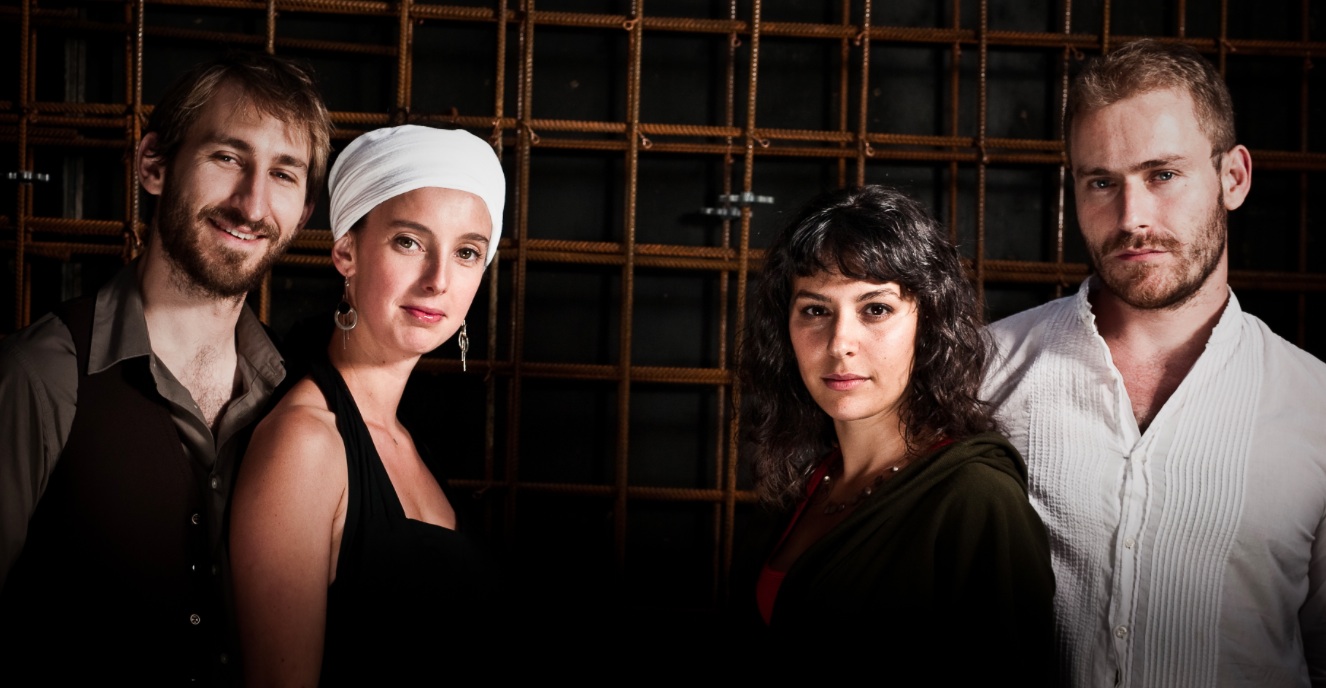
Orioxy’s third album resonates most when it re-imagines the template of simple folk music. Evocative storytelling perfectly suits this quartet of Manu Hagmann on double bass, Roland Merlinc on drums, harpist Julie Campiche and Yael Miller’s voice which at best is pure and unadorned, yet rich with the flavour of her mother tongue, Hebrew.

These stories have a modern accent though. Princeless is Yael’s re-telling of the Cinderella tale, it’s riven with longing and bereft of the happy ending. Soft electronic cries, a melancholic double bass and bare drum taps use a delicacy that binds the whole piece together. Yael Miller’s voice flips between innocence and sensuous knowing throughout, calling on her natural ability for drama. Song of Love is wonderfully accompanied by a percussive typewriter as if the singer is dictating her letter. Some type of squeeze box murmurs sadly and drops of electronica fold into a sympathetic bass solo, all the while the fountain-like harp sparkling light and fresh.

Julie CampicheCampiche’s timing seems to fly directly from her heart
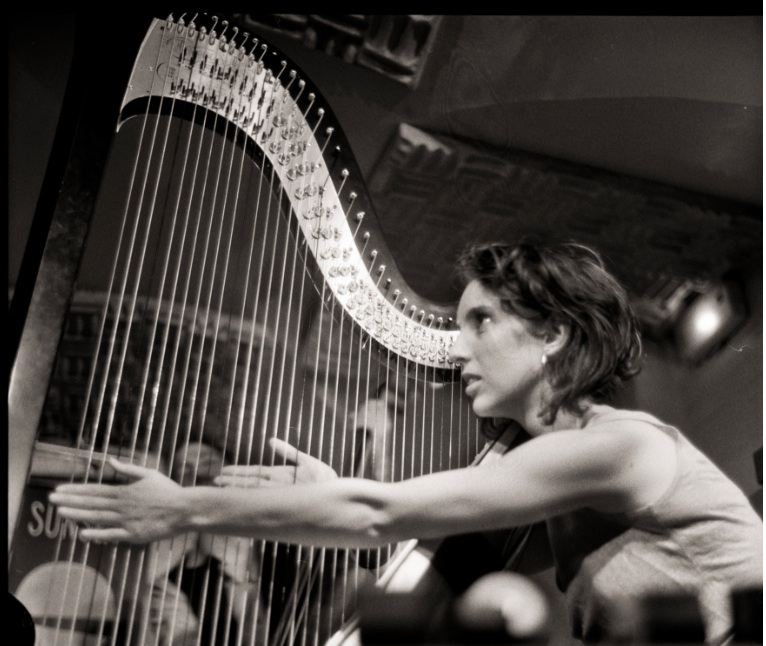
The harp is really the heroine of this album with Julie Campiche’s myriad of subtle colours and styles perfectly placed again and again. Her solo in Isha is spine-tingling. This track is ranging and borderless, a landscape of yearning vocals and grooving rhythms helped by tape rewinds and effects. At first the harp captivates with Middle Eastern vibes amid deep double bass twangs that fall into dark scrapes, before the harp emerges in a solo full of soul and expression. Campiche’s timing seems to fly directly from her heart.

I don’t mind Yael’s rapping or the use of the Sami Darg Team (rappers from Gaza) on Bachour Meshouamam (A Bored Boy) but it does break the spell of the delicate web of lovelorn melodies. As an album, Lost Children does face the danger of its gentle downtempo mood coming to a lethargic halt so I welcome a bit more spit and verve. However, this is best done with their own instruments such as in Old World. Using a bow on the double bass and suitable electronics they bring a free rock track together without a whiff of lead guitar.

There could be a further clarity of the unique Orioxy sound
‘Music doesn’t have a style,’ Yael sings and it’s true this album does not fit into a neat genre. But music does need to have a clear identity, and although this is a decent third album I feel there could be a further clarity of the unique Orioxy sound gained through exploring further musical depth and developing musicianship and songwriting skills.

Interestingly, Orioxy do a captivating interpretation of Paul McCartney’s Blackbird. But in a way that cover serves to show what a truly stunning song can do. It’s the track that has stayed in my head. Orioxy have a good line up of gigs, often a chance for a band to get to know itself on a deeper level. Grab a chance to hear them play as I’m sure there will be some wonderful moments of magic.

Orioxy website and tour dates

[youtube=http://youtu.be/VftefxldpLM]

Welcome to the world of Heidi Happy

heidi-happy-golden-heart

Singer-songwriter Prisk Zemp, otherwise known as Heidi Happy, is a delightful exponent of today’s Swiss indie music scene, delivering a fresh, cheeky, homemade lo-fi folk/pop with an electronic edge. Her ethereal voice is seductively irresistable and has been entrancing audiences in and around Switzerland for the past 10 years. Her latest LP, Golden Heart (Silent Mode/ Irascible), is a creative project of 14 compact songs that float by like a breeze, each full of deep, beautiful melodies as well as a hint of melancholy and “sonic heartbreak”. The album’s received very warm reviews, has sold out and is currently being re-pressed.

Is the name ‘Heidi Happy’ some kind of strategic Swiss marketing trick?

Heidi Happy Funnily enough no, though I did love the Heidi stories as a kid. It was more a question of visual design because my first ever solo live performance was at a party of some graphic designer friends who wanted my stage name to look good on their flyers. There were many to choose from but they decided that Heidi Happy had a nice symmetry to it.

You’re from a small village outside Lucerne, what kind of music did you grow up listening to?

Heidi Happy Everyone is musical in my family: my father is a choir singer, my mother is a classically trained soprano, all my siblings play instruments, music was always happening in the house. As a teenager I loved everything soulful like Aretha Franklin and the funky jazz sound of Jamiroquai and Incognito. My first group was a funk band, I sang, wrote the lyrics and arranged the horn section. During my exchange year in America at 17, I discovered Jimi Hendrix and got into a dirtier, rockier sound which I still appreciate now. In recent years I’ve been very inspired by singers like Feist and Wallis Bird, at home I usually listen to old vinyl records with big voices and orchestra, like Lee Hazlewood or Nina Simone.

How did your career take off?

Heidi Happy I recorded my first CD with the funk band in 1998. Then in 2003 a producer asked me to do an album with him based on my own material. I learnt a lot about what I can/can’t do, what I really want to do and what I’m best suited to. I did so many things on that record that I’m still deeply ashamed of that I decided to not let others convince me to do things (like rapping!) if I’m not sure about it myself. It helped me to listen to my heart and trust my intuition and hence, I have produced all my subsequent LPs. I’ve been lucky to receive some funding from the city and canton of Lucerne which has allowed me to do my own thing. After having released my records on labels like Little Jig and Two Gentlemen, I set up my own label Silent Mode in 2012 on which I have released my records abroad (often in collaboration with other labels and promotors) and in Switzerland.

You’ve been described as “one of the most influential Swiss voices of the moment”. How would you describe your sound/your voice?

Heidi Happy I had a distinctive folk/pop sound at the start that was rather safe and constructed, but now that I’ve branched out into electronic music things feel freer, more open to surprises. My voice is very precious to me after surgery to remove a polyp on my vocal chords in 2001. The operation has given it a slightly more crackly tone, but I’ve learnt to like it and appreciate it more. I always take care of it nowadays and warm up before going on stage.

SNSN_HEIDIHAPPY_LIVE_SCHUUR_221014_Q3A9796

You are quite a multi-instrumentalist powerhouse on stage.

Heidi Happy Each tour is different. I’ve had duo shows where I sang, played guitars, drums, melodica, piano, glockenspiel and used a loop station, or shows with an entire symphonic orchestra where I just sang and played the guitar. It all depends on the songs, location, audience and financial possibilities. Right now I usually perform with my four-piece band or solo with my loop station, guitars, glockenspiel and a synthesizer.

 How is Heidi Happy received abroad?

Heidi Happy I’ve played the most abroad shows in Germany, Holland, Canada, England and in Russia. People abroad seem to really appreciate our music – we get very enthusiastic feedback. Radio stations in France, Germany, Austria and USA have put my songs on their playlist. Thanks to my collaboration with Yello, some people know me without me ever having played there.  We’ve just been on an Austria tour with Clara Lucia, an Austrian singer very similar in style to me. We’ve been friends for a few years and it was a wonderful, perfectly matched tour.

What are you working on at the moment?

Heidi Happy I’m currently writing some film music which has always been a big love of mine. I’m also rearranging my repertoire for a big show in spring next year where I’ll be playing in my hometown Dagmersellen with the local brass band. I’m constantly gigging, writing and looking for new distribution deals abroad to get my music heard.


Forthcoming gigs:

12.12.2014 Zauberwald Lenzerheide (solo)

24.01.2015 Filmtage Solothurn (band)

29.01.2015 Gaskessel Bern (band)

30.01.2015 Moods Zürich (band)

31.01.2015 Kreuz Nidau (band)

27.02.2015 Kulturkarrousel Stäfa (band)

Interview: Johann Bourquenez of Plaistow

©Janice Siegrist
©Janice Siegrist
Johann Bourquenez is hardcore

As Johann walked into the hotel for our first meeting, I got Plaistow‘s music. Dressed in black, head shaved, lean – he is stripped back. There’s an aroma of smoke and an intensity quivering a hair’s breadth beneath the surface, a rapid rhythm. The albums, Citadelle and Lacrimosa, with their trance-inducing repetition, microscopic detail and Johann’s rounds of claustrophobic piano notes, feel driven by a desire for the raw and pure. It didn’t surprise me when he said in preparing for the next album (due out in April 2015) he woke at 6am, worked 8 hours at the piano, then took a bike ride in the evening…every day for a month. It could be said Johann Bourquenez is hardcore.

‘…maybe it’s better not to go too far with this’

French-born and studying jazz in Toulouse, he met drummer Cyril Bondi doing a gig in Geneva. Their connection is the cornerstone of Plaistow, you can hear it on the albums. Johann moved to a squat in Geneva (‘a big house full of crazy people’) and he played regularly with Cyril, but not seriously (‘I was partying a lot.’). Eventually they felt there was something worthwhile, ‘I said to Cyril, OK but I’m a very crazy guy so if I do a band…I will do it very seriously, very deeply, and I will expect people around me to do the same, so maybe it’s better not to go too far with this, and he said, ‘No, no, no, no, you don’t know me, if I do a band it’s going to be a mother******.’ So we decided to do it.’ That was in 2007 when they recruited, Raphaël Ortis on bass, though more recently, Vincent Ruiz on double bass.

johann_bourquenez_feat_plaistow‘You have to be physically be in the present’
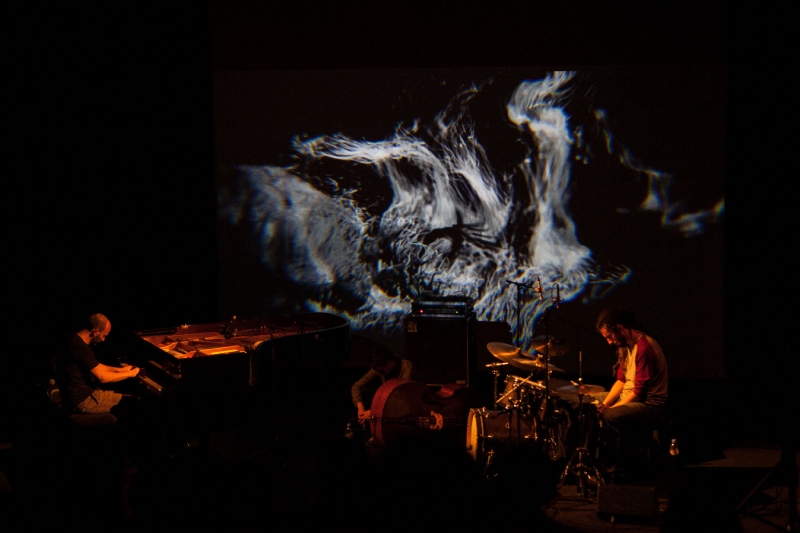

Their musical angle comes from Johann’s early years of immersing himself in drum ‘n’ bass and techno (he has currently got Rrose on rewind), using machines and synths, ‘I had many years of this kind of experimentation with electronics…and computer noise stuff.’ At one gig, pre-Plaistow, fed up of lugging equipment around, Johann decided to play acoustic piano – opening it up to use the strings to create a more powerful sound. ‘I can play this piano the way I played all those machines, but I found the significance of every move I make is very important , if I don’t move there is nothing, if I do a very small thing it is very meaningful…The movement – that is very important…you have to be physically be in the present. So, I said with Plaistow let’s pretend we are just a jazz trio but we actually are filled with techno and noise walls…let’s make that music but with acoustic instruments.’

‘I will take your brain, trust me…’
Plaistow au Centre Culturel Suisse (Paris) ©Simon Letellier

To take these ideas further the art and animations of Nicolas Berger will be integral to the new album. Johann understands that visuals [on a cinema-sized screen] can divert attention from the music so they need to be justified by making the performance an immersive experience. ‘It’s an old fantasy of mine, I would like to have a two hour concert the way you would do with a DJ set – I will take your brain, trust me, and then I give it back to you at the end.’ This best sums up Plaistow’s raison d’être, it reminds me of the theatre of Artaud or Stravinky’s Rite of Spring – primal yet with a care for the concept of ceremony, event, people.

In fact Johann’s next project is the Great Noise Choral which will debut in December. It will feature, ’20 to 30 people only using voice and making some noise’. I’m certain it will be something pretty hardcore.

Plaistow live @ London, Pizza Express, 20 November (London Jazz Festival)
Liepaja (Latvia), Hiks Hall, 27 nov
Cesis (Latvia), Vidzeme Concert Hall, 28 novembre
Daugavpils (Latvia), Mark Rothko Art Center, 29 novembre

The Great Noise Choral at AMR Jazz Club in Geneva, 19 & 20 December

 
“Lacrimosa” to be released on vinyl, November here!
Plaistow on Facebook

Plaistow on YouTube:

http://youtu.be/ctoFHbz8wWY

Marc Perrenoud Talks on the Eve of his US Tour

2014 has been a good year for Marc Perrenoud and his trio of Cyril Regamey on drums and Marco Müller on double bass. They’ve toured China, Taiwan, Europe and are off to the US this month to play five cities and cover about 20,000 kilometres of American soil.

The gigs have followed their well-received third album, Vestry Lamento (released October 2013-April ’14). Frank Alkyer of Downbeat magazine crucially wrote, ‘Would someone please book this band for a tour of the States? We want to see them live!’


MarcPerrenoudUSAI spoke to Marc Perrenoud about his feelings on the eve of the trio’s US tour.
Marc Perrenoud I’m very excited. US people are very open, I’m not nervous, I just feel pleasure to go there…Playing in New York is always a big thing, but I am very excited to discover New Orleans, it must be an incredible place…and it’s the birthplace of jazz. There’s so much music there and I’m really looking forward to that, to ‘feeling’ Louisiana.

Sometimes it can be hard to be from a little country but sometimes it makes you more curious…you have to be because we have to leave Switzerland and that’s very stimulating. I am very honoured that these guys invited me, a Swiss guy, to play jazz there – it’s crazy. It’s so cool.

Do you think Vestry Lamento was particularly suitable for US audiences?

Marc Perrenoud There is a very big difference between Two Churches [his previous album] and this one. I was a little bit, not bored, but tired of the top, classical jazz, European style…so I tried to think about what I love about this music – and that is American jazz from the ’60s and even earlier. I tried to put some musical ideas like the energy and the swing style into this CD but with my European culture too, to make a mix of these two cultures.

In this album I was more confident in my partners. I was a control freak before, so I had an idea and would be like – you have to play that and that. Now the ideas are more precise and I can give more liberty to the musicians…It gave more pleasure and more energy to the drummer and bass-player and they had more fun playing because their ideas are in there too. It really grew together.

When will you work on a new album and what direction will it take?

Marc Perrenoud When we finish the US tour we are working for the month of December on the new repertoire and the new trio CD for 2015. I think recording will take place in February or March. After the US we’ll be full of ideas, I think it will be a good moment to write new things. We had a very exciting year, but it will be good to calm down and write.

The direction: you can never say exactly what it is, but I am sure about the manner with which to work and write together with the trio – it will be the same way and same kind of energy as with Vestry Lamento.

With the new album I will try to have a longer release time to focus on a new country every month with good PR. It’s good to have big festivals [to play] but it’s always important to meet people in smaller clubs. At Ronnie Scott’s we jammed til 3.30am…it was nice to meet the London jazz scene and have a real bebop jam session. Then I went straight to the Gatwick Express at 5am [to get to the airport – proper jazz stylee].

What have you found inspiring recently?

Marc Perrenoud I try to often go to concerts but also to theatre – I saw a very good theatre piece of Dostoyevsky, I go to opera, rock, jazz concerts. It’s very important to me to go to live music and performance. I’ve seen Roy Hargrove, a cool concert of Brad Mehldau solo and Joe Lovano.

I have a project next year with actors, poetry and music – trying to make something new. I think jazz is made from these things, we need improvisation in jazz and to do that we need to look everywhere. It’s why it’s unstable and moving because we have to continually find ideas and, sure, other arts are very inspiring.

18/11 Somethin Jazz Club, New York
20/11 Snug Harbor, New Orleans, Louisiana
21/11 The Jazz Station, Eugene, Oregon
23/11 Upstairs at Vitello’s, Los Angeles, California
24/11 Lobero Theatre, Santa Barbara, California

Insights into the 1st edition of the Montreux Jazz Academy

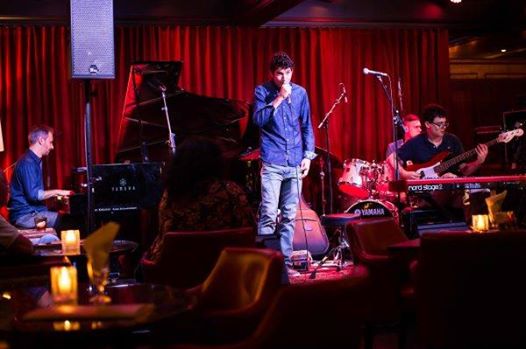
NB-DSC02809Stéphanie-Aloysia Moretti, artistic director of the Montreux Jazz Academy, talks about the first edition of this exciting, pedagogical project where 12 young winners of the prestigious Montreux piano, voice and guitar prizes are further coached by 14 world-renowned mentors at the Sylvia Waddilove musical centre.
How did the idea of musical pedagogy evolve at Montreux Jazz ?


Stéphanie-Aloysia Moretti I’ve been working for the Montreux Jazz Festival for over 25 years, primarily as artistic co-ordinator, but also as educational co-ordinator ever since Claude Nobs began the idea of informal musical workshops. Before my arrival in 1989, Claude had always asked key musicians to extend their stay in Montreux in order to talk, teach and interact with the audience, students and fellow musicians. He would announce the workshop details at the end of a concert for the following day, but this meant that only people present at the concert would know what, where and with whom it was happening. I started organising these workshops in advance, incorporating them into the official programme, which gradually made the workshops an important feature of the festival highlighting the importance we gave to the interaction between master and pupil. This eventually led to the 1st official Montreux Jazz Solo Piano Prize in 1999 where a selection of young pianists from all over the world came to Montreux be coached by professionals in the field. Voice and guitar prizes soon followed.

What was the approach to the Montreux prizes?

Stéphanie-Aloysia Moretti We wanted to structure these prizes in such a way to avoid the competitiveness you might find in a sporting event, and instead create a nice atmosphere for the candidates. The young musicians coming to Montreux were treated as a group, made to feel comfortable, lucky to meet and work together, mostly of the same age and level but coming from different countries. At that time it was also an excellent way to bridge the gap between eastern and western Europe of the late 90s. It was important that the contestants be real, complete musicians, not just able to reproduce or repeat music, each had to submit their own composition or arrangement and give a lot of themselves.

When did you realise that musical coaching was not enough?

Stéphanie-Aloysia Moretti Year after year, we began to notice a reoccurring problem. Despite the winners receiving money, a recording contract and a live show the following year at Montreux Jazz – a few months after winning the prize, they would call us up asking for help: “can we have the names of a good agent, manager, how can we find gigs, labels, PR, etc..?” It was clear that being a young virtuoso is not enough in the world of jazz and music, many of our young winners had no idea what direction to go in and how to follow up their prize-winning achievements. We soon realised that the chosen candidates coming from over 40 different countries needed a more practical form of training alongside their musical coaching. Hence the idea of the Montreux Jazz Academy was born – to help young musicians take advantage of the experience and connections of the Montreux Jazz Artists Foundation, the Festival’s pedagogical wing, in order to maximise their self expression as artists and also help them build their career toolkits.

Describe how the Montreux Jazz Academy is set up.

Stéphanie-Aloysia Moretti There are 14 mentors and 12 candidates, or ‘laureates’ as we like to call them. Nine of them are made up of the first, second and third place winners of this year’s piano, voice and guitar competitions. The remaining three are made up of the first prize winners of the previous year. The Academy lasts just over a week from 30th October to 5th November where the young laureates live, work, perform and learn during an intensive week of exchanges with international musicians and music-business professionals. Masterclasses are given on a daily basis on useful topics such as “Understanding the music business/ How do I get signed to a label? / Managing your online presence”. There’s no competitive atmosphere or prize at the end of the Academy, just learning, sharing and a big gala show on the last evening overseen by Lee Ritenour. What’s very precious for me is to have the laureates express themselves freely and get into the habit of risk-taking with ideas and possibilities, this is less present when there’s a competition at stake. After the Academy I know something will change in how they make music as individuals – and not just the laureates, the mentors have also been affected by what they’ve shared here. They didn’t all know eachother beforehand and it was wonderful to see the cross-fertilisation bubbling up between them during the duologs, live gigs and workshops.

http://youtu.be/7XVXOUIlVoA

How did you go about chosing the mentors?

Stéphanie-Aloysia Moretti I chose mentors who already have a strong relationship to Montreux, first of all because it’s easier to have direct access to them, secondly because I needed to know their resources, what they’re capable of and how curious they are. For example, I chose guitarist Lee Ritenour as musical director of this edition because he has always taught in his career, he has a good relationship with the younger generation and knows how to raise everyone’s level. He’d already been president of a previous Montreux Jazz Guitar prize and had done an amazing job. From the USA we invited drummer Sonny Emory from Earth, Wind and Fire who has an amazing energy but is very different from the classical jazz drummer; saxophonist Charles Lloyd, who opened the first Montreux Jazz Festival in 1967 – a kind of godfather figure; star vocalist Patti Austin, president of the Voice competition a few years ago. We also had the pianist Yaron Herman from Israel, electronic genius Bugge Wesseltoft from Norway, Hammond B3 giant Macoto Ozone from Japan, singer Sebastian Schuller from France and our very own Eric Truffaz. Their interaction made it feel more like a laboratory than an academy, anything could happen! The relationship between instruments and machines was really explored which was very important to me as I wanted new musical territories to be looked at as much as geographical ones. Even Charles Lloyd got to experiment with the power of electronic music.

Does the Academy have a particular involvement with Swiss artists?

1459961_862670483754534_356142560921368328_nStéphanie-Aloysia Moretti The Academy is essentially aimed at aspiring jazz musicians on an international basis, but obviously we are happy to nurture Swiss young talent as much as we can. The exceptional singer/songwriter/guitarist Patrick Rouiller, (one of the star contestants on The Voice Switzerland 2013), was the only Swiss laureate selected for the Academy this year. However we were graced with some top Swiss musicians who took part in our live sessions in the evenings, among which vocalists Anna Aaron, Billie Bird, and pianist Léo Tardin – who was so enraptured with his jam session that he missed his train back to Geneva and ended up with all the other laureates back at the Waddilove centre. Léo, a Montreux solo piano prize winner himself, was blown away to see the high standard of practical teaching, backline equipment and tools on offer. “The best of the best in an informal setting” is how he described his time spent at the Academy.

What will the laureates take away with them? 

Stéphanie-Aloysia Moretti Firstly, all the laureates have said that the practical learning has been crucial: how to get a gig, consider yourself a brand, understand the workings of the music business, etc… They feel more confident to go into the world as a musician and handle their lives. No school normally talks about the practical side but now at last they know what to expect. Secondly, they’ve all mentioned the importance of experimentation and improvisation as a group. They have been stretched beyond what they thought were their capacities, forced to explore new territories and been made to find new ways of expressing their art.

How will the Montreux Jazz Academy be next year?

Stéphanie-Aloysia Moretti I could be a bit more audacious next year regarding styles of music from further afield than just the western world. Maybe bring in mentors from India or the Orient and see what new musical perspectives they could share with us, teach us to feel music more with our guts and less with our brains perhaps…? But for sure the goal will remain the same: to maximise self-expression, risk-taking in each young musician and to teach them the practical tools for succeeding in their music careers.

Egopusher @ tHBBC, Cully

EgopusherPreisig plays like an anti-violinist with a violin

I have never seen a drum and violin duo before and, despite a set up of delay and reverb pedals, a mini Moog bass synth and samples, Alessandro Giannelli and Tobias Preisig focused on their actual instruments. These are clearly accomplished musicians.

Preisig plays like an anti-violinist with a violin. He attacks his strings with rhythmic stabs and warped slides, sawing his bow across his instrument as if a maniac cutting off his own leg. Notes get higher and higher, searching for an exit for the impending explosion. Such a moment had my spine-tingling, the music slipping and warped as it ascended; it was faintly erotic.

“It gives me energy”

Preisig describes this band as a chance for ‘controlled vomiting’, getting stuff out of his system in the least contrived way possible. He can be more immediate and free than with his quartet purely because the logistics of a duo are simpler. He can also explore influences from rock and electronica. ‘It gives me energy,’ he told me.

Giannelli’s physique (I wouldn’t want to pick a fight with him) gives a clue to his sound. He’s a workhorse who can bang a drum with such force I thought he might gash the skin. But he wasn’t thrashing, his sound was controlled and clean. I could sense him tuning into Preisig and he was able to shape-shift between smashing out a rock line, feeling the funk or neatly tap dancing on a drum rim.

This was only their eighth live appearance

Occasionally Preisig would fall in with the rhythm of the drum to make a powerful coupling, or allow a scrap of melody to emerge before repeating it until he flogged into silence. Sometimes I was even reminded of the melancholic fury of ’80s New Wave bands like Magazine, and I wanted more of that.

This was only their eighth live appearance so these are early days especially in terms of use of sound effects and samples. My note of caution would be that whilst ‘spewing’ is probably fun there could still be space for the exquisite aesthetic the violin is capable of. Preisig does not need to be ‘hard’ or loud to engage a different audience; true power always lies in being open, revealing vulnerability. He could take a note from Giannelli’s seamless moves through texture and colour.

Egopusher played as part of the I Ha Nüt festival at tHBBC in Cully. This club is a one-off. Firstly, there are pebbles (stones) on the floor! It is one of the friendliest venues I’ve been to and most importantly it’s a place where musicians can ‘get down’ – let themselves go, try out new projects. The fact that 15 people make it feel crowded also helps. If you live anywhere nearby, I order you to visit and say hi to the sparkling hosts – Gilliane and Nicolas Rosazza.

[vimeo http://vimeo.com/104851854]

Egopusher website
tHBBC website

14.10.14 La Catrina, Zurich
6.11.14   Kurzfilmtage, Winterthur
6.11.14   Zukunft, Zurich
8.11.14   Up State, Zürich (Vernissage Marianne Müller)
21.12.14 Trabant Echo LP Release, Hive Zurich