Berlin Music Week : good and bad news from the music industry

BMW14_bisTo get your bearings at the Berlin Music Week, it’s best to come with a very open mind and pair of ears. The 5th edition of this music fair, a prelude to the Berlin Festival, is diveded into two parts. Part 1, « Music », offers a plethora of new artists performing in clubs along both sides of the Spree (between Warschauerstrasse and Ostbahnof).

Part 2, « Word », offers conferences, debates and round table discussions featuring influential people from the music industry. All these fine people are here to scratch their heads, explore new possibilities, give advice and find solutions to save a market which is in a never-ending downward spiral.

Here below are some points of interest that I came across during the two days of conferences and brainstorming sessions.


The record market continues its long and inexorable downfall

You’re lucky to come across any record shops in France or Germany because digital sales have almost completely replaced the disc. In Norway, 65% of music sales revenue is due to streaming platforms. Now it’s not even a question of downloading… The membership system of Spotify or Deezer & co only generates an insignificant revenue for artists who aren’t already very well-known.

In a conference entitled « Surviving Streaming », Professor Arnt Maaso presented the results of a research project, “Clouds and Concerts” , carried out at the department of Musicology at Oslo University. Having been given access to WiMP data, (a streaming platform which offers its listeners HiFi sound quality), he studied the behaviour of the users and looked for ways of improving what the system offered. His studies found that the most popular user days were Friday and Saturday (but not Sunday). 66% of users listened to music on their headphones from their Iphone or tablet device and discovered new tracks by following other people’s playlists.

 The prorata redistribution of money by streaming platforms is unfair
BMW14_4In other words, the largest part of the money lands in the hands of a few international stars. Hooray for globalisation ! Among the many negatives of such a system, let’s note the most important one : if a big star brings out an album at the same time as a newly-emerging artist, the newcomer will be totally eclipsed and will hardly get anything, despite having a loyal fan base or being already known on a local or regional basis.

 Different ways of remuneration could be envisaged

Arnt Maaso and his team suggest a new model of redistribution based on the user. Let’s imagine, you’re signed up to Spotify for the sum of 10.- per month, but each month you only listen to a few tracks by groups who are relatively unknown. Your contribution will be exclusively paid to the groups you’ve listened to, it won’t go into the big pot along with all the other members’ fees to then be distributed prorata based on the most listened to tracks of the month. This system would allow up-and-coming artists to be better remunerated and to be able to count on their local fan base.

 The two other ways of building fan-loyalty are crowdfunding and paid-up memberships

No need to remind anyone about the importance of crowdfunding, a system that never ceases to prove its worth. However, let’s talk about something that a lot of musicians find difficult to grasp : crowdfunding cannot be done from scratch ! The most important thing is to make your fan base loyal, communicate with them and build your community of fans step by step. Only once the fanbase is big enough can you think of starting crowdfunding or asking for paying members. To confirm this, watch the debate called « Revenues, Discoverability, Distribution, Transparency » (filmed live from Berlin Music Week) and chaired by Andrea Leonelli, activator of digitalmusictrends.com. since 2009. Also taking part are Janine Wuelker (fintunes.com), Benjamin Lebrave (akwaabamusic.com), Phiona Okumu (afripopmag.com) and Michael Krause (deezer.com). Highly recommended viewing !

[youtube=https://www.youtube.com/watch?v=BBjXWRLR8Xk&feature=youtu.be]

With regards to becoming member of an artist’s club, it’s simply involves a membership deal put forward by a label, an artist or a collective of musicians for their most assiduous fans. In exchange of a monthly fee, fans have access to an exclusive internet site containing videos or audio reserved just for the fans, the possibility to chat live on line, etc..

A conference held by Andrew Apanov, CEO of Dotted Music, a music website which offers online marketing tutorials for artsist producing electronic music unde the name of We spin.

It’s still possible to earn money from making music, but more than ever before the artist has to become as entrepreneurial as possible and simply work, work and work at it.

Berlin Music Week took place from 3rd to 7th September 2014. Click here for the website : ici!

(This article was originally published in French, translated in English by Beatrice Venturini)
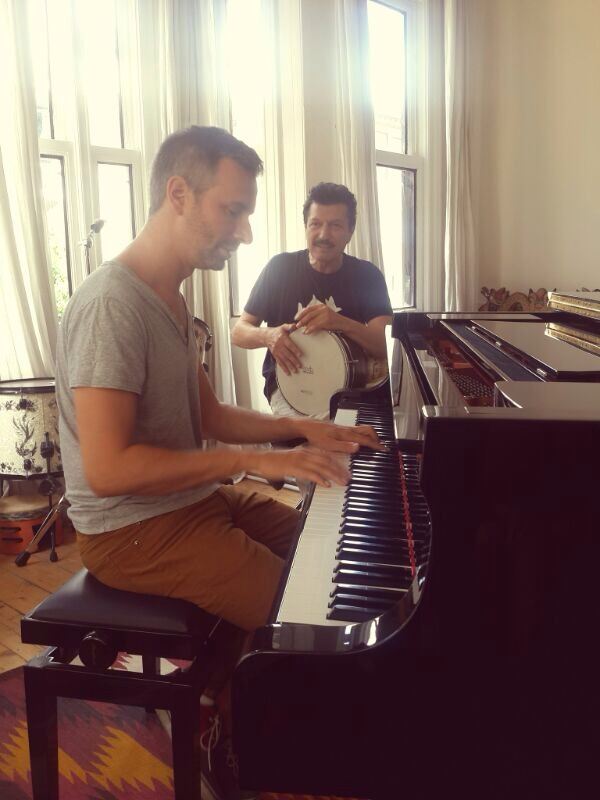
Leo Tardin: Mr Gemini, the man with two personalities

IMG_1043

In the run up to his performance at Chateau de Chillon for Montreux Jazz on 13th July, Leo Tardin talks about his live project with Turkish percussionist Burhan Oçal, his latest solo LP Dawnscape and his band Grand Pianoramax   

Leo Tardin I got introduced to Burhan Oçal by the drummer of Grand Pianoramax, Dom Burkhalter, who’s a good friend of his. Burhan had been trying to get the band to play with him in Istanbul and we finally managed to organise it this time last year, so that’s how I first met him. Apart from being an amazing percussionist, he’s also an actor who often plays the villain in Turkish B movies. He’s a real character, full of mad stories, really quite unique. After the gig, the Montreux Jazz organisers and producers of Dawnscape heard that we’d played with him in Turkey and asked if we’d like to perform togther in Switzerland. It’s actually very similar to the early stages of Grand Pianoramx where it was only piano and percussion. It’s pretty easy to integrate percussion with piano because you can look at the piano as a percussion instrument that can afford space and freedom.

How does your album lend itself to being played in a duo format?

Leo Tardin Let’s see! We’re going to try this out in Istanbul for the first time. I know Burhan often plays as a duo with other pianists, sometimes even classical, I’m sure he’s going to blend in pretty easily into my music because it’s fairly rhythmical. There will be pieces where it’s only going to be me or bits with just him, then we’ll meet together on some others. I’m very flexible and confident that it will be a success.

Has the Dawnscape album done what you wanted it to do?

Leo Tardin It’s too early to reflect on this but it has definitely opened a lot of doors. One of the reasons for this is that it’s very flexible and light compared to a band that needs a lot of equipment, sound system, backline, hotel rooms and plane tickets. With Dawnscape live gigs can be organised fast and easily. This kind of freedom and flexibility is one of the great things about this project. Also the fact that this LP was co-produced by Montreux Jazz is helping a lot. It’s bringing a lot of credibility and making people take this project seriously. This is a very new project that needs to be established after having made a name for myself with Grand Pianoramax.


Leo Tardin
Leo Tardin
What was the reaction to you bringing out this new solo project that’s so different from Grand Pianoramax?

Leo Tardin It took a while for people around me to accept this, not just the other band members who worried that it might signify me wanting to deprioritise the group, but also the music journalists. I was surprised by the press’s reaction, it was at times very extreme – they either loved it or hated it. The music in this solo project is less radical than with Grand Pianoramax, but the reaction to the music has been more radical.  I feel that the journalists were comfortable to put me in a box as the piano guy who does hip hop, so when I came out with this romantic, dreamy, poetic stuff they were confused. Not all of them appreciated or understood the move. I was pleased when a few realised that it was something that took guts to do. But I’m happier this way because there are some things I can finally do with my solo project that I couldn’t do with the group, so I’m more relaxed in the context of the group and it brings a better vibe to GP as well.

When and what might we expect from Grand Pianoramax in the imminent future?

Leo Tardin We’re going to play the Paléo Festival, followed by Cosmojazz which is a really nice festival in Chamonix, open air at the foot of a dam. Then on the days off we’re going to work on some new music, a new EP that should be out in the first half of next year. The last LP, “Till There’s Nothing Left”, only came out a year and a half ago so it still has a bit of life in it, but we’re already working on new music and this has helped my band members realise that GP is as much a priority as my solo piano project.

 You are known as being a very polyvalent musician with different styles and projects. Do you agree?

Leo Tardin I’m not really doing so many different things, I’m just doing two VERY different things. but that’s about it. I think it has to do with my slightly schizophrenic personality. I can’t find one just project that covers the full spectrum of what touches me and the emotions I feel. That’s why I have these 2 very different projects. If you listen carefully you can hear some of my solo project in GP in some of the very emotional epic pieces, and little bits of GP in my solo project. I felt limited just sticking to one project, but I’d say that I’m more dual than polyvalent.

 Do you consider yourself a jazz pianist?

Leo Tardin That’s tricky. Calling me a ‘jazz pianist’ is a bit reductive and with GP we’re trying to get away from the jazz tag. We rarely play at any jazz festivals, (last year we played mostly rock festivals!) Jazz is where I came from but I don’t know how relevant it is today to what I do. When people ask me if I’m part of the Swiss jazz scene, I say I’m part of a group of musicians who are making noise and have some visibility outside of Switzerland, so in that regard I’m part of the Swiss music scene. The solo project has a few jazz overtones, but it’s far more influenced by classical, ambient and crossover music.  It could be the soundtrack to a movie. I want people to be inspired and travel in their minds when they listen to it. A lot of the pieces are very simple but with a rich emotional content that can reach people. Sometimes I find that jazz musicians are a little bit too focussed on what they can do with their instrument and rather than what they can make the audience feel.

Dawnscape is a co-production with the Fondation Montreux Jazz 2 & Balik Studios
Physical distribution by Irascible www.irascible.ch

Live dates:

13th July: Montreux Jazz Festival, duo w/ Burhan Öçal, performing Dawnscape: http://www.montreuxjazzfestival.com/fr/artist/leo-tardin
24th July: Paléo Nyon Festival w/ Grand Pianoramaxhttp://yeah.paleo.ch/fr/artist/grand-pianoramax
27th July: Cosmojazz Festival w/ Grand Pianoramaxhttp://cosmojazzfestival.com/fr/programme/artistes/grand-pianoramax
Autumn Swiss solo tour:
24th Sept: Eisenwerk, Frauenfeld
6th Oct: open lecture with students from CEC Emilie Gourd, Genève
11th Oct: Workshop EJMA, Lausanne
11th Oct: Ferme Asile, Sion
14th Oct: Rolex Learning Center, EPFL, Lausanne
25th Oct: AMR, Genève

“Are we selling candles or are we selling light?”

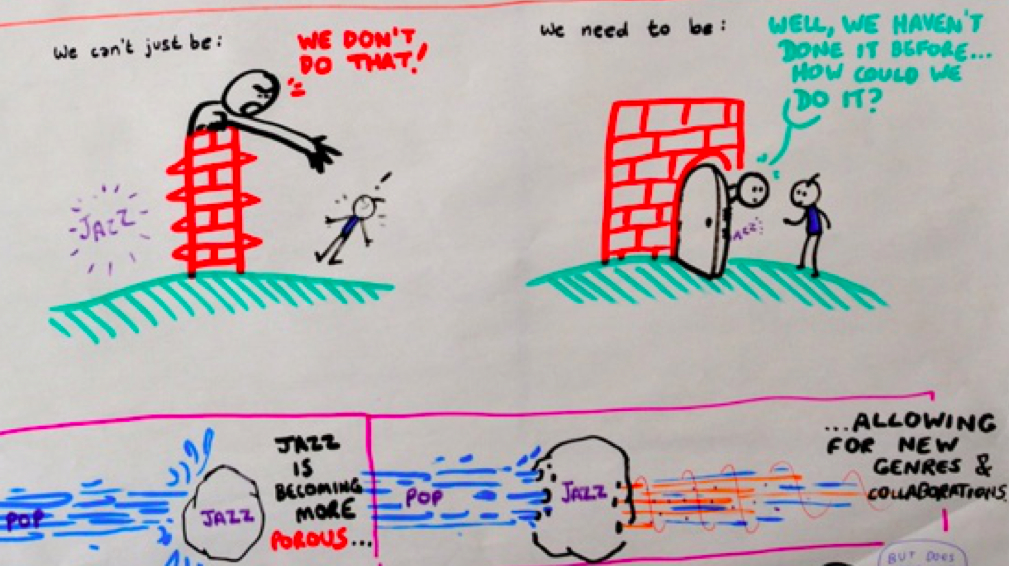
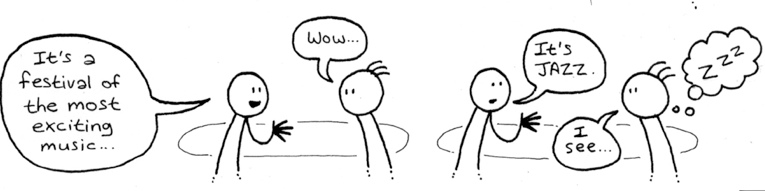
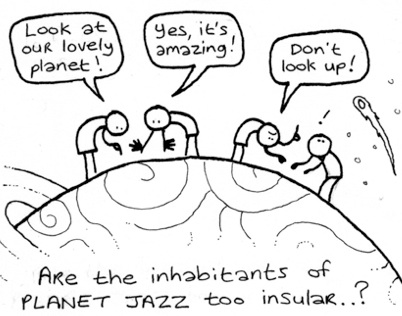
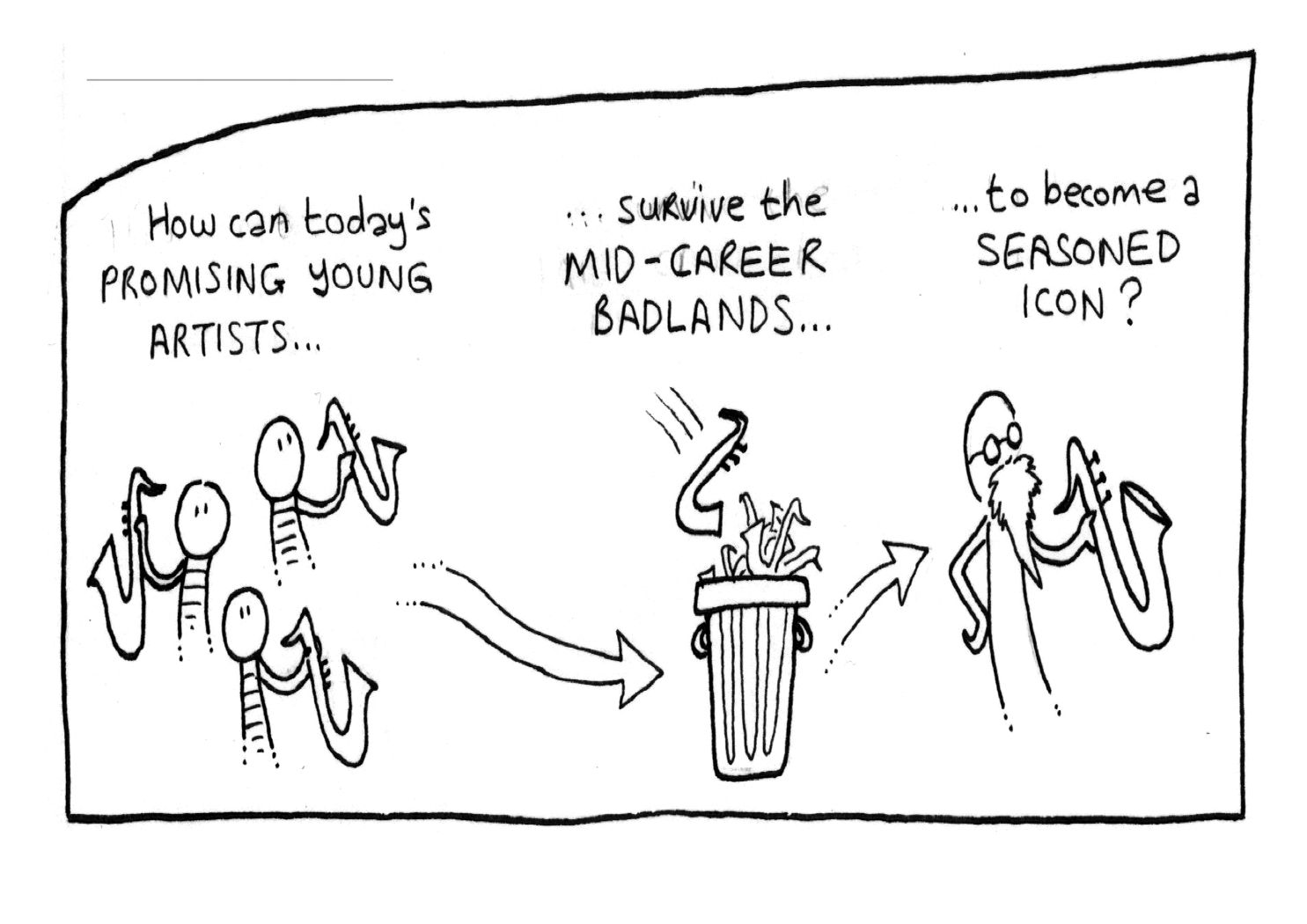
When I reviewed the Schaffhausen Jazz Festival, questions emerged – is Rusconi‘s new album, jazz? What should jazz be in 2014? Gerry Godley of the Improvised Music Company and 12 Points festival worked with cartoonist Patrick Sanders on a presentation that made some vital points for the industry. I particularly liked the analogy – are we selling candles or are we selling light? Put crudely if we carry on focusing on traditional forms of jazz we may go out of business.

© Patrick Sanders Let's be more open to innovation, especially as jazz has become  more porous and collaborative ©Patrick Sanders
© Patrick Sanders
Let’s be more open to innovation, especially as jazz has become more porous and collaborative ©Patrick Sanders

Godley referred to America’s major arts survey of 2012 and although I don’t see Europe in the same grip of the “heritage” of jazz, it’s probably a similar picture here: audience numbers are declining and they are growing older (as I saw at Schaffhausen and see in London). As Terry Teachout of the Wall Street Journal wrote, “Jazz musicians who want to keep their own…beautiful music alive…have got to start thinking hard about how to pitch it to young listeners.”

“What is jazz about & who is it for? – grows unclear.” Phil Johnson

To be frank, jazz has lost its hipness. Young urban ‘gunslingers’ are more likely to listen to new folk or the myriad forms of electronica. Last year journalist Phil Johnson wrote in the The Independent, “The essential narrative and context – what is jazz about and who is it for? – grows unclear. An increasing lack of visibility in the mainstream media contributes to a growing credibility gap…” This is an issue; print and radio (let’s not even go there with TV) influence tastes and with diminishing support it’s difficult for promotors to take risks. The respected critic, John Fordham commented on the lack of press coverage for jazz in 2010, “…the most routine performances by an orchestra, or the most mundane gigs by fading pop stars will usually grab the space from innovative jazz artists who may well be shaping the future of music…”


©Patrick Sanders
©Patrick Sanders


Godley also addressed the “J” word and whether it’s doing music a dis-service. I don’t feel overarching terms such as jazz, classical or rock are relevant in the age of the internet. My favourite phrase is ‘music for curious ears’ and London’s Cafe Oto bills itself as a venue for “creative new music”. Phil Johnson suggests Oto could be a good model for other European clubs as it’s found success by, “building an audience from the bottom up through artist-run co-ops and club-nights.” They are managing to attract a mix of ages, at least.

BBC Radio 3 (plays classical music and some jazz) is rightly obsessed with the phrase “replenishing audiences” as their core listeners age. Attracting new audiences requires new marketing tones. Rusconi have been so successful at building an online rapport with their fans that they won the voted-for ECHO Jazz Award for Best Live Act 2012. But the music itself needs to be relevant.

Build on traditions, but break the rules

Some promotors I spoke to felt Rusconi were being gimmicky – maybe they haven’t quite hit the right spot (as they did with Alice in the Sky) but I’m more engaged by them than I am by clever musicians desperately trying to re-create a time that has gone. Build on traditions, but break the rules, or at least put in your own life, your emotion. My musical axis has been informed by being a DJ where it’s all about the new, and I’ve always admired pioneers who faced enormous criticism but changed things up; as much as I adore Miles Davis’ Kind of Blue I’m glad he heard Hendrix and got re-inspired.

A band who is getting the balance right is Hildegard Lernt Fliegen. They played a triumphant set at Moods a few weeks ago. The music builds on traditional jazz and improvisation and yet is modern. They’ve got a strong look going on and their video for the track Don Clemenza  is perfectly pitched. OK, not everyone has to (or can) wear a breadstick on their head, but what brings it all together is that it feels utterly genuine, it’s ‘authentic’. And that’s the word Godley finished his talk with and it’s an important one.

Labels like ECM are “borders-blind”

What I’d like to see is European countries co-operating at supporting talent from a wide spectrum of ‘jazz’ and from regions beyond their own. Labels like ECM are “borders-blind”, venues could be better at this too. I believe: “If it ain’t broke, change it!” Or it dies. Keep jazz relevant, think about new ways to package it and consider who we want to promote it to. There are audiences out there who are missing out on heart-pounding, incredible music.


©Patrick Sanders
©Patrick Sanders


OY: “Life is like a mobile phone your unit comes, your unit goes…”


Unknown

Akwaaba! Welcome to the  “No Problem Saloon”, the second album from OY, (previously released under the name “Kokokyinaka” last year on Creaked Records), this time repackaged on the Belgian label, Crammed Discs and featuring some extra tracks.

OY are a Berlin-based duo composed of Swiss-Ghanaian vocalist, story-teller, musician, sound sampler Joy Frempong and mysterious drummer & producer Lleluja-Ha. This album is a refreshing, improvised breeze of African-influenced electronica based on a road trip that absorbed sounds and experiences from Ghana, Mali, Burkina Faso and South Africa. Tales, proverbs and folklore were gathered along the way to be retold in an experimental, kaleidoscopic style, at times dark and mercurial, other times as joyful as walking through an African market place. As OY sings: “Life is like a mobile phone your unit comes, your unit goes”…

 A charmingly beguiling, left-of-centre, musical adventure

The slam of a taxi door becomes a drum, an antiquated washing machine provides a bass sound, conversation and street noises drift in and out of songs, the lyrics naturally develope from the stories and fragments of popular African wisdom encountered along the way. It makes for a charmingly beguiling, left-of-centre, musical adventure told in Joy’s elegant, playful voice that is as ease in English and French as it is in the numerous regional dialects.

Full of observational delight

Songs about bizarre name choices “My name is Happy” and the sexual politics of afro hair Halleluja Hair” are pure poetry in motion full of observational delight, colourful local custom and Joy’s own personal fire. Her velvety speaking voice entertains us with tales of how you should never run to a funeral of the man who stumbled and died (“Don’t Run Run”) and should you ever find yourself in a village where snoring is a crime punishable by death just start singing instead (“I don’t snore”).

Compassionate observation of humanity

Unknown-2Graced with ambidextrous talents, Joy is mistress of many synths and sound machines, often distorting her voice and playing it back as haunting accompaniment or backing vocals. An impressive wall of sound is at times created between herself and partner as in “Doondari”, where dark voice effects and heavy synth rhythms clash with swirling drum beats as menacing as a locust storm. Contrast this with a playful singing voice that combines rare soothing sweetness and reassuring confidence. ‘No Problem Saloon’ exudes compassionate observation of humanity and wraps it up in multi-textured, exhuberant electronic soundscapes.
 

OY are a wonderful live experience, catch them on stage here!

OY: “No Problem Saloon” (Crammed Discs)


The Schaffhausen Jazz Festival 2014

As I walked into the ex-yarn factory, Kulturzentrum Kammgarn, it was clear the organisers put passion and care into their festival. The place was warm and intimate with candlelit tables and there was a relaxed, convivial vibe. Over four evenings the audience was treated to a variety of Swiss improvised music and there was a day of professional talks.

Without doubt, this is an ambitious festival

I missed the compelling Elina Duni Quartet who opened the event, but was there to experience BASH. I’m getting to know Lukas Roos through his outfit, pommelHORSE, but here the clarinetist/saxophonist played with guitarist, Florian Möbes, Domi Chansorn on drums and Samuel Gfeller on graphic novel, literally. A massive screen behind the band showed the story of a prisoner drawn into increasingly twisted events that lead to his end. The style of Gfeller’s drawings, Robert Crumb in feeling, are so powerful that at times, I tuned out their sensitive and minimal music. On speaking to Roos he explained that cutting the set to 40 minutes affected the balance – a point echoed by Andreas Schaerer and Rusconi on appearing at this festival.
Arte Quartett

Schaerer’s vocal noises ran amok

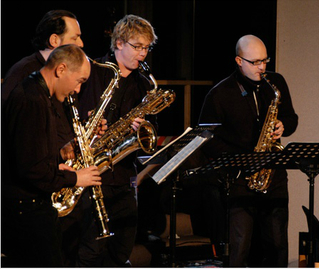
Andreas Schaerer was performing Perpetual Delirium, his composition for the saxophonists, the Arte Quartett with Wolfgang Zwiauer on electric bass. It had the quartet interlacing with a naturalness that was almost child-like in it’s fun and freedom. There were fascinating textures as soprano sax took over from alto, or tenor had a furious and thrilling exchange with the baritone, whilst Schaerer’s vocal noises ran amok adding sparkle, or hiding within their vibrant sound.

For pianist Gabriel Zufferey the time limit was perfect. His music was fluid with notes as sweet as fluttering butterflies yet underpinned by such knowledge and skill that he came across as an eccentric wizard. I liked the echoes of classical music and he incorporated an Eric Satie piece – it might sound tacky, but in his hands it lifted the hearts of the audience who then demanded two encores.

Is Rusconi’s music, jazz, or not?!

I was recently critical of Rusconi‘s gig at the Cully Jazz festival, but at Schaffhausen they were more confident in their ideas and I totally got into the groove of Hits of Sunshine and am warming to the strangeness of Change Part 1. However, on talking to some of the European promotors invited to the festival, questions emerged – is Rusconi’s music, jazz, or not? Is it gimmicky or authentic? I felt some answers were suggested by Gerry Godley of 12 Points who tackled the issue of the future(s) of jazz in his presentation with cartoons from Patrick Sanders, at the festival. But I’ll go into that more in my next Swiss Vibes’ blog, ‘How is Jazz?’

In the meantime I’ll leave you with the Bill Evans‘ quote that Godley used, “Jazz is not a what, it is a how. If it were a what, it would be static, never growing. The how is that the music comes from the moment, it is spontaneous, it exists at the time it is created.” If the Schaffhausen Jazz Festival has its sights set on being a relevant platform for jazz then it needs to continue putting on bands that question our perception of this rich and challenging music, as well as, those that celebrate it.

Cartoon by Patrick Sanders

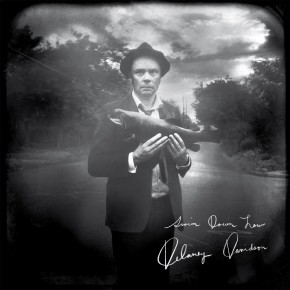
Record of the month (June): Delaney Davidson “Swim Down Low”

Delaney_Davidson_Swim_Down_LowAlbum_Cover-290x290Roll up, roll up to Delaney Davidson’s old curiosity shop. Make way for big ugly fish, swampy rivers, bloodied stilettoes, fog, dogs, worms and old bones – it ain’t all pretty but it sure is fun. ‘Swim Down Low’ is Davidson’s 5th solo album and heralds the New Zealander’s return to Outside Inside Records. Having lived in Switzerland from 2002 to 2008, he is considered an adopted son of the Swiss folk/blues scene and is highly respected for his previous releases on labels like Voodoo Rhythm.

A magical collection of sepia-tinged vignettes

Captured on fabulous analogue during a week of down time, it’s a magical collection of sepia-tinged vignettes from the supernatural, macabre, dark-side-of-town. The lo-fi country rock genre is amply stretched to encompass flashes of vaudeville cabaret, blues and gothic folk-noir; as a result the album reads like a book of short stories by Edgar Allen Poe meets Tom Waits on a cocktail of whiskey, cigarettes and ketamine.

A slow work of seduction

It’s a work of slow seduction where the 10 perfectly crafted songs permeate their way into your psyche so that you begin to miss them when they’re not on. Take the Big Ugly Fish that ‘Swim Down Low’, one listen to the twangy, foot-stomping guitar riff and you’re hooked on wanting to know what horrors grandpa done did saw at the bottom of the sea.

Balancing the creepy with the beautiful

Let’s remember that Davidson is an old Dead Brothers pro, hence a flair for making the funereal grim and ghastly seem reluctantly joyful and frankly quite hilarious. Dead Brother, Pierre Omer, quotes him as being a “multi-talented musician who played everything from drums and trombone to the lap steel guitar, and even wore a dress on stage”. His poetic songwriting skills exel at balancing the creepy with the beautiful, aided by his penetrating, elastic vocals that can stretch, growl and whine to fit all the desperate nooks and crannies. Many lines are as quoteable as Oscar Wilde, especially the plaintive numbers like ‘It’s all Fun’ (“life is a dog and you are the bone”) and ‘Poor White Trash’ (“I’d rather be lucky than good”).

Thigh-slappingly good

Davidson creates a dramatic persona who enjoys letting the darkness in like a weather-beaten, weary, wandering minstrel. Yet despite the theatrical mask of fatigue and cynicism, it’s a work brimming with pretty melodies, harmonies and incisive wit. The banjoes, slide guitars, harmonicas and fiddles make sure that all toes are tapping in true Roy Orbison fashion not only on to the uptempo numbers such as ‘Farewell’ and ‘Dogs of Love’, but even on the suicidally slow numbers where an alluring rhythmic tension is always maintained. For maximum joy, listen on headphones to catch all the humouristic harmonies, backing vocals and theatrical sound effects. Thigh-slappingly good and un-turn-off-able once the fish bites.

Delaney Davidson,  “Swim Down Low” (Outside Inside Records)

Forthcoming live gigs with Pierre Omer guesting in the band:

15th July: Fribourg (Les Georges Festival)
8th August: St Gall (Graben Halle)
9th August: Vinelz (Bielersee Festival)
10th August: Zürich (El Lokal).

Delaney Davdison is also touring Italy, France and Germany this summer. List of gigs here!


Colin Vallon speaks about “Le Vent”

Colin Vallon © Petra Cvelbar“Le Vent” is Colin Vallon‘s second album for the prestigious label ECM. Listening to it, or to him speak, you might think he’s a bit soft – a gentle soul. There’s a distinct aesthetic to his playing, it’s mindful and sombre as if remembering a lost love. Interviewing him, I found an assured and fiery spirit; a pianist with a clear intelligence, driven to carving out his own, individual path.

“From the moment I could stand I tried to press down the keys”

Music was always around Vallon – when most families were arguing at Christmas, his was gathering at the ever-present piano, singing hymns and Gospel. “I loved the sound of the instrument, from the moment I could stand I tried to press down the keys”. Despite this, he quit piano at the age of 12 because he could no longer play by ear and reading music frustrated him. Then two things happened: his uncle taught him some blues chords that he could play, “Without paper in front of me” and he saw a solo concert of Keith Jarrett, “It was really amazing to hear that.”

He returned to music lessons at 14 and began composing. By 19 he was at the University of Arts in Bern and had his own trio. Here he found the American theory of copying the standards until you could imitate them too restrictive. “But this was also very good for me,” he says, “because it meant that if I wanted to do something of my own then I had to do it really on my own and to be more didactic in terms of composing. I was really independent.”

“It’s a music that has something very raw about it”

However the composition tutor, Frank Sikora, inspired Colin and for his class he recorded, “A huge fence or gate that was screeching, making harmonics and noises.” By 2002 he developed this interest in strange sounds with prepared piano techniques and had begun an enduring curiosity for Eastern European music. “It has something very raw about it and, like this fence maybe [that he’d recorded], it’s a very different sound and it’s something that caught me immediately.” He joined a band with the saxophonist Sascha Schönhaus playing Balkan music and discovered one of his “desert island records”, Le Mystère des Voix Bulgares.

A journey in Albania

Meeting Elina Duni provided fertile creative soil as Albanian music opened up to him and the Trio’s third album, (their first for ECM) was entitled Rruga, the word for “path” or “journey” in Albanian. It was critically acclaimed, so did this make it hard to follow? “There was a bit of pressure,” admits Colin, “not from the label, but from myself..it’s hard to come with a second album…and changing the drummer [from Rohrer to Sartorius], but in the end I’m really happy with the results.”

“There are a few goodbyes, a tribute to Asita Hamidi”

Colin found his material came naturally as he dealt with several deaths and saw a suicide jump from a bridge. “Le Vent was an elegiac album, a lot to do with death…and the passing of time and life. It sounds really dark but it’s not just about that…There are a few goodbyes, a tribute to Asita Hamidi [the harp player] who died…things that are a part of life but I needed to express somehow.” It’s Vallon’s careful listening for, then stating his own truth, that makes him a compelling artist.

Colin Vallon “Le Vent” (ECM)

On tour:

26/04/14 Jazzahead, Bremen DE
27/04/14 A-Trane, Berlin DE
29/04/14 Mokka, Thun CH
30/04/14 Bee-Flat, Bern CH
03/05/14 L’Azimut, Estavayer-Le-Lac, CH
13/05/14 Mokka, Thun CH
17/05/14 AMR Genève, CH
27/05/14 Mokka, Thun CH
01/06/14 Green Hours Festival, Bucarest RO
07/06/14 Paris Jazz Festival, Paris FR

Rusconi at Cully Jazz Festival

ImageI was reminded of the story of the Sorcerer’s Apprentice watching this trio perform. Keen to make magic and mischief, Rusconi sometimes found themselves unable to control the proceedings. This was the first gig of the tour and I think their playfulness will win over audiences, they just needed more child-like energy, a sort of innocent conviction, to pull it off at Cully. However, the band were most captivating when they painted afresh their best compositions from the new album, History Sugar Dream.

‘Psychedelia for Laika’
Ankor was a trademark piece, with Stefan Rusconi’s mournful yet sweet piano, rich with echo and thought, sensitively interlaced with Fabian Gisler’s handsome bass notes. The sparse, crispy drum beats of Claudio Strüby balanced the sound perfectly. Sojus Dream used a repetitive theme as its foundation before a synth keyboard sneaked in, providing Herbie Hancock-like funky accents. The track grew in stature as it built a platform for Fabian’s electric guitar to glide through, providing, as they tell us, ‘psychedelia for Laika,’ the dog who was sent out to orbit the earth in 1957 (and died within hours of lift off). I didn’t feel Fabian pierced deeply enough, so it was down to Stefan’s collapse into a warped and weird circus-style piano to trip the track out.

Bowie’s Life on Mars? started up
So, to the ‘high jinks’ – such as swapping instruments amongst themselves, as in Change (Part One), with Claudio on piano, Fabian on drums and Stefan on guitar, and stopping everything for Fabian to put a record on the Technics deck set up onstage. Bowie’s Life on Mars? started up, complete with vinyl crackles to re-enforce the theme of History Sugar Dream – childhood memories, “A time when dreams and hopes, fantasy and illusion, were reality,” as they write in their press release.

This trio is capable of subtle and complex emotions
I like the way Rusconi seem to feel their way through unknown landscapes in their music, playing with fantasy. At one point I thought of dark, rainy scenes in the film Blade Runner with its sense of nostalgia, loss and romance. This trio is capable of subtle and complex emotions. I’d like to have been taken more deeply into these worlds, that’s where the real playfulness lives.


Record of the month: Tobias Preisig, ‘Drifting’

Tobias Preisig's 'Drifting'

I’ve got Drifting on constant rewind. It’s a spacious album, pulling back to allow an experience of resonance and a sort of quiet mayhem. The musicians don’t hate us: they want to captivate, however, we’re not their only object of desire. There’s a care and deep listening in their interplay that is almost audible. It’s as if they are feeling their way into a new form of being, as a quartet.

Abstract, even animalistic

Tobias Preisig spoke to me of his band working as an ‘integrated instrument’ with ‘spots’ replacing full-blown solos, such as when André Pousaz’s double bass breaks out into a sombre spotlight in Floating Causes amongst low violin stabs and hi-hat shimmers. It’s true that tracks like Out of Reach weave a subtle tapestry of instruments, intensifying in colour as it progresses. But there is no ignoring the quality of Tobias’ violin: rich, assured, respectful of its emotional power yet avoiding sentimentality. It can be abstract, even animalistic, revelling in a purity of sound.

Miniature for Gold is a painfully-gentle vignette painted by Stefan Aeby‘s piano. Preisig’s violin balances the sweetness, plucking as if a tight bass line. The track is like an exquisite kiss. But Searching for Soil is my highlight, a spellbinding piece.

Michi Stulz’s drum rolls… an unrelenting mantra

The opening Rhodes’ chord conjures a translucent pathway out to the Milky Way, there’s the metallic jingle of a cold star, before Michi Stulz’s drum rolls march us on; an unrelenting mantra. It’s the woozy high violin plucks and quivering strokes of the strings that send my goosebumps bumping. It’s a trip, to somewhere magical or possibly, macabre. Piercing violin runs twist the screws tighter whilst a stormy piano bashes at its low notes. A scrap of melody breaks through as if to keep us entwined in the music, before it shudders to a close.

This music has character: it can be moody, sensitive, frustrated yet is often playful – it’s got soul. What I hope to hear from the band in the future is a wider range of textures and themes; an evolution of their emerging and ear-catching language. Look out for this quartet playing live and let me know what you think.

http://www.youtube.com/watch?v=6UpFkg3F_8s


05.04.2014 CH-Zurich, Moods
12.04.2014 DE-Erfurt, Jazzclub
13.04.2014 DE-Dresden, Tonne
15.04.2014 DE-Jena, Cafe Wagner
16.04.2014 DE-Berlin, A-Trane
25.04.2014 CH-Basel, Jazzfestival Offbeat
16.05.2014 CH-Arbon, Kultur Cinema
02.06.2014 CH-Orsière, Fête de la musique
20.07.2014 CH-Gstaad, Menuhin Festival
14.08.2014 CH-Winterthur, Musikfestwochen


William White – Open Country

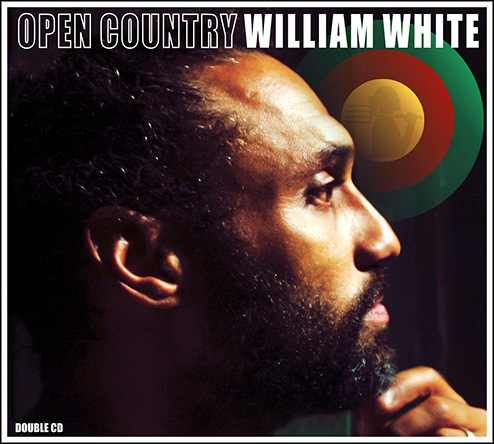
OpenCountry-williamwhite-coverHalf Swiss, half Barbadian William White arrived in the German part of Switzerland 20 years ago to study at university. But thanks to the mix of Bob Marley, Dionne Warwick, Nashville and country ballads that formed his musical DNA, engineering got the elbow for song-writing and playing his guitar in bars and bands instead. Celebrating ten years as a solo Swiss recording artist, William White spoils us with his 4th studio album, “Open Country”, a double CD featuring ten new studio tracks recorded in Jamaica last year, plus a live album recorded at Das Welt Winterthur in 2012.

A star-studded production

Compared to his previous albums constructed in solo mode, this is a star-studded production featuring the imput of Devon Bradshaw (former Burning Spear bassist) and Ian Coleman (Ziggy Marley guitarist), not to mention the distinctive legendary voices of Bushman and Toots & The Maytals. It’s a colourful and varied collaboration which hints appropriately at the title. “Open Country”: an invitation for White’s work to be interpreted and moulded by others, paying homage to his Caribbean roots and above all tipping his hat in the direction of free spiritedness, the love of nature, the wild and the organic backyard setting of the simple life.

The sound is refreshingly pure and authentic

showthumb-1.phpHugely radio-friendly, there are welcome country, folk and pop nuances that are woven throughout the reggae textures. The occasional syrupy moments (the new single ‘For Your Love’) are well contrasted with forceful, emotionally charged protest songs where White’s vocal ability is always convincing and sensitive (as in ‘Power Reggae’ or in the Marley cover of ‘Caution’). In keeping with all good reggae albums, the production is unfussy and organic, the sound is refreshingly pure and authentic. An album that exudes sunny joyfulness and the clear euphoria of mixed cultures. Listen barefoot, preferably with the sun on your back whilst planting something fabulous in your garden, (“Money for the strong man and the earth for the wise”). The album is out on 7th March 2014, launched live at Les Docks (Lausanne). A tour throughout Switzerland till April follows.

Forthcoming William White gigs:

7/03/14: Les Docks, Lausanne

8/03/14: Chollerhalle, Zug

13/03/14: Rete 3, Studio 2, Lugano

14/03/14: Rössli, Stäfa

15/03/14: Casino Theater, Winterthur

28/03/14: Hotel Murten, Murten

29/03/14: TonArt Festival, Altdorf

03/04/14: Kofmehl, Solothurn

04/04/14: Schüür, Luzern

05/04/14: Eintracht, Kirchberg

25/04/14: Nordportal, Baden

26/04/14: Mühle Hunziken, Bern