Grand Pianoramax @Festival Jazz Onze+ (Lausanne)

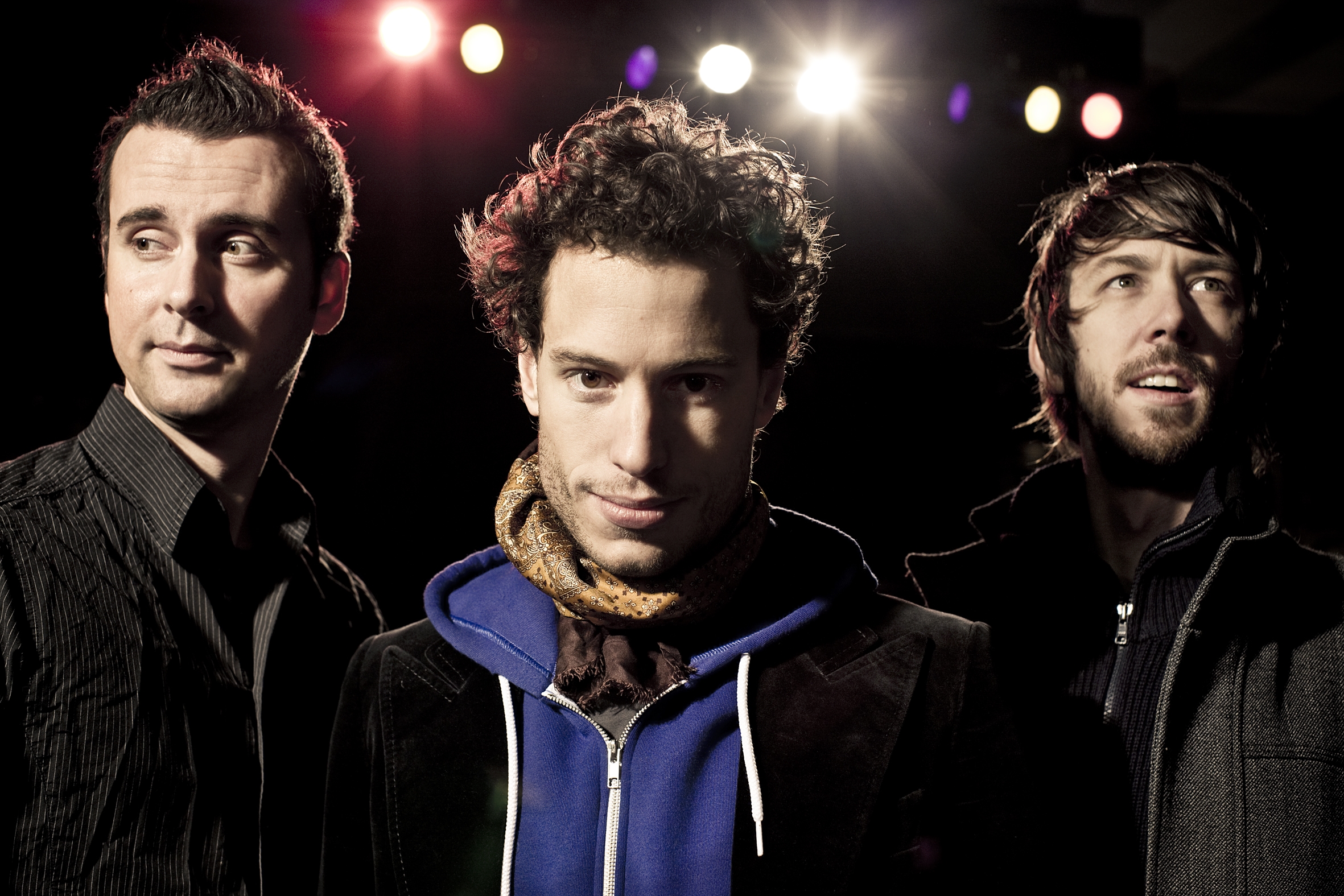
Grand Pianoramax_300dpiDescribed in terms such as “power trio”, “supergroup” and “heavyweight”, Grand Pianoramax easily testify to being greater than the sum of their parts. The deceptively skimpy lineup of keyboards, drums and rapper belies the aural magic monster that lurks beneath the surface.  Elegant piano/rhodes, razor sharp drums and urban-edged rap/poetry jostle and come together to create a fiery fullness of sound that has become their distinctive trademark since the band’s inception in 2008.

A rich, emotive soundtrack that already hints at the light and shade which is to follow

Tonight, the Jazz Onze+ crowd are warm and receptive towards their errant Swiss son, keyboard maestro and band leader Leo Tardin, who has over the years immersed himself in foreign locations such as New York and Berlin to develop his sound until recently relocating back to his native Geneva. Much of tonight’s tracklist comes from the latest Grand Pianoramax LP, “Till There’s Nothing Left”, released on ObliqSound last spring and is met with appreciative familiarity indicative of an audience who’s been paying attention.

The skimpy elements are eased in gradually. Leo seduces us gracefully with “Firefly”, a captivating and melodic solo start on the piano, creating a rich, emotive soundtrack that already hints at the light and shade which is to follow.
Joined on stage by drummer, Dom Burkhalter – a modernist fist in an iron glove –  the friendly duel quickly evolves between the two main musical elements, at times rolling around happily side by side, other times in stark stylistic contrast to one another as though wanting to stretch the listener’s awareness to its fullest capacity.

Two herculean pillars laying down a spectacular multi-textured foundation…

The play-fighting relationship between keyboards and drums is what underpins the essence of Grand Pianoramax, two herculean pillars laying down a spectacular multi-textured foundation on which the third element, Black Cracker, can nimbly unleash his craft of language and movement. This Alabama wordsmith and charismatic agent provocateur forges an agile bridge between the audience and the stage, bringing things down from a powerful sonic ride to a more urban, earthly, NYC dimension using rap, poetry or song.

In common with each track is a strategic sense of rise and fall, density and space. It’s an occasionally challenging but always engaging journey. The rhythmic patterns and shapes vary from mercurially dark (“Cry Alone”, “Runaway”, “Have You ever Seen”) to quirkily funky, bouncing along like De la Soul meets Michel Legrand (“Nights Turn To Days”), and hard-edged urgency complete with strobe lights (“Call it Like You See It” and “Roulette”).

In the case of Grand Pianoramax, less is definitely more

An effortless cohesion of threads coming together is felt during ‘Till There’s Nothing Left’, their most radio-friendly hit, a subtle suggestion that crossover to commercial polish is possible if so desired. ‘The Hook’ provides the encore, a track remixed by DJ Spinna and put out on vinyl a few years back, an example of what can work well in a club setting as through the headphones of the rap enthusiast or jazz muso.

It’s a consummate work performed by heavyweights in their field. Honed down talent and acumen has produced an act that can adeptly bend styles and cook up a rhythmic frenzy on only three burners. In the case of Grand Pianoramax, less is definitely more.

Grand Pianoramax played @ Festival Jazz Onze+ in Lausanne on the 31th of October
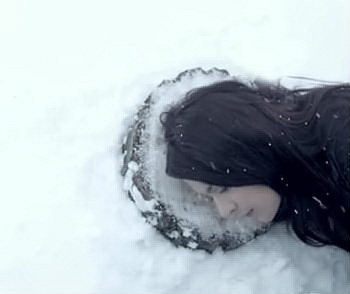
Grand Pianoramax, Till There Is Nothing Left, (Obliq Sound)

How Do I Look? Image in the Digital Era

Forget Twitter’s 140 character limit and just post a photo, or 15 second video – and you’ve got the new digital craze, Instagram (16 million active users per day). It’s responsible for the widespread ‘selfie’ (taking a picture of yourself and posting it) and along with Facebook, YouTube and camera/video devices within our smartphones, tablets and consoles has blown the importance of our own image into a monstrous size. This is impacting society and culture, and that includes jazz.

“You can take a stand and decide what emphasis you will apply to your image”  Elina Duni

Elina1(1)There is resounding evidence that Dr Catherine Hakim was bang on the money when she wrote a book asserting that those who use beauty, physical fitness, charm and sexiness will find success (Honey Money: The Power of Erotic Capital) and it’s especially true in the music industry. “I am so sad about what I see today, what are the role models for young girls? Mostly women stars who don’t represent the feminist way of thinking, but represent the sexual object,” says vocalist Elina Duni when I ask her about women’s image in music, “but you can take a stand and decide what emphasis you will apply to your image, if any, or what it says about you.”
Duni instinctively realized the importance of engaging visuals from the start of her career, but it was when she found a kindred spirit in the Albanian photographer Blerta Kambo that she could realize her ideas. “Some things can be sensual or sublime without being cheap or sexual,” comments Duni, “she represents me very well.” Trombonist Samuel Blaser didn’t have the same issues to face but admitted he’d changed his thoughts on his image, “Now I’ve hired a fashion consultant. We went shopping for a day together. I spent way too much money, but I think it’s important to present yourself well.

“In some parts of Europe music is more connected to hipness than to good music”  Florian Arbenz

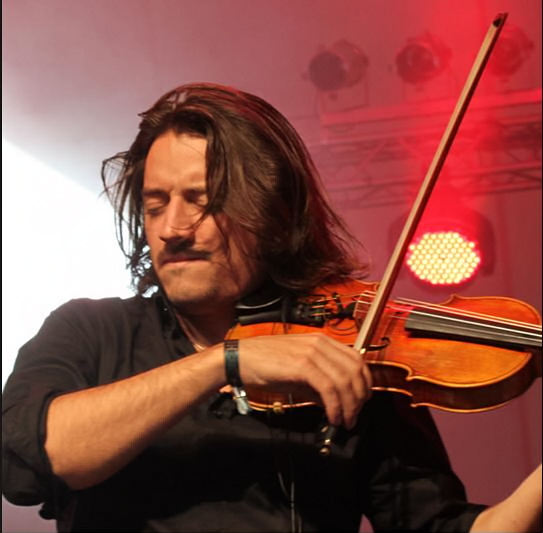
In my own career I witnessed how having a strong visual identity helps people remember you (I had dreadlocks for many years), but as pianist Rusconi notes, it has to be genuine, “If it comes from you and who you are as a band then great, but there’s no need to force it.” Some people have a natural visual intelligence, such as Tobias Preisig. He plays violin and in a subtle way, plays upon the look of a free and fiery but very modern gypsy. He forges a clear identity, very useful tobias1when establishing a ‘brand’. If any artists out there are flinching as I use the word ‘brand’, consider the creative accomplishments of Björk, one of the most magical musicians of my generation whilst being one of the strongest brands. Brands enable people to get who you are and, if it’s strong or unique, remember it. You may not say Eric Vloeimans’ indulgence in colourful clothes and ‘funky’ shoes launched his career, but you could see how his image, along with his playing has set him apart.
Florian Arbenz of Vein commented that not everywhere was infected by “fashion”, “In some parts of Europe music is more connected to hipness than to good music. In Eastern parts [of Europe] you are still judged very hard when you play and I like that.” He found that his band’s classical training and passion for vintage jazz, not their choice of clothes, had given Vein a strong profile in those regions.

Image in music isn’t just about personal appearance

Bebop and modernist jazz was helped by the daring graphics of Reid Miles at Blue Note in the 50s and 60s, whilst Manfred Eicher’s audio vision for ECM was perfectly interpreted by designers Barbara Wojirsch in the ’70s and Dieter Rehm who nurtured the photographic style of windswept trees and monochrome landscapes. On the other hand you could argue that GRP Records sold a lot of albums despite some of the ugliest record sleeves ever (though they were operating in the ‘style-free’ era of the 1980s). As digital downloads and streams find their feet there’s less attention paid to album covers, but a few of the Swiss artists I interviewed confirmed their audiences were still buying CDs. In the wider picture of music, however, the music video, once the marketing tool of pop alone, has taken on increasing weight. Use of YouTube as a device for discovering music is mostly responsible.

“We did it like a piece of art”, Samuel Blaser

samuel1(1)Samuel Blaser has found himself experimenting more with visuals such as photos and videos and, like Duni, recognizes their importance as publicity. They also have both relished these added dimensions to their creativity. Blaser met Polish video maker, Ewa Kozanecka in New York and asked her to shoot something for a shorter version of Pieces of Old Sky. “I don’t know if it was totally useful because we did it like a piece of art.” From a listener’s point of view that video held the music more firmly in my memory. And that’s where videos and photos can really assist musicians – by etching their sound into the consciousness of the public. Rusconi are a band that have also naturally partnered with video to explore ways to extend their expression.
“The video thing opened up our music to a totally different crowd” Stefan Rusconi

[youtube=http://www.youtube.com/watch?v=XDdzOFYnLuo]

They have forged a successful pairing with the film collective,  Zweihund, producing engaging and professional work for comparably small budgets. Stefan Rusconi told me, “The video thing opened up our music to a totally different crowd. What we’re interested in as an audience is people that are interested in different fields of culture. Doing the video got people interested that would never have come to a Rusconi jazz gig,” and it enabled them to crossover to contemporary music festivals outside of the ‘jazz’ genre.

“You need good clothes…” Marc Perrenoud

This has proved useful as a piano trio, because as Marc Perrenoud, the leader of another piano trio, noted, “You have to find something different form other trios, find another visual identity.” Some of the artists I interviewed were also filming their gigs, tours and recording sessions as ‘documentaries’ in order to extend their ‘visual presence’. The digital world is forcing the hands of musicians, “You have to be very connected on the web, you have to have very good presentation and have very good pictures [and] you need good clothes,” noted Marc Perrenoud.

A few months ago I went to a jazz festival. One of the bands I came away very firmly etched in my mind were Snarky Puppy – they had great stage presence (helped by the fact there were so many of them) but also their fans were wearing well-branded T-shirts, with a print of a dog’s head wearing headphones. Jazz musicians may not feel the pressure to look like George Clooney, yet, but the world is changing rapidly and visual intelligence or ‘erotic capital’ if you like, won’t be diminishing their influence in the near future.

“Tweet Me!” Jazz in the Digital Age

Swiss Vibes 2013_01_Mix 4As far as I see it, social media is a form of Internet dating, just without the romance (though not always). It’s relationships, connecting, communicating, dare I say, flirting, and showing off your best photos. There’s also a lot of hype about what it can do for a career.
Example: kid playing guitar uploads to YouTube, sets up Facebook page to consolidate following, finds a manager via Twitter, releases EP, tweets to major UK shop about singing on their next Christmas advert – gets job, the track goes to no.1 in UK charts, she gets lots of press. This is the true story of Gabrielle Aplin who literally created her own career in a few years using digital media and it shouts at us, “Digital and social media matter!”

“It’s the most neglected field in jazz music”  Stefan Rusconi

Rusconi_2But what are the implications of this explosion of media for the new generations of jazz musicians? Out of the eight musicians I spoke to they had all breathed the same air, tainted by these hyped success stories of social media, but only three were already forcing themselves to fully utilize the Internet. Stefan Rusconi observed, “I understand our music is about being a master of playing for real, you invest a lot of time in your instrument, you’re a craftsman and it’s sometimes hard to accept the digital side, but I think it’s the most neglected field in jazz music.”

“it’s not up to me to decide if it’s important or not, it’s just a fact that it’s important” Andreas Schaerrer

Andreas SchaererCertainly they don’t share the same audience as Justin Bieber (over 42 million Twitter followers) but Herbie Hancock has doubled his followers in the last year to 54,000 and it’s doubtful the trend will reverse. Andreas Schaerer reflected the thoughts of others when he said, “I personally don’t enjoy Facebook…This concept of communication is a fake one to me, but I realize I’m living in a time when it’s not up to me to decide if it’s important or not, it’s just a fact that it’s important.” However, the issues around digital media aren’t only about personal taste, a key problem mentioned by all the musicians was, time.

“To create, you really have to shut down your Internet and phone”   Elina Duni

Elina Duni_PF1Creating and updating websites, Facebook pages, blogs and tweets take an enormous amount of time and more notably, headspace, because it’s ongoing, always on the ‘to do’ list. Smartphones have supported social media by making it easier to update ‘on the go’ but as Elina Duni noted, “It’s not just posting things, you have to be active, to answer, people have to feel you’re near to them.” It’s this consistency that can be at odds with a creative process such as composing that demands focused, uninterrupted time. Duni explained, “To create you really have to shut down your Internet and phone…but today you always have to be reachable…It’s not easy and sometimes it depresses me, but I try to find a way…I try to improve.”
Building a database of loyal fans…

Marc Perrenoud Trio_LD1There are other issues such as keeping your website alive and relevant and the cost of that. The pianist Marc Perrenoud realized, “I just made my new website last year, but I want to change it already.” These Swiss musicians accepted that their websites needed good translations into English for the international market (which they need to survive), but this point leads us on to one of the big positives of digital media: it makes musicians completely accessible. When researching these artists I watched all of them live, got their discography, biography and the geography of their forthcoming gigs without leaving my South London apartment.
The Internet has also helped them connect with other musicians and collaborators, and most importantly, in the case of Rusconi, their audience. This group took time to research these new forms of promotion and communication, watching e-marketing videos by Seth Godin amongst others. They decided to adopt the ‘download and donate what you want’ approach to their recent album, Revolution, as opposed to giving it a price tag. Not only did it help the band connect to a broad-based audience beyond the jazz market, “people that are interested in different fields of culture…people who are active, who want to be a part of society, who are aware of others and a vibrant thing…” but also it helped them win the Echo Jazz Award for Best Live Act (up against Wayne Shorter, no less). That’s a big win that would not have been possible without having built a database of loyal fans.

“it can be serious stuff that you post on your Facebook page which people would enjoy”  Florian Arbenz

FlorianSI’m going to skirt around the subject of digital downloads and e-commerce here as it’s a big and complicated field. However, as a marketing tool, digital media is up there as a new force. In some ways Rusconi are lucky in that their explorations of the digital world and the videos and imagery that need to accompany that fit naturally with their own tastes and interests. Drummer Florian Arbenz of Vein was one of the artists who openly admitted that he hated social media, but realized he’d been looking at it in the wrong way. “We didn’t want to write stupid stuff like, ‘I’m waking up in Paris, yeah guys,’ so we rarely wrote anything. But if you think business-wise, you can connect with your audience.” He was going to look again at digital media from a new persepective, “The music is still the priority but we could build some concept around that, it could be art, a series of films – it can be serious stuff that you post on your Facebook page which people would enjoy – and reflects us.”
Digital media can also consolidate an artist’s musical expression, make them appear stronger and bigger, as well as provide more aspects to their personality when they use other art forms. Imagery and Swiss jazz is something I’ll write about next time but for now, it’s worth considering that whatever your opinion of social media, understand that you can interact with it in whatever way you want. And in doing so, connect to like-minded people. In terms of time, money and energy, digital media can suck you dry, but what musician wants to risk missing out on its benefits? It’s not just about crossing borders and continents to make sure people turn up at your gigs, it’s also about developing your ‘voice’ and at what volume it’s heard.

In Fai Baba’s cave

On stage at Lephoto_fai_baba_01 Bourg, Fabian Sigmund, alias Fai Baba, surprises us with a trio that’s as minimal as it is powerful. He is back at Paléo Festival Nyon, Friday the 26th of July.

First of all, there’s the voice that can scale great heights in an empowered register, something which doesn’t really go with the willowy physique and jerky body moves. An intriguing mismatch which strikes a chord straight away.

The accompanying bassist and drummer amplify and play around with these noisy blues, tinged with flashes of rock and punk.

The rhythms are broken up to make way for long instrumental sections. Thanks to two guitars, (one simple and one 12 string), and a few pedals for effects, Fai Baba puts his guts into his music without batting an eyelid.

A cover version of Townes Van Zandt and a nod in the direction of many different rock styles, all of which confirms that the man is a music freak.

Fai Baba says goodbye, announces that his CDs are on sale and gets straight to business by pulling out a suitcase from the side of the stage. Inside are his two CDs releases, including the latest “She’s the guru”. It’s a lot more orchestral than what the Zurichois has just delivered on stage despite being a work that he designed entirely on his own. Here are some insights into his work:

How did you set about making « She is My Guru » ?

Fai Baba: This LP was made in six months. I shut myself away in a rehearsal studio in Zurich and started working on some loops, experimenting with sounds on an eight-track. Within six months all the ground work was done. I then went to New York to finish the rest. I worked in the studio with Tony Maimone who was Père Ubu’s bass player for a long time.

How did you meet Tony Maimone ?

Fai Baba: By chance. I was helping a friend organise a kids’ second-hand market and whilst chatting to a woman I mentioned that I was a musician. She happened to be Tony Maimone’s sister-in-law and she hooked us up. In him I discovered a nerd who like me enjoys organic music and working with analogue sound.

Since when have you been working on your own?

Fai Baba: When I was 14, I started playing in a band and hanging out with an older friend who was clued up. He taught me how to record onto a tape deck and I immediately thought it was more cool than working with a computer.

How do you work?

Fai Baba: I’ve always played my rhythm section plus guitar. As soon as I touch an instrument I know there’s a specific sound for me to make. For example, I can make a kick drum sound with my foot, then I sample it and play it back and this gives me a base on which to build. It’s often as basic as just one simple note. This is a hip-hop technique but its origins come from the blues.

How did you get into the blues ?

Fai Baba: I used to play in a band where we went through all different styles of playing: rock à la Radiohead, then Pink Floyd style, and then Sonic Youth! Next I went off to India with my guitar, it was some travellers there who initiated me into the blues. When I got back I found myself playing the first half of a set all alone on the guitar. It was then that I realised that I wanted to play solo.

You seem to have an impressive collection of instruments and synths?

Fai Baba: I don’t know how many instruments I’ve got. They fill up a whole room, rather stressful because I’ve got to move house soon. I’ve always loved vintage sounds, the instruments used back in the day, but I’m not rich enough to have them all. Recently a friend of mine unearthed an Ace Tone organ, (a portable organ used a lot in 60s American rock), which featurs on the LP.

 You invited some musicians to join you on the LP, what did they contribute to the sound?

Fai Baba: When I ask someone to play on my record I know exactly what I want from them and the kind of sound that they’ll bring. But I also like for the process to be spontaneous and radical.

 Your album is entitled « She is my Guru ». Who is your guru?

Fai Baba: Once the recording was over, I noticed that I’d only done love songs. When we think of a guru our first thoughts are often of a man, but it amused me to say “She’s my guru”; a ‘she’ that refers to ‘woman’ in general, my muse as much as my guru.

“Julia”, a track from Fai Baba’s first LP (“Snake Snake”) is available for download on bandcamp at Swiss Vibes and can heard here:

[soundcloud url=”http://api.soundcloud.com/tracks/88381394″ params=”” width=” 100%” height=”166″ iframe=”true” /]

PS. This text was originally published in French on the 31st MAY 2013 on this blog

Made in Switzerland (the pros and cons of being a Swiss jazz artist)

Swiss Vibes 2013_01_Mix 4“You can tap into resources and support and it’s there”  Leo Tardin
The Swiss jazz scene is evolving and has been for some time. Music education at institutions such as the Bern University of the Arts, professional support for artists and an expansion of the term jazz, have helped the emergence of new and award-winning talent. I asked musicians who’ve had help from Pro Helvetia, how being Swiss has impacted their music and careers and if any changes could be made for the better.

They unanimously acknowledged the funding system that exists. Drummer Florian Arbenz said financial help was a huge advantage, “Because of the spare time we have for our heads to create something…(and) work on our own concepts.” Leo Tardin, who spent a significant time building his reputation whilst living in New York, said that being abroad gave him perspective on being Swiss, “You can tap into resources and support and it’s there. It’s shrinking just like everywhere else but we’re still very privileged and that’s a fact.”

It will always be diverse, musically”  Stefan Rusconi

Several artists did refer to the Nordic scene as an example to follow, with its huge investment in jazz and organic creation of an almost tangible ‘brand’, encompassing artists from Jan Garbarek to E.S.T. However, the journalist Arnaud Robert said recently, “Switzerland creates individuals, not schools or movements of music,” and musician Stefan Rusconi agrees, “It will always be diverse, musically, I don’t think it will be like the Nordic sound, I think it will be an approach, an attitude that could come out of Switzerland.”

I would agree; as a DJ visiting Switzerland, I was drawn to the open-minded spirit of people less concerned with being cool, than being free (whilst getting things done, of course!). Humour and a spattering of crankiness are somewhere in the mix and as the Zurich-born violinist, Tobias Preisig, says, “I’m pretty amazed how small this country is but how rich it is music and cultural-wise.” Maybe this is entangled with the make up of Switzerland as noted in Wikipedia, it’s not, ‘a nation in the sense of a common ethnic or linguistic identity’ and over one fifth of the population are immigrants.

“Switzerland, for me, is a big chance”  Elina Duni

Vocalist Elina Duni says of her quartet, “This music wouldn’t exist without Switzerland because it is the fruit of bringing together my Albanian roots and my Swiss culture.” Having moved to Geneva when she was ten, Duni sees her music as building bridges between people and acknowledges the support she’s had with that, “Switzerland, for me, is a big chance.”

Andreas Schaerer also feels that being Swiss has informed his compositions and vocal work in an interesting way. He refers to the Swiss obsession with detail, “We work so long to make things better and better until every last corner of the product is perfect…What is good is if you can be brave and destroy it…so that you see these pieces of complexity (and detail) but the environment is complete chaos.”

Schaerer also observed that the Swiss are good at technology and high quality products that take the spotlight, as it allows ‘their creator’ to stay in the shadows. Elina Duni also commented on this Swiss characteristic of humility, “It allows people to learn further and go further,” but too much of it prevents the Swiss from exporting itself with pride. Rusconi pointed to the same issue, that it’s not ‘Swiss’, “to stand there and say we’re proud of ourselves, we want to get out there, we’re great.” Self-promotion is a pre-requisite in the music world today and Schaerer has had to confront his discomfort with that, “You need to get rid of it without becoming arrogant or losing respect for others.”

“It’s hard to cross borders in music and life”  Tobias Preisig

Several of the artists have lived or are living abroad. Samuel Blaser now resides in Berlin but spent time in New York. Although none of them felt that ‘being Swiss’ made them particularly exotic, Blaser felt, “It’s stronger if you live in New York because you can then ‘export’ your music back into the EU market (from the US).” Being an ‘export’ is vital to these musicians because as they pointed out Switzerland is not a big enough market for them to survive there alone. “It’s hard to cross borders in music and life,” reflected Preisig, and it’s why support to tour is key. Pianist Marc Perrenoud saw this as a positive, “I use the obligation to export yourself as a way to travel, meet people and experience other cultures.”

Being a Swiss musician is packed with advantages, not least because being brought up in a culture of excellence, passion and professionalism has impacted the standard of playing. Being a jazz musician anywhere is not an easy choice but that can’t be changed, neither can the size of Switzerland. However the discomfort with ‘blowing your own trumpet’ can be discarded along with the Swiss milkmaid. These musicians are cultivating a confidence in their own unique ‘voices’ and this needs to be reflected in the way they are promoted. I’m certain cheese and chocolate will always sell but now there’s a chance to add a new and more emotionally expressive export to the table.

Andreas Schaerer Makes Friends with London

Guest appearance with Soweto Kinch at King’s Place, London. May 31st 2013.
Photos Reto Andreoli

IMG_8967bI’d like to say he has bionic vocal chords
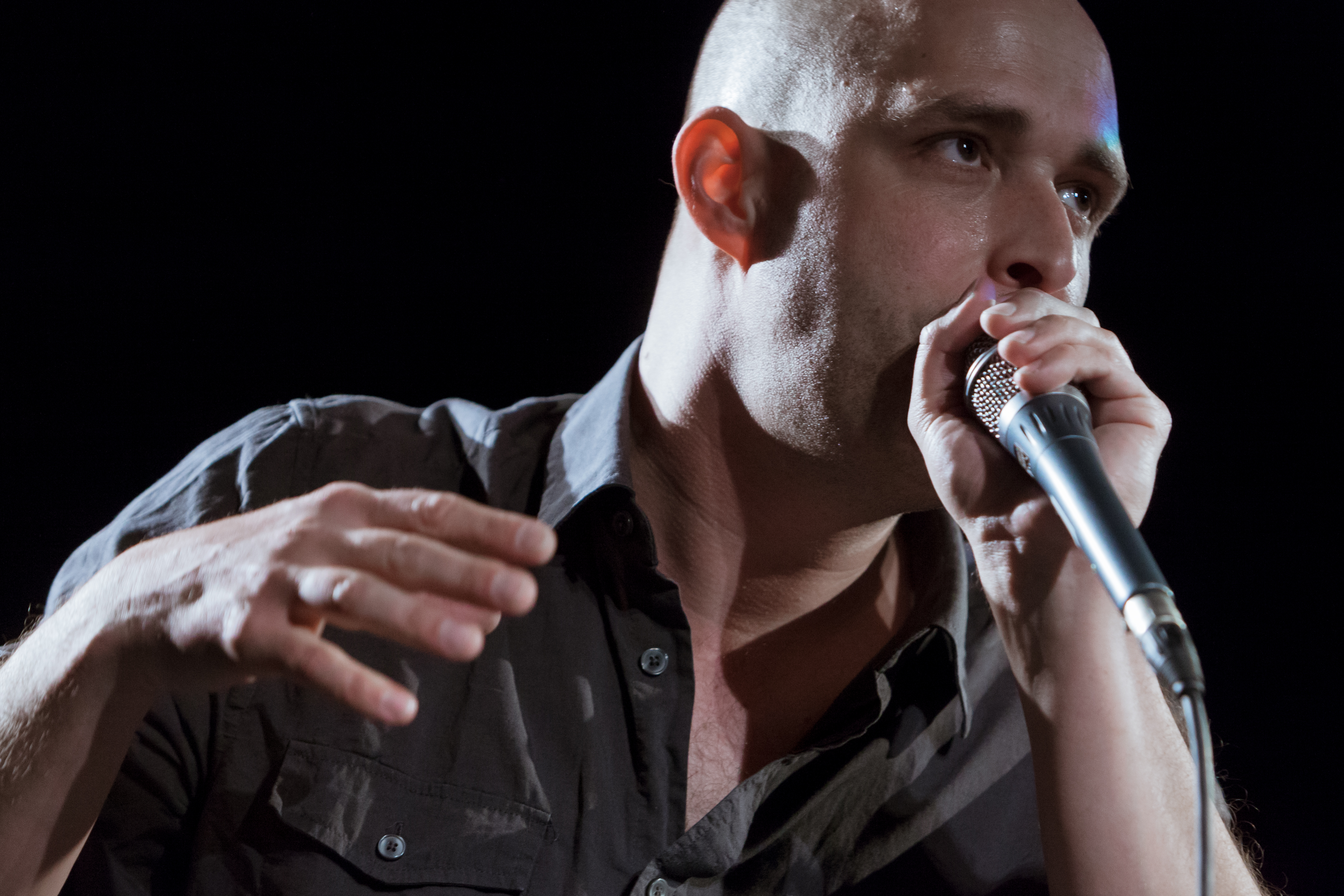
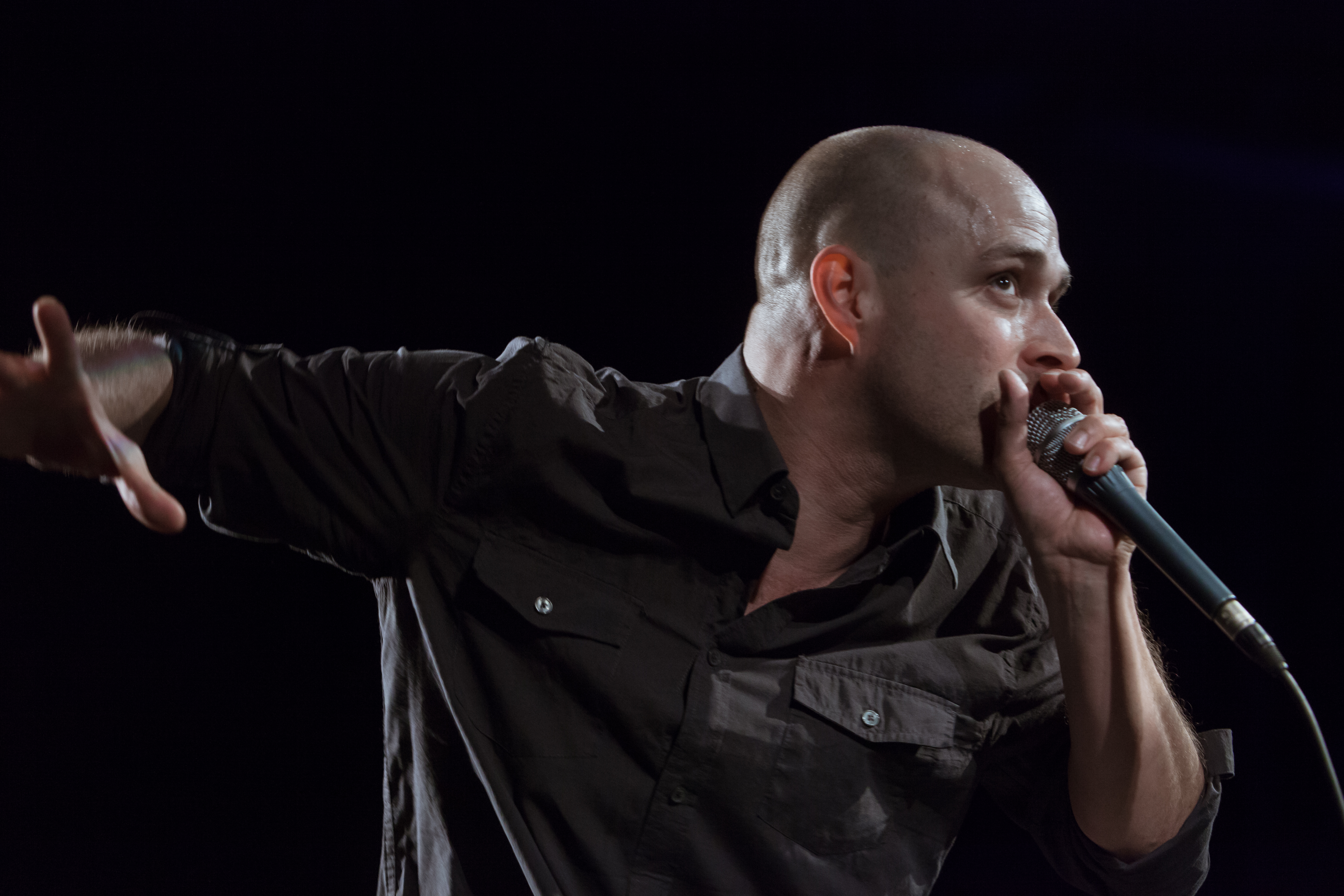
The vocalist, Andreas Schaerer, is captivating. I’d like to say he has bionic vocal chords but in fact they probably resemble yours or mine. Whereas I can’t even whistle, Schaerer can convince you that a nightingale has got caught in the rafters or a percussionist has taken to the stage with a shekere, Batá drum and a pair of claves.

This Bern-based talent had been invited to perform in London by Soweto Kinch, the British alto sax player and rapper. Part of the show was made up of tracks from Kinch’s ambitious concept album, The Legend of Mike Smith but part way through Schaerer joined Kinch to improvise with him, his bassist Nick Jurd and drummer, Shane Forbes.

The game was to interplay sounds and rhythm with Kinch on the modern theme, ‘how will consumerism respond to the depletion of resources?’ Appropriation and optimization were amongst Kinch’s articulate raps but to be honest, these themes didn’t cut through into the music. What did was Schaerer’s vocal craft.

The turn that made the audience’s mouths drop was his ‘muted trumpet’

Starting with a beautiful three-note call and whistles, African plains and fluttering birds floated through my mind, Schaerer went on to bubbling, clicking and bashing before building an industrial cacophony that dropped into some fresh beatboxing. The turn that made the audience’s mouths drop was his ‘muted trumpet’ duet, echoing and dancing with Kinch’s sax runs. It was so convincing that people looked over at Kinch thinking he’d picked up a trumpet.

The gig could have relaxed a little, allowing the band and Schaerer to expand on their improvisations, but it’s to Kinch’s credit that he spotted the potential punch Schaerer brings to a gig. His ‘joyful noise’ left us all smiling, including Jonzi D, director of the breakdancing festival, Breakin’ Convention. He was intrigued by Schaerer’s vocals and how he used his physicality to echo them, bringing a visual dimension to the performance.
Jazz musicians need to make international friends and connections as their potential audience is spread far and wide. Schaerer is doing just that. I hope that part of his journey is also taking him deeper into vocal expression, developing his potential to truly move people. His talent is beyond a party piece.

Take 5: Switzerland

Take 5_Swiss team

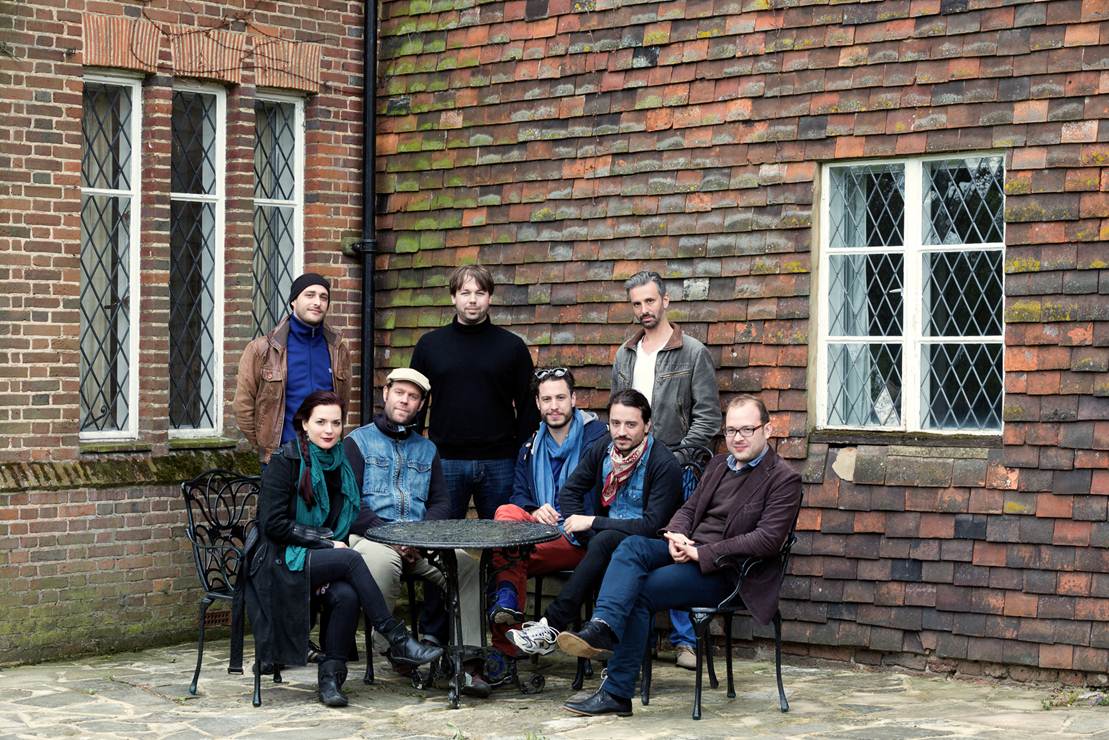
(Left to Right) Andreas Schaerer, Elina Duni, Florian Arbenz, Marc PerrenoudStefan Rusconi, Tobias Preisig. Leo Tardin, Samuel Blaser. ©Emile Holba

The heated kitchen for innovative artists

Take Five is a “heated kitchen” for innovative, young jazz artists, with five concentrated days of coaching, learning, sharing and networking (along with some fun and seriously good food). Created by the UK’s foremost jazz producer, Serious, and funded by Pro Helvetia, Take Five:Switzerland was designed to isolate eight Swiss musicians in the lush setting of Bore Place in Kent – think bluebell woods, gardens bursting with wisteria and mock orange, slouchy sofas and log fires – and lead them through sessions with a performance coach (Mary McCusker), music promoters from across Europe, as well as, digital, legal and industry experts including Wulf Muller of Sony.

“It’s been a rich experience,” said Tobias Preisig, as a comment on the variety of “inside information” they could garner, even when that meant facing tedious home truths. Musicians, such as Florian Arbenz, were aware they could improve their social networking and online presence, and some learnt the value of visual presentation, possibly helped by the photo shoot with experienced portraitist, Emile Holba. Scott Cohen of The Orchard gave a blistering session on aggressive digital distribution and ways to make money from music in an era of sporadic CD sales, with pianist Leo Tardin commenting, “He was the one to shake our ground the most, not someone to pat us on the head, but kick us in the butt, and he did that very well.”

“We need some space for our dreams” Andreas Schaerrer

Sometimes the message from promoters was dour, “We’re learning about the business, but there is no business”, said Marc Perrenoud noting that, “You have to build your audience because, apparently, no audience is interested in jazz.” However, as the vocalist Andreas Schaerer explained, “We need some space for our dreams,” and without exception they were resilient to negative messages. They have to be.

Jazz will need to go on beyond the passing of the classic “greats” and continue sculpting its own relevant identity whilst earning a living. Schaerer felt supported by some promoters learning that, “It’s not only our job to build up our career but it’s also that everybody is interested in having a future generation of active people.”

“We are a community, we are coming from the same place” Stefan Rusconi

What became achingly clear was the wall of work that faces these artists on a daily basis and that as they’d been given this break away from emails, calls, rehearsals, travelling, organising, etc, they were keen to squeeze every drop of tangible use out of the time with little patience for anything deemed irrelevant. Although Take Five is an extremely organised and detailed affair, thanks in part to the sterling work of Martel Ollerenshaw, it also tried to be flexible. So when the Swiss crew stood up to say they wanted time to simply hang out to share concepts, contacts and knowledge with each other, they were given it.

Something I was most struck by was the honesty with which the artists spoke to me about issues they were facing. Somehow the bombardment of information along with the intimate environment and maybe the odd glass of wine had enabled them to face up to their personal challenges: do they follow their business head or artistic heart, how can they deal with the amount they should be doing whilst having focused rehearsal/practise days, or time for their family, what step should they take next?

A Tribe Called Swiss

On the last day there was an extraordinary jam session led by one of the UK’s most exquisite saxophonists, John Surman. And there was an impromptu game of “football-piggy-in-the-middle”. It was actually in the kick about that I most clearly saw a key triumph of Take Five: the founding of a connected, bonded and inspired group. Let’s call it, A Tribe Called Swiss. Without exception each artist echoed Stefan Rusconi’s sentiment, “I knew all of them at least by name, but it’s been great to meet the other musicians. Also, to see we are a community, we are coming from the same place.”

Take Five can shake things up and it will take a while for the musicians to digest it all. I agreed with Rusconi when he said, “We need to be proud of what we’re doing. Swiss music is the new thing – chaotic, strange but rooted too.” Now all they need to do is buck the Swiss trend and force the spotlight onto themselves. As John Surman noted after their music session together, “I won’t forget you guys in a hurry,”  and if they utilise their newly found esprit de corps, they stand a chance of the music world saying the same thing.

Take 5 Switzerland website

Pierre Omer, Cully Jazz Interview

From a distance Pierre Omer‘s appearance is reminiscent of a compelling shadowy figure in a Jim Jarmusch film. His attire is dark, well-worn and elegantly dishevelled. His sound is a film noiresque Django Reinhardt meets Link Wray via The Clash.

London-born, Geneva-based Omer spent his youth listening to 80s UK pop, new wave and punk. Then came American roots music, large doses of Delta Blues, Hank Williams, Jimmy Rodgers, Bob Dylan, Shellac records and all things swinging from the 30s, 40s and 50s. Very much a vintage kinda guy.

His first band was a cabaret outfit immersed in the Berlin/Paris tradition. Omer then became a founding member of the Dead Brothers – an infamous funeral band known for their punk garage band ethic of rock’n’roll and other old school styles like swing, Bluegrass and hillbilly folk.

Pierre Omer & Stewarts Garages Conspiracy Crew_lowAfter 10 years of cult status, Omer moved into writing music for theatre, cinema and dance, as well as producing the first Mama Rosin LP, setting up his own label, ‘Radiogram Records’ and bringing out 3 solo albums.
By autumn 2011, a new band had organically come together out of disparate elements. Rob Butler – bass player from LA, now resident in Berne and part of the Voodoo Rhythm/Beatman scene. Christian Aregger (banjo) and Roly Bucher (drums) had asked Omer to play with them once and then automatically became his backing band. And lastly, the free radical, Julian Israelian – percussionist and noise-maker who plays his own handmade ‘Samsonite Orchestra’, (an out of this world lap-steel contraption that fits perfectly into a Samsonite suitcase). Together they produce a bluesy, rootsy, vintage sound with a post punk twist which is quite often dark but never sad.

Last year saw the release of “Stewart’s Garages Conspiracy Crew'”on Radiogram Records to critical acclaim. It was recorded at Space Echo Studios above Stewart’s old red-brick car garage in Fulham. The cockney twang in Omer’s singing voice is ever-present as is the up-tempo, jivey, Pogues-style sense of manic rhythm. Omer describes his guitar style as “raw, strange, dangerous and fun. I like to get people moving nowadays to music which has tragic and comic juxtapositions”. Judging by the full house at The Hundred Blue Bottle Club where Omer was resident this year at Cully Jazz, his filmic cocktail of folk-noir, roots, jive and swing is just what the Blues doctor ordered.

Erik Truffaz Quartet with Anna Aaron @Cully Jazz Festival

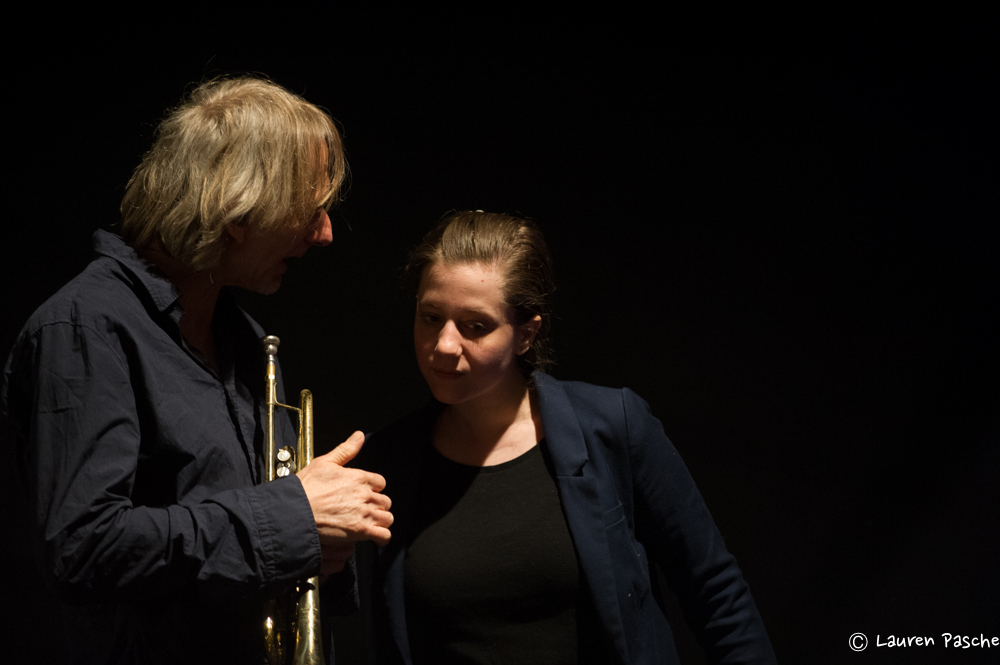
Erik Truffaz et Anna Aaron au Cully Jazz  ©Laurent Pasche
Erik Truffaz et Anna Aaron au Cully Jazz ©Laurent Pasche

Trumpeter Erik Truffaz has been a beacon of light in the Swiss and international jazz world since the early nineties and last autumn saw his 10th album release on Blue Note records. ‘El Tiempo de la Revolition’ links up nicely with tonight’s ‘Revolution Groove’ theme at Cully Jazz where the band finally return to play at this important festival after a gap of over 15 years – possibly a sign of how busy they’ve been in the interim.

It’s a delightfully mixed audience at the Chapiteau tonight, surley a testament of Truffaz’s dexterous ability to bridge the jazz gap from the traditional lyrical beauty of a Chet Baker to the nu-jazz experimentalist vibes reminiscent of Miles Davis. Hence, whether young or old, Truffaz’s elegant, atmospheric and resourceful style holds something magical for everyone.

Oiling the wheels of the machine are his heavyweight band members, each one bringing personality and colour to the cinematic flavour of the evening.

The wildly energetic and well-equipped Benoit Corboz on keyboards produced a wide variety of sounds ranging from piano, rhodes, church organ to wailing guitars and waterfalls. Along with Marc Erbetta on drums and voice box, they were the driving force behind the busy textures and soundscapes that contrasted from time to time with the more languid, introspective pieces. Marcello Giuliani on bass provided a rhythmically hip underpinning that helped to bring all elements and styles cohesively together. And as for Truffaz and his trumpet, whether bellicose or serene, his delivery was haunting, penetrating and deceptively understated throughout. Like liquid wax, he cleverly moved into places you would not expect and seductively melted you away.

Together, this quartet deliver a quietly confident, deeply poetic and engaging sound. They are not in any hurry, spaces in the music are allowed to breathe, less is quite often more, thereby allowing the atmosphere to build in a hypnotically meditative way, (typically evident in the track “African mist”).

The young and promising Swiss singer, Anna Aaron joined them on stage for two numbers, “Blue Movie” and “Blow Away”. Her soothing, agile, slightly pop-ish voice added a lighter touch, reminding us that Truffaz has often collaborated with unexpected genres of music to great effect.

“Mr K”, homage to their diligent manager, brought out their funkier side and whipped the audience into a joyful, energetic frenzy. It was hard for the band to leave the stage at the end of the gig, the audience had clearly not had enough of their favourite jazz export and wanted to bask a while longer in their irresistible ambiant beauty.


OY@Electron Festival Geneva

Oy_press2_Andi_ZantWelcome to the OY experience – another intoxicatingly, left-of-centre, musical adventure dispelling all myths that life is unexotic in Switzerland.

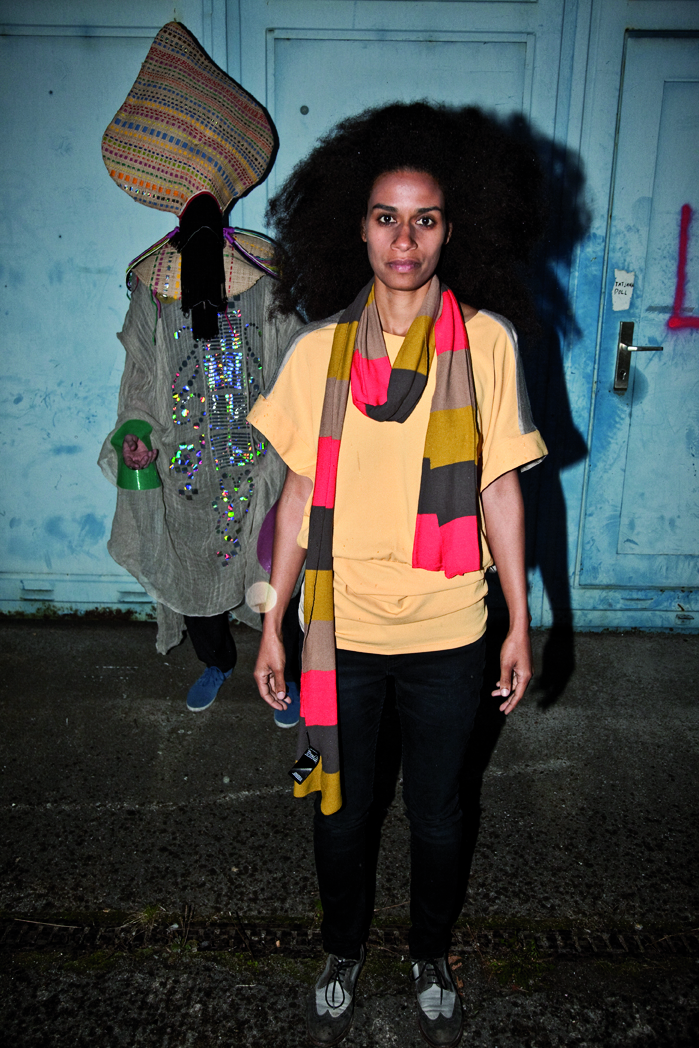
This highly creative duo is made up of Joy Frempong: Swiss/Ghanaian vocalist, composer, story teller, sound sampler – and Lleluja-Ha: drummer, writer, producer. Their on stage appearance already communicates that you’re in for an outlandish and unique evening. Joy is like an elegant gazelle, all height and hair, dressed in colourful childlike patterns exuding both innocence and depth; Lleluja-Ha, possibly a lost member of Sun Ra’s arkestra, is shrouded within engulfing high priest regalia and remains the enigmatic driving force behind the entire show.

Here, on the 30th of March 2013, to promote their newly-released 2nd album – Kokokyinaka – on Creaked Records, their sound is a refreshing, improvised breeze of African-influenced electronica based on a road trip that absorbed sounds and experiences from Ghana, Mali, Burkina Faso and South Africa. Tales, proverbs and folklore were gathered along the way to be retold in an experimental, kaleidoscopic style, at times dark and mercurial, other times as joyful as walking through an African market place.

Graced with ambidextrous talents, Joy is busy at the controls of her many synths and sound machines, often sampling her voice and playing it back as haunting accompaniment or backing vocals. An impressive wall of sound is often created between herself and partner as in ‘Chicken Beer’, where dark voice effects and heavy synth rhythms clash with swirling drum beats as menacing as a locust storm. Contrast this with a playful singing voice that combines rare soothing sweetness and reassuring confidence, (I imagined Joy singing me the last rites and how delightful it would sound). Songs about bizarre name choices ‘My name is happy’ and the sexual politics of hair ‘Halleluja Hair’ are pure poetry in motion full of observational delight and personal fire. Her seductive speaking voice entertains us with tales of how you should “never run to a funeral if you’re late” or how Ghanaians believe that “every mistake is a new style”.

If she fancied reading out the local Chinese take-away menu I think most of the audience would have happily listened. There was a lot of love in the room for this band. OY exude compassionate observation of humanity and wrap it up in multi-textured, exhuberant electronic soundscapes. The slightly drunken man standing next to me kept muttering “I’m in love with the singer, she makes me feel love, she makes me feel things I’ve never felt before”. He wasn’t wrong.

[vimeo http://vimeo.com/62645660]

Joy Frempong – vocals, sampler, synths, sound machines. Leluja-Ha – drums, production
Oy, Kokokyinaka (Creaked Record)