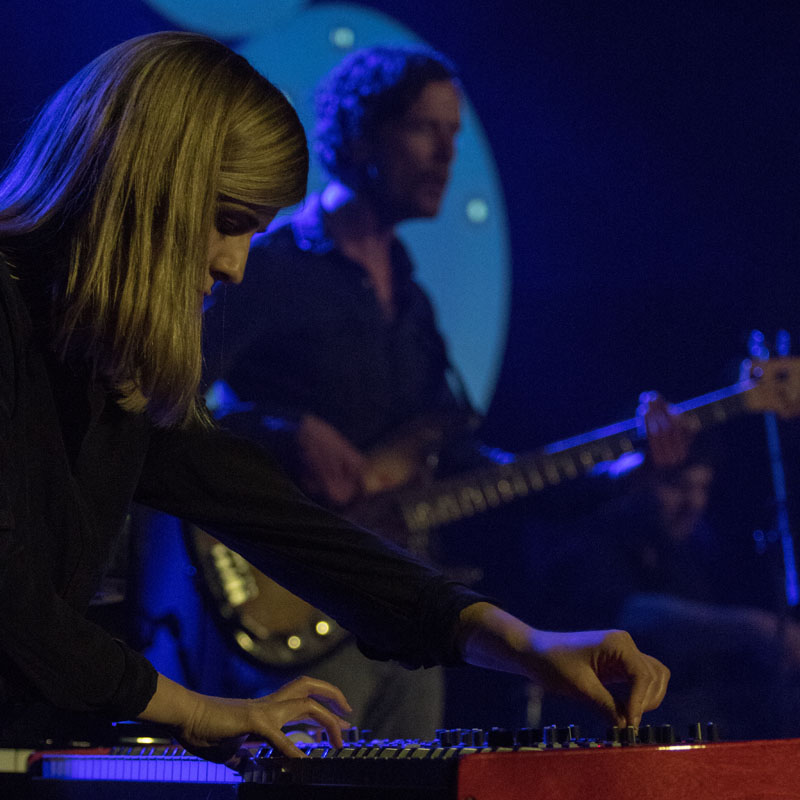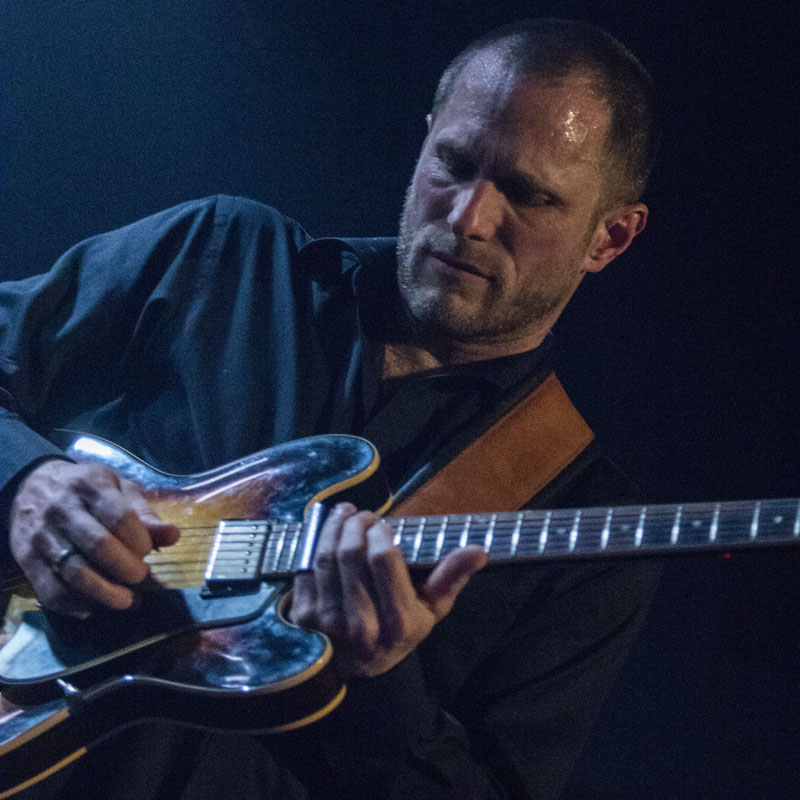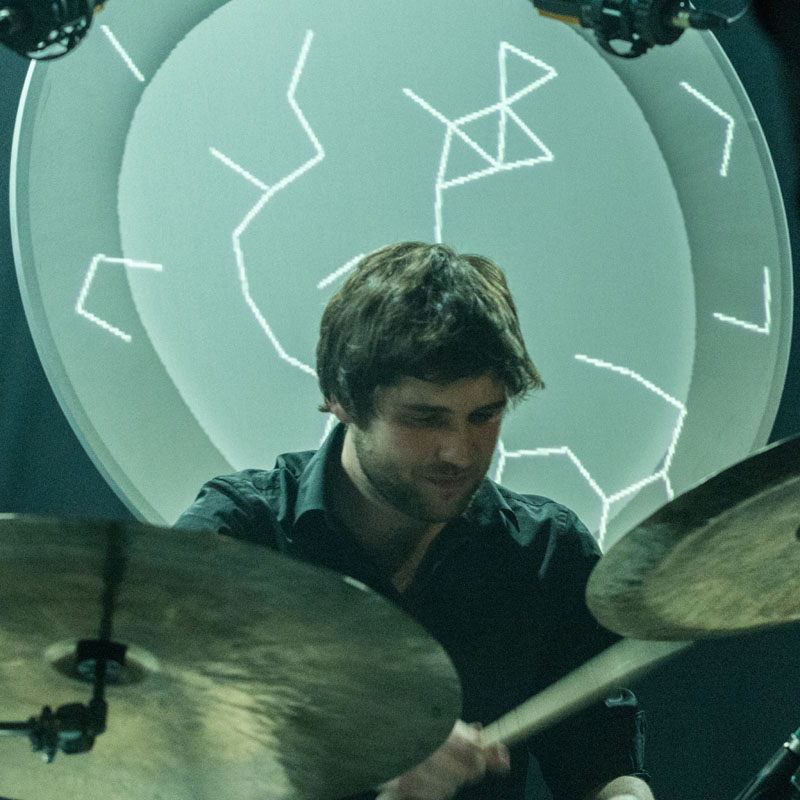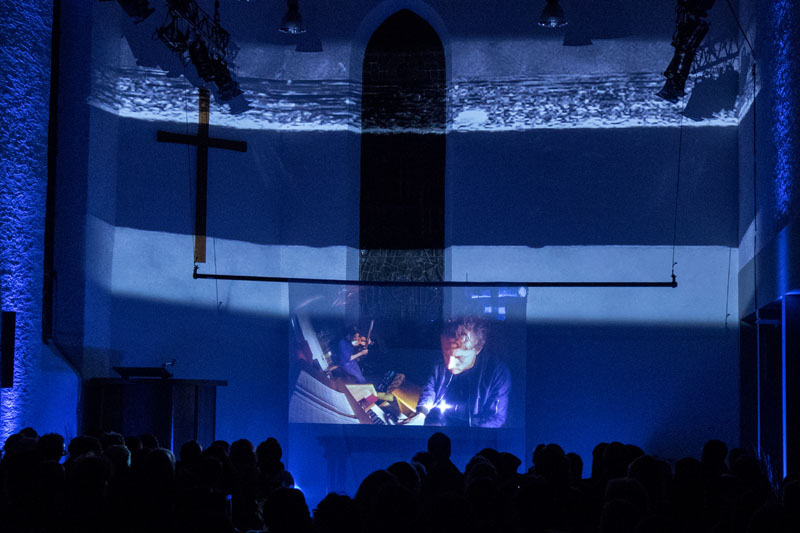
How Did They Do? Jazzahead! report

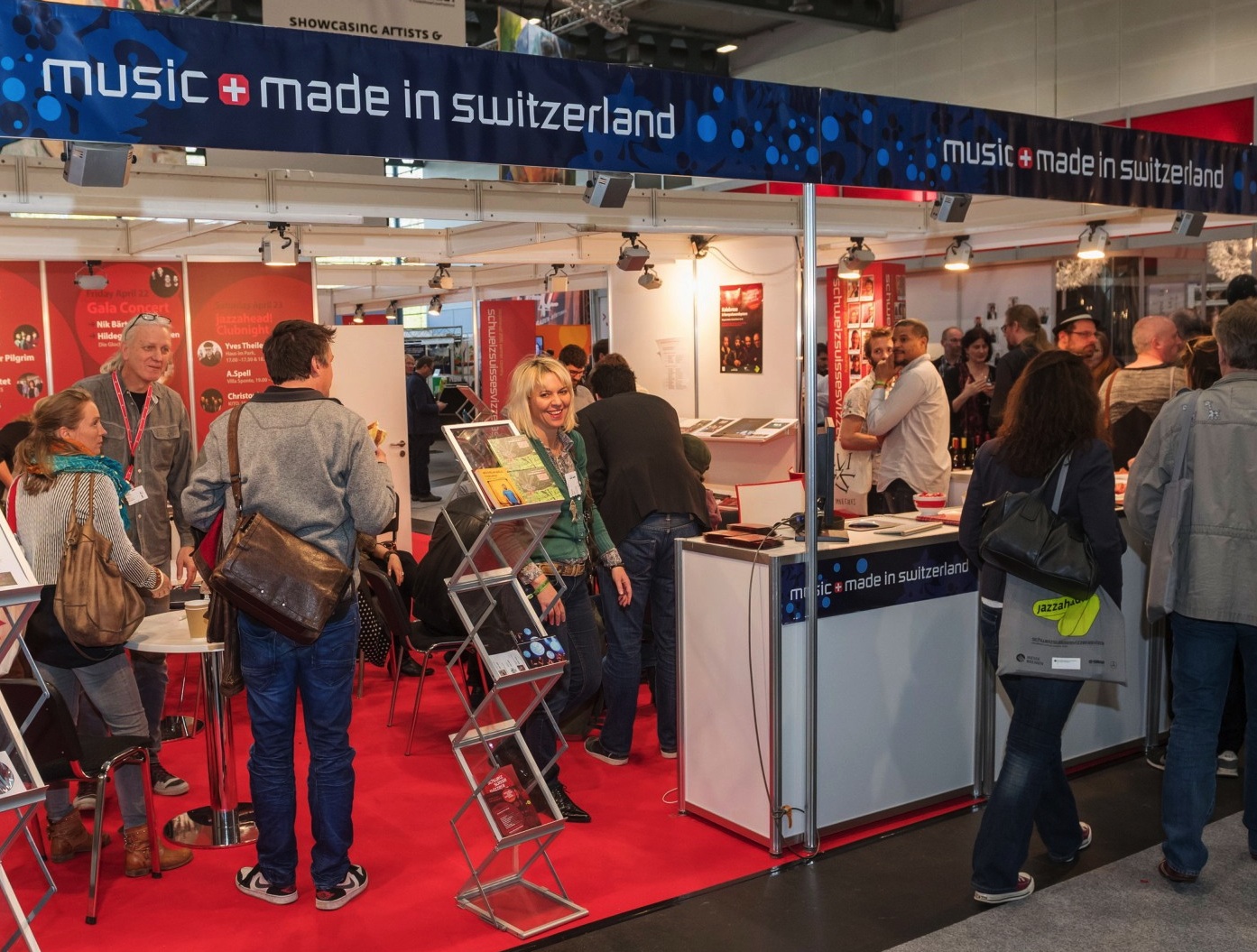
jazzahead_SwissStand
Photo: Michael Hornung

It’s a strange beast: the jazz trade fair. There’s networking, business talks and sets of exactly 30 minutes, with audiences legging it from one hall to another to catch as much music as they want. It’s pretty intense. Wisely, Erika Stucky, with Marc Unternährer and Lucas Niggli, had been invited to open Jazzahead – not only is she an anarchic ‘force of nature’ but she embodies a side of the Swiss spirit I like: bohemian, gifted and pushing music as far as they can (see video of her in the men’s toilets at Jazzahead below).

Erika Stucky with Lucas Niggli and Marc Unternährer, filmed by Chris Philips of Jazz FM.

“I see what you mean about the drummer.”
Generally, the Swiss night was one of super-quality, despite most bands starting nervously. The better musicians were able to get drawn into their own sound and so, lead the audience into places where magic can happen. I wrote of Elina Duni‘s voice before and it rang clear and true in this gig with her quartet – I wasn’t the only one whose neck hairs were electrified when she sang ‘Fëllënza’. I’d pointed out to a UK promoter how wonderful Norbert Pfammatter is in the band, his playing is so sensitive it’s as if there is no drummer but a sweeping landscape in which Elina stands. During the gig this promoter leant over and said, “I see what you mean about the drummer.” From the audience’s response to Elina they were equally captivated. In the future, whatever context she performs in, I want to see her going places.

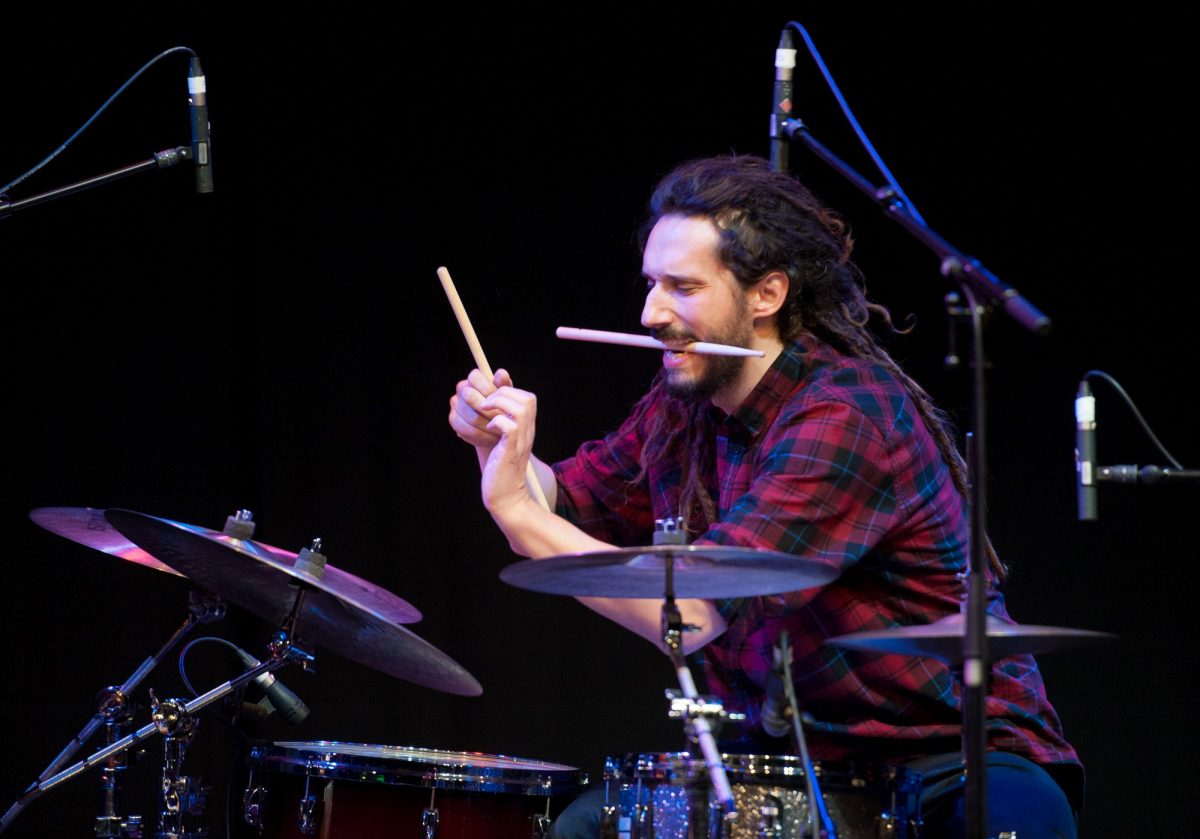
Maybe the most obviously successful act was Julian Sartorius’ drum solo
Someone else who made their mark was Christoph Irniger, warming into Pilgrim‘s set and launching a cracking sax solo that blew the cobwebs away. His time in New York came
Jazzahead!
Plaistow. Photo: Ingo Wagner

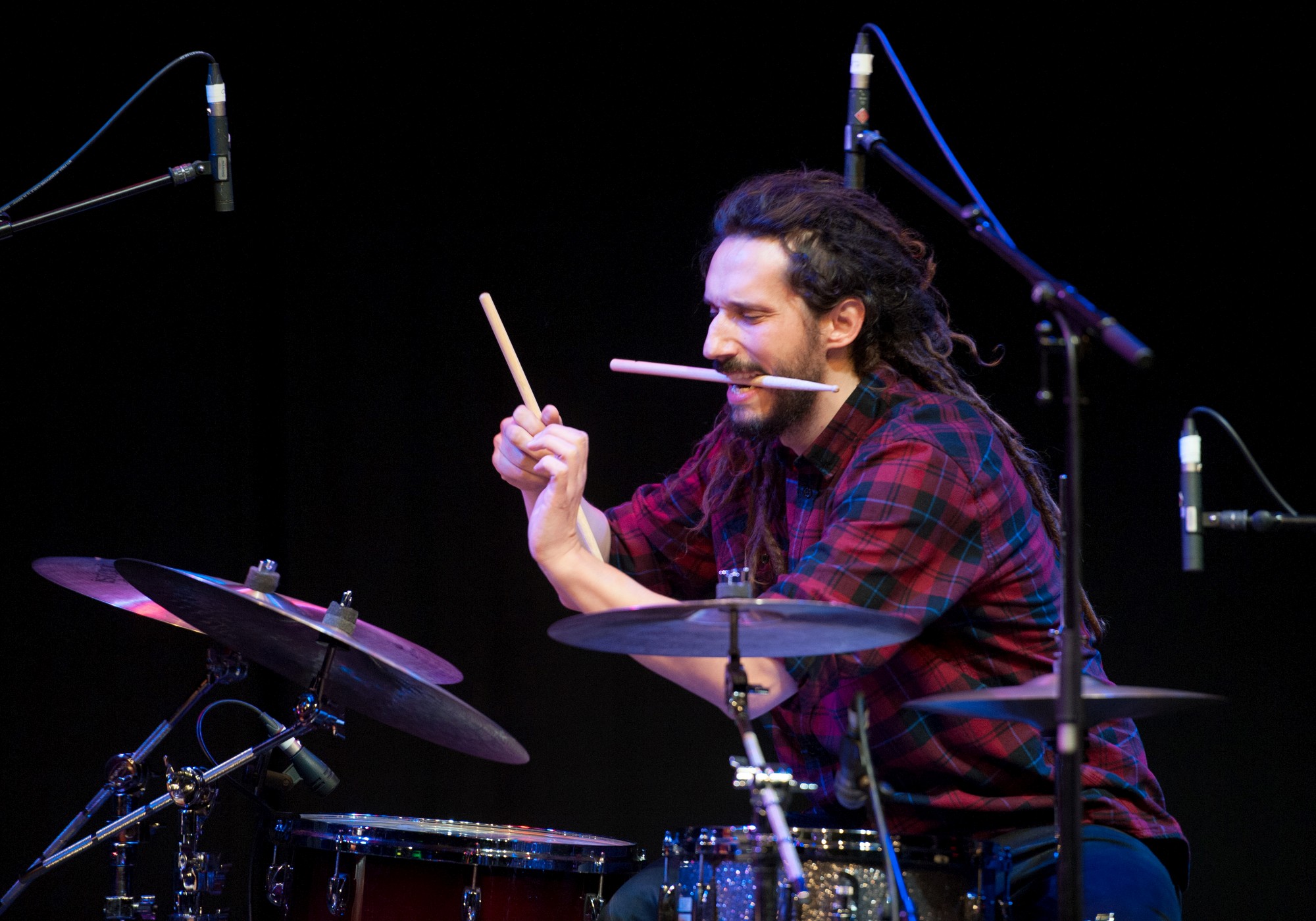
through in the attack he gave it. I was holding my breath at the start of Plaistow‘s gig because like so many bands they are an experience that needs time and a concentrated atmosphere – not what you get in a showcase. However, their narcotic concept with it’s fascinating rhythms had a booker for a big London club tell me they were the most engaging band of the night. Another, and maybe the most obviously successful act was Julian Sartorius‘ drum solo. It was a big ‘wow’ and my mate, Jez Nelson, a key jazz radio presenter said, “It’s hard to do something like that, but he was genuinely inventive.” Elisabeth Stoudman gives a wonderful in-depth review below.

Next year I expect to see more Swiss women onstage
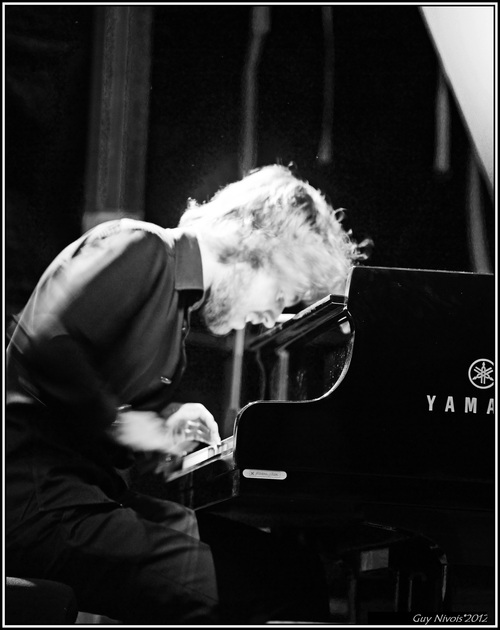
Julian is also part of the Colin Vallon Trio – another artist I expect much of. His set was not only elegant but so assured; it showed the quality of Swiss musicianship. Luca Sisera’s Roofer played a more traditional style well, whilst pommelHORSE had more character but were also left wanting. To be fair they’d been delivered a bit of a blow when key member, Lukas Roos, left the band two weeks before this gig. I see a nugget of some possibility, especially with Olivier Zurkirchen on keys and one UK programmer said the band brought a narrative to their music he liked. Weird Beard looked more comfortable on stage than they did last year and delivered their ideas clearly with Martina Berther on bass. Next year I expect to see more Swiss women onstage – and that’s an order…

Thomy Jordi nearly blew my hair off
It was a pleasure to attend the Gala Concert at Die Glöcke with Nik Bärtsch’s Ronin and Hildegard Lernt Fliegen because this is where some of the showcase bands could be heading: a high level of recognition with audiences delighting in their music. Both received genuine standing ovations. Ronin’s music and lighting design isn’t messing. It delivers punch after punch, even when Sha is at his most sublimely subtle with his saxophone becoming a hoarse and whispering human voice, or when Nik delivers a melody so painfully sweet that it’s a beautiful surprise. Kaspar Rast is equally imaginative on drums and Thomy Jordi nearly blew my hair off with some electric bass notes worthy of Goldie’s Metalheadz label.
Jazzahead!
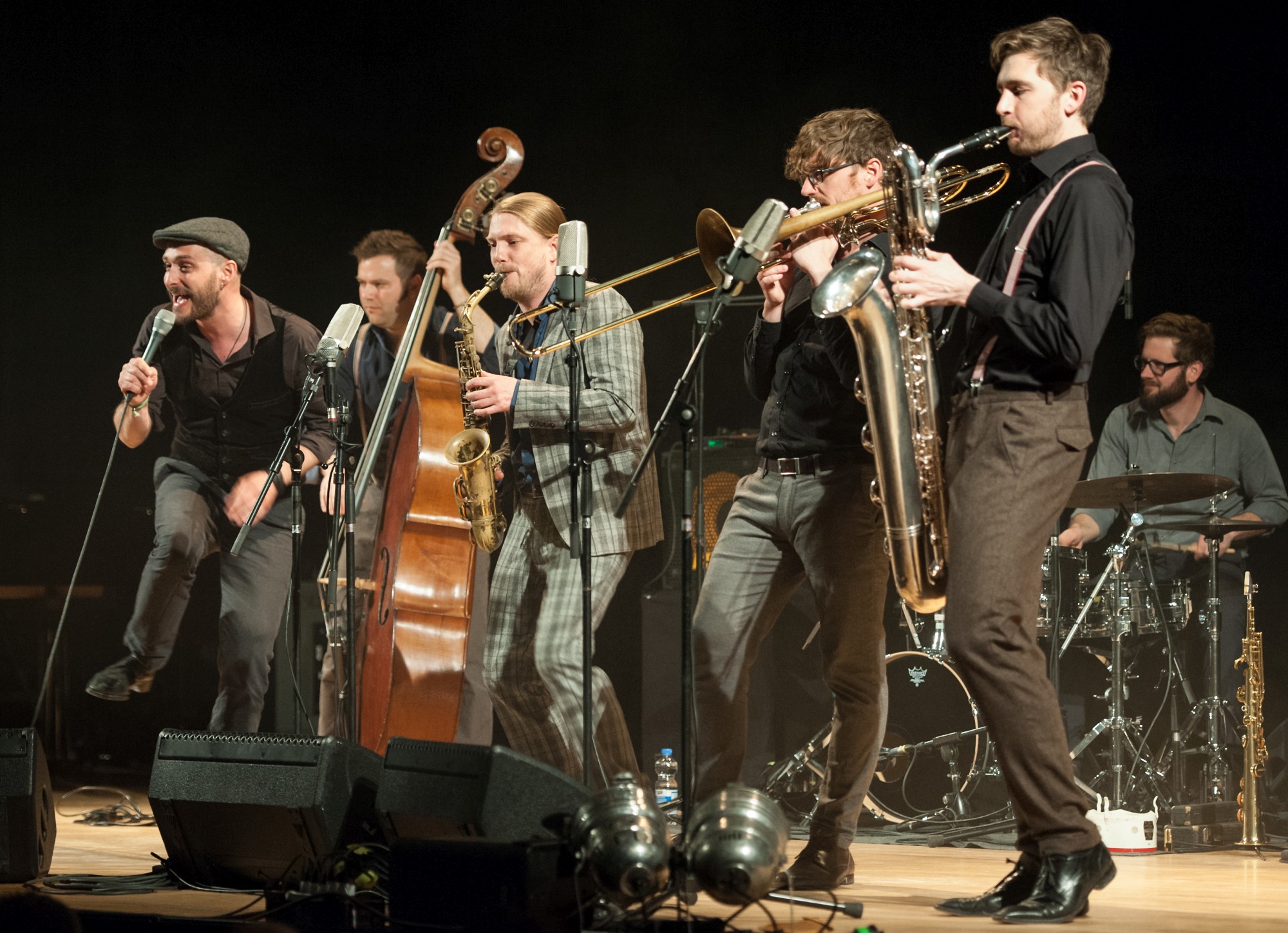
Hildegard Lernt Fliegen. Photo: Ingo Wagner

Such a touching ending
Hildegard’s show was a superbly staged bonanza of ingenious ideas with Andreas Schaerer even conducting the band in an improv – pretty risky in such a context. You may think a vocalist sounding a muted horn or beatboxing whilst singing isn’t your thing, but I would challenge anyone not to fall under his spell. The highlight was how the band brought it right down to such a touching ending. In the encore they sat with their legs dangling off the front of the stage, looking like a bunch of kids playing a charming round on blockflutes. It was a rip-roaring success. Schaerer has driven himself hard since I first saw Hildegard play in 2012 and he’s showing how Swiss music can make a big impact on the world out there. Boom!

Julian Sartorius @ jazzahead! 2016 by Elisabeth Stoudmann
Jazzahead_JulianSartorius
Julian Sartorius

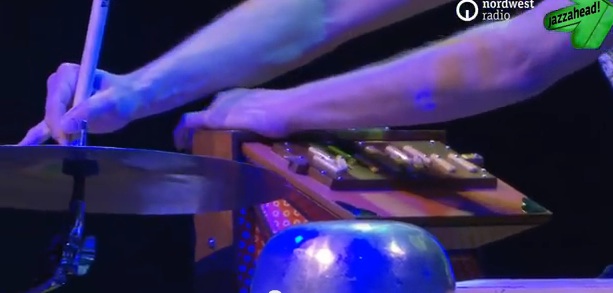
Unlike Colin Vallon or Elina Duni who are already well known on the European jazz scene, Julian Sartorius is the new boy at Jazzahead! Although his solo project is not constrained by any genre barrier, he’s been considered before, part of alternative rock circuit. Backstage, Julian is tense: he’s coming down with the flu and fears this will hinder him. The Bernese drummer comes on stage, as always, aloof and a little shy. Had he not been announced, one could almost have mistaken him for the technician come to do one last check before the set. He sits down and turns instantly into a one-man band.

The audience holds its breath…
Sartorius puts on an impressive show. As expected, there are rhythms that interlock with each other like pearls in a necklace. Some sequences are set up in advance, others are totally improvised. His pockets brimming with drumsticks, Julian Sartorius stays unperturbed throughout. He can drop the sticks at any second to suddenly strike a percussion with his hand or place a felt mat on a cymbal. He then puts odd objects on his snare drum: percussive bits and pieces that he strokes, rubs and strikes with amazing feeling. Tension mounts in a jubilant crescendo. The audience holds its breath, captivated, when without warning, Julian Sartorius stops everything. Time’s up. The thirty minute showcase – that only felt like five – has passed. The audience is galvanized, excited, happy. We can only hope that Julian Sartorius has the flu before every gig. It seemed to serve him well!

Videos of bands at jazzahead!

Arte TV
Elina Duni Quartet
Luca Sisera’s Roofer

Plaistow

Weird Beard


Cully Jazz festival 2016 – Switzerland gets down to bizniz (day 3)

AKKU Quintet – Chapiteau, Cully, 10/4/16

160410_007
@J-C Arav

Supporting a very traditional jazz vocalist, (Dianne Reeves), the Akku Quintet played as a very untraditional ‘jazz’ quintet – holding their weight very well as the alternative, slightly dark option on the Cully musical menu. A year ago the band were described as a work in progress, today the quintet comes across as a well-oiled machine full of maturity and articulation.

Underpinned by a definite focus on rhythmic and repetitive elements laid down essentially by the drums and keyboards, this quintet is not in a hurry. Their spacious, unhurried approach leaves plenty of room for interplay between all members who get to shine in totally different ways at very different times.


160410_054
@J-C Arav

The most attention-grabbing sound is Markus Ischer’s electric guitar which verges towards the psychedelic and is played out to full effect, fuelling the terms ‘jazz rock’ and ‘jazz fusion’ that the band is often labelled with.

Some of the sound particles in the Akku atmosphere are made of of bleeps, hallucinogenic wails, squeaky outbursts. Music to immerse yourself in like a rich, pulsating heart-beat which occasionally slows down, skips and jerks. As Jonas Fehr’s live visuals suggest, the molecules are in gradual full expansion. Expect a new LP from Akku Quintet in spring 2017.

Some questions and answers with AKKU Quintet drummer and bandleader, Manuel Pasquinelli:
Describe the musical dynamics within the quintet
160410_041
@J-C Arav

Manuel Pasquinelli: We are a quintet with saxophone, but the the sax is not the only leading instrument. The focus on an instrument changes all the time. We are all leading at different times, each member influences the whole thing. Groove and mood are as important as the solos. A solo is always part of the composition and leads from one part to the other. We try to create a piece of music as a journey. We leave space and don’t always play everything we could. We don’t tell a prefabricated story to the listener, so that the listener can derive their own story or mood.

Do you think you fit easily into the ‘jazz’ genre?

Manuel Pasquinelli: People often say to me “I don’t usually like jazz, but I really like what you do”,  so I think that ‘jazz’ is maybe not the right word to describe our music. It’s minimal, ambient, rock with the playfulness of jazz, influenced by different kinds of music (from Nik Bärtsch to Steve Reich, Yann Tiersen, Pink Floyd and beyond).

Akku Quintet “Molecules”

[youtube=https://youtu.be/bVXvA8FJBCA]

Band members:

Manuel Pasquinelli – drums & composition
Michael Gilsenan – sax
Markus Ischer – guitar
Maja Nydegger – keys
Andi Schnellmann – bass
Jonas Fehr – live visuals

Cully Jazz festival 2016 – Switzerland gets down to bizniz (day 2)

‘Levitation’ by Tobias Preisig & Stefan Rusconi – Le Temple, Cully, 9/4/16

@J-C Arav

Tobias Preisig and Stefan Rusconi are Swiss pillars of the Cully Jazz musical institution. Their Saturday night performance at Le Temple church marked a return to sacred ground that the duo had already trodden a few years ago. This is the venue that inspired and housed their Levitation project that tonight is played out to an eager audience, most of whom are already familiar with the powerful, intimate exchange between violinist and pianist.

The key feature of the Levitation project is the sensitive, gradually drawn out soundscape created in great part by Rusconi on the church organ which is then supported and teased out by the strings. In practical terms this means having the two musicians play upstairs in the church gallery, heard but not seen from the audience down below. Deciding that this year’s jazz audience needed something to look at, the entire concert was projected on screen at ground level, which, ironically – because of the very bright projector light that was aimed right at the audience – meant that many of us listened with eyes tightly shut, (it was a bit like staring at the solar eclipse without eye protection). Possibly the best way to appreciate the moody, almost Gothic sounds raining down from above.

Some questions and answers with violinist Tobias Preisig:
What’s your relationship to the Cully Jazz festival?

Tobias Preisig: I have a special attachment to Cully Jazz. I’ve been playing here for the last 6 years, I started off in a small caveau as part of the ‘OFF’ programme, then they offered me residency, then larger stages as part of the main programme. There’s a extremely open-minded attitude here and strong commitment to push the next generation. Young and unestablished musicians find a stage here, right next to the superstars. Playing at Cully is definitely the highlight of the year for me. It’s become almost a family gathering with musical professionalism.

Was the material for ‘Levitation’ tailor-made for Cully?

Tobias Preisig: We played as a duo here at Le Temple in Cully a few years ago, performing for the first time with the church organ. Again, it was an opportunity that the festival gave to us. We fell in love with the sound and came back one summer to record at Le Temple for 5 nights. This music is now released as an LP called ‘Levitation’ and yes, it’s definetely tailor-made. So what’s nicer than to celebrate a recording that was actually made in this enviroment?!

Will there be more live gigs with the ‘Levitation’ project?

Tobias Preisig: This is a special side project for both Rusconi and I whose friendship and collaborations go back a long time. So far we’ve only played the material from Levitation live twice! There are a lot of underplayed organs and oversized churches, so we are looking forward to exploring them and awakening them with new music.

Preisig & Rusconi Levitation bandcamp

[youtube=https://youtu.be/epdIDDB5n0U]


Cully Jazz festival 2016 – Switzerland gets down to bizniz (day 1)

Kaleidoscope String Quartet – Le Temple, Cully, 8/4/16
@J-C Arav
@J-C Arav

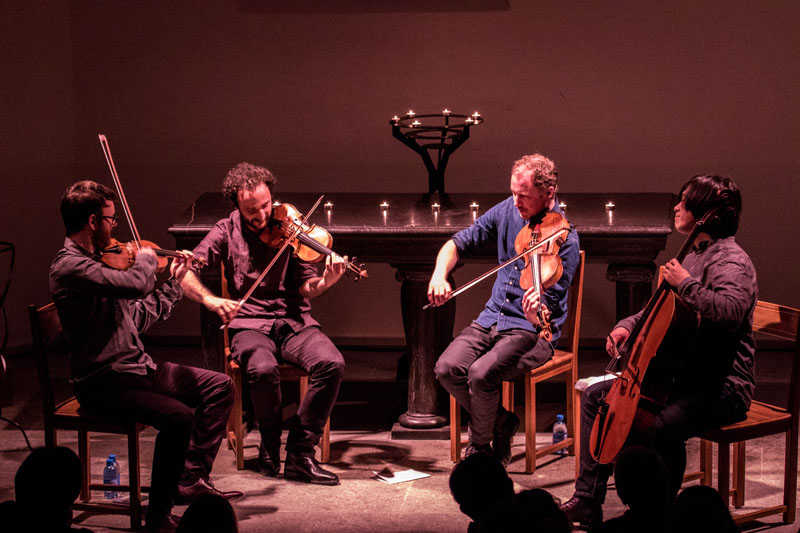
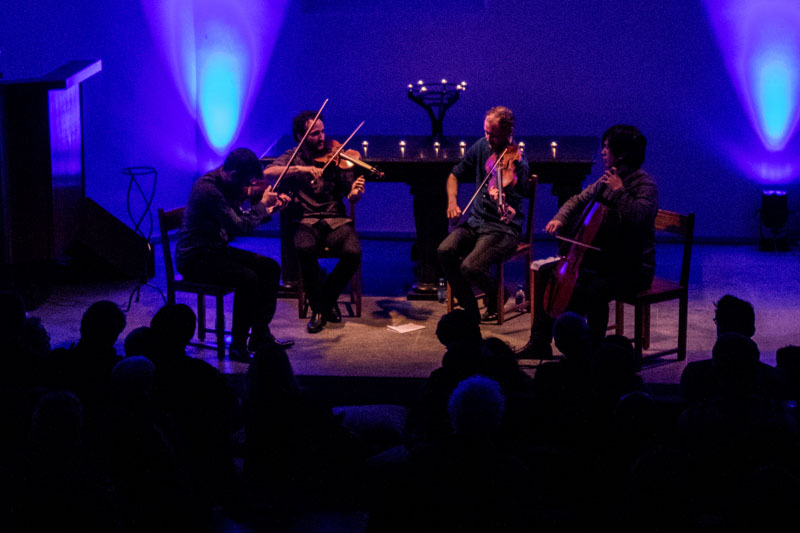
Two violins, one viola and a cello make up the unconventional Kaleidoscope String Quartet who kicked off the first night of Swiss musical contributions at the prestigious Cully Jazz festival. Performing material from their second LP, ‘Curiosity’, their strictly acoustic set up was a perfect fit to the meditative church setting of Le Temple.

I was lucky to bump into violinist Tobias Preisig just before the band came on, he tipped me off with a few insights into the quartet: « I used to play with them in the early days. What they do is technically very hard, you have to be really connected as musicians. Their forte is how they swerve tradition, always looking for new ways to play their instruments ».

@JC-Arav
@JC-Arav

These words proved a useful interpretation tool. A string quartet inevitably conjures up very rigid ideas of genre, hence what makes this group interesting is how a variety of styles, rhythms and tones are woven into the classical string infrastructure. There’s a feeling of the experimental and the improvised even though they’re clearly a tightly rehearsed unit. Seamlessly the ball is passed from one member to the other as the violin is bent and shaped in all directions. Closing my eyes I could have sworn someone had sneaked in some Japanese pipes during track 3. Quasi pop refrains and folkloric riffs creep up when least expected to add colour and vibrancy.

@J-C Arav
@J-C Arav

Admittedly, there were moments when some the barren plucking overstayed its welcome, (at a critical point in the musical tension I overheard someone muttering «sounds a bit like a swarm of mosquitoes » ), the bass tones of the cello proving a welcome contrast to the higher pitches of the violins. Possibly too many sparsely clad moments where the rowdy festival crowd outside the venue added more rhythmic movement to the music than the quartet itself.


@J-C Arav
@J-C Arav

The higlights for me were the warm, swirling melodies that sprang suddenly out of the languid tones. Nothing gives the feeling of lift off and transportation quite like a set of strings, so to hear them setting off into fourth gear with dynamic, frenetic synchronisation was a delight – one track culminating with a joyful vocal shout! Amazing that a string didn’t break in the process.

Some questions and answers with KSQ bandleader and composer, Simon Heggendorn:
Is it important for KSQ to be seen as more than just a classical outfit?
@J-C Arav
@J-C Arav

Simon Heggendorn: In many ways, yes. From our point of view, a ‘classical’ string quartet mostly interpretes music, whereas we create the music ourselves – rather like a band – and are completely free in the style of interpretation. This gives us the possibility to have a unique ensemble sound defined by the music we write for it.

Did the fact you were playing in a church impact your choice of what material to play?

Simon Heggendorn: Not primarily, maybe the fact we played in a church had an influence on ‘how’ we played (tempi, improvisations, dynamics). We like to play completely acoustic, so Le Temple was a perfect set-up for us.

What’s your relationship to Cully Jazz?

Simon Heggendorn: We played at Cully Jazz in 2012 for the first time. Spots are limited so it’s always very special to be chosen. Since it’s a big festival, you get more press attention than with standard gigs. It’s important to get known on the scene and be exposed to a wider audience, maybe even internationally. Not to mention the unique atmosphere in the village during the festival and the effort of everybody working here – just amazing!

[youtube=https://youtu.be/YTYVvcAsda8]

Band members:

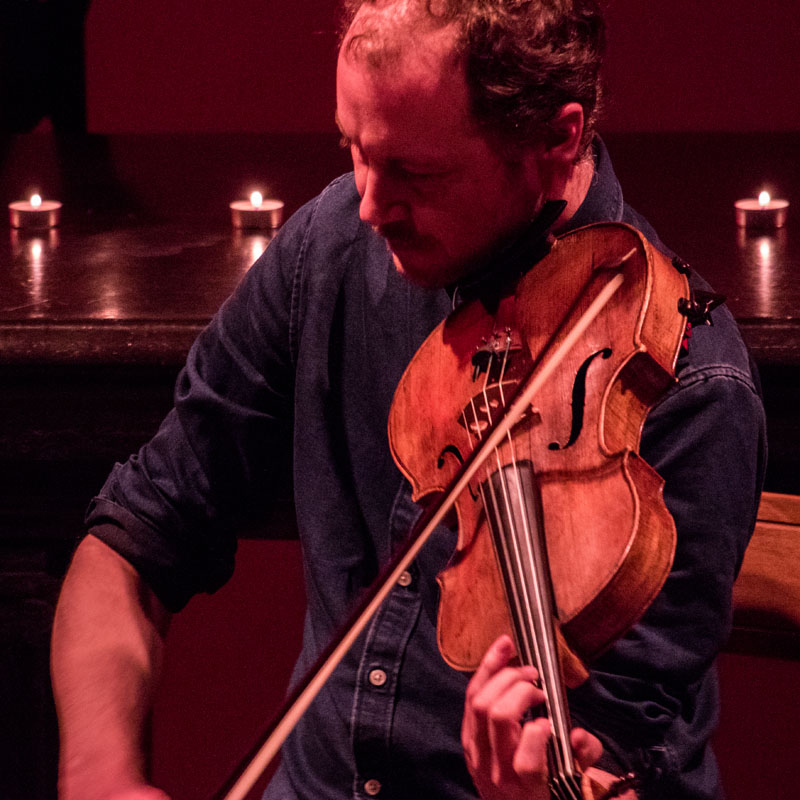
Simon Heggendorn – violin & composition
Ronny Spiegel – violin
David Schnee – viola & composition
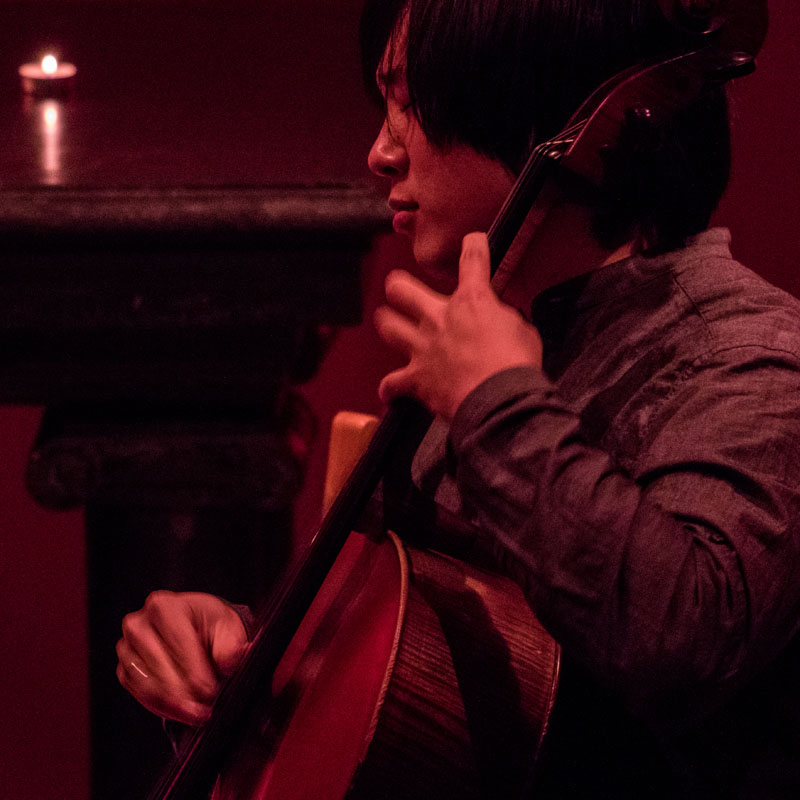
Solme Hong – cello


De l’Afrique à la Suisse en chantant

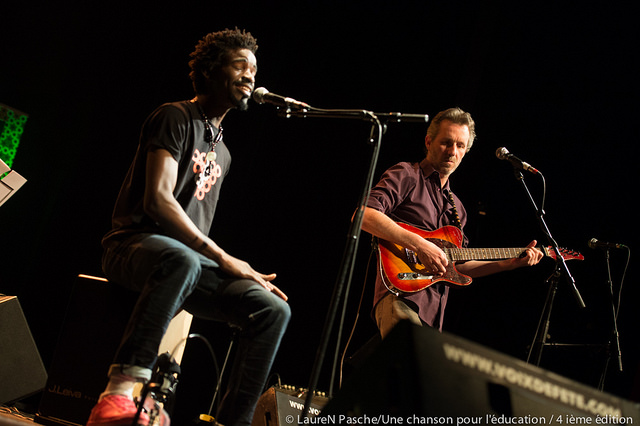
Pour une vieille peau comme moi, à l’esprit farci de préjugés, un projet pédagogique d’échanges artistiques et de médiation francophone en Afrique qui s’intitule « Une chanson pour l’Education » fait frémir. Je crains d’emblée de retrouver ce bon vieil esprit paternaliste que beaucoup de Français ont si bien su développer à l’égard de leurs ex-colonies. Qu’elle ne fut donc pas ma surprise, lorsque, en ce dimanche 20 mars, je découvre au Festival Voix de Fête de Genève un nombre impressionnant d’artistes burkinabés aussi créatifs que stimulants et engagés : Patrick Kabré dans la cour, Maï Lingani, Dicko Fils et Alif Naaba sur la petit scène du théâtre. Depuis que Victor Démé a ouvert la voie, il semble que la scène burkinabé soit en passe d’imploser.

Du Konkistenga à la Cité de Calvin
Patrick Kabré dans la cour du Théâtre Pitoëff
Patrick Kabré dans la cour du Théâtre Pitoëff ©Laureen Pasche

« C’est un phénomène assez récente, explique dans les loges le chanteur Alif Naaba, également appelé le prince du Konkistenga en raison de ses nobles origines. Elle existe depuis une dizaine d’années et manifeste d’une génération qui veut oser et expérimenter des choses nouvelles. La base de notre musique est traditionnelle, mais elle utilise des codes universels pour ne pas rester enfermée dans une sorte de ghetto artistique ». Quant aux écoliers romands, ils sont venus déclamer des citations de leur crû avec un bel aplomb. Un petit air de révolution et une énergie impressionnante flotte à tous les étages du théâtre Pitoëff. Impressionnant et réjouissant.

Quand coopération rime avec inspiration
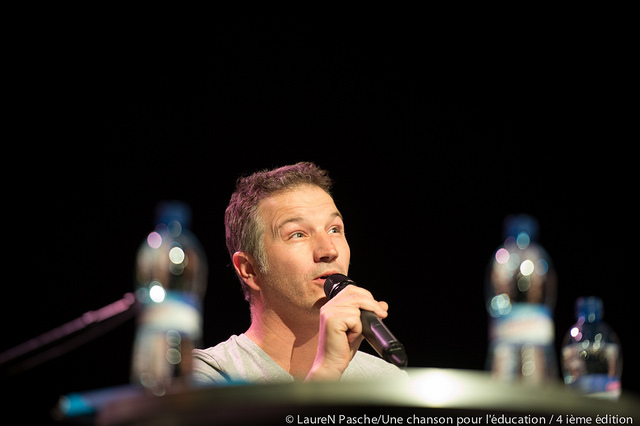
Yannick Cochand
Yannick Cochand ©Laureen Pasche

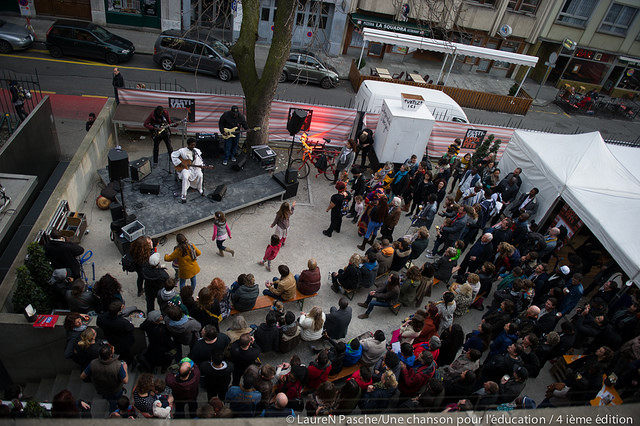
Et cela ne fait que commencer : à 20 :00  le plateau de “Une chanson pour l’Education” investit pour de bon la scène du théâtre Pitoëff. “Une chanson pour l’Education” c’est un projet de coopération initié par l’association Enfants du Monde et réalisé en partenariat avec la Compagnie Zappar  dont Yannick Cochand est le directeur artistique. Il s’agit d’une part de sensibiliser de manière ludique des jeunes francophones au fait que des millions d’enfants dans la monde n’ont toujours pas accès à l’école. Les parrains, tous des artistes confirmés, ont eu pour mission d’accompagner les enfants dans la création de textes et des chansons sur le thème du droit à l’éducation. Mais il s’agit aussi de faire des opérations de sensibilisation artistiques dans les régions concernées par les problèmes d’éducation (cette année le Sénégal et le Burkina Faso) et en Suisse romande via une série de concerts (Gland, Neuchâtel et Monthey) qui se terminait au Festival Voix de Fête à Genève.

La crème de la chanson romande
Patrick Kabré et Zedrus
Patrick Kabré et Zedrus ©Laureen Pasche

A Genève, une heure durant les parrains et marraines défilent sur scène ensemble ou séparément. Alif Naaba réapparaît pour un dialogue avec la chanteuse congolaise Gasandji et un autre duo avec Sébastien Peiry sur le thème du climat. La jeune Valaisanne Sylvie Bourban chante, quant à elle, les réfugiés – en bambara – avec Dicko Fils. Zedrus et Patrick Kabré interprètent un titre écrit après le tremblement de terre en Häiti, Pascal Rinaldi chante sa « Race Humaine », Fraissinet nous fait rire avec ses phobies d’avion …. « Un bouillon de culture incroyable » résume Yannick Cochand qui court dans tous les sens sur scène, le sourire vissé aux lèvres.

Le ventre blanc 
Dicko Fils et Sylvie Bourban
Dicko Fils et Sylvie Bourban ©Laureen Pasche

Du côté suisse, Sylvie Bourban impressionne par sa voix aux accents jazz, sa présence lumineuse et évidemment sa capacité à chanter dans autant de langues différentes. « C’est un peu mon fonds de commerce, s’exclame en riant la chanteuse le lendemain au bout du fil. Depuis mes études à Berklee, j’ai chanté dans beaucoup de langues différentes : du patois valaisan à l’anglais en passant par l’arabe ou l’espagnol. Avec Alif Naala, j’ai chanté en bambara, avec Maï Lingani en français en onomatopée. J’aime les langues pour leur mise en bouche, pour leur sonorités. Cela dit je me considère comme une chanteuse à texte et je comprends chaque mot que je chante. »

Une autre dimension 

« Avant de partir en Afrique, j’avais peur d’être condescendante, mais en fait on a tout de suite basculé dans l’émotion. Dans les villages on était accueilli par des dizaines d’enfants qui couraient à notre rencontre. J’avais en permanence des enfants dans mes bras ou qui me tenaient la main, même quand je chantais ! Les Burkinabés me disaient tout le temps que j’avais le «  ventre blanc » et que les enfants le sentaient. Je ne comprenais pas. « Avoir le ventre blanc » est une expression de là-bas qui indique la bonté d’une personne. Cette expérience m’a vraiment ouvert une porte sur une autre dimension.»

Pour mieux vous imprégner des sensations de cette expérience unique en son genre, consultez le blog de Sylvie Bourban, où elle posté ses impressions.

Bad Bonn @ Cafe Oto

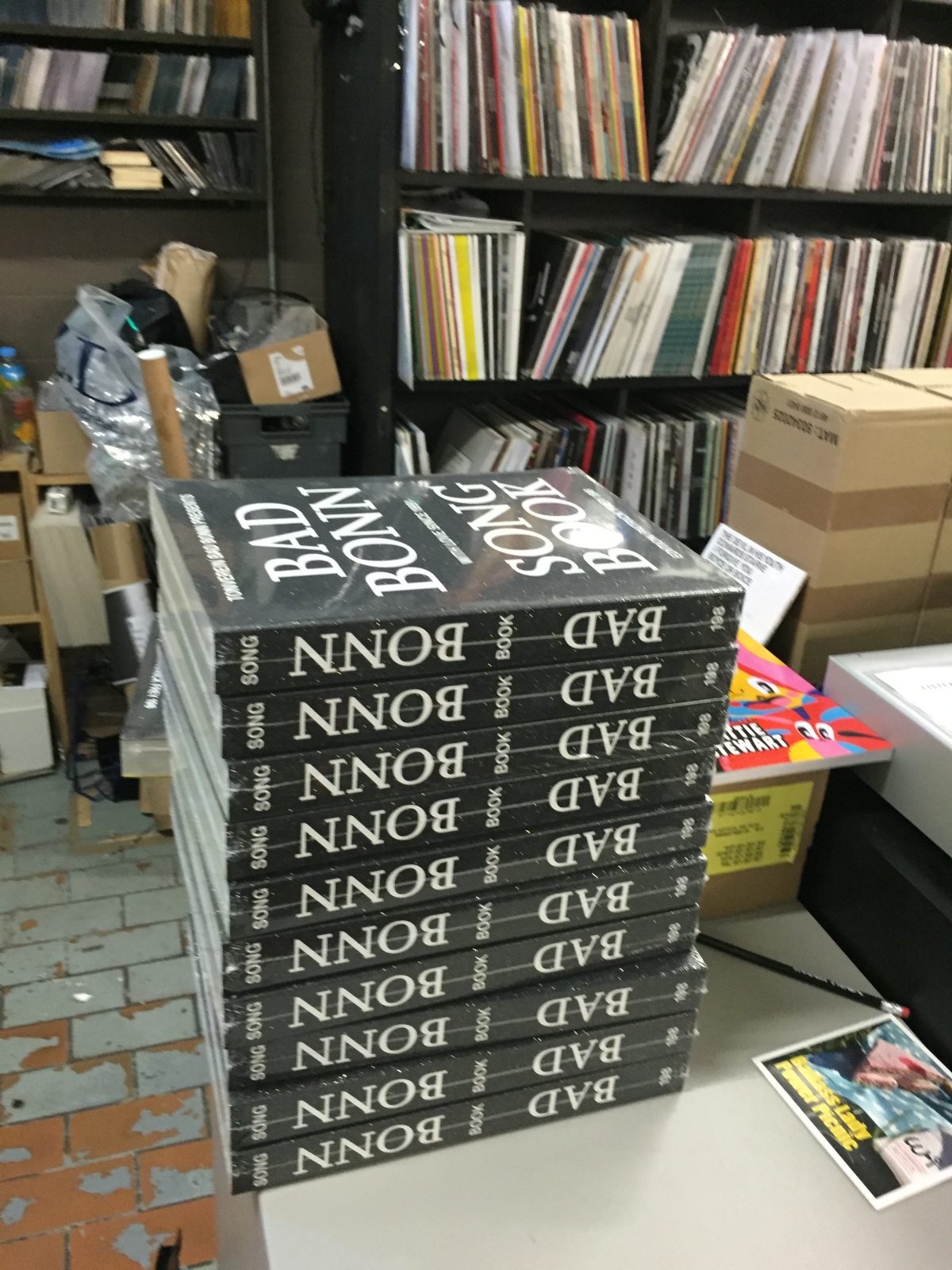
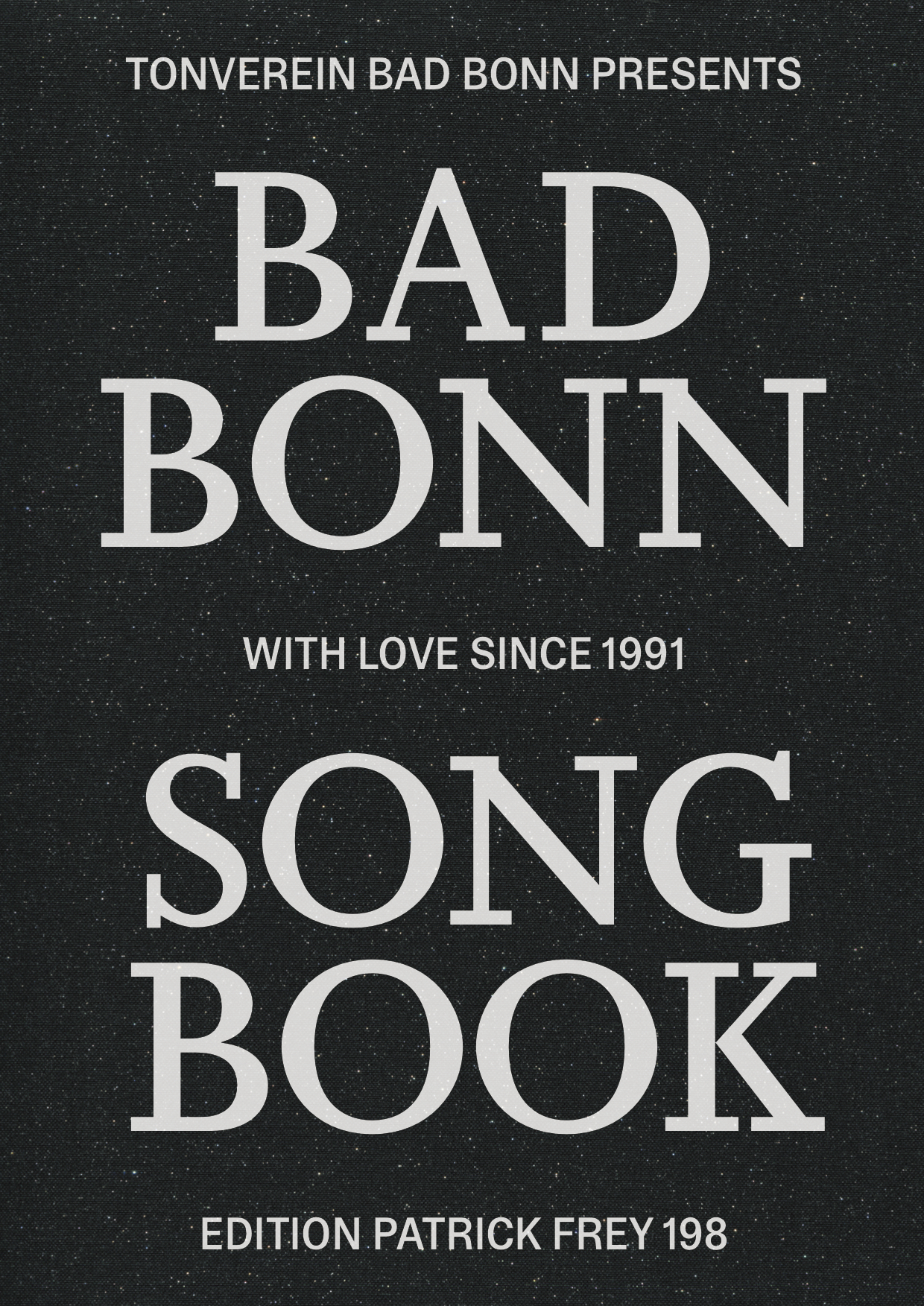
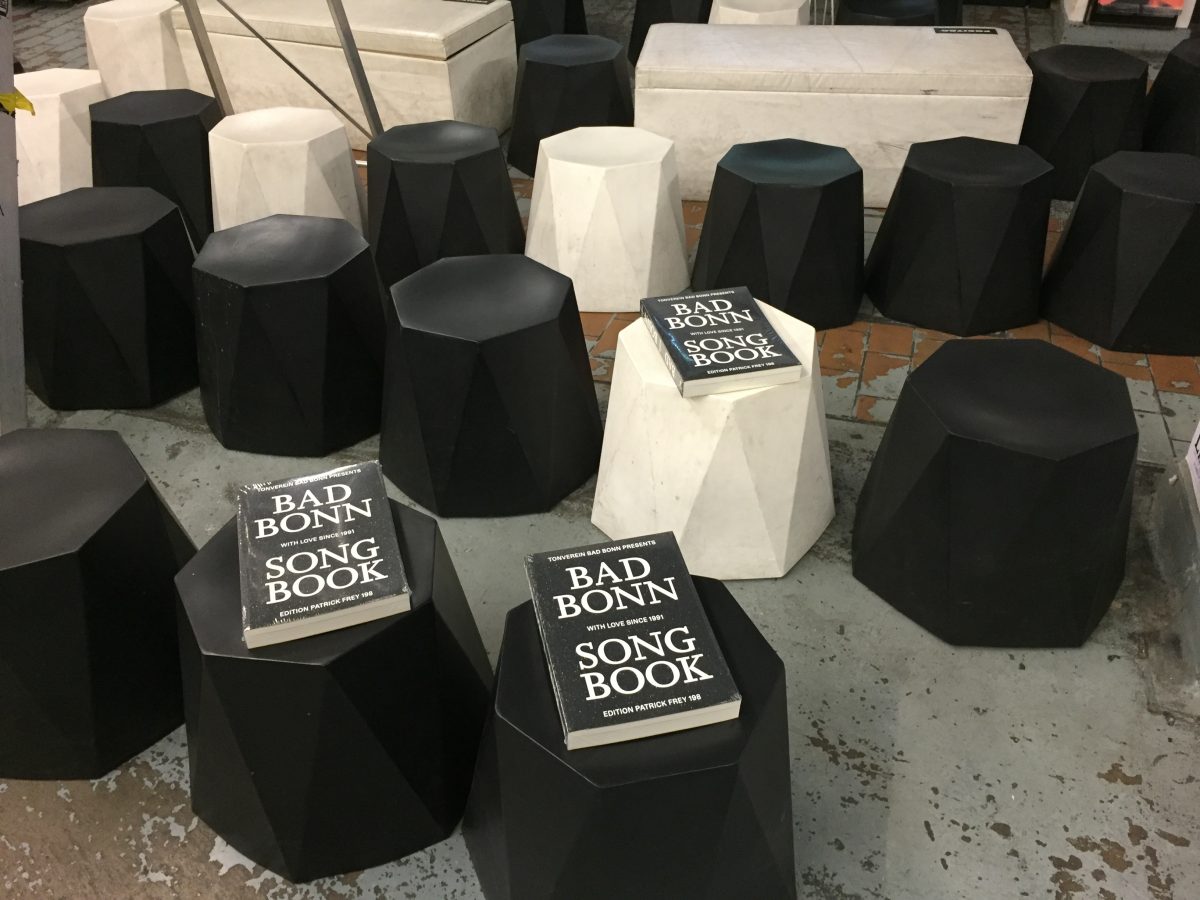
BBSB_Cover_final_23-2-16_simuliertThe day after the successful launch event at Rough Trade East, the celebration of the publication of the“The Bad Bonn Song Book”  continues. Bad Bonn crew moved North to Dalston for a celebratory Kilbi night at the legendary avant-garde/jazz/folk venue Cafe Oto. Another sizeable and appreciative crowd was served a diverse programme of Swiss artists that showed off Bad Bonn´s sense of adventure to good effect.
First off was Strotter Inst., aka Christoph Hess. Operating in a border area between noise and conventional music with a pair of “treated” old record players and a series of similarly adapted vinyl records, Strotter Inst produced a minimalist and yet richly textured drone that somehow pulsated with rhythm and held the audience´s attention with remarkable ease.

Next came percussionist Julian Sartorius who, judging by the conversations afterwards, was perhaps the biggest success of the evening. Playful and yet precise, subtle and yet powerful, his uninterrupted half-hour performance was a master class of innovative and controlled solo percussion. In sharp musical contrast, the synth duo Papiro reconnected the audience with early Krautrock history with their slowly shape-shifting take on dreamy Ash Ra-Temple-type sounds.

[soundcloud url=”https://api.soundcloud.com/tracks/214251145″ params=”auto_play=false&hide_related=false&show_comments=true&show_user=true&show_reposts=false&visual=true” width=”100%” height=”450″ iframe=”true” /]


The evening was rounded off sweatily by Camilla Sparksss, Barbara Lehnhoff’s fiery electro outfit, consisting of just herself and a dancer. Combining punky vocals with minimalist electro rhythms and melodies, her short, sharp bursts of high-octane songs were completely different from everything else that had been heard before then, and all the better for it.

Contributing greatly to the success of the night were the DJs Andy Votel and Doug Shipton whose selection of records was perfectly in tune with the spirit of Bad Bonn. In short – the two Bad Bonn nights in London turned out to be an unqualified success.

Bad Bonn @ Rough Trade East

Bad BonnBBSB_Cover_final_23-2-16_simuliert venue in Düdingen celebrates its 25th anniversary this year with – amongst other things – the publication of a unique book: over the past few years, bands appearing at this idyllic location in the rolling green hills near Fribourg have been asked to donate one song each for the project. Some sent sheet music, others sent drawings, poems, chord sequences and collages. “The Bad Bonn Song Book” collects 140 of these in a splendidly glittery coffee table book published by Edition Patrick Frey in Zurich.

A unique collective work

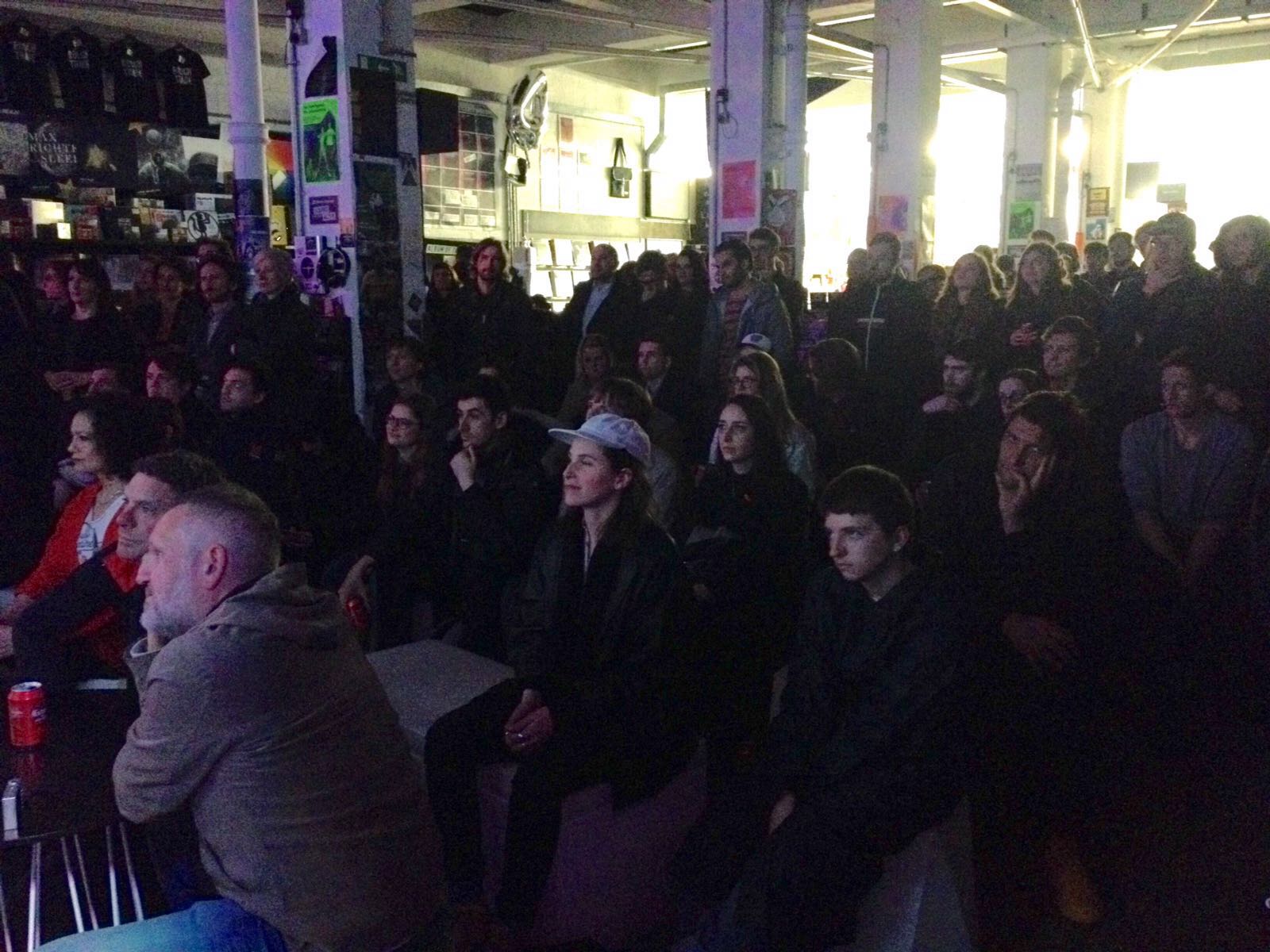
IMG_3966The impressive and diverse list of participants ranges from Flaming Lips and Bonnie “Prince” Billy to Goat, Jandek, Sebadoh, Sleaford Mods and Suzanne Vega. To launch the book, Bad Bonn came to the legendary Rough Trade East shop off London’s Brick Lane. The choice of venue made sense: Most of the lyrics in the book are in English, many of the artists involved are from the UK, and the shop carries one of the most comprehensive selections of music-related books anywhere. The two-pronged event attracted an excellent crowd of around 150 people.
A panel and a solo concert
IMG_3852
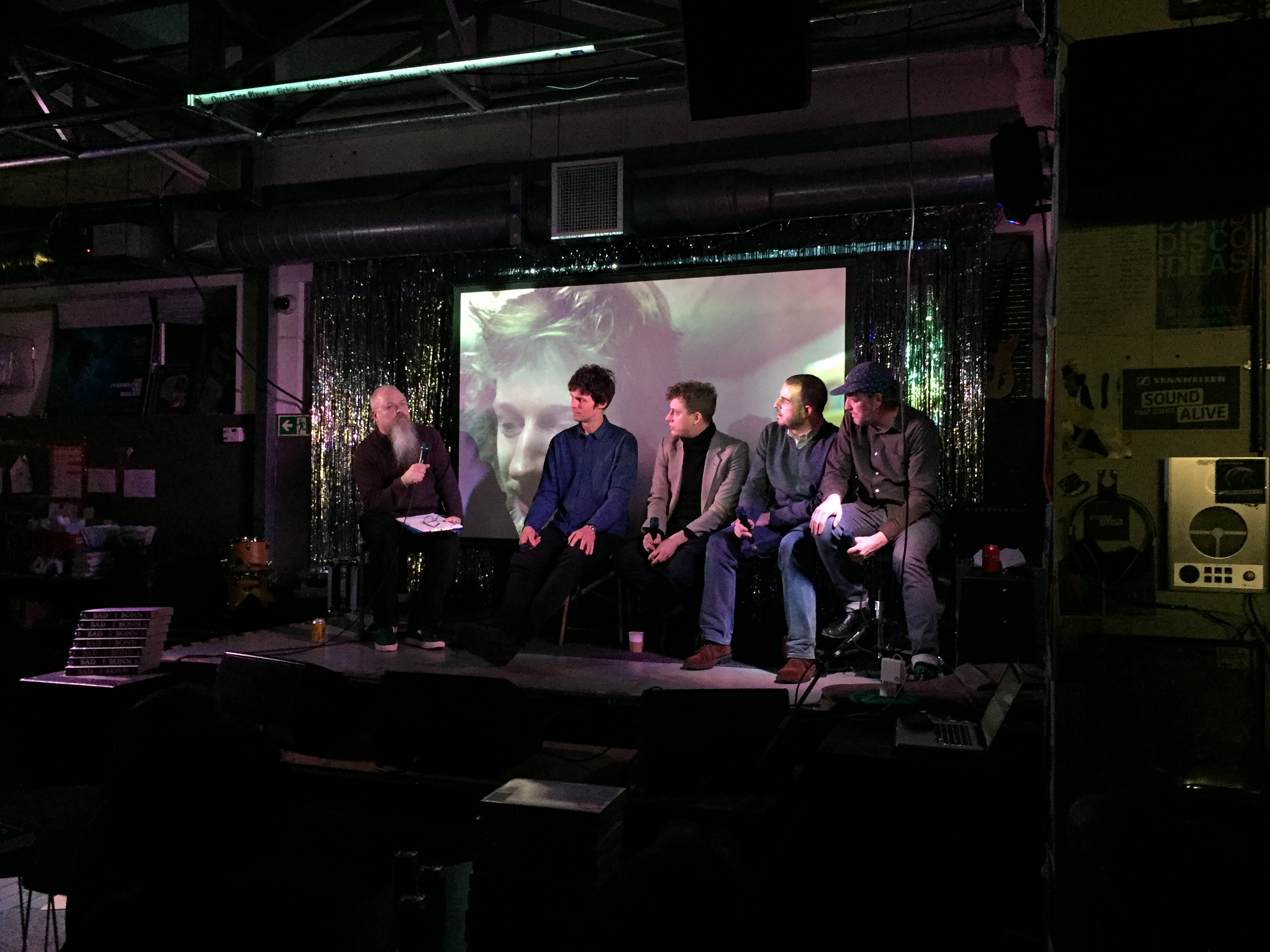
Hanspeter Kuenzler, Tom Relleen, Luke Turner,Christophe Schenk, Daniel Fontana

The first part consisted of a panel discussion, “Can a Live Music Venue Change a Small Town?” with the participants, Tom Relleen (musician with Tomago and The Oscillation, concert agent with the Julie Tippex Agency), Luke Turner (writer, founder of the Queitus web-zine), Christophe Schenk (Swiss television), and Düx aka Daniel Fontana (founder, Bad Bonn). A lively exchange was peppered with excellent anecdotes, including Relleen´s story that many a band he had booked for the venue called him up in desperation, fearing the GPS had misdirected them when they found themselves driving past freshly tilled fields and manure

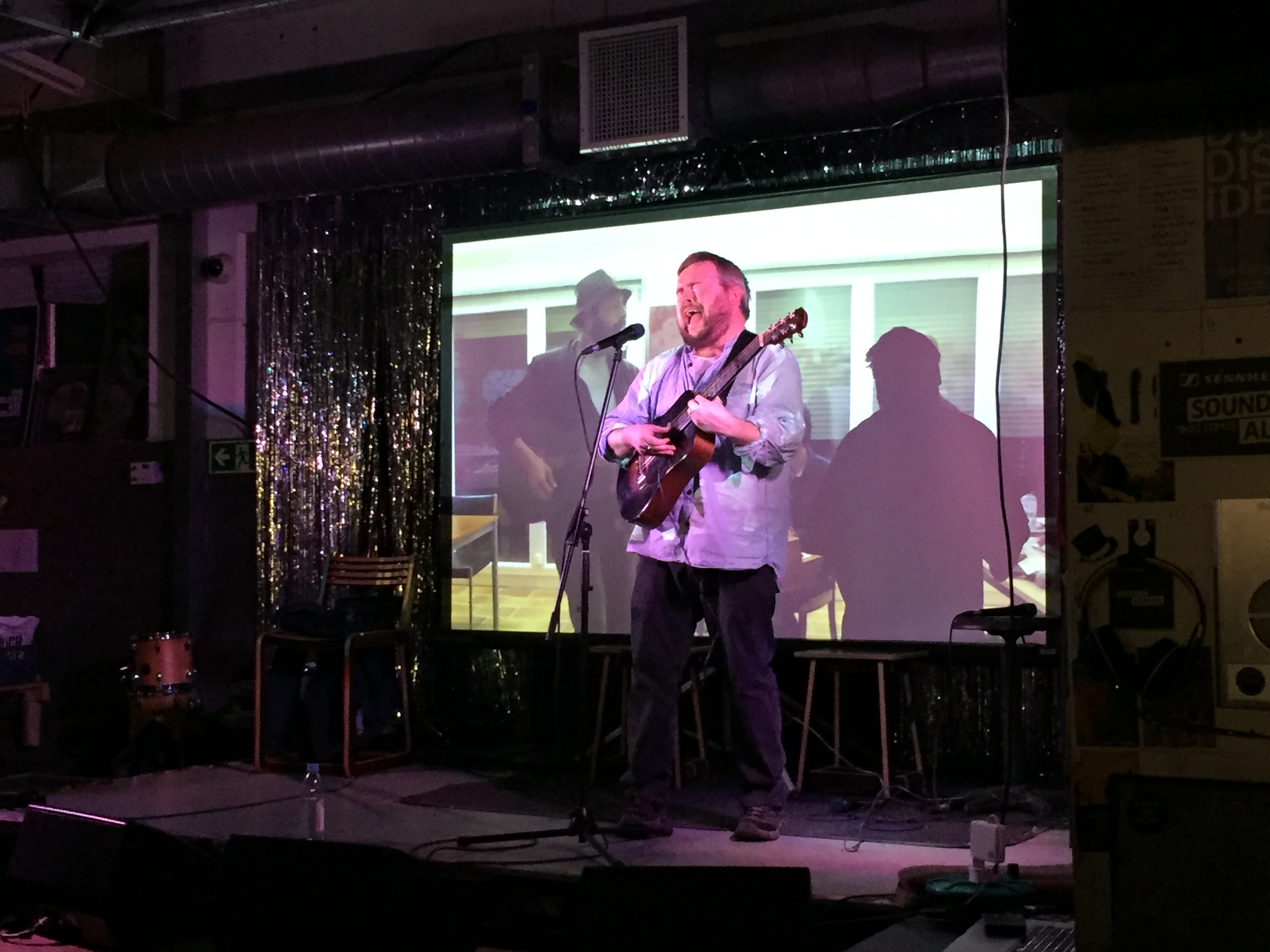
IMG_3856silos instead. Following the discussion – the conclusion: of course it would! -, Richard Dawson, a highly original singer/songwriter from Newcastle and a happy regular at Bad Bonn, gave a breathtaking solo performance, sometimes with his battered guitar, sometimes acapella.


The Bad Bonn Song Book, Edition Patrick Frey.

Swiss artists @EFG London Jazz Festival 2015

EFG_London Jazz logoThe EFG London Jazz Festival is a big annual affair running for ten days in the middle of November. This year Swiss and Swiss-based artists, represented by Nik Bärtsch’s Ronin and Mobile, Elina Duni, Samuel Blaser, Basel Rajoub, Marc Perrenoud, Christophe Fellay and the Russian/Swiss collaboration, Jazzator, had well-attended gigs (two were sold out). Phew. Clashing with big-name artists, and the overwhelming number of events can be an issue at such festivals.
The UK can be a tough and weird market

Consider this list of musicians – you couldn’t get a more diverse bunch. There isn’t a Swiss sound like there was a Norwegian one, but the artists are building individual reputations via their quality. The UK can be a tough and weird market, but when people hear something they like they will always give a warm and enthusiastic response.

Nik Bärtsch has a definite fanbase and had a two-day residency at King’s Place as part of the Minimalism Unwrapped season with Mobile Extended and Ronin Rhythm Clan. I saw the latter on the opening night of the festival with an added 3-part brass section and guitarist Manuel Troller, whose sensitive but spirited playing made him a natural part of the clan. I first heard Ronin two years ago in the same hall. I was entranced by their intense yet grooving sound and still am.

You live for such moments with Ronin

nik_baertschs_feat_roninThere were the sparkles of Nik’s compelling piano work and superior conversations between the Ronin members whilst other phases had the extended band heading into an alt-funk fest with James Brown’s spirit shimmying around the room (well, almost). But ‘Modul 32’ was the highlight for me: Kaspar Rast played a small shaker – no fuss, just simple but killer in its repetition, and clever in the textural canvas it gave saxophonist, Sha, and Manuel on which to paint subtle but deeply personal musical thoughts. You live for such moments with Ronin.
He can evoke memories of J. J. Johnson

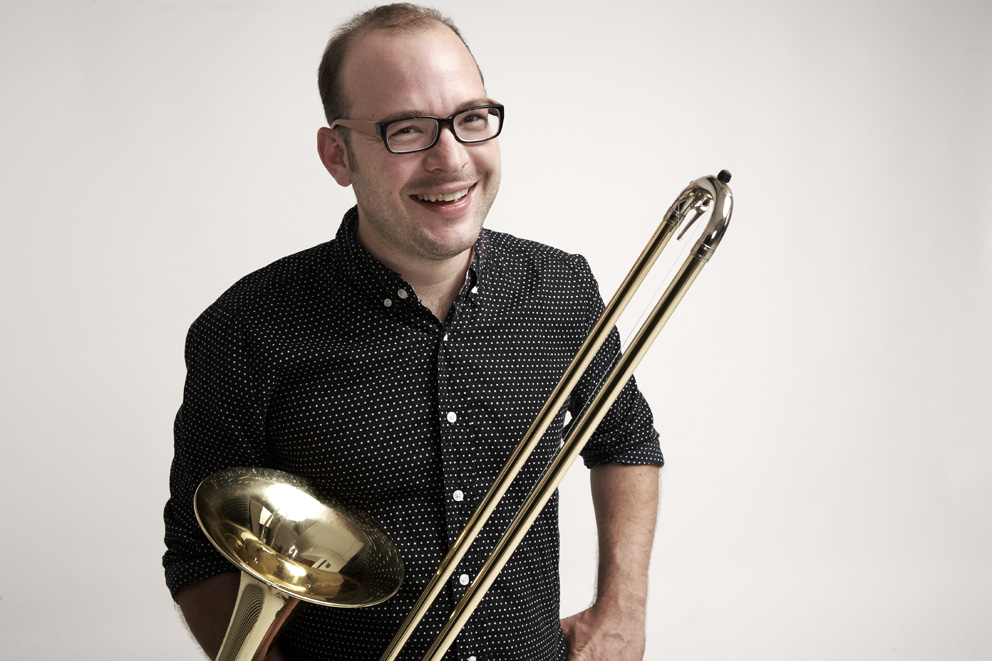
©Alex TroeschThe small, shabby Club Inégales is in the bowels of an office building but was set aglow by the quality of the musicians in Samuel Blaser‘s quartet. I’ve already waxed lyrical about the wisdom of pianist Russ Lossing’s playing on Spring Rain, Blaser’s tribute to Jimmy Guiffre. He approaches music as an horizon, it’s not about him, but the entire landscape. I love his touch. Equally fine are bassist Masatoshi Kamaguchi and legendary Gerry Hemingway. A key drummer on the avant garde circuit he caresses and cajoles rhythm out of his kit, able to be economical yet inventive. I particularly like Blaser when he drawls his sound as if part of a deep South funeral march, his soulfulness peeping through. He can evoke memories of J. J. Johnson then veer off elsewhere. It was a promising show cut short by the venue’s format of a final set improvising with the house band.


marc_perrenoud_feat_marc_perrenoud_trio

Luckily I’d got to hear the crisp interplay between this quartet at Adventures in Sound, a feast of music recorded for BBC Radio’s Jazz on 3 programme earlier that day. Each of them also improvised with renowned UK artists such as John Edwards (bass) and rising keyboardist, Elliott Galvin (in photo). Unfortunately it meant I missed Marc Perrenoud‘s set as part of ‘Seriously Talented’ – an afternoon of musicians that had been on Serious’ Take Five course. The Clore Ballroom of the Royal Festival Hall was packed and I heard that Marc’s joyful and bonded trio were an uplifting addition to the line up.

Elina’s expression taps into our universal goosebumps

Elina Duni Quartet Elina Duni Quartet are equally notable and their Dallëndyshe album had good reviews, one in The Guardian. Live, Norbert Pfammatter stands out as a sublime drummer. His pulse-like work encourages a sensual interplay between vocals and rhythm. There is an almost mantra-like progression as Elina leads us through the emotive themes of Albanian folk songs. Lyrics such as, “My dear boy in front of the flag oh, my heart’s engulfed in worrisome flames,” (from ‘Me on a Hill, You on a Hill’) feel horribly relevant and even if they weren’t Elina’s expression taps into our universal goosebumps. At first her tone seems warm and smooth, but then a quiver or cry renders me helplessly emotional.

Colin Vallon is simply captivating, and fierce too, making his mark. Along with new, fearless bassist, Lukas Traxel, they stand their ground at the side of Elina’s power. I like the brave move the quartet made of paying great respect to the Albanian folk tradition whilst interlacing it with a form of ethereal jazz. It left the audience spellbound.

richmixbaselrajoubnov15_26It was a similar story for another Swiss émigré. The concert of Basel Rajoub‘s Soriana (‘Our Syria’) was the evening after the Paris attacks and as the review Classical Source expressed, it could not have made for a more eloquent night of music. Made so by the skill and personality of Basel in a magical alchemy with the type of welcoming audiences that can be found in London.


 A unique view of free music

Jazzator2_M&FNov2015Finally, Jazzator are a Russian/Swiss quartet with quirky intentions conveyed with talent. I particularly liked saxophonist Oleg Mariakhin who delicately integrated himself with the vivid vocals of Marina Sobyanina. I sensed underlying eastern folk traditions that had been pulled apart leaving ragged edges and broken threads. Drummer Sergey Balashov on drums and bass player Maximilian Grossenbacher provided an ear-pricking rhythm section, and together Jazzator offered a unique view of free music. One UK reviewer declared them a highlight of the festival.


Match&Fuse, London 2015

Climbing the Eiger’s Mordwand is tough, but if you are a band trying to get a gig in the UK, then you really face a challenge. And it’s not much better anywhere else.
Presenting the most engaging artists from Europe’s progressive scenes

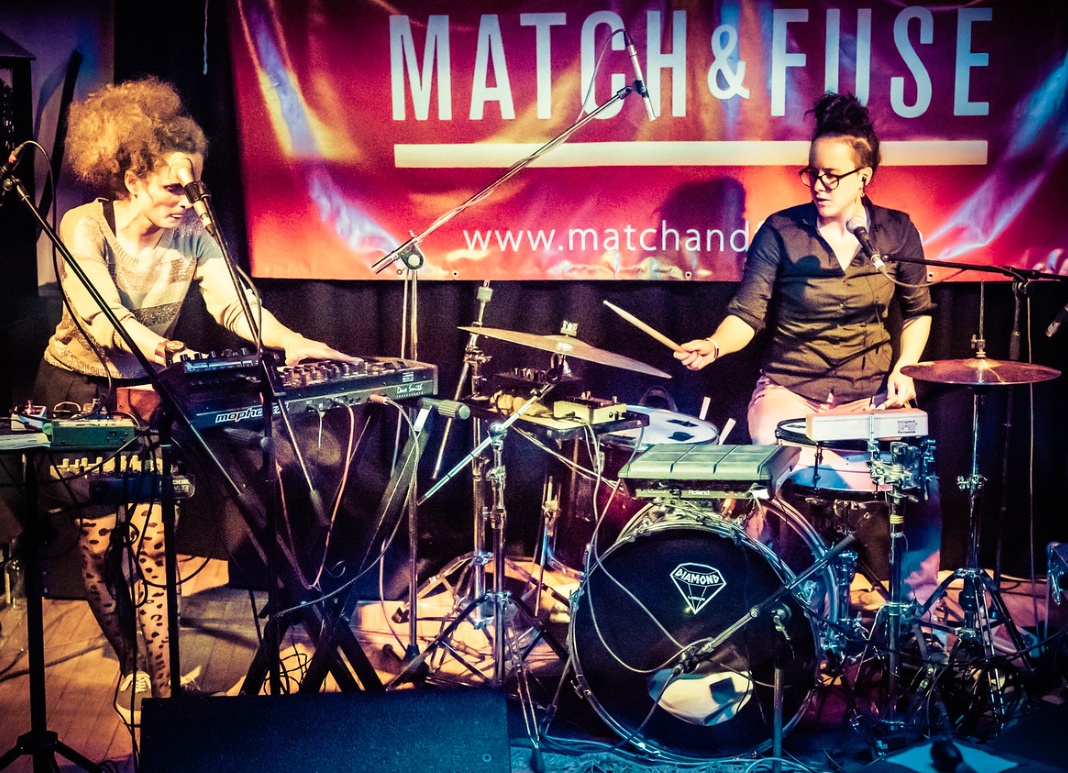
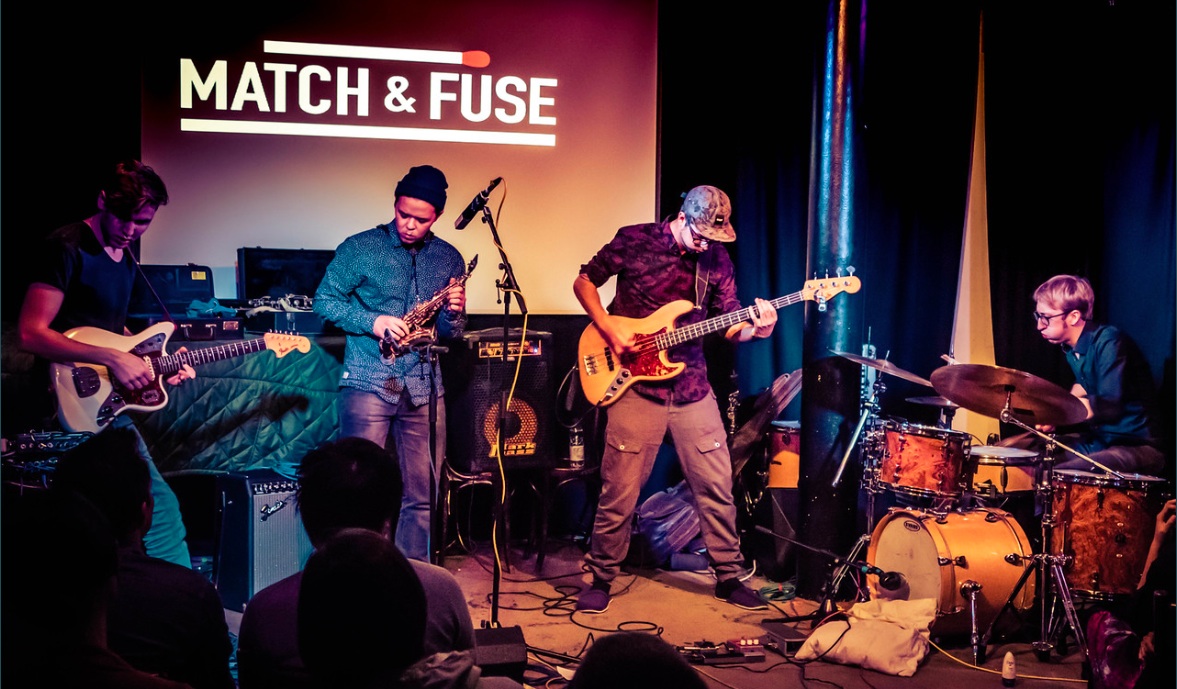
The musician Dave Morecroft started Match&Fuse (M&F) in 2011 to attack this problem – with energy. He wanted his band (World Service Project) to tour abroad, so in 2011 he found a Norwegian act to ‘match’ his and asked them to find three gigs in Norway for this double bill, whilst he used his UK contacts to book gigs at home. It worked, and the following year Match&Fuse launched its first festival with the aim of presenting the most engaging artists from Europe’s progressive scenes – giving audiences a taster of music from inside and outside their own borders and, more crucially, enabling musicians to extend their contacts abroad.

GHH
Great Harry Hillman Photos: Steven Cropper

Since then Match&Fuse (M&F) has developed co-producers with festivals in Toulouse, Warsaw, Rome and Oslo. Their annual event in the buzzing Dalston area of London uses venues such as Cafe Oto, Vortex and Servant Jazz Quarters and this year, Swiss bands, the Great Harry Hillman (GHH) and duo, 2henning were invited to play. I spoke to them about their experience.


‘We could see our music has many different sides’

‘The gig was big fun,’ said Nils Fischer of the GHH, ‘with a conscientious audience. We would have loved to play more than 35 minutes, but the time was sufficient to present our music and get involved in some interesting talk – feedback and discussions, after.’ Valeria Zangger of 2henning also appreciated getting feedback, adding, ‘It showed us some very important stuff that we still have to do, but we could see our music has many different sides and can fit in with a real variety of music programming which is good.’

2henning_a
2henning (Steven Cropper)
‘Getting all this inspiration in a few days, was invaluable’

They were scheduled alongside other emerging European artists such as Strobes, Laura Moody, J=J, Kaja Draksler and Alarmist as well as unique collaborations such as Isabel Sörling with Leafcutter John (of Polar Bear). 2Henning felt that, ‘There was room for free improvisation as well as for more pop/rock oriented music…Playing in that context with a lot of different bands and styles – and getting all this inspiration in a few days, was invaluable.’

‘The idea to unite the bands in a soundpainting orchestra is great’

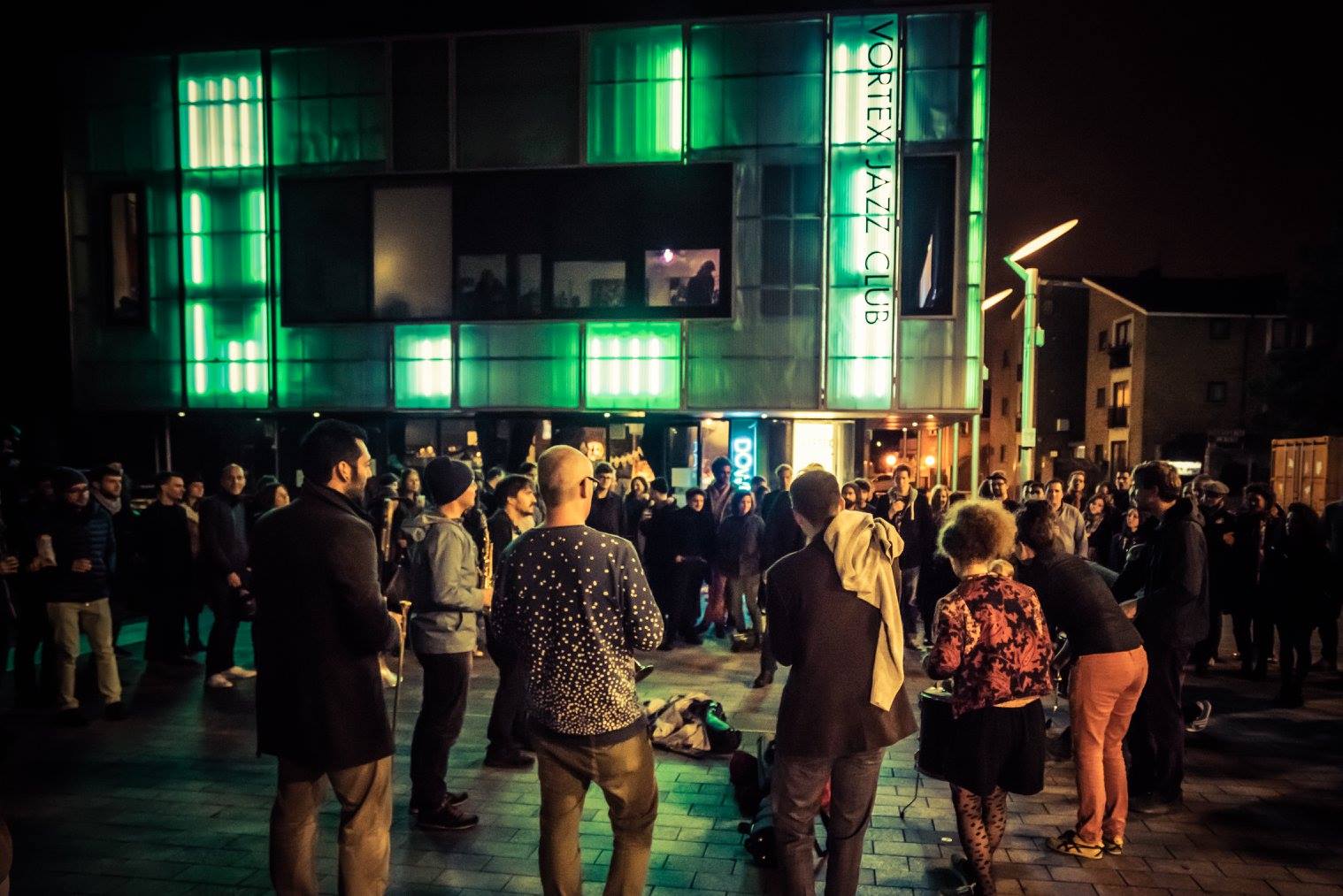
The ‘fuse’ of the festival brings the bands together in an improvisation in each venue before they proceed to a square outside where they play together in an ‘orchestra’. Using the soundpainting technique with a conductor and hand signals, it can be powerful, fun and completely chaotic. ‘The idea to unite the bands in a soundpainting orchestra is great. We had a very energetic session inside [at the Vortex],’ said Nils. ‘Maybe we stretched the session too long and missed the right point to stop, but it was big fun to meet everybody in the square.’ 2henning agreed, ‘When we began it wasn’t really defined, but then, as we walked to the square in front of the Vortex and met with the other musicians, it was great…people were listening and we played some cool ideas.’

Orchestra
Match&Fuse Orchestra (Steven Cropper)
‘Everybody was giving their best’

The GHH hope to continue being part of the M&F family, taking part in exchange tours, meeting other bands and contacts, ‘Back at home we discussed the option to do another UK trip during our next tour,’ they told me. 2Henning who also played a Sofa Sound night (gigs in people’s living rooms), did a school workshop and appeared on London Live TV as part of their M&F festival experience said, ‘It is helpful to use the name Match&Fuse, but also to have London as a reference,’ before adding, ‘Everybody was giving their best and I think people could feel that…I really had the feeling we belonged to the Match&Fuse family.’

It is a slow and long process with no guarantees

It’s not just about getting gigs and tours abroad – quality of experience matters and concrete benefits. Despite vital support from embassies and cultural organisations, there is not much financial renumeration so M&F need to build media relations in order that musicians get useful reviews. What they do well is encourage exposure of specialist musics, connect musicians and help them develop fanbases across Europe. It is a slow and long process with no guarantees but what was clear from Match&Fuse London 2015 was not only the breadth of talent but the good feeling, positivity and confidence that came out of it for both M&F and the artists.

M&F also had three events during the EFG London Jazz Festival with the Swiss/Russian band Jazzator. It will develop more ‘threads’ through other festivals both in the UK and abroad. M&F festivals are confirmed for Toulouse and London in 2016 as well as tours in Sweden, Poland and Ireland.
Soundcloud: Match&Fuse, London 2015 Mix
Match&Fuse
Match&Fuse Facebook

Bonne nouvelle : les bons pianistes romands se mutiplient!

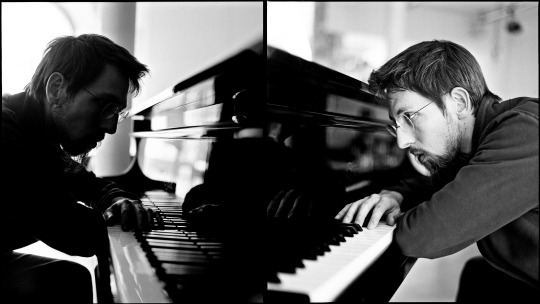
Malcolm Braff et ses microrythmes, Michel Wintsch et son piano global, habité de sons annexes, Colin Vallon en trio ou en collaboration avec Nicolas Masson (Parallels) et Elina Duni, Marc Perrenoud et son power trio en perpétuelle ébullition, Leo Tardin maître des cérémonies de son grand Pianoramax, Johann Bourquenez, tête pensante de Plaistow (sans oublier le Fribourgeois Florian Favre et d’autres plus jeunes) : le pianistes romands sont légion. D’eux d’entre eux se disputaient les faveurs du public samedi soir au Festival Jazz Onze +.

SONY DSC
SONY DSC

Gauthier Toux n’est pas Suisse, mais presque! Français, il a fait ses classes à la HEMU de Lausanne. En combo avec le batteur un brin énervé, Maxence Sibille (un autre Français de Lausanne) et le contrebassiste danois Kenneth Dahl Knudsen, Gauthier Toux jongle entre Fender Rhodes et piano. Il faut dire que le pianiste a beaucoup de choses à dire, beaucoup de territoires musicaux à défricher. Gautier Toux a ici le doigté classique, là un penchant pour l’improvisation jazz, Son trio est traversé par le feu du funk, par l’énergie du hip hop. Il surprend aussi en flirtant avec des rythmiques empruntées aux musiques de danse ou au rock. Avouant avoir été être influencé par Jason Moran ou Eric Legnini, le Gautier Toux trio séduit par son énergie jubilatoire et communicative et sa palette de sons variées. Il faut pourtant s’échapper après 40 minutes de concert : direction la salle Paderewski où Gabriel Zufferey s’illustre lui en solo. Et un concert solo ça se déguste de bout en bout!

“La musique donne une âme à nos cœurs et des ailes à la pensée

©Mehdi Benkler
©Mehdi Benkler

Gabriel Zufferey n’hésite pas à citer Platon sur son site Internet pour proclamer haut et fort son credo: une vision transcendante de la musique et un esprit vif toujours sur le qui-vive.  Samedi soir, le pianiste romand a choisi de placer sa performance sous le haut patronage de Bill Evans auquel il consacre son morceau d’ouverture et de clôture. Depuis qu’il a quinze ans, Gabriel Zufferey est considéré comme le petit génie du piano de ce côté-ci du la Léman. Désormais trentenaire, Zufferey n’est plus seulement un phénomène: il allie aujourd’hui à son intuition, une maturité et une dextérité toujours aiguisée. Couché sur son piano, on ne sait pas vraiment qui de ses doigts, de sa tête ou de son cœur contrôle la performance. Gabriel Zufferey peut caler sa main droite sur boucle rythmique de trois notes jusqu’à friser la saturation pendant que sa main gauche tourne autour de ce trinôme, semble parfois vouloir s’échapper pour de bon, mais n’y parvient jamais. Avec un petit air de professeur Tournesol, Gabriel Zufferey est un personnage et un artiste à la fois. Parfois drôle, parfois lunaire, il est capable d’évoquer  Satie, l’anniversaire de son amie et de jouer avec l’alphabet pour dire que le plus important est que sa musique vient du cœur. Gabriel Zufferey officie aussi dans un trio, Paralog, non moins libertaire, dont le nom  vient du grec paralogos qui signifie absurde…