Cérémonie du Prix Suisse de Musique

6157994.image“”Enfin!” diront certains, “voilà”, diront d’autres…” C’est en ces termes que le Conseiller Fédéral Alain Berset a commencé son discours d’ouverture de la cérémonie officielle du Premier Prix Suisse de Musique à l’Opéra de Lausanne ce vendredi 19 septembre 2014.

Une soirée pas comme les autres. Un public bigarré, entre mises sur son 31, uniformes politiques, et débraillage artistique. A première vue, peu de journalistes, beaucoup d’Alémaniques.

Super cérémonie, dynamique, longue juste ce qu’il faut, faite d’humour avec deux sketches bien envoyés de Vincent Kucholl et Vincent Veillon (des 120 secondes sur Couleur3) ainsi que la très jolie virtuosité de l’Ensemble Krysalid, pupilles de la HEMU de Lausanne, pour ce qui est des intermèdes.

Avant la remise des prix, un beaux film d’une quinzaine de minutes présentait les 14 nominés dans un medley inspiré dont voici un extrait.

https://www.youtube.com/watch?v=-BgdcCRVgdo&app=desktop

Plaisir de constater l’élégance du tout, de la sélection des artistes, plurielle et pertinente, à leur collaboration et connivence ou à l’organisation et la communication (très belle) de l’événement, qui signifie beaucoup pour beaucoup de monde. Exit les Awards un peu cheap, Le Prix de Musique Suisse, Mesdames et Messieurs, c’est la classe, et il y a de quoi être fier.

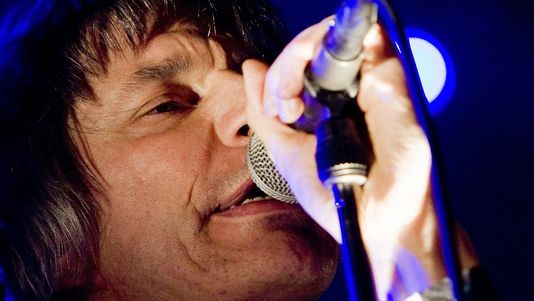
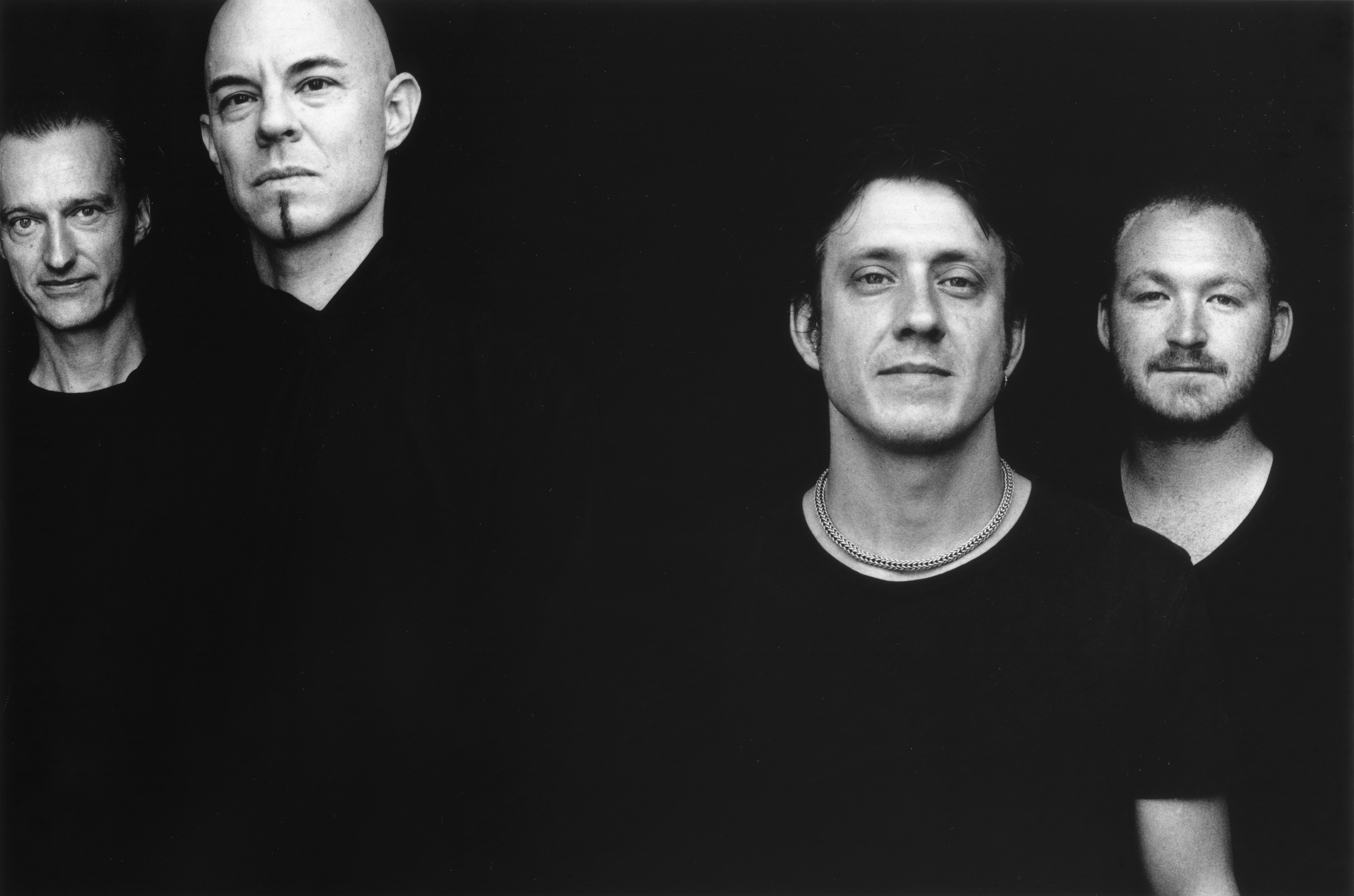
14 artistes qui amènent de l’eau au moulin, pétrissent une matière musicale originale, avec persévérance et mérite. Il était bien difficile de faire des paris sur le gagnant: Saluerait-on la virtuosité et la carrière d’Irene Schweitzer, la fougue et l’élan de Julian Sartorius, la rock’n’roll attitude infatigable de Beat Man ou le parcours iconique subjuguant d’Erika Stucky? Après une salutation en rang d’oignon, toute simple, et quelques enveloppes distribuées (chaque artiste sélectionné recevait d’office 25’000 CHF), le décachetage principal, honorifique et d’une valeur de 100’000 CHF annonce “Franz Treichler”, leader du groupe The Young Gods, suivi d’un torrent d’applaudissements et de somme toute beaucoup d’émotion.

Visiblement secoué, Franz Treichler monte sur scène remercier ses parents qui l’ont laissé partir de la maison tout jeune, sa femme qui le soutien depuis perpette, et tous les membres et collaborateurs des Young Gods, au plus ou moins long cours. Un prix mérité, pour un artiste ayant participé à faire rayonner la Suisse dans le monde entier. Un beau symbole qui installe les musiques actuelles, underground et expérimentales au budget de la confédération. En effet, “enfin”! Et merci, bien joué.
Le site de la confédération

Le site de Young Gods

Zurich meets Berlin

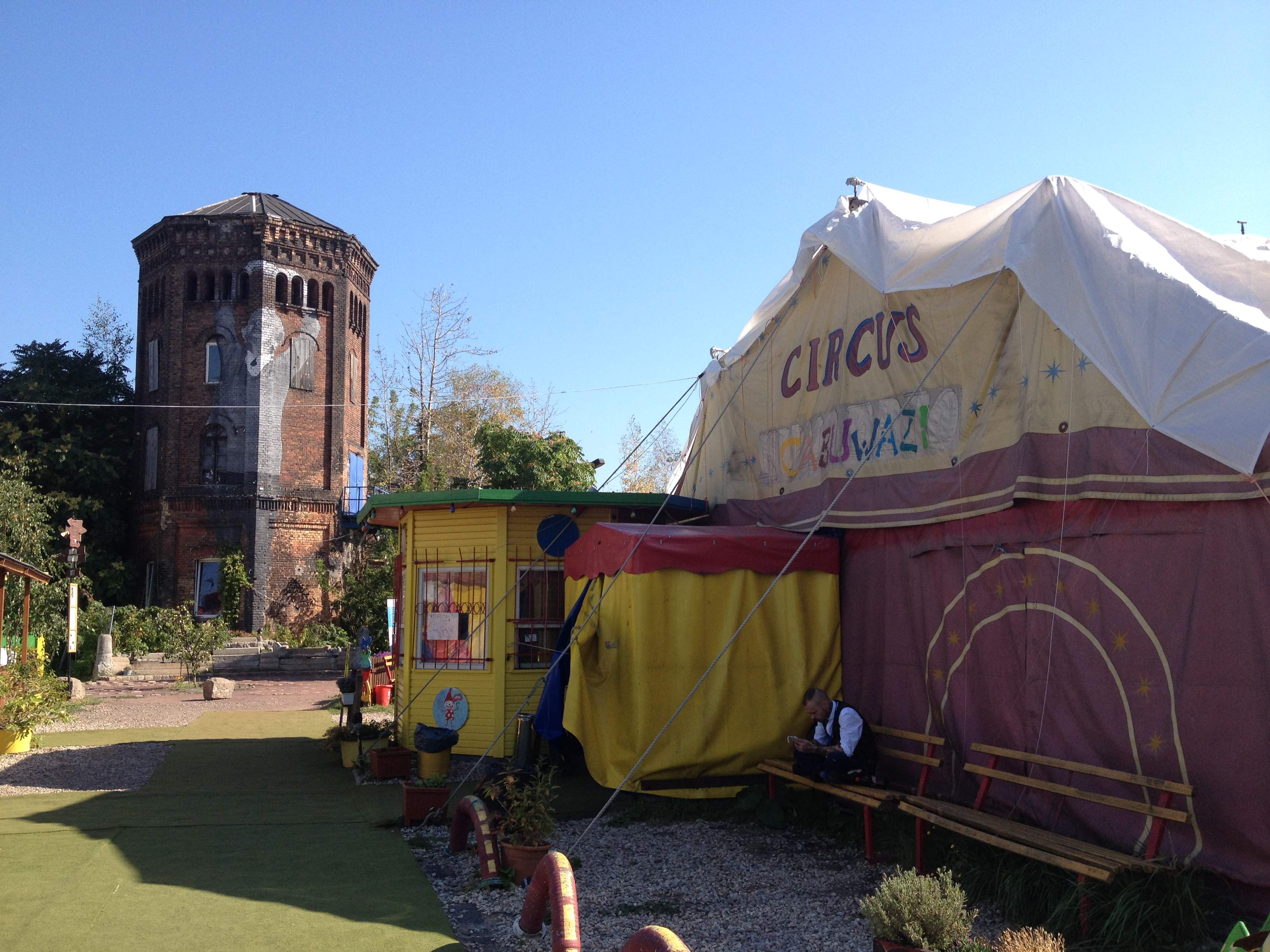
A la Berlin Music Week, le Swiss Business Mixer s'est installé sous la tnte du cirque Cabuwazi
A la Berlin Music Week, le Swiss Business Mixer s’est installé sous la tente du cirque Cabuwazi

Les 3 et 4 septembre derniers, le bâtiment de briques rouges qui abritait autrefois la gare postale de Berlin Est se transformait en centre névralgique de la Berlin Music Week, un lieu de rencontre, de discussion et de présentation des nouveaux projets musicaux de la scène pop et rock. Née des cendres du célèbre Popkomm, cette réunion était l’occasion pour la ville de Zurich et Swiss Music Export de présenter un Swiss Business Mixer.

” La Suisse est un microcosme de l’Europe, avec Saint-Gall dans le rôle de Moscou et Genève dans celui de Lisbonne”

C’est sous la petite tente du cirque Cabuwazi que se son retrouvés quelques organisateurs de festivals et de clubs zurichois pour discuter des spécificités du marché suisse et présenter quelques-uns de ses artistes prometteurs ou confirmés. Les tables rondes n’ont pas débouché sur de grandes révélations. Du côté des festivals ont été rassemblés deux open air – Saint-Gall et Zurich – le festival et  lieu de rencontres des professionnels suisses M4Music, et l’irréductible indépendant Bad Bonn Kilbi. C’est avec une pointe d’humour que Philipp Schnyder, boss du M4Music résume les difficultés d’un marché suisse dans lequel trois régions linguistiques et mentalités se côtoient : ” La Suisse est un microcosme de l’Europe, avec Saint-Gall dans le rôle de Moscou et Genève dans celui de Lisbonne”. Quant à Alex Dallas, Dj et programmateurs de plusieurs clubs zurichois, il confirme que malgré sa vie nocturne trépidante (entre 70 et 100 clubs à la recherche de DJ’s tous les jours de la semaine) Zurich ne pourra jamais devenir une ville aussi attractive que Berlin du fait de son niveau de vie incroyablement élevé.

Oy, grande prêtresse de la soirée M4Music

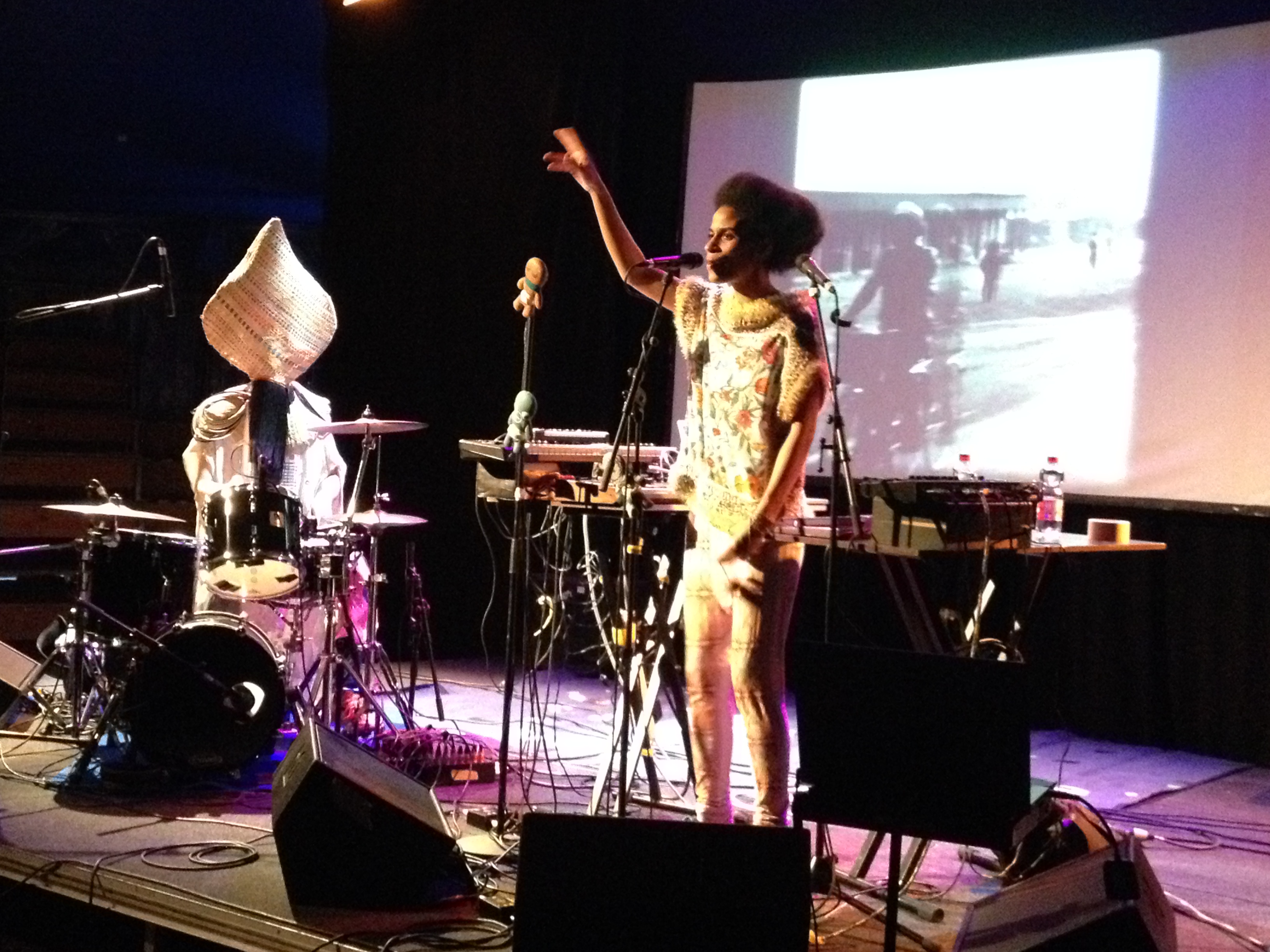
Oy-BerlinLe soir dans le cadre d’une soirée intitulée M4Music at Postbahnof les artistes convainquent pourtant que disparité linguistique et culturelle peut rimer avec vivacité. Après Wolfman, au potentiel intéressant, Anna Aaron toujours plus rock’n’roll, ce sont deux Zurichois exilés à Berlin qui mènent la danse. Bonaparte incognito et en formation réduite a remporté un vif succès sous le nom code de « Secret Act ». Mais la grande prêtresse de cette journée zurichoise fut sans conteste Joey Frempong de Oy. La chanteuse helvetico-ghanéenne Joey Frempong a conquis l’audience avec ses samples inspirés et son batteur masqué Lleluja-Ha.
Le nouveau spectacle de Oy est le fruit d’un long travail au cours duquel Joey Frempong a voyagé en Afrique de l’Ouest, au Ghana et en Afrique du Sud. De ces différents séjours, la chanteuse, flanquée de ses enregistreurs en tous genres, a extrait des samples tous azimuts (bruits de la rue, rythmes traditionnels), mais surtout elle a trouvé une énergie et une chaleur qui lui confèrent un nouveau charisme.

Entre poésie et électronique

Dans des costumes réalisés par un ami et designer, le tandem constitué de Joey Frempong et du batteur masqué Lleluja-Hade forme un drôle de couple. Elle, entourée de ses claviers et d’un ordinateur, jongle entre poésie et électronique. Elle utilise parfois la technique du live sampling, effleure une de ses poupées-totem pour que des images défilent sur un grand écran. Elle se prend tour à tour pour une chanteuse de gospel, pour une conteuse ou transforme le son de ses différents micros pour jouer à la ventriloque des temps modernes. Lui la suit, faisant jongler les baguettes de sa batterie qui semble elle aussi avoir fait une immersion africaine tant son groove est implacable. A eux deux, ils créent avec une aisance déconcertante un univers musical et poétique, riche en émotions, et une forme de sagesse basée sur l’étude du quotidien. Un univers ô combien séduisant à découvrir également sur leur dernière vidéo “My Name is Happy”!

http://vimeo.com/104903948

The Schaffhausen Jazz Festival 2014

As I walked into the ex-yarn factory, Kulturzentrum Kammgarn, it was clear the organisers put passion and care into their festival. The place was warm and intimate with candlelit tables and there was a relaxed, convivial vibe. Over four evenings the audience was treated to a variety of Swiss improvised music and there was a day of professional talks.

Without doubt, this is an ambitious festival

I missed the compelling Elina Duni Quartet who opened the event, but was there to experience BASH. I’m getting to know Lukas Roos through his outfit, pommelHORSE, but here the clarinetist/saxophonist played with guitarist, Florian Möbes, Domi Chansorn on drums and Samuel Gfeller on graphic novel, literally. A massive screen behind the band showed the story of a prisoner drawn into increasingly twisted events that lead to his end. The style of Gfeller’s drawings, Robert Crumb in feeling, are so powerful that at times, I tuned out their sensitive and minimal music. On speaking to Roos he explained that cutting the set to 40 minutes affected the balance – a point echoed by Andreas Schaerer and Rusconi on appearing at this festival.
Arte Quartett

Schaerer’s vocal noises ran amok

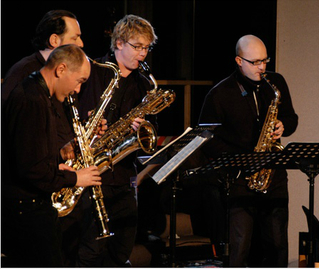
Andreas Schaerer was performing Perpetual Delirium, his composition for the saxophonists, the Arte Quartett with Wolfgang Zwiauer on electric bass. It had the quartet interlacing with a naturalness that was almost child-like in it’s fun and freedom. There were fascinating textures as soprano sax took over from alto, or tenor had a furious and thrilling exchange with the baritone, whilst Schaerer’s vocal noises ran amok adding sparkle, or hiding within their vibrant sound.

For pianist Gabriel Zufferey the time limit was perfect. His music was fluid with notes as sweet as fluttering butterflies yet underpinned by such knowledge and skill that he came across as an eccentric wizard. I liked the echoes of classical music and he incorporated an Eric Satie piece – it might sound tacky, but in his hands it lifted the hearts of the audience who then demanded two encores.

Is Rusconi’s music, jazz, or not?!

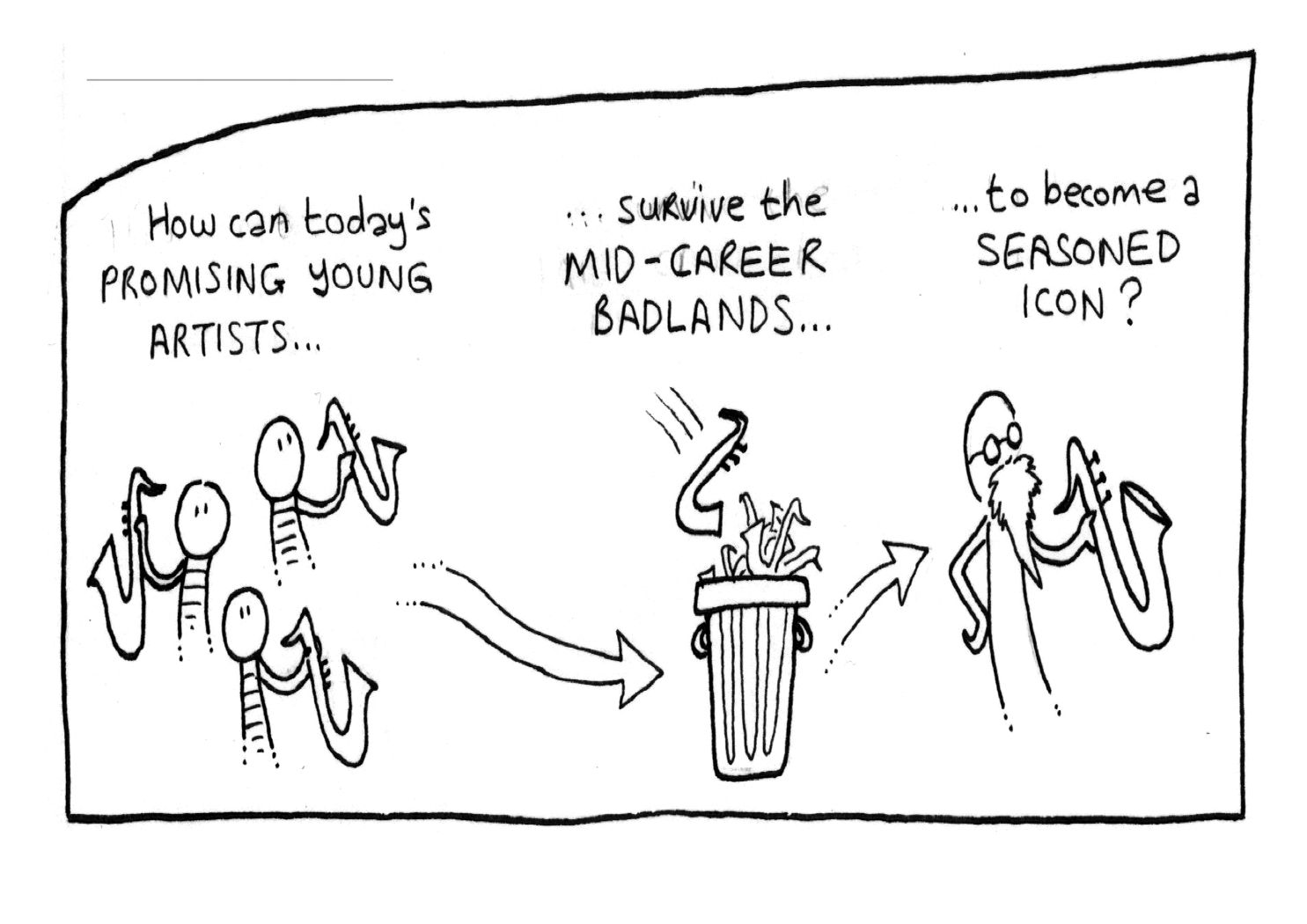
I was recently critical of Rusconi‘s gig at the Cully Jazz festival, but at Schaffhausen they were more confident in their ideas and I totally got into the groove of Hits of Sunshine and am warming to the strangeness of Change Part 1. However, on talking to some of the European promotors invited to the festival, questions emerged – is Rusconi’s music, jazz, or not? Is it gimmicky or authentic? I felt some answers were suggested by Gerry Godley of 12 Points who tackled the issue of the future(s) of jazz in his presentation with cartoons from Patrick Sanders, at the festival. But I’ll go into that more in my next Swiss Vibes’ blog, ‘How is Jazz?’

In the meantime I’ll leave you with the Bill Evans‘ quote that Godley used, “Jazz is not a what, it is a how. If it were a what, it would be static, never growing. The how is that the music comes from the moment, it is spontaneous, it exists at the time it is created.” If the Schaffhausen Jazz Festival has its sights set on being a relevant platform for jazz then it needs to continue putting on bands that question our perception of this rich and challenging music, as well as, those that celebrate it.

Cartoon by Patrick Sanders

Camilla Sparksss administre une claque sexy punk aux Parisiens

tumblr_mn5n8u4ZdG1s8nlfwo1_500Pour réussir une première partie, il vaut mieux ne pas y aller à reculons. Barbara Lehnoff, alias Camilla Sparksss, a fait tout le contraire : elle est carrément descendue dans l’arène. Par deux fois, elle a quitté la scène pour se frotter (littéralement) aux trentenaires bedonnants, trépignants à l’idée de revoir l’idole du garage blues folâtre, Jon Spencer. Elle les a fixés dans les yeux, leur a murmuré à l’oreille, s’est roulé par terre en scandant les répliques définitives de son morceau « Europe », « This is shit ! ».
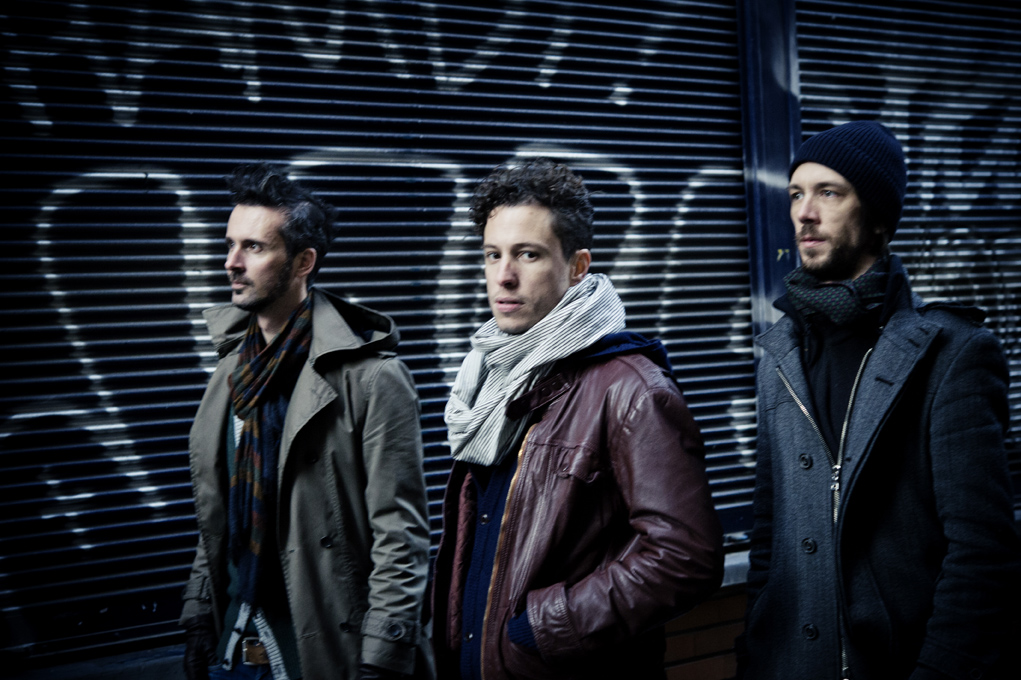
Thérapie par le cri primal

Elle a même tendu le micro aux heureux du premier rang, pour une séance de thérapie par le cri primal. Barbara Lehnoff a véritablement pris son public à bras le corps et cela tombait bien, puisque c’est justement l’objet de Camilla Sparksss. Le side project électro punk DIY de la guitariste stridente du duo Peter Kernel consiste à « donner une dimension charnelle à la musique électronique, à dépasser les machines » comme elle nous le confiait après son passage remarqué. Pas question donc de rester plantée derrière un laptop pendant que s’égrènent les rythmes tribaux, les déchaînements techno ou les apartés presque hip hop. Sur scène, la Canadienne installée en Suisse a multiplié les invectives et les torsions, tout juste aidée par son acolyte Myriam Vile, créatrice de bijoux reconvertie dans la performance très DIY elle aussi.

De l’écoute polie à la semi-hystérie

En courant sur place ou en boxant en rythme avec la beatbox avec son gilet bien trop court, elle n’a pas peu contribué à échauffer les virilités parisiennes : un spectateur inspiré lui lança même l’élégant « Est ce que tu baises ? » sans provoquer de réprobation générale. Justement, quelques temps avant la débauche de transpiration sexuelle de Jon Spencer, le duo féminin a initié avec peu de moyens la délivrance physique du public, passé de l’écoute polie à un état de semi-hystérie.

 Le 26 mai à la Machine du Moulin Rouge à Paris , en première partie de The Jon Spencer Blues Explosion
Nouvel EP de Camilla Sparksss “For you the Wild” sur bandcamp.
Les disques de Camilla Sparksss sortent sur le label On the Camper Records


Rusconi at Cully Jazz Festival

ImageI was reminded of the story of the Sorcerer’s Apprentice watching this trio perform. Keen to make magic and mischief, Rusconi sometimes found themselves unable to control the proceedings. This was the first gig of the tour and I think their playfulness will win over audiences, they just needed more child-like energy, a sort of innocent conviction, to pull it off at Cully. However, the band were most captivating when they painted afresh their best compositions from the new album, History Sugar Dream.

‘Psychedelia for Laika’
Ankor was a trademark piece, with Stefan Rusconi’s mournful yet sweet piano, rich with echo and thought, sensitively interlaced with Fabian Gisler’s handsome bass notes. The sparse, crispy drum beats of Claudio Strüby balanced the sound perfectly. Sojus Dream used a repetitive theme as its foundation before a synth keyboard sneaked in, providing Herbie Hancock-like funky accents. The track grew in stature as it built a platform for Fabian’s electric guitar to glide through, providing, as they tell us, ‘psychedelia for Laika,’ the dog who was sent out to orbit the earth in 1957 (and died within hours of lift off). I didn’t feel Fabian pierced deeply enough, so it was down to Stefan’s collapse into a warped and weird circus-style piano to trip the track out.

Bowie’s Life on Mars? started up
So, to the ‘high jinks’ – such as swapping instruments amongst themselves, as in Change (Part One), with Claudio on piano, Fabian on drums and Stefan on guitar, and stopping everything for Fabian to put a record on the Technics deck set up onstage. Bowie’s Life on Mars? started up, complete with vinyl crackles to re-enforce the theme of History Sugar Dream – childhood memories, “A time when dreams and hopes, fantasy and illusion, were reality,” as they write in their press release.

This trio is capable of subtle and complex emotions
I like the way Rusconi seem to feel their way through unknown landscapes in their music, playing with fantasy. At one point I thought of dark, rainy scenes in the film Blade Runner with its sense of nostalgia, loss and romance. This trio is capable of subtle and complex emotions. I’d like to have been taken more deeply into these worlds, that’s where the real playfulness lives.


Ein kleiner Festivalbericht vom M4Music

SCHWEIZ M4MUSIC 2014Gute Konzerte und interessante Panels: Diese Mischung lockt jedes Jahr Musikfans und Musikschaffende an das M4Music nach Lausanne (erster Festivaltag) und Zürich (zweiter und dritter Festivaltag). Im Rahmen des Festivals findet auch die Demotape Clinic statt, an der die vielversprechendsten Nachwuchskünstler gekürt werden und einen Förderbeitrag erhalten.
An der 17. Ausgabe des M4Music Festivals wurde erstmals der neu gegründete Verband der unabhängigen Musiklabels und -produzenten IndieSuisse vorgestellt. Angeregt wurde dieses Jahr ausserdem der Austausch mit der Kulturmetropole Berlin, wobei für verschiedene Panels Gäste aus der deutschen Hauptstadt zugegen waren. Als «Demo Of The Year» wurde der Song «Somnambulant Cannibal» der Band Conjonctive aus Nyon ausgezeichnet.

Erstmals Konzerte unter freiem Himmel

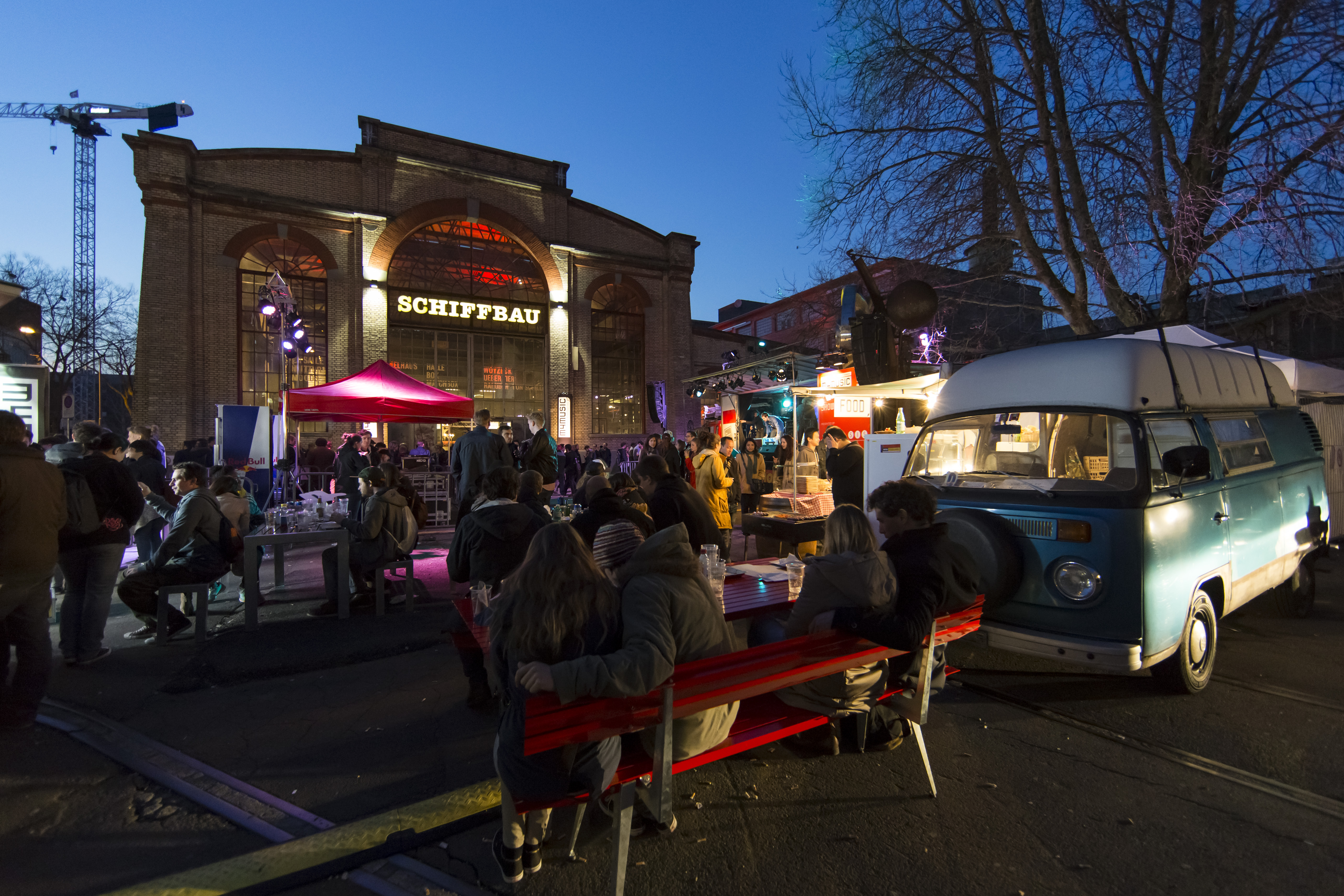
Das M4Music bot auch dieses Jahr ein spannendes Konzertprogramm. Auf fünf Bühnen in und um dem Schiffbau in Zürich stellten Schweizer und internationale Acts ihre Songs vor. Für den letzten Festivaltag machte ich mir ein dichtes Programm zurecht; die Konzerte des Vortages hatte ich bedauerlicherweise verpasst. Der Auftritt von Broken Bells war als Krönung des Festival-Samstags eingeplant.

Um 16.30 Uhr bestritt Milchmaa als zweiter Act an diesem Samstag ein Konzert auf der Bühne vor dem Schiffbau – die erste Openair-Bühne am M4Music, wo die Auftritte zudem noch gratis zu bestaunen waren. Der sympathische Rapper aus Chur war ziemlich geduldig mit dem Publikum, das auf die Animationsversuche eher zurückhaltend reagierte, die Show aber dennoch aufmerksam verfolgte. Anschliessend betrat die aus Russland stammende Tessinerin Ekat Bork die Bühne – und zog sogleich die Aufmerksamkeit der Zuhörer mit ihrer starken Stimme und ihrer exzentrisch-expressiven Art auf sich.

Viele spannende Acts am Abend

Eine enorme Bühnenpräsenz legten auch The Rambling Wheels an den Tag. Mit fadengeradem Rock lockten die vier Neuenburger die Festivalbesucher in die anfangs ziemlich leere Halle des Schiffbaus. Musikalisch durchaus abwechslungsreich brachten sie die vordersten Reihen schnell zum Tanzen.

Um halb elf begann das Konzert von The Lonesome Southern Comfort Company (schwieriger Name, man sagte dann jeweils: «Ich gehe noch ans Konzert der Southern Comfort irgendwas da…»). Geblieben bin ich nur für zweieinhalb Songs, aber nicht etwa, weil sie nicht gefielen. Im Gegenteil: Die folkigen Lieder liessen mich in Entzückung mitschwanken. Den Bandnamen konnte ich mir danach merken. Aber meine Helden namens Broken Bells würden gleich auftreten.

So stand ich nun vor der Halle, einige Minuten vor dem Konzert der amerikanischen Headliner. Die Schlange bewegte sich nicht vorwärts. Es vergingen Minuten und die Band hatte bereits losgelegt, in der Schlange war ich aber kaum vorwärts gekommen. So beschloss ich schliesslich, mich von dem Gedanken zu verabschieden, Broken Bells an diesem Abend noch zu sehen. Einen letzten Blick warf ich noch durch die offene Tür in die grosse Halle und glaubte für einen Moment, James Mercer auf der Bühne erblickt zu haben. Vermutlich war es nur ein Becher Bier, das begeistert in die Höhe gestreckt wurde.

Verärgert über mein eigenes Zeitmanagement zog es mich Richtung Exil. Glass Animals standen nun auf dem Programm. Und sie begeisterten. Musikalisch einwandfrei gab die junge Band aus Grossbritannien ihrer teils distanziert wirkenden Musik ein Gesicht. Das Publikum fiel in Ekstase und tanzte – auf ähnliche Weise wie Ekat Bork einige Stunden zuvor auf dem Schiffbauplatz. Dieses Konzert war genug Entschädigung für das verpasste Konzert von Broken Bells.

 Auch nächstes Jahr der Treffpunkt für die Schweizer Independent-Musik-Szene

Kurz vor zwei Uhr verabschiedete ich mich von der tanzenden Menge beim Bonaparte-Konzert. Durch das wunderschöne Foyer des Schiffbaus schlendernd stellte ich fest, dass das Musikprogramm am M4Music auch dieses Jahr sehr ansprechend war. Immerhin hielt es mir sofort eine würdige Alternative für das verpasste Broken Bells-Konzert bereit.

Eine spannende Konferenz, die ungemein wertvolle Demotape Clinic und gute Konzerte gibt es nächstes Jahr wieder vom 26. bis 28. März 2015 in Zürich und Lausanne.

Best Swiss Vidéo Clip

Les 2 gagnants et le jury @Allessandro Dellabella
Les 2 gagnants et le jury
@Allessandro Dellabella

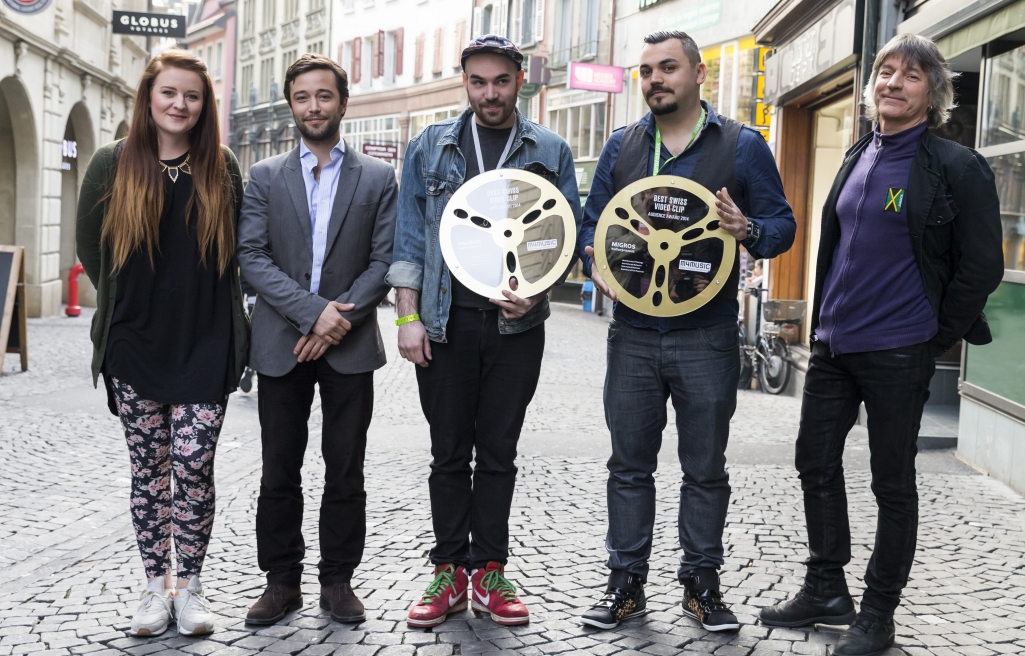
La semaine dernière dans le cadre du M4Music ont été décernés deux prix pour le meilleur clip vidéo. Parmi 14 vidéos retenues, cinq étaient en compétition. Le Prix du public était organisé sur la plateforme Mx3 par votation online et le Prix du Jury faisait appel au regard de trois personnalités du milieu culturel suisse : Franz Treichler des Young Gods, Vincent Jaquier de l’ECAL et Désirée Wismer de la TV zurichoise Joiz.

Prix du Jury

Le réalisateur Vaudois Simon Wannaz remporte le Prix du Jury pour le clip « Airplane Friendship » de Buvette. Une vidéo à l’atmosphère étrange, où les bonnes idées et une belle photo parent intelligemment aux petits moyens à disposition. Un visuel en belle adéquation avec l’électronique DIY de Buvette, qui avait déjà été remarqué, notamment à la Nuit du Court de Lausanne qui l’avait programmé. Simon Wannaz vient de terminer le prochain clip de la jeune veveysanne Verveine – dont nous parlerons ici très bientôt – et s’envole pour New York où il compte travailler ces prochaines années.

[youtube.com=http://youtu.be/AhfifHipcZU]


Prix du Public

Le Prix du Public a quant à lui été remporté par Uslender Production pour « Würsch Sie », un clip dont la victoire au nombre de clics doit franchement beaucoup aux très jolies filles en bikinis et à leurs nombreux amis.

[youtube=https://www.youtube.com/watch?v=LhmqdfcTGPY]

Or parmi les 14 clips projetés, il y avait d’autres belles choses, qui n’étaient étonnamment pas en compétition. Pour le plaisir, voici donc la….

Sélection Swiss Vibes

Le clip du rappeur Skor, pour les rondes enchanteresses en costumes traditionnels:
[youtube=http://youtu.be/rpSmHh6zIjM]

Celui du producteur vaudois Christophe Calpini, dont le dispositif en négatif, simple comme bonjour, est diablement maîtrisé:[youtube=https://www.youtube.com/watch?v=yvBtPwlq6ac]

La vidéo de Bonaparte, une jolie animation bricolée :
[youtube=http://youtu.be/gVWK7cuWh2w]

Et enfin, la vidéo de Metube qui est plus un court métrage qu’un réel clip musical, mais qui, tout en s’amusant, raconte beaucoup de choses sur les nouveaux médias et le rapport à l’image:
[youtube=http://www.youtube.com/watch?v=P2jn_lxrrPg&list=PLl-CRSATZiXSMWhkvfHs0H5j9JQ12DsZm&feature=share]


Bänz Oester and The Rainmakers @Chorus Club

Bass maestro, Bänz Oester and his friends The Rainmakers are a joyful union of Swiss and South African musicians who grouped together after a chance encounter at the Grahamstown National Arts festival in 2011. Rainmakers_photo 1Spontaneous cameraderie and a deeply felt musical intention are what unite this group and deliver an immediate, powerful jazz punch. Tonight at Lausanne’s Chorus Club they perform the final date of their 2 week tour, show-casing their first LP, Bänz Oester and The Rainmakers ‘Playing at the Bird’s Eye’ – an album that took just four days to put down and that captures an intimate sense of wonderment, spirituality and emotion.
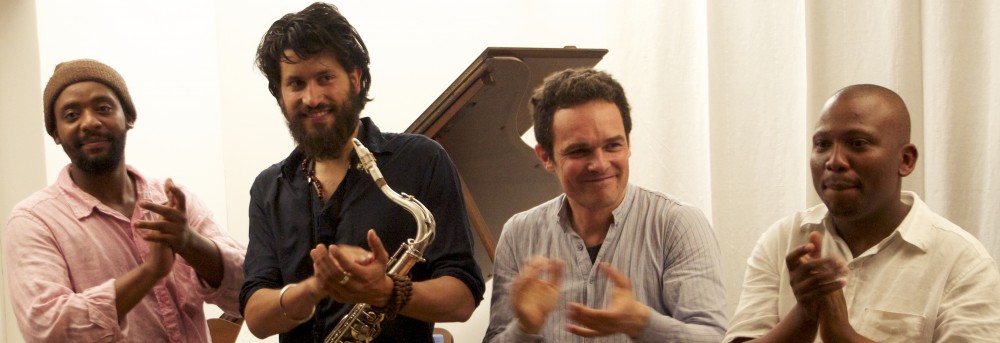
Only two days of rehearsals

Live, their style and content vary from the languid jazz standard, African polyrhythms, seductive funky blues, obscure Swiss and Bulgarian folklore to blinding improvisation. Whether introspective or gregarious, all styles are drenched in emotional depth and meaningful purpose. This is a band who describe themselves as playing “the music of intention” after only two days of rehearsals.

Spectacularly lithe piano playing

Afrika Mkhize’s spectacularly lithe piano playing is a constant joy, over-brimming with the gospel, blues and afro-jazz colours you’d expect after 10 years on the road as Myriam Makeba’s musical director. His instrument is cropped-DSC01181jumping as he scats, sings and cajoles it into action, rolling out the pretty melodies and interplaying beautifully with the often darker hues of the sax. Shame there’s no microphone, I’m curious to hear more of his singing voice but am later informed that his vocalese is not an imitation of Keith Jarrett, just a special way of entering into communication with a foreign piano that is ever-changing whilst on tour.
It’s a miracle we don’t all start stripping

The track “The Rainmakers” is a wonderfully sunshiny example of lilting African rhythms, dynamic and strong, rising and falling with a jovial ambiance that has the band and entire audience smiling from ear to ear. Similarly heart-warming is “Land’s End”, a silky smooth and teasingly bluesy number, full of such playful sexy pacing it’s a miracle we don’t all start stripping. Between the achingly seductive beats, drummer Ayanda Siukande amuses us with his larking about while pianist continues to speak Ray Charles-inspired volumes. There is joy on stage and in the room!

A weight of emotion

From the Swiss camp is Ganesh Geymeier on the saxophone with a style uncontainable as it is delicate, full of DSC6546-189x126emotional fire as well as delicate spaciouness. Whether building up a frantic storm as in “The Elevator” à la 60s Blue Note soundtrack or hinting at the sinister grey fog in the traditional Swiss-German folksong ‘Wie di graue Näbel schlyche”, his sound carries a weight of emotion and accompanies the listener into a spiritual musical dimension.
Bänz, looking splendid in his African shirt and red pixie shoes, is by no means the understated member of the band. His presence is, as usual, smilingly masterful and his exhuberant musical creativity proving  once again that he’s not considered “one of Europe’s leading jazz-bassists” for nothing.

Bänz Oester & The Rainmakers, « Playing at The Bird’s Eye » (Unit Records)

[youtube=http://www.youtube.com/watch?v=N14DMUAVRWQ]

Nik Baertsch’s Ronin @ The London Jazz Festival

©Martin Moell
©Martin Moell

This is Ronin’s first London gig since their latest recorded-in-concert ECM release simply entitled “LIVE”. New to this Swiss quartet, I had heard them described in terms such as ‘zen, meditative, minimalist and hypnotic’, and am hence expecting to quietly relax in my seat and possibly drift off into some pleasant la-la-land reverie. Fat chance.

Then comes the master’s cry

The opening number, a piece commissioned by the London Jazz Festival to celebrate their 21st edition, admittedly sets out the minimalist framework from which many of Nik Baertsch’s compositions emerge: a small sequence of notes played out repeatedly until an almost humming, vibrational plateau is reached. Then comes the shout – akin to a quantum leap – the master’s cry which signals the change in direction, and it’s never the direction you’re expecting. Enter the spikey-edged groove that creates an exciting synergie among the four musicians as the humming vibration is maintained but layered and combined with idiosyncratic funk-jazz rhythms. At once I understand the beguiling statement featured on the band’s press page: “creating the maximum effect by minimal means”. This is music that makes space within a limited space, yet manages to sound intense and massive. “From self-imposed restriction stems freedom” explains Nik on his website.

In between anything can happen
©Martin Moell
©Martin Moell

The twists and turns inside the strict aesthetic infrastructure are varied, unexpected and occasionally brutal. Tracks merge in and out of one another with liquid low-key starts and scary built-up endings; in between anything can happen. Just as you begin to think you’ve seized the pattern – bang! – here comes a sharp corner ushering in a brisk tempo change, a pregnant pause, an unexpected motive, an anti-pattern or perhaps just a slight percusiive tap on the inside of the piano. The yin and yang of tension and release are constant key elements, (brilliantly exemplified by a loud, almost orgasmic, gasp from an audience member during an unusually abrupt stop mid-flow in track 5). To quote a You Tube comment “It goes right in the body. Ronin can sometimes feel like a drug”, no snoozing on this risky rollercoaster, Nik himself describes his musical thinking as “ecstasy through asceticism”.

What’s clear though is that Nik is having fun…

A big engaging smile encourages the interlocking rhythms between him and his band members. There’s a lot of playfulness going on in the groove habitat despite the apparent strict code of conduct. Sha on the bass clarinet shuffles and whispers like a discreet background vocalist, yet is in fact unifying the electrical force field. Kaspar Rast on drums is raw and explosive when pushing outwards from the framework . Thomy Jordi on bass is the funk master from whom the mesmerising groove stems. This is a band that meets every Monday at 2pm in Zurich to play in a workshop environment open to all members of the public, so to assume that Ronin is a musical concept best appreciated by the brainy and pretentious is a total fallacy. Tonight’s audience is made up of novices as well as diehard fans, and both types leap to a rapturous standing ovation once released from the deliciously dramatic tension.

Nik Baertsch: piano, Fender Rhodes

Sha: bass clarinet, alto saxophone

Thomy Jordi: bass

Kaspar Rast: drums

Nik Baertsch’s Ronin played @ The London Jazz Festival (Kings Place), 23rd November 2013.

Elina Duni Quartet @ the London Jazz Festival

BaO_DuniYou physically feel the power of Elina’s cry
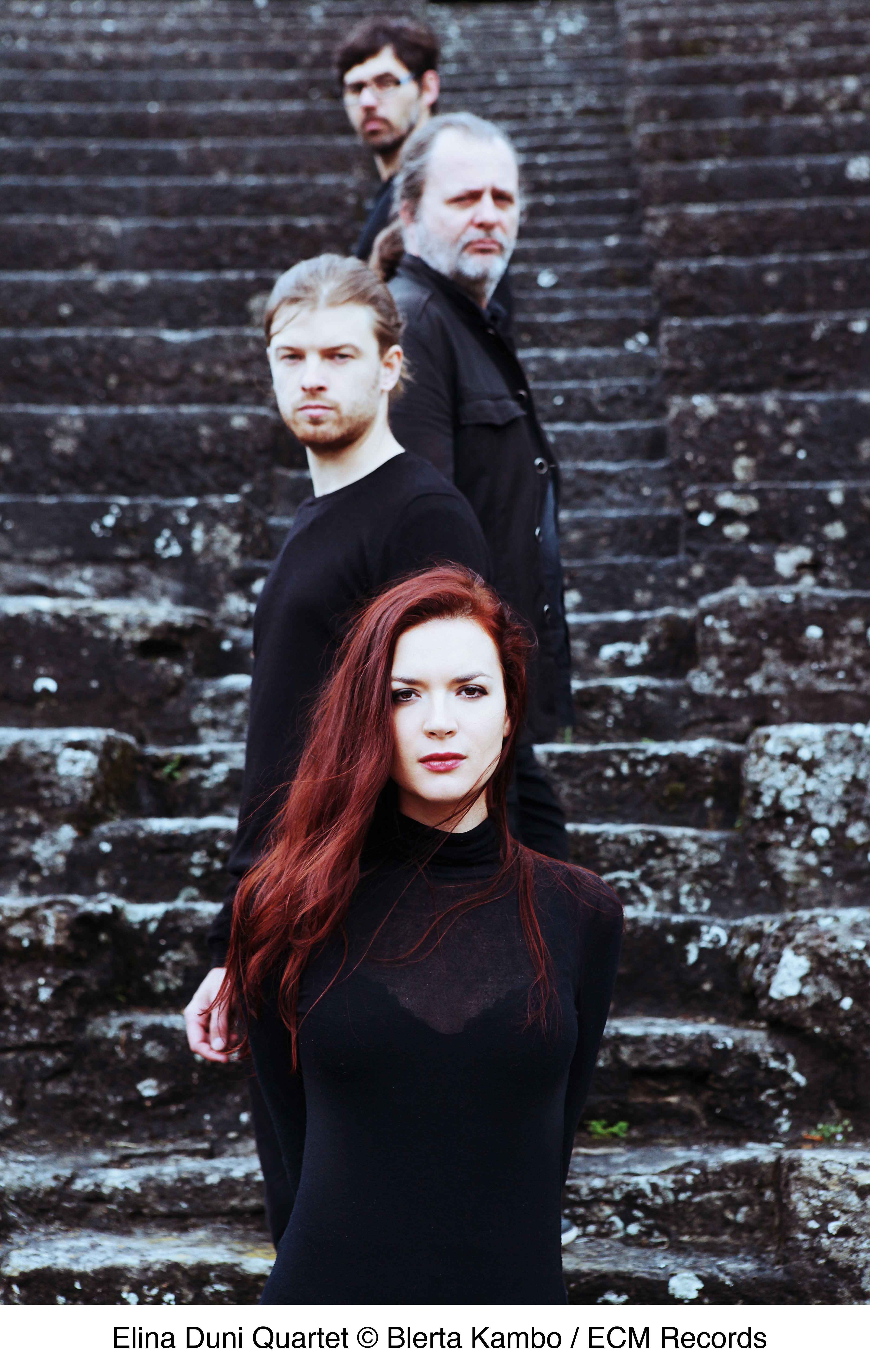
Elina Duni is a storyteller and from the moment her first ever London concert began she unapologetically took us, barefoot, from the Queen Elizabeth Hall into the forests and mountains of Eastern Europe. And into a culture of stirring tales of family bonds, passionate love, loss and longing. You physically feel the power of Elina’s cry, the emotional quivering of the Balkan vibrato and resonance of the words (even though most of us didn’t know the language) and along with her quartet she held the audience rapt

“The magical part is what’s happening between us, our interplay”

Elina’s lifeblood is both the folk music of her birthplace, Albania, and improvised music. “The magical part is what’s happening between us, our interplay,” she explained to me and over the nine years they’ve played together they’ve evolved ways to hold Elina’s stories (two were traditional songs passed to her by grandparents) without crushing them under the weight of jazz improv or, more to the point, not being eclipsed by them and Elina’s charisma. In The Girl of the Waves Elina’s ethereal vocal sounded as if it was floating on the wind, being carried to the bird that the girl is questioning about her missing lover. Colin Vallon’s piano felt like the bird’s reply, sweet yet with edgy minor keys to hint at tragedy.

“The earth beneath us”

Elina Duni_PF2I have to admit I was entranced by Colin’s imagination; he is a potent voice and I want to check his own trio now. At times he played with such melancholy it broke my heart, then in a moment, flashed his anger or became cold, like ice cubes dropping into Elina’s blood-red cocktail, cracking and clinking, changing the temperature. He used various techniques to physically alter the piano, deadening the resonance or twisting the keys into cimbalom-like notes, revealing a Balkan soul whilst never breaking the spiritual thread of jazz.

The drumming of Norbert Pfammatter was sensitive and swinging. He made every beat count and at a pace that clearly said, ‘I’m taking my time, got a problem with that?’ He used bundles of thin sticks to create an effect between brushing and drumming and exuded a yin quality: soft but dark, tapping out a funereal rhythm or taking us into a tribal trance. The double bass of Patrice Moret stayed warm and solid, ‘The earth beneath us,’ as Elina described it.

Albanian blues

A rendition of Nënë Moj, a son sorrowfully telling his mother he must leave to his homeland to work, was a highlight. Elina described it as Albanian blues and it’s the flavour of the quartet’s next album. If it’s half as thrilling as their performance it will blow your socks off. I did want to hear a wider range of sounds and ideas but admittedly it was a short set. I think it will be vital for the quartet to establish the breadth of their creativity in the future. After the gig finished, I heard a woman behind me say, “You can feel the root, the tradition and that’s what she is.” I would add that Elina is genuine, humble and only at the start of exploring her full compelling potential.


Elina Duni played @The London Jazz Festival (Southbank), 19 November, 2013.

Next concerts:

23.11. 2013, München (DE), Unterfarht
06.12. 2013 Fribourg, La Spirale (Elina Duni & Bessa Myftiu, lecture-chant)
25.12. 2013 Bern (CH), Bee-Flat, Elina Duni & Colin Vallon
05.01.2014 Toulouse (FR), salle Nougaro
16.01.2014 Paris-Pantin (FR), Festival Banlieues Bleues, la Dynamo
17.01.2014 Auray (FR), Centre Culturel Athena