Take Four Musicians (part 2)

Yael Miller “It was very difficult at the beginning, very upsetting”
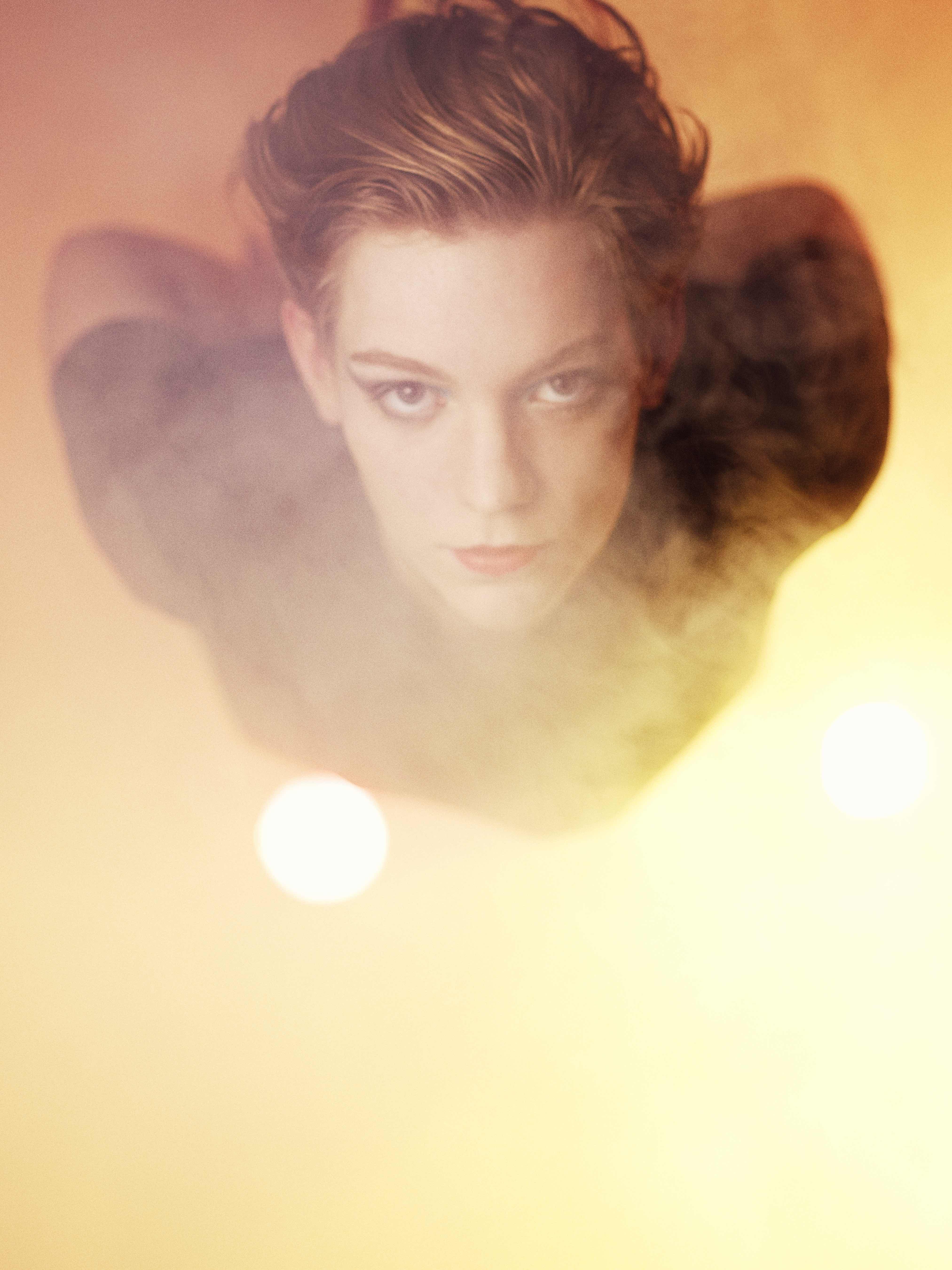
As Orioxy’s key composer and vocalist, Yael says, “We did amazing things, were in amazing places and had crazy experiences – it is why it’s good that it finished now before it became bitter…” Like bandmate Julie Campiche, Yael was re-assured about the decision to split up, at Take Five Switzerland & South Africa, even though it affected others, “It was very difficult at the beginning, very upsetting.”
Screenshot 2016-04-04 19.30.15
Photo Gerald Langer

Yael has faced tough challenges before. From Tel Aviv, she spoke of a childhood almost lost to shouldering heavy responsibilities. So it’s unsurprising when she says it was a feeling of duty to compose for a whole band that caused her writing block. Her desire was to go more deeply into personal expression, like a singer-songwriter, where lyrics lead. “This is not so acceptable in the mainstream jazz world, so I’m shifting it a bit…not feeling obliged to fit in.” It’s as if Yael is finding the freedom that was compromised as a child.

Orioxy’s drummer, Roland Merlinc will be part of her new trio, “We want the same things,” she explains, and Baptiste Germser, a bassist and French horn player who has a Paris studio. “We close ourselves away for three or four days and just rehearse and record from morning to evening, then we go and drink beers, and then continue.” It’s time for Orioxy to explore who they are now and I’m excited to hear their individual projects.

Mandla Mlengeni: “I was a troubled child and I was always in trouble”
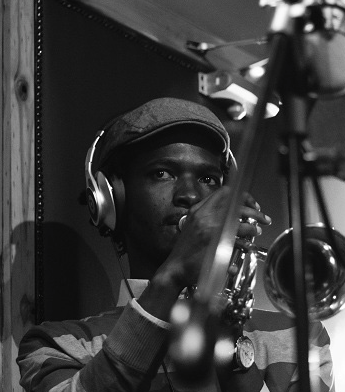
Screenshot 2016-04-04 19.40.09Someone else shaped by a dramatic early life is trumpeter Mandla. Brought up in a turbulent Soweto by a young, single mother after his lawyer father was murdered, he admits, “I had to find coping mechanisms. I went to see psychologists, but I didn’t know how to deal with it, I was a troubled child and I was always in trouble.” His childhood is hazy but he remembers sitting on his dad’s shoulders, hearing music at political rallies, and a small, blue piano he brought Mandla from London when working on a case concerning South Africa’s ‘hit squads’.

Listening to Mariah Carey and Boyz II Men on the radio, he says, “I thought composing was a sacred gift and being a musician was something bestowed upon you, like being a ‘sangoma’, it was a calling.” An exchange to Norway introduced him to composing in a simple way, but he left the first piece he wrote for a couple of years, then, “One drunken night, I was with a friend and we were jamming and I started playing this song and he asked, ‘Hey man, whose song is that?’” This encouragement eventually led to his 2015 debut, Bhekisizwe.

It was a long process but the recording fell fatefully into place: finding a studio and having saxophonists Shabaka Hutchings (UK) and Ganesh Geymeier (CH) in town to guest. And now, Mandla says, “I’ve sold all the albums so I have to re-print and strategise as to how to get into markets other than South Africa.” With a tenacity that secured him gigs even before the album’s release, he’s one to watch for.

Joel Graf: “We have to find new strategies”
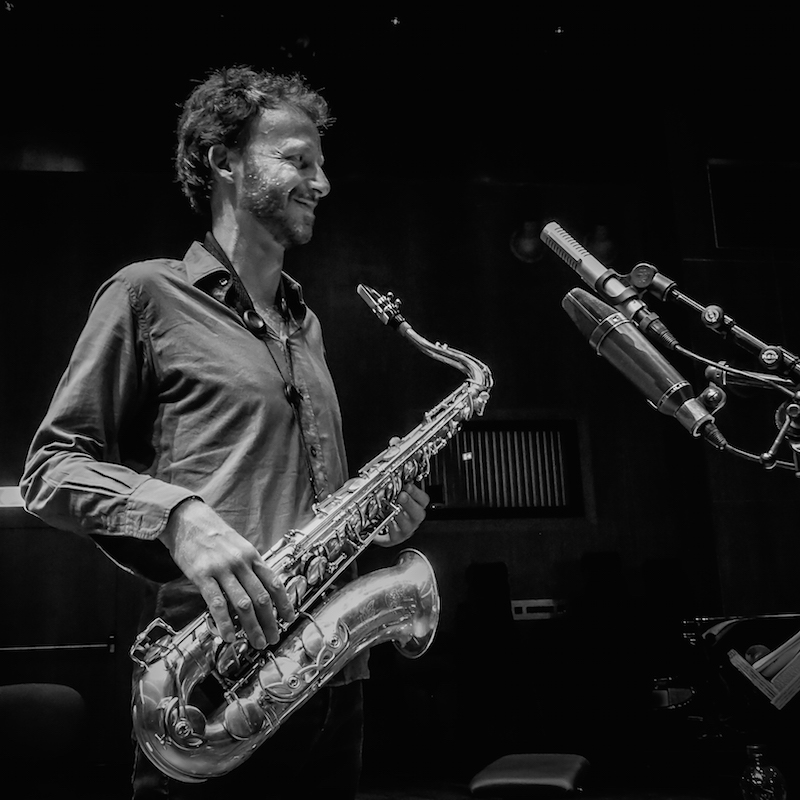
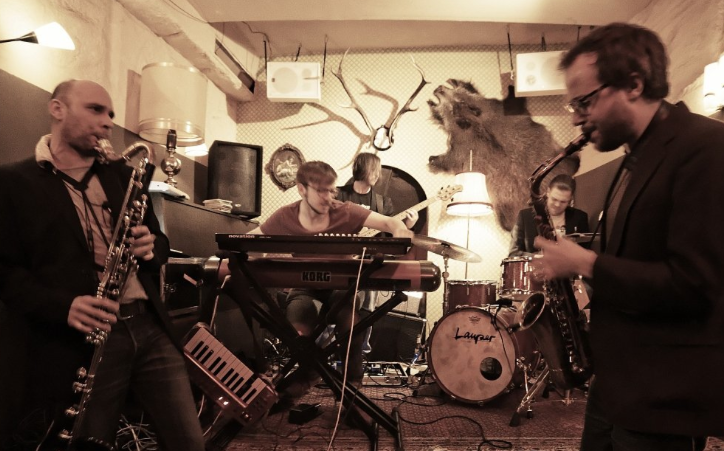
PommelHORSE’s sax player is also thinking about a game plan. This quintet met studying in Bern and are good buddies but says Joel, “We have to find new strategies, new ways and that includes a new label…and better ways to market the band.” I can’t help chuckling when Joel explains they took an actual pommel horse on their early tours. “When we first played shows, audiences in Germany thought we were a music and gymnastics show…they were kind of disappointed.”
Screenshot 2016-04-04 19.47.54
Photo Peter Tümmers

My favourite track on their last album was Joel’s ‘Drunk on Christmas Eve’, and I’m intrigued to see them play live at jazzahead! this month. “There’s always big competition,” he says of this music fair, “…selling yourself and your music, it’s hard work.” He talks of feeling overwhelmed by everything a band should be doing and how you can lose sight of why you ever went into music.
Joel actually studied IT first despite coming from a sort of ‘Partridge Family‘ with the six musical siblings all playing instruments. In a way pommelHORSE are his new musical family and although each of them play various styles e.g. classical and heavy rock, they gel together. “I love our combination of music, but really we have to move on, make our music better and move forward.”

Yilian Cañizares “You know what you want, but you don’t know how to get it”

Screenshot 2016-04-04 20.00.51
With Ibrahim Maalouf                                    Photo Marc Bertolazzi

Yilian is looking at how to progress too. “When you are trying to build something, sometimes you can feel,” she searches for the right word, “…lost, because you know what you want, but you don’t know how to get it.” She is often invited to play with others after they see her perform, such as Richard Bona, Ibrahim Maalouf and Omar Sosa (with whom she’s just recorded an album) but she wants more exposure.

In fact Yilian sums up a major issue in Europe, “Right now it’s quite difficult because culture [representation] in all media is getting smaller and smaller and sometimes they just speak about pop music or celebrities. It’s quite frustrating.” That’s an understatement – don’t get me started on UK press coverage of this music, but Yilian knows there’s more she can do, “I believe it’s very important to always be in the creative process, I like to see it as an everyday process…maybe we are sure about that as musicians, but we don’t apply the same concept to other areas of our career.”

I suggest that she must get homesick and Yilian graciously replies that she’s blessed to be able to pursue music at this level, but does want to see her Cuban family more often, “I am split into two feelings…and I try to transform this into my music and creativity, that’s how I manage it.”
Take Four Musicians (part 1)

Take Four Musicians (part 1)

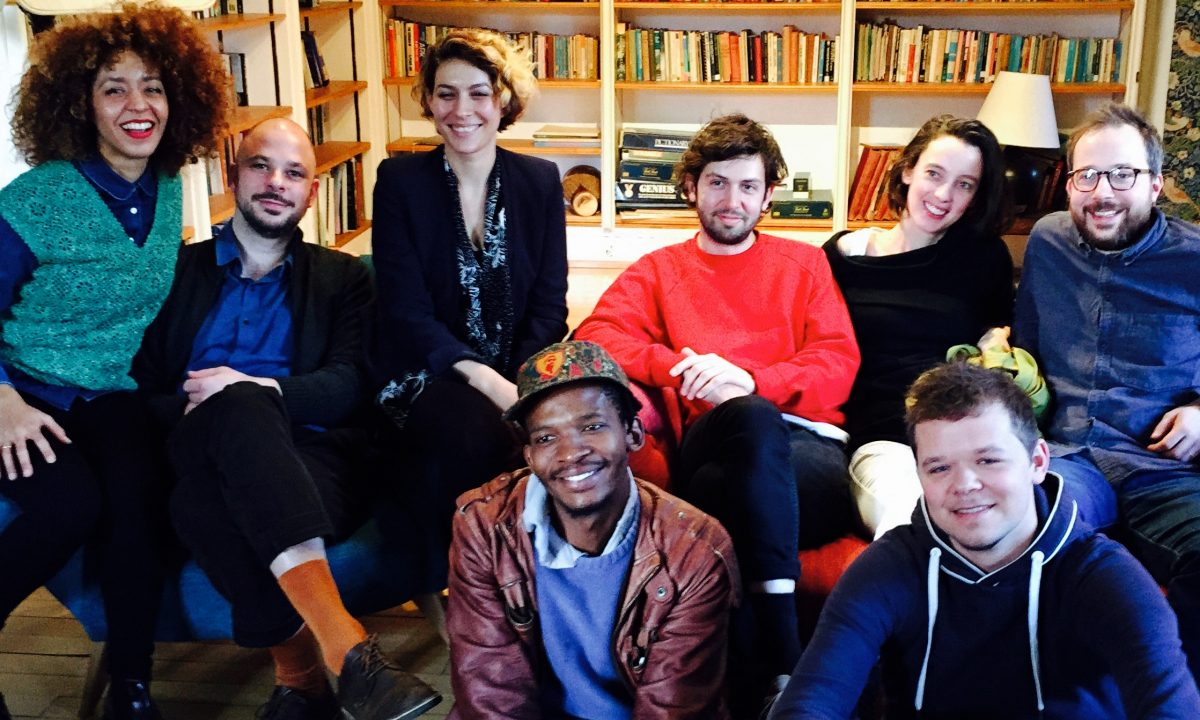
This is the first of two articles; sketches of musicians that took part in Take Five Switzerland & South Africa.

Manuel Troller
“How do we make a classic guitar-bass-drum trio sound like something else?”

I’m re-naming Schnellertollermeier as Nitric Acid (hydrogen, nitrogen, oxygen). They are not a trio, but a chemical reaction. Seeing them perform at a Lume event in London I felt the room may combust into flames during the title track of their album, X. The sustained tension of Manuel Troller’s Telecaster plucks, Meier’s afro-beat-punk drums and Schnellmann’s distorted, demanding bass, pin you into a tight corner, forever, it seems. A sudden breakdown into nothingness releases the hold before industrial drones and a poetic, distant guitar change the mood. It’s psychotic and clever – throwing Mr Hyde at you first and, much later, the sane Dr Jeckyll.

Schnellertollermeier_Lume
Schnellertollermeier play London’s Lume night

Guitarist Troller admitted, “That was a huge job. How do we make a classic guitar-bass-drum trio sound like something else? Like one compact organism; with different elements, different functions, but all going for the same thing.” When it comes together, the sound is seismic; the gig was a whirl of grunge, classical, jazz, blues, rap and rave. Troller is cat-like, darting around the ‘dry and heavy’ bass, at other times he is obsessive, a strumming nutter. I’m as thrilled as they are that X was in the Wall Street Journal’s best music of 2015 (alongside artists like Björk). It’s rare to have such an album picked up by the mainstream.

“I’m really happy at the moment,” says Troller who has good things ahead. He’s an associated artist at Lucerne’s Südpol with the trio playing unfinished music to audiences to give insight into the composing process, then he’ll be in Chicago for an autumn residency and US tour. He’s developing solo material and performing with author Michael Fehr. I first saw him play with Nik Bärtsch’s Rhythm Clan at the EFG London Jazz Festival and solos from him and Sha were highlights.

“I’m more interested in people like Marc Ribot”

“Some of the elder generation in Switzerland used to tell me, ‘Man you have to decide what you really want to do.’ For me it’s not the right way. I’m more interested in people like Marc Ribot who are working in different fields but have their own language, their own personality that they bring to all sorts of music.” Manuel has also played with Sophie Hunger and senses such artists are helping to sketch a profile of Swiss musicians for countries like the UK. “I also feel there is a self-confidence growing which is necessary.”

Julie Campiche
“There is something in me that needs to learn to accept the compliment”
JulieCampiche_LaurentML
Photo: Laurent ML

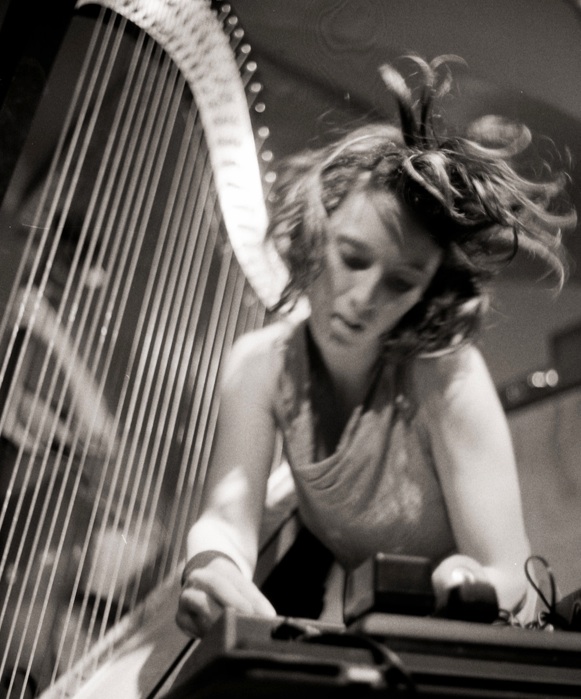
Confidence was a theme in my conversation with Julie Campiche. “I’m happy and confident,” she tells me, “and I wasn’t like that two months ago, I was much more afraid.” Julie is part of the quartet, Orioxy, who are dis-banding and she describes the build-up to this split as ‘a crisis’. It’s clearly a difficult time for any band and although she began a trio project she felt too unsettled to make it work. The Take Five programme – and interactions with other professionals helped, but Julie realised she faced a common Swiss issue – being comfortable with her worth.

After gigs she often had people praise her playing, but made excuses – they don’t know the harp, they were just impressed by the instrument, not my playing. “There is something in me that needs to learn to accept the compliment…I have built some tricks to seem like I’m accepting it, but with all the crisis stuff, I was confronted by that…I laughed at myself because I realised I had escaped as long as I could and now I had to face it. Good luck Julie!” She feels the revered Malcolm Braff whom she plays with in Jibcae has found a good balance, “…knowing you’re good, accepting it, being comfortable with that and knowing it’s not about you, it’s what you are able to do, what you enjoy doing…the priority is so clear with him – it’s music.”

“I love to go into the world of the music atmosphere for someone else”

Julie isn’t scared of the business side of music and is organised, but wants to stay active whilst stepping away from planning too much, just, “play with people, find the people to work with on my project,” and explore being a side woman. “I love to go into the world of the music atmosphere for someone else. What can I bring into that? What can I serve in his or her music?” It’s an exciting time being in a place of ‘not-knowing’, having space to truly explore and Julie deserves to relax and enjoy the freedom that can bring.

Christoph Irniger
“My way of thinking about jazz is based in the American way”

I find saxophonist Christoph Irniger a little impenetrable, guarded, but he comes alive when working through an explanation of his music. He excitedly refers to Theolonius Monk: “When he’s soloing you always hear the song – and that’s what I’m for, that’s my approach to music, in that kind of tradition.” That’s clear when you listen to recordings of his projects: his trio, the quintet Pilgrim, quartet Counterpoint or the more electronic project, Cowboys From Hell, there is a sense of respect and nostalgia for be-bop. “My way of thinking about jazz is based in the American way and it’s connected with melody. I always try to play melody even if I’m playing avant-garde music.”

Over the years, Christoph has forged a relationship with New York (his ‘musical home’ alongside Zurich) and cherishes the chance to be part of the scene there where the propulsion to simply ‘play’ supersedes thinking or planning. Bonds with the New York based drummers, Ziv Ravitz and Nasheet Waits mean a lot to him and his stays ‘over the pond’ give an alternative lifestyle and viewpoint for composing.

“… the way to work on music is to play gigs”
Pilgrim_Erwin Van Rillaer
Pilgrim photo: Erwin Van Rillaer

Pilgrim’s new album, Big Wheel [Live] is out in the autumn (Christoph’s third release on Intakt Records) and they’ve been picked to showcase at jazzahead! the renowned trade fair in Bremen. But he’d like more gigs and larger venues. “The main thing is to play music…to go further, to search for new ways…it’s like a scientist, and the way to work on music is to play gigs, the live situation.” And the bigger the audience the more you get reflected back, “It’s like a mirror, it’s the best way to develop your music.” I’m sure more gigs will follow but as Christoph knows, “There are no shortcuts.”

Nils Fischer
“I also like playing different styles, it gives me a lot of energy”

Although Wayne Shorter is still the most important influence for saxophonist Nils Fischer, he is coming at music from a spectrum of points. “I often have periods where I listen to one or two albums all the time, it’s not something I do consciously but I love it. I’m listening to Warpaint, an incredibly good female band from the States. I love the album of Kendrick Lamar. I like listening to different things and I also like playing different styles, it gives me a lot of energy.” His main project, quartet The Great Harry Hillman, describe their music as ‘jazz of today’ and I find it spacious and engaging. Last year they won the ZKB jazz prize at Moods in Zurich and played at London’s Match&Fuse festival.

NilsFischer
Nils Fischer

Starting drums at six Nils moved to sax aged eight, after seeing one in the gospel choir his mother sings with. His dad is an organist and his sister is going into musical theatre, but he questioned playing professionally. “It was a hard decision…it came naturally, I wasn’t forced to do it, but when I decided to do it, I really said yes to it.” A chance encounter at a workshop led him to leave his native Germany to study in Lucerne where he met his band. “It’s almost too romantic to say it, but we really had our first lesson together and from then on that was it.” When GHH played London their musical chemistry and friendship was clear, “We have a lot of fun always when we are together,” and I witnessed that…

“Our sound is pretty detailed”

The other side of Nils is he is pro-active and organised, dealing with the bands’ bookings. “I like talking to people, making relations, that’s fun,” he says. That’s the sort of band member you want to hold on to. He is planning GHH’s tour with the Austrian trio, Edi Nulz and something new in November – a heavily produced EP with layers of tracks. “Our sound is pretty detailed…it’s a step further to really make it structured on the record so it’s different from the live thing…we will clearly separate it – give something different on the EP from the live feel of an album.” I’m very keen to hear what they come up with.

A la découverte des voyages de Verveine

Après avoir été l’une des révélations des Transmusicales en 2014, Verveine s’est imposée au Printemps de Bourges cette année et vient d’annoncer sa participation à la Mecque du rock européen,  Eurosonic au mois de janvier prochain. En attendant Verveine donne encore quelques concerts en France et en Suisse d’ici à la fin de l’année. Ne la manquez pas!

Un objet qui en tape un autre. Une cadence qui s’établit. Vingt secondes où ce rythme se répète et attire subtilement l’auditeur dans l’atmosphère si particulière de cet album sobrement nommé « Antony ». Petit à petit, d’autres éléments rejoignent la bulle. On se retrouve projeté dans un univers aux contours électro, au tempo envoûtant. Le verbe s’envole dans un nuage lyrique, porté par une vague organique et cosmique.

[soundcloud url=”https://api.soundcloud.com/playlists/64763086″ params=”auto_play=false&hide_related=false&show_comments=true&show_user=true&show_reposts=false&visual=true” width=”100%” height=’450′ iframe=”true” /]

Derrière cette création aussi étonnante que savoureuse se cache Verveine, un talent nourrit au bouillonnement artistique de la petite ville de Vevey, au bord du lac Léman. Après une formation au chant et au piano, Joëlle Nicolas, de son vrai nom, se tourne vers l’électro. Réelle autodidacte, elle se familiarise avec les boîtes à rythmes pour en faire ses instruments de prédilection et développe sa patte musicale sur scène. « La musique me suit depuis que je suis gamine. C’est quelque chose de très intuitif et ça a été très naturel pour moi d’aller explorer des choses musicales et sonores. Je n’ai pas cherché à créer dans un style musical précis. Je fais ce qui me plaît et le résultat est ce qu’il est ».

Un effet domino

verveine_2_verticalEn septembre 2013, la sortie de son premier album, « Peaks », marque l’aboutissement de cette évolution et une étape importante dans la carrière de Verveine, en Suisse, mais aussi en France. « Il y a eu un effet domino positif : la sortie de « Peaks », ma participation à l’Opération Iceberg et mon concert au Paléo Festival qui m’a permis de rencontrer ma bookeuse française ». Album de qualité et bon timing lui ont ainsi permis d’attirer l’ouïe des programmateurs des Transmusicales de Rennes qui l’invitent pour leur édition de 2014. Ce concert lui ouvre d’autres portes.

«Les Transmusicales ont été un événement majeur. Libération a ensuite publié un très bel article. J’en ai été la première surprise. A partir de là, les autres médias se sont intéressés au projet. Je suis très heureuse de ces retombées médiatiques mais je me protège également. L’essentiel n’est pas d’apparaître dans la presse mais de faire un bon son ». Libération et Les Inrocks offrent une pléiade de critiques les plus flatteuses les unes que les autres. Loin d’un effet de mode éphémère, Verveine parcours les planches suisses et françaises à la rencontre de son public. En 2015, un mois à peine après la sortie de son deuxième album,« Anthony », son passage au Printemps de Bourges confirme son succès grandissant et attire la plume du journal Le Monde.

“Je sors mon projet et le laisse vivre là où il peut évoluer”

Verveine se réjouit de ce succès naissant tout en avançant au rythme de ses harmonies : « Ce projet est potentiellement extensible à n’importe quel territoire. Cela peut être la Suisse romande, l’Europe ou le monde…Voir qu’en une année et demi il y a eu la France et la Suisse, c’est génial. Mais ce n’est pas un but, mais cela ne peut que me donner confiance. Je sors mon projet et le laisse vivre là où il peut évoluer ».

Fin 2015, c’est au coeur du MaMA à Paris – haut lieu de rencontre des professionnels de l’industrie musicale – que la Veveysanne a posé ses machines. Signe de reconnaissance de la profession, cette participation à ce festival visant, entre autres, à faire connaître les talents en phase ascendante, lui a permis d’asseoir un peu plus sa place de « révélation à surveiller » dans le paysage musical suisse et  français. Sa sélection à Eurosonic au Danemark le 14 janvier prochain la positionne désormais sur l’échiquier européen. Une évolution plaisante mais qui devra patienter; Verveine met la scène de côté en 2016 pour se consacrer à la création de son prochain album.

Avec un univers musical qui se détache des codes actuels et qui chatouille le subconscient d’une caresse d’écume cosmique, la patte Verveine s’inscrit dans cette nouvelle génération de musiciens qui n’ont pas peur de repousser les limites harmoniques toujours plus loin, le tout avec une attitude emprunte d’humilité.

Disque

Verveine, Antony (Creaked Records) est disponible sur bandcamp

Concerts

Nantes (F), Stéréolux, le 20 novembre 2015

Brest (F), Kergariou Farm, le 22 novembre 2015

Laval (F), 6par4, le 27 novembre 2015

Neuchâtel (CH), Superette, le 28 novembre 2015

Auxerre (F), Le Silex, le 4 décembre 2015

Lausanne (CH), Les Docks, le 11 décembre 2015

Noorderslag, Festival Eurosonic (Dan), le 14 janvier 2016


Preview: Klaus Johann Grobe at For Noise

© Paléo / Boris Soula

I can’t pay a bigger compliment to Klaus Johann Grobe than to say they make me want to learn German (I’m actually looking at courses in London now). For the moment I freely sing along to their album Im Sinne der Zeit not knowing what on earth I’m saying. When I got the CD I played it every morning, over and over, because it made me so happy.

A minor-key world of melancholy and sensuality

My interest in KJG was immediate. I was due to see them at the Great Escape festival in Brighton in May and so I did some research on YouTube (of course). I found a live version of ‘Traumhaft’ and the very first chords of Moog/Farfisa synths pricked up my ears – the sound was so dandy, almost comical, and yet honest and soulful. The vocals seemed to dwell in a minor-key world of melancholy and sensuality, entwined with a thread of quiet optimism. It sounded nostalgic for DIY culture and a time of simplicity yet was progressive and fresh.

© Paléo / Boris Soula
The irresistible synth sensibility of Sevi

Their show confirmed me as a fan and I literally barged people out of the way so I could be near the front (I avoided the very front row as I was aware my stalker-grin might scare the band). It was the irresistible synth sensibility of Sevi Landolt that drew me to them, but the equally genuine and clever rhythm section of Daniel Bachmann on drums and Stephan Brunner on bass (for the live shows) made this trio greater than the sum of its parts. I cornered their manager (who happens to be a great guy from Liverpool), gushed about how much I liked them and got a CD – then I gushed about how much I loved the CD cover. My gushing hasn’t stopped.

A serious depth of musical knowledge

On the album, tracks such as ‘Koffer’ give a sense of The Doors metamorphosing into The Jam via Herb Alpert. There are wafts of garage band, psychedelia and post-punk outfits like Howard Devoto’s sharp and lyrical, Magazine. Sevi throws us scraps of groove that the keyboard King, Jimmy Smith, would even nod his head to. You sense there is a serious depth of musical knowledge that underpins their unique ideas, but they draw on influences without being derivative.

KlausJohannGrobeThese guys aren’t afraid of an easy listening sway

‘Les Grecks’ still makes me chuckle as it wafts in memories of Peter Fenn’s music for the TV quiz show, ‘Sale of the Century’. These guys aren’t afraid of an easy listening sway or blowing an unashamedly romantic mist onto tracks like ‘Vergangenes’. If they keep their timing, simplicity and never try to be anything except genuine, I’m sure I will stay hooked. In fact I’m coming all the way to Switzerland to see them play the For Noise Festival in Pully on Thursday 20 August (I’ll be near the front with a big stalker-grin on my face…).

20.08. For Noise, Pully (CH)
21.08. C/o Pop, Köln (GER)
22.08. Dockville, Hamburg (GER)
09.09. Daba Daba, San Sebastian (ESP)
10.09. Moby Dick, Madrid (ESP)
11.09. Psych Fest, Zaragoza (ESP)
12.09. Sala Apolo, Barcelona (ESP)

Nicolas Masson, entre contemplation et liberté

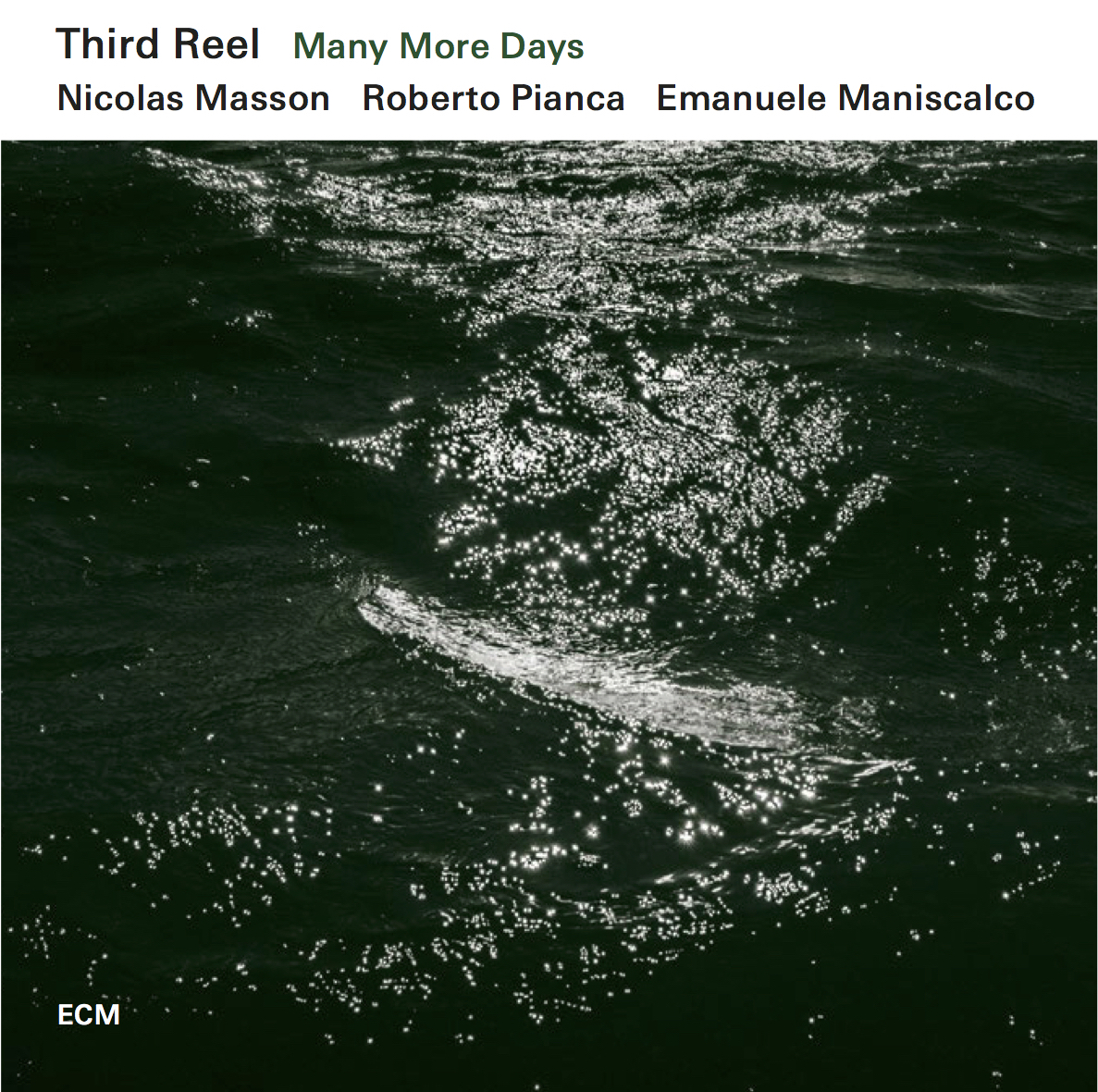
A l’écoute des ondes méditatives de « Many More Days » de Third Reel, on peine à croire que le saxophoniste et clarinettiste Nicolas Masson a fait ses débuts dans la musique à la guitare, en fan de heavy metal.

bg-body2En fait, c’est à un concert du groupe de hip hop hard funk allumé, Fishbone qu’il découvre le saxophone ténor du chanteur Angelo Moore. Fasciné, il décide d’en louer un. Quelques temps plus tard, adolescent en vacances sur les hauts de Montreux, il profite d’un billet gratuit offert à sa grand-mère pour se précipiter au concert du World Saxophone Quartet. Nous sommes en 1989 et les dés sont jetés. Notre homme se met alors à dévorer du jazz, de la musique classique du XXème siècle (« parce que beaucoup de jazzmen faisaient explicitement référence à cette musique ») et à jouer en autodidacte. En 1992, on le retrouve à New York sur les traces de Cecil Taylor, Fred Hopkins, Frank Lowe, Makanda Ken McIntyre. Il se sent à l’aise dans cette scène free. En 2000, après un séjour d’une année à New York, il monte sa formation américaine avec Russ Johnson (trompette), Eivind Opsvik (basse) and Mark Ferber (batterie).
En parallèle

Quinze ans plus tard, Nicolas Masson est une figure majeure de la scène jazz suisse à la tête de deux projets bien différents : Parallels avec Colin Vallon (piano), Patrice Moret (contrebasse), Lionel Friedli (batterie) qu’il qualifie lui-même de projet « enraciné et viscéral, structuré et incantatoire ». Et Third Reel avec le Tessinois Roberto Pianca (guitare) et l’Italien Emanuele Maniscalco (batterie) à l’approche climatique, aux références minimalistes.

Les choses sérieuses pour ce trio ont commencé à l’invitation de Paolo Keller qui organise des concerts de jazz pour la radio suisse italienne. Sans les en informer, ce dernier passe en douce l’enregistrement radio de l’ensemble à Manfred Eicher, big boss de ECM, qui apprécie. Le premier disque du groupe sera enregistré à la RSI après une brève rencontre d’une demi-heure avec Manfred Eicher. « Le studio dans lequel nous avons enregistré avait été conçu plutôt pour de la musique classique. L’acoustique était différente de ce à quoi nous étions habitués. On a dû s’adapter. Ce fut un traitement cathartique qui nous a amené vers plus d’intériorité. »

Deuxième enregistrement sur ECM

2431 B - copie 4(1)Aujourd’hui, « Many More Days » confirme que Third Reel a trouvé sa voix. Nicolas Masson y est très présent. Le ton de son saxophone ténor est grave, son style épuré, essentiel, en connexion subtile avec ce qui l’entoure. Batterie et guitare se meuvent à l’unisson. Les ambiances se concentrent et se diluent comme une étendue d’eau qui afflue et reflue, à l’image de la pochette du disque. Souvent construit autour d’une ou deux phrases musicales, la liberté reste le dénominateur commun de ces trois instrumentistes. « White » renvoie à l’univers du pianiste japonais Masabumi Kikuchi. « J’ai composé ce thème chez moi face à une fenêtre à travers laquelle je voyais les arbres enneigés. Ce morceau est un reflet de ce que je ressens à propos de cette musique. C’est un titre contemplatif, à la fois fragile et brut ».

Quant au morceau-titre « Many More Days », il est écoutable sur le player de ECM.

 « Ecrire un minimum pour improviser au maximum »

15082014-Foto 1-3Sur la scène du Sud des Alpes le 21 mai 2015, les trois comparses sont rejoints par le contrebassiste Thomas Morgan (connu entre autres pour son travail avec Paul Motian) et c’est comme si on avait brassé les cartes et que la musique de Third Reel était redistribuée. «Nos compositions sont très ouvertes, conçues pour être réinventées à chaque concert. Avec Thomas Morgan, cela a rendu les choses encore plus créatives puisqu’il considère que les instruments n’ont pas de rôle déterminé ». La texture musicale de Third Reel est la même, mais le jeu d’interactions, l’instinct, la transcendance, la personnalité des uns et des autres s’affirment plus concrètement. Avec sa clarinette, Nicolas Masson semble explorer les sons « J’ai beaucoup plus travaillé le saxophone que la clarinette. Du coup, j’ai une approche plus archaïque de cet instrument, avec moins d’automatisme. C’est plus naïf et, dans un sens, plus libre. »

Ecoutez le morceau “Many More Days” sur le player de ECM!

Klaus Johann Grobe an der Bad Bonn Kilbi 2015

Ihr Label ist in den USA beheimatet, und die Bühnen, die sie bespielen, befinden sich nicht selten in England oder im angrenzenden Euroland – so spielten sie eben am Entdeckerfestival The Great Escape in Brighton. Hierzulande blieben Sevi Landolt und Dani Bachmann lange Zeit unbehelligt, was wohl auch mit dem Namen zusammenhängt, den sich die beiden gegeben haben. Klaus Johann Grobe lautet dieser und unter diesem Namen fabrizieren sie eine analoge Musik, die repetitiv und doch nervös getaktet ist.

kjg

Im vergangenen Jahr erschien ihr Album «Im Sinne der Zeit», das in Winterthur aufgenommen wurde und seither eigentümliche Runden dreht. Krautrock, Soul und heiss-kühle Tropicália: all das sind Elemente, die auf dieser Platte echohaft und psychedelisch anklingen. Es ist eine retrofuturistische Tonspur, die aus Orgel, Bass, Schlagzeug und verhallten Stimmen gebaut ist und die perfekt in eine popmusikalische Gegenwart passt, in der oftmals nicht mehr genau ausgemacht werden kann, wo der Song aufhört und der Track beginnt und was Vergangenheit, Zukunft oder das Jetzt eigentlich sind.

[youtube https://www.youtube.com/watch?v=wJoh236m5RU&w=640&h=360]

«Die Zeit, sie steht still // der Kamin qualmt vor sich hin und wir sind auf der Reise», singen Klaus Johann Grobe im kosmisch-melancholischen «Schlaufen der Zukunft», und kommen zum Schluss: «Wir sind noch nicht am Ziel.» Dass das Ziel noch nicht erreicht ist, dokumentiert auch die Wiederveröffentlichung ihrer namenlosen EP aus dem Jahr 2013 auf dem englischen Label Salvation Records – und ein eindrücklicher Tourplan, der sie quer durch Europa und glücklicherweise auch an die Bad Bonn Kilbi führt.

[youtube https://www.youtube.com/watch?v=Yvw-5DI0TZM&w=640&h=360]

28.05. Düdingen, Bad Bonn Kilbi
11.07. Lausanne, Festival De La Cité,
21.07. Nyon, Paléo Festival

Alle Daten der Tournee, die Klaus Johann Grobe auch nach Deutschland, Luxemburg, Spanien, Frankreich und Holland führt, sind hier notiert.

The beat of Swiss electro pop is TRUE

true_0070-5

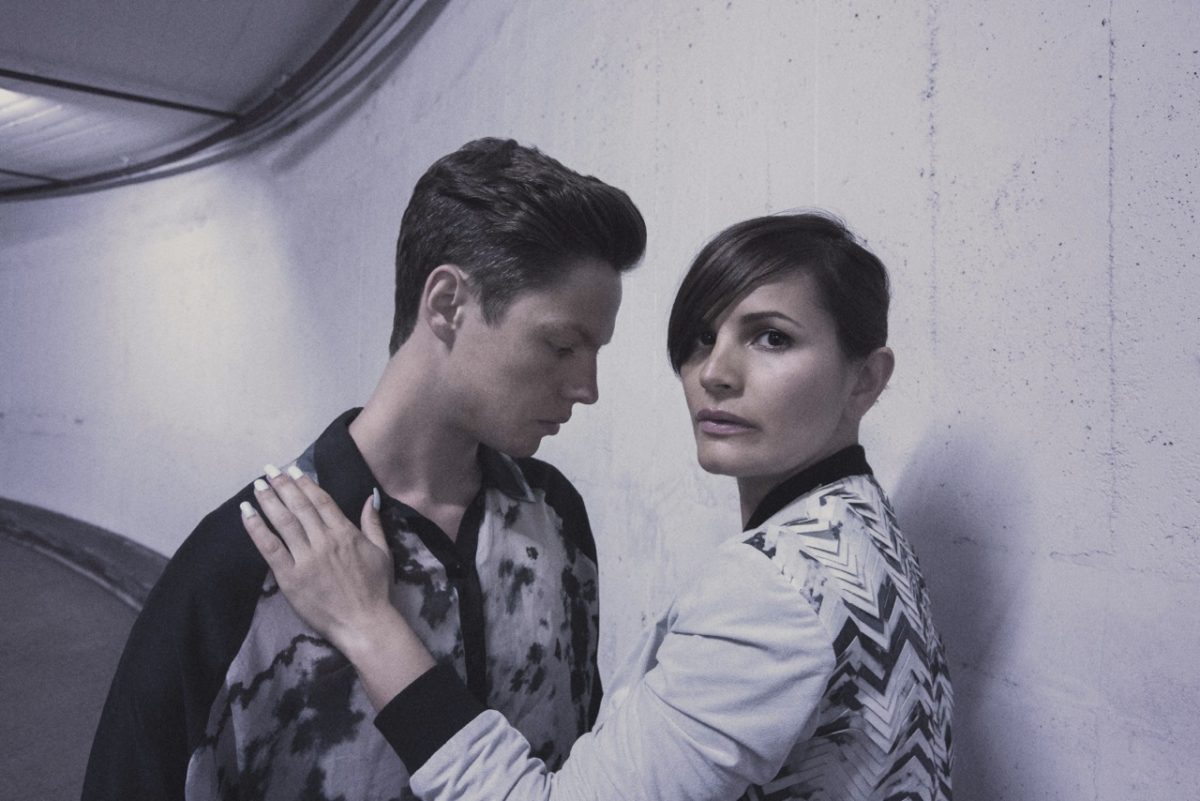
Flying the flag for Swiss indie electro pop, TRUE are highly creative Bern-based duo formed by Daniela Sarda on vocals & keys and Rico Baumann on keys, drums, drum machines & sound design. Emerging out of the jazz scene and having cut their teeth on numerous musical projects, the duo came together just over two years ago with the aim of putting their brand of sleek, elegantly-produced synth beats on the European electronica map.

Their sound is deliciously enveloping

True to their aim, the duo have already gained quite a reputation for their sultry, downbeat singles and EPs which are always accompanied by exquisitely made art-house videos directed by film duo Nicole Pfister and Kapuly Dietrich. Their sound is deliciously enveloping due to many strong ingredients: Daniela’s rich sultry voice very apt at carrying emotion, haunting synth arrangements and sparse, compelling beats. As Rico explains, “We like songs that you could play on a guitar or piano, and we put it into an electronic context”. Singles like ‘What I’ve Lost’ and ‘Colors of my Estimation’ are late-night slow-burners that cast shadows on the musical landscape. The lyrics are full of bitter-sweet introspection which hint at the origins of the groups name – “a commitment to unadulterated truth”.

A collectable item in a precious series

Visually, each video and photograph is a studied performance in itself. Not only are True’s videos filmed with a fully live rendition of the song, but each clip has its own particular style, colour and tone, almost as if it were a collectable item in a precious series. The quirky, upbeat ‘Vertyko’ is a seamless take of Japanese 80s-style choreography, blueish hues, mixing up the retro with the futuristic. The timbre of ‘Colors of my Estimation’ is sombre and monochrome to match the moody beats whereas ‘What I’ve lost’ comes at you with dazzlingly bright lights, white attire and a sharp, bouncy rhythm.

Championed regularly by BBC Radio 1 and 6 Music, the duo can be seen at the prestigious M4 festival on the showcase stage at the Moods club in Zurich on 28th March. Keep an eye on this classy Swiss synth pop outfit, released on Mouthwatering Records out of Bern, their name is and their aim is TRUE.

Interesting additional reading: an in depth article entitled “Switzerland: in the creative Spirit” on The Formant blog where TRUEKamikazeSnow GhostsLen Sander among other artists from the Swiss electronic scene are well represented.


Leo Tardin: Mr Gemini, the man with two personalities

IMG_1043

In the run up to his performance at Chateau de Chillon for Montreux Jazz on 13th July, Leo Tardin talks about his live project with Turkish percussionist Burhan Oçal, his latest solo LP Dawnscape and his band Grand Pianoramax   

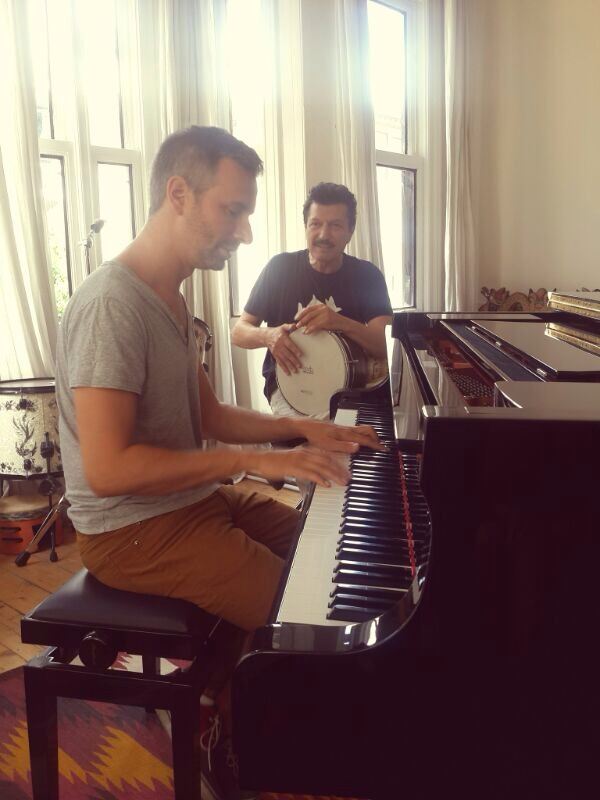
Leo Tardin I got introduced to Burhan Oçal by the drummer of Grand Pianoramax, Dom Burkhalter, who’s a good friend of his. Burhan had been trying to get the band to play with him in Istanbul and we finally managed to organise it this time last year, so that’s how I first met him. Apart from being an amazing percussionist, he’s also an actor who often plays the villain in Turkish B movies. He’s a real character, full of mad stories, really quite unique. After the gig, the Montreux Jazz organisers and producers of Dawnscape heard that we’d played with him in Turkey and asked if we’d like to perform togther in Switzerland. It’s actually very similar to the early stages of Grand Pianoramx where it was only piano and percussion. It’s pretty easy to integrate percussion with piano because you can look at the piano as a percussion instrument that can afford space and freedom.

How does your album lend itself to being played in a duo format?

Leo Tardin Let’s see! We’re going to try this out in Istanbul for the first time. I know Burhan often plays as a duo with other pianists, sometimes even classical, I’m sure he’s going to blend in pretty easily into my music because it’s fairly rhythmical. There will be pieces where it’s only going to be me or bits with just him, then we’ll meet together on some others. I’m very flexible and confident that it will be a success.

Has the Dawnscape album done what you wanted it to do?

Leo Tardin It’s too early to reflect on this but it has definitely opened a lot of doors. One of the reasons for this is that it’s very flexible and light compared to a band that needs a lot of equipment, sound system, backline, hotel rooms and plane tickets. With Dawnscape live gigs can be organised fast and easily. This kind of freedom and flexibility is one of the great things about this project. Also the fact that this LP was co-produced by Montreux Jazz is helping a lot. It’s bringing a lot of credibility and making people take this project seriously. This is a very new project that needs to be established after having made a name for myself with Grand Pianoramax.


Leo Tardin
Leo Tardin
What was the reaction to you bringing out this new solo project that’s so different from Grand Pianoramax?

Leo Tardin It took a while for people around me to accept this, not just the other band members who worried that it might signify me wanting to deprioritise the group, but also the music journalists. I was surprised by the press’s reaction, it was at times very extreme – they either loved it or hated it. The music in this solo project is less radical than with Grand Pianoramax, but the reaction to the music has been more radical.  I feel that the journalists were comfortable to put me in a box as the piano guy who does hip hop, so when I came out with this romantic, dreamy, poetic stuff they were confused. Not all of them appreciated or understood the move. I was pleased when a few realised that it was something that took guts to do. But I’m happier this way because there are some things I can finally do with my solo project that I couldn’t do with the group, so I’m more relaxed in the context of the group and it brings a better vibe to GP as well.

When and what might we expect from Grand Pianoramax in the imminent future?

Leo Tardin We’re going to play the Paléo Festival, followed by Cosmojazz which is a really nice festival in Chamonix, open air at the foot of a dam. Then on the days off we’re going to work on some new music, a new EP that should be out in the first half of next year. The last LP, “Till There’s Nothing Left”, only came out a year and a half ago so it still has a bit of life in it, but we’re already working on new music and this has helped my band members realise that GP is as much a priority as my solo piano project.

 You are known as being a very polyvalent musician with different styles and projects. Do you agree?

Leo Tardin I’m not really doing so many different things, I’m just doing two VERY different things. but that’s about it. I think it has to do with my slightly schizophrenic personality. I can’t find one just project that covers the full spectrum of what touches me and the emotions I feel. That’s why I have these 2 very different projects. If you listen carefully you can hear some of my solo project in GP in some of the very emotional epic pieces, and little bits of GP in my solo project. I felt limited just sticking to one project, but I’d say that I’m more dual than polyvalent.

 Do you consider yourself a jazz pianist?

Leo Tardin That’s tricky. Calling me a ‘jazz pianist’ is a bit reductive and with GP we’re trying to get away from the jazz tag. We rarely play at any jazz festivals, (last year we played mostly rock festivals!) Jazz is where I came from but I don’t know how relevant it is today to what I do. When people ask me if I’m part of the Swiss jazz scene, I say I’m part of a group of musicians who are making noise and have some visibility outside of Switzerland, so in that regard I’m part of the Swiss music scene. The solo project has a few jazz overtones, but it’s far more influenced by classical, ambient and crossover music.  It could be the soundtrack to a movie. I want people to be inspired and travel in their minds when they listen to it. A lot of the pieces are very simple but with a rich emotional content that can reach people. Sometimes I find that jazz musicians are a little bit too focussed on what they can do with their instrument and rather than what they can make the audience feel.

Dawnscape is a co-production with the Fondation Montreux Jazz 2 & Balik Studios
Physical distribution by Irascible www.irascible.ch

Live dates:

13th July: Montreux Jazz Festival, duo w/ Burhan Öçal, performing Dawnscape: http://www.montreuxjazzfestival.com/fr/artist/leo-tardin
24th July: Paléo Nyon Festival w/ Grand Pianoramaxhttp://yeah.paleo.ch/fr/artist/grand-pianoramax
27th July: Cosmojazz Festival w/ Grand Pianoramaxhttp://cosmojazzfestival.com/fr/programme/artistes/grand-pianoramax
Autumn Swiss solo tour:
24th Sept: Eisenwerk, Frauenfeld
6th Oct: open lecture with students from CEC Emilie Gourd, Genève
11th Oct: Workshop EJMA, Lausanne
11th Oct: Ferme Asile, Sion
14th Oct: Rolex Learning Center, EPFL, Lausanne
25th Oct: AMR, Genève

Roman Nowka, Jazz Master à sa manière

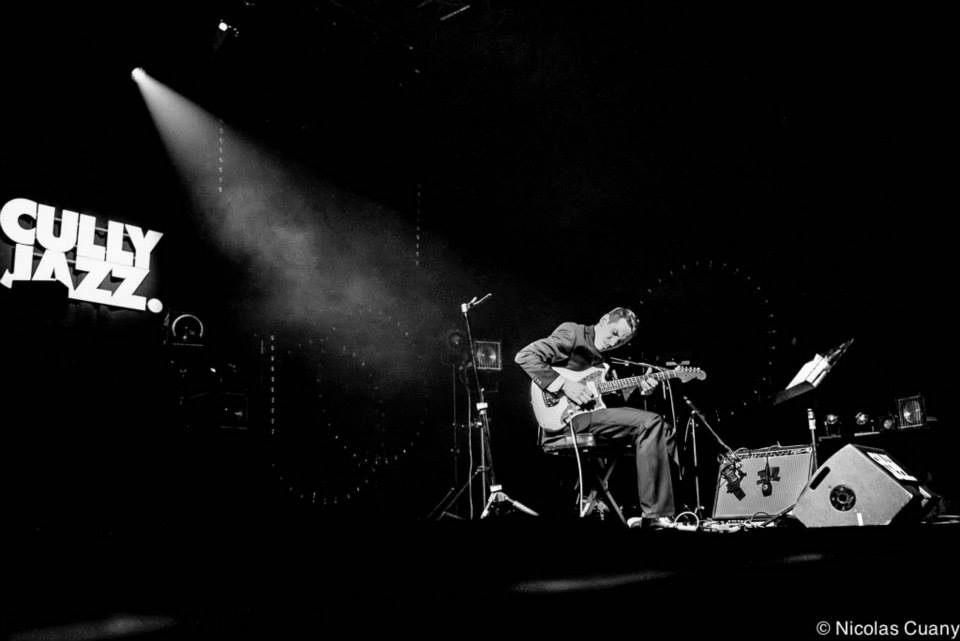
1907597_10152074424737712_93029093_nLa soirée « guitare » du CullyJazz Festival nous a révélé un magnifique musicien : avant Marc Ribot et Medeski Martin & Wood avec le guitariste de Wilco Nels Cline, jouait le jeune Biennois Roman Nowka, en solo.

On le savait alors bassiste dans le fameux Lucien Dubuis Trio, guère plus. Curiosité et impatience de voir une nouvelle figure sur cette belle grande scène, devant un parterre noir de monde. Tout sourire, accent fleuri en prime, Roman Nowka nous dira ensuite : « La musique, ça me plaît quand il y a de l’espace et que c’est fragile. » Nous étions donc tous au bon endroit.


“Il faut être présent, jouer ce qu’on aime, et ne pas avoir peur”

Nonchalant et jovial, il a entonné de petites ritournelles sympathiques, assez techniques et décalées, avant de nous happer dans un univers d’une belle intensité. Prendre le temps de bien rajuster son micro, de trouver ses mots pour dire peu mais bien, de modifier un réglage sans se presser. Un peu drolatique car « normalement on doit toujours montrer qu’on est fort ; mais moi ce qui m’intéresse c’est le concert : simple, joyeux, honnête. » Peu à peu le public s’est tu, avant de littéralement flotter avec lui, très attentif. « C’était prévu, je savais – enfin ! je ne savais pas si ça allait marcher –  mais c’est l’effet que je recherchais. »

En avril sortaient simultanément deux albums : un solo nommé Jazzmaster – « c’est juste parce que c’est le nom de la guitare Fender que j’utilise, elle était tellement cher ! c’est un peu nul comme nom » – mais aussi un très beau disque de reprise de Duke Ellington en trio, Do Da Ellington, avec Thobbias Schramm à la batterie et Samuel Kühn à la basse. Avant, il y a encore eu Me Myself and I en solo « parce que j’aime bien être seul avec ma guitare n’importe où, c’est comme ça que j’ai commencé. »

“J’écoutais à fond Michaël Jackson, David Hasselhof”

Boire un café avec Roman Nowka, c’est aussi parler pêle-mêle de souvenirs de la Californie où il a grandi, de son père guitariste classique, de sa mère vendeuse de sandwiches à Venice Beach, des thérapies d’Arthur Janov, de sa formation en haute école de musique et de son amour de la pop – « J’écoutais à fond Michaël Jackson, David Hasselhof, . Le jazz pas tellement en fait, à part Monk ou quelques trucs. »

Comme avec la poule et l’œuf, on ne sait jamais trop si c’est la candeur qui fait le grand musicien, ou l’inverse. Roman Nowka est de ces gens-là, qui donnent au monde une musique presque céleste. Il travaille aujourd’hui à un autre album solo, à sortir en 2015 probablement. Un bel artiste à surveiller, car « on s’améliore toujours ».

www.romannowka.com

Colin Vallon speaks about “Le Vent”

Colin Vallon © Petra Cvelbar“Le Vent” is Colin Vallon‘s second album for the prestigious label ECM. Listening to it, or to him speak, you might think he’s a bit soft – a gentle soul. There’s a distinct aesthetic to his playing, it’s mindful and sombre as if remembering a lost love. Interviewing him, I found an assured and fiery spirit; a pianist with a clear intelligence, driven to carving out his own, individual path.

“From the moment I could stand I tried to press down the keys”

Music was always around Vallon – when most families were arguing at Christmas, his was gathering at the ever-present piano, singing hymns and Gospel. “I loved the sound of the instrument, from the moment I could stand I tried to press down the keys”. Despite this, he quit piano at the age of 12 because he could no longer play by ear and reading music frustrated him. Then two things happened: his uncle taught him some blues chords that he could play, “Without paper in front of me” and he saw a solo concert of Keith Jarrett, “It was really amazing to hear that.”

He returned to music lessons at 14 and began composing. By 19 he was at the University of Arts in Bern and had his own trio. Here he found the American theory of copying the standards until you could imitate them too restrictive. “But this was also very good for me,” he says, “because it meant that if I wanted to do something of my own then I had to do it really on my own and to be more didactic in terms of composing. I was really independent.”

“It’s a music that has something very raw about it”

However the composition tutor, Frank Sikora, inspired Colin and for his class he recorded, “A huge fence or gate that was screeching, making harmonics and noises.” By 2002 he developed this interest in strange sounds with prepared piano techniques and had begun an enduring curiosity for Eastern European music. “It has something very raw about it and, like this fence maybe [that he’d recorded], it’s a very different sound and it’s something that caught me immediately.” He joined a band with the saxophonist Sascha Schönhaus playing Balkan music and discovered one of his “desert island records”, Le Mystère des Voix Bulgares.

A journey in Albania

Meeting Elina Duni provided fertile creative soil as Albanian music opened up to him and the Trio’s third album, (their first for ECM) was entitled Rruga, the word for “path” or “journey” in Albanian. It was critically acclaimed, so did this make it hard to follow? “There was a bit of pressure,” admits Colin, “not from the label, but from myself..it’s hard to come with a second album…and changing the drummer [from Rohrer to Sartorius], but in the end I’m really happy with the results.”

“There are a few goodbyes, a tribute to Asita Hamidi”

Colin found his material came naturally as he dealt with several deaths and saw a suicide jump from a bridge. “Le Vent was an elegiac album, a lot to do with death…and the passing of time and life. It sounds really dark but it’s not just about that…There are a few goodbyes, a tribute to Asita Hamidi [the harp player] who died…things that are a part of life but I needed to express somehow.” It’s Vallon’s careful listening for, then stating his own truth, that makes him a compelling artist.

Colin Vallon “Le Vent” (ECM)

On tour:

26/04/14 Jazzahead, Bremen DE
27/04/14 A-Trane, Berlin DE
29/04/14 Mokka, Thun CH
30/04/14 Bee-Flat, Bern CH
03/05/14 L’Azimut, Estavayer-Le-Lac, CH
13/05/14 Mokka, Thun CH
17/05/14 AMR Genève, CH
27/05/14 Mokka, Thun CH
01/06/14 Green Hours Festival, Bucarest RO
07/06/14 Paris Jazz Festival, Paris FR