Label Suisse : its a global thing…

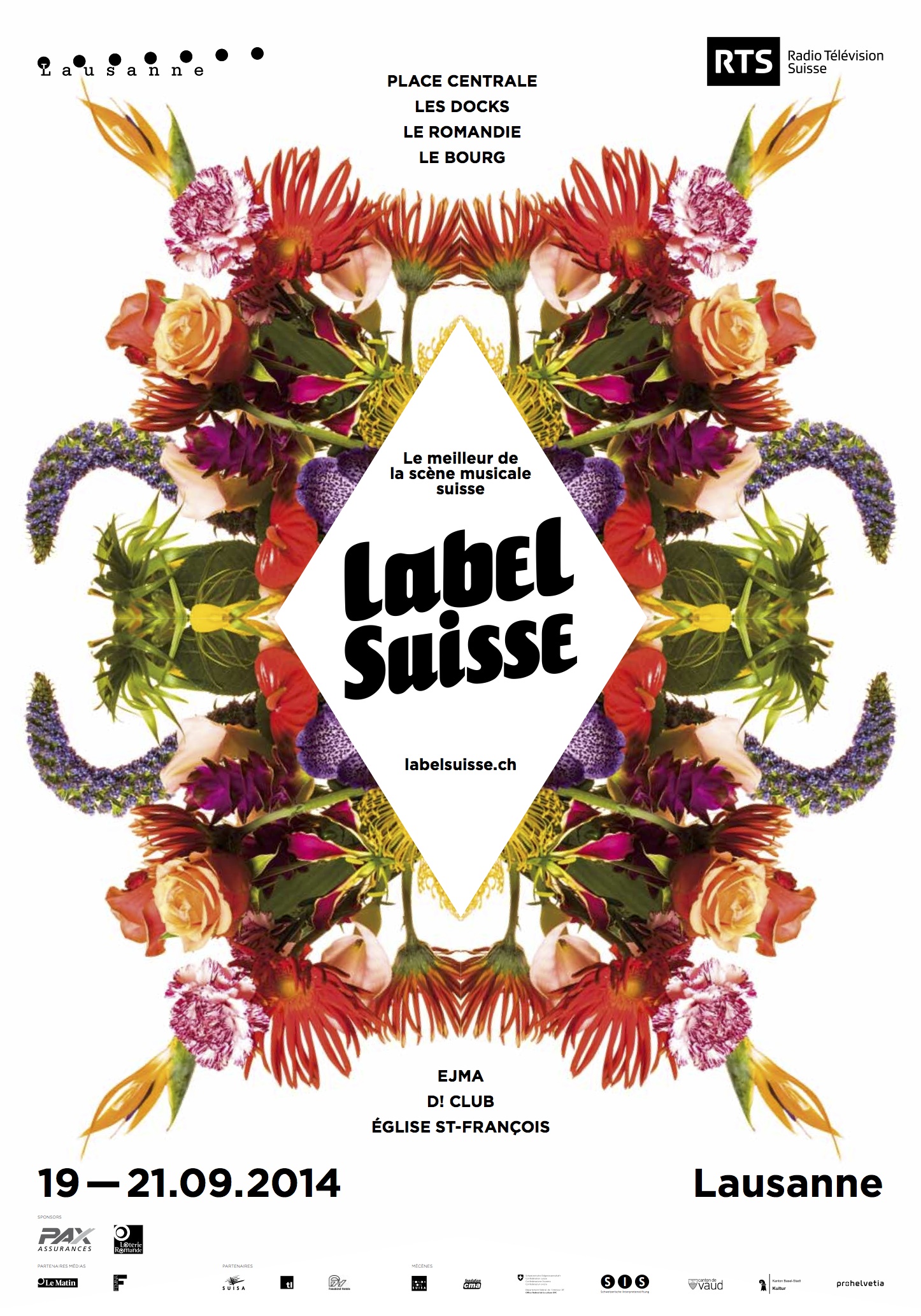
affiches_basse_def_avec_logos” Ce qui ne tue pas rend plus fort.” Fin 2011, lorsque la Radio Télévision Suisse annonçait son désengagement financier de Label Suisse, le festival bisannuel était donné pour mort. Mais les acteurs musicaux de la scène romande se sont mobilisés : une association est née et l’édition 2012 a pu être assurée.

Grand Prix suisse de musique

En 2014, Label Suisse s’impose désormais comme un vrai rendez-vous multigenres, interrégional et multimédia puisque la plupart des concerts sont rediffusés en direct ou en différé sur les ondes de la RTS. C’est en son sein qu’aura d’ailleurs lieu la première cérémonie de remise du Grand Prix suisse de musique le 19 septembre (100’000 francs au vainqueur, 25’000 francs à chacun des quatorze nominés).

Un nom à réinventer

Julien Gross, président de l’association, explique : « En 2012, nous avons hérité d’un nom, mais tout était à réinventer au niveau de la structure et de l’organisation. Nous avons choisi une approche globale en renforçant l’ouverture vers les musiques jazz et classique. Nous avons également voulu nous affirmer comme un festival national, avec des concerts rediffusés sur les trois chaînes radio romande, suisse-allemande et tessinoise ».

2014

De fait la programmation de l’édition 2014 brille de tous ses feux avec des concerts de jazz à l’Auditorium et l’Atrium de l’EJMA, des concerts classiques à l’Eglise Saint-François ainsi que de la pop, du rock, des musiques électroniques et du hip hop dans les principaux clubs de la ville. Avec une belle brochette de groupes suisses-allemands et tessinois, Label Suisse porte un coup de plus dans une barrière de roesti qui ressemble de plus en plus à un Emmental*…

On ne peut donc que chaudement recommander aux spectateurs lausannois de réserver leur week-end des 19-20 et 21 septembre et aux autres Helvètes de brancher leur poste radio.

Impossible de citer tout le monde, mais voici quelques propositions – totalement subjectives -pour chacune des soirées du festival :

Les extrémistes de Puts Marie et Camilla Sparksss au Bourg le vendredi 19 septembre dès 20 :00

[youtube=https://www.youtube.com/watch?v=wUCpxjWLL_M]

Du très bon hip hop avec Murmures Barbares, Tweek, Rootwords aux Docks le samedi 20 septembre

Du prestige avec la création “Avant l’Aube” Erik Truffaz, Franz Treichler et l’OCL dimanche 21 septembre, en fin de matinée, sur la Place Centrale.

Pour avoir le détail de tous les groupes, rendez-vous sur le site Internet du festival

A vos marques, prêts…

*Je précise aux lecteurs français de ce blog que c’est bien notre Emmental national qui est un fromage à trous et non le Gruyère comme vous continuez de le prétendre…
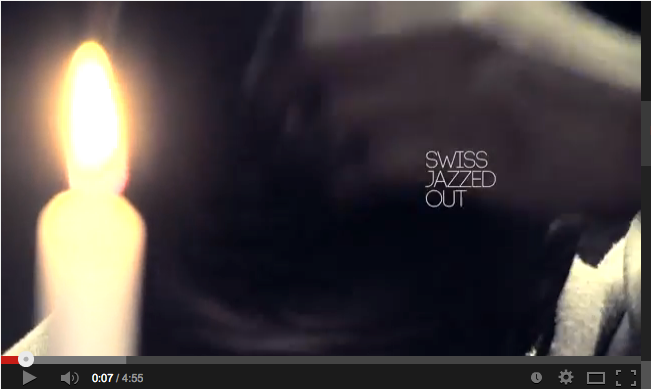
Swiss Jazzed Out: Grand Pianoramax à la bougie

Swiss_Jazzed_Out__Grand_Pianoramax_-_YouTubeMathieu Mastin, concepteur et réalisateur de la série de mini-documentaires Jazzed Out a posé ses valises en Suisse pour y orchestrer des sessions live improvisées.
Swiss Vibes vous propose de (re)découvrir ces quelques minutes de musique hors norme tout au long de l’été.

A Lausanne,  dans les anciennes écuries de Mont-Repos (Lausanne comptait près de 1000 chevaux il y a siècle seulement), Grand Pianoramax, le plus électronique des combos de jazz helvétique joue acoustique et aux chandelles!

Swiss Jazzed Out: Lucien Dubuis à l’usine

Swiss_Jazzed_Out__Lucien_Dubuis_-_YouTubeMathieu Mastin, concepteur et réalisateur de la série de mini-documentaires Jazzed Out a posé ses valises en Suisse pour y orchestrer des sessions live improvisées.Swiss Vibes vous propose de (re)découvrir ces quelques minutes de musique hors norme tout au long de l’été.

A Bienne, Lucien Dubuis a emmené les réalisateurs das une fabrique de seringues.

Swiss Jazzed Out: Elina Duni & Colin Vallon

Swiss_Jazzed_Out__Elina_Duni___Colin_Vallon_-_YouTubeMathieu Mastin, concepteur et réalisateur de la série de mini-documentaires Jazzed Out a posé ses valises en Suisse pour y orchestrer des sessions live improvisées.
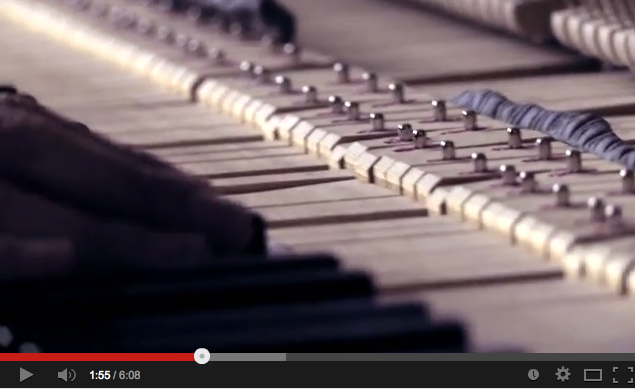
Swiss Vibes vous propose de (re)découvrir ces quelques minutes de musique hors norme tout au long de l’été. Après le duo lausannois de Stade, le piano suspendu de Malcolm Braff, la balade continue dans les entrailles du club bee-flat de Berne avec la chanteuse Elina Duni et le pianiste Colin Vallon.

Swiss Jazzed Out: Malcolm Braff dans ses montagnes

Swiss_Jazzed_Out__Malcolm_Braff_-_YouTubeMathieu Mastin, concepteur et réalisateur de la série de mini-documentaires Jazzed Out a posé ses valises en Suisse. Il y a rencontré Suzanne Abbuelh & Matthieu Michel, Plaistow, Rusconi, Grand Pianoramax, Malcolm Braff, Erik Truffaz, Werner Hasler & Jan Galega Brönnimann, Lucien Dubuis, Pierre Favre, Nik Bärtsch et Stade.

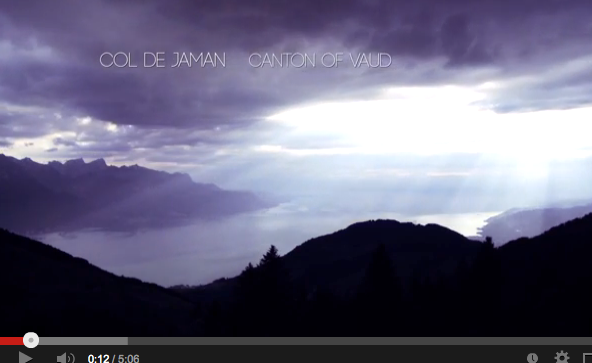
Swiss Vibes vous propose de (re)découvrir ces quelques minutes de musique hors norme tout au long de l’été. Après le duo lausannois de Stade, la balade continue et retrouve le piano de Malcolm Braff suspendu à la Dent de Jaman.

Swiss Jazzed Out: La malle aux trésors de Stade

Swiss_Jazzed_Out__Stade_-_YouTube

Depuis 2010, la chaîne de télévision française Mezzo a rendu célèbre une série de mini-vidéo intitulée Jazzed Out. Leur auteur, Mathieu Mastin, a eu une idée aussi simple que surprenante: donner un aperçu d’une scène ( de New York à Oslo), en filmant une dizaine de musiciens en extérieur, dans des lieux inhabituels. Une expérience inédite à mi-chemin entre le mini-documentaire musical et le clip.

En 2012, Mathieu Mastin a sillonné la Suisse à la poursuite de Suzanne Abbuelh & Matthieu Michel, Plaistow, Rusconi, Grand Pianoramax, Malcolm Braff, Erik Truffaz, Werner Hasler & Jan Galega Brönnimann, Lucien Dubuis, Pierre Favre, Nik Bärtsch et Stade.

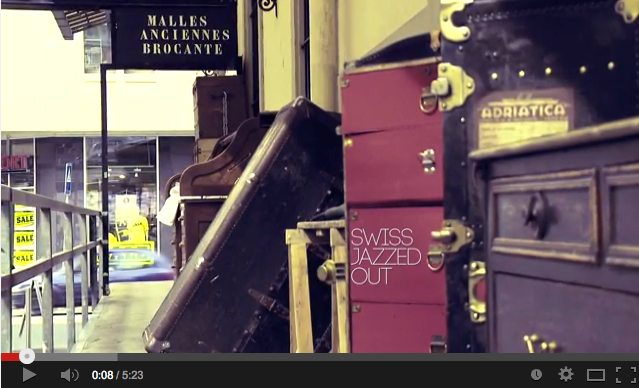
Swiss Vibes vous propose de (re)découvrir ces quelques minutes de musique hors norme tout au long de l’été. La balade commence aujourd’hui avec le duo lausannois Stade, aux prises avec sa malle aux trésors.

Leo Tardin: Mr Gemini, the man with two personalities

IMG_1043

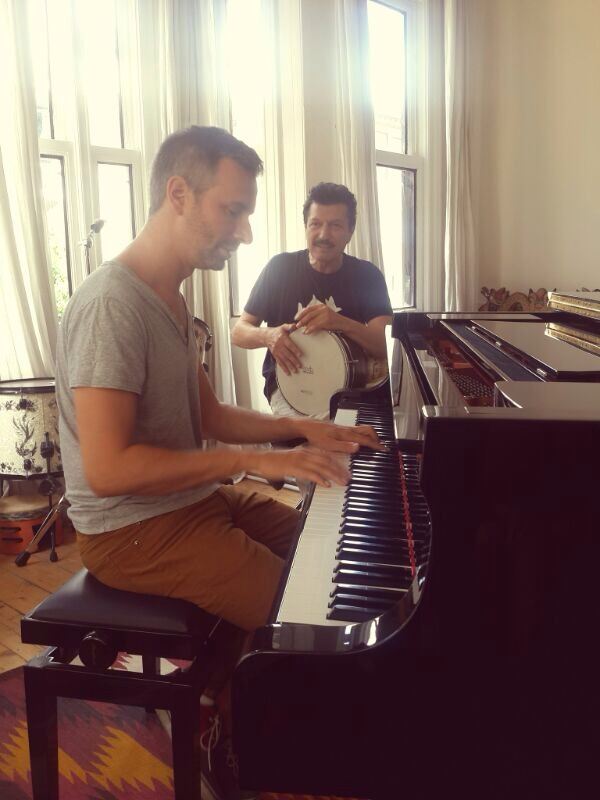
In the run up to his performance at Chateau de Chillon for Montreux Jazz on 13th July, Leo Tardin talks about his live project with Turkish percussionist Burhan Oçal, his latest solo LP Dawnscape and his band Grand Pianoramax   

Leo Tardin I got introduced to Burhan Oçal by the drummer of Grand Pianoramax, Dom Burkhalter, who’s a good friend of his. Burhan had been trying to get the band to play with him in Istanbul and we finally managed to organise it this time last year, so that’s how I first met him. Apart from being an amazing percussionist, he’s also an actor who often plays the villain in Turkish B movies. He’s a real character, full of mad stories, really quite unique. After the gig, the Montreux Jazz organisers and producers of Dawnscape heard that we’d played with him in Turkey and asked if we’d like to perform togther in Switzerland. It’s actually very similar to the early stages of Grand Pianoramx where it was only piano and percussion. It’s pretty easy to integrate percussion with piano because you can look at the piano as a percussion instrument that can afford space and freedom.

How does your album lend itself to being played in a duo format?

Leo Tardin Let’s see! We’re going to try this out in Istanbul for the first time. I know Burhan often plays as a duo with other pianists, sometimes even classical, I’m sure he’s going to blend in pretty easily into my music because it’s fairly rhythmical. There will be pieces where it’s only going to be me or bits with just him, then we’ll meet together on some others. I’m very flexible and confident that it will be a success.

Has the Dawnscape album done what you wanted it to do?

Leo Tardin It’s too early to reflect on this but it has definitely opened a lot of doors. One of the reasons for this is that it’s very flexible and light compared to a band that needs a lot of equipment, sound system, backline, hotel rooms and plane tickets. With Dawnscape live gigs can be organised fast and easily. This kind of freedom and flexibility is one of the great things about this project. Also the fact that this LP was co-produced by Montreux Jazz is helping a lot. It’s bringing a lot of credibility and making people take this project seriously. This is a very new project that needs to be established after having made a name for myself with Grand Pianoramax.


Leo Tardin
Leo Tardin
What was the reaction to you bringing out this new solo project that’s so different from Grand Pianoramax?

Leo Tardin It took a while for people around me to accept this, not just the other band members who worried that it might signify me wanting to deprioritise the group, but also the music journalists. I was surprised by the press’s reaction, it was at times very extreme – they either loved it or hated it. The music in this solo project is less radical than with Grand Pianoramax, but the reaction to the music has been more radical.  I feel that the journalists were comfortable to put me in a box as the piano guy who does hip hop, so when I came out with this romantic, dreamy, poetic stuff they were confused. Not all of them appreciated or understood the move. I was pleased when a few realised that it was something that took guts to do. But I’m happier this way because there are some things I can finally do with my solo project that I couldn’t do with the group, so I’m more relaxed in the context of the group and it brings a better vibe to GP as well.

When and what might we expect from Grand Pianoramax in the imminent future?

Leo Tardin We’re going to play the Paléo Festival, followed by Cosmojazz which is a really nice festival in Chamonix, open air at the foot of a dam. Then on the days off we’re going to work on some new music, a new EP that should be out in the first half of next year. The last LP, “Till There’s Nothing Left”, only came out a year and a half ago so it still has a bit of life in it, but we’re already working on new music and this has helped my band members realise that GP is as much a priority as my solo piano project.

 You are known as being a very polyvalent musician with different styles and projects. Do you agree?

Leo Tardin I’m not really doing so many different things, I’m just doing two VERY different things. but that’s about it. I think it has to do with my slightly schizophrenic personality. I can’t find one just project that covers the full spectrum of what touches me and the emotions I feel. That’s why I have these 2 very different projects. If you listen carefully you can hear some of my solo project in GP in some of the very emotional epic pieces, and little bits of GP in my solo project. I felt limited just sticking to one project, but I’d say that I’m more dual than polyvalent.

 Do you consider yourself a jazz pianist?

Leo Tardin That’s tricky. Calling me a ‘jazz pianist’ is a bit reductive and with GP we’re trying to get away from the jazz tag. We rarely play at any jazz festivals, (last year we played mostly rock festivals!) Jazz is where I came from but I don’t know how relevant it is today to what I do. When people ask me if I’m part of the Swiss jazz scene, I say I’m part of a group of musicians who are making noise and have some visibility outside of Switzerland, so in that regard I’m part of the Swiss music scene. The solo project has a few jazz overtones, but it’s far more influenced by classical, ambient and crossover music.  It could be the soundtrack to a movie. I want people to be inspired and travel in their minds when they listen to it. A lot of the pieces are very simple but with a rich emotional content that can reach people. Sometimes I find that jazz musicians are a little bit too focussed on what they can do with their instrument and rather than what they can make the audience feel.

Dawnscape is a co-production with the Fondation Montreux Jazz 2 & Balik Studios
Physical distribution by Irascible www.irascible.ch

Live dates:

13th July: Montreux Jazz Festival, duo w/ Burhan Öçal, performing Dawnscape: http://www.montreuxjazzfestival.com/fr/artist/leo-tardin
24th July: Paléo Nyon Festival w/ Grand Pianoramaxhttp://yeah.paleo.ch/fr/artist/grand-pianoramax
27th July: Cosmojazz Festival w/ Grand Pianoramaxhttp://cosmojazzfestival.com/fr/programme/artistes/grand-pianoramax
Autumn Swiss solo tour:
24th Sept: Eisenwerk, Frauenfeld
6th Oct: open lecture with students from CEC Emilie Gourd, Genève
11th Oct: Workshop EJMA, Lausanne
11th Oct: Ferme Asile, Sion
14th Oct: Rolex Learning Center, EPFL, Lausanne
25th Oct: AMR, Genève

Montreux Jazz Festival: l’art du solo

Le batteur Julian Sartorius et le pianiste Marc Perrenoud confronteront leur art du solo au Château de Chillon le 11 juillet. Tous deux ont accepté de livrer à  Swiss Vibes quelques-uns de leurs secrets de fabrication.
@Reto Camenisch
@Reto Camenisch

Pour le plus grand malheur de ses parents et pour le plus grand bonheur de nos oreilles, Julian Sartorius a la fâcheuse habitude de taper sur tout ce qui l’entoure depuis qu’il est en âge de marcher. Quelque trente ans plus tard, il a fait de cette pulsion profonde son fonds de commerce. Pendant toute une année, il s’est astreint à la délicate mission de réaliser un beat par jour où qu’il soit. D’abord publié sur son blog, son « beat diary » est sorti l’an dernier sous la forme de 12 vinyles accompagnés d’un livre de photos. Depuis l’homme à la batterie écume les scènes les plus diverses. Il joue au milieu du public au Festival Onze plus, tape sur les murs du Musée Rietberg lors de l’inauguration d’un nouveau pavillon et se risque sur la grande scène du Cully Jazz Festival.

 « Le plus important c’est l’espace »

Le 11 juillet prochain, il investira un haut lieu historique, le Château de Chillon, dans le cadre du Montreux Jazz Festival. «  Le plus important c’est l’espace », explique Julian Sartorius au bout du fil alors qu’il attend un avion pour Copenhague. Le jour du concert, je vais tester l’acoustique de la salle avec ma batterie. Selon la façon dont elle sonne, je prépare des accessoires différents, acoustiques ou non ». Dans sa tête les plans des morceaux s’enchaînent, mais la prestation n’est jamais deux fois pareille. L’homme-orchestre peut à tout moment changer de direction, imprimer d’autres couleurs, d’autres harmonies à son set.

« C’est juste toi et le public »

Après s’être fait connaître comme batteur de Sophie Hunger, Julian Sartorius est devenu un amoureux de liberté d’improvisation, même si et surtout si ce travail est plus accaparant. « Quand tu accompagnes quelqu’un, tu peux compter sur l’autre ou le suivre, quand tu es seul, c’est juste toi et le public.». Julian Sartorius propose également dans le cadre du Montreux Jazz festival un duo « totalement improvisé » avec Benoît Delbecq (Montreux Palace, mardi 8 juillet).

 « Je préfère travailler sur les mouvements »

02 Marc SoloForcément l’exercice du piano solo est plus connu que celui de la batterie solo. Marc Perrenoud le conjugue pourtant à sa manière. « Plutôt que de travailler en improvisant sur un base de 32 mesures comme cela se fait dans le jazz, je préfère travailler sur plusieurs mouvements, à l’instar dans la musique classique ».
Solo de batterie versus solo de piano

Pour pousser l’exercice plus loin, le pianiste, dont le dernier CD en trio « Vestry Lamento » a séduit les critiques de New York à Paris, aime prendre pour point de départ une technique ou une texture. Il peut ainsi choisir d’improviser à partir d’octaves ou s’amuser à retranscrire au piano un solo de batterie. A chaque son – la grosse caisse, la caisse claire, les cymbales – il associe des notes, créant ainsi d’autres formes rythmiques sur son instrument. Le but étant bien sûr de prendre un maximum de risques, de chercher à ce que le résultat soit à chaque fois différent.

 « Ne pas se laisser dépasser par ce qui est entrain de se passer »

« Lorsque tu joues en groupe, tu cherches d’abord la résonnance, l’osmose. Le groupe trouve alors sa propre énergie et se met à fonctionner de façon autonome, un peu comme une meute. En solo, tu dois entrer en connexion avec toi-même sans aller trop loin. Tu ne dois pas te laisser dépasser par ce qui est entrain de se passer, garder un temps d’avance, garder le contact avec le public. Tu dois être en permanence ultra-concentré. Il ne peut y avoir que très peu de déchets. »

Les pierres millénaires du Château de Chillon et la féérie du lac au crépuscule ne pourront qu’inspirer la batterie insolite de Julian Sartorius et le piano expansif de Marc Perrenoud. Ne ratez pas ce moment d’exception !

Julian Sartorius solo/ Marc Perrenoud Solo, Montreux Jazz Festival, vendredi 11 juillet, 21 h.

Montreux Jazz goes Switzerland

« Claude Nobs aimait comparer le jazz à un bouquet de fleurs. Plus les fleurs rassemblées étaient d’origines et de couleurs différentes, plus il appréciait le bouquet. Le jazz suisse est lui aussi particulièrement intéressant parce qu’il s’abreuve à de multiples sources culturelles». Stéphanie-Aloysa Moretti (directrice artistique de l’Artists Fondation du Montreux Jazz Festival)


L’édition 2014 du Montreux Jazz Festival fait la part belle aux Helvètes. Ouverture des festivités avec Leonzo Cherubini  et sa composition « Flora » pour trois batteries et trois percussions  (dimanche 6 juillet à 17 :00) et clôture avec « Ivresse » de Jérôme Berney, une création mêlant classique et jazz (vendredi 18 juillet à 17 :00). Le pianiste François Lindemann, qui avait joué en son temps à Montreux, est également de retour en quartet (mardi 8 juillet en première partie de Tigran Hamasyan). Quant à Julian Sartorius, il improvisera en duo avec le pianiste Parisien Benoît Delbecq (mardi 8 juillet, 21 :00).

Un week-end de folie dans les différents espaces du Festival
Leo Tardin
Leo Tardin
Marc Perrenoud
Marc Perrenoud

Du 11 au 13 juillet, les artistes suisses investissent la plupart des salles du Montreux Jazz Festival. Jugez plutôt: Le 11 juillet, Julian Sartorius – encore lui, mais en solo cette fois – tapera sur tout ce qui bouge dans le somptueux décor du Château de Chillon, victime du succès de son « beat diary » (un coffret de 12 vinyles qui compte 365 beats, soit 1 beat composé chaque jour pendant une année).


Le même soir, Marc Perrenoud fera aussi voler en solo les touches de son piano. Un coucher de soleil musical inédit et intriguant en perspective au Château de Chillon.

Et pour ceux qui sont doués du don d’ubiquité, signalons qu’au même moment, les inclassables Plaistow se produiront au Club juste avant la pianiste japonaise Hiromi.

Quant au maestro Stephan Eicher, il se voit offrir les honneurs de l’Auditorium Stravinski le 12 juillet. Enfin last but not least, Leo Tardin rencontre le percussionniste turco-suisse Burhan Oçal le 13 juillet au Château de Chillon. Nous y reviendrons.

Ne manquez surtout pas de découvrir ou de re-découvrir cette scène suisse en pleine expansion !

Concours

logo_Swiss Vibes-compilInscrivez-vous ici, à la newsletter de Swiss Vibes (ça prend une minute) et  gagnez une des dix invitations pour la soirée du 11 juillet (Sartorius et Marc Perrenoud) ou pour la soirée du 13 juillet (Leo Tardin et Burhan Oçal).


“Are we selling candles or are we selling light?”

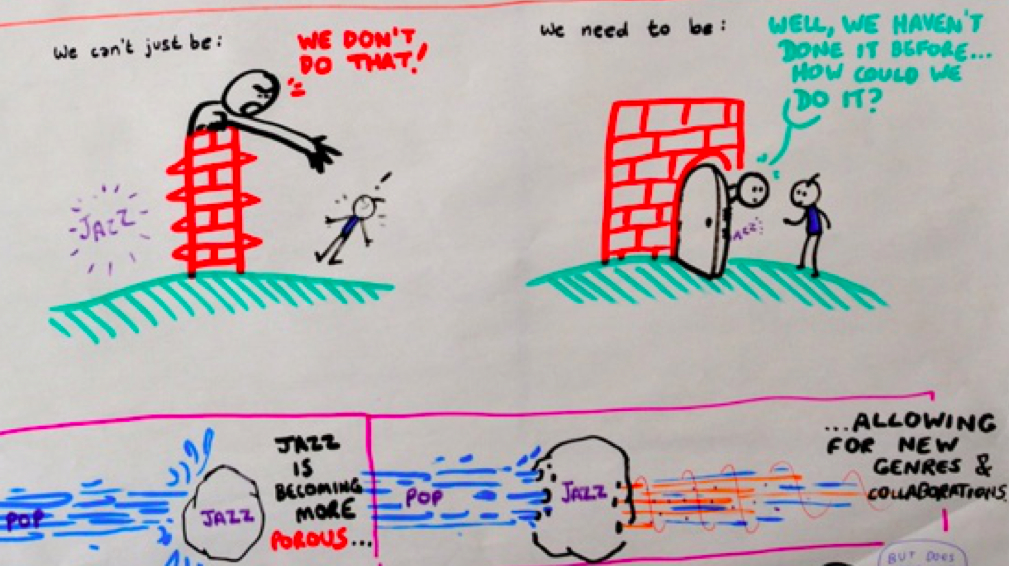
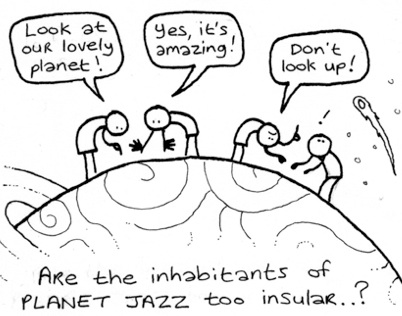
When I reviewed the Schaffhausen Jazz Festival, questions emerged – is Rusconi‘s new album, jazz? What should jazz be in 2014? Gerry Godley of the Improvised Music Company and 12 Points festival worked with cartoonist Patrick Sanders on a presentation that made some vital points for the industry. I particularly liked the analogy – are we selling candles or are we selling light? Put crudely if we carry on focusing on traditional forms of jazz we may go out of business.

© Patrick Sanders Let's be more open to innovation, especially as jazz has become  more porous and collaborative ©Patrick Sanders
© Patrick Sanders
Let’s be more open to innovation, especially as jazz has become more porous and collaborative ©Patrick Sanders

Godley referred to America’s major arts survey of 2012 and although I don’t see Europe in the same grip of the “heritage” of jazz, it’s probably a similar picture here: audience numbers are declining and they are growing older (as I saw at Schaffhausen and see in London). As Terry Teachout of the Wall Street Journal wrote, “Jazz musicians who want to keep their own…beautiful music alive…have got to start thinking hard about how to pitch it to young listeners.”

“What is jazz about & who is it for? – grows unclear.” Phil Johnson

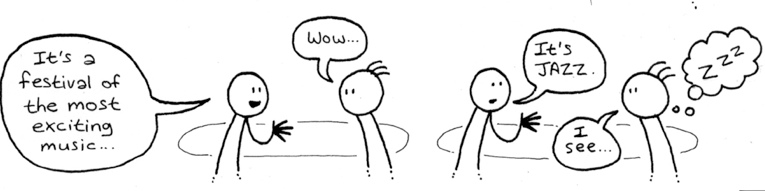
To be frank, jazz has lost its hipness. Young urban ‘gunslingers’ are more likely to listen to new folk or the myriad forms of electronica. Last year journalist Phil Johnson wrote in the The Independent, “The essential narrative and context – what is jazz about and who is it for? – grows unclear. An increasing lack of visibility in the mainstream media contributes to a growing credibility gap…” This is an issue; print and radio (let’s not even go there with TV) influence tastes and with diminishing support it’s difficult for promotors to take risks. The respected critic, John Fordham commented on the lack of press coverage for jazz in 2010, “…the most routine performances by an orchestra, or the most mundane gigs by fading pop stars will usually grab the space from innovative jazz artists who may well be shaping the future of music…”


©Patrick Sanders
©Patrick Sanders


Godley also addressed the “J” word and whether it’s doing music a dis-service. I don’t feel overarching terms such as jazz, classical or rock are relevant in the age of the internet. My favourite phrase is ‘music for curious ears’ and London’s Cafe Oto bills itself as a venue for “creative new music”. Phil Johnson suggests Oto could be a good model for other European clubs as it’s found success by, “building an audience from the bottom up through artist-run co-ops and club-nights.” They are managing to attract a mix of ages, at least.

BBC Radio 3 (plays classical music and some jazz) is rightly obsessed with the phrase “replenishing audiences” as their core listeners age. Attracting new audiences requires new marketing tones. Rusconi have been so successful at building an online rapport with their fans that they won the voted-for ECHO Jazz Award for Best Live Act 2012. But the music itself needs to be relevant.

Build on traditions, but break the rules

Some promotors I spoke to felt Rusconi were being gimmicky – maybe they haven’t quite hit the right spot (as they did with Alice in the Sky) but I’m more engaged by them than I am by clever musicians desperately trying to re-create a time that has gone. Build on traditions, but break the rules, or at least put in your own life, your emotion. My musical axis has been informed by being a DJ where it’s all about the new, and I’ve always admired pioneers who faced enormous criticism but changed things up; as much as I adore Miles Davis’ Kind of Blue I’m glad he heard Hendrix and got re-inspired.

A band who is getting the balance right is Hildegard Lernt Fliegen. They played a triumphant set at Moods a few weeks ago. The music builds on traditional jazz and improvisation and yet is modern. They’ve got a strong look going on and their video for the track Don Clemenza  is perfectly pitched. OK, not everyone has to (or can) wear a breadstick on their head, but what brings it all together is that it feels utterly genuine, it’s ‘authentic’. And that’s the word Godley finished his talk with and it’s an important one.

Labels like ECM are “borders-blind”

What I’d like to see is European countries co-operating at supporting talent from a wide spectrum of ‘jazz’ and from regions beyond their own. Labels like ECM are “borders-blind”, venues could be better at this too. I believe: “If it ain’t broke, change it!” Or it dies. Keep jazz relevant, think about new ways to package it and consider who we want to promote it to. There are audiences out there who are missing out on heart-pounding, incredible music.


©Patrick Sanders
©Patrick Sanders