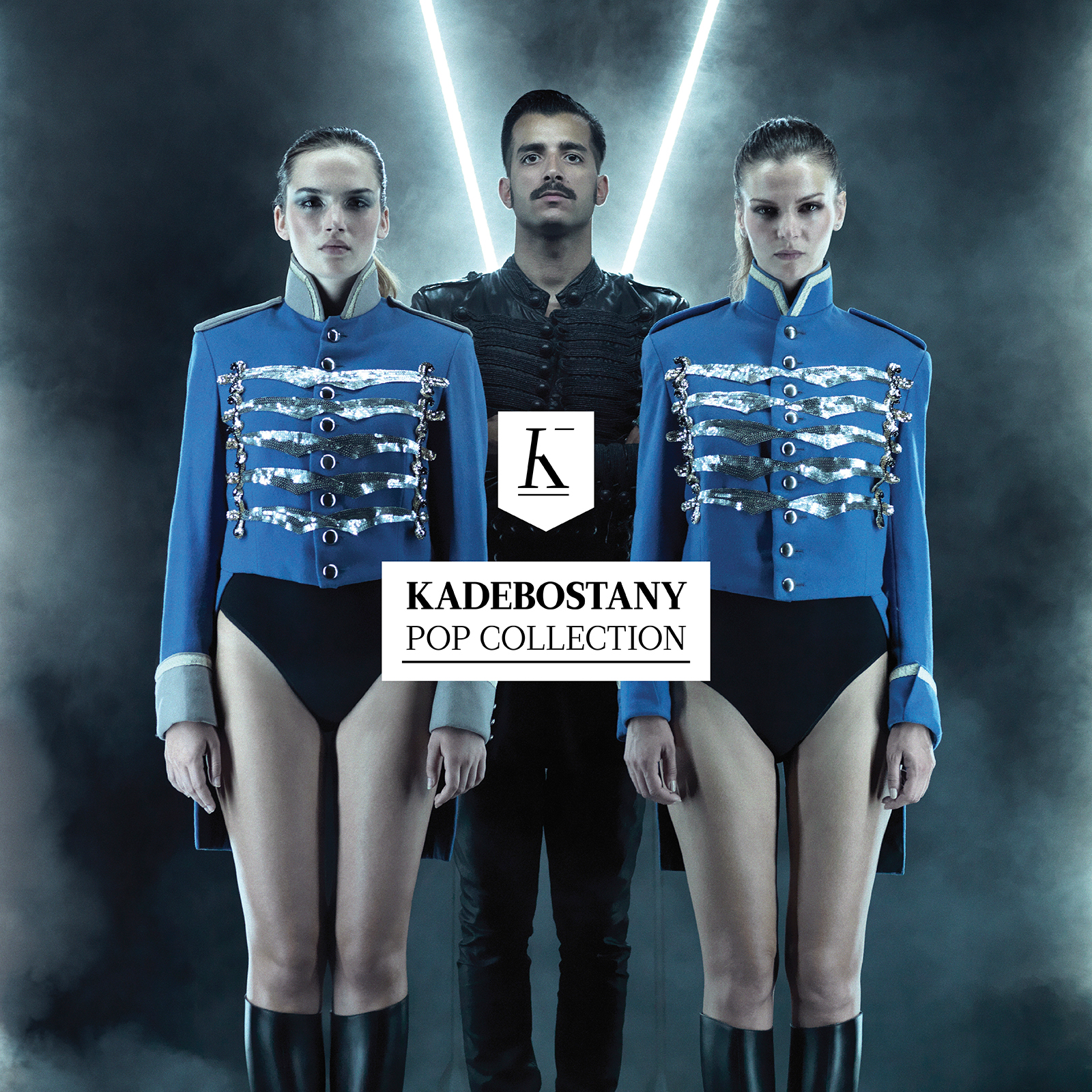
À Paris, Kadebostany fait (presque) taire les sceptiques

Kadebostany_PopCollection_FINALDans les travées encore clairsemées du Nouveau Casino, ça murmure. Ignorant une première partie désespérante (Edward Barrow, grand échalas androgyne pleurant ses chansons d’amour à la harpe dans une indifférence polie), le public s’inquiète.

A Paris, le « président Kadebostan » ne débarquait pas encore en pays conquis

Son look de général d’opérette aurait d’ailleurs pu très vite le voir affublé de quelques railleries jadis réservées au Général Tapioca. «  J’ai quand même des réserves sur cet album » glisse un beau gosse à l’oreille de sa compagne de concert – « je ne suis pas sûr d’accrocher à leur virage électro hip hop » renchérit un autre, qui avait découvert le groupe quand il s’appelait encore, The National Fanfare of Kadebostany. Et pourtant. Et pourtant, il n’a pas mis longtemps pour se mettre les danseurs au rythme de ses galons brillants.

Un dispositif scénique légèrement mégalo

Au centre de la scène, il annonce la couleur dès les premières secondes, devant une audience immédiatement densifiée : bombardement de batterie électronique martiale alourdie de tonnes de réverb, un trombone et un saxo sur le côté gauche en support d’artillerie, la voix diaphane de sa « ministre Amina » pour adoucir les mœurs, sur sa droite. Dispositif scénique légèrement mégalo, surtout que le « président » se retrouve sous les deux « drapeaux écrans » faisant défiler les couleurs du Kadebostany, mais relativement efficace pour faire bondir la foule tout au long des morceaux de « Pop Collection » : electro pop emphatique sous influences légèrement balkaniques.

Le passage à la scène de ce disque inégal permet d’en gommer certains clichés de production

Kadebostany revient ainsi à l’essence de sa musique, profondément dansante, déclinée sous forme dub,hip hop ou presque jungle et laisse de côté ses inclinations kitscho-dégoulinantes. On regrette quand même la disparition des sources plus traditionnelles de son premier album, “Songs from Kadebostany”, en s’obligeant même à rejouer une deuxième fois ses deux « tubes », « Walking with a Ghost » et « Jolan ».

Kadebostany s’est produit le 12 novembre 2013 à Paris, au Nouveau Casino
Prochains concerts : à Lyon le 22 novembre, à Strasbourg le 28 novembre
Dernier album paru: “Pop Collection” (Mental Groove)

[youtube=http://www.youtube.com/watch?v=t994-0_1bJI&feature=youtu.be]
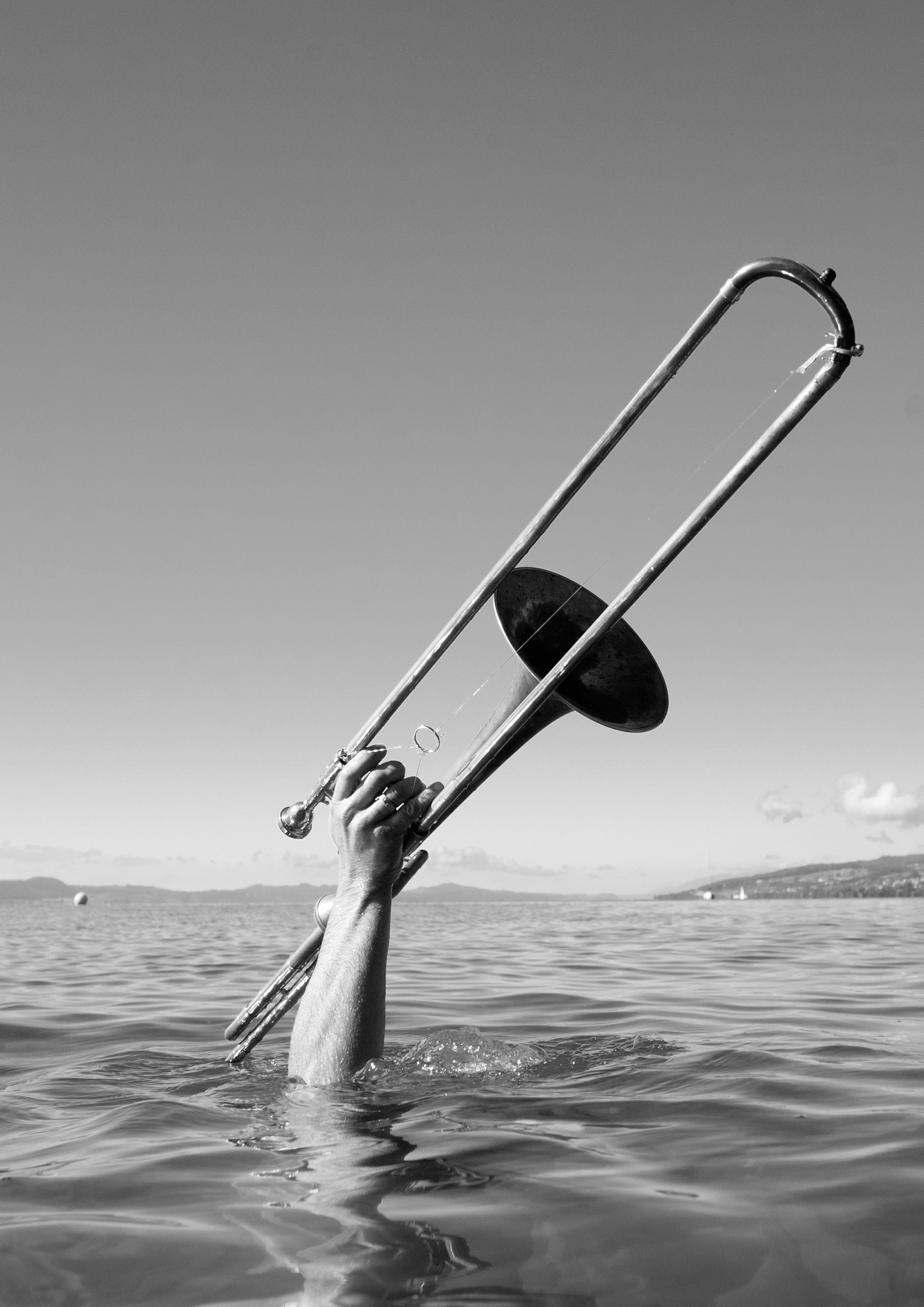
Samuel Blaser: Trombone Man

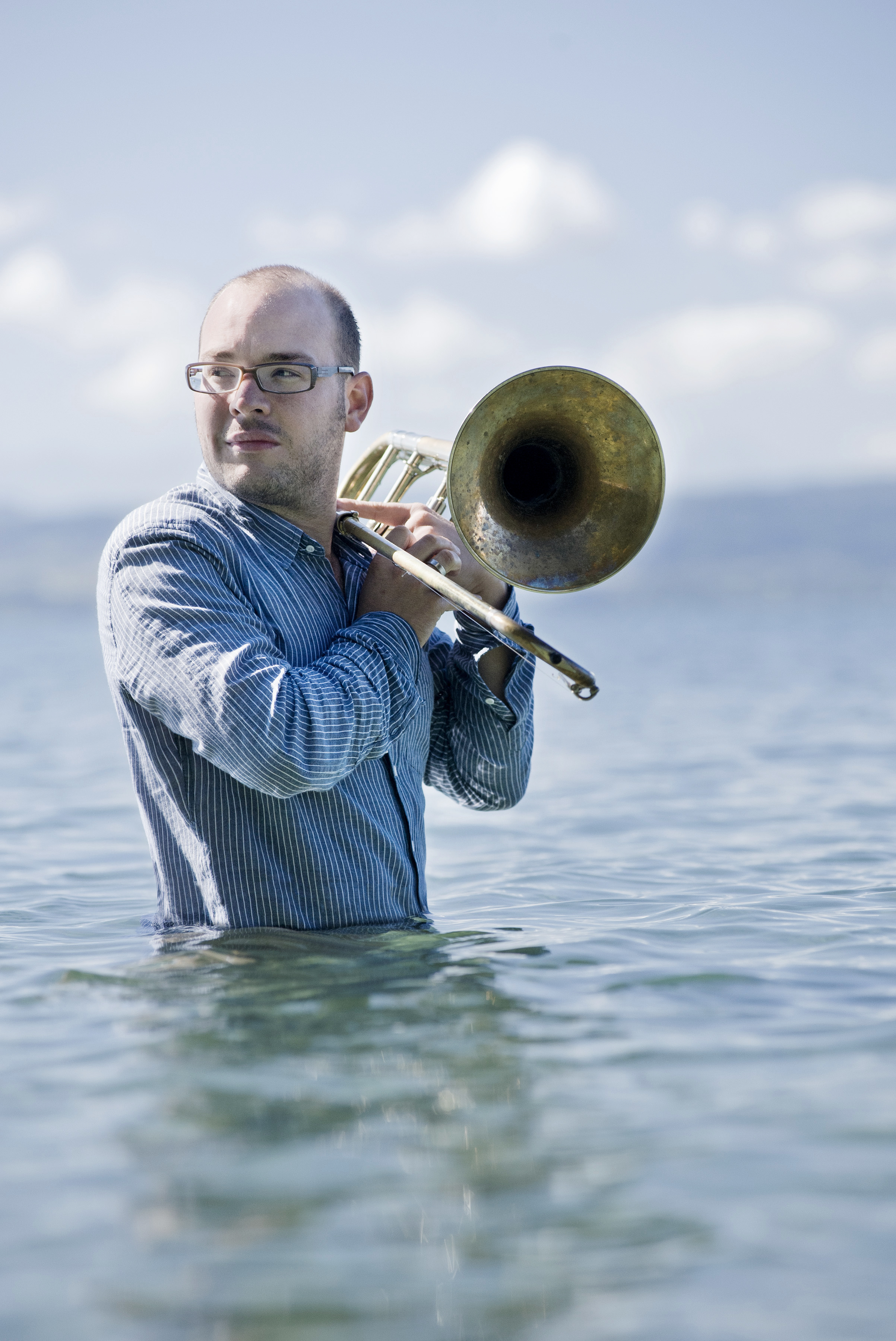
SamuelBlaserLacPosterSamuel Blaser doesn’t mess around. The 32 year old formed the Samuel Blaser Trio with Marc Ducret and Peter Bruun six months ago and they’re already on their third tour touching down at the Festival Jazz Onze+ in Lausanne, London Jazz Festival and playing Poland and Italy in the next couple of months.

You need Sherlock Holmes to deduce which bands he was, is, or will be, performing in

In the last few months he’s toured as a duo with Ducret in Brazil (“There is an opening market there,” he says, due to the SESC cultural centres), released a CD with Consort in Motion, the international outfit that included revered drummer Paul Motion until his death in 2011 and has been to Japan with his new solo venture, “It’s like a marathon for trombone,” he tells me of the hour-long performances.

“A lot of time I don’t like the way the trombone is played…

When I ask him how he keeps his ‘creative well’ topped up, with so many projects on the go, he looks at me questioningly, “I don’t feel like I need to be inspired.” He just listens to music every day, “Yesterday I listened to…Burning Spear, Dennis Bovell [with whom Samuel also plays] then some Polish pop, and today Maria Callas, Beethoven and Joe Henderson, all kinds of music, yeah.” And it was Vinco Globokar and Berlioz that originally fired his love of trombone, “Those guys really pushed the boundaries of the instrument and that was really inspiring.” He moved into jazz through his mum’s love of the music but says, “A lot of time I don’t like the way the trombone is played…I try to keep the natural way of the trombone to express myself and to have new extended techniques.”

He refesamuelblaser3rs to his trombone as ‘her’

It’s a true romance (he refers to his trombone as ‘her’) that began after seeing marching bands when he was two years old. He couldn’t say the word, ‘trombone’, so tried to make a sliding movement to his parents then held onto his dream until he was nine when his arms were (almost) long enough to play. He progressed rapidly at the local conservatory in La Chaux-de-Fonds, winning awards, praise and a Fullbright scholarship to study in America.

“Maybe if I call myself ‘Trombone Chubby’…”

It’s when I ask whether he has to ‘compose to order’ that he remembers the tribute to Jimmy Giuffre he’s recording next year with, due to his own suggestion to Fortune Records, Ravi Coltrane. “I don’t like to record an album only with material written by someone else. I need to add my touch so that I feel it is mine,” Blaser comments. Last month saw the release of a recording made with Benoît Delbecq and Who Trio’s Gerry Hemingway that charted in Billboard’s top 50 jazz albums. “Maybe if I call myself Trombone Chubby…” he quips with reference to Trombone Shorty’s chart success.

He keeps his spirit light

It’s not all fast and plain sailing as Blaser explains, “I still cannot really break through into France and I’ve been playing with French musicians since 2002.” He also has to find a label for a solo recording made with ‘sound designer’ Martin Ruch in various rooms of the ex-DDR radio station in Berlin. He knows it’s not an easy sell, but says it with his ever-optimistic smile. It’s the Blaser secret: he doesn’t spend time on things that don’t work or he doesn’t like to do (a good manager helps) and he keeps his spirit light. While he has a smile on his face, a shiny trombone in his hands and a song in his heart, I’m sure Blaser will maintain this incredible workload and find out who he really is as a musician.

Samuel Blaser is playing London Jazz Festival (Oto Café), the 17th of November.

“What we saw and experienced in the United States was very inspiring”

BOY_Benedikt Schnermann

Valeska Steiner, the singer of Boy, shared her thoughts with Swissvibes on the band’s recent US.

You just finished touring the US. What were the highlights?

The whole tour was very special to us. It was the first time we toured the US with the whole band. The show at Webster Hall in New York was something extraordinary for us, as it is always special to play in New York. We were very nervous and excited at the same time. People were so nice to us and the atmosphere was great. We were on tour for 4 weeks. We played in big cities and in smaller ones. We sometimes had quieter crowds and sometimes very excited ones. Both experiences were nice. New York was a great crowd, but we also had special shows in Washington DC and in Portland. It was a smaller venue and a very intimate show. We are always very surprised we hear people sing along with us. It’s really fun.

[vimeo http://vimeo.com/79137240]

In New York, quite a few Swiss expats came to see the show. Did you have other “Swiss” crowds during the tour?

We had some Swiss people, but there were more Germans. You can also notice the Germans in the crowd as they make themselves noticed. The Swiss people are quieter. I am the only Swiss member of the band. And we have a big following in Germany.

Did you get a chance to meet US bands during the tour?

Not really. Life on tour can be pretty insulated. You spend a lot of time in your tour bus, going from one city to another. You often don’t see much of the city as you go straight to the club, where you play. But we had Jeremy Messersmith open for us.

You also had a good exposure in the media…

Yes, in Philadelphia, we played at World Cafe (ndlr, the cutting-edge rock show on NPR, the American Public Radio). We also played on KCRW (ndlr, Famous underground rock radio station in Los Angeles) . It was really nice and we got 45 minutes of air time.

You played in some of the best venues in the US, including on a Friday night at Webster Hall in New York. How did that happen?

We have a great booking agency, High Road Touring. We were really impressed with the venues they booked for us.

You drove through the whole United States. How was this experience?

It was beautiful. Denver was one of the highlights of trip. We had a day off and our bus driver drove us to Garden of the Gods in Colorado Springs. He always wanted to go there and we were really happy to discover this incredible place.

Did you get a chance to write some new music while you were in the US?

We are not a band that writes on the bus. But what we saw and experienced in the United States was very inspiring. Hopefully all this will turn into songs. The show in San Diego was the last show of the tour but also of the album. We have been touring for 2 1/2 years. We are looking forward to spending some time at home and recording our new album.

For more info:

Boy’s website

Boy’s Facebook page

Who Trio @Festival Jazz Onze+

Who Trio_HemingwayWhen I hear a band like Who Trio, I feel I need to get out from under my rock and listen to a lot more Swiss-based music. Playing together since 1995, they thrilled Lausanne’s Jazz Onze+ Festival last week with highlights such as drummer Gerry Hemingway losing himself in a cave of pounding beats that never hit us like falling rocks but swung with such power and groove we could hardly stay in our seats. But I’m getting ahead of myself – a key to imagining their performance is to know how they looked.
Three toddlers, who are black belts in music improvisation

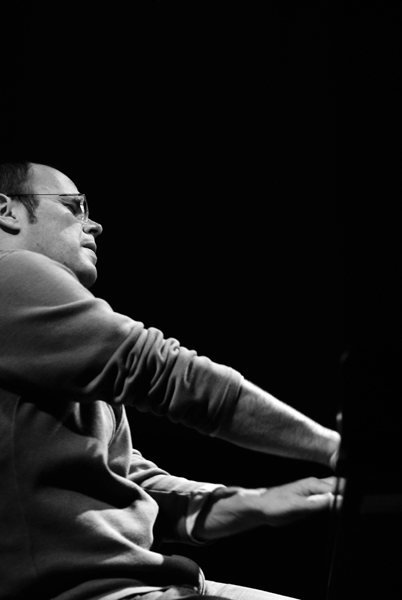
Who Trio_WintschPut simply, three toddlers. Who are black belts in music improvisation. The way they played, stroked, tweaked, plucked and beat the living daylights out of their instruments, was as creatively done as it could be. Michel Wintsch was often hunched over the piano like Schroeder from Charlie Brown as if to control his delicate touch, or plucking strings under the hood of the piano like a car mechanic. Gerry also used physicality to direct energy into his drum kit, emphasizing beats be they furious or almost inaudible. He’d throw his head back and release vocally, serving us with scraps of a monologue; mutterings of the crazy guy who loiters on a street corner. Inventive sounds and ideas were continually mushrooming from this trio.
animalistic whines, walking bass, scratches…

Who Trio_Oester

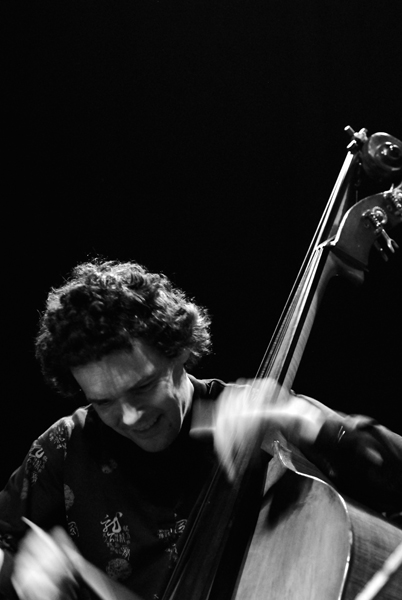
Whatever Baenz Oester created with his double bass there was clarity and conviction: animalistic whines, walking bass, scratches, deep twangs and a series of Bach-like notes that I found particularly moving. It was the trio’s emotion and revealing of vulnerability that stood their performance apart and gave it resonance. Michel’s work as a film and theatre composer showed itself in glimmers of exquisite melodies and perfectly imagined chords that were authoritative yet melancholic.

It is a feat to improvise a full set without pausing but I wanted breaks in the music so we, the audience, could express and release our responses and also so the trio had a chance to start a piece, afresh. There was a tendency to build the tension, bring it down, then re-build the sound and this became a little predictable as a landscape. However, the music never was and the view was continually riveting. I can’t wait to hear more.


[youtube=http://www.youtube.com/watch?v=F9HcCDFW8oI]

Grand Pianoramax @Festival Jazz Onze+ (Lausanne)

Grand Pianoramax_300dpiDescribed in terms such as “power trio”, “supergroup” and “heavyweight”, Grand Pianoramax easily testify to being greater than the sum of their parts. The deceptively skimpy lineup of keyboards, drums and rapper belies the aural magic monster that lurks beneath the surface.  Elegant piano/rhodes, razor sharp drums and urban-edged rap/poetry jostle and come together to create a fiery fullness of sound that has become their distinctive trademark since the band’s inception in 2008.
A rich, emotive soundtrack that already hints at the light and shade which is to follow

Tonight, the Jazz Onze+ crowd are warm and receptive towards their errant Swiss son, keyboard maestro and band leader Leo Tardin, who has over the years immersed himself in foreign locations such as New York and Berlin to develop his sound until recently relocating back to his native Geneva. Much of tonight’s tracklist comes from the latest Grand Pianoramax LP, “Till There’s Nothing Left”, released on ObliqSound last spring and is met with appreciative familiarity indicative of an audience who’s been paying attention.

The skimpy elements are eased in gradually. Leo seduces us gracefully with “Firefly”, a captivating and melodic solo start on the piano, creating a rich, emotive soundtrack that already hints at the light and shade which is to follow.
Joined on stage by drummer, Dom Burkhalter – a modernist fist in an iron glove –  the friendly duel quickly evolves between the two main musical elements, at times rolling around happily side by side, other times in stark stylistic contrast to one another as though wanting to stretch the listener’s awareness to its fullest capacity.

Two herculean pillars laying down a spectacular multi-textured foundation…

The play-fighting relationship between keyboards and drums is what underpins the essence of Grand Pianoramax, two herculean pillars laying down a spectacular multi-textured foundation on which the third element, Black Cracker, can nimbly unleash his craft of language and movement. This Alabama wordsmith and charismatic agent provocateur forges an agile bridge between the audience and the stage, bringing things down from a powerful sonic ride to a more urban, earthly, NYC dimension using rap, poetry or song.

In common with each track is a strategic sense of rise and fall, density and space. It’s an occasionally challenging but always engaging journey. The rhythmic patterns and shapes vary from mercurially dark (“Cry Alone”, “Runaway”, “Have You ever Seen”) to quirkily funky, bouncing along like De la Soul meets Michel Legrand (“Nights Turn To Days”), and hard-edged urgency complete with strobe lights (“Call it Like You See It” and “Roulette”).

In the case of Grand Pianoramax, less is definitely more

An effortless cohesion of threads coming together is felt during ‘Till There’s Nothing Left’, their most radio-friendly hit, a subtle suggestion that crossover to commercial polish is possible if so desired. ‘The Hook’ provides the encore, a track remixed by DJ Spinna and put out on vinyl a few years back, an example of what can work well in a club setting as through the headphones of the rap enthusiast or jazz muso.

It’s a consummate work performed by heavyweights in their field. Honed down talent and acumen has produced an act that can adeptly bend styles and cook up a rhythmic frenzy on only three burners. In the case of Grand Pianoramax, less is definitely more.

Grand Pianoramax played @ Festival Jazz Onze+ in Lausanne on the 31th of October

Grand Pianoramax, Till There Is Nothing Left, (Obliq Sound)

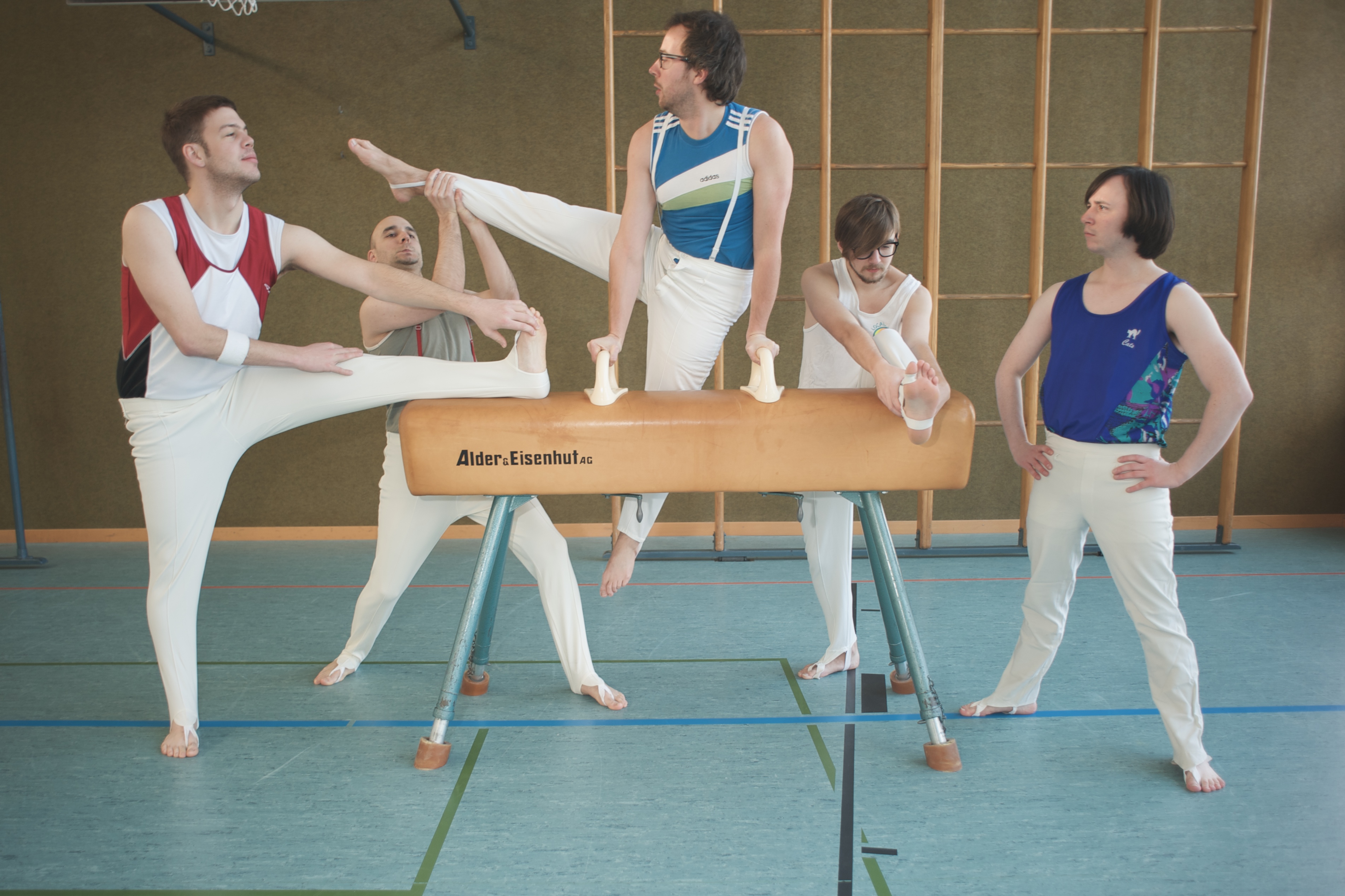
Pommelhorse, für Körper, Kopf und Seele

Pommelhorse 3Das Pauschenpferd auf Reisen: Die fünfköpfige Art-Rock-Jazzband Pommelhorse hat erst in Indien Temperatur gefühlt, bevor sie unsere nördlichen Nachbarn besuchten. Dafür geht’s diesen Herbst quer durch den deutschen Sprachraum. Mit dem selbstbetitelten Debutalbum. Und einer guten Portion Humor.
Der Bandname verleitet natürlich zu Gymnastikvokabular, und so geschieht es auch, dass die Band in Pressetexten turnt, grätscht, oder auf Schritt und Tritt überrascht. Ob das die Jazzer stört? Kein Stück, meint Pommelhorse-Keyboarder Olivier Zurkirchen, der findet, dass bei ihrer Musik durchaus gelacht werden dürfe. Ausserdem, so Zurkirchen, «hat Jazz ja durchaus einen sportlichen Aspekt: Man setzt alles auf die Karte Musik, übt und übt und nimmt Abstriche in anderen Lebensaspekten gerne in Kauf.»

Vor allem, wenn’s so rund läuft wie bei Pommelhorse. Spielte das Quintett 2009 gerade mal drei Konzerte, so ist diese Anzahl dieses Jahr auf beeindruckende 43 Konzerte geklettert. Im 2012 tourte Pommelhorse durch Indien, noch bevor sie unsere Nachbarländer besuchten. «Wir wollten damit signalisieren, dass unser Ziel darin besteht, mit unserer Musik internationale Anerkennung zu geniessen», erklärt Pommelhorse-Klarinettist Lukas Roos. Dafür ist Pommelhorse seit diesem Herbst ausgiebig auf Europatournee – und ab nächstem Frühling bereits mit ihrem zweiten Album am Start. Doch den Anfang macht das Pauschenpferd mit dem nächsten Release, wie es sich gehört, zuhause: In der Turnhalle. Gemeint ist natürlich das bee-flat im Berner PROGR.

Vom 22. Oktober bis 8. November reisen Pommelhorse nach Deutschland und spielen Konzerte in Berlin, Köln, Hamburg

[youtube=http://www.youtube.com/watch?v=iwttOskxiBc]

Serge Wintsch à propos de la scène jazz suisse

Francine et Serge Wintsch

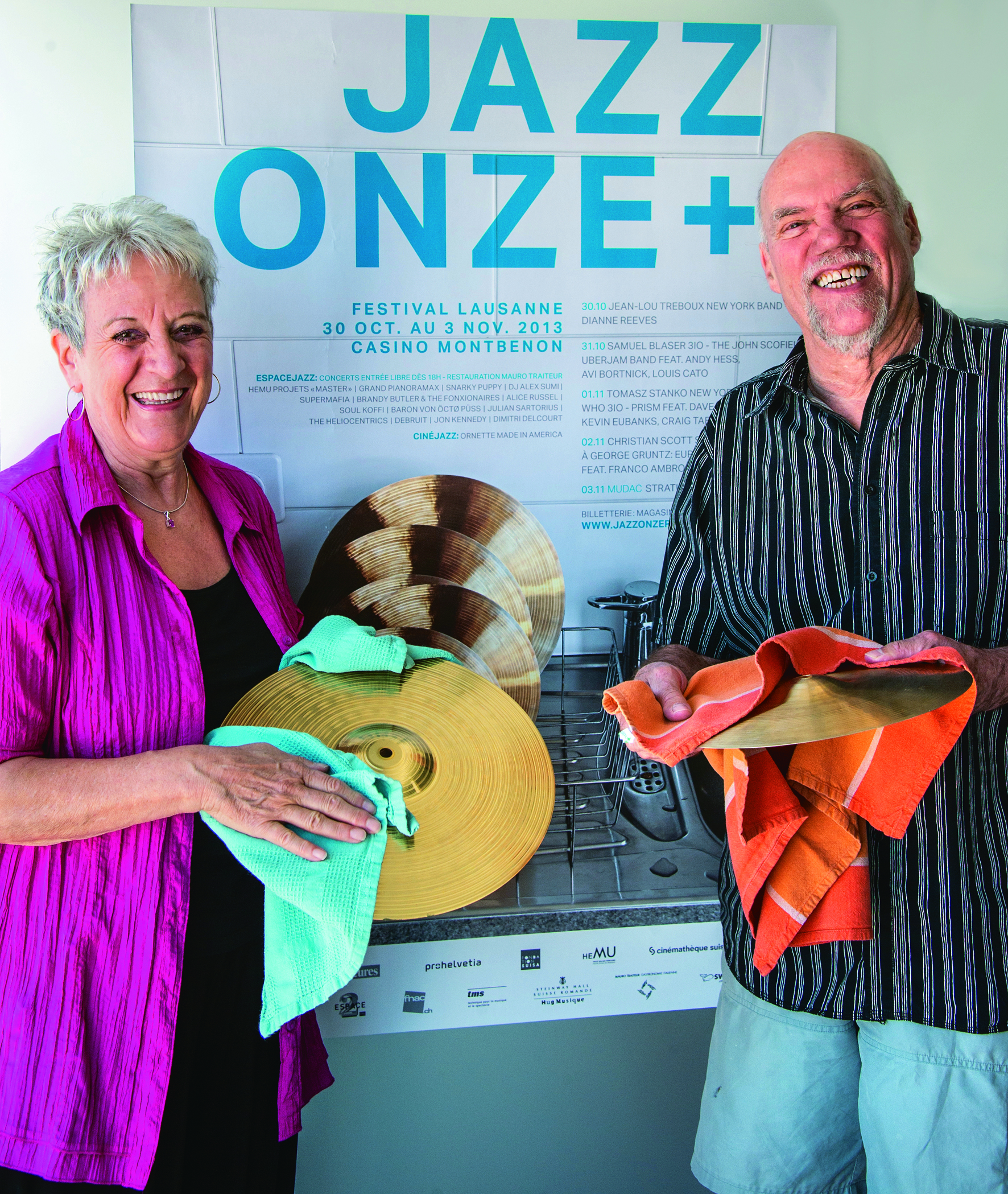
Directeur du JazzOnze+ Festival avec son épouse Francine depuis plus de vingt ans, Serge Wintsch est aussi un musicien à ses heures perdues. Il connaît la scène suisse sur le bout des doigts. D’autant qu’Onze+ était à l’origine une association de musiciens lausannois, rassemblés pour donner plus de visibilité « aux musiques d’improvisation, à la musique contemporaine ». Du haut de ses 25 éditions, Onze+ s’impose aujourd’hui comme un rendez-vous incontournable du jazz suisse  comme international ainsi que des musiques actuelles. Les concerts de jazz ont lieu dans la salle Paderewski alors que depuis 2001, la salle des Fêtes du Casino de Montbenon se transforme en EspaceJazz et propose des concerts gratuits destinés à un public plus jeune, amateur de musiques africaines, de soul-funk ou d’electro.

Le festival a toujours accueilli des musiciens suisses. Parlez-nous de ceux que vous avez invités en 2013 ?
Serge Wintsch Le Who Trio est une valeur sûre. Michel Wintsch (mon homonyme sans être un parent) joue depuis de nombreuses années avec Gerry Hemingway et Bänz Oester. Ce trio s’est rarement produit à Lausanne. Idem pour le guitariste genevois Christian Graf dont le côté rock me plaît beaucoup. Et comme cette année, nous voulions mettre l’accent sur les guitaristes, l’occasion était toute trouvée.

Qu’en est-il de Samuel Blaser et Jean-Lou Treboux ?
Serge Wintsch Samuel Blaser est un extraordinaire inventeur de musiques. Il trace sa propre voie dans la musique improvisée sans s’inscrire dans un genre particulier. Sa formation autant classique que jazz lui a permis d’acquérir des bases techniques solides pour créer avec la plus grande liberté formelle. Jean-Lou Treboux est un jeune vibraphoniste que nous suivons de près. Il a décroché une aide financière institutionnelle pour résider à New York pendant six mois. Cette invitation à Onze+ constitue son premier concert en Suisse avec cette nouvelle formation. Nous ne savons pas du tout ce que cela va donner, mais nous lui faisons entièrement confiance.

Que pensez-vous du jazz en Suisse en 2013 ?
Serge Wintsch Cette scène est extrêmement intéressante et riche. Rappelons qu’en Suisse il y a une longue tradition du jazz. Avant elle existait sans doute plus à l’intérieur des frontières qu’à l’extérieur. Je pense en particulier au Zürcher Jazz Festival qui de 1951 à 1973 fut un lieu de rendez-vous incontournable des musiciens alémaniques comme romands. Mais peu de musiciens s’exportèrent. On peut citer, parmi ceux-ci, Pierre Favre, Daniel Humair, George Gruntz, Irène Schweizer, Matthieu Michel ou Mathias Rüegg (Vienna Art Orchestra). Dans la nouvelle génération, il suffit d’écouter les pianistes, Colin Vallon, Stefan Aeby, Gabriel Zufferey, Léo Tardin ou Marc Perrenoud pour être convaincu que la relève est là et qu’elle possède un haut niveau créatif.

Les musiciens que vous mentionnez se sont souvent intégrés à d’autres scènes, comme Daniel Humair en France ou Pierre Favre en Allemagne. On oublie presque que ce sont des Suisses.
Serge Wintsch Oui, les Suisses sont discrets ! Peu nombreux sont ceux qui se sont exportés et ceux-là se sont fondus dans l’internationalisme du jazz. Ce qui manque, c’est un mouvement spécifiquement helvétique. Il me semble toutefois que les musiciens circulent plus qu’avant, qu’ils collaborent plus entre eux, peut-être aussi grâce à l’apparition d’écoles comme l’HEMU (Haute Ecole de Musique) de Lausanne).

Les conditions seraient donc réunies pour un mouvement spécifiquement helvétique ?
Serge Wintsch Ce serait drôle d’imaginer des tournées internationales avec des ensembles suisses en alternance. Un peu comme le Chicago Blues en son temps. Cela permettrait de montrer le foisonnement de cette scène suisse au reste du monde.

Festival JazzOnze +, Lausanne, du 30 octobre au 3 novembre. www.jazzonzeplus.ch

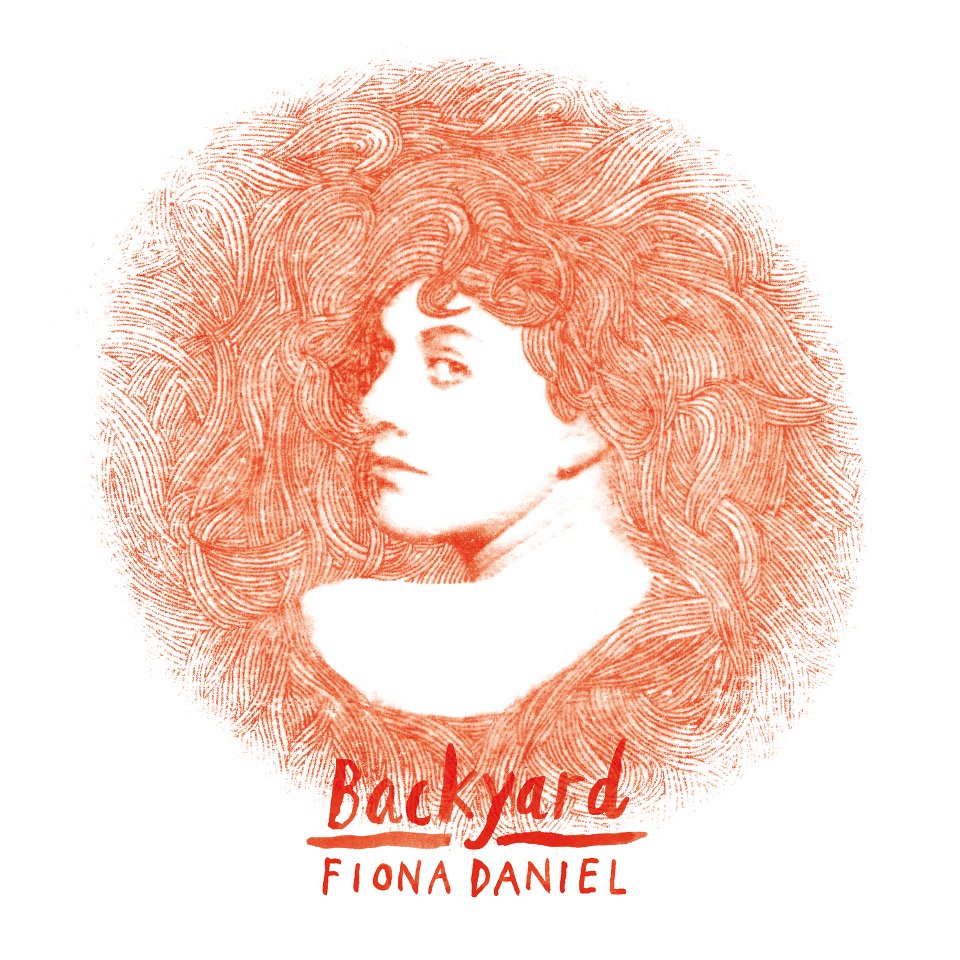
Swiss Vibes 2013: la chanson d’octobre: Fiona Daniel

Cover_FionaDaniel

« Après plusieurs enregistrements de voix pour ce morceau, ma productrice Katharina Nuttal et moi étions vraiment insatisfaites. Plus nous essayions, plus cela semblait difficile de trouver l’expression juste pour raconter cette histoire d’incendie, pour toucher vraiment l’auditeur. La solution : ouvrir une bouteille de single malt et revoir le film Sacrifice de Tarkovsky, où il y a justement une scène de maison en flammes. Après plusieurs verres, Katharina a mieux compris ce que je voulais faire ressentir, et nous avons enfin pu identifier le ton parfait pour cette chanson. »

Fiona Daniel, chanteuse, Zurich

[soundcloud url=”https://api.soundcloud.com/tracks/88381392″ width=”100%” height=”166″ iframe=”true” /]

La chanson Letter est également téléchargeable gratuitement sur le bandcamp de Swiss Vibes

Le disque “Backyard” est désormais diffusé en Allemagne et en Autriche (en plus de la Suisse). A quand la France?

Erika Stucky, ein üppiger 16-Gänger

248_cover_frontWas erwarten wir von Kunst? Dass sie gefällig ist, sich und ihren Kanon ständig wiederholt und uns in unseren Haltungen bestätigt? Erika Stucky tut nichts davon. Deshalb ist «Black Widow» Kunst.

Von der Bühne…

«Hey, just because you’re paranoid it doesn’t mean nobody’s following you.» Erika Stucky sorgt für Irritation. Gemeinsam mit David Coulter, Terry Edwards und Michael Blair präsentiert uns die Musikerin 16 Stücke: Währen Stimme und Timbre der Sängerin im Rampenlicht stehen, flirten ihre Texte und ihre Musik im Zwielicht mit Film und Theater, mit Traum und Realität, mit Romantik und Vernunft.

 …in die Küche

«Black Widow» ist eine Tour de Force, ein üppiges 16-Gänge Menu, das man gerne geniesst – auch, weil Chefköche dahinterstecken. Das schwerverdauliche Cover von «Black Betty» eröffnet die Schlemmerei. Mit «Knees» setzt uns Stucky bedrohlich das Messer an die Kehle, um uns einen Track später mit «Spiderlegs» versöhnlich Süsses zu geben. Leicht bekömmlich ist das alles nicht. Mit den Worten Cake, Coffee und Sugar lässt uns Erika Stucky zwar wohlgenährt zurück: Der Appetit ist verschwunden – aber der Hunger auf solche Kunst, der ist stärker als je zuvor.

Erika Stucky, “Black Widow” (Traumton Records)

Trois questions à Tobias Preisig

Tobias Preisig band @Corinne Kramer

En 2012, le CD “In transit” de Tobias Preisig figure parmi les meilleures ventes de disques jazz au Japon. Le violoniste suisse est sur le point de repartir avec son band pour une tournée de six concerts sur l’île nippone. Interview exprès.

Alors que ta carrière décolle à l’étranger, pourquoi être resté à Zürich et ne pas avoir déménagé, à Berlin ou Paris  ?
Tobias Preisig  Etonnamment, c’est plus pratique pour moi de rester par ici. Mon groupe est éparpillé un peu partout en Suisse, entre Bâle, Bern et Lausanne, et je peux les retrouver en un clin d’oeil. Pareil pour voyager à l’étranger : Zürich a une position tellement centrale en Europe que l’on peut se rendre partout sans problème. Enfin, c’est bête à dire, j’ai la chance d’avoir mon bureau et mon espace de répétition dans un club d’ici, l’Exil, et cela me permet de me concentrer sur mon travail. En plus, je peux profiter des conseils d’un ancien d’ici, Nik Bärtsch, et évoluer dans un environnement où les musiciens prennent des risques, et c’est la seule chose que je recherche.

Comme le pianiste Stefan Rusconi, par exemple, avec qui tu partages une approche originale de vos instruments respectifs?
Tobias Preisig Et oui, non seulement je m’essaie au jazz au violon, ce qui est très rare (à part Stéphane Grappelli, j’aurais du mal à citer d’autres violonistes de jazz!), mais en plus j’essaie d’exploiter mon instrument au-delà des canons du genre, sinon je m’ennuie. Il y a tellement de gens qui savent jouer du violon parfaitement, cela ne sert à rien de d’être un nouveau disciple appliqué. A vrai dire, j’ai eu de la chance de pouvoir rencontrer un professeur au conservatoire et à l’école de jazz suffisamment ouvert pour me dire :  « ce n’est pas grave si tu joues la tête en bas, du moment que tu joues bien… » Ca m’est resté… et effectivement ca me fait un grand point commun avec Stefan Rusconi. Lui, c’est comme c’est comme un frère pour moi, nous formons une petite communauté à nous deux. On a énormément joué ensemble pour d’autres musiciens et maintenant, nous avons un drôle de duo, à l’orgue et au violon, qui nous ouvre un espace pour explorer de nouveaux sons.

[youtube=http://www.youtube.com/watch?v=N3JW83f-0hQ]

Justement, comment peut se dérouler le processus créatif qui amène à dénicher ces nouveaux sons ?
Tobias Preisig Comme pour tout le monde : avec beaucoup de travail, et un peu de chance. Prenons l’exemple de « Transforming », l’un des morceaux les plus connus de « In Transit ». Au départ, j’ai eu huit mesures en tête, dans la rue, et je me suis empressé de les noter sur le carnet où je note toutes mes idées. Plus tard, en répétant, je me replonge dans mon carnet et je me rend compte que ces mesures pourraient bien s’accorder avec d’autres, que j’avais notées plusieurs pages plus tôt. En les réarrangeant, j’avais la base de mon morceau… mais ce n’est pas tout ! Un peu plus tard, je me suis mis en tête d’apprendre à jouer du theremin, alors je me rend sur youtube pour trouver un tutoriel… et je tombe sur la vidéo d’un type qui joue le thème principal de « Transforming »  – sans le savoir, j’avais repris un morceau de Gabriel Fauré ! C’était moins une : la pochette de l’album partait le lendemain à l’impression, j’ai appelé le label en catastrophe pour qu’ils  « créditent » Fauré sur le livret …

il paraît que « In Transit » est rentré dans les tops albums au Japon…
Tobias Preisig Oui, c’est incroyable, n’est-ce-pas ? Il y a deux ans, le bureau export nous a permis de faire une petite tournée à Tokyo et Kyoto; une excellente expérience. Non seulement les ingénieurs du son ont été formidables, mais notre mélange de rock, de jazz et de musique expérimentale a paru complètement avant-gardiste aux oreilles du public japonais… et ils en redemandaient ! En exagérant à peine, les filles étaient en pleurs à la fin des concerts. Du coup, nous avons prévu d’y retourner cet automne pour flatter nos nouveaux fans hystériques (il rit ).

En concert au Japon: Shikori Fukuoka, sa 12 octobre 2013. Hiroshima, Speak Low, di 13. Osaka, Mister Kelly’s, lu 14. Kyoto, Live Spot Rag, me 16. Tokyo, Spiral Lay, je 17. Kyoto, Left Alone, ve 18.