Das Treffen von zwei Kolossen

Andreas Schaerers Band Hildegard lernt fliegen wird beim Luzerne Festival symphonisch

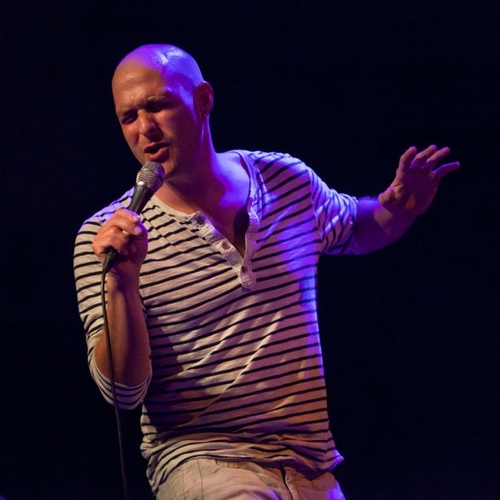
Probe 1: Andreas Schaerer (links) und Lucerne Festival Academy Orchestra ©Stefan Deuber

Es gibt gleich einige gute Gründe, warum der Berner Andreas Schaerer derzeit der vielleicht interessanteste Gesangskünstler der Musikszene ist. Was damit beginnt, das der aktuelle Preisträger des Echo Jazz in der Sparte „Gesang international“ (und damit direkter Nachfolger von Gregory Porter) weit mehr ist als nur ein Sänger und auch nur bedingt in die Schublade Jazz passt; Schaerer ist vielmehr ein Stimm-Jongleur, der sein Organ nicht nur in den verschiedensten Lagen und Stilen (vom klassischen Lied- bis zum Crooner- oder Scat-Gesang) erklingen, sondern damit auch alle denkbaren Geräusche erzeugen und allerlei Instrumente bis hin zum Schlagzeug imitieren und polyphon übereinander türmen kann. Er ist darüber hinaus ein glänzender Komponist und Improvisator, der diese Fähigkeiten für die verschiedensten Projekte variabel einsetzen und rhythmisch wie melodisch virtuos gestalten kann. Und er verfügt schließlich in reichem Maße über Bühnen-Charisma und die in der „ernsten Musik“ eher seltenen Gabe des Humors, was vor allem bei seiner Paradeband Hildegard lernt fliegen zur Geltung kommt.

Interessantester Vokalist der Gegenwart
Probe 2: Andreas Schaerer mit Lucerne Festival Academy Orchestra ©Stefan Deuber

So ist es folgerichtig, dass Hildegard lernt fliegen vor zwei Jahren den BMW Welt Jazz Award gewann, als dessen jährlich wechselndes Motto „Sense of Humour“ lautete; und dass Schaerer mit der Band nun beim Lucerne Festival ins Spiel kam – lautet doch dessen Motto heuer „Humor“. Dramaturg Mark Sattler, beim Festival seit 16 Jahren für „zeitgenössische Projekte“ zuständig, fragte Schaerer, ob er nicht einen Hildegard-Auftritt mit einer 20-minutigen Komposition für das Lucerne Festival Academy Orchestra kombinieren wolle. Schaerer ergriff mehr als nur den gereichten Finger und schrieb gleich den kompletten 70-Minuten-Auftritt als „The Big Wig“ betiteltes Orchesterstück für 66 Musiker. Am vergangenen Samstag erblickte das kurz, aber intensiv geprobte, von Schaerer komponierte, arrangierte und orchestrierte, dann vom Hildegard-Saxofonisten (und ehemaligen Geiger) Matthias Wenger feingeschliffene Werk im Luzerner KKL das Licht der Welt – und riss die Zuschauer von den Stühlen.

Mehr Kraft, weniger Gags
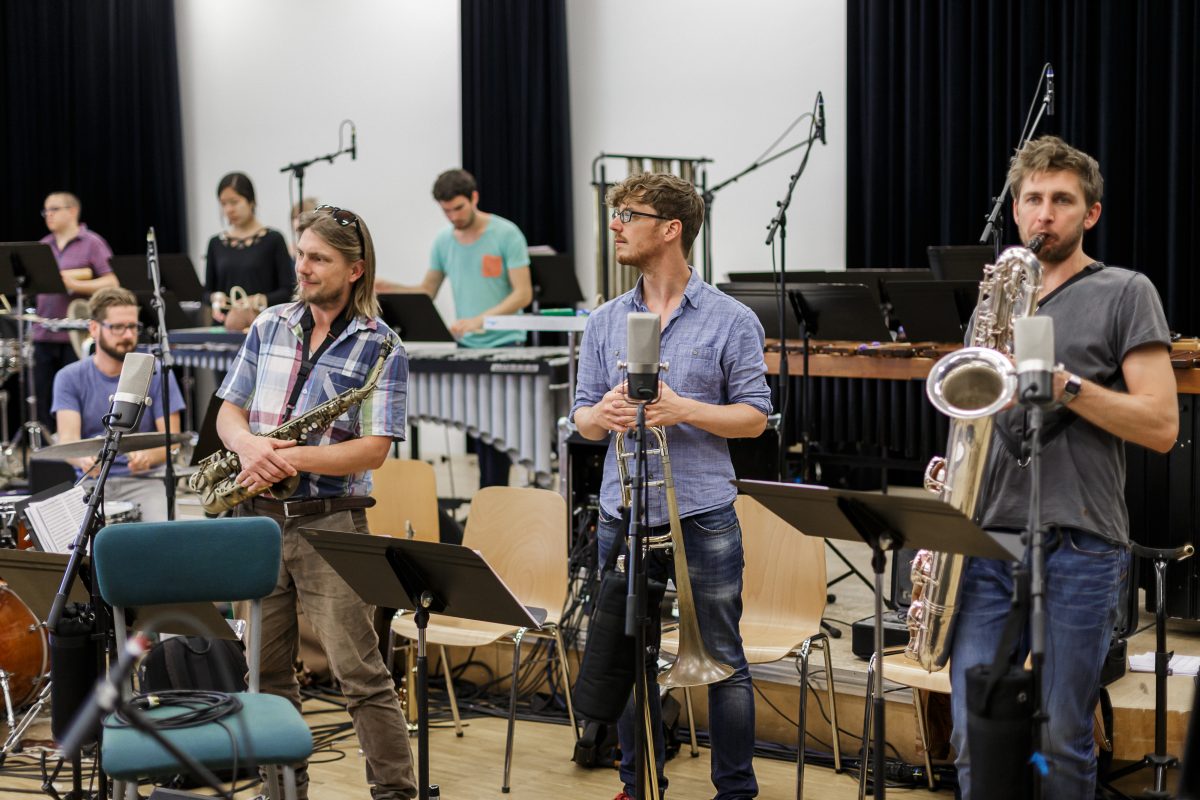
Probe 3: Hildegards Blechbläser ©Stefan Deuber

Paradoxerweise – hält man sich das Festivalmotto vor Augen – hat man wohl noch keinen „seriöseren“, weniger „lustigen“ Hildegard-Auftritt erleben können. Was die logische und bewusste Konsequenz daraus war, dass Schaerer seine Chance beim Schopf packte und alle Möglichkeiten des sinfonischen Rahmens ausschöpfte. Denn damit traten er selbst wie seine Hildegard-Mitstreiter sozusagen ins zweite Glied, um sich in den orchestralen Gesamtklang einzufügen. Die drei adaptierten Hildegard-Hits „Zeusler“, „Seven Oaks“ und „Don Clemenza“ gewannen so einen neuen Fluss und enorme, mitunter filmische Kraft und verloren die in der kleinen Besetzung latente Zickigkeit. Und die eigens geschriebenen Stücke wie „Two Colosses“ ergaben inspirierte Sinfonik mit einem Esprit und einer stets zugänglich bleibenden Experimentierlust, der den meisten neuen Werken dieses Genres fehlt. Das junge, mit überragenden Talenten aus aller Welt gespickte und vom Dirigenten Mariano Chiaccharini lässig, aber präzise instruierte Orchester hatte sichtlich seinen Spaß und ließ sich sogar vom kurz das Dirigentenpult enternden Schaerer auf Jazz-Abwege führen: Wann hat man je ein Sinfonieorchester gelungen kollektiv improvisieren sehen.

Eine sinnvolle Symbiose

Ohnehin ist die Kombination aus klassischem Orchester und Jazzband ja schon oft genug missglückt, zuletzt durfte man sich bei Geir Lysnes Monteverdi-Morricone-Hybridkompositionen vom Auftritt Michael Wollnys mit den 12 Cellisten in Berlin enttäuscht fühlen. Hier war es eine runde Sache, eine sinnvolle und befruchtende Symbiose, die allen Beteiligten nicht nur unvergesslich bleiben, sondern ihnen auch bei der weiteren musikalischen Entwicklung helfen wird.
Andreas Schaerer wins ECHO Jazz Award

Andreas SchaererI met Andreas Schaerer two years ago almost to the day, when he was on a week-long course for jazz musicians in the UK. It was about 10pm and he was the last of seven interviews I was doing, we were both pretty exhausted. There’s a softness to people zapped of the energy to be nervous or erect the usual social barriers. The room was lit only by the evening sky outside and Andreas was slumped forward, his head rested in his hands. “I’m a bit f***ed up,” he said. Lack of planning and things going better than expected meant everything was coming at him at the same time, “Too much work, pressure and expectations,” he explained.

In a way he didn’t need to tell me. When I’d checked his website for my research I could see this was a man who liked to say, ‘Yes’ and play ball with everyone who asked. He wasn’t shy of taking responsibility, but that evening it felt like there was a truly heavy weight on his shoulders.

On May 28th of this year, Andreas will be walking up the ‘red carpet’ of the ECHO Jazz Awards to collect International Vocalist of the Year, a prize won by Gregory Porter in 2014. This is massive, not only for Andreas, but dare I say, for Switzerland. Another building block increasing the country’s reputation for distinctive music of quality. It was just as well Schaerer didn’t take my advice to slim down his commitments! Instead he developed bigger muscles to face the challenges, releasing four albums in just over a year. Admirably he also scheduled in time for a proper long holiday with his young family.

As I write this, Andreas is at home in Bern surrounded by sheets of scores he’s composing for his band Hildegard Lernt Fliegen and the Lucerne Festival Orchestra, no less. That’s music for almost 70 musicians from two harps to eighteen violins and a tuba. “There’ll be some Beatboxing meets classical percussion meets three marimbas,” he told me, “there’ll be fairytale-ish harmonic moments and lots of madness….” That sounds about right. It will be a prestigious, one-off concert in Lucerne on September 5th and I can’t wait.

I know it’s not a Swiss characteristic to ‘blow your own trumpet’ (shout about yourselves) so I like to do it for you. Along with the ECHO Award, Schaerer was nominated for the Swiss Music Prize and voted International Newcomer of 2014 by French magazine, JazzMan. Hildegard Lernt Fliegen won the BMW World Jazz Award – both the jury and the audience prizes (!) and their album, The Fundamental Rhythm Of Unpolished Brains was voted as Best Vocal Release of 2014 by New York City Jazz Record. The album Arcanum with Lucas Niggli won the Deutscher Schallplattenpreis and was chosen as a ‘CHOC’ by JazzMan Magazine in 2014. So not a bad year then. And one that clarifies the importance of originality and drive in a highly competitive and crowded market. I think it helps that Schaerer can have an audience giggling whatever their language, we all need a laugh every so often.

The Schaffhausen Jazz Festival 2014

As I walked into the ex-yarn factory, Kulturzentrum Kammgarn, it was clear the organisers put passion and care into their festival. The place was warm and intimate with candlelit tables and there was a relaxed, convivial vibe. Over four evenings the audience was treated to a variety of Swiss improvised music and there was a day of professional talks.

Without doubt, this is an ambitious festival

I missed the compelling Elina Duni Quartet who opened the event, but was there to experience BASH. I’m getting to know Lukas Roos through his outfit, pommelHORSE, but here the clarinetist/saxophonist played with guitarist, Florian Möbes, Domi Chansorn on drums and Samuel Gfeller on graphic novel, literally. A massive screen behind the band showed the story of a prisoner drawn into increasingly twisted events that lead to his end. The style of Gfeller’s drawings, Robert Crumb in feeling, are so powerful that at times, I tuned out their sensitive and minimal music. On speaking to Roos he explained that cutting the set to 40 minutes affected the balance – a point echoed by Andreas Schaerer and Rusconi on appearing at this festival.
Arte Quartett

Schaerer’s vocal noises ran amok

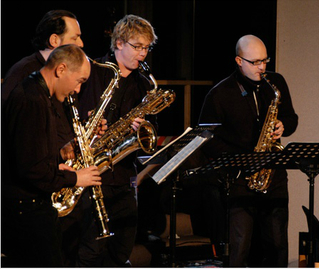
Andreas Schaerer was performing Perpetual Delirium, his composition for the saxophonists, the Arte Quartett with Wolfgang Zwiauer on electric bass. It had the quartet interlacing with a naturalness that was almost child-like in it’s fun and freedom. There were fascinating textures as soprano sax took over from alto, or tenor had a furious and thrilling exchange with the baritone, whilst Schaerer’s vocal noises ran amok adding sparkle, or hiding within their vibrant sound.

For pianist Gabriel Zufferey the time limit was perfect. His music was fluid with notes as sweet as fluttering butterflies yet underpinned by such knowledge and skill that he came across as an eccentric wizard. I liked the echoes of classical music and he incorporated an Eric Satie piece – it might sound tacky, but in his hands it lifted the hearts of the audience who then demanded two encores.

Is Rusconi’s music, jazz, or not?!

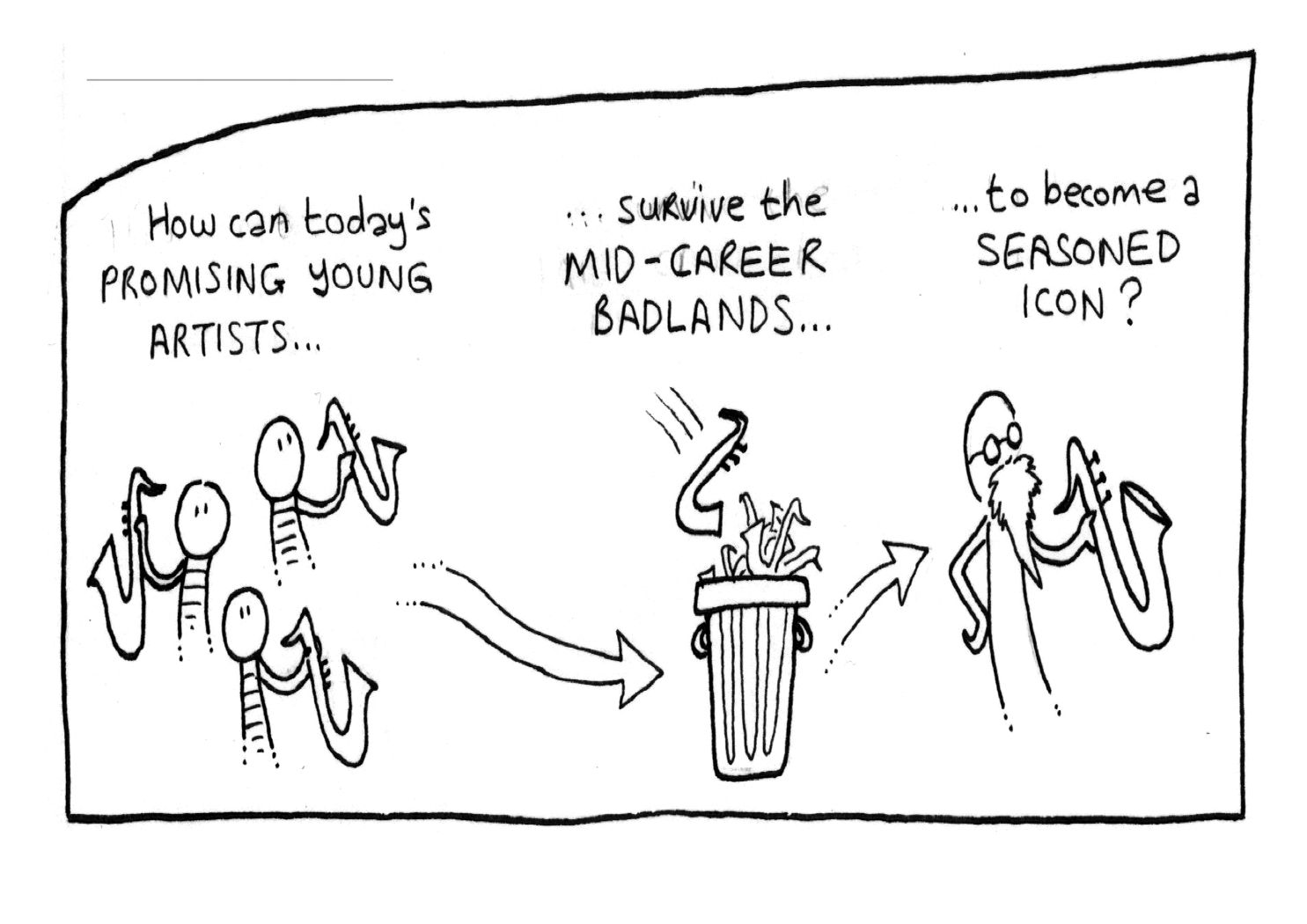
I was recently critical of Rusconi‘s gig at the Cully Jazz festival, but at Schaffhausen they were more confident in their ideas and I totally got into the groove of Hits of Sunshine and am warming to the strangeness of Change Part 1. However, on talking to some of the European promotors invited to the festival, questions emerged – is Rusconi’s music, jazz, or not? Is it gimmicky or authentic? I felt some answers were suggested by Gerry Godley of 12 Points who tackled the issue of the future(s) of jazz in his presentation with cartoons from Patrick Sanders, at the festival. But I’ll go into that more in my next Swiss Vibes’ blog, ‘How is Jazz?’

In the meantime I’ll leave you with the Bill Evans‘ quote that Godley used, “Jazz is not a what, it is a how. If it were a what, it would be static, never growing. The how is that the music comes from the moment, it is spontaneous, it exists at the time it is created.” If the Schaffhausen Jazz Festival has its sights set on being a relevant platform for jazz then it needs to continue putting on bands that question our perception of this rich and challenging music, as well as, those that celebrate it.

Cartoon by Patrick Sanders

Rom Schaerer Eberle: At The Age of Six I Wanted To Be A Cook

artworks-000056794141-a88nt2-t500x500“At the Age of Six I wanted To be A Cook” by Rom Schaerer Eberle takes you gently by the hand into the landscape of childhood. There are lullabies oozing with ‘mother-love’, sounds of jumpy kids at play and simple, stare-into-space tracks. The achingly sweet vocal ‘stories’ of Royal Family are sung by Schaerer; his warm, steady tone flowing with imagined words whilst Eberle plays the horn with a simplicity that is both melancholic and uplifting. Rom caresses his guitar to sound different on every track whilst always creating spacious, considered and sensitive notes. At times you can almost see the coils of his A string as every scrape and pluck resonate.
Cooking the Books is a stand-out track with its robotic opening giving way to the most exquisite refrain of vibing guitar and melodic trumpet, echoed by Schaerer’s vocal-trumpet notes. Syncopated dabs of sparse rock-guitar and buzzing mouth harp serve to heighten the beauty of the theme; the guitar bending and entwining you with its longing. It holds you.

[soundcloud url=”https://api.soundcloud.com/tracks/108202431″ params=”color=ff6600&auto_play=false&show_artwork=true” width=”100%” height=”166″ iframe=”true” /]

This is a well-blended trio, each echoing the others’ voices, never trying to dominate, but I missed the fizzing energy that comes with an extended solo. In Triple Prism, Schaerer explores higher vocal registers to ghostly effect but Eberle and Rom become a mere reflection as opposed to a solid presence.

I liked Eberle’s When I Was Seven I Wanted to be Napoleon, led with great panache by Schaerer’s Cabaret-style MC. The drunken slurs of Eberle’s trumpet and Rom’s guitar draw a George Grosz sketch of a flea-bitten bar with wrinkled, topless ‘dancers’ slouched on faded velvet, but again, I wanted it to go further. Lou is the final lullaby to tuck us up in bed, but sometimes I craved something more adult – where each musician had the freedom to delve into their wonderfully creative themes in a deeper and more explosive way.

“At the Age of Six I wanted To be A Cook” by Rom Schaerer Eberle  was released in September 2013 on JazzWerkstatt Records. Tour dates include:
Rom Schaere Eberle played Bern (CH), Beeflat, the 4th Dec, and London (UK), Vortex, 8th Dec
Next concert: Zurich (CH),  Moods, 12th Dec

Made in Switzerland (the pros and cons of being a Swiss jazz artist)

Swiss Vibes 2013_01_Mix 4“You can tap into resources and support and it’s there”  Leo Tardin
The Swiss jazz scene is evolving and has been for some time. Music education at institutions such as the Bern University of the Arts, professional support for artists and an expansion of the term jazz, have helped the emergence of new and award-winning talent. I asked musicians who’ve had help from Pro Helvetia, how being Swiss has impacted their music and careers and if any changes could be made for the better.

They unanimously acknowledged the funding system that exists. Drummer Florian Arbenz said financial help was a huge advantage, “Because of the spare time we have for our heads to create something…(and) work on our own concepts.” Leo Tardin, who spent a significant time building his reputation whilst living in New York, said that being abroad gave him perspective on being Swiss, “You can tap into resources and support and it’s there. It’s shrinking just like everywhere else but we’re still very privileged and that’s a fact.”

It will always be diverse, musically”  Stefan Rusconi

Several artists did refer to the Nordic scene as an example to follow, with its huge investment in jazz and organic creation of an almost tangible ‘brand’, encompassing artists from Jan Garbarek to E.S.T. However, the journalist Arnaud Robert said recently, “Switzerland creates individuals, not schools or movements of music,” and musician Stefan Rusconi agrees, “It will always be diverse, musically, I don’t think it will be like the Nordic sound, I think it will be an approach, an attitude that could come out of Switzerland.”

I would agree; as a DJ visiting Switzerland, I was drawn to the open-minded spirit of people less concerned with being cool, than being free (whilst getting things done, of course!). Humour and a spattering of crankiness are somewhere in the mix and as the Zurich-born violinist, Tobias Preisig, says, “I’m pretty amazed how small this country is but how rich it is music and cultural-wise.” Maybe this is entangled with the make up of Switzerland as noted in Wikipedia, it’s not, ‘a nation in the sense of a common ethnic or linguistic identity’ and over one fifth of the population are immigrants.

“Switzerland, for me, is a big chance”  Elina Duni

Vocalist Elina Duni says of her quartet, “This music wouldn’t exist without Switzerland because it is the fruit of bringing together my Albanian roots and my Swiss culture.” Having moved to Geneva when she was ten, Duni sees her music as building bridges between people and acknowledges the support she’s had with that, “Switzerland, for me, is a big chance.”

Andreas Schaerer also feels that being Swiss has informed his compositions and vocal work in an interesting way. He refers to the Swiss obsession with detail, “We work so long to make things better and better until every last corner of the product is perfect…What is good is if you can be brave and destroy it…so that you see these pieces of complexity (and detail) but the environment is complete chaos.”

Schaerer also observed that the Swiss are good at technology and high quality products that take the spotlight, as it allows ‘their creator’ to stay in the shadows. Elina Duni also commented on this Swiss characteristic of humility, “It allows people to learn further and go further,” but too much of it prevents the Swiss from exporting itself with pride. Rusconi pointed to the same issue, that it’s not ‘Swiss’, “to stand there and say we’re proud of ourselves, we want to get out there, we’re great.” Self-promotion is a pre-requisite in the music world today and Schaerer has had to confront his discomfort with that, “You need to get rid of it without becoming arrogant or losing respect for others.”

“It’s hard to cross borders in music and life”  Tobias Preisig

Several of the artists have lived or are living abroad. Samuel Blaser now resides in Berlin but spent time in New York. Although none of them felt that ‘being Swiss’ made them particularly exotic, Blaser felt, “It’s stronger if you live in New York because you can then ‘export’ your music back into the EU market (from the US).” Being an ‘export’ is vital to these musicians because as they pointed out Switzerland is not a big enough market for them to survive there alone. “It’s hard to cross borders in music and life,” reflected Preisig, and it’s why support to tour is key. Pianist Marc Perrenoud saw this as a positive, “I use the obligation to export yourself as a way to travel, meet people and experience other cultures.”

Being a Swiss musician is packed with advantages, not least because being brought up in a culture of excellence, passion and professionalism has impacted the standard of playing. Being a jazz musician anywhere is not an easy choice but that can’t be changed, neither can the size of Switzerland. However the discomfort with ‘blowing your own trumpet’ can be discarded along with the Swiss milkmaid. These musicians are cultivating a confidence in their own unique ‘voices’ and this needs to be reflected in the way they are promoted. I’m certain cheese and chocolate will always sell but now there’s a chance to add a new and more emotionally expressive export to the table.

Andreas Schaerer Makes Friends with London

Guest appearance with Soweto Kinch at King’s Place, London. May 31st 2013.
Photos Reto Andreoli

IMG_8967bI’d like to say he has bionic vocal chords
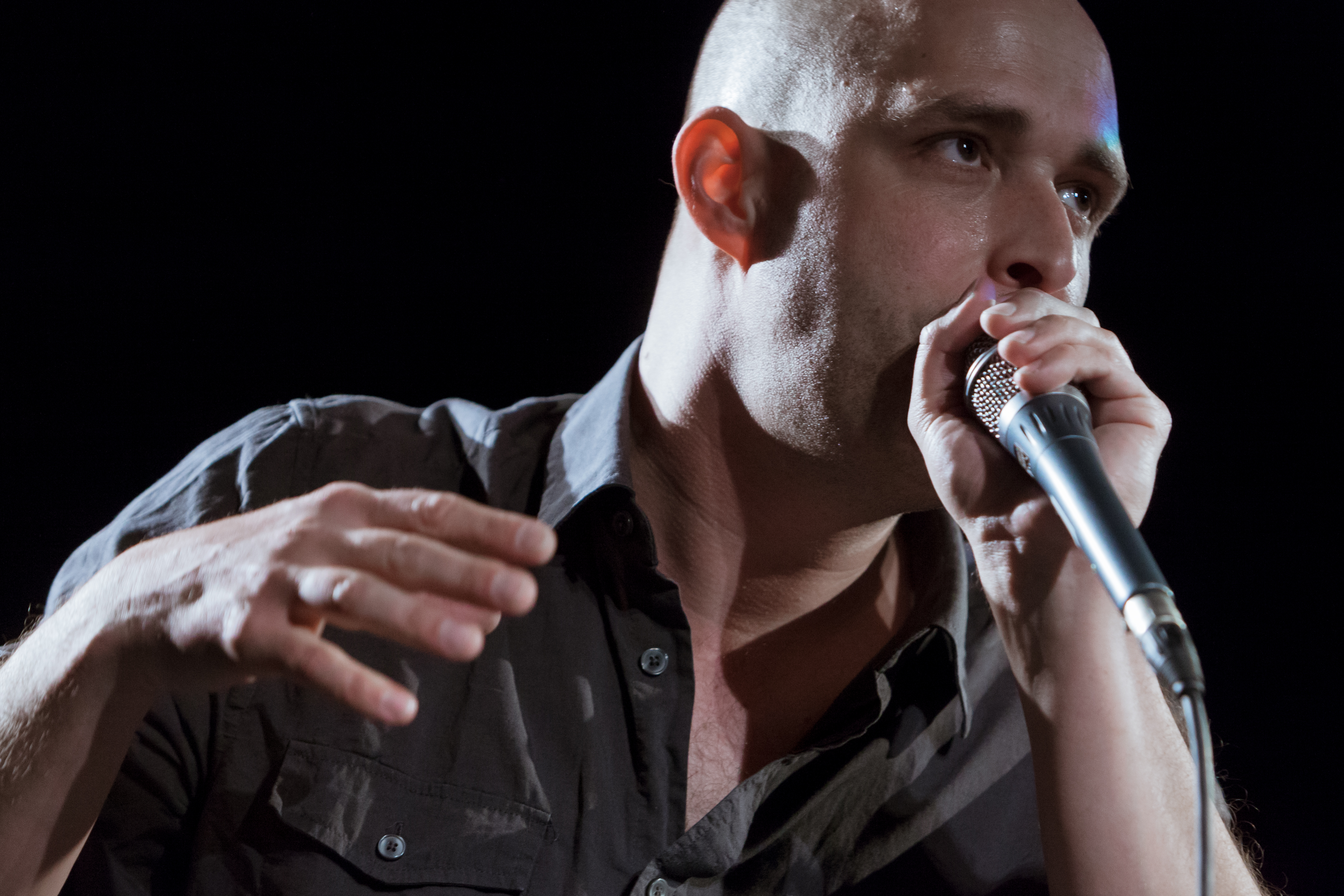
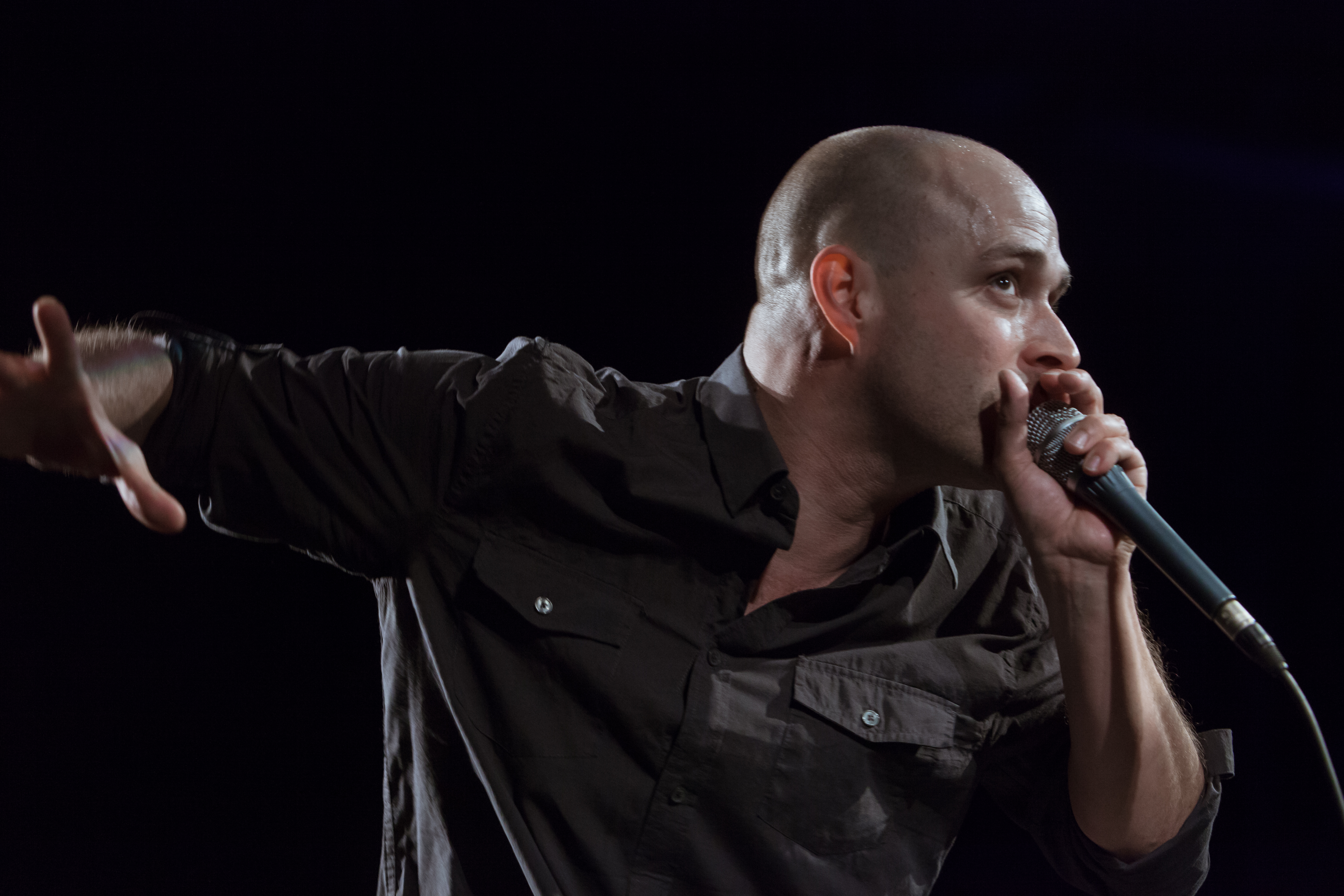
The vocalist, Andreas Schaerer, is captivating. I’d like to say he has bionic vocal chords but in fact they probably resemble yours or mine. Whereas I can’t even whistle, Schaerer can convince you that a nightingale has got caught in the rafters or a percussionist has taken to the stage with a shekere, Batá drum and a pair of claves.

This Bern-based talent had been invited to perform in London by Soweto Kinch, the British alto sax player and rapper. Part of the show was made up of tracks from Kinch’s ambitious concept album, The Legend of Mike Smith but part way through Schaerer joined Kinch to improvise with him, his bassist Nick Jurd and drummer, Shane Forbes.

The game was to interplay sounds and rhythm with Kinch on the modern theme, ‘how will consumerism respond to the depletion of resources?’ Appropriation and optimization were amongst Kinch’s articulate raps but to be honest, these themes didn’t cut through into the music. What did was Schaerer’s vocal craft.

The turn that made the audience’s mouths drop was his ‘muted trumpet’

Starting with a beautiful three-note call and whistles, African plains and fluttering birds floated through my mind, Schaerer went on to bubbling, clicking and bashing before building an industrial cacophony that dropped into some fresh beatboxing. The turn that made the audience’s mouths drop was his ‘muted trumpet’ duet, echoing and dancing with Kinch’s sax runs. It was so convincing that people looked over at Kinch thinking he’d picked up a trumpet.

The gig could have relaxed a little, allowing the band and Schaerer to expand on their improvisations, but it’s to Kinch’s credit that he spotted the potential punch Schaerer brings to a gig. His ‘joyful noise’ left us all smiling, including Jonzi D, director of the breakdancing festival, Breakin’ Convention. He was intrigued by Schaerer’s vocals and how he used his physicality to echo them, bringing a visual dimension to the performance.
Jazz musicians need to make international friends and connections as their potential audience is spread far and wide. Schaerer is doing just that. I hope that part of his journey is also taking him deeper into vocal expression, developing his potential to truly move people. His talent is beyond a party piece.

Take 5: Switzerland

Take 5_Swiss team

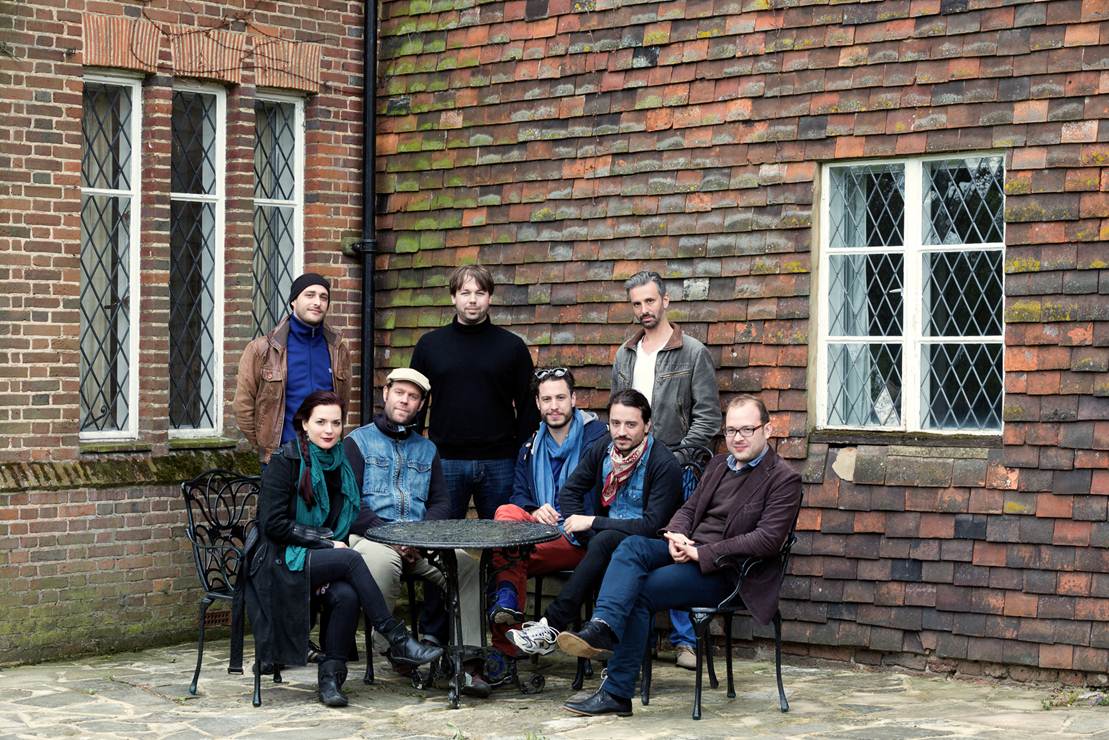
(Left to Right) Andreas Schaerer, Elina Duni, Florian Arbenz, Marc PerrenoudStefan Rusconi, Tobias Preisig. Leo Tardin, Samuel Blaser. ©Emile Holba

The heated kitchen for innovative artists

Take Five is a “heated kitchen” for innovative, young jazz artists, with five concentrated days of coaching, learning, sharing and networking (along with some fun and seriously good food). Created by the UK’s foremost jazz producer, Serious, and funded by Pro Helvetia, Take Five:Switzerland was designed to isolate eight Swiss musicians in the lush setting of Bore Place in Kent – think bluebell woods, gardens bursting with wisteria and mock orange, slouchy sofas and log fires – and lead them through sessions with a performance coach (Mary McCusker), music promoters from across Europe, as well as, digital, legal and industry experts including Wulf Muller of Sony.

“It’s been a rich experience,” said Tobias Preisig, as a comment on the variety of “inside information” they could garner, even when that meant facing tedious home truths. Musicians, such as Florian Arbenz, were aware they could improve their social networking and online presence, and some learnt the value of visual presentation, possibly helped by the photo shoot with experienced portraitist, Emile Holba. Scott Cohen of The Orchard gave a blistering session on aggressive digital distribution and ways to make money from music in an era of sporadic CD sales, with pianist Leo Tardin commenting, “He was the one to shake our ground the most, not someone to pat us on the head, but kick us in the butt, and he did that very well.”

“We need some space for our dreams” Andreas Schaerrer

Sometimes the message from promoters was dour, “We’re learning about the business, but there is no business”, said Marc Perrenoud noting that, “You have to build your audience because, apparently, no audience is interested in jazz.” However, as the vocalist Andreas Schaerer explained, “We need some space for our dreams,” and without exception they were resilient to negative messages. They have to be.

Jazz will need to go on beyond the passing of the classic “greats” and continue sculpting its own relevant identity whilst earning a living. Schaerer felt supported by some promoters learning that, “It’s not only our job to build up our career but it’s also that everybody is interested in having a future generation of active people.”

“We are a community, we are coming from the same place” Stefan Rusconi

What became achingly clear was the wall of work that faces these artists on a daily basis and that as they’d been given this break away from emails, calls, rehearsals, travelling, organising, etc, they were keen to squeeze every drop of tangible use out of the time with little patience for anything deemed irrelevant. Although Take Five is an extremely organised and detailed affair, thanks in part to the sterling work of Martel Ollerenshaw, it also tried to be flexible. So when the Swiss crew stood up to say they wanted time to simply hang out to share concepts, contacts and knowledge with each other, they were given it.

Something I was most struck by was the honesty with which the artists spoke to me about issues they were facing. Somehow the bombardment of information along with the intimate environment and maybe the odd glass of wine had enabled them to face up to their personal challenges: do they follow their business head or artistic heart, how can they deal with the amount they should be doing whilst having focused rehearsal/practise days, or time for their family, what step should they take next?

A Tribe Called Swiss

On the last day there was an extraordinary jam session led by one of the UK’s most exquisite saxophonists, John Surman. And there was an impromptu game of “football-piggy-in-the-middle”. It was actually in the kick about that I most clearly saw a key triumph of Take Five: the founding of a connected, bonded and inspired group. Let’s call it, A Tribe Called Swiss. Without exception each artist echoed Stefan Rusconi’s sentiment, “I knew all of them at least by name, but it’s been great to meet the other musicians. Also, to see we are a community, we are coming from the same place.”

Take Five can shake things up and it will take a while for the musicians to digest it all. I agreed with Rusconi when he said, “We need to be proud of what we’re doing. Swiss music is the new thing – chaotic, strange but rooted too.” Now all they need to do is buck the Swiss trend and force the spotlight onto themselves. As John Surman noted after their music session together, “I won’t forget you guys in a hurry,”  and if they utilise their newly found esprit de corps, they stand a chance of the music world saying the same thing.

Take 5 Switzerland website

Nun fliegt die Hildegard um die Welt – Dank Jazzahead.

Der 36-jährige Berner Stimmakrobat Andreas Schaerer gehört zweifelsohne zu den interessantesten Vocalisten der Schweizer Musikszene. Dessen grosses Talent ist auch dem Meister selbst, Bobby McFerrin, nicht entgangen, mit d

em er am diesjährigen Cully Jazz Festival bereits zum 3. Mal auf der Bühne stand. Sein abwechslungsreiches und vielfältiges musikalisches Schaffen ist ihm ebenso wichtig, wie seine eigene virtuose Jazz Klamauk Band “Hildegard lernt fliegen.”

Mit letzterer trat er vor kurzem an der diesjährigen europäischen Jazz Messe “Jazzahead” auf. Ein Auftritt, der von allen Seiten frenetisch gefeiert wurde und Auslöser für die kommenden Konzerte rund um den Globus war, wie Andreas Schaerer im Interview erklärt:

Dein 30 minütiges Showcase mit Hildegard Lernt Fliegen an der diesjährigen Jazzahead (dem wichtigsten Treffpunkt der europäischen Jazzszene ) wurde vom Publikum frenetisch gefeiert. Die Jazzmesse gilt natürlich vorallem als Sprungbrett um im internationalen Musikmarkt Fuss fassen zu können. Was hat sich daraus ergeben?

Andreas Schaerer Wir arbeiten neu mit F-Cat zusammen, einer sehr renommierten Booking Agentur aus Berlin. Im Herbst sind wir auf in China auf Tour, werden unser Album in Grossbritannien releasen und am London Jazz Festival spielen. Das israelische Red Sea Jazzfestival hat ebenfalls angeklopft und wir haben aber noch einiges im Köcher, was aber zur Zeit noch nicht spruchreif ist. Die Jazzahead hat sich also für uns sehr gelohnt!
So eben ist das 3. Album “Live in Moscow” von Hildergard Lernt Fliegen erschienen. Nach 2 Studio Alben nun schon ein Live Album zu veröffentlichen ist eher ungewönlich. was war eure Idee dahinter?
Andreas Schaerer Nun, diese Band entwickelt Live eine unglaubliche Energie. Eigentlich ist es eher komisch, dass wir zuerst 2 Studio Alben produziert haben und erst dann eine Live Platte. Es war uns schon lange ein Anliegen die Live Qualität dieser Band einzufangen, die Stimmung auf unserer Russland Tour war einmalig und ideal für dieses Unterfangen. Gleichzeitig war es ja auch die Idee Hildegard Lernt Fliegen visuell einzufangen. Darum auch die Zusammenarbeit mit Michelle Brun die zum Film “Tales Wander“ geführt hat. Es ist also nicht “nur” eine Live Platte entstanden sondern eine Art “Gesamtkunstwerk” mit Film und Live Platte und dickem Tourbuch und Plakat. Das ganze wie immer vom “Hofillustratoren” Peter Bäder wundervoll eingepackt.

Nebst deiner eigenen Band leitest du auch das alljähriliche Jazzfestival Jazzwerkstatt Bern, bist Dozent an der Hochschule der Künste Bern und singst noch in diversen anderen Bands u.a. mit den Trio’s Rom Schaerer Eberle und Das Beet, mit denen du momentan auf Tour bist. Wie bringt man das alles unter einen Hut, ohne sich dabei zu verzetteln?

Andreas Schaerer Ich versuche sehr fokussiert zu arbeiten. Planerisch verfolge ich alle Projekte parallel und plane dabei sehr weit in die Zukunft, bis zu 18 Monate im Voraus ist da keine Seltenheit, künstlerisch arbeite ich aber meistens nur an einer „Baustelle“ und lebe sehr im Moment. Ich denke kaum weit voraus und lebe stark im Augenblick. So behalte ich den Fokus.
Ich plane ausserdem bewusst immer wieder Ruhephasen ein, in denen ich gar nichts mache ausser meine Familie zu geniessen und mit meinem dreijährigen Sohn Levin zu jammen – was übrigens eines der spannensten Duoprojekte ist in welches ich z.Zt involviert bin.

Kürzlich standest du im Rahmen des Cully Jazz Festivals bereits zum 3. Mal mit Bobby McFerrin auf der Bühne. Mit wem würde es dich ebenfalls reizen mal zu performen und weshalb?
Andreas Schaerer Am diesjährigen Cully Jazz hat mich Bobby für ein Duo eingeladen. Das war eine sehr schöne Erfahrung und musikalisch richtig fett! Es würde mich sehr freuen in Zukunft mal einen ganzen Gig im Duo mit Bobby zu spielen. Andere Träumereien, wären, dass Pierre Boulez mal eine Komposition von mir dirigieren würde, es würde mich dabei vor allem interessieren, was passiert wenn ein solcher Meister meine Musik auf einen Klangkörper übersetzt. Ist vielleicht etwas hoch gegriffen, aber man weiss ja nie.

[youtube=http://www.youtube.com/watch?v=IfAxOQFf2Vo]

Was steht als nächstes bei dir an und worauf freust du dich ganz besonders?

Andreas Schaerer Im Moment freue ich mich vor allem darauf, einen relativ entspannten Sommer vor mir zu haben. Es gibt richtig Urlaub ohne Internet und mit schlechtem Handyempfang – wunderbar. Musikalisch freue mich sehr darauf ab dem Herbst mit einer Auftragskomposition für das ARTE Quartett anzufangen und mit HLF im Oktober in China auf Tour zu gehen. Daneben gibt’s immer wieder kleine Leckerein. So bin ich mit Bänz Oester gerade unsere zweite CD am fertig mischen – wird ein absoluter Kontrapunkt zu meinen anderen Projekten,habe die holländische Band “the Ploctones” für 3 Gigs in die Schweiz eingeladen, bin mit Rom-Schaerer-Eberle im herbstlichen Paris, demnächst beginnen wir mit der Programmplanung für die Jazzwerkstatt 2013 … es gibt wirklich ein paar wunderschöne “Schmankerl” auf die ich mich sehr freue.

Malcom Braff und Andreas Schaerer: Jazz made in Switzerland

Malcom Braff (à gauche), Reggie Washington et Lukas Koenig
∞Malcom Braff (à gauche), Reggie Washington et Lukas Koenig ©Suisa

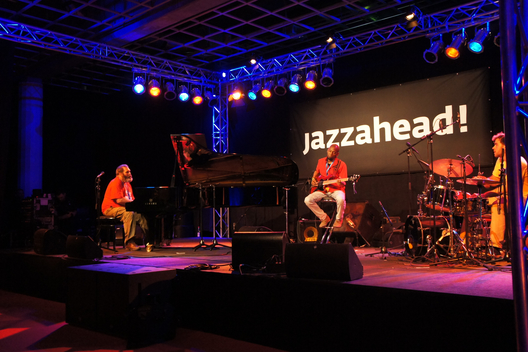
Das Malcolm Braff Trio und Andreas Schaerer’s Hildegard lernt fliegen begeisterten an der jazzahead!-Messe in Bremen das internationale Publikum und zeigten einmal mehr, dass sich Schweizer Jazz im internationalen Vergleich nicht zu verstecken braucht.

Die Fachmesse fand dieses Jahr bereits zum siebten Mal statt und hat sich mittlerweile zu DEM Treffpunkt der europäischen Jazzszene entwickelt. Erfreulich aus Schweizer Sicht war deshalb, dass die Jury gleich zwei Schweizer Bands für eines der begehrten Showcases ausgewählt hatte.

Hildegard lernt fliegen ergatterte sogar einen besonders begehrten Platz am Samstagabend im Kulturzentrum Schlachthof, das zur Prime Time aus allen Nähten platzte. Die Zuschauer waren von der musikalisch eindrucksvollen und ideenreichen Performance begeistert und applaudierten der Band frenetisch.

Das Trio um Malcolm Braff (piano) mit Reggie Washington (bass) und Lukas Koenig (drums) überzeugte am Nachmittag ebenso mit erstaulicher Spielkraft. Ungeheure Energien und phantastische Klangbilder entfalteten sich hier aus kleinsten musikalischen Zellen, die drei Musiker loteten die Grenzen ihrer Instrumente vielfältig aus und kosteten sowohl die Transparenz als auch die Kraft ihrer Musik genüsslich aus. Das routinierte Trio eroberte die Gunst des internationalen Fachpublikums schon vom ersten Stück an – auch ihnen stand nur eine kurze halbe Stunde zur Verfügung. Schliesslich musste Malcolm Braff am selben Abend (wie am Abend zuvor!) auch wieder das heimische Publikum beim Cully Jazz Festival unterhalten… Beide Bands sind auch auf der brandneuen CD-Compilation “jazz made in switzerland, selection 2012/13” vertreten. 

Malcolm Braff Trio, Inside, Enja Records 2011
Hildegard lernt fliegen, Cinéma Hildegard, Unit record 2012