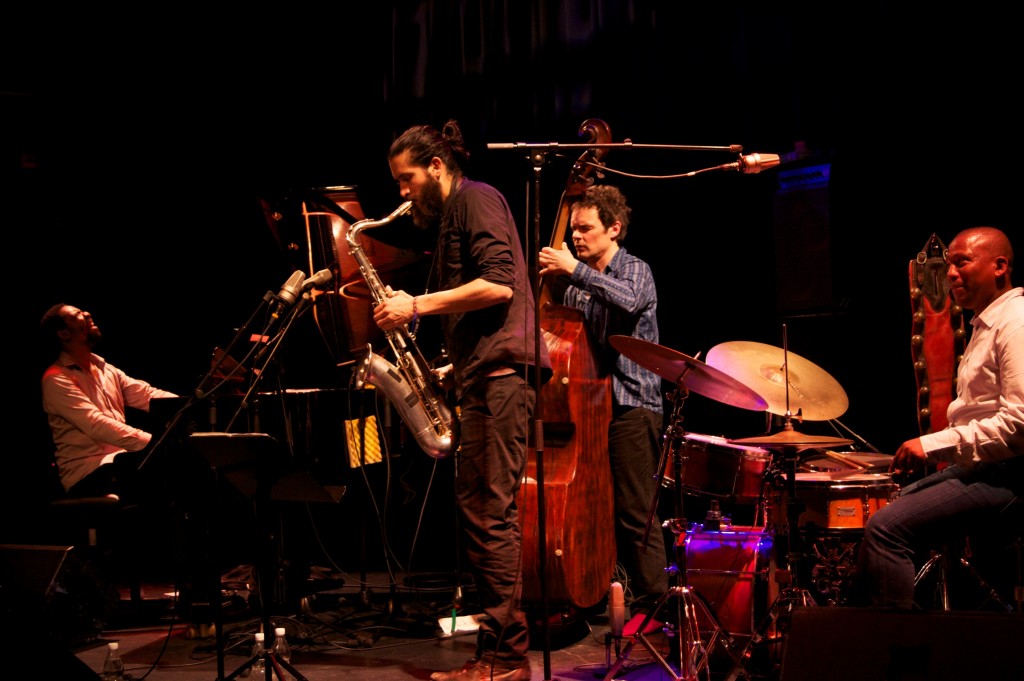
The Who Trio presents “The Who Zoo”

The Who ZooFrom the opening, assured double bass note and urgent cymbal tapping to piano notes peeking shyly out, the quality of The Who Zoo is apparent. The acoustic side of this limited release, double album uphold the trio’s aim: to respectfully work on the art of improvisation.

It sounds like a whale singing of unrequited love

The track Rembellarun stands out for feeling like an actual composition, all be it a dreamlike one with Michel Wintsch at his melancholic best and Gerry Hemingway providing an edge by literally scraping the side of a cymbal. It sounds like a whale singing of unrequited love. Just when the percussive ideas begin to dominate, in rides a piano rebuff – a few notes delivered with confidence and defiance.

Hemingway is a constant imaginative presence sensitively patting out ideas and allowing cymbals to whisper sweet nothings around the hook line in Demmpa. Bänz Oester tunes in, but asserts his own ideas with an intimate knowledge of strokes, caresses and pulls of his bass strings. The inventiveness of his playing borders on the magical.

I like it when they get raw and primal

I didn’t like Sloeperr to begin with, then at nine minutes in, on maybe the third listen, I got goosebumps and almost tears in my eyes as the warped hymn lines and piano poundings, bass vibrations and beatings and rattling drum funk entangled me in an emotional net. I like it when they get raw and primal. They can handle it without resorting to cliché. There are times when I’m certain Hemingway could get in chops and licks but he keeps it organic, all three staying riveted to the present moment. This favouring of the integrated ‘group solo’ enables an uninterrupted onslaught.

Hemingway was a name in the ‘loft scene’ of 1970s New York where free jazz had laid the foundation and was developed by new creatives such as Joe McPhee, Don Pullen and David Murray. His presence is powerful but his depth of experience is matched by Oester and Wintsch. Michel embroiders the music with runs that sound like glass beads scattering and exquisite melodies that seem to trickle from a Peter Greenaway film soundtrack.

How I’d love to hear Oester on electric bass

The second CD is mis-titled as ‘Electric’. I was expecting Wintsch on Fender Rhodes and how I’d love to hear Oester on electric bass, but in fact at the core of these longer improvisations are the acoustic instruments with what seems to be decorative strokes of synthesiser, electric sound effects and noodlings. ‘Acoustic Plus’ may have been a better description.

This release has a multitude of textures and thoughts: dry, scraping grief, assertive fury and vulnerable beauty. Although I wouldn’t have complained at even more variety, it’s quite an achievement to capture improvised music as it should be heard – live. The Who Zoo is an exploration of the potency of improvisation and all venues interested in such music should book them now.

The WHO Trio, The Who Zoo (Auricle Records / Nagual Music)
The Who Trio
Auricle Records
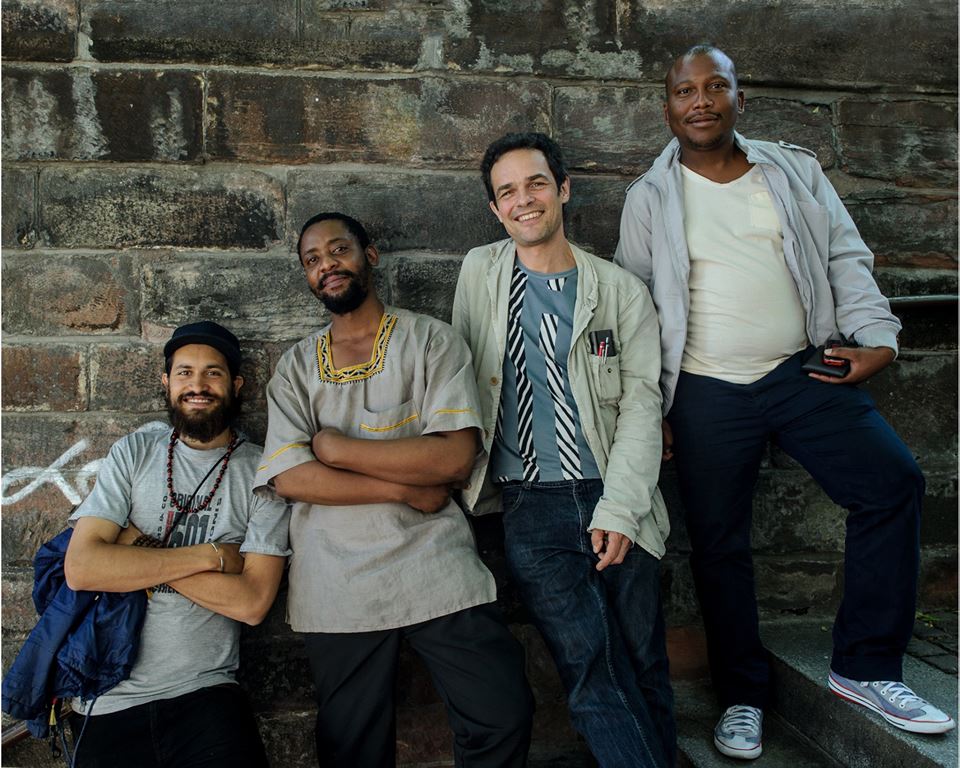
Bänz Oester et les faiseurs de pluie

Rain, O Rainmaker.
Because when you rain, the soul of mankind will rejoice
Leaving the spirit of the ancestors to sleep in peace
Again, rain!

(Extrait d’un poème de Darko Antwi, Ghana)

Rainmakers_2Le disque de Bänz Oester & The Rainmakers s’ouvre sur ces mots. Une belle introduction à ces quelque six morceaux enregistrés en quatre jours à Bâle, au Bird’s Eye. Ils préfigurent d’une musique fulgurante où l’ont reconnaît des bribes de folklores, un piano sud-africain mais surtout un sens de l’improvisation forcené. Les Rainmakers sont la rencontre  de deux musiciens sud-africains – Africa Mkhize, Ayanda Sikade – et de deux musiciens suisses, le contrebassiste Bänz Oester et son ami saxophoniste Ganesh Geymeier.

 J’aime ce groupe pour son esprit démocratique” (Africa Mkhize)

L’histoire a commencé en 2011 au National Arts Festival de Grahamstown. Bänz Oester y est invité avec son ami Andreas Schaerrer. Les rencontres avec les musiciens locaux sont multiples, mais le coup de foudre avec Africa Mkhize et Ayanda Sikade est immédiat. « C’est drôle, on peut ne pas se voir pendant une année. On se met à répéter et en trente minutes, nous sommes en sueur. Cela ne m’était jamais jusque-là » s’exclame le contrebassiste connu aussi pour être un membre du Who Trio.

Un an plus tard, ces quatre-là se retrouvent en Suisse, tournent et enregistrent. Pour célébrer la sortie de ce premier opus des Rainmakers, les musiciens sont repartis à la conquête des scènes de Suisse.

Ils terminaient leur tournée à Lausanne au Chorus, pour deux sets magistraux où le piano percussif de Africa Mkhize se plongeait dans les folies d’une rythmique qui semblait libre de toute contrainte et d’un sax aussi séducteur que surprenant. « J’aime ce groupe pour son esprit démocratique. Chacun contribue. Une idée peut amener dans n’importe quelle direction. Dans mon quartet sud-africain, on a plus tendance à maîtriser les idées. » explique le sourire aux lèvre Africa Mkhize à la sortie du dernier concert de la tournée, au Chorus de Lausanne.

« Nous ne cherchons pas à faire un morceau de yodel avec un rythme africain » (Bänz Oester)

Rainmakers_photo 1Des compositions originales (signées de lui ou de Bänz Oester), des standards de jazz, des morceaux issus du folklore bulgare ou suisse, toutes les musiques sont à portées d’instrument. «Ce n’est pas un concept de producteur, précise Bänz Oester. « Nous ne cherchons pas à faire un morceau de yodel avec un rythme africain. Tout part d’abord du cœur. On ne peut jouer le morceau à notre manière que si on aime le morceau. »
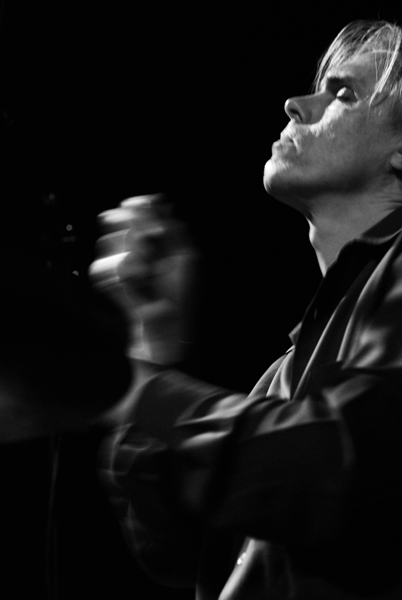
 « C’est ma voix qui me permet d’entrer en contact avec le piano» (Africa Mkhize)

La musique de ces quatre-là est porteuse, porteuse d’émotions, porteuse d’univers musicaux en constante mutation, du free à la ballade. A Chorus, penché sur son piano, Africa Mkhize semble absorbé par son instrument, sa voix laissant échapper parfois cris, murmures, scat. «Je joue tous les soirs sur des pianos différents, sur lesquels tant de mains sont passées. Ma voix est la seule façon d’entrer en contact avec eux» explique celui qui joua pendant près de dix ans avec Miriam Makeba. » Ses doigts effleurent, voltigent, frappent les touches blanches et noires, ouvrent la porte de la spiritualité, une porte par laquelle, ses trois comparses s’empressent de s’engouffrer.

[youtube=http://www.youtube.com/watch?v=mEJ-34vtJTo]

Bänz Oester & The Rainmakers, « Playing at The Bird’s Eye » (Unit Records)


Who Trio @Festival Jazz Onze+

Who Trio_HemingwayWhen I hear a band like Who Trio, I feel I need to get out from under my rock and listen to a lot more Swiss-based music. Playing together since 1995, they thrilled Lausanne’s Jazz Onze+ Festival last week with highlights such as drummer Gerry Hemingway losing himself in a cave of pounding beats that never hit us like falling rocks but swung with such power and groove we could hardly stay in our seats. But I’m getting ahead of myself – a key to imagining their performance is to know how they looked.
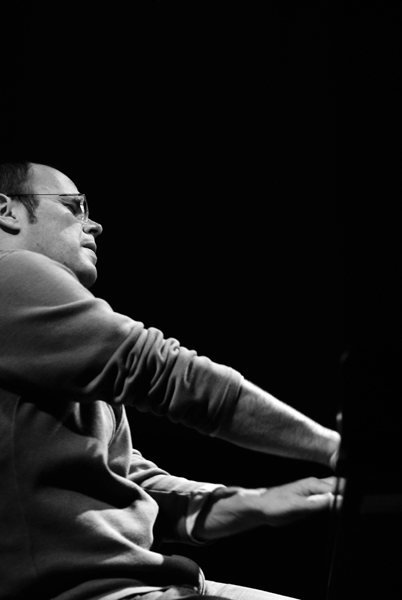
Three toddlers, who are black belts in music improvisation

Who Trio_WintschPut simply, three toddlers. Who are black belts in music improvisation. The way they played, stroked, tweaked, plucked and beat the living daylights out of their instruments, was as creatively done as it could be. Michel Wintsch was often hunched over the piano like Schroeder from Charlie Brown as if to control his delicate touch, or plucking strings under the hood of the piano like a car mechanic. Gerry also used physicality to direct energy into his drum kit, emphasizing beats be they furious or almost inaudible. He’d throw his head back and release vocally, serving us with scraps of a monologue; mutterings of the crazy guy who loiters on a street corner. Inventive sounds and ideas were continually mushrooming from this trio.
animalistic whines, walking bass, scratches…

Who Trio_Oester

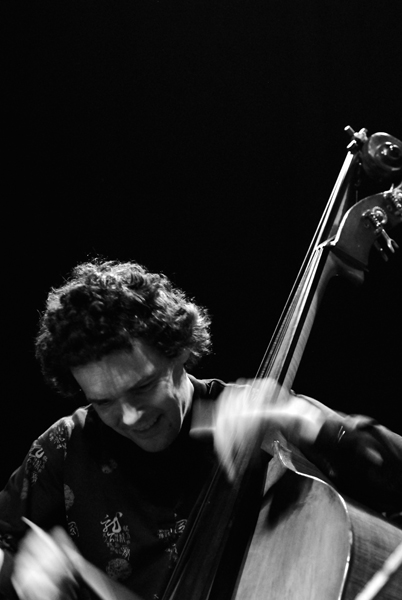
Whatever Baenz Oester created with his double bass there was clarity and conviction: animalistic whines, walking bass, scratches, deep twangs and a series of Bach-like notes that I found particularly moving. It was the trio’s emotion and revealing of vulnerability that stood their performance apart and gave it resonance. Michel’s work as a film and theatre composer showed itself in glimmers of exquisite melodies and perfectly imagined chords that were authoritative yet melancholic.

It is a feat to improvise a full set without pausing but I wanted breaks in the music so we, the audience, could express and release our responses and also so the trio had a chance to start a piece, afresh. There was a tendency to build the tension, bring it down, then re-build the sound and this became a little predictable as a landscape. However, the music never was and the view was continually riveting. I can’t wait to hear more.


[youtube=http://www.youtube.com/watch?v=F9HcCDFW8oI]

Nun fliegt die Hildegard um die Welt – Dank Jazzahead.

Der 36-jährige Berner Stimmakrobat Andreas Schaerer gehört zweifelsohne zu den interessantesten Vocalisten der Schweizer Musikszene. Dessen grosses Talent ist auch dem Meister selbst, Bobby McFerrin, nicht entgangen, mit d

em er am diesjährigen Cully Jazz Festival bereits zum 3. Mal auf der Bühne stand. Sein abwechslungsreiches und vielfältiges musikalisches Schaffen ist ihm ebenso wichtig, wie seine eigene virtuose Jazz Klamauk Band “Hildegard lernt fliegen.”

Mit letzterer trat er vor kurzem an der diesjährigen europäischen Jazz Messe “Jazzahead” auf. Ein Auftritt, der von allen Seiten frenetisch gefeiert wurde und Auslöser für die kommenden Konzerte rund um den Globus war, wie Andreas Schaerer im Interview erklärt:

Dein 30 minütiges Showcase mit Hildegard Lernt Fliegen an der diesjährigen Jazzahead (dem wichtigsten Treffpunkt der europäischen Jazzszene ) wurde vom Publikum frenetisch gefeiert. Die Jazzmesse gilt natürlich vorallem als Sprungbrett um im internationalen Musikmarkt Fuss fassen zu können. Was hat sich daraus ergeben?

Andreas Schaerer Wir arbeiten neu mit F-Cat zusammen, einer sehr renommierten Booking Agentur aus Berlin. Im Herbst sind wir auf in China auf Tour, werden unser Album in Grossbritannien releasen und am London Jazz Festival spielen. Das israelische Red Sea Jazzfestival hat ebenfalls angeklopft und wir haben aber noch einiges im Köcher, was aber zur Zeit noch nicht spruchreif ist. Die Jazzahead hat sich also für uns sehr gelohnt!
So eben ist das 3. Album “Live in Moscow” von Hildergard Lernt Fliegen erschienen. Nach 2 Studio Alben nun schon ein Live Album zu veröffentlichen ist eher ungewönlich. was war eure Idee dahinter?
Andreas Schaerer Nun, diese Band entwickelt Live eine unglaubliche Energie. Eigentlich ist es eher komisch, dass wir zuerst 2 Studio Alben produziert haben und erst dann eine Live Platte. Es war uns schon lange ein Anliegen die Live Qualität dieser Band einzufangen, die Stimmung auf unserer Russland Tour war einmalig und ideal für dieses Unterfangen. Gleichzeitig war es ja auch die Idee Hildegard Lernt Fliegen visuell einzufangen. Darum auch die Zusammenarbeit mit Michelle Brun die zum Film “Tales Wander“ geführt hat. Es ist also nicht “nur” eine Live Platte entstanden sondern eine Art “Gesamtkunstwerk” mit Film und Live Platte und dickem Tourbuch und Plakat. Das ganze wie immer vom “Hofillustratoren” Peter Bäder wundervoll eingepackt.

Nebst deiner eigenen Band leitest du auch das alljähriliche Jazzfestival Jazzwerkstatt Bern, bist Dozent an der Hochschule der Künste Bern und singst noch in diversen anderen Bands u.a. mit den Trio’s Rom Schaerer Eberle und Das Beet, mit denen du momentan auf Tour bist. Wie bringt man das alles unter einen Hut, ohne sich dabei zu verzetteln?

Andreas Schaerer Ich versuche sehr fokussiert zu arbeiten. Planerisch verfolge ich alle Projekte parallel und plane dabei sehr weit in die Zukunft, bis zu 18 Monate im Voraus ist da keine Seltenheit, künstlerisch arbeite ich aber meistens nur an einer „Baustelle“ und lebe sehr im Moment. Ich denke kaum weit voraus und lebe stark im Augenblick. So behalte ich den Fokus.
Ich plane ausserdem bewusst immer wieder Ruhephasen ein, in denen ich gar nichts mache ausser meine Familie zu geniessen und mit meinem dreijährigen Sohn Levin zu jammen – was übrigens eines der spannensten Duoprojekte ist in welches ich z.Zt involviert bin.

Kürzlich standest du im Rahmen des Cully Jazz Festivals bereits zum 3. Mal mit Bobby McFerrin auf der Bühne. Mit wem würde es dich ebenfalls reizen mal zu performen und weshalb?
Andreas Schaerer Am diesjährigen Cully Jazz hat mich Bobby für ein Duo eingeladen. Das war eine sehr schöne Erfahrung und musikalisch richtig fett! Es würde mich sehr freuen in Zukunft mal einen ganzen Gig im Duo mit Bobby zu spielen. Andere Träumereien, wären, dass Pierre Boulez mal eine Komposition von mir dirigieren würde, es würde mich dabei vor allem interessieren, was passiert wenn ein solcher Meister meine Musik auf einen Klangkörper übersetzt. Ist vielleicht etwas hoch gegriffen, aber man weiss ja nie.

[youtube=http://www.youtube.com/watch?v=IfAxOQFf2Vo]

Was steht als nächstes bei dir an und worauf freust du dich ganz besonders?

Andreas Schaerer Im Moment freue ich mich vor allem darauf, einen relativ entspannten Sommer vor mir zu haben. Es gibt richtig Urlaub ohne Internet und mit schlechtem Handyempfang – wunderbar. Musikalisch freue mich sehr darauf ab dem Herbst mit einer Auftragskomposition für das ARTE Quartett anzufangen und mit HLF im Oktober in China auf Tour zu gehen. Daneben gibt’s immer wieder kleine Leckerein. So bin ich mit Bänz Oester gerade unsere zweite CD am fertig mischen – wird ein absoluter Kontrapunkt zu meinen anderen Projekten,habe die holländische Band “the Ploctones” für 3 Gigs in die Schweiz eingeladen, bin mit Rom-Schaerer-Eberle im herbstlichen Paris, demnächst beginnen wir mit der Programmplanung für die Jazzwerkstatt 2013 … es gibt wirklich ein paar wunderschöne “Schmankerl” auf die ich mich sehr freue.