Album: Yves Theiler Trio

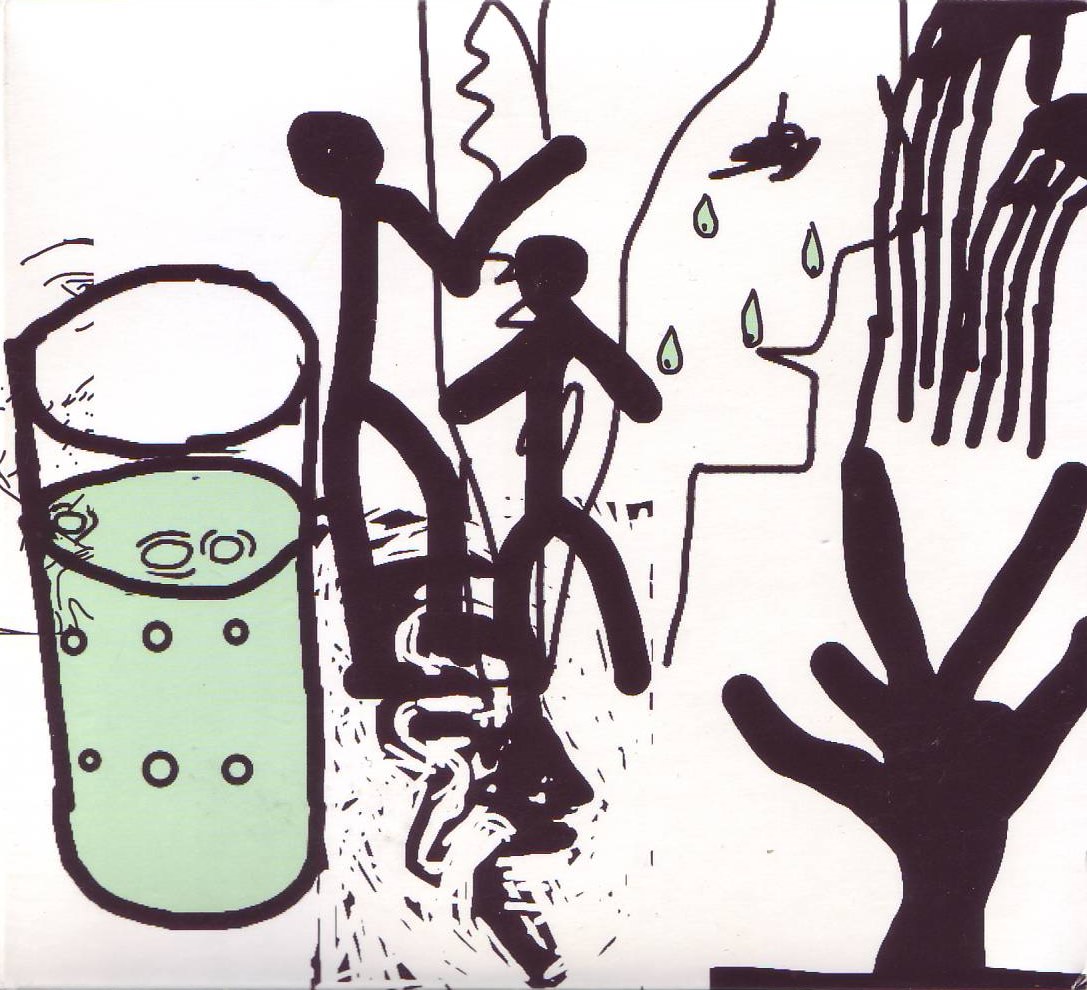
yt_cd_coverVor vier Jahren erschien das Debut-Album des Yves Theiler Trio und wurde von der SRF2-Kulturredaktion gleich zum Trio-Album des Jahres gekürt. Eigentlich hätte er schon früher nachdoppeln wollen, sagt der 28jährige Pianist aus Zürich, aber ein Personal-, beziehungsweise Instrumentenwechsel hatte eine Verzögerung zur Folge. Statt dem Fretless-Ebass von Valentin Dietrich ist nun der Kontrabass von Luca Sisera zu hören, mit dem Theiler auch in der Band Roofer zusammenspielt. Der Klang des Instrumentes zusammen mit Siseras fluid-melodischem Stil verleihen dem rhythmisch explosiven und doch kristallklar präzisen Sound des Trios eine geradezu sonnige, neue Wärme.

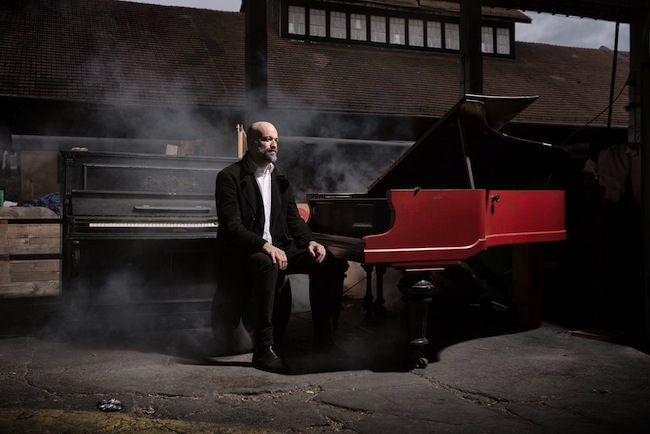
Yves Theiler TrioSo viel wird bereits im ersten Stück des von Radio SRF2 ko-produzierten Zweitlings “Dance in a Triangle” klar. Es heisst “For Bass” und beginnt mit einer fast zweiminütigen Einführung, wo eine fein gesponnene Bassmelodie von einer insistenten, einzelnen Pianonote und Perkussion vorwärtsgetrieben werden, ehe Theiler einen druckvollen Groove und eine labyrinthartige Melodie ins Geschehen einführt, die irgendwo zwischen Afrika und Erik Satie angesiedelt ist.

Yves Theiler_live_1Mit dem Perkussionisten Lukas Mantel arbeitet der Pianist seit zehn Jahren zusammen. Das daraus resultierende telepathische Verständnis erlaubt es dem Trio, die überaus subtile Komplexität von Theilers Kompositionen – sie beginnen zumeist mit einer Improvisation allein am Klavier – mit einer rhythmischen Dynamik auszuleuchten, welche der atemberaubenden Virtuosität des Gebotenen einen starken, emotionellen Rückhalt gibt. Mit jugendlicher Verspieltheit jongliert Theiler mit Techniken und Stilen aus der ganzen Welt zwischen Eritrea, Ahmad Jamal und Post-Rock. Dennoch tritt nie das Gefühl auf, man habe es mit einer Elster zu tun, denn jeder Musiker hat seine eigene Stimme und schreckt nicht dafür zurück, sie laut und deutlich einzusetzen. Ein Album voller Witz, Energie und kühnen Kurven.

Yves Theiler Trio, “Dance in a Triangle” (MGB Jazz 18)  
Link für Yves Theiler Konzerte

https://youtu.be/zGvGhXNIHJ4

Record of the Month (April): Nadja Zela «Immaterial World»


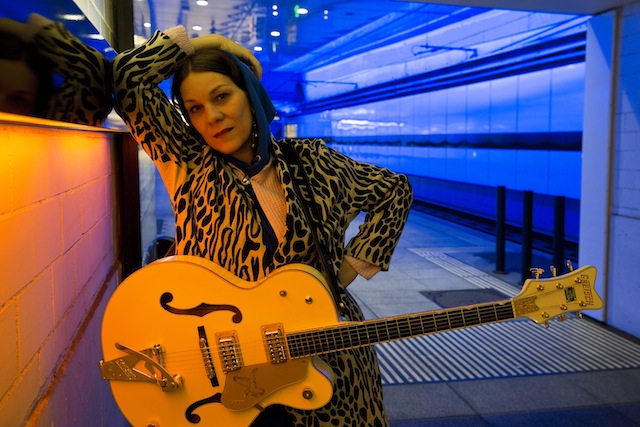
zela_2016_4a_rgb©niklaus_spoerriEin Banjo zupft ein repetitives Muster, die Band setzt mit einem bestimmten, akzentuierten Spiel ein, während die Protagonistin durch den mit blauem Industrielicht ausgeleuchteten Gang schreitet – und näher kommt. Sie hat eine elektrische Gitarre, Marke Gretsch, umgehängt und als sie ankommt am Ende des langen Korridors, singt sie nur die Worte: «I’m still alive.»


Eine markante weibliche Stimme in der Schweizer Rocklandschaft

Die «Überlebende», die diese Zeile nicht ohne Trotz intoniert, ist Nadja Zela, die glücklicherweise immer noch da ist und seit über zwei Jahrzehnten eine markante weibliche Stimme in der Schweizer Rocklandschaft ist. Erst waren da Bands wie The Whooshings oder Rosebud, später dann Fifty Foot Mama. Ab 2009 veröffentlicht Zela nur noch unter eigenem Namen. Immer war die 44-jährige Zürcherin da, doch nie mittendrin. Denn dazu sind ihre Musik und ihre Stimme zu eigensinnig und unverkennbar. Und vor allem: Zela lässt sich nicht vereinnahmen. Wenn es zu bequem wird, dann bricht sie auf – und geht weiter.

[youtube https://www.youtube.com/watch?v=ROpSOozi3G0&w=640&h=360]

“Ich bin doch nicht Blues! Ich bin auch nicht Rock oder Folk!”

«Immaterial World» ist ihr viertes Album. Sie hat es mit einer neuen, rockigeren Band eingespielt – mit Martin Fischer am Schlagzeug, Michel Lehner am Bass, Nico Feer an Gitarre und Bruder Rico Zela an Orgel und Oboe. Mitproduziert wurde es von Mama-Rosin-Mitglied Robin Girod. «Ich hatte einfach plötzlich wieder dieses Lechzen nach einer Rockband», schreibt sie. Denn ihr wurde es «zu Comfort-Zone-mässig» mit der vorherigen jazzigen Formation. «Ich mag es einfach nicht, wenn eine Szene mich für sich beansprucht. Ich bin doch nicht Blues! Ich bin auch nicht Rock oder Folk! Ich will Zela sein, irgendwas zwischen Bowie, Sister Rosetta Tharpe und Cheyenne aus ‘Spiel mir das Lied vom Tod’», so Zela.

Eine Art kollektive Ahnung

Das Album beginnt mit einem stillen «Prelude». «We are the children of the old world», singt Zela, nur begleitet von ihrem Gitarrenspiel. Sie meint mit dieser Zeile vor allem ihre Generation der «Golden Age Kids in Europa» – «die aufgeklärte, prosperierende, kolonialisierende, missionierende alte Welt.» Eine Welt, die wie der Kapitalismus ihrer Meinung nach ausgedient habe. Die «Immaterial World», die Zela in zwölf Songs besingt, empfindet sie «als eine Art kollektive Ahnung von einer seelischen Verbundenheit der Menschen in ihrem Bestreben nach Liebe, Zusammenhalt und Frieden.» Dies sei nicht religiös oder esoterisch motiviert, sondern rein emotional zu verstehen.

Die Gegenwart und Vergangenheit zu überwinden

Und so klingt denn auch «Immaterial World», das versucht, aufzubrechen in diese neue, bessere Welt – und es aber nicht immer schafft, die Gegenwart und Vergangenheit zu überwinden. Weil: Die Verletzungen, das Elend und Ungerechtigkeiten der momentanen Gesellschaft, sie geben den Ton mit an, beispielsweise im schroffen «I’m Still Alive» – einem der Schlüsselsongs der Platte – oder gleich darauf in «Break Every Bone». Und selbst wenn die Band ausgelassen aufspielt wie in «Sunday Morning» fühlt sich die Sängerin allein. Aber: «I try to carry on», weil es muss weitergehen, irgendwie.

[soundcloud url=”https://api.soundcloud.com/tracks/242718550″ params=”auto_play=false&hide_related=false&show_comments=true&show_user=true&show_reposts=false&visual=true” width=”100%” height=”450″ iframe=”true” /]

Es gibt aber auch Hoffnung, und Aufrufe zu mehr Solidarität wie im grossartigen «Mercy on the Weak», in dem Zela und ihre Band eine entspannte und doch dringliche Gospelspielart entwerfen. Überhaupt: Diese Band folgt Zela und ihrer Stimme überallhin – sei es im Reggae «Level Off Level Out» oder im abschliessenden und tröstenden «Homeless Son» – und es ist zu hören, dass hier etwas gemeinsames entstanden ist, das mehr ist als nur eine weitere beeindruckende Soloplatte. Denn es ist so (und da darf man schon mal pathetisch werden, etwas, das dieses Album zu keiner Zeit ist): Nur gemeinsam ist sie zu erreichen, diese «Immaterial World».

Nadja Zela: «Immaterial World» (Patient Records/Irascible)

Konzerte:
16.04., Bundeshaus zu Wiedikon, Zürich
27.04., Kraftfeld, Winterthur
29.04., Le Singe, Biel
30.04., Kammgarn, Schaffhausen
06.05., Palace, St. Gallen
16.07., Café Kairo, Bern
02.09., Neubad, Luzern
03.09., El Lokal, Zürich:
17.09., Kiosk Tabak, Zürich
29.10., Bibliothek, Dottikon
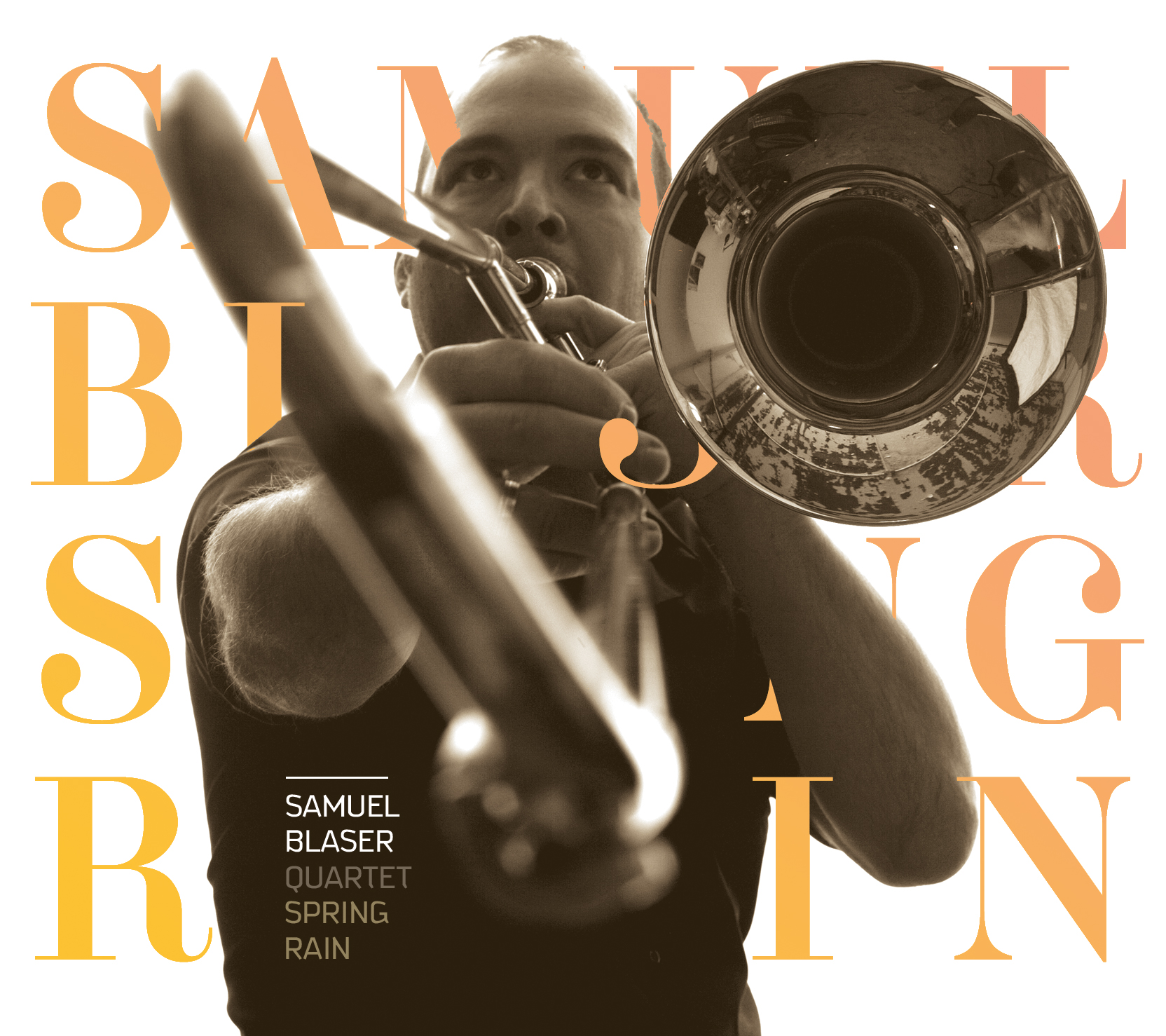
Record of the month: “Spring Rain” by Samuel Blaser

Samuel Blaser's Spring RainBlaser trills and sways with a wonderful, inebriated tone
Samuel’s opening notes of ‘Jesus Maria’ emit a tone of skewed warmth, imperfect but aglow. What follows is an almost heartbreaking conversation between Blaser, Russ Lossing whose piano notes fall as clear spring raindrops, and the ghostly double bass of Drew Gress. Gerald Cleaver locks into this sensitivity brushing drums or rustling cymbals and I drifted into a meditation that I didn’t want to leave. It’s a gorgeous piece written by Carla Bley and was featured on the Jimmy Giuffre 3‘s album Fusion, 1961. Spring Rain is a tribute to Giuffre, specifically his now-revered, explorative work with Paul Bley and Steve Swallow and combines covers with original compositions in a conducive listen.

Lossing makes the difference in ‘Missing Mark Suetterlyn’: as Blaser trills and sways with a wonderful, inebriated tone, Russ brings the double joy of piano and keyboards (he plays Minimoog, Fender Rhodes and Wurlitzer on this album). His electronic runs and chord stabs funk it up, space it out and take us into a thrilling, lawless landscape. All the time Cleaver is finding off-beats with laudable subtlety; he’s finely integrated but always notable.

A warm ’60s jazz homecoming
This track leads straight into the lucid melody of ‘Temporarily’ (another Carla Bley composition). There’s a sense of the recognisable here, like a warm ’60s jazz homecoming. Blaser hits the spot in the way a trumpet can – with soulful, cool sensibilities. Spring Rain has been directed by Robert Sadin, a classical conductor (a vital point as there are flavours of classical expressionism in Blaser’s playing) who also arranged and produced output such as Gershwin’s World by Herbie Hancock. From the musical themes to the sequencing, this feels a quality production.

I adored Blaser’s short solo ‘Homage’, its romantic grief like a modernist ‘Last Post’. If it was played with Blaser’s late manager, Izumi Uchida in mind, I can’t think of a more touching goodbye. ‘The First Snow’ is a free-for-all improv that again shows how this quartet is greater than the sum of its parts. They entangle themselves yet create space for ideas to breathe a fresh air.

Blaser: “Beautiful melodies and no boundaries”
If I’m honest I don’t find the trombone an easy listen, but the combination, especially with Lossing’s exquisite electronic touches, creates both an engaging tension and harmony. Blaser says, “I want people to know that there is jazz, blues, classical music, beautiful melodies and no boundaries,” and maybe that’s why I like this album. However I also think taking Guiffre as inspiration has given Blaser permission to incorporate five interpretative covers as well as provide a fertile direction for composing.

The Giuffre 3 are now recognised for their crucial contribution to free jazz, but disbanded in 1962 after the avant-garde album Free Fall and a gig where they earned 35 cents each. I’m certain there are quite a few musicians out there now who can relate to that.

Spring Rain will tour in November and December 2015.
Whirlwind Recordings

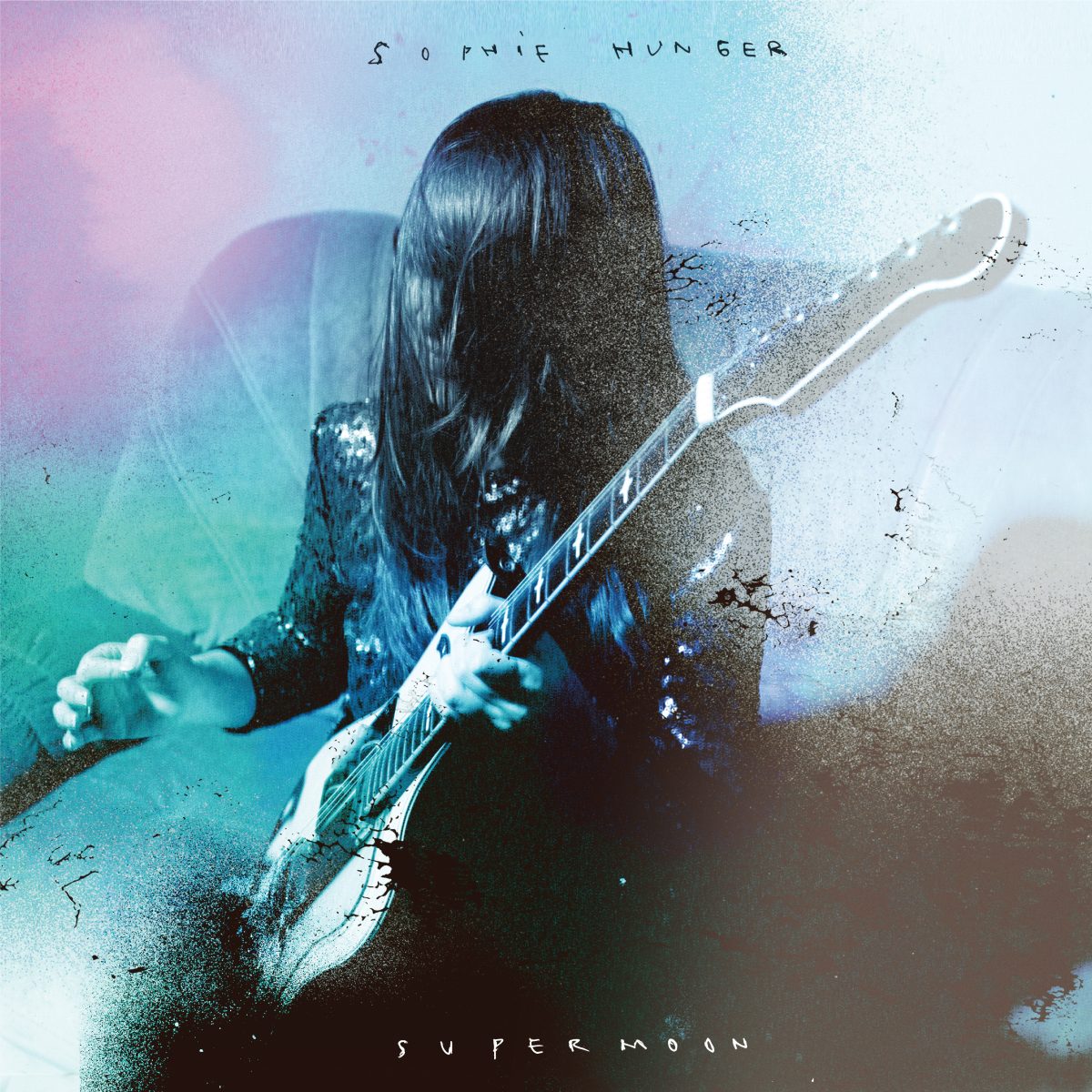
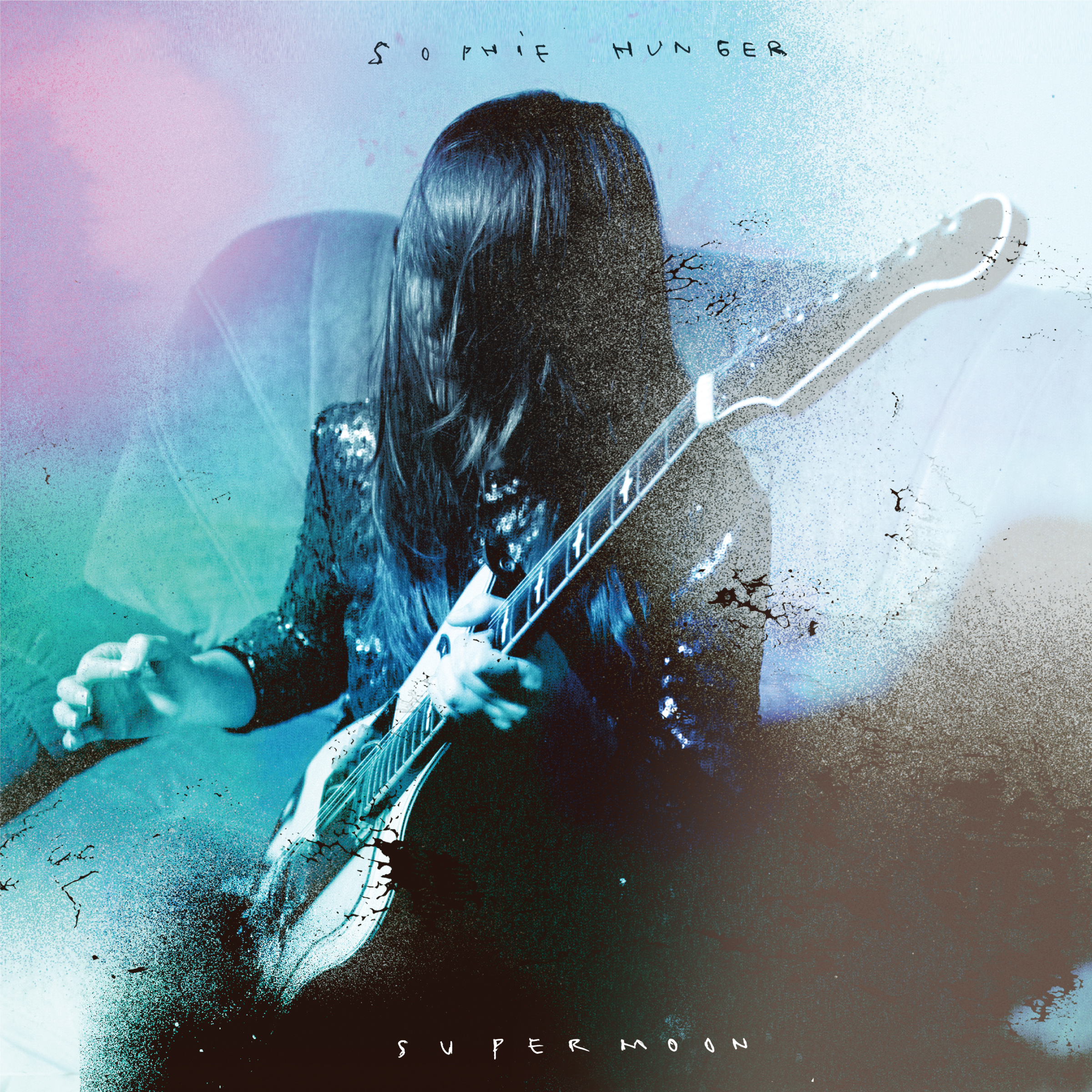
Sophie Hunger “SUPERMOON”

Cover_SophieHungerMuch has been written about Sophie Hunger‘s stellar credentials: polyglot singer-songwriter, multi-instrumentalist, bandleader, film-maker, the only Swiss artist ever to play Glastonbury, etc… Yet, visually speaking, there’s little hint that she’s one of Switzerland’s most incisive, defiant and successful artists. Watching some of her live footage on YouTube, I was struck by how demure her physical appearance is; she could easily be mistaken for a young graduate turning up for an administrative internship at the local bank. I mention this simply because after listening to her fifth studio album, SUPERMOON just released on Two Gentlemen, I realise that she is indeed establishing herself as a heavyweight on the Swiss alternative pop scene and personally find her lack of super-sized-me visual representation very refreshing. A woman of substance. Like a tough hand in a velvet glove, Hunger’s musical approach often seems understated but is as tough as a big slap when you decide to pay attention.

Uncompromising, intimate, bewitching

The LP was recorded, mixed and mastered in a variety of international locations, hinting at a healthy investment of the part of her record company and a musical confidence of knowing who was going to bring out the best in her sound. SUPERMOON bears many her usual trade marks: uncompromising, intimate, bewitching. Inspired by a trip to the Golden Gate Park museum in San Francisco, the moon takes centre stage as muse in this work and sets the haunting, floaty, echoey tone throughout most of the 12 tracks.

It’s a generally sparse, languid, introspective work that to its credit doesn’t feel over-produced. Space is indeed the place. The title track is all gentle folk guitar and echo-chamber vocals, languid and contemplative with beautiful harmonies that soon seep in and have you looking at the earth from her dark, lunar perspective.

A perfectly lilting, sombre pace

Melodically beautiful and emotionally rich ballads are plentiful. ‘Die Ganze Welt’ being a prime example of a perfectly lilting, sombre pace that is cut through by her sensitive vocal limpidity. ‘Fathr’ is also a stand-out slowie, wonderfully uplifted by divine string arrangements and again a peg on which to hang a silvery vocal delivery full of depth and feeling. Footballer/actor, Eric Cantona makes an unusual appearance as her erstwhile lover in the duet ‘La chanson d’Hélène’ and together they make a decent enough job of this cover version originally done by Romy Schnieder and Michel Piccoli – possibly a strategic move to please Sophie’s large French following.

The potential to be a screaming smash hit single

Thankfully, it’s not all liquid, languid grey tones, there are bursts of great up-tempo rhythms that retain Hunger’s defiant dark edge, adding some fire energy to the moon dance. ‘Mad Miles’, again inspired by her recent trip to California, has the potential to be a screaming smash hit single with its sinister start, big pop chorus, distorted guitar solo middle and tidy end. Similarly ‘Love is not the Answer’, ‘Superman Woman’ and ‘We are the living’ – all examples of perfectly formed, socially-conscious, urgent 3 minute indie wonders.

The question is does Sophie Hunter really want to get into the smash and grab international pop arena that she sometimes hints at? Or is it preferable for her to stay slightly aloof in the shadowy world of underground cult status? A kind of Swiss PJ Harvey full smoldering talent and recalcitrant attitude? SUPERMOON suggests that both options are possible.

Forthcoming live gigs:
17.05 – Zürich, X-Tra
10.07 – Montreux (Montreux Jazz Festival)
25.07 – Lucerne, Blue Balls 
[soundcloud url=”https://api.soundcloud.com/tracks/193320011″ params=”auto_play=false&hide_related=false&show_comments=true&show_user=true&show_reposts=false&visual=true” width=”100%” height=”450″ iframe=”true” /]

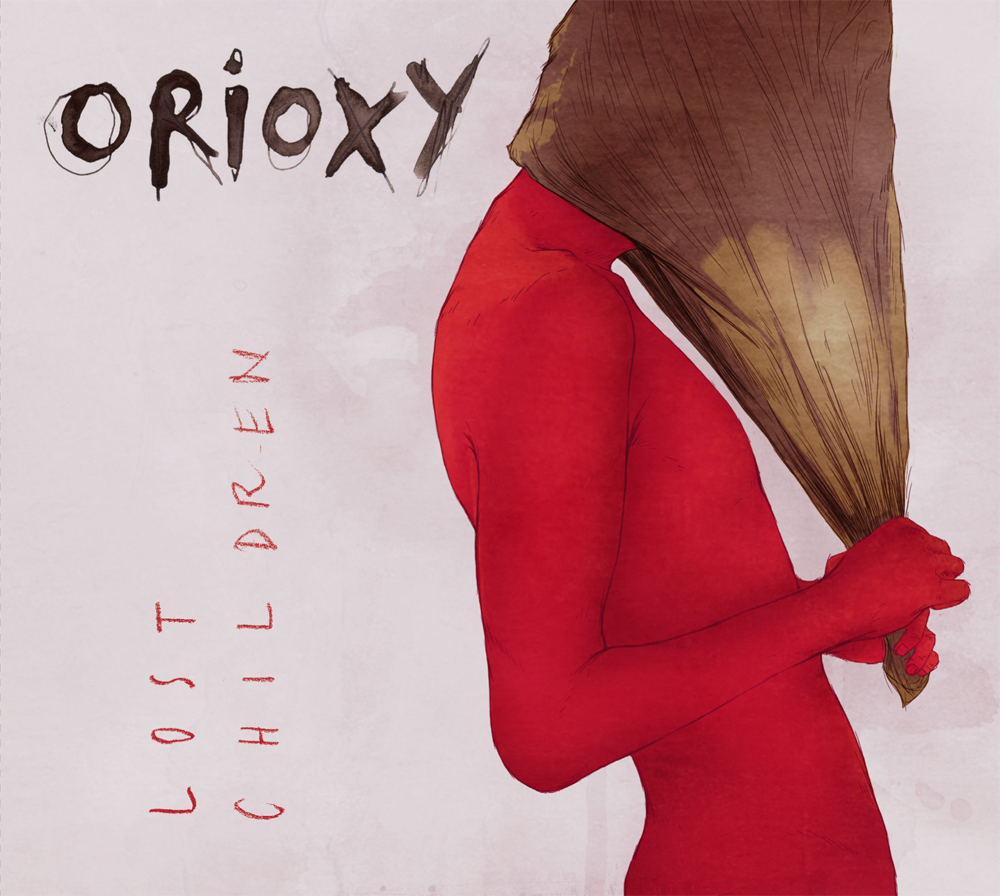
Orioxy “Lost Children”

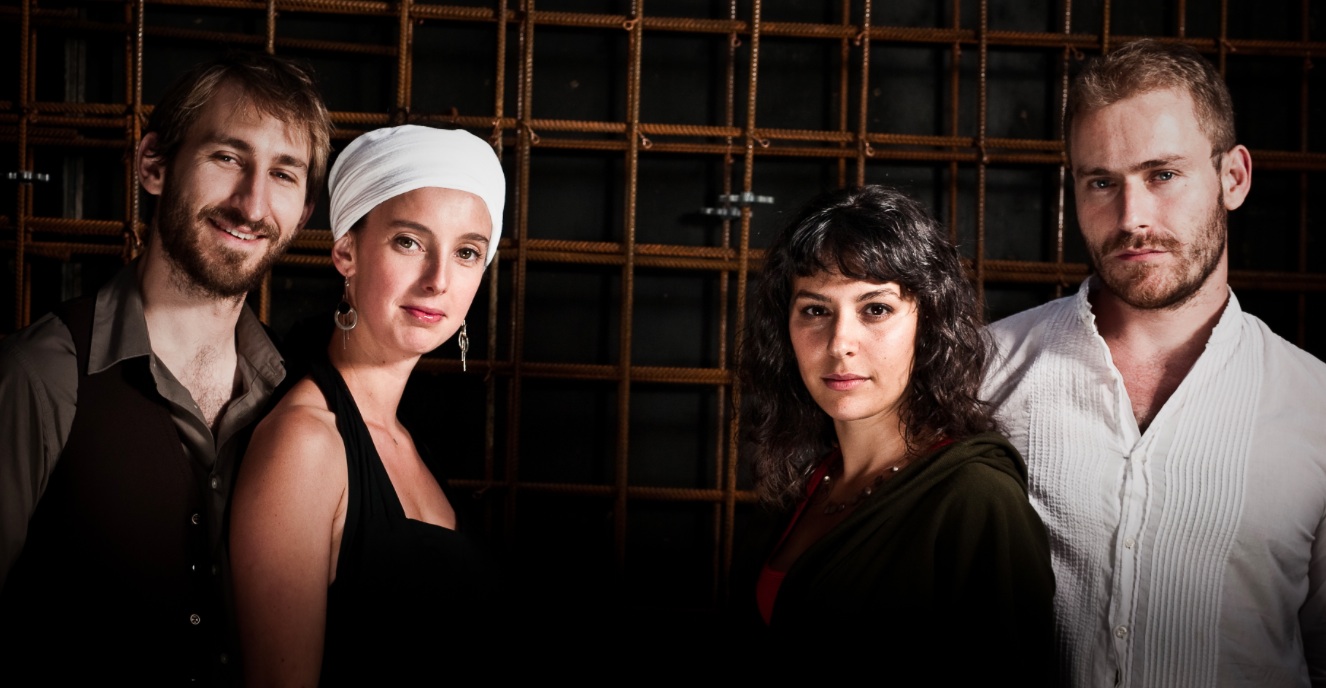
OrioxyEvocative storytelling perfectly suits this quartet
Orioxy’s third album resonates most when it re-imagines the template of simple folk music. Evocative storytelling perfectly suits this quartet of Manu Hagmann on double bass, Roland Merlinc on drums, harpist Julie Campiche and Yael Miller’s voice which at best is pure and unadorned, yet rich with the flavour of her mother tongue, Hebrew.

These stories have a modern accent though. Princeless is Yael’s re-telling of the Cinderella tale, it’s riven with longing and bereft of the happy ending. Soft electronic cries, a melancholic double bass and bare drum taps use a delicacy that binds the whole piece together. Yael Miller’s voice flips between innocence and sensuous knowing throughout, calling on her natural ability for drama. Song of Love is wonderfully accompanied by a percussive typewriter as if the singer is dictating her letter. Some type of squeeze box murmurs sadly and drops of electronica fold into a sympathetic bass solo, all the while the fountain-like harp sparkling light and fresh.

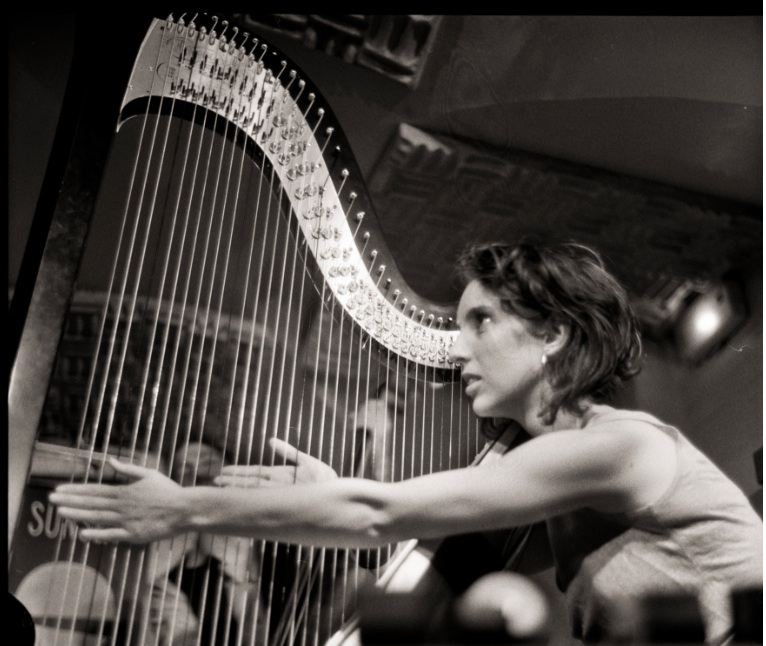
Julie CampicheCampiche’s timing seems to fly directly from her heart
The harp is really the heroine of this album with Julie Campiche’s myriad of subtle colours and styles perfectly placed again and again. Her solo in Isha is spine-tingling. This track is ranging and borderless, a landscape of yearning vocals and grooving rhythms helped by tape rewinds and effects. At first the harp captivates with Middle Eastern vibes amid deep double bass twangs that fall into dark scrapes, before the harp emerges in a solo full of soul and expression. Campiche’s timing seems to fly directly from her heart.

I don’t mind Yael’s rapping or the use of the Sami Darg Team (rappers from Gaza) on Bachour Meshouamam (A Bored Boy) but it does break the spell of the delicate web of lovelorn melodies. As an album, Lost Children does face the danger of its gentle downtempo mood coming to a lethargic halt so I welcome a bit more spit and verve. However, this is best done with their own instruments such as in Old World. Using a bow on the double bass and suitable electronics they bring a free rock track together without a whiff of lead guitar.

There could be a further clarity of the unique Orioxy sound
‘Music doesn’t have a style,’ Yael sings and it’s true this album does not fit into a neat genre. But music does need to have a clear identity, and although this is a decent third album I feel there could be a further clarity of the unique Orioxy sound gained through exploring further musical depth and developing musicianship and songwriting skills.

Interestingly, Orioxy do a captivating interpretation of Paul McCartney’s Blackbird. But in a way that cover serves to show what a truly stunning song can do. It’s the track that has stayed in my head. Orioxy have a good line up of gigs, often a chance for a band to get to know itself on a deeper level. Grab a chance to hear them play as I’m sure there will be some wonderful moments of magic.

Orioxy website and tour dates

[youtube=http://youtu.be/VftefxldpLM]

Ephrem Lüchinger: «Are You Prepared?»

are you prepared

Vor sieben Jahren ging der Pianist Ephrem Lüchinger für zwei Tage ins Studio, improvisierte und experimentierte alleine mit seinem Instrument, das der Zürcher mit allerlei Gegenständen präparierte. Das Material, das in diesen Tagen entstanden ist – zeitweise in Begleitung des Posaunisten Michael Flury – jagte Lüchinger später durch den Laptop, verfremdete und arrangierte die Klaviersounds neu und setzte sie zu 34 Stücken zusammen, die nun, auf der CD-Trilogie «Are You Prepared?» zu hören sind.

[vimeo 56098064 w=500 h=292]

Ephrem Lüchinger – Are you prepared from ephrem lüchinger on Vimeo.

Entstanden ist eine reichhaltige Sammlung an neugierigen Klängen, die wahlweise technoid schimmern, romantisch schillern und auch popnah dahinschlendern können. Soundclips, Tracks und auch Songs sind auf «Are You Prepared?» zu hören – und die Trilogie entpuppt sich mit dieser Formenvielfalt auch als Suche nach den sonischen Grenzen des Klaviers, eine Suche, die allerdings scheitert. Denn Lüchinger, der in zahllosen Bands seine Spuren hinterlassen hat, entdeckt in seinem Instrument zuweilen Sounds, die man auch beim dritten Hördurchgang nicht mit einem Klavier in Verbindung bringt. So ist «Are You Prepared?» eine überaus lohnenswerte Reise in den Saitenkasten eines Instruments der unbegrenzten Möglichkeiten. Möglichkeiten, die Ephrem Lüchinger verspielt und doch konzentriert auslotet.

Ephrem Lüchinger, “Are You Prepared?” (Dist CH Irascible)

[soundcloud url=”https://api.soundcloud.com/playlists/72104018″]


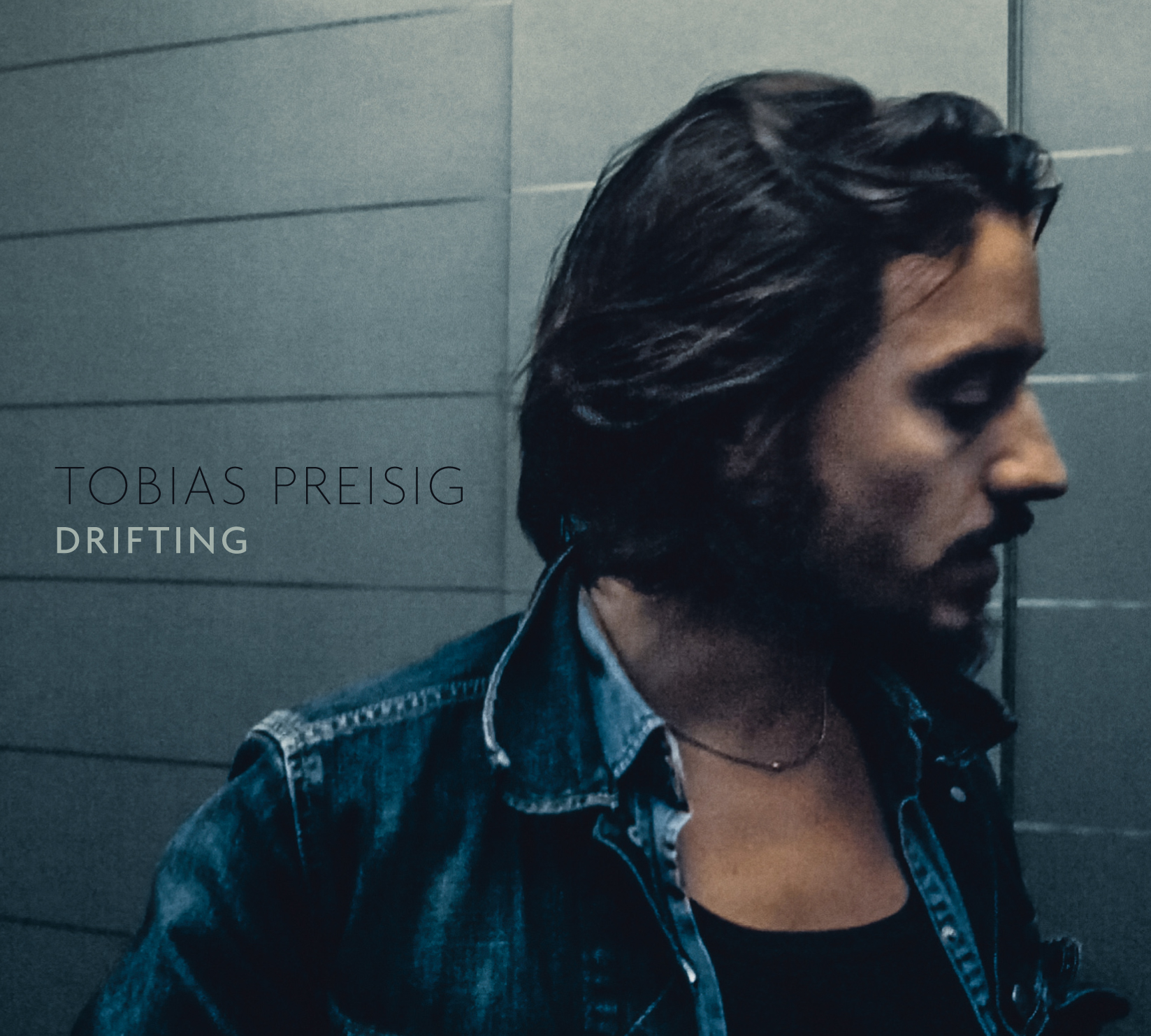
Record of the month: Tobias Preisig, ‘Drifting’

Tobias Preisig's 'Drifting'

I’ve got Drifting on constant rewind. It’s a spacious album, pulling back to allow an experience of resonance and a sort of quiet mayhem. The musicians don’t hate us: they want to captivate, however, we’re not their only object of desire. There’s a care and deep listening in their interplay that is almost audible. It’s as if they are feeling their way into a new form of being, as a quartet.

Abstract, even animalistic

Tobias Preisig spoke to me of his band working as an ‘integrated instrument’ with ‘spots’ replacing full-blown solos, such as when André Pousaz’s double bass breaks out into a sombre spotlight in Floating Causes amongst low violin stabs and hi-hat shimmers. It’s true that tracks like Out of Reach weave a subtle tapestry of instruments, intensifying in colour as it progresses. But there is no ignoring the quality of Tobias’ violin: rich, assured, respectful of its emotional power yet avoiding sentimentality. It can be abstract, even animalistic, revelling in a purity of sound.

Miniature for Gold is a painfully-gentle vignette painted by Stefan Aeby‘s piano. Preisig’s violin balances the sweetness, plucking as if a tight bass line. The track is like an exquisite kiss. But Searching for Soil is my highlight, a spellbinding piece.

Michi Stulz’s drum rolls… an unrelenting mantra

The opening Rhodes’ chord conjures a translucent pathway out to the Milky Way, there’s the metallic jingle of a cold star, before Michi Stulz’s drum rolls march us on; an unrelenting mantra. It’s the woozy high violin plucks and quivering strokes of the strings that send my goosebumps bumping. It’s a trip, to somewhere magical or possibly, macabre. Piercing violin runs twist the screws tighter whilst a stormy piano bashes at its low notes. A scrap of melody breaks through as if to keep us entwined in the music, before it shudders to a close.

This music has character: it can be moody, sensitive, frustrated yet is often playful – it’s got soul. What I hope to hear from the band in the future is a wider range of textures and themes; an evolution of their emerging and ear-catching language. Look out for this quartet playing live and let me know what you think.

http://www.youtube.com/watch?v=6UpFkg3F_8s


05.04.2014 CH-Zurich, Moods
12.04.2014 DE-Erfurt, Jazzclub
13.04.2014 DE-Dresden, Tonne
15.04.2014 DE-Jena, Cafe Wagner
16.04.2014 DE-Berlin, A-Trane
25.04.2014 CH-Basel, Jazzfestival Offbeat
16.05.2014 CH-Arbon, Kultur Cinema
02.06.2014 CH-Orsière, Fête de la musique
20.07.2014 CH-Gstaad, Menuhin Festival
14.08.2014 CH-Winterthur, Musikfestwochen