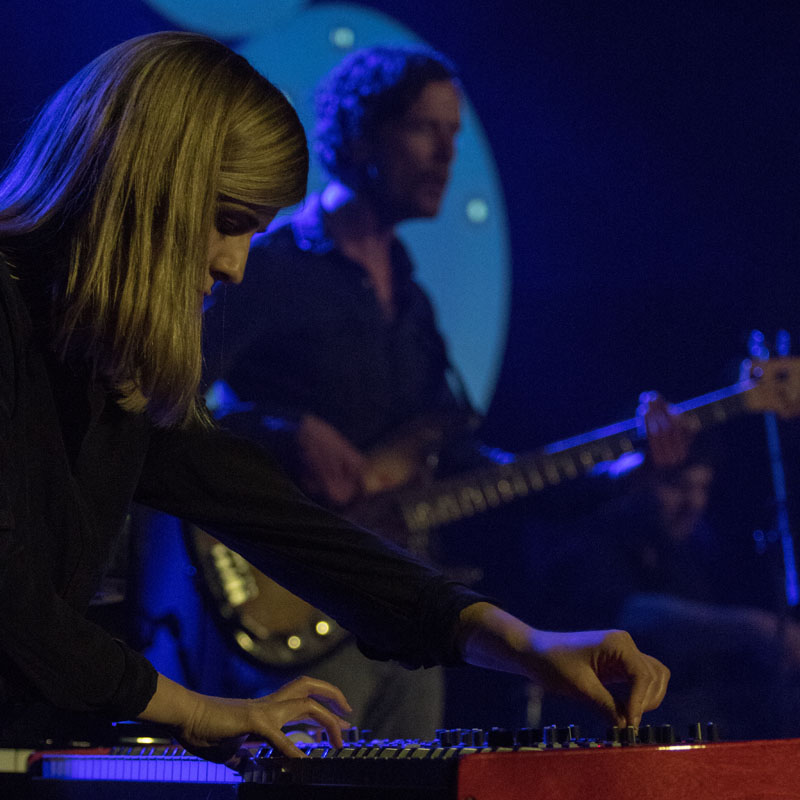
Supporting a very traditional jazz vocalist, (Dianne Reeves), the Akku Quintet played as a very untraditional ‘jazz’ quintet – holding their weight very well as the alternative, slightly dark option on the Cully musical menu. A year ago the band were described as a work in progress, today the quintet comes across as a well-oiled machine full of maturity and articulation.
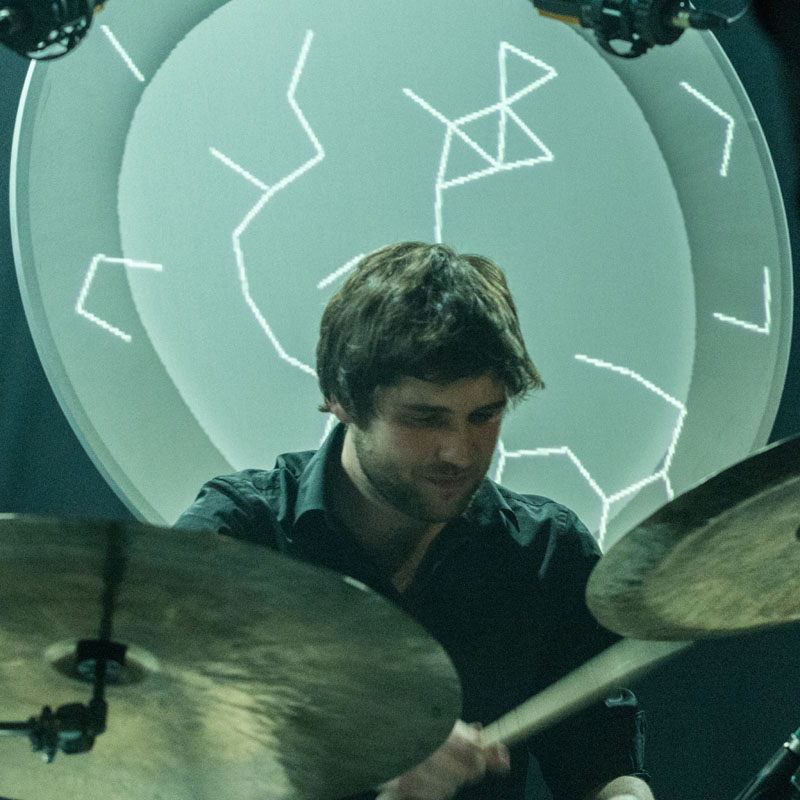
Underpinned by a definite focus on rhythmic and repetitive elements laid down essentially by the drums and keyboards, this quintet is not in a hurry. Their spacious, unhurried approach leaves plenty of room for interplay between all members who get to shine in totally different ways at very different times.
@J-C Arav
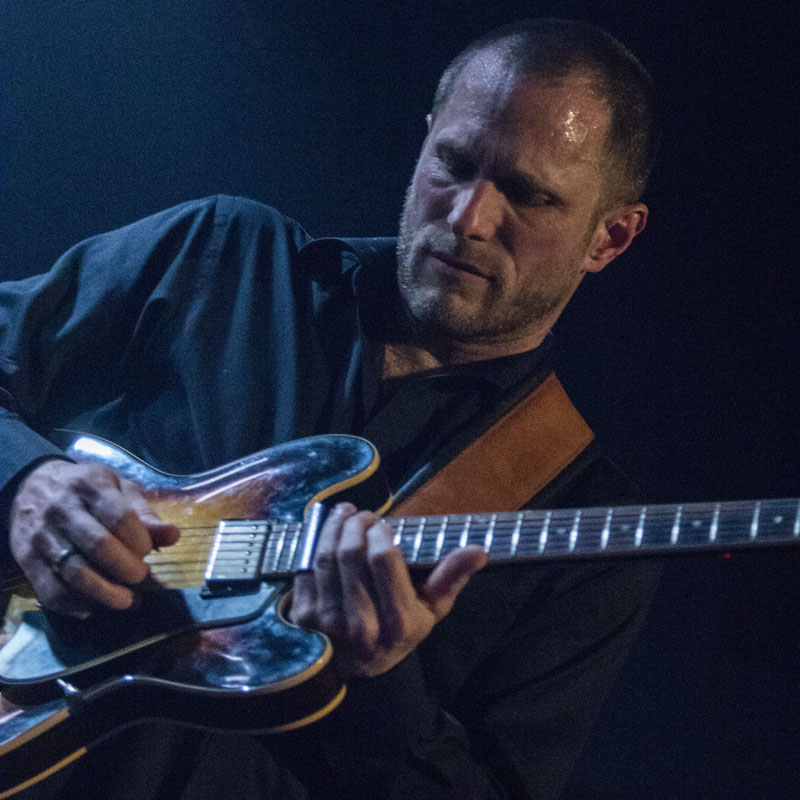
The most attention-grabbing sound is Markus Ischer’s electric guitar which verges towards the psychedelic and is played out to full effect, fuelling the terms ‘jazz rock’ and ‘jazz fusion’ that the band is often labelled with.
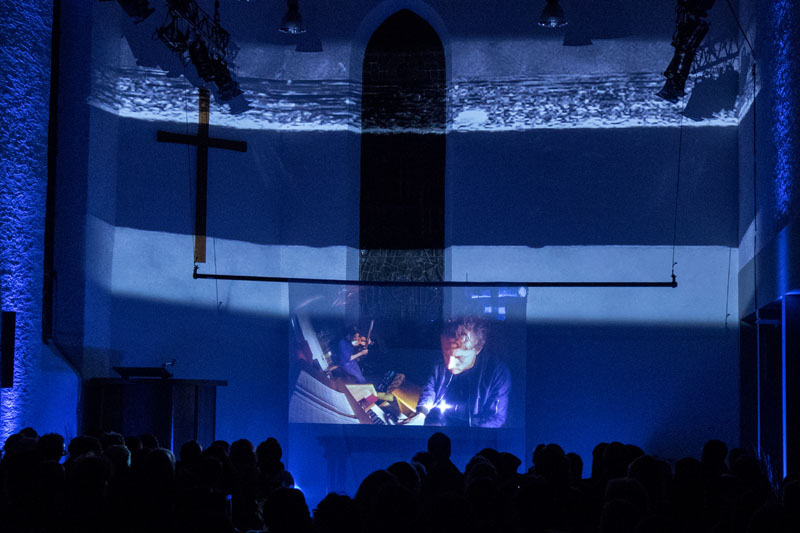
Some of the sound particles in the Akku atmosphere are made of of bleeps, hallucinogenic wails, squeaky outbursts. Music to immerse yourself in like a rich, pulsating heart-beat which occasionally slows down, skips and jerks. As Jonas Fehr’s live visuals suggest, the molecules are in gradual full expansion. Expect a new LP from Akku Quintet in spring 2017.
Some questions and answers with AKKU Quintet drummer and bandleader, Manuel Pasquinelli:
Describe the musical dynamics within the quintet
@J-C Arav
Manuel Pasquinelli: We are a quintet with saxophone, but the the sax is not the only leading instrument. The focus on an instrument changes all the time. We are all leading at different times, each member influences the whole thing. Groove and mood are as important as the solos. A solo is always part of the composition and leads from one part to the other. We try to create a piece of music as a journey. We leave space and don’t always play everything we could. We don’t tell a prefabricated story to the listener, so that the listener can derive their own story or mood.
Do you think you fit easily into the ‘jazz’ genre?
Manuel Pasquinelli: People often say to me “I don’t usually like jazz, but I really like what you do”, so I think that ‘jazz’ is maybe not the right word to describe our music. It’s minimal, ambient, rock with the playfulness of jazz, influenced by different kinds of music (from Nik Bärtsch to Steve Reich, Yann Tiersen, Pink Floyd and beyond).
Manuel Pasquinelli – drums & composition
Michael Gilsenan – sax
Markus Ischer – guitar
Maja Nydegger – keys
Andi Schnellmann – bass
Jonas Fehr – live visuals
‘Levitation’ by Tobias Preisig & Stefan Rusconi – Le Temple, Cully, 9/4/16
@J-C Arav
Tobias Preisig and Stefan Rusconi are Swiss pillars of the Cully Jazz musical institution. Their Saturday night performance at Le Temple church marked a return to sacred ground that the duo had already trodden a few years ago. This is the venue that inspired and housed their Levitation project that tonight is played out to an eager audience, most of whom are already familiar with the powerful, intimate exchange between violinist and pianist.
The key feature of the Levitation project is the sensitive, gradually drawn out soundscape created in great part by Rusconi on the church organ which is then supported and teased out by the strings. In practical terms this means having the two musicians play upstairs in the church gallery, heard but not seen from the audience down below. Deciding that this year’s jazz audience needed something to look at, the entire concert was projected on screen at ground level, which, ironically – because of the very bright projector light that was aimed right at the audience – meant that many of us listened with eyes tightly shut, (it was a bit like staring at the solar eclipse without eye protection). Possibly the best way to appreciate the moody, almost Gothic sounds raining down from above.
Some questions and answers with violinist Tobias Preisig:
What’s your relationship to the Cully Jazz festival?
Tobias Preisig: I have a special attachment to Cully Jazz. I’ve been playing here for the last 6 years, I started off in a small caveau as part of the ‘OFF’ programme, then they offered me residency, then larger stages as part of the main programme. There’s a extremely open-minded attitude here and strong commitment to push the next generation. Young and unestablished musicians find a stage here, right next to the superstars. Playing at Cully is definitely the highlight of the year for me. It’s become almost a family gathering with musical professionalism.
Was the material for ‘Levitation’ tailor-made for Cully?
Tobias Preisig: We played as a duo here at Le Temple in Cully a few years ago, performing for the first time with the church organ. Again, it was an opportunity that the festival gave to us. We fell in love with the sound and came back one summer to record at Le Temple for 5 nights. This music is now released as an LP called ‘Levitation’ and yes, it’s definetely tailor-made. So what’s nicer than to celebrate a recording that was actually made in this enviroment?!
Will there be more live gigs with the ‘Levitation’ project?
Tobias Preisig: This is a special side project for both Rusconi and I whose friendship and collaborations go back a long time. So far we’ve only played the material from Levitation live twice! There are a lot of underplayed organs and oversized churches, so we are looking forward to exploring them and awakening them with new music.
Kaleidoscope String Quartet – Le Temple, Cully, 8/4/16
@J-C Arav
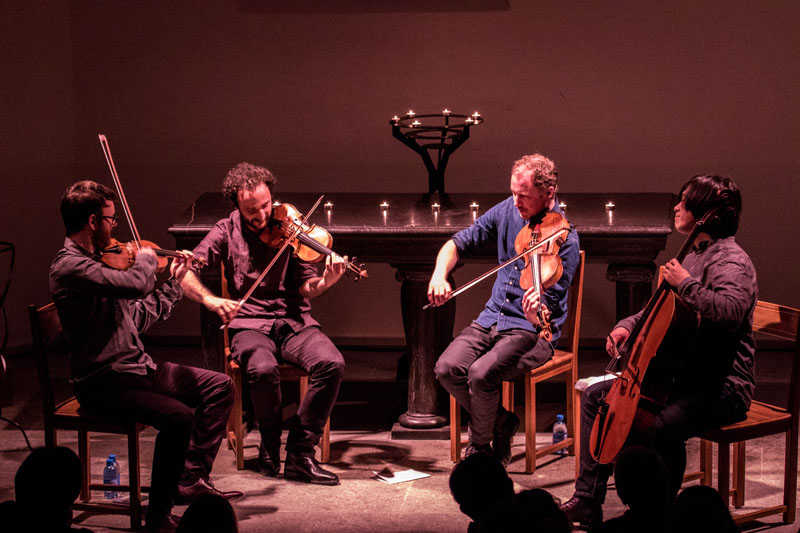
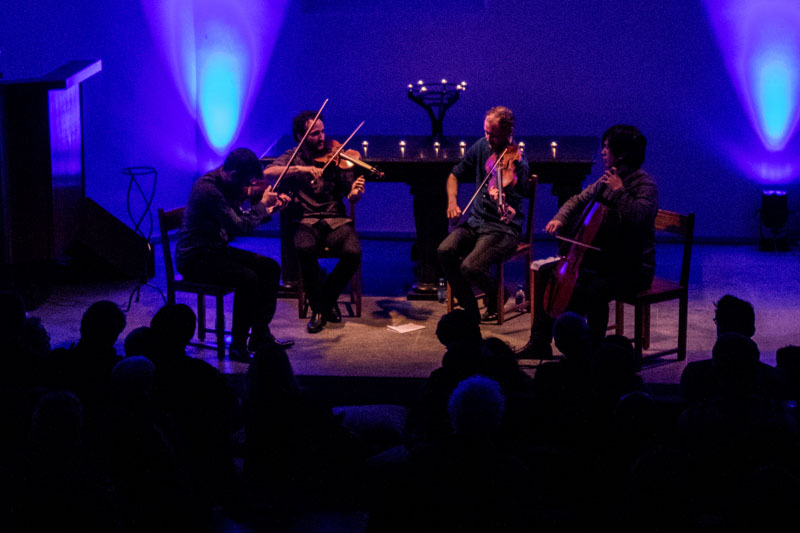
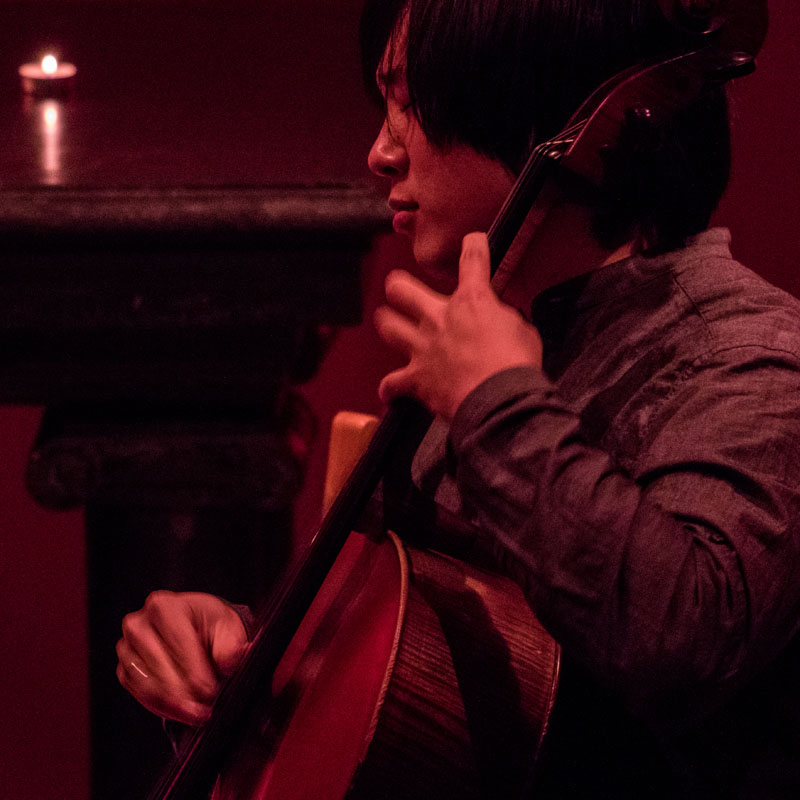
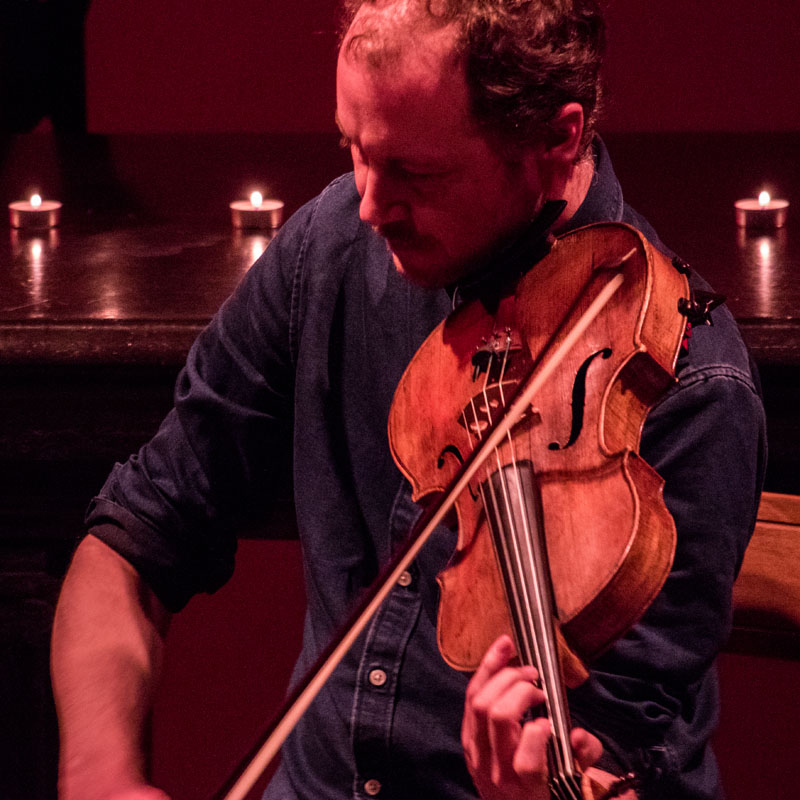
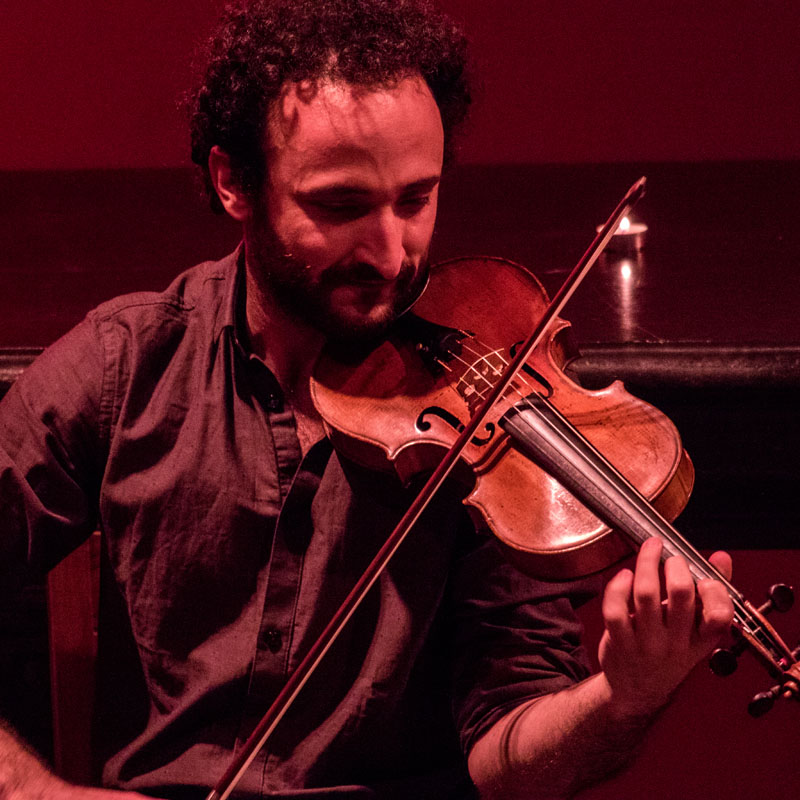
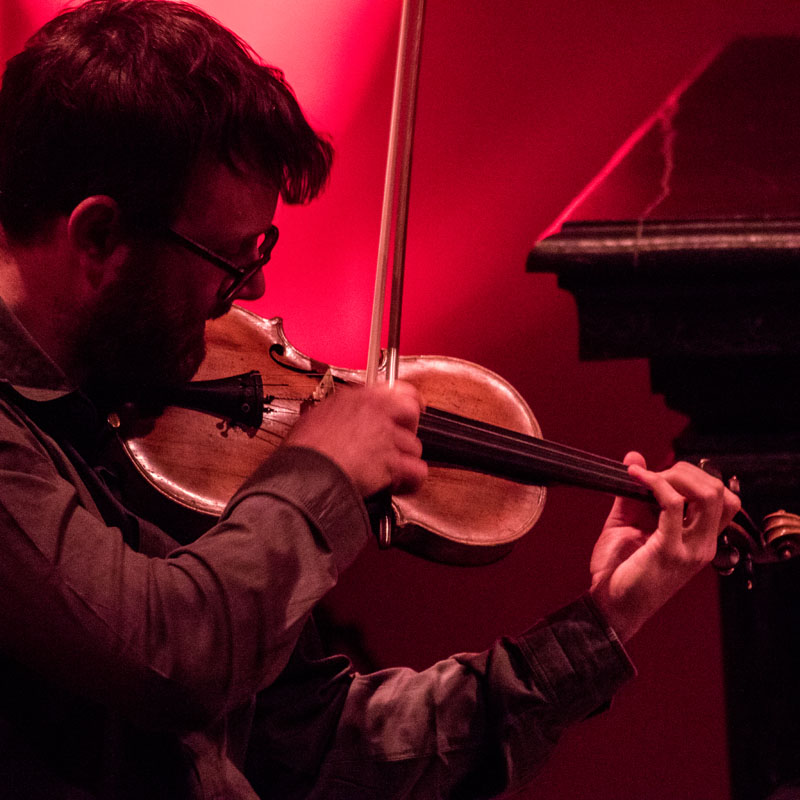
Two violins, one viola and a cello make up the unconventional Kaleidoscope String Quartet who kicked off the first night of Swiss musical contributions at the prestigious Cully Jazz festival. Performing material from their second LP, ‘Curiosity’, their strictly acoustic set up was a perfect fit to the meditative church setting of Le Temple.
I was lucky to bump into violinist Tobias Preisig just before the band came on, he tipped me off with a few insights into the quartet: « I used to play with them in the early days. What they do is technically very hard, you have to be really connected as musicians. Their forte is how they swerve tradition, always looking for new ways to play their instruments ».
@JC-Arav
These words proved a useful interpretation tool. A string quartet inevitably conjures up very rigid ideas of genre, hence what makes this group interesting is how a variety of styles, rhythms and tones are woven into the classical string infrastructure. There’s a feeling of the experimental and the improvised even though they’re clearly a tightly rehearsed unit. Seamlessly the ball is passed from one member to the other as the violin is bent and shaped in all directions. Closing my eyes I could have sworn someone had sneaked in some Japanese pipes during track 3. Quasi pop refrains and folkloric riffs creep up when least expected to add colour and vibrancy.
@J-C Arav
Admittedly, there were moments when some the barren plucking overstayed its welcome, (at a critical point in the musical tension I overheard someone muttering «sounds a bit like a swarm of mosquitoes » ), the bass tones of the cello proving a welcome contrast to the higher pitches of the violins. Possibly too many sparsely clad moments where the rowdy festival crowd outside the venue added more rhythmic movement to the music than the quartet itself.
@J-C Arav
The higlights for me were the warm, swirling melodies that sprang suddenly out of the languid tones. Nothing gives the feeling of lift off and transportation quite like a set of strings, so to hear them setting off into fourth gear with dynamic, frenetic synchronisation was a delight – one track culminating with a joyful vocal shout! Amazing that a string didn’t break in the process.
Some questions and answers with KSQ bandleader and composer, Simon Heggendorn:
Is it important for KSQ to be seen as more than just a classical outfit?
@J-C Arav
Simon Heggendorn: In many ways, yes. From our point of view, a ‘classical’ string quartet mostly interpretes music, whereas we create the music ourselves – rather like a band – and are completely free in the style of interpretation. This gives us the possibility to have a unique ensemble sound defined by the music we write for it.
Did the fact you were playing in a church impact your choice of what material to play?
Simon Heggendorn: Not primarily, maybe the fact we played in a church had an influence on ‘how’ we played (tempi, improvisations, dynamics). We like to play completely acoustic, so Le Temple was a perfect set-up for us.
What’s your relationship to Cully Jazz?
Simon Heggendorn: We played at Cully Jazz in 2012 for the first time. Spots are limited so it’s always very special to be chosen. Since it’s a big festival, you get more press attention than with standard gigs. It’s important to get known on the scene and be exposed to a wider audience, maybe even internationally. Not to mention the unique atmosphere in the village during the festival and the effort of everybody working here – just amazing!
[youtube=https://youtu.be/YTYVvcAsda8]
Band members:
Simon Heggendorn – violin & composition
Ronny Spiegel – violin
David Schnee – viola & composition
Solme Hong – cello
Described as “a laboratory of ideas, where you will assist the birth of creation live and direct, public jam sessions, pure sound research”, there’s a sense of anticipation in the air as I wait for The Treichler-Pizzi-Trontin Experience to take to the small stage at the Hundred Blue Bottle Club. It’s the last night of their OFF festival residency in Cully and a tightly-packed crowd of loyal Young Gods fans of all ages are giving off the distinct impression that something thrilling and unique is about the take place. It’s the coming together of well-seasoned, deeply-connected musical partners still capable of enthralling their audience with new ideas and aural concepts. The three musicians share a musical history of almost 30 years, yet everybody present knows that old school nostalgia is not on the menu tonight.
A tight whirlwind of gripping sound
Indeed, for those not familiar with the three-decade towering inferno that are Treichler and company, it might be a surprising sight to see men over 50 producing such a tight, trancy, experimental, head-nodding wall of sound. From the get-go there is a sense of journey, like being yanked onto a rhythmic train moving with pleasant urgency from station to station, hypnotising you with varying degress of intensity and volume along the way. Rhythms are created slowly, electro beats taking their time before coming at you like a whip and ensnarling you into a tight whirlwind of gripping sound.
It’s a technological playground for bedroom rockers
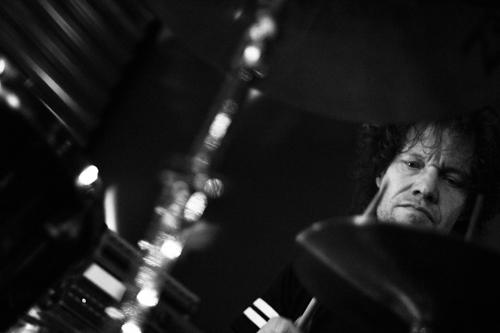
Franz Treichler, the archetypal gum-chewing rock legend, weaves his often unintelligeble vocals in and out of the soundscape tapestry. His words are at times irrelevant and haphasard but serve to add a darker edge to the swirling, dubby rhythms. Interesting effects are used to create echo, reverb, loops and playback – it’s a technological playground for bedroom rockers who like their soundtrack trippy, hypnotic and just that little bit sinister. When things get a little too bouncy, Treichler comes in with a good dose of tough-love guitar to remind us there is beauty in light and shade. However, for me, the greatest of props go to drummer, Bernard Trontin, who steers a tight ship full of funky breakbeats and unparalleled rhythmic structure. Watching his dexterity and joy behind the drumkit is a rare delight.
Four questions to Franz Treichler
What was your reasoning behind “a laboratory of ideas”?
Franz Treichler: We were invited to do a residency at the Hundred Blue Bottle Club as part of the OFF festival at Cully Jazz. It seemed a perfect occasion to try out new ideas without the pressure of having to play Young Gods material. The OFF festival attracts a very open-minded audience at Cully, the atmosphere on stage is very free, basically ‘anything goes’. This felt appropriate for the band. Some ideas were born in the afternoon and played out the same night. Tracks changed every evening. I played guitar in a style I don’t normally use for The Young Gods, the same for my vocals – I couldn’t really call it singing, it was more sound improvisation and throwing things into the mix. There weren’t even any track titles, each piece was considered a session, a one off.
Why didn’t you bill yourselves as The Young Gods?
Franz Treichler: This would have changed the expectations of the audience and would have limited our freedom to experiment. We really wanted to create a mysterious vibe during the residency, encourage the listeners to be curious and progressive with us. Expect the unexpected.
What was happening on stage from a technical point of view?
@J.-Ch.Arav www.sweat-and-tears.ch
Franz Treichler: Cesare and I both had computers loaded with programmes that activate sound, sequencing, loops and pitch. Our computers were synchronised so that I could affect what he was playing and vice versa whilst keeping in rhythm. It was a very free and interactive process, although I must admit that there were times when it was hard to know who was doing what! What we set out to create was a sound of elevation, (music doing the job of the drugs!)
Is this in some way the future sound of The Young Gods?
Franz Treichler: We’d like to do something for the next album that’s in a similar vein, by that I mean not totally sequenced. We’ve always been categorised somewhere between rock and electronic music. It would be good to expand our experimental ambiant side, something less structured, more free.
Band line up:
Franz Treichler – vocals, guitar
Cesare Pizzi – keyboard, sample
Bernard Trontin – drums
Mains jointes ou offertes, poing tendu, le corps ondulant ou sautillant, la chanteuse Claire Huguenin impose d’emblée son style très particulier. La vocaliste de Bulle dont tout le monde parle a choisi de dévoiler en formule acoustique son premier projet solo, Jibcae, au Temple de Cully. Jibcae est un OVNI musical qui tente des ponts audacieux entre des penchants musicaux et sentimentaux extrêmements variés. Claire Huguenin est du genre à frapper vite et fort. Pour donner le ton, elle enchaîne trois morceaux d’une intensité folle, dont un a cappella poignant. Elle happe ainsi l’auditoire dans son monde d’introspection, un monde le plus souvent obscur qu’elle illumine de son sourire, de sa voix et de sa gestuelle.
Les limites du 100% acoustique
A ses côtés, le grand manitou du piano, Malcolm Braff, s’essaie à la retenue, la harpiste Julie Campiche développe les myriades de notes de son instrument avec parcimonie pendant que le bassiste Jeremias Keller (le seul instrument électrique) s’occupe de la ponctuation. Le concept des concerts du temple est de ne jamais sonoriser les ensembles. Difficile dès lors de brider les instruments par nature plus forts, dont l’imposant piano à queue de Malcolm Braff.
Little big woman
Ce qui n’empêche pas Claire Huguenin de continuer sans faillir son évocation de l’intime, des sentiments à fleur de peaux, des sensations pas forcément agréables, comme ce « Weary Dany » en duo voix-contrebasse qui évoque l’ennui. Le monde de Claire Huguenin est peuplé d’esprits, de gens qui ne communiquent plus, de ruptures, de fracas. Et sa voix fonctionne comme un écho à ses ruptures, ses cabosses, ses éclats de rire. Evidemment, l’équilibre est périlleux, difficile à tenir de bout en bout. Variant les modes, déstabilisant l’auditeur en jouant sur le tragi-comique, Claire Huguenin et ses musiciens taillent néanmoins leur route. Il faudra encore certainement quelques prestations live pour que ce projet atteigne sa pleine puissance. Mais le potentiel, la grâce et la trempe de cette « little big woman » (pour reprendre l’expression d’un Internaute subjugué) sont de ceux qui marquent durablement. Merci !
Elina Duni moved to Switzerland when she was ten, five years after she’d first stepped on a stage to sing in her homeland, Albania. Later, studying music in Bern led to a crucial meeting – with pianist and composer, Colin Vallon. It’s Vallon, along with drummer Norbert Pfammatter and now Patrice Moret on bass, who held a mirror up to Elina so she could see who she is and be free to draw on the rich cultural soil of the Balkans.
Elina’s second album for the major label ECM is Dallëndyshe (The Swallow) and listening to it immersed me in a bubble of ancient and distant lives where women call their loves ‘Ylber’ (rainbow) as they watch them leave green hills for work or, war. With titles such as ‘Nënë moj’ (O, Mother) and ‘Kur të pashë’ (When I Saw You), Elina describes them as ‘songs of love and exile’ but somehow the purity of the melodies and simplicity of delivery make them timeless.
What were you driven to express and explore in this album?
Elina Duni I think the word ‘timeless’ is very important in this case…You can feel the songs’ strength because they’ve crossed centuries and the melodies are archaic and deep. It’s this mixture of the contemporary perception each one of us has being a musician living in today’s world and the fact [the songs] are related to something that concerns all of us – we are all migrants, it’s the fate of all human beings: leaving behind something you love, going abroad, going from countryside to city, themes that are universal.
Where and how are did you find these traditional songs?
Elina Duni You may be surprised or maybe not, I found them on YouTube! Albanian friends are always suggesting songs and a friend of mine living in Greece put ‘Fëllënza’ on my wall on Facebook.
‘Fëllënza’ has a melody that has my dopamine triggers firing like Dirty Harry and Elina’s voice is so intimate you feel she’s singing with her head next to yours on a single pillow. Colin Vallon’s tangential arrangement steers it clear of saccharine-slush whilst on ‘Unë në kodër, ti në kodër’ (Me on a Hill, You on a Hill) he hypnotises, plucking piano strings like a cimbalom.
Elina Duni This is one of the songs where Colin wrote the arrangement with the bassline and the ‘mantra’, I had the melody and rhythm but he takes the song to another level…The three of them are wonderful musicians, they never play ‘1st degree music’. For me, art is the distance we take from things, it’s playing or looking at them in the 2nd, 3rd and 4th degree…Balkan music can be so pathetic [evoking pity] and it’s really a trap, somehow this distance from the pathos is the art.
When I started singing these songs Colin told me to imagine how Miles Davis would sing these themes – as simple as possible. When I do an ornament then it’s really thought out, I try not to do too much so when I do something it stands out. It’s the manner for the whole quartet.
You said that we live in a time where there is a need for poetry, say more about this.
Elina Duni Poetry has its own music, you can listen to a poem that you don’t understand and still cry with it… [the language] Albanian has something very interesting, it has a lot of sounds in it and it is a very, very old European language. It has Latin and Turkish words and, they say, also from the Celts, and it has something very deep and at the same time, strange.
Tell me about your childhood in Albania and how you feel about your homeland now.
Elina Duni There is a phrase, ‘there are two tragedies in life: to have a wonderful childhood and to have an awful childhood’. So, I had a wonderful childhood. In Albania it was another time that doesn’t exist anymore, there were no cars, no consumerism, no Coca Cola, no aluminium…we used to be happy when we could eat a chewing gum because it was very rare, or chocolate. We were raised in the neighbourhoods, everybody was going to everybody’s houses…and we were free. We grew up jumping, climbing the trees and running and fighting and being outside all the time…the imagination played a very important role. Everyone was writing poetry and reading…I think this was a golden time.
For me Albania is always inspiring, I go very often, it’s like all the countries that are transforming themselves, they have something alive there. Unfortunately Albanian society is still macho and patriarchal, it’s changing slowly, but there is a lack of models for women…The best thing is to educate women…and to show that being free is not being a sexual object which is hard because the media promotes this – and the singers too. There are so many in Albania, every good-looking girl puts on a mini skirt, makes a video clip and she’s a ‘singer’. I try to do my best to promote another model of woman.
What other projects are you doing?
Elina Duni I’ve been doing a solo project where I sing Albanian songs with guitar but I also did an album a year ago as a singer/songwriter where I wrote songs in Albanian so I’m going on writing, in French and English too…I love the quartet but I am trying to diversify so I’m writing as much as possible to find my way into music – which is not as simple when so many things have been done and you want to find your own original way at looking at things.
I still don’t know where all this is going to lead, the thing is I love acoustic music so maybe this can be a duo with voice and piano, it depends on who your partners are on the adventure, who you find. I would like to go more electric because it is a sound that really attracts me. These days there are no boundaries and you can explore without losing your identity. I love to sing my songs, that’s my biggest dream.
Elina Duni Solo
12.04.15 Cully Jazz Festival – Cully, CH Elina Duni Quartet
21.04.2015 Jazzkaar Festival – Tallinn, Estonia
22.04.2015 Viljandi Folk Music Center, Estonia
24.04.2015 Salle des Fêtes de Carouge – Genève, CH
26.04.2015 Dampfschiff – Brugg CH
29.04.2015 Centralstation – Darmstadt, Germany
09.05.2015 Treibhaus – Innsbruck, Austria
10.05.2015 Bee-Flat im Progr – Bern, CH
27.05.2015 Moods – Zürich, CH
29.05.2015 Paradox – Tilburg, Netherlands
31.05.2015 Rote Salon – Berlin, Germany
13.06.2015 Schloss – Thun, CH
21.06.2015 Bibliothéque Universitaire et cantonale – Lausanne, CH
Bringing a myriad of verve, elegance and exotic rhythms to the Swiss jazz scene is Havana-born Yilian Cañizares. Classically trained violinist, singer, songwriter, dancer, teacher – there are many feathers to her cap. With a highly acclaimed 2nd album, ‘Invocación’, recently released on Naïve Records and an anticipated live performance at this year’s Cully Jazz festival, Yilian talks about the music that has shaped her and the important role that Switzerland has played in her musical evolution.
How did the violin become part of your life?
Yilian Cañizares: I come from a sporty, musical family and a country where music, singing and dancing are a big part of the cultural identity. As a three year old, singing came first followed by dancing. At music school aged 7, I was directed towards the piano but the minute I saw the violin I felt such a pull towards it that I knew it had to be MY instrument, even though my family thought I was crazy. I still use the piano for composing but then transfer everything to the violin. I’ve had a very strong classical training, but thankfully through the songwriting I’ve been able to develop my own style. At 16, I went to Caracas, Venezuela, to study with the ‘El Sistema’ youth orchestra where violin tuition was more developed than in Cuba. There I had a French violin teacher who told me that Europe was the epicenter for classical violin studies, so I came to Switzerland especially because of Gyula Stuller, (no.1 solo violinist with the Lausanne Chamber Orchestra). The technical and musical level was just of another standard, I benefitted from all the rich musical heritage that had formed Gyula.
How has moving to Switzerland impacted your musical career?
Yilian Cañizares: The impact has been enormous! There is more cultural diversity happening in Switzerland than people think. Geographical centrality is a key element which means that all that’s happening musically and artistically in Europe is within easy reach. Cuba is culturally rich but is locked inwards, not many international artists go there to play, you can’t always hear or get immediate access to what’s happening musically in the world, the learning curve gets cut short. My 15 years in Switzerland have exposed me to so many different styles of playing, listening, learning and teaching. Being here has made me the musician I am today, my style of playing has grown in a way that would have been impossible to imagine in Cuba. There are so many gifted artists in this small country, I feel very lucky to be part of the dynamic Swiss jazz scene. My cultural heritage is respected and welcomed as a richness that can be ploughed back into this multicultural scene. I’m also touched that major Swiss institutions such as Pro Helvetia, La Ville de Lausanne and Swiss Music Export are helping me develop my career, taking me on as a newcomer and helping me transform into a headline act. They believe I am a good ambassador for the young Swiss scene, as well for Cuban music.
How has being in a Francophone environment affected you?
Yilian Cañizares: I once heard someone say that every time you learn a new language you gain a ‘new soul’. Becoming a French speaker has developed a new sensibility in me and a different aesthetic, it’s all part of the person I’ve become. I can now sing and write in French even if it’s harder for me compared to Spanish, but very much part of my musical direction. I feel an affinity with the language and would like to touch as much of the French-speaking audience as possible, so it’s no coincidence that I’ve signed to a French label, Naïve Records in Paris.
Why did you go to Sweden to record your latest LP?
Yilian Cañizares: Compared to my first LP, I knew I wanted to go onto the next level with regards to my sound. I noticed that a lot of great current music I’ve been listening to has been recorded in Sweden. They have such great studios, such savoir faire, their culture of sound is really unique. So I was very clear about wanting to use Lars Nilsson at Nilento Studios.
What are the musical genres that have shaped you and your style?
Yilian Cañizares: I come from a very classical background where Santería music was coming from next door and Cuban jazz from down the street. Then here in Europe I discovered Stéphane Grapelli and what can be done with the violin especially in the jazz context. I’d say that jazz, as opposed to ‘world music’, is what defines me best because of its power of rebirth, improvisation and freedom. I don’t want to be classified as strictly ‘Afro-Cuban’ since musical evolution and transformation is key to what I do and my aim is to be open to many different spheres.
How would you describe your latest LP, ‘Invocacion’?
Yilian Cañizares: This is my most honest work to date, a real portrait of myself, my lived experiences and all that has shaped me. Above all it’s a homage to loved ones no longer here: my grandfather, family friends, slave ancestors, singers and poets who have taught me so much. Clearly it’s a very personal, heart-felt work with lots of different influences ranging from a Yoruba traditional prayer to Edith Piaf’s ‘Non, je ne regrette rien’. I hope people can feel the Cuban influence in my work, but also all the other important musical journeys that have helped me evolve. I feel a certain responsibility to represent the ‘new Cuba’, a country with a fragmented population struggling to open up to the world. I am so very Cuban, but for now my place is in Europe.
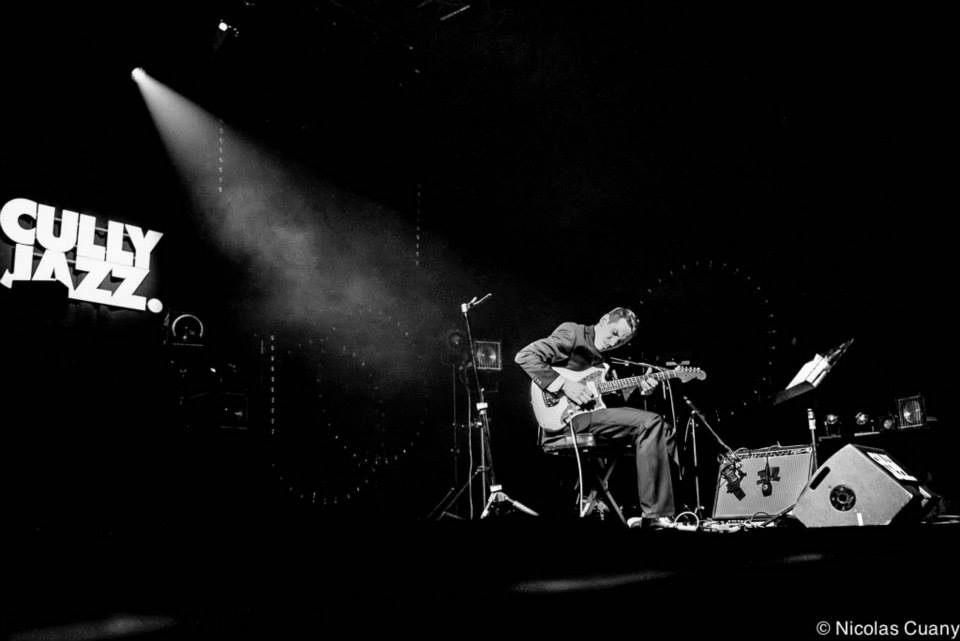
La soirée « guitare » du CullyJazz Festival nous a révélé un magnifique musicien : avant Marc Ribot et Medeski Martin & Wood avec le guitariste de Wilco Nels Cline, jouait le jeune Biennois Roman Nowka, en solo.
On le savait alors bassiste dans le fameux Lucien Dubuis Trio, guère plus. Curiosité et impatience de voir une nouvelle figure sur cette belle grande scène, devant un parterre noir de monde. Tout sourire, accent fleuri en prime, Roman Nowka nous dira ensuite : « La musique, ça me plaît quand il y a de l’espace et que c’est fragile. » Nous étions donc tous au bon endroit.
“Il faut être présent, jouer ce qu’on aime, et ne pas avoir peur”
Nonchalant et jovial, il a entonné de petites ritournelles sympathiques, assez techniques et décalées, avant de nous happer dans un univers d’une belle intensité. Prendre le temps de bien rajuster son micro, de trouver ses mots pour dire peu mais bien, de modifier un réglage sans se presser. Un peu drolatique car « normalement on doit toujours montrer qu’on est fort ; mais moi ce qui m’intéresse c’est le concert : simple, joyeux, honnête. » Peu à peu le public s’est tu, avant de littéralement flotter avec lui, très attentif. « C’était prévu, je savais – enfin ! je ne savais pas si ça allait marcher – mais c’est l’effet que je recherchais. »
En avril sortaient simultanément deux albums : un solo nommé Jazzmaster – « c’est juste parce que c’est le nom de la guitare Fender que j’utilise, elle était tellement cher ! c’est un peu nul comme nom » – mais aussi un très beau disque de reprise de Duke Ellington en trio, Do Da Ellington, avec Thobbias Schramm à la batterie et Samuel Kühn à la basse. Avant, il y a encore eu Me Myself and I en solo « parce que j’aime bien être seul avec ma guitare n’importe où, c’est comme ça que j’ai commencé. »
“J’écoutais à fond Michaël Jackson, David Hasselhof”
Boire un café avec Roman Nowka, c’est aussi parler pêle-mêle de souvenirs de la Californie où il a grandi, de son père guitariste classique, de sa mère vendeuse de sandwiches à Venice Beach, des thérapies d’Arthur Janov, de sa formation en haute école de musique et de son amour de la pop – « J’écoutais à fond Michaël Jackson, David Hasselhof, . Le jazz pas tellement en fait, à part Monk ou quelques trucs. »
Comme avec la poule et l’œuf, on ne sait jamais trop si c’est la candeur qui fait le grand musicien, ou l’inverse. Roman Nowka est de ces gens-là, qui donnent au monde une musique presque céleste. Il travaille aujourd’hui à un autre album solo, à sortir en 2015 probablement. Un bel artiste à surveiller, car « on s’améliore toujours ».
I was reminded of the story of the Sorcerer’s Apprentice watching this trio perform. Keen to make magic and mischief, Rusconi sometimes found themselves unable to control the proceedings. This was the first gig of the tour and I think their playfulness will win over audiences, they just needed more child-like energy, a sort of innocent conviction, to pull it off at Cully. However, the band were most captivating when they painted afresh their best compositions from the new album, History Sugar Dream.
‘Psychedelia for Laika’ Ankor was a trademark piece, with Stefan Rusconi’s mournful yet sweet piano, rich with echo and thought, sensitively interlaced with Fabian Gisler’s handsome bass notes. The sparse, crispy drum beats of Claudio Strüby balanced the sound perfectly. Sojus Dream used a repetitive theme as its foundation before a synth keyboard sneaked in, providing Herbie Hancock-like funky accents. The track grew in stature as it built a platform for Fabian’s electric guitar to glide through, providing, as they tell us, ‘psychedelia for Laika,’ the dog who was sent out to orbit the earth in 1957 (and died within hours of lift off). I didn’t feel Fabian pierced deeply enough, so it was down to Stefan’s collapse into a warped and weird circus-style piano to trip the track out.
Bowie’s Life on Mars? started up So, to the ‘high jinks’ – such as swapping instruments amongst themselves, as in Change (Part One), with Claudio on piano, Fabian on drums and Stefan on guitar, and stopping everything for Fabian to put a record on the Technics deck set up onstage. Bowie’s Life on Mars? started up, complete with vinyl crackles to re-enforce the theme of History Sugar Dream – childhood memories, “A time when dreams and hopes, fantasy and illusion, were reality,” as they write in their press release.
This trio is capable of subtle and complex emotions I like the way Rusconi seem to feel their way through unknown landscapes in their music, playing with fantasy. At one point I thought of dark, rainy scenes in the film Blade Runner with its sense of nostalgia, loss and romance. This trio is capable of subtle and complex emotions. I’d like to have been taken more deeply into these worlds, that’s where the real playfulness lives.
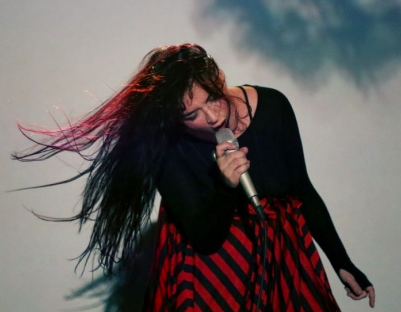
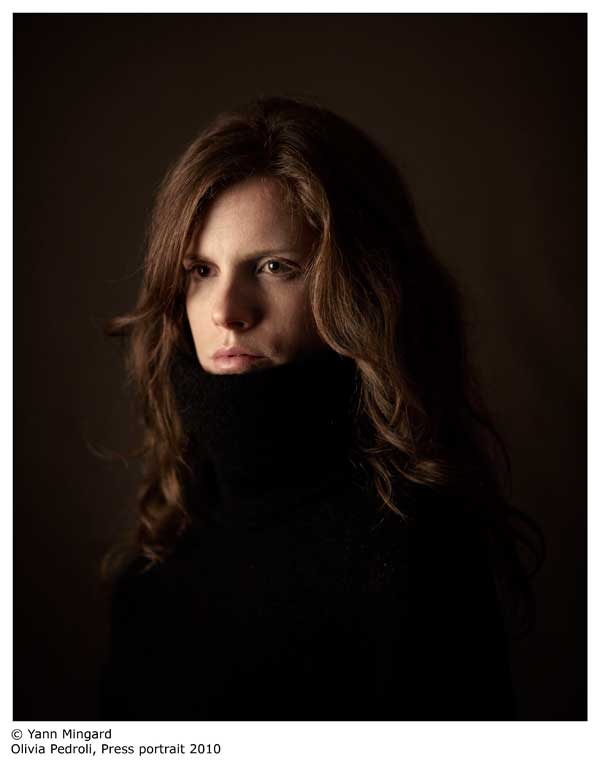
Deuxième création présentée dans le cadre du Cully Jazz, la chanteuse neuchâteloise Olivia Pedroli présente au Temple les chansons de son album A Thin Line, en avant-première.
En 2010, elle était passée de « Lole » – un projet de chanson pop, un peu folk – à « Olivia Pedroli » en sortant The Den, album intimiste aux textures classieuses ; un changement de cap aussi déroutant que réussi. « J’ai commencé jeune, puis j’ai eu la chance de rencontrer les bonnes personnes qui m’ont permis de révéler ce monde intérieur ». En l’occurrence, le producteur complice de Björk, CocoRosie ou encore Feist, l’Islandais Valgeir Sigurðsson.
“Ces dualités qui règnent en nous… “
C’est naturellement qu’elle est retournée à Reykjavik pour ce nouvel album à paraître en septembre, avec l’envie d’approfondir les choses, de « creuser un sillon, trouver une cohérence ». « Ce sont les dualités qui règnent en nous qui m’ont intéressées, d’où le titre A Thin Line : ces moment très particuliers ou se rencontrent les doutes et les certitudes. Comment aller à la rencontre de nos propres paradoxes, lorsque tout est clair mais rien n’est sûr. Et nous vivons dans une époque où il est nécessaire de jongler en permanence. » Elle évoque un album réfléchit en plusieurs temps, conçut pour un support vinyle qui conditionne en beauté l’écoute de la musique, avec « une grande recherche sur la forme ».
Hiver nomade et printemps acoustique
Son parcours classique de violoniste lui a permis d’apprendre à composer la musique, chose qu’elle tend à faire de plus en plus. “Il y a trois univers assez distincts que j’aime faire se rejoindre: une écriture folk, les arrangements classiques avec des cordes ou des cuivres, et une architecture sonore faite de textures électroniques.” Elle a dernièrement composé pour le film “Hiver Nomade”, pour lequel elle a été nominée au Quartz du Cinéma Suisse, et travaille actuellement sur le thème du loup avec le Musée d’histoire naturelle de Neuchâtel. Des collaborations transversales qui permettent un autre regard, et de souvent découvrir “la beauté insoupçonnée des choses simples”.
L’exercice de ce soir au CullyJazz Festival – réarranger ses morceaux pour une petite église – est une belle « zone de frottement ». En tentant le tout acoustique, il lui a fallut trouver des alternatives aux textures électroniques, s’approprier les résonances, « jouer avec les contraintes, ce qui amène paradoxalement une forme de liberté, car il faut aller dans le fond plutôt que plus haut ou plus loin. » Travail harmonique, improvisation des textures, beaucoup d’écriture. Pour l’occasion, elle s’est entourée de musiciens qu’elle connaît bien aux violon, violoncelle, percussions et contrebasse. Un projet qu’elle espère ensuite faire tourner dans des lieux insolites, en marge de sa formation électrique en trio (Rhodes, électronique, piano), à l’automne. On pourra revoir cet ambitieux projet acoustique dans la sublime Abbatiale du Bellleay le 5 juillet prochain.
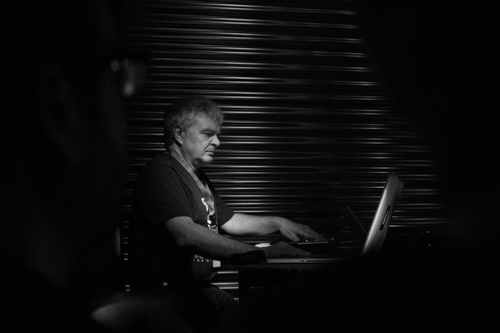
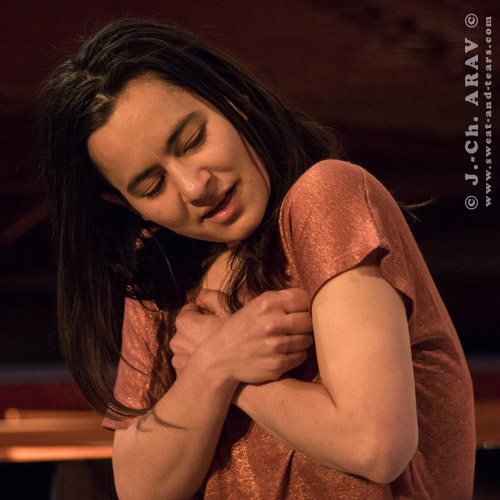
 Mains jointes ou offertes, poing tendu, le corps ondulant ou sautillant, la chanteuse Claire Huguenin impose d’emblée son style très particulier. La vocaliste de Bulle dont tout le monde parle a choisi de dévoiler en formule acoustique son premier projet solo,
 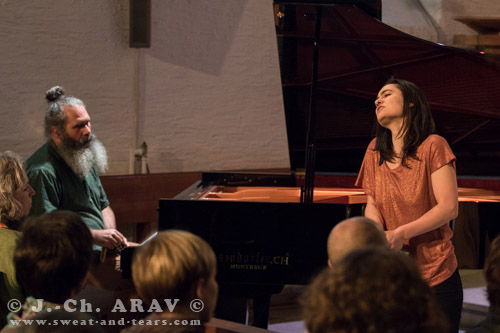 A ses côtés, le grand manitou du piano,
 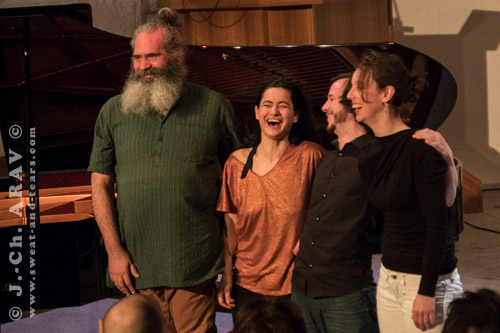 Ce qui n’empêche pas Claire Huguenin de continuer sans faillir son évocation de l’intime, des sentiments à fleur de peaux, des sensations pas forcément agréables, comme ce « Weary Dany » en duo voix-contrebasse qui évoque l’ennui. Le monde de Claire Huguenin est peuplé d’esprits, de gens qui ne communiquent plus, de ruptures, de fracas. Et sa voix fonctionne comme un écho à ses ruptures, ses cabosses, ses éclats de rire. Evidemment, l’équilibre est périlleux, difficile à tenir de bout en bout. Variant les modes, déstabilisant l’auditeur en jouant sur le tragi-comique, Claire Huguenin et ses musiciens taillent néanmoins leur route. Il faudra encore certainement quelques prestations live pour que ce projet atteigne sa pleine puissance. Mais le potentiel, la grâce et la trempe de cette « little big woman » (pour reprendre l’expression d’un Internaute subjugué) sont de ceux qui marquent durablement. Merci !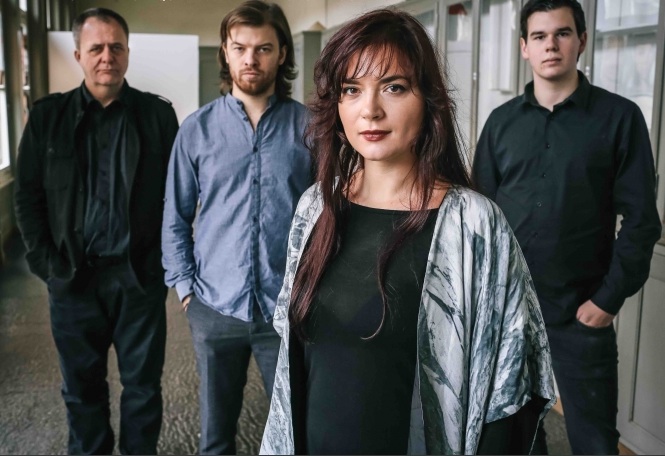
 La soirée « guitare » du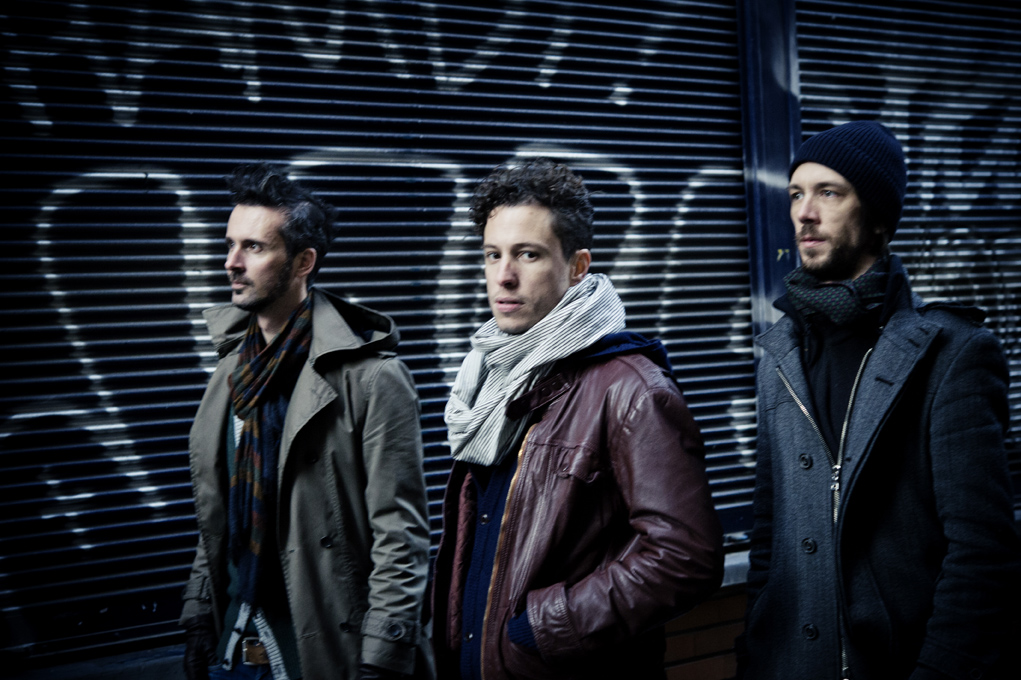
 Deuxième création présentée dans le cadre du Cully Jazz, la chanteuse neuchâteloise