Swiss bands at jazzahead 2016!

One night: eight showcase-acts: the Swiss Night on April 21 will be a highlight of this year’s live program at Jazzahead!  Find out more about the eight Swiss bands below. You can also listen to a track of each band selected at jazzahead! here. If you are not attending jazzahead! this year, Arte Concert is streaming the concerts played at Kulturzentrum Schlachthof live there. Alternatively you can also watch all videos of the showcases the next day on www.jazzahead.de In other words, you have no excuse not to follow those guys  live or on Internet!
_______________________________________

Plaistow
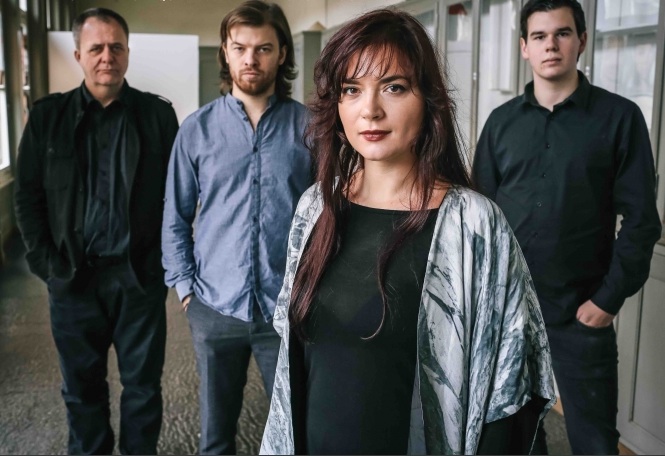
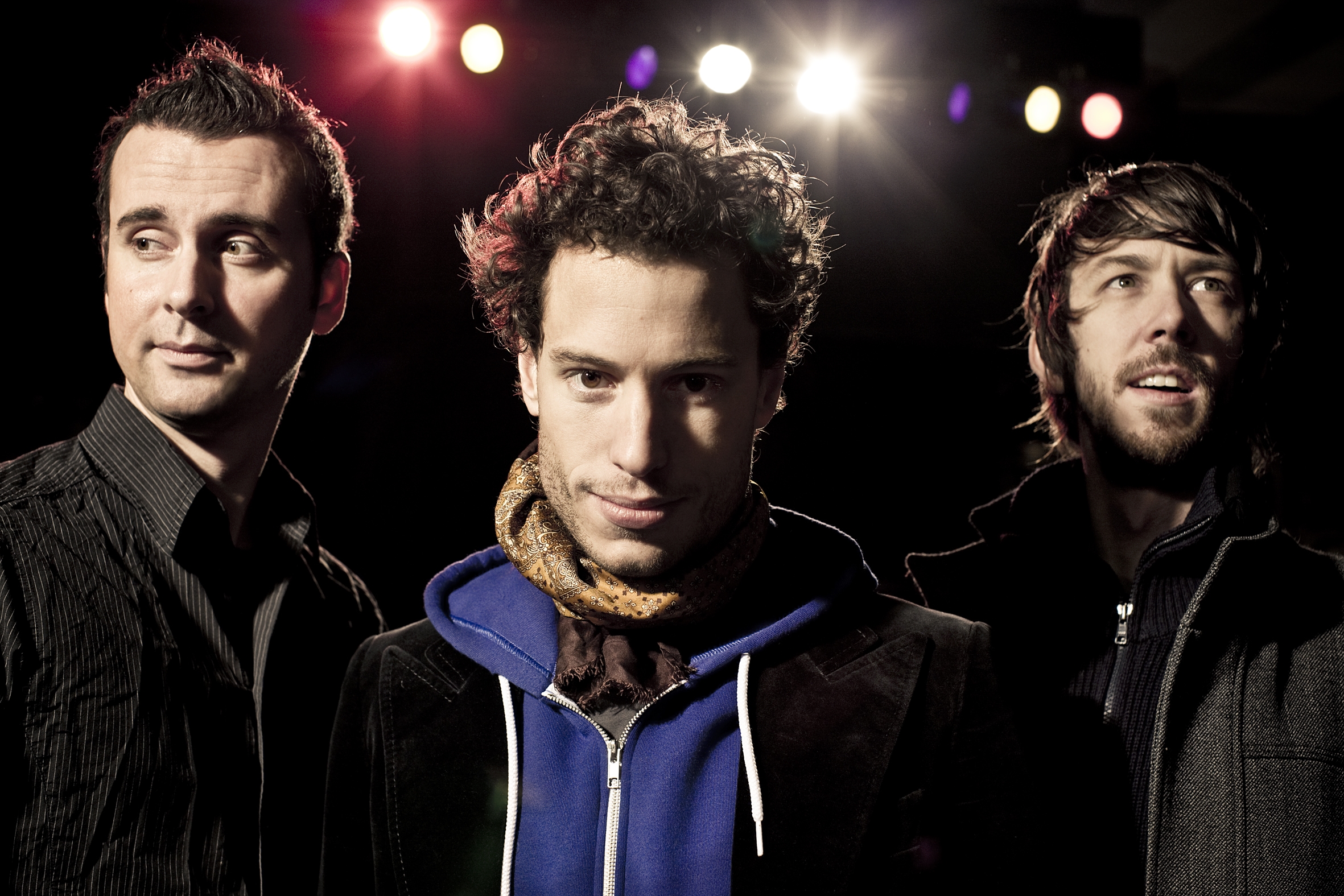
Plaistow_pic_LDLast week the editor of a UK jazz magazine said how much the office had got into Plaistow’s album Titan. I think they are something special. Plaistow is an acoustic piano trio driven by experimental dance musics, ancient drones and a desire to distill their sound to its most ‘alcoholic’, most potent. Plaistow make for a thrilling listen. At first I wasn’t sure of Geneva-based Cyril Bondi’s drumming style, it seemed to lack swing, bashing the air out of a beat, but at a sweaty, rammed Berlin Jazz Festival club last November, he was brilliant. Unique and aggressive with an engaging, rhythmic sensibility – perfectly coupled with the imaginings of pianist Johann Bourquenez. Irritating, repetitive notes hypnotise under his touch and at other times he sweeps you off your feet with a sweet melody as in ‘Enceladus’ – it has me in a whirl. Johann’s music is so fresh. Growing in confidence is Vincent Ruiz on bass. His sensitivity connects and subtly reflects the band’s ambitions.
To learn more about Plaistow, read our selection of articles on Swiss Vibes!

[youtube:https://www.youtube.com/watch?v=RAtzeqI6RWc]


_____________________________________
Colin Vallon

@Mehdi Benkler
@Mehdi Benkler

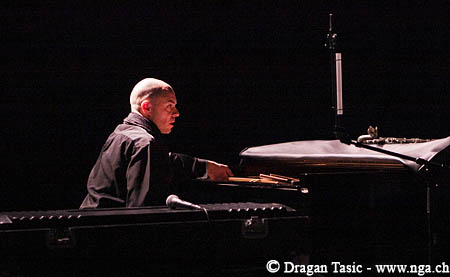
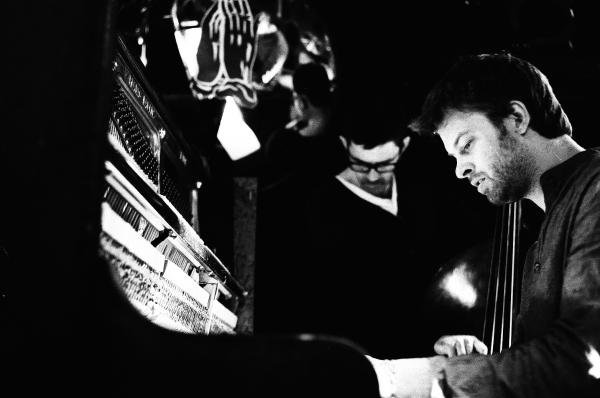
I’ve never seen Colin‘s own trio and am curious, especially as I felt his last ECM album, Le Vent (2014) fell into the ‘contemplative hole’ that undoes many an artist exploring prepared or experimental piano. I suspect Colin is currently going through a time of musical reflection about his direction. His trio is a pretty high-powered crew with drummer Julian Sartorius (who impressed London’s Cafe Oto in March) and Patrice Moret on bass and his appearance at jazzahead! will be a chance to discover where he is now – and what he wants to say.
To learn more about Colin Vallon, read our selection of articles on Swiss Vibes!

[youtube=https://www.youtube.com/watch?v=dM5kFt0I_l8]


_________________________________________
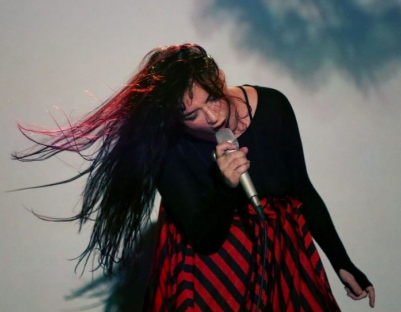
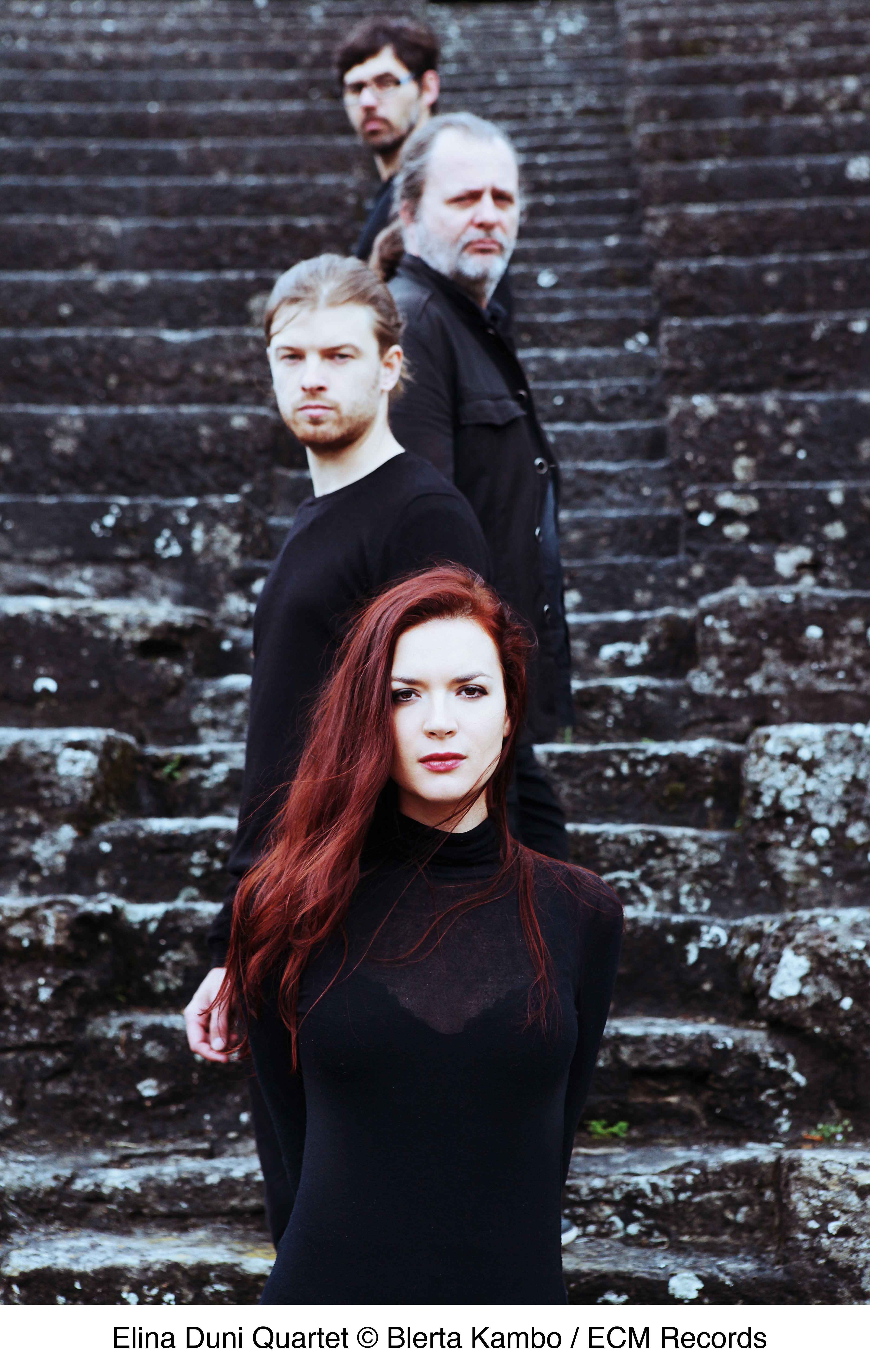
Elina Duni

© Blerta Kambo
© Blerta Kambo

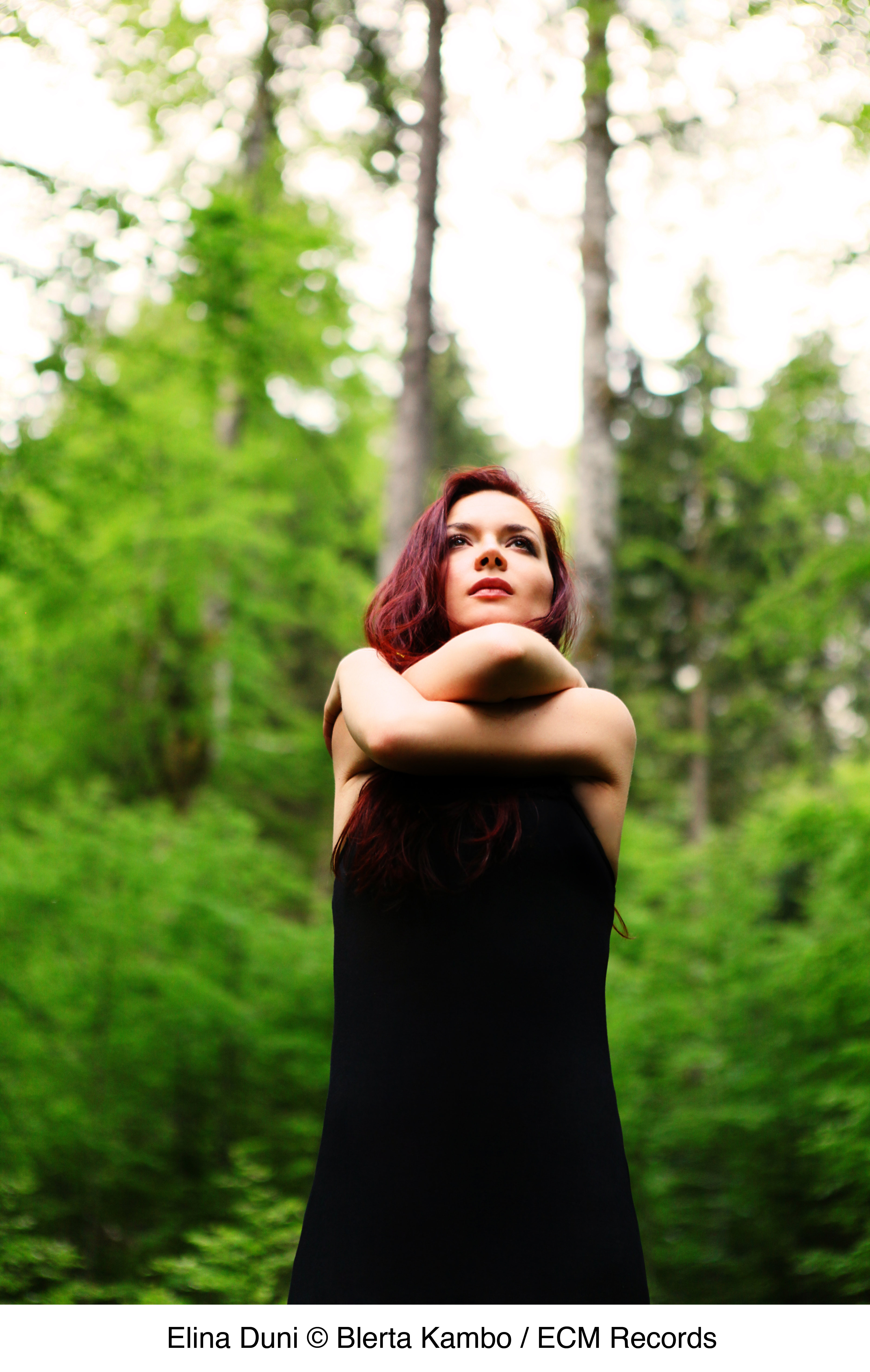
Seeing Elina playing solo at Cully Jazz last year elevated her even more in my estimation. That woman can sing! She’s been performing since she was five years of age in her native Albania and although she moved to Switzerland when she was ten, you can almost taste her culture and country when she sings. Her experience comes through too – she moves an audience, but is never cloyingly sentimental. I think the drummer Norbert Pfammatter is key to the band, almost the yin to her yang (yes, that way round), responsive to her and tuned in, whilst Colin Vallon leads the music into imaginative landscapes, provoking her to stretch her ideas. The recent addition of Lukas Traxel on bass adds a sparkling energy as I saw when they played the EFG London Jazz Festival last year. I’ve spoken before about Elina evoking universal goosebumps with her emotive expression and that sold-out gig was no exception.

To learn more about Elina Duni, read our selection of articles on Swiss Vibes!

[youtube=https://www.youtube.com/watch?v=8TFtCZEdRT0]


__________________________________________
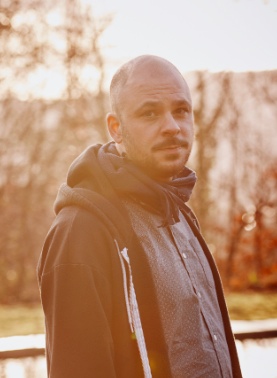
Christoph Irniger Pilgrim

ChristophIrnigerPilgrim includes Stefan Aeby on keyboards and Michi Stulz on drums – I know their work as part of Tobias Preisig’s quartet and both were crucial to the innovation of Preisig’s album, Drifting. In Pilgrim, Aeby draws on his ability to play an evocative jazz, informed by artists such as Bill Evans in order to echo Irniger‘s direction. Stulz walks an intelligent line between the past and the now and his interplay with Irniger, Aeby and bassist Raffaele Bossard, makes the band something special.

I like Irniger’s choice of electric guitar and Dave Gisler is a highlight of the track ‘Italian Circus Story’ from the album of the same name. Here, Christoph almost whispers in evocative drawls on the saxophone; he tells his tales in a spacious and thoughtful style. Along with the Christoph Irniger Trio and other projects with New York-based artists, he uses trips to the US to immerse himself in the heritage of jazz whilst carefully searching for his own expression.

To learn more about Christoph Irniger read our selection of articles on Swiss Vibes!

[youtube=https://www.youtube.com/watch?v=HRO-11tLQ18]


________________________________________________

PommelHORSE
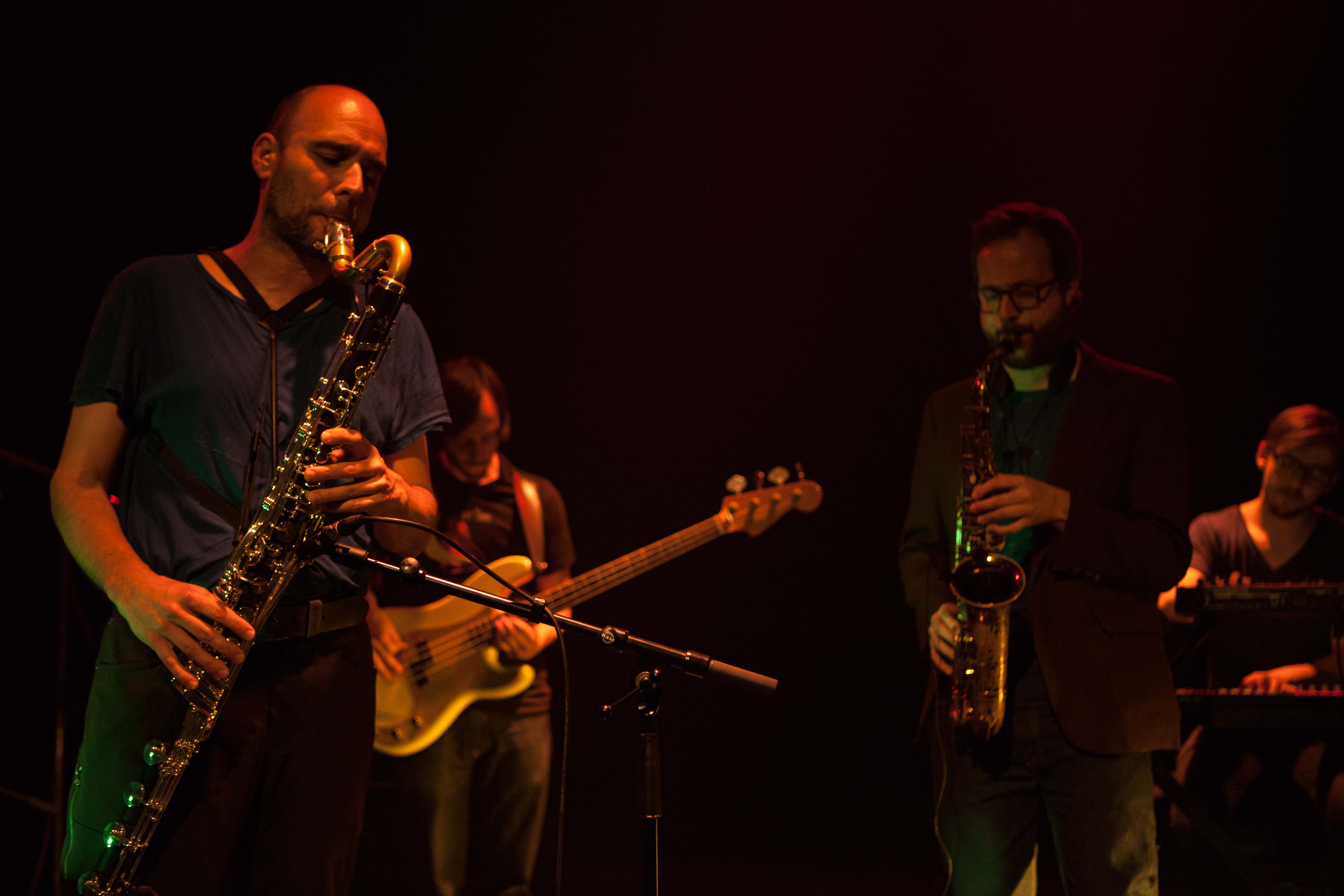
PommelHORSE ©Simon Letellier

This confident and original Bernese quintet are a refreshing flight of fancy on the Swiss jazz scene. They inhabit a surreal terrain somewhere between mutant jazz, prog rock and synthy ambiant rhythms. Cleverly creating a story and atmosphere in each track, they juggle an abundance of patterns and ideas always leaving room for improvisation, tempo changes and general dashing about. With tracks entitled ‘Drunk on Christmas eve’ and ‘The circus is closed and all the animals have gone wild’, it’s impossible to resist their playful attitude and experimental forms, both dark and light. Very popular on the live circuit, PommelHORSE are currently working on their third LP.

To learn more about PommelHORSE read our selection of articles on Swiss Vibes!

[youtube=https://www.youtube.com/watch?v=BfL5speG_Uk]

_________________________________________________

Weird Beard
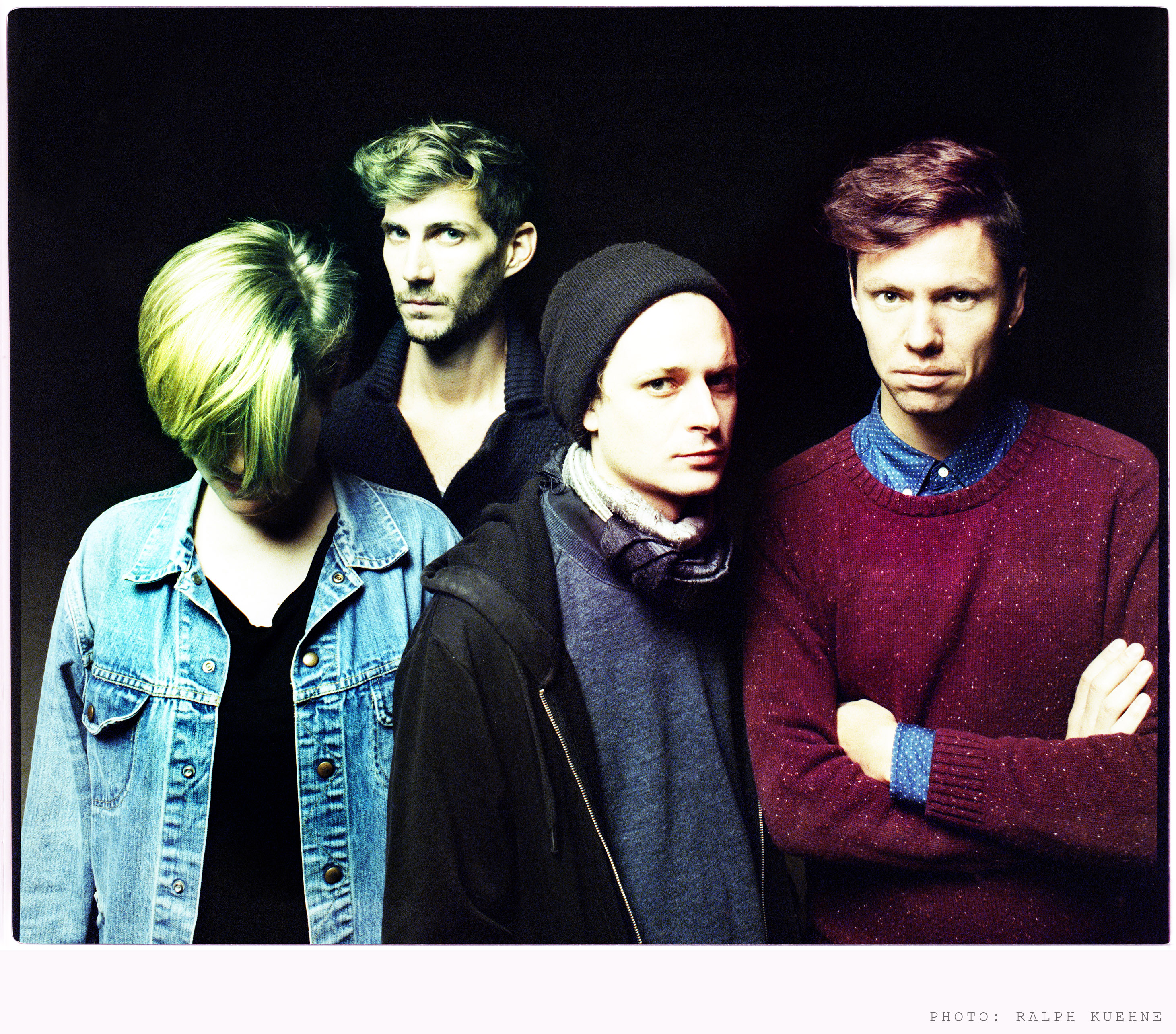
Weird_Beard_2_A5_RGB_PHOTO_RALPH_KUEHNERepresenting the exciting non-conformity of the contemporary Swiss jazz scene, Weird Beard is a quartet led by saxophonist Florian Egli, featuring guitar, electric bass and drums. The weirdness of their beards is less a facial hair reference, more a hallmark of their musical individuality. A band rooted in the jazz tradition in terms of improvisation and composition, but sonically pulled towards trashy metal, punk riffs and quirky noise. Both lyrical and totally unpredictable, their elegant, laconic sound designs can go off in all directions. ‘Everything Moves’ is their second LP just out on Intakt Records and comes warmly championed by Bugge Wesseltoft who describes the group as having ”musical ideas and inspirations merged into a very fresh and new sound.”

Weird Beard, Everything Moves, Intakt Records

[youtube=https://www.youtube.com/watch?v=Fdi7YOaOD3o]

___________________________________________________

Julian Sartorius
@Reto Camenisch
@Reto Camenisch

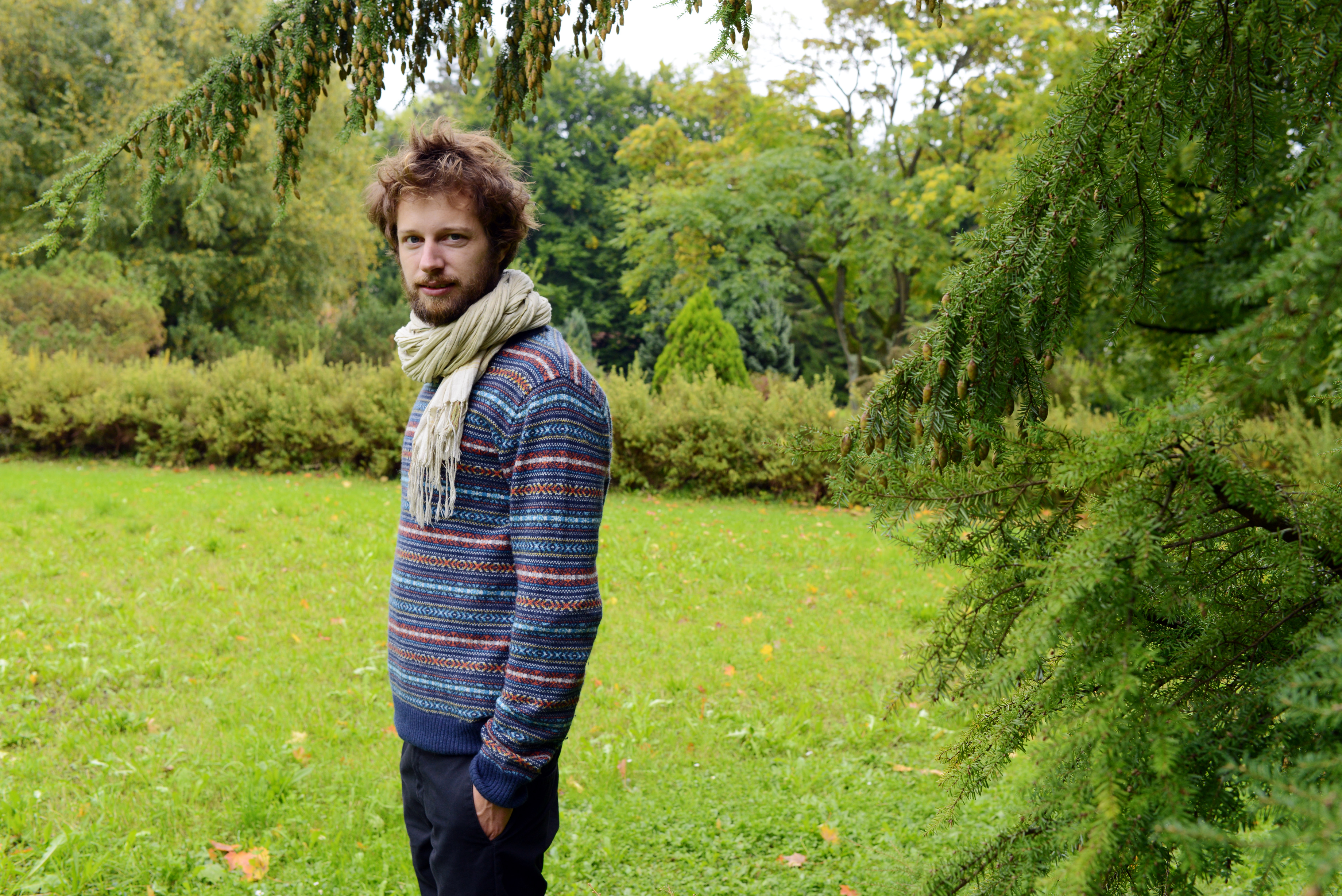
The Swiss musical ecosystem is a richer place because of drummer Julian Sartorius. What David Attenborough is to nature wildlife documentaries, Sartorius is to the world of sound: a beat explorer, a sound forager, a sonic researcher. His gigs are a masterclass in bashing, crashing and smashing – not just the ordinary drum skin or commonplace cowbell, but squeaky toys, handcrafted gongs, hairdryers, electric toothbrushes. Can he hit it? Yes he can.

Agile in pushing boundaries of the percussive sound from hip-hop to abstract electronica, Sartorius opens up endless possibilities and range. His latest video features cymbals rolling along a studio space, poetically crashing about at will. Previous works include a 12 LP box set called ‘Beat Diary’ composed of 365 analogue beats, each one painstakenly researched and accompanied by its own visual. A true artist in every sense of the word, a national treasure.

To learn more about Julian Sartorius read  our selection of articles on Swiss Vibes!

[youtube=https://www.youtube.com/watch?v=4G8GbugnY50]

________________________________

Luca Sisera ROOFER
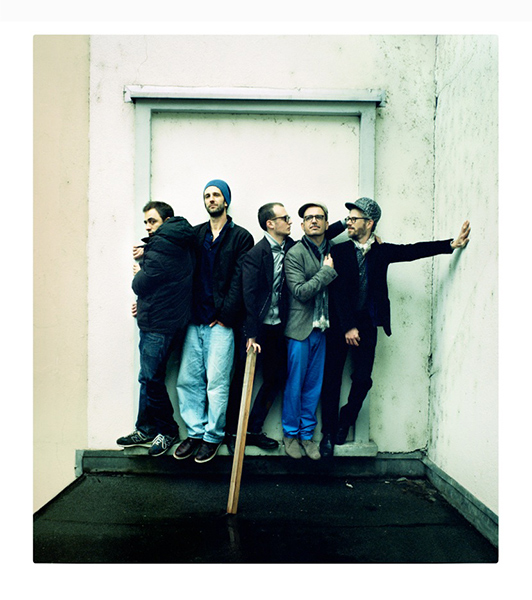
roofer_01Luca Sisera is a well­ seasoned Swiss double bass player whose ROOFER quintet describe their sound as “contemporary, liberated jazz music”. Negotiating the fine line between improvisation and composition, the five elements come apart and then reunite in equal measures. There’s a theatrical edge to their music thanks to the horn section adding a lovely big band swing to the complex equation. One minute groovy, sexy, full of bump and grind ­the next angular, frenetic, swarming around one another like agile birds. The interplay between the musicians is extremely confident and general mood leans towards the playful. An exciting band to watch live because of their warm, busy and inventive approach.

[youtube=https://m.youtube.com/watch?v=CLvuzfD4wMQ]

Text by Debra Richards and Beatrice Venturini


Swiss artists @EFG London Jazz Festival 2015

EFG_London Jazz logoThe EFG London Jazz Festival is a big annual affair running for ten days in the middle of November. This year Swiss and Swiss-based artists, represented by Nik Bärtsch’s Ronin and Mobile, Elina Duni, Samuel Blaser, Basel Rajoub, Marc Perrenoud, Christophe Fellay and the Russian/Swiss collaboration, Jazzator, had well-attended gigs (two were sold out). Phew. Clashing with big-name artists, and the overwhelming number of events can be an issue at such festivals.
The UK can be a tough and weird market

Consider this list of musicians – you couldn’t get a more diverse bunch. There isn’t a Swiss sound like there was a Norwegian one, but the artists are building individual reputations via their quality. The UK can be a tough and weird market, but when people hear something they like they will always give a warm and enthusiastic response.

Nik Bärtsch has a definite fanbase and had a two-day residency at King’s Place as part of the Minimalism Unwrapped season with Mobile Extended and Ronin Rhythm Clan. I saw the latter on the opening night of the festival with an added 3-part brass section and guitarist Manuel Troller, whose sensitive but spirited playing made him a natural part of the clan. I first heard Ronin two years ago in the same hall. I was entranced by their intense yet grooving sound and still am.

You live for such moments with Ronin

nik_baertschs_feat_roninThere were the sparkles of Nik’s compelling piano work and superior conversations between the Ronin members whilst other phases had the extended band heading into an alt-funk fest with James Brown’s spirit shimmying around the room (well, almost). But ‘Modul 32’ was the highlight for me: Kaspar Rast played a small shaker – no fuss, just simple but killer in its repetition, and clever in the textural canvas it gave saxophonist, Sha, and Manuel on which to paint subtle but deeply personal musical thoughts. You live for such moments with Ronin.
He can evoke memories of J. J. Johnson

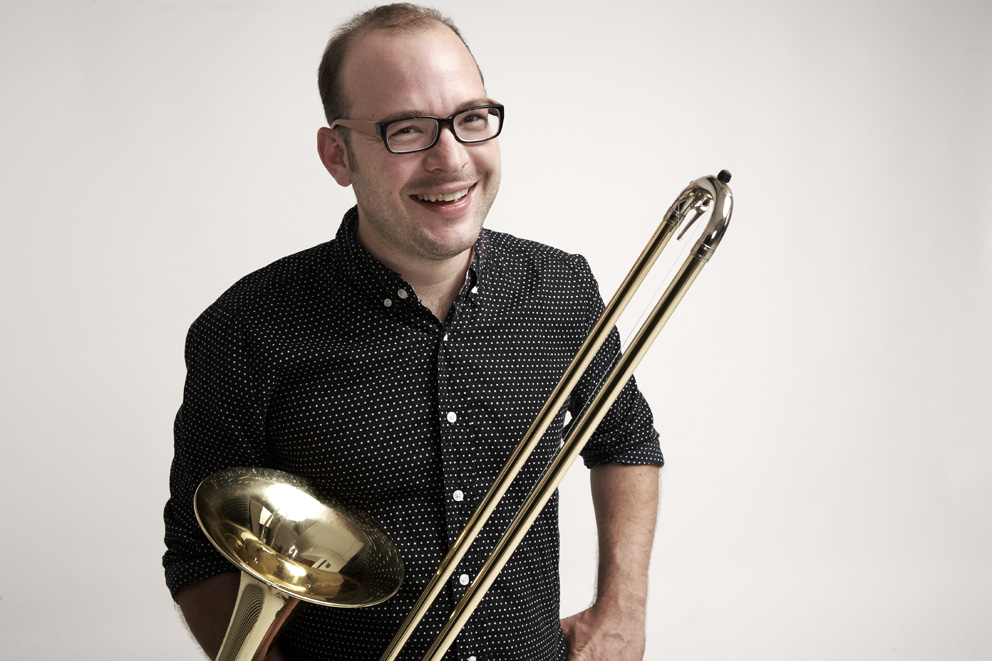
©Alex TroeschThe small, shabby Club Inégales is in the bowels of an office building but was set aglow by the quality of the musicians in Samuel Blaser‘s quartet. I’ve already waxed lyrical about the wisdom of pianist Russ Lossing’s playing on Spring Rain, Blaser’s tribute to Jimmy Guiffre. He approaches music as an horizon, it’s not about him, but the entire landscape. I love his touch. Equally fine are bassist Masatoshi Kamaguchi and legendary Gerry Hemingway. A key drummer on the avant garde circuit he caresses and cajoles rhythm out of his kit, able to be economical yet inventive. I particularly like Blaser when he drawls his sound as if part of a deep South funeral march, his soulfulness peeping through. He can evoke memories of J. J. Johnson then veer off elsewhere. It was a promising show cut short by the venue’s format of a final set improvising with the house band.


marc_perrenoud_feat_marc_perrenoud_trio

Luckily I’d got to hear the crisp interplay between this quartet at Adventures in Sound, a feast of music recorded for BBC Radio’s Jazz on 3 programme earlier that day. Each of them also improvised with renowned UK artists such as John Edwards (bass) and rising keyboardist, Elliott Galvin (in photo). Unfortunately it meant I missed Marc Perrenoud‘s set as part of ‘Seriously Talented’ – an afternoon of musicians that had been on Serious’ Take Five course. The Clore Ballroom of the Royal Festival Hall was packed and I heard that Marc’s joyful and bonded trio were an uplifting addition to the line up.

Elina’s expression taps into our universal goosebumps

Elina Duni Quartet Elina Duni Quartet are equally notable and their Dallëndyshe album had good reviews, one in The Guardian. Live, Norbert Pfammatter stands out as a sublime drummer. His pulse-like work encourages a sensual interplay between vocals and rhythm. There is an almost mantra-like progression as Elina leads us through the emotive themes of Albanian folk songs. Lyrics such as, “My dear boy in front of the flag oh, my heart’s engulfed in worrisome flames,” (from ‘Me on a Hill, You on a Hill’) feel horribly relevant and even if they weren’t Elina’s expression taps into our universal goosebumps. At first her tone seems warm and smooth, but then a quiver or cry renders me helplessly emotional.

Colin Vallon is simply captivating, and fierce too, making his mark. Along with new, fearless bassist, Lukas Traxel, they stand their ground at the side of Elina’s power. I like the brave move the quartet made of paying great respect to the Albanian folk tradition whilst interlacing it with a form of ethereal jazz. It left the audience spellbound.

richmixbaselrajoubnov15_26It was a similar story for another Swiss émigré. The concert of Basel Rajoub‘s Soriana (‘Our Syria’) was the evening after the Paris attacks and as the review Classical Source expressed, it could not have made for a more eloquent night of music. Made so by the skill and personality of Basel in a magical alchemy with the type of welcoming audiences that can be found in London.


 A unique view of free music

Jazzator2_M&FNov2015Finally, Jazzator are a Russian/Swiss quartet with quirky intentions conveyed with talent. I particularly liked saxophonist Oleg Mariakhin who delicately integrated himself with the vivid vocals of Marina Sobyanina. I sensed underlying eastern folk traditions that had been pulled apart leaving ragged edges and broken threads. Drummer Sergey Balashov on drums and bass player Maximilian Grossenbacher provided an ear-pricking rhythm section, and together Jazzator offered a unique view of free music. One UK reviewer declared them a highlight of the festival.


Elina Duni: Songs of Love and Exile

© Nicolas Masson
Elina Duni Quartet © Nicolas Masson

Elina Duni moved to Switzerland when she was ten, five years after she’d first stepped on a stage to sing in her homeland, Albania. Later, studying music in Bern led to a crucial meeting – with pianist and composer, Colin Vallon. It’s Vallon, along with drummer Norbert Pfammatter and now Patrice Moret on bass, who held a mirror up to Elina so she could see who she is and be free to draw on the rich cultural soil of the Balkans.

Elina’s second album for the major label ECM is Dallëndyshe (The Swallow) and listening to it immersed me in a bubble of ancient and distant lives where women call their loves ‘Ylber’ (rainbow) as they watch them leave green hills for work or, war. With titles such as ‘Nënë moj’ (O, Mother) and ‘Kur të pashë’ (When I Saw You), Elina describes them as ‘songs of love and exile’ but somehow the purity of the melodies and simplicity of delivery make them timeless.

What were you driven to express and explore in this album?

Elina Duni I think the word ‘timeless’ is very important in this case…You can feel the songs’ strength because they’ve crossed centuries and the melodies are archaic and deep. It’s this mixture of the contemporary perception each one of us has being a musician living in today’s world and the fact [the songs] are related to something that concerns all of us – we are all migrants, it’s the fate of all human beings: leaving behind something you love, going abroad, going from countryside to city, themes that are universal.

Where and how are did you find these traditional songs?

Elina Duni You may be surprised or maybe not, I found them on YouTube! Albanian friends are always suggesting songs and a friend of mine living in Greece put ‘Fëllënza’ on my wall on Facebook.

‘Fëllënza’ has a melody that has my dopamine triggers firing like Dirty Harry and Elina’s voice is so intimate you feel she’s singing with her head next to yours on a single pillow. Colin Vallon’s tangential arrangement steers it clear of saccharine-slush whilst on ‘Unë në kodër, ti në kodër’ (Me on a Hill, You on a Hill) he hypnotises, plucking piano strings like a cimbalom.

Elina Duni This is one of the songs where Colin wrote the arrangement with the bassline and the ‘mantra’, I had the melody and rhythm but he takes the song to another level…The three of them are wonderful musicians, they never play ‘1st degree music’. For me, art is the distance we take from things, it’s playing or looking at them in the 2nd, 3rd and 4th degree…Balkan music can be so pathetic [evoking pity] and it’s really a trap, somehow this distance from the pathos is the art.

When I started singing these songs Colin told me to imagine how Miles Davis would sing these themes – as simple as possible. When I do an ornament then it’s really thought out, I try not to do too much so when I do something it stands out. It’s the manner for the whole quartet.

You said that we live in a time where there is a need for poetry, say more about this.

Elina Duni Poetry has its own music, you can listen to a poem that you don’t understand and still cry with it… [the language] Albanian has something very interesting, it has a lot of sounds in it and it is a very, very old European language. It has Latin and Turkish words and, they say, also from the Celts, and it has something very deep and at the same time, strange.

Tell me about your childhood in Albania and how you feel about your homeland now.

Elina Duni There is a phrase, ‘there are two tragedies in life: to have a wonderful childhood and to have an awful childhood’. So, I had a wonderful childhood. In Albania it was another time that doesn’t exist anymore, there were no cars, no consumerism, no Coca Cola, no aluminium…we used to be happy when we could eat a chewing gum because it was very rare, or chocolate. We were raised in the neighbourhoods, everybody was going to everybody’s houses…and we were free. We grew up jumping, climbing the trees and running and fighting and being outside all the time…the imagination played a very important role. Everyone was writing poetry and reading…I think this was a golden time.

© Blerta Kambo
© Blerta Kambo

For me Albania is always inspiring, I go very often, it’s like all the countries that are transforming themselves, they have something alive there. Unfortunately Albanian society is still macho and patriarchal, it’s changing slowly, but there is a lack of models for women…The best thing is to educate women…and to show that being free is not being a sexual object which is hard because the media promotes this – and the singers too. There are so many in Albania, every good-looking girl puts on a mini skirt, makes a video clip and she’s a ‘singer’. I try to do my best to promote another model of woman.

What other projects are you doing?

Elina Duni I’ve been doing a solo project where I sing Albanian songs with guitar but I also did an album a year ago as a singer/songwriter where I wrote songs in Albanian so I’m going on writing, in French and English too…I love the quartet but I am trying to diversify so I’m writing as much as possible to find my way into music – which is not as simple when so many things have been done and you want to find your own original way at looking at things.

I still don’t know where all this is going to lead, the thing is I love acoustic music so maybe this can be a duo with voice and piano, it depends on who your partners are on the adventure, who you find. I would like to go more electric because it is a sound that really attracts me. These days there are no boundaries and you can explore without losing your identity. I love to sing my songs, that’s my biggest dream.

Elina Duni website

Elina Duni Solo
12.04.15 Cully Jazz Festival – Cully, CH
Elina Duni Quartet 
21.04.2015
 Jazzkaar Festival – Tallinn, Estonia
22.04.2015 
Viljandi Folk Music Center, Estonia
24.04.2015 
Salle des Fêtes de Carouge – Genève, CH
26.04.2015 
Dampfschiff – Brugg CH
29.04.2015
 Centralstation – Darmstadt, Germany
09.05.2015 
Treibhaus – Innsbruck, Austria
10.05.2015
 Bee-Flat im Progr – Bern, CH
27.05.2015
 Moods – Zürich, CH
29.05.2015 
Paradox – Tilburg, Netherlands
31.05.2015
 Rote Salon – Berlin, Germany
13.06.2015 
Schloss – Thun, CH
21.06.2015 
Bibliothéque Universitaire et cantonale – Lausanne, CH

Swiss Jazzed Out: Elina Duni & Colin Vallon

Swiss_Jazzed_Out__Elina_Duni___Colin_Vallon_-_YouTubeMathieu Mastin, concepteur et réalisateur de la série de mini-documentaires Jazzed Out a posé ses valises en Suisse pour y orchestrer des sessions live improvisées.
Swiss Vibes vous propose de (re)découvrir ces quelques minutes de musique hors norme tout au long de l’été. Après le duo lausannois de Stade, le piano suspendu de Malcolm Braff, la balade continue dans les entrailles du club bee-flat de Berne avec la chanteuse Elina Duni et le pianiste Colin Vallon.

The Schaffhausen Jazz Festival 2014

As I walked into the ex-yarn factory, Kulturzentrum Kammgarn, it was clear the organisers put passion and care into their festival. The place was warm and intimate with candlelit tables and there was a relaxed, convivial vibe. Over four evenings the audience was treated to a variety of Swiss improvised music and there was a day of professional talks.

Without doubt, this is an ambitious festival

I missed the compelling Elina Duni Quartet who opened the event, but was there to experience BASH. I’m getting to know Lukas Roos through his outfit, pommelHORSE, but here the clarinetist/saxophonist played with guitarist, Florian Möbes, Domi Chansorn on drums and Samuel Gfeller on graphic novel, literally. A massive screen behind the band showed the story of a prisoner drawn into increasingly twisted events that lead to his end. The style of Gfeller’s drawings, Robert Crumb in feeling, are so powerful that at times, I tuned out their sensitive and minimal music. On speaking to Roos he explained that cutting the set to 40 minutes affected the balance – a point echoed by Andreas Schaerer and Rusconi on appearing at this festival.
Arte Quartett

Schaerer’s vocal noises ran amok

Andreas Schaerer was performing Perpetual Delirium, his composition for the saxophonists, the Arte Quartett with Wolfgang Zwiauer on electric bass. It had the quartet interlacing with a naturalness that was almost child-like in it’s fun and freedom. There were fascinating textures as soprano sax took over from alto, or tenor had a furious and thrilling exchange with the baritone, whilst Schaerer’s vocal noises ran amok adding sparkle, or hiding within their vibrant sound.

For pianist Gabriel Zufferey the time limit was perfect. His music was fluid with notes as sweet as fluttering butterflies yet underpinned by such knowledge and skill that he came across as an eccentric wizard. I liked the echoes of classical music and he incorporated an Eric Satie piece – it might sound tacky, but in his hands it lifted the hearts of the audience who then demanded two encores.

Is Rusconi’s music, jazz, or not?!

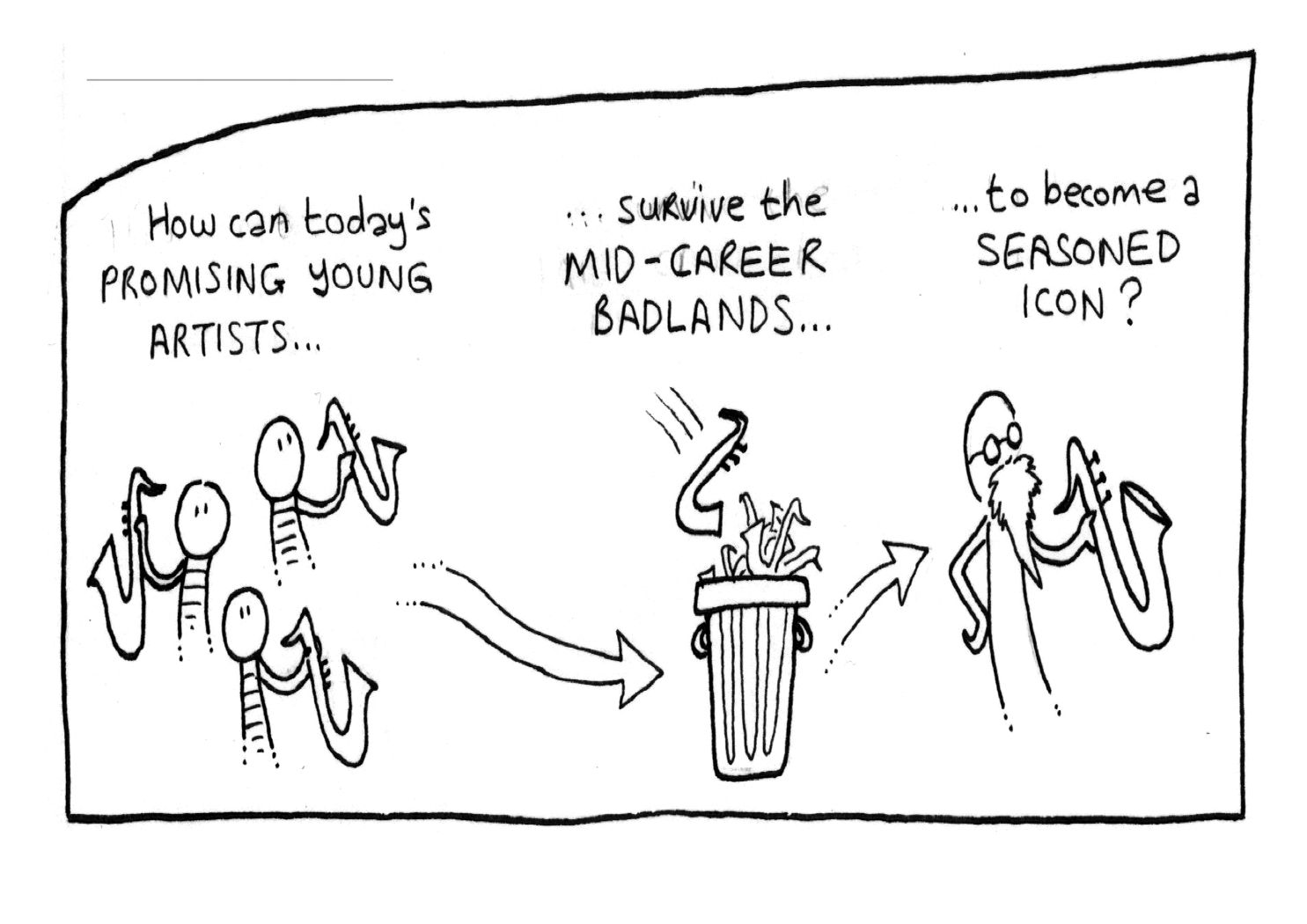
I was recently critical of Rusconi‘s gig at the Cully Jazz festival, but at Schaffhausen they were more confident in their ideas and I totally got into the groove of Hits of Sunshine and am warming to the strangeness of Change Part 1. However, on talking to some of the European promotors invited to the festival, questions emerged – is Rusconi’s music, jazz, or not? Is it gimmicky or authentic? I felt some answers were suggested by Gerry Godley of 12 Points who tackled the issue of the future(s) of jazz in his presentation with cartoons from Patrick Sanders, at the festival. But I’ll go into that more in my next Swiss Vibes’ blog, ‘How is Jazz?’

In the meantime I’ll leave you with the Bill Evans‘ quote that Godley used, “Jazz is not a what, it is a how. If it were a what, it would be static, never growing. The how is that the music comes from the moment, it is spontaneous, it exists at the time it is created.” If the Schaffhausen Jazz Festival has its sights set on being a relevant platform for jazz then it needs to continue putting on bands that question our perception of this rich and challenging music, as well as, those that celebrate it.

Cartoon by Patrick Sanders

Colin Vallon speaks about “Le Vent”

Colin Vallon © Petra Cvelbar“Le Vent” is Colin Vallon‘s second album for the prestigious label ECM. Listening to it, or to him speak, you might think he’s a bit soft – a gentle soul. There’s a distinct aesthetic to his playing, it’s mindful and sombre as if remembering a lost love. Interviewing him, I found an assured and fiery spirit; a pianist with a clear intelligence, driven to carving out his own, individual path.

“From the moment I could stand I tried to press down the keys”

Music was always around Vallon – when most families were arguing at Christmas, his was gathering at the ever-present piano, singing hymns and Gospel. “I loved the sound of the instrument, from the moment I could stand I tried to press down the keys”. Despite this, he quit piano at the age of 12 because he could no longer play by ear and reading music frustrated him. Then two things happened: his uncle taught him some blues chords that he could play, “Without paper in front of me” and he saw a solo concert of Keith Jarrett, “It was really amazing to hear that.”

He returned to music lessons at 14 and began composing. By 19 he was at the University of Arts in Bern and had his own trio. Here he found the American theory of copying the standards until you could imitate them too restrictive. “But this was also very good for me,” he says, “because it meant that if I wanted to do something of my own then I had to do it really on my own and to be more didactic in terms of composing. I was really independent.”

“It’s a music that has something very raw about it”

However the composition tutor, Frank Sikora, inspired Colin and for his class he recorded, “A huge fence or gate that was screeching, making harmonics and noises.” By 2002 he developed this interest in strange sounds with prepared piano techniques and had begun an enduring curiosity for Eastern European music. “It has something very raw about it and, like this fence maybe [that he’d recorded], it’s a very different sound and it’s something that caught me immediately.” He joined a band with the saxophonist Sascha Schönhaus playing Balkan music and discovered one of his “desert island records”, Le Mystère des Voix Bulgares.

A journey in Albania

Meeting Elina Duni provided fertile creative soil as Albanian music opened up to him and the Trio’s third album, (their first for ECM) was entitled Rruga, the word for “path” or “journey” in Albanian. It was critically acclaimed, so did this make it hard to follow? “There was a bit of pressure,” admits Colin, “not from the label, but from myself..it’s hard to come with a second album…and changing the drummer [from Rohrer to Sartorius], but in the end I’m really happy with the results.”

“There are a few goodbyes, a tribute to Asita Hamidi”

Colin found his material came naturally as he dealt with several deaths and saw a suicide jump from a bridge. “Le Vent was an elegiac album, a lot to do with death…and the passing of time and life. It sounds really dark but it’s not just about that…There are a few goodbyes, a tribute to Asita Hamidi [the harp player] who died…things that are a part of life but I needed to express somehow.” It’s Vallon’s careful listening for, then stating his own truth, that makes him a compelling artist.

Colin Vallon “Le Vent” (ECM)

On tour:

26/04/14 Jazzahead, Bremen DE
27/04/14 A-Trane, Berlin DE
29/04/14 Mokka, Thun CH
30/04/14 Bee-Flat, Bern CH
03/05/14 L’Azimut, Estavayer-Le-Lac, CH
13/05/14 Mokka, Thun CH
17/05/14 AMR Genève, CH
27/05/14 Mokka, Thun CH
01/06/14 Green Hours Festival, Bucarest RO
07/06/14 Paris Jazz Festival, Paris FR

Elina Duni Quartet @ the London Jazz Festival

BaO_DuniYou physically feel the power of Elina’s cry
Elina Duni is a storyteller and from the moment her first ever London concert began she unapologetically took us, barefoot, from the Queen Elizabeth Hall into the forests and mountains of Eastern Europe. And into a culture of stirring tales of family bonds, passionate love, loss and longing. You physically feel the power of Elina’s cry, the emotional quivering of the Balkan vibrato and resonance of the words (even though most of us didn’t know the language) and along with her quartet she held the audience rapt

“The magical part is what’s happening between us, our interplay”

Elina’s lifeblood is both the folk music of her birthplace, Albania, and improvised music. “The magical part is what’s happening between us, our interplay,” she explained to me and over the nine years they’ve played together they’ve evolved ways to hold Elina’s stories (two were traditional songs passed to her by grandparents) without crushing them under the weight of jazz improv or, more to the point, not being eclipsed by them and Elina’s charisma. In The Girl of the Waves Elina’s ethereal vocal sounded as if it was floating on the wind, being carried to the bird that the girl is questioning about her missing lover. Colin Vallon’s piano felt like the bird’s reply, sweet yet with edgy minor keys to hint at tragedy.

“The earth beneath us”

Elina Duni_PF2I have to admit I was entranced by Colin’s imagination; he is a potent voice and I want to check his own trio now. At times he played with such melancholy it broke my heart, then in a moment, flashed his anger or became cold, like ice cubes dropping into Elina’s blood-red cocktail, cracking and clinking, changing the temperature. He used various techniques to physically alter the piano, deadening the resonance or twisting the keys into cimbalom-like notes, revealing a Balkan soul whilst never breaking the spiritual thread of jazz.
The drumming of Norbert Pfammatter was sensitive and swinging. He made every beat count and at a pace that clearly said, ‘I’m taking my time, got a problem with that?’ He used bundles of thin sticks to create an effect between brushing and drumming and exuded a yin quality: soft but dark, tapping out a funereal rhythm or taking us into a tribal trance. The double bass of Patrice Moret stayed warm and solid, ‘The earth beneath us,’ as Elina described it.

Albanian blues

A rendition of Nënë Moj, a son sorrowfully telling his mother he must leave to his homeland to work, was a highlight. Elina described it as Albanian blues and it’s the flavour of the quartet’s next album. If it’s half as thrilling as their performance it will blow your socks off. I did want to hear a wider range of sounds and ideas but admittedly it was a short set. I think it will be vital for the quartet to establish the breadth of their creativity in the future. After the gig finished, I heard a woman behind me say, “You can feel the root, the tradition and that’s what she is.” I would add that Elina is genuine, humble and only at the start of exploring her full compelling potential.


Elina Duni played @The London Jazz Festival (Southbank), 19 November, 2013.

Next concerts:

23.11. 2013, München (DE), Unterfarht
06.12. 2013 Fribourg, La Spirale (Elina Duni & Bessa Myftiu, lecture-chant)
25.12. 2013 Bern (CH), Bee-Flat, Elina Duni & Colin Vallon
05.01.2014 Toulouse (FR), salle Nougaro
16.01.2014 Paris-Pantin (FR), Festival Banlieues Bleues, la Dynamo
17.01.2014 Auray (FR), Centre Culturel Athena

How Do I Look? Image in the Digital Era

Forget Twitter’s 140 character limit and just post a photo, or 15 second video – and you’ve got the new digital craze, Instagram (16 million active users per day). It’s responsible for the widespread ‘selfie’ (taking a picture of yourself and posting it) and along with Facebook, YouTube and camera/video devices within our smartphones, tablets and consoles has blown the importance of our own image into a monstrous size. This is impacting society and culture, and that includes jazz.

“You can take a stand and decide what emphasis you will apply to your image”  Elina Duni

Elina1(1)There is resounding evidence that Dr Catherine Hakim was bang on the money when she wrote a book asserting that those who use beauty, physical fitness, charm and sexiness will find success (Honey Money: The Power of Erotic Capital) and it’s especially true in the music industry. “I am so sad about what I see today, what are the role models for young girls? Mostly women stars who don’t represent the feminist way of thinking, but represent the sexual object,” says vocalist Elina Duni when I ask her about women’s image in music, “but you can take a stand and decide what emphasis you will apply to your image, if any, or what it says about you.”
Duni instinctively realized the importance of engaging visuals from the start of her career, but it was when she found a kindred spirit in the Albanian photographer Blerta Kambo that she could realize her ideas. “Some things can be sensual or sublime without being cheap or sexual,” comments Duni, “she represents me very well.” Trombonist Samuel Blaser didn’t have the same issues to face but admitted he’d changed his thoughts on his image, “Now I’ve hired a fashion consultant. We went shopping for a day together. I spent way too much money, but I think it’s important to present yourself well.

“In some parts of Europe music is more connected to hipness than to good music”  Florian Arbenz

In my own career I witnessed how having a strong visual identity helps people remember you (I had dreadlocks for many years), but as pianist Rusconi notes, it has to be genuine, “If it comes from you and who you are as a band then great, but there’s no need to force it.” Some people have a natural visual intelligence, such as Tobias Preisig. He plays violin and in a subtle way, plays upon the look of a free and fiery but very modern gypsy. He forges a clear identity, very useful tobias1when establishing a ‘brand’. If any artists out there are flinching as I use the word ‘brand’, consider the creative accomplishments of Björk, one of the most magical musicians of my generation whilst being one of the strongest brands. Brands enable people to get who you are and, if it’s strong or unique, remember it. You may not say Eric Vloeimans’ indulgence in colourful clothes and ‘funky’ shoes launched his career, but you could see how his image, along with his playing has set him apart.
Florian Arbenz of Vein commented that not everywhere was infected by “fashion”, “In some parts of Europe music is more connected to hipness than to good music. In Eastern parts [of Europe] you are still judged very hard when you play and I like that.” He found that his band’s classical training and passion for vintage jazz, not their choice of clothes, had given Vein a strong profile in those regions.

Image in music isn’t just about personal appearance

Bebop and modernist jazz was helped by the daring graphics of Reid Miles at Blue Note in the 50s and 60s, whilst Manfred Eicher’s audio vision for ECM was perfectly interpreted by designers Barbara Wojirsch in the ’70s and Dieter Rehm who nurtured the photographic style of windswept trees and monochrome landscapes. On the other hand you could argue that GRP Records sold a lot of albums despite some of the ugliest record sleeves ever (though they were operating in the ‘style-free’ era of the 1980s). As digital downloads and streams find their feet there’s less attention paid to album covers, but a few of the Swiss artists I interviewed confirmed their audiences were still buying CDs. In the wider picture of music, however, the music video, once the marketing tool of pop alone, has taken on increasing weight. Use of YouTube as a device for discovering music is mostly responsible.

“We did it like a piece of art”, Samuel Blaser

samuel1(1)Samuel Blaser has found himself experimenting more with visuals such as photos and videos and, like Duni, recognizes their importance as publicity. They also have both relished these added dimensions to their creativity. Blaser met Polish video maker, Ewa Kozanecka in New York and asked her to shoot something for a shorter version of Pieces of Old Sky. “I don’t know if it was totally useful because we did it like a piece of art.” From a listener’s point of view that video held the music more firmly in my memory. And that’s where videos and photos can really assist musicians – by etching their sound into the consciousness of the public. Rusconi are a band that have also naturally partnered with video to explore ways to extend their expression.
“The video thing opened up our music to a totally different crowd” Stefan Rusconi

[youtube=http://www.youtube.com/watch?v=XDdzOFYnLuo]

They have forged a successful pairing with the film collective,  Zweihund, producing engaging and professional work for comparably small budgets. Stefan Rusconi told me, “The video thing opened up our music to a totally different crowd. What we’re interested in as an audience is people that are interested in different fields of culture. Doing the video got people interested that would never have come to a Rusconi jazz gig,” and it enabled them to crossover to contemporary music festivals outside of the ‘jazz’ genre.

“You need good clothes…” Marc Perrenoud

This has proved useful as a piano trio, because as Marc Perrenoud, the leader of another piano trio, noted, “You have to find something different form other trios, find another visual identity.” Some of the artists I interviewed were also filming their gigs, tours and recording sessions as ‘documentaries’ in order to extend their ‘visual presence’. The digital world is forcing the hands of musicians, “You have to be very connected on the web, you have to have very good presentation and have very good pictures [and] you need good clothes,” noted Marc Perrenoud.

A few months ago I went to a jazz festival. One of the bands I came away very firmly etched in my mind were Snarky Puppy – they had great stage presence (helped by the fact there were so many of them) but also their fans were wearing well-branded T-shirts, with a print of a dog’s head wearing headphones. Jazz musicians may not feel the pressure to look like George Clooney, yet, but the world is changing rapidly and visual intelligence or ‘erotic capital’ if you like, won’t be diminishing their influence in the near future.

“Tweet Me!” Jazz in the Digital Age

Swiss Vibes 2013_01_Mix 4As far as I see it, social media is a form of Internet dating, just without the romance (though not always). It’s relationships, connecting, communicating, dare I say, flirting, and showing off your best photos. There’s also a lot of hype about what it can do for a career.
Example: kid playing guitar uploads to YouTube, sets up Facebook page to consolidate following, finds a manager via Twitter, releases EP, tweets to major UK shop about singing on their next Christmas advert – gets job, the track goes to no.1 in UK charts, she gets lots of press. This is the true story of Gabrielle Aplin who literally created her own career in a few years using digital media and it shouts at us, “Digital and social media matter!”

“It’s the most neglected field in jazz music”  Stefan Rusconi

Rusconi_2But what are the implications of this explosion of media for the new generations of jazz musicians? Out of the eight musicians I spoke to they had all breathed the same air, tainted by these hyped success stories of social media, but only three were already forcing themselves to fully utilize the Internet. Stefan Rusconi observed, “I understand our music is about being a master of playing for real, you invest a lot of time in your instrument, you’re a craftsman and it’s sometimes hard to accept the digital side, but I think it’s the most neglected field in jazz music.”

“it’s not up to me to decide if it’s important or not, it’s just a fact that it’s important” Andreas Schaerrer

Andreas SchaererCertainly they don’t share the same audience as Justin Bieber (over 42 million Twitter followers) but Herbie Hancock has doubled his followers in the last year to 54,000 and it’s doubtful the trend will reverse. Andreas Schaerer reflected the thoughts of others when he said, “I personally don’t enjoy Facebook…This concept of communication is a fake one to me, but I realize I’m living in a time when it’s not up to me to decide if it’s important or not, it’s just a fact that it’s important.” However, the issues around digital media aren’t only about personal taste, a key problem mentioned by all the musicians was, time.
“To create, you really have to shut down your Internet and phone”   Elina Duni

Elina Duni_PF1Creating and updating websites, Facebook pages, blogs and tweets take an enormous amount of time and more notably, headspace, because it’s ongoing, always on the ‘to do’ list. Smartphones have supported social media by making it easier to update ‘on the go’ but as Elina Duni noted, “It’s not just posting things, you have to be active, to answer, people have to feel you’re near to them.” It’s this consistency that can be at odds with a creative process such as composing that demands focused, uninterrupted time. Duni explained, “To create you really have to shut down your Internet and phone…but today you always have to be reachable…It’s not easy and sometimes it depresses me, but I try to find a way…I try to improve.”
Building a database of loyal fans…

Marc Perrenoud Trio_LD1There are other issues such as keeping your website alive and relevant and the cost of that. The pianist Marc Perrenoud realized, “I just made my new website last year, but I want to change it already.” These Swiss musicians accepted that their websites needed good translations into English for the international market (which they need to survive), but this point leads us on to one of the big positives of digital media: it makes musicians completely accessible. When researching these artists I watched all of them live, got their discography, biography and the geography of their forthcoming gigs without leaving my South London apartment.
The Internet has also helped them connect with other musicians and collaborators, and most importantly, in the case of Rusconi, their audience. This group took time to research these new forms of promotion and communication, watching e-marketing videos by Seth Godin amongst others. They decided to adopt the ‘download and donate what you want’ approach to their recent album, Revolution, as opposed to giving it a price tag. Not only did it help the band connect to a broad-based audience beyond the jazz market, “people that are interested in different fields of culture…people who are active, who want to be a part of society, who are aware of others and a vibrant thing…” but also it helped them win the Echo Jazz Award for Best Live Act (up against Wayne Shorter, no less). That’s a big win that would not have been possible without having built a database of loyal fans.

“it can be serious stuff that you post on your Facebook page which people would enjoy”  Florian Arbenz

FlorianSI’m going to skirt around the subject of digital downloads and e-commerce here as it’s a big and complicated field. However, as a marketing tool, digital media is up there as a new force. In some ways Rusconi are lucky in that their explorations of the digital world and the videos and imagery that need to accompany that fit naturally with their own tastes and interests. Drummer Florian Arbenz of Vein was one of the artists who openly admitted that he hated social media, but realized he’d been looking at it in the wrong way. “We didn’t want to write stupid stuff like, ‘I’m waking up in Paris, yeah guys,’ so we rarely wrote anything. But if you think business-wise, you can connect with your audience.” He was going to look again at digital media from a new persepective, “The music is still the priority but we could build some concept around that, it could be art, a series of films – it can be serious stuff that you post on your Facebook page which people would enjoy – and reflects us.”
Digital media can also consolidate an artist’s musical expression, make them appear stronger and bigger, as well as provide more aspects to their personality when they use other art forms. Imagery and Swiss jazz is something I’ll write about next time but for now, it’s worth considering that whatever your opinion of social media, understand that you can interact with it in whatever way you want. And in doing so, connect to like-minded people. In terms of time, money and energy, digital media can suck you dry, but what musician wants to risk missing out on its benefits? It’s not just about crossing borders and continents to make sure people turn up at your gigs, it’s also about developing your ‘voice’ and at what volume it’s heard.

Made in Switzerland (the pros and cons of being a Swiss jazz artist)

Swiss Vibes 2013_01_Mix 4“You can tap into resources and support and it’s there”  Leo Tardin

The Swiss jazz scene is evolving and has been for some time. Music education at institutions such as the Bern University of the Arts, professional support for artists and an expansion of the term jazz, have helped the emergence of new and award-winning talent. I asked musicians who’ve had help from Pro Helvetia, how being Swiss has impacted their music and careers and if any changes could be made for the better.

They unanimously acknowledged the funding system that exists. Drummer Florian Arbenz said financial help was a huge advantage, “Because of the spare time we have for our heads to create something…(and) work on our own concepts.” Leo Tardin, who spent a significant time building his reputation whilst living in New York, said that being abroad gave him perspective on being Swiss, “You can tap into resources and support and it’s there. It’s shrinking just like everywhere else but we’re still very privileged and that’s a fact.”

It will always be diverse, musically”  Stefan Rusconi

Several artists did refer to the Nordic scene as an example to follow, with its huge investment in jazz and organic creation of an almost tangible ‘brand’, encompassing artists from Jan Garbarek to E.S.T. However, the journalist Arnaud Robert said recently, “Switzerland creates individuals, not schools or movements of music,” and musician Stefan Rusconi agrees, “It will always be diverse, musically, I don’t think it will be like the Nordic sound, I think it will be an approach, an attitude that could come out of Switzerland.”

I would agree; as a DJ visiting Switzerland, I was drawn to the open-minded spirit of people less concerned with being cool, than being free (whilst getting things done, of course!). Humour and a spattering of crankiness are somewhere in the mix and as the Zurich-born violinist, Tobias Preisig, says, “I’m pretty amazed how small this country is but how rich it is music and cultural-wise.” Maybe this is entangled with the make up of Switzerland as noted in Wikipedia, it’s not, ‘a nation in the sense of a common ethnic or linguistic identity’ and over one fifth of the population are immigrants.

“Switzerland, for me, is a big chance”  Elina Duni

Vocalist Elina Duni says of her quartet, “This music wouldn’t exist without Switzerland because it is the fruit of bringing together my Albanian roots and my Swiss culture.” Having moved to Geneva when she was ten, Duni sees her music as building bridges between people and acknowledges the support she’s had with that, “Switzerland, for me, is a big chance.”

Andreas Schaerer also feels that being Swiss has informed his compositions and vocal work in an interesting way. He refers to the Swiss obsession with detail, “We work so long to make things better and better until every last corner of the product is perfect…What is good is if you can be brave and destroy it…so that you see these pieces of complexity (and detail) but the environment is complete chaos.”

Schaerer also observed that the Swiss are good at technology and high quality products that take the spotlight, as it allows ‘their creator’ to stay in the shadows. Elina Duni also commented on this Swiss characteristic of humility, “It allows people to learn further and go further,” but too much of it prevents the Swiss from exporting itself with pride. Rusconi pointed to the same issue, that it’s not ‘Swiss’, “to stand there and say we’re proud of ourselves, we want to get out there, we’re great.” Self-promotion is a pre-requisite in the music world today and Schaerer has had to confront his discomfort with that, “You need to get rid of it without becoming arrogant or losing respect for others.”

“It’s hard to cross borders in music and life”  Tobias Preisig

Several of the artists have lived or are living abroad. Samuel Blaser now resides in Berlin but spent time in New York. Although none of them felt that ‘being Swiss’ made them particularly exotic, Blaser felt, “It’s stronger if you live in New York because you can then ‘export’ your music back into the EU market (from the US).” Being an ‘export’ is vital to these musicians because as they pointed out Switzerland is not a big enough market for them to survive there alone. “It’s hard to cross borders in music and life,” reflected Preisig, and it’s why support to tour is key. Pianist Marc Perrenoud saw this as a positive, “I use the obligation to export yourself as a way to travel, meet people and experience other cultures.”

Being a Swiss musician is packed with advantages, not least because being brought up in a culture of excellence, passion and professionalism has impacted the standard of playing. Being a jazz musician anywhere is not an easy choice but that can’t be changed, neither can the size of Switzerland. However the discomfort with ‘blowing your own trumpet’ can be discarded along with the Swiss milkmaid. These musicians are cultivating a confidence in their own unique ‘voices’ and this needs to be reflected in the way they are promoted. I’m certain cheese and chocolate will always sell but now there’s a chance to add a new and more emotionally expressive export to the table.