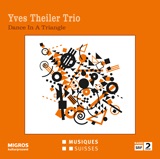
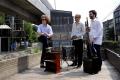
Vor vier Jahren erschien das Debut-Album des Yves Theiler Trio und wurde von der SRF2-Kulturredaktion gleich zum Trio-Album des Jahres gekürt. Eigentlich hätte er schon früher nachdoppeln wollen, sagt der 28jährige Pianist aus Zürich, aber ein Personal-, beziehungsweise Instrumentenwechsel hatte eine Verzögerung zur Folge. Statt dem Fretless-Ebass von Valentin Dietrich ist nun der Kontrabass von Luca Sisera zu hören, mit dem Theiler auch in der Band Roofer zusammenspielt. Der Klang des Instrumentes zusammen mit Siseras fluid-melodischem Stil verleihen dem rhythmisch explosiven und doch kristallklar präzisen Sound des Trios eine geradezu sonnige, neue Wärme.
So viel wird bereits im ersten Stück des von Radio SRF2 ko-produzierten Zweitlings “Dance in a Triangle” klar. Es heisst “For Bass” und beginnt mit einer fast zweiminütigen Einführung, wo eine fein gesponnene Bassmelodie von einer insistenten, einzelnen Pianonote und Perkussion vorwärtsgetrieben werden, ehe Theiler einen druckvollen Groove und eine labyrinthartige Melodie ins Geschehen einführt, die irgendwo zwischen Afrika und Erik Satie angesiedelt ist.
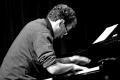
Mit dem Perkussionisten Lukas Mantel arbeitet der Pianist seit zehn Jahren zusammen. Das daraus resultierende telepathische Verständnis erlaubt es dem Trio, die überaus subtile Komplexität von Theilers Kompositionen – sie beginnen zumeist mit einer Improvisation allein am Klavier – mit einer rhythmischen Dynamik auszuleuchten, welche der atemberaubenden Virtuosität des Gebotenen einen starken, emotionellen Rückhalt gibt. Mit jugendlicher Verspieltheit jongliert Theiler mit Techniken und Stilen aus der ganzen Welt zwischen Eritrea, Ahmad Jamal und Post-Rock. Dennoch tritt nie das Gefühl auf, man habe es mit einer Elster zu tun, denn jeder Musiker hat seine eigene Stimme und schreckt nicht dafür zurück, sie laut und deutlich einzusetzen. Ein Album voller Witz, Energie und kühnen Kurven.
Yael Miller “It was very difficult at the beginning, very upsetting”
As Orioxy’s key composer and vocalist, Yael says, “We did amazing things, were in amazing places and had crazy experiences – it is why it’s good that it finished now before it became bitter…” Like bandmate Julie Campiche, Yael was re-assured about the decision to split up, at Take Five Switzerland & South Africa, even though it affected others, “It was very difficult at the beginning, very upsetting.”
Photo Gerald Langer
Yael has faced tough challenges before. From Tel Aviv, she spoke of a childhood almost lost to shouldering heavy responsibilities. So it’s unsurprising when she says it was a feeling of duty to compose for a whole band that caused her writing block. Her desire was to go more deeply into personal expression, like a singer-songwriter, where lyrics lead. “This is not so acceptable in the mainstream jazz world, so I’m shifting it a bit…not feeling obliged to fit in.” It’s as if Yael is finding the freedom that was compromised as a child.
Orioxy’s drummer, Roland Merlinc will be part of her new trio, “We want the same things,” she explains, and Baptiste Germser, a bassist and French horn player who has a Paris studio. “We close ourselves away for three or four days and just rehearse and record from morning to evening, then we go and drink beers, and then continue.” It’s time for Orioxy to explore who they are now and I’m excited to hear their individual projects.
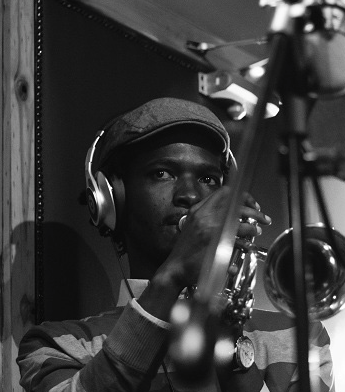
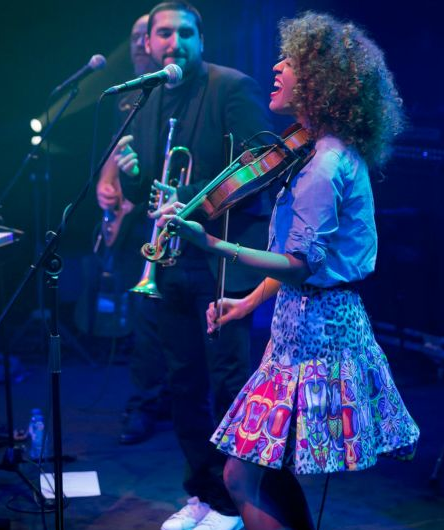
Mandla Mlengeni: “I was a troubled child and I was always in trouble” Someone else shaped by a dramatic early life is trumpeter Mandla. Brought up in a turbulent Soweto by a young, single mother after his lawyer father was murdered, he admits, “I had to find coping mechanisms. I went to see psychologists, but I didn’t know how to deal with it, I was a troubled child and I was always in trouble.” His childhood is hazy but he remembers sitting on his dad’s shoulders, hearing music at political rallies, and a small, blue piano he brought Mandla from London when working on a case concerning South Africa’s ‘hit squads’.
Listening to Mariah Carey and Boyz II Men on the radio, he says, “I thought composing was a sacred gift and being a musician was something bestowed upon you, like being a ‘sangoma’, it was a calling.” An exchange to Norway introduced him to composing in a simple way, but he left the first piece he wrote for a couple of years, then, “One drunken night, I was with a friend and we were jamming and I started playing this song and he asked, ‘Hey man, whose song is that?’” This encouragement eventually led to his 2015 debut, Bhekisizwe.
It was a long process but the recording fell fatefully into place: finding a studio and having saxophonists Shabaka Hutchings (UK) and Ganesh Geymeier (CH) in town to guest. And now, Mandla says, “I’ve sold all the albums so I have to re-print and strategise as to how to get into markets other than South Africa.” With a tenacity that secured him gigs even before the album’s release, he’s one to watch for.
Joel Graf: “We have to find new strategies”
PommelHORSE’s sax player is also thinking about a game plan. This quintet met studying in Bern and are good buddies but says Joel, “We have to find new strategies, new ways and that includes a new label…and better ways to market the band.” I can’t help chuckling when Joel explains they took an actual pommel horse on their early tours. “When we first played shows, audiences in Germany thought we were a music and gymnastics show…they were kind of disappointed.”
Photo Peter Tümmers
My favourite track on their last album was Joel’s ‘Drunk on Christmas Eve’, and I’m intrigued to see them play live at jazzahead! this month. “There’s always big competition,” he says of this music fair, “…selling yourself and your music, it’s hard work.” He talks of feeling overwhelmed by everything a band should be doing and how you can lose sight of why you ever went into music.
Joel actually studied IT first despite coming from a sort of ‘Partridge Family‘ with the six musical siblings all playing instruments. In a way pommelHORSE are his new musical family and although each of them play various styles e.g. classical and heavy rock, they gel together. “I love our combination of music, but really we have to move on, make our music better and move forward.”
Yilian Cañizares “You know what you want, but you don’t know how to get it”
With Ibrahim Maalouf Photo Marc Bertolazzi
Yilian is looking at how to progress too. “When you are trying to build something, sometimes you can feel,” she searches for the right word, “…lost, because you know what you want, but you don’t know how to get it.” She is often invited to play with others after they see her perform, such as Richard Bona, Ibrahim Maalouf and Omar Sosa (with whom she’s just recorded an album) but she wants more exposure.
In fact Yilian sums up a major issue in Europe, “Right now it’s quite difficult because culture [representation] in all media is getting smaller and smaller and sometimes they just speak about pop music or celebrities. It’s quite frustrating.” That’s an understatement – don’t get me started on UK press coverage of this music, but Yilian knows there’s more she can do, “I believe it’s very important to always be in the creative process, I like to see it as an everyday process…maybe we are sure about that as musicians, but we don’t apply the same concept to other areas of our career.”
I suggest that she must get homesick and Yilian graciously replies that she’s blessed to be able to pursue music at this level, but does want to see her Cuban family more often, “I am split into two feelings…and I try to transform this into my music and creativity, that’s how I manage it.”
Pianist Stefan Rusconi über die Entwicklung seines Trios und das neue Live-Album mit Fred Frith
Mit Rusconi, seinem Trio mit dem Bassisten Fabian Gisler und dem Schlagzeuger Claudio Strüby, reiht sich der Zürcher Pianist Stefan Rusconi seit bald 15 Jahren in die Riege der Erneuerer des klassischen Klaviertrios im Jazz ein. „Garagen-Jazz“ nannten Kritiker ihren charakteristischen, sehr zugänglichen und bis 2012 bei Sony erscheinenden Mix aus Jazz, Rock und Pop, der Einflüsse aus der elektronischen Musik bis hin zum Noise-Rock einer Band wie Sonic Youth – deren Kompositionen sie 2010 auf dem Album „It’s A Sonic Life“ interpretierten – verarbeitet. Nun ist beim eigenen „Qilin“-Label das Album „Live in Europe“ erschienen, das die gemeinsame Tour mit dem amerikanischen Avantgarde-Gitarristen Fred Frith dokumentiert.
Wie habt ihr und Fred Frith euch gefunden? Stefan Rusconi Wenn man seit ein paar Jahren unterwegs ist, denkt man über Gäste nach. Wir haben uns zuletzt immer wieder mal mit verschiedenen Leuten getroffen und sie zum Mitspielen eingeladen. Bei manchen hat es wider Erwarten nicht gepasst, bei anderen sehr gut. Ich glaube, es geht natürlich um Geschmack und eine ähnliche ästhetische Ausrichtung, aber auch sehr viel um Haltung. Was will ich in der Musik oder sogar im Leben? Was ist es, das mich da fasziniert, was ich leben möchte?
Da seid ihr euch mit Fred Frith ebenso einig wie in der Liebe zu extravaganten Sounds? Stefan Rusconi Ja, da decken wir uns mit ihm exakt. Nicht im Musikalischen, die Musik seiner Bands ist ganz anderes als unsere, und das hat ihn ebenso gereizt wie uns. Aber die Grundeinstellung, auf der Bühne in einem definierten Kontext Dinge zu wagen und so anzuspielen, dass sie scheitern könnten, aber dann doch die Kurve kriegen, dieses Spielerische, das teilen wir. Wir kennen ihn inzwischen besser, er ist öfter bei Fabian in Basel zu Besuch, weil er ja in Basel unterrichtet. Wir spielen dann alle mit Fabians drei Kindern.
Einfach einmal geklingelt
Ihr habt ihn also einfach gefragt, ob er mitmachen will? Stefan Rusconi Naja, es war auch ein bisschen Zufall. Wir waren für unsere „Revolution“-Platte in dem Haus, in dem wir immer aufnehmen. Wir bauen uns da immer selbst ein Studio zusammen und nehmen uns selber auf, ganz ohne diesen Strukturdruck, dass Techniker da sind, die gerne nach Hause möchten. Nur aufnehmen, das ist echt einfach. Wir haben einen Techniker, der richtet uns alles ein, und dann darf er wieder gehen. Das ist für den und für uns schön. In dieser Atmosphäre kam uns dann bei einem Track, bei „Alice In The Sky“, die Idee, dass da der Sound von Fred Frith perfekt passen könnte. Und er arbeitete quasi nebenan. Wir haben geklingelt, ihn gefragt, und er war sofort dabei.
So einfach geht das manchmal. Stefan Rusconi Ja, und das ist schon sehr schön, denn zu der Zeit hatten wir noch einen Manager. Und es lief bei solchen Features normalerweise so, dass der Manager einer Agentur oder irgendeinem Assistenten eine Mail schreibt, und dann die Anfrage hin und her geht. Das ist oft ein bisschen verkrampft und komisch. So hieß es halt: Ja klar, lasst uns ein bisschen spielen gehen, in den Keller runter. So ist das Ganze dann entstanden.
Das war dann direkt vor den Konzerten, bei denen das Album entstanden ist? Stefan Rusconi Nein, wir hatten etwa ein Jahr Pause dazwischen. In der hat Fabian immer mehr Gitarre gespielt, weil wir durch Fred gemerkt hatten, wie sehr wir diesen Sound gebrauchen können. Da kamen wir auf die Idee, mit ihm ein paar Konzerte zu spielen. Es hat sich also ganz natürlich ergeben, war kein Festivalprojekt – was auch toll sein kann -, und war deshalb total entspannt.
Ihr tourt jetzt aber gar nicht mit Fred? Stefan Rusconi Nein, im Moment spielen wir ohne ihn. Ich weiß, das ist jetzt nicht im Sinne eines klassischen Marketings. Aber wir hatten viele Gastfeatures zuletzt, und es ist jetzt schön, mal wieder auf einer Tour zu sein, wo wir mal wieder den ganzen Abend nur für uns haben (lacht).
„Die Schweiz ist so klein“
Du hast in Zürich studiert, Fabian in Basel und Claudio aus Luzern. Wie habt ihr euch denn gefunden, damals vor bald 15 Jahren? Stefan Rusconi Die Schweiz ist so klein. Da ist dann halt die eine Jam Session in Bern, die nächste in Luzern, da bist du eine Stunde unterwegs. In Berlin, wo ich seit einiger Zeit wohne, brauche ich die fast, nur um in den Übungsraum zu kommen.
Kann man sagen, dass die klaren Strukturen, das Rhythmische und das Hymnische eurer alten Alben jetzt in einen starken Kontrast zu Noise- und freien Improvisationsphasen treten? Dass also eure Ästhetik offener ist als früher? Stefan Rusconi Ja, das Gefühl habe ich auch. Das hat sich aber schon mit dem „History Sugar Dream“-Album und in den vergangenen zwei Tour-Jahren so entwickelt. Die Funktion von Fred kann auch immer jemand von uns übernehmen. Ich spiele dann halt mehr Synthi-Bass und Fabian Gitarre. Wir haben dann freilich immer noch den Kontext einer quasi konventionellen Band; bei Fred konnten wir wieder auf unsere Ur-Instrumente zurückkommen, gleichzeitig ergab sich sehr viel Raum, eine Spielwiese zum Ausprobieren. Die Stücke sind verschachtelter. Das ist, wo wir jetzt stehen, denke ich.
Esbjörn Svensson hat von seinem Trio mal gesagt: „Wir sind eine Rock-Band, die Jazz spielt“. Trifft das auch für euch zu? Stefan Rusconi Das würde ich nicht sagen. Der Claudio etwa spielt schon ein sehr distiguiertes Jazz-Schlagzeug. Esbjörn Svensson war so zehn Jahre vor uns, aber wir haben das schon mitbekommen: Es war damals richtig, sich ein bisschen zu distanzieren, zu sagen: Wir sind eine neue Generation, wir schauen auf die Geschichte ein bisschen anders, wir haben andere Höreinflüsse. Aber trotzdem: Für uns bleibt Jazz immer ein wichtiger Bezugspunkt. Es gibt halt viele Schnittstellen, auch bei der Film- und Theatermusik, die ich schreibe. Auch für Claudio und Fabian, wir loten unsere eigene Welt aus, eine sehr bildhafte.
„Wir fühlen uns Leuten verbunden, die an den Rändern arbeiten“
Dazu passen die Licht- und Videobegleitung eurer Konzerte. Ihr denkt Musik wohl sehr interdisziplinär? Stefan Rusconi Ja, wir haben an der „Art Basel“ sogar mit einer Modedesignerin gearbeitet, was aber nichts mit „Germans Next Top Model“ zu tun hatte oder an was man so denken könnte. Wir fühlen uns sehr verbunden mit Leuten, die an den Rändern arbeiten, ob die nun vom Film, von der Kunst oder aus der Mode kommen.
Ihr wart früher bei Sony, jetzt habt ihr „Live in Europe“ wie schon zuvor „History Sugar Dream“ beim eigenen „Qilin“-Label herausgebracht, das auch eine Plattform für befreundete Künstler sein soll. Ist die Zeit der Majors für Jazzmusiker vorbei? Stefan Rusconi Ich weiß nicht. Es muss einfach passen, und bei uns hat’s nicht mehr gepasst. Große Labels schauen sich Musik nach einem Verkaufsargument an, und dann läuft die Maschine Major auch. Es gibt immer noch Jazz, den man so unter die Leute bringen kann. Unser Sonic-Youth -Album wurde damals in den Magazinen besprochen, die beim Friseur liegen. Das ist einfach nicht unser Publikum. Wir haben uns auseinanderbewegt bei dem, was so ein Major gut kann, mit uns aber gar nicht mehr umsetzen konnte. Am Anfang war das noch anders, da war alles noch offen. Das hätte Zukunft haben können, das haben wir dann irgendwie anders entwickeln lassen. Bei einem Till Brönner zum Beispiel, ein toller Musiker, mit dem ich auch schon gespielt habe, kann das prima funktionieren. Für uns aber sind gewisse konkrete Erwartungshaltungen inzwischen ein Horror. Wir fühlen uns sehr wohl, wo wir sind. Auch wenn die Konsequenz ist, dass alles etwas länger dauert, und die Leute dich ein bisschen suchen gehen müssen. Das ist aber auch was Schönes, das hat für uns viel mit einer Lebenshaltung zu tun, bei der wir alles an uns genommen und unter Kontrolle haben. Das färbt auch auf die Musik ab: Es ist dann etwas konsequent Eigenformuliertes.
Et hop, une petite playlist spotify qui met en avant quelques-unes des sorties les plus excitantes de l’automne. Rock, pop, jazz, rap, electro et même un remix en clôture: laissez-vous surprendre par cette sélection helvétique inédite.
Es gibt gleich einige gute Gründe, warum der Berner Andreas Schaerer derzeit der vielleicht interessanteste Gesangskünstler der Musikszene ist. Was damit beginnt, das der aktuelle Preisträger des Echo Jazz in der Sparte „Gesang international“ (und damit direkter Nachfolger von Gregory Porter) weit mehr ist als nur ein Sänger und auch nur bedingt in die Schublade Jazz passt; Schaerer ist vielmehr ein Stimm-Jongleur, der sein Organ nicht nur in den verschiedensten Lagen und Stilen (vom klassischen Lied- bis zum Crooner- oder Scat-Gesang) erklingen, sondern damit auch alle denkbaren Geräusche erzeugen und allerlei Instrumente bis hin zum Schlagzeug imitieren und polyphon übereinander türmen kann. Er ist darüber hinaus ein glänzender Komponist und Improvisator, der diese Fähigkeiten für die verschiedensten Projekte variabel einsetzen und rhythmisch wie melodisch virtuos gestalten kann. Und er verfügt schließlich in reichem Maße über Bühnen-Charisma und die in der „ernsten Musik“ eher seltenen Gabe des Humors, was vor allem bei seiner Paradeband Hildegard lernt fliegen zur Geltung kommt.
So ist es folgerichtig, dass Hildegard lernt fliegen vor zwei Jahren den BMW Welt Jazz Award gewann, als dessen jährlich wechselndes Motto „Sense of Humour“ lautete; und dass Schaerer mit der Band nun beim Lucerne Festival ins Spiel kam – lautet doch dessen Motto heuer „Humor“. Dramaturg Mark Sattler, beim Festival seit 16 Jahren für „zeitgenössische Projekte“ zuständig, fragte Schaerer, ob er nicht einen Hildegard-Auftritt mit einer 20-minutigen Komposition für das Lucerne Festival Academy Orchestra kombinieren wolle. Schaerer ergriff mehr als nur den gereichten Finger und schrieb gleich den kompletten 70-Minuten-Auftritt als „The Big Wig“ betiteltes Orchesterstück für 66 Musiker. Am vergangenen Samstag erblickte das kurz, aber intensiv geprobte, von Schaerer komponierte, arrangierte und orchestrierte, dann vom Hildegard-Saxofonisten (und ehemaligen Geiger) Matthias Wenger feingeschliffene Werk im Luzerner KKL das Licht der Welt – und riss die Zuschauer von den Stühlen.
Paradoxerweise – hält man sich das Festivalmotto vor Augen – hat man wohl noch keinen „seriöseren“, weniger „lustigen“ Hildegard-Auftritt erleben können. Was die logische und bewusste Konsequenz daraus war, dass Schaerer seine Chance beim Schopf packte und alle Möglichkeiten des sinfonischen Rahmens ausschöpfte. Denn damit traten er selbst wie seine Hildegard-Mitstreiter sozusagen ins zweite Glied, um sich in den orchestralen Gesamtklang einzufügen. Die drei adaptierten Hildegard-Hits „Zeusler“, „Seven Oaks“ und „Don Clemenza“ gewannen so einen neuen Fluss und enorme, mitunter filmische Kraft und verloren die in der kleinen Besetzung latente Zickigkeit. Und die eigens geschriebenen Stücke wie „Two Colosses“ ergaben inspirierte Sinfonik mit einem Esprit und einer stets zugänglich bleibenden Experimentierlust, der den meisten neuen Werken dieses Genres fehlt. Das junge, mit überragenden Talenten aus aller Welt gespickte und vom Dirigenten Mariano Chiaccharini lässig, aber präzise instruierte Orchester hatte sichtlich seinen Spaß und ließ sich sogar vom kurz das Dirigentenpult enternden Schaerer auf Jazz-Abwege führen: Wann hat man je ein Sinfonieorchester gelungen kollektiv improvisieren sehen.
Eine sinnvolle Symbiose
Ohnehin ist die Kombination aus klassischem Orchester und Jazzband ja schon oft genug missglückt, zuletzt durfte man sich bei Geir Lysnes Monteverdi-Morricone-Hybridkompositionen vom Auftritt Michael Wollnys mit den 12 Cellisten in Berlin enttäuscht fühlen. Hier war es eine runde Sache, eine sinnvolle und befruchtende Symbiose, die allen Beteiligten nicht nur unvergesslich bleiben, sondern ihnen auch bei der weiteren musikalischen Entwicklung helfen wird.
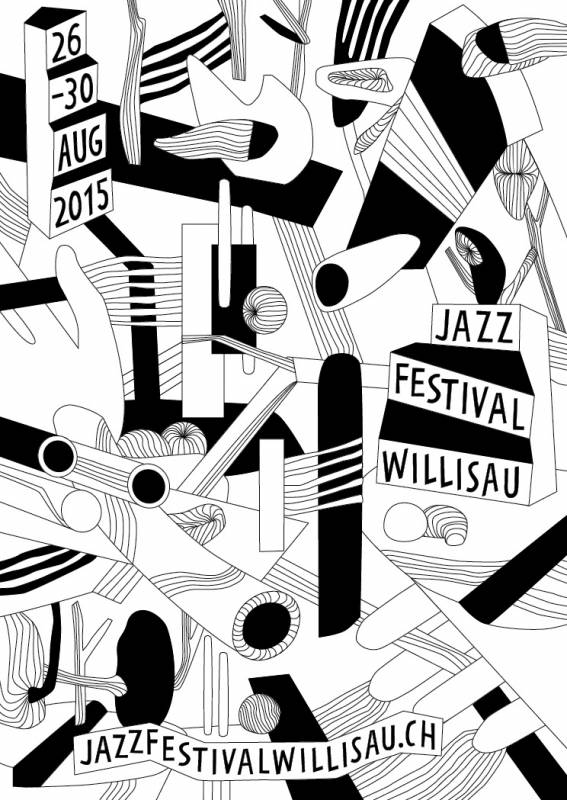
Pff….voilà près de vingt ans que je n’étais pas venue au Festival de Jazz de Willisau. Et pourtant rien ou presque ne semble avoir changé. Il faut dire que j’en gardai un souvenir vivace, vaguement traumatique : une orgie de jazz orchestrée de 14 :00 à minuit dans une grange au milieu d’un petit village de la campagne lucernoise augmenté d’ un camping rempli de mordus de jazz, un stand de disques achalandé par le label suisse de référence Plainsiphare et une cantine où n’étaient consommables que des « Wurst mit Pomme Frites »!
Bref, au bout deux jours de ce régime musical et gastronomique, j’avais fait une overdose et ne souhaitait qu’une chose : regagner mes pénates lausannoises, me plonger dans un monde de silence et manger des légumes.
Une des Mecques du jazz contemporain
Blague à part, le festival de jazz de Willisau existe depuis 42 ans. Il est considéré comme l’une des Mecques du jazz contemporain. Il a accueilli et “découvert” certains des plus grands noms du genre. Plus de 50 disques “live à Willisau” ont été publiés. Mieux, le festival ne s’est jamais dénaturé: il est toujours resté fidèle à ses fondamentaux. Keith Jarrett l’a d’ailleurs consacré de cette citation fracassante: “one of the best places for music in the world“!
Vingt ans plus tard donc, le village, la grange et le camping sont toujours là, mais la cantine s’est nettement améliorée et, signe du temps qui passe, Plainisphare, n’est plus de la partie. Reste la musique et un public toujours aussi mordu et attentif.
Une vision grand angle de la musique
Samedi soir, lors du concert de clôture, Schnellertollermeier me rappelle avec brio que jazz peut se conjuguer avec noise, heavy metal et rock’n’roll (voir l’article en allemand que lui a consacré Benedikt Sartorius sur ce blog). Mais je suis venue pour voir Michel Wintsch, dont le dernier disque solo m’a éblouie. On connaît les disques de piano solo préparé, les disques de multi-piano solo (piano acoustique, synthétiseurs, orgue hammond ou autres) amplifiés d’effets électroniques. Il y a cinq ans le pianiste genevois nous avait d’ailleurs gratifié d’un enregistrement de cette veine intitulé « Metapiano ».
Un instrument savamment amplifié
Aujourd’hui, Michel Wintsch va plus loin et cherche à donner vie à son piano sans lui ajouter d’effets. Grâce à une impressionnante batterie de micros savamment installés par Benoît Piccand, son instrument est amplifié subtilement. Michel Wintsch peut ainsi non seulement jouer des notes, mais, aussi des clicks que font les touches effleurées mais non jouées, de la frappe de ses mains sur les différentes parties du piano à sa portée (dessus-dessous..) et même du son de l’air que déplace ses mains.
Ses mains qui cavalcadent ou effleurent les touches, aspirant ici le son qui reste en suspens, évoquant là le frottement des ailes d’un oiseau. Michel Wintsch orchestre ainsi une fantasmagorie musicale dans laquelle le spectateur peut sans peine imaginer des petits animaux détalant dans tous les sens, des grands mouvements pachydermiques, le vent qui souffle, sentir la jubilation ou l’effroi…. Le concert est constitué de trois longs morceaux de 20 minutes en forme de plongée introspective lumineuse. Le public est en osmose.
Rencontré le matin du concert dans un tea-room où il prend son petit-déjeuner, Michel Wintsch s’est plié au jeu des 5 questions.
Comment improvise-t-on en solo ?
Michel Wintsch Je procède de façon semi-improvisée, semi-écrite. J’ai des bouts de thèmes, des harmonies, une gestuelle et je construis les agencements entre ces différents éléments. J’aime bien comparé cette façon de procéder à celle d’un conteur qui a ses personnages, son fil rouge, et qui construit une histoire à partir de ces éléments.
En quoi l’improvisation en solo est-elle différente de l’improvisation en groupe que vous pratiquez aussi ?
Michel Wintsch Les deux choses n’ont pas grand chose à voir ensemble. En solo, on est vraiment seul, un demiurge en quelque sorte. En groupe, ça respire. Chacun est impliqué dans le processus d’improvisation et je peux attendre que l’énergie me revienne. On est plus dans le registre de la conversation.
Pourquoi est-ce que cet album s’intitule « Roof Fool » ?
Michel Wintsch Ah les titres, c’est toujours difficile! Dans mon cas, ils viennent s’ajouter à la fin quand la musique est faite. Je trouvais que celui-ci sonnait bien. J’aime bien l’idée du « fou du toit ». Certaines personnes pensent que je suis fou. C’est clair que ma musique est un peu hors-norme. J’aime bien monter sur les toits ; je suis un montagnard…
Quant aux titres des morceaux, ils sont parfois étranges, comme « Pytihob Clochery ». Votre intention était de créer de nouveaux mots ?
Michel Wintsch Pas du tout. Ce sont des titres de travail. Par exemple Pytihob Clochery est un morceau où j’ai utilisé des petits objets sonores. Au cours de sa composition j’ai pensé au clocher au-dessus de ma maison. J’ai donc utilisé ça phonétiquement. Le titre « Si c’est assez, cessez » m’a été inspiré suite à la lecture d’un article sur la pollution
Vos sources d’inspiration ?
Michel Wintsch La vie. Je me sens inspiré par la verticalité, par le vide, par le vent, par la chaleur, par l’effort, par le mouvement, par les oiseaux. Une sorte de chorégraphie animalière. L’inspiration est faite de tout ce que l’on est. J’adore me balader en montagne, observer la course d’un chamois par exemple. On peut comparer ça au travail de l’abeille qui butine toutes les fleurs qu’elle trouve. Je peux être inspiré par Ligeti comme par Prince comme par le Mont Jalllouvre….
En cette première semaine du mois de juin, le Centre culturel suisse se présente sous ses plus beaux atours. En plein cœur du Marais, la devanture de la libraire fait de l’œil au passant en exposant ses sacs Freitag bien en évidence. Passé les lourdes portes en bois les cours intérieures fleuries transportent en un instant le passant de l’ébullition de la rue des Franc-Bourgeois au calme d’un bâtiment historique. Intra muros, place à la création contemporaine avec Marc-Antoine Fehr et l’installation sonore et visuelle de Dominique Koch.
Les deux directeurs du Centre culturel suisse, Olivier Kaeser et Jean-Paul Felley et leur équipe, travaillent d’arrache-pied pour faire « connaître en France une création contemporaine helvétique ouverte sur le monde et y favoriser le rayonnement des artistes suisses ».
Ça tombe bien, au rayon musique, c’est exactement la même ambition qui anime le blog swissvibes.org. Les grands esprits se sont donc rencontrés au Ccs du 3 au 6 juin 2015 pour présenter trois soirées de concerts aux couleurs musicales différentes. Grâce au soutien de Pro Helvetia (la Fondation pour la culture suisse) et de Swiss Music Export, l’entreprise dut une réussite tant au niveau de la qualité artistique, des échanges que de l’affluence. L’union fait la force!
Mardi 3 juin Swiss Vibes goes rock
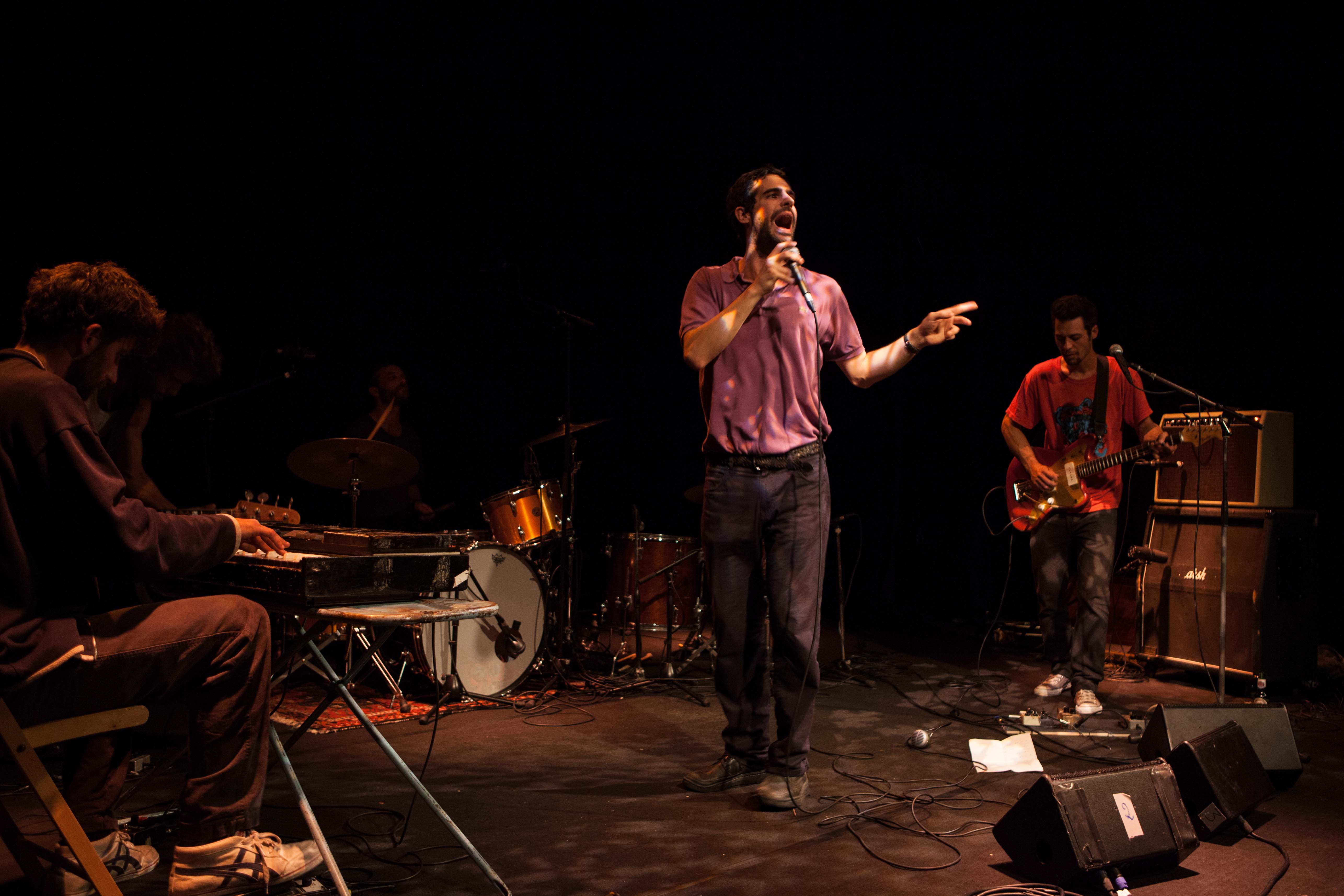
Pour cette soirée étiquetée rock, la Zurichoise Evelinn Trouble et les Biennois de Puts Marie ont joué des reprises surprenantes.
Evelinn Trouble se sent un peu à l’étroit dans l’auditorium du Ccs et elle le fait bien savoir : en milieu de set, elle attaque le répertoire de Tina Turner plus qu’elle ne la reprend. Pour mieux convaincre des vertus de son « What’s Love Got to Do with it » revu et corrigé version 2015, Evelinn Trouble grimpe les escaliers entre les chaises des spectateurs et se lance dans un ping pong vocal mi-hurlé mi chanté avec les trois autres membres de son groupe. Et si le prochain album « Arrrowhead » de l’excentrique diva zurichoise est censé se décliner en version trip hop, cela ne l’empêche pas de rester une rockeuse et une funky woman infernale qui balance du lourd et séduit par la puissance de sa voix et par son caractère bouillonnant.
Puts Marie choisit quant à lui d’évoquer Sun Ra, le roi du free jazz psychédélique. Sun Ra, le cosmos, la folie : un univers qui parle bien au chanteur Max Usata et à ses acolytes biennois, tous bien barrés et en même temps tellement soudés. Evidemment c’est le chanteur qui attire d’abord l’attention, avec sa gestuelle saccadée, sa voix schizophrène (très haute puis presque cassée), ses deux micros qu’il ne cesse de manipuler, dévisser ou jeter. Mais le groupe disposé en arc de cercle autour de lui n’est pas en reste. Incroyablement soudé rythmiquement – alors que le batteur et le bassiste sont deux nouveau venus -, il expérimente aussi les digressions sonores et les expérimentations en tous genres. On colle volontiers à Puts Marie l’étiquette de blues psychédélique, mais au vu de l’univers développé dans leur prestation d’à peine une heure, cette étiquette semble bien réductrice.
Mercredi 4 juin Swiss Vibes goes électro
Même décor, autre ambiance le lendemain avec les expérimentations électro de Larytta et Egopusher.
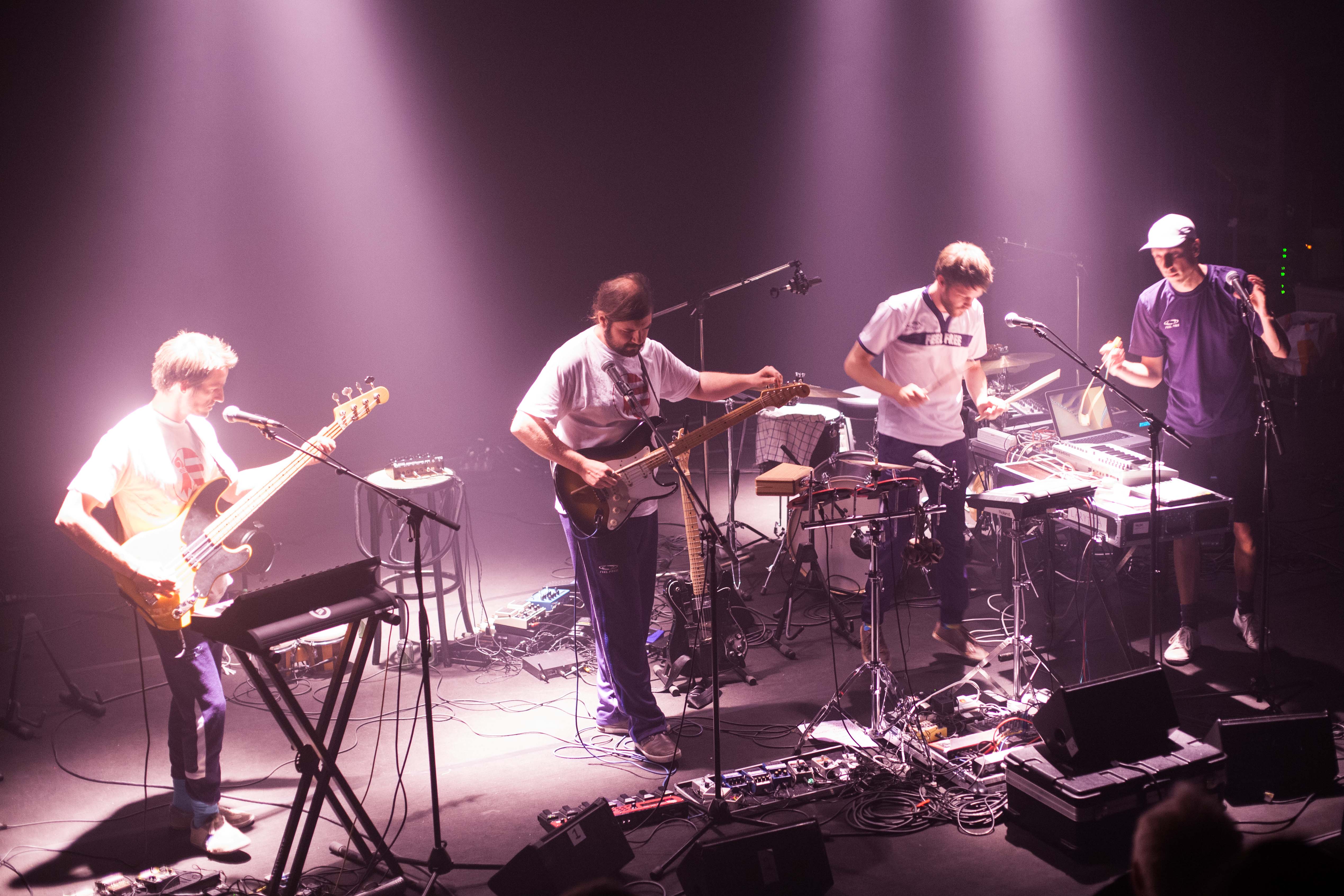
Le duo lausannois constitué du designer graphique Guy Meldem et du performer sonore Christian Pahud nous avouait dans l’après-midi fonctionner comme un « vieux couple infernal ». Depuis la parution de son nouvel album « Jura » l’an dernier, il a décidé de faire peau neuve: de deux, les voilà passés à quatre, ajoutant des vrais instruments à leurs machines, ordinateurs et pédales.
Résultat : un show ultra-enjoué qui multiplie les clins d’œil musicaux; ici des guitares africaines, là un chant en portugais. Funky ou techno, les musiciens sautillent comme des balles de ping-pong et ne cessent de changer de place, d’instruments. C’est ludique, dynamique, même si parfois ce chant à quatre voix sur des micros sans cesse différents pose des petits soucis de calage. Une phase de transition pour cette formation qui a plus d’un tour dans son sac et qui sidère par son énergie communicative.
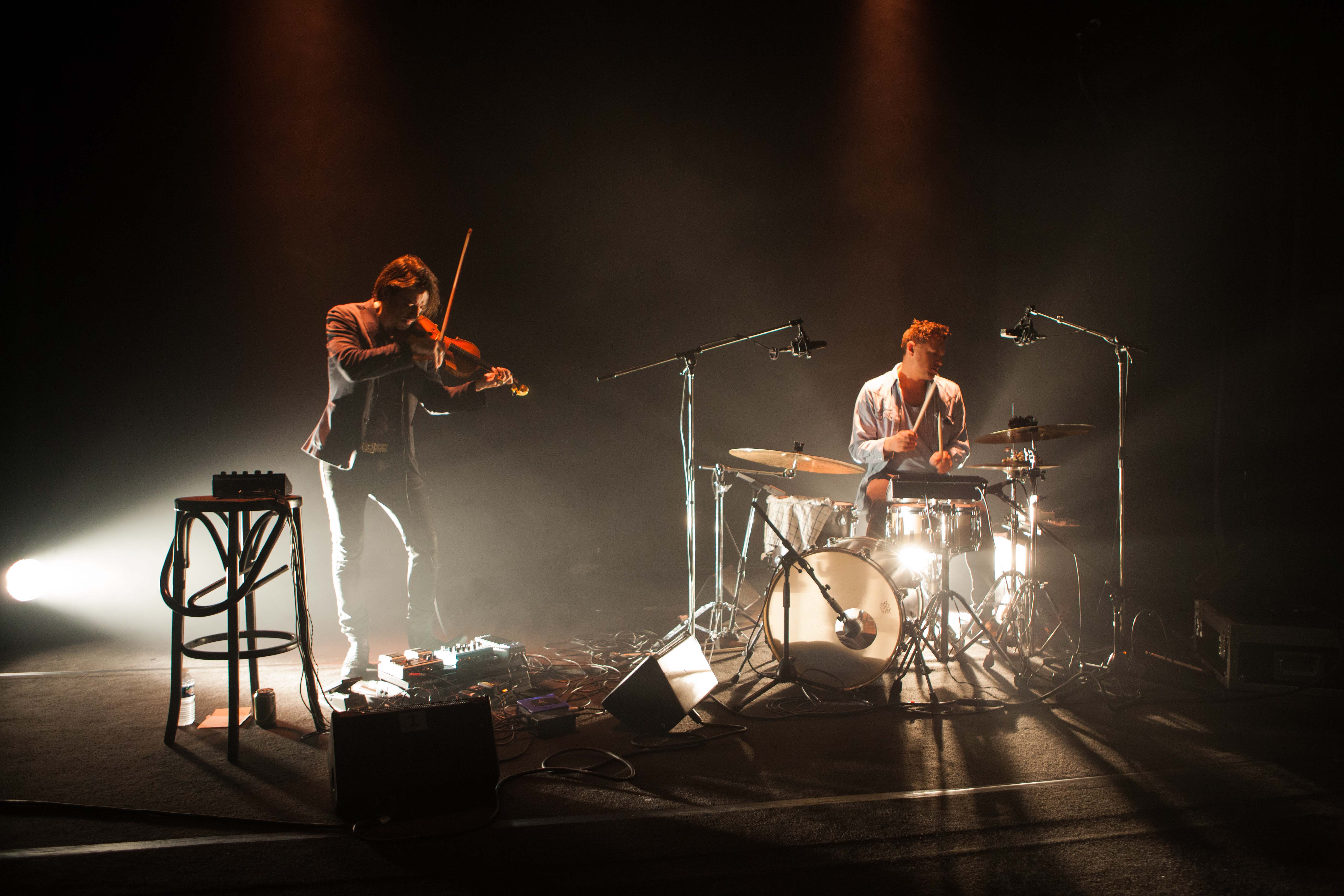
Nous vous avons déjà abondamment parlé de Egopusher dans ce blog. Ce duo constitué du violoniste Tobias Preisig et du batteur Alessandro Giannelli a décidé de lâcher les amarres et de se lancer dans un work in progress permanent. Peaufinant leur morceau sur scène, ils les mettent ensuite à disposition des internautes via soundcloud puis les retravaille, et ainsi de suite. Une prestation qui s’inscrit donc aux confluents de l’expérimentation sonore, des rythmes déconstruits ou répétitifs et des musiques improvisées. Une musique qui semble chercher à revenir vers une pulsion primale, essentielle.
Entendus dans un set flirtant avec la techno au Cully Jazz, puis plus sages dans l’émission de Manoukian sur France Inter le 29 mai, ils se présentent dans une version plus théâtrale et plus subtile au Ccs. Ce dialogue inédit entre la batterie et le violon est aussi visuel. Tobias Preisig travaille son instrument au corps pendant que les baguettes d’Alessandro voltigent sur les fûts. Le principe de l’exercice fait que l’on n’évite pas quelques moments de flottement, mais ce même principe invite aussi à la curiosité, à une attention extrême de la part de l’auditeur qui ne s’y trompe pas. « Vraiment nouveau », « Franchement étonnant »,« excitant » sont les commentaires qu’on entend fuser dans l’assistance à la fin de leur set. Quant à Preisig, il définit sa musique comme du « Brahms sous psychotrope ».
Jeudi 5 juin Swiss Vibes goes jazz
En Suisse, jazz rime souvent avec diversité stylistique. Le double concert d’Orioxy et de PommelHORSE en fut la preuve.
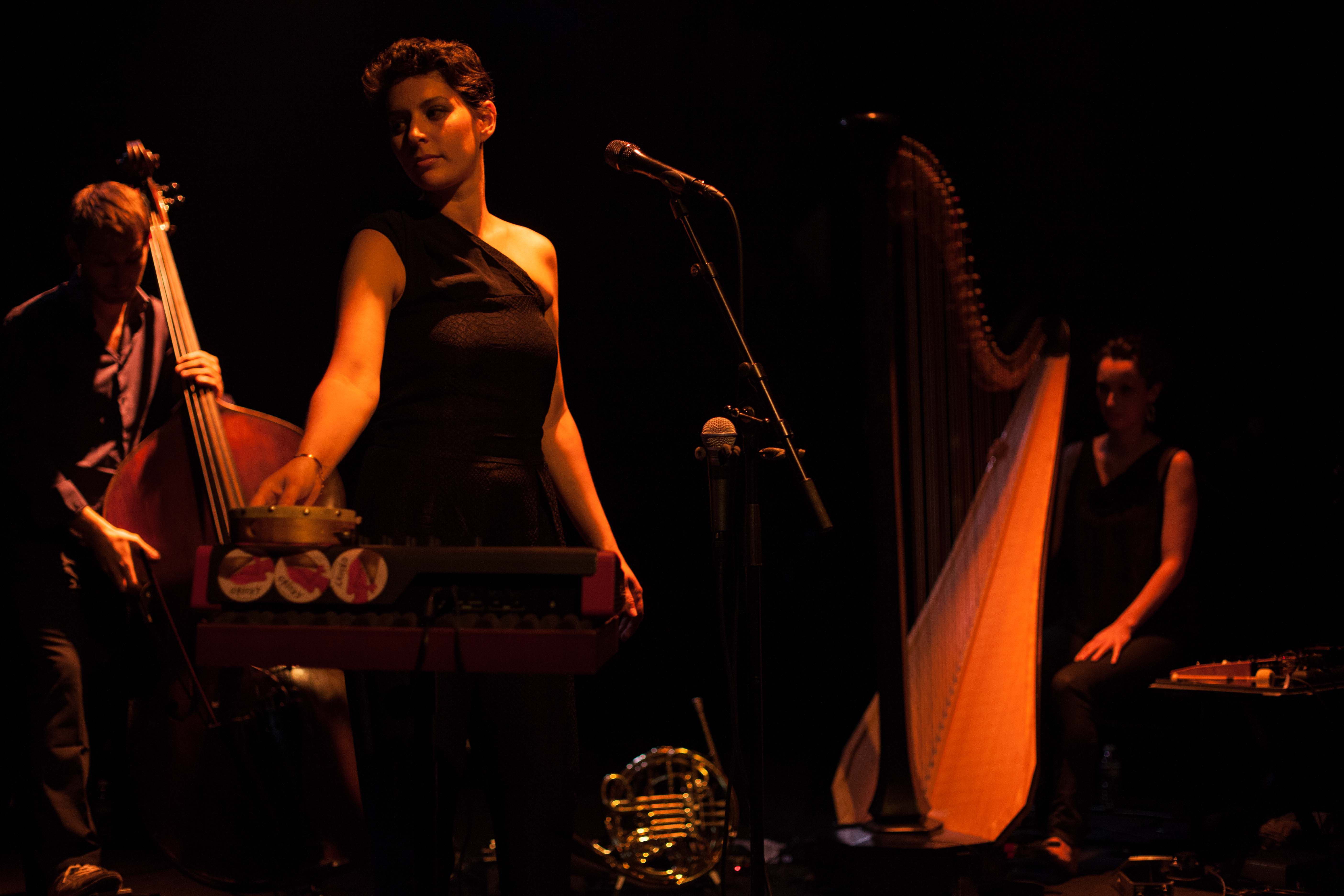
Orioxy séduit en finesse avec une approche très féminine (que la rythmique masculine veuille bien m’excuser pour ce commentaire). Yael Miller, Israélienne de Suisse, impose sa marque au chant. En hébreu en anglais, entre rap, scat et chuchotements, sa voix tisse un univers d’émotions à fleur de peau, d’impressions parfois enfantines, parfois matures et engagées. Auquel répondent les mouvements du corps habité de Julie Campiche et sa gestuelle précise qui, d’une main tire un foulard entre les cordes de son instrument, de l’autre bidouille ses effets électroniques quand elle ne se sert pas d’une baguette de feutre. Le travail sur le son est subtil, pénétrant. Dans cet univers le cor de Baptiste Germser, l’invité français de la soirée, s’intègre naturellement, comme si il allait de soi. « Dans nos chansons on cherche aussi à exprimer les non-dits» nous expliquait Yael Miller sur ce blog il y a deux ans. Pari tenu au Ccs.
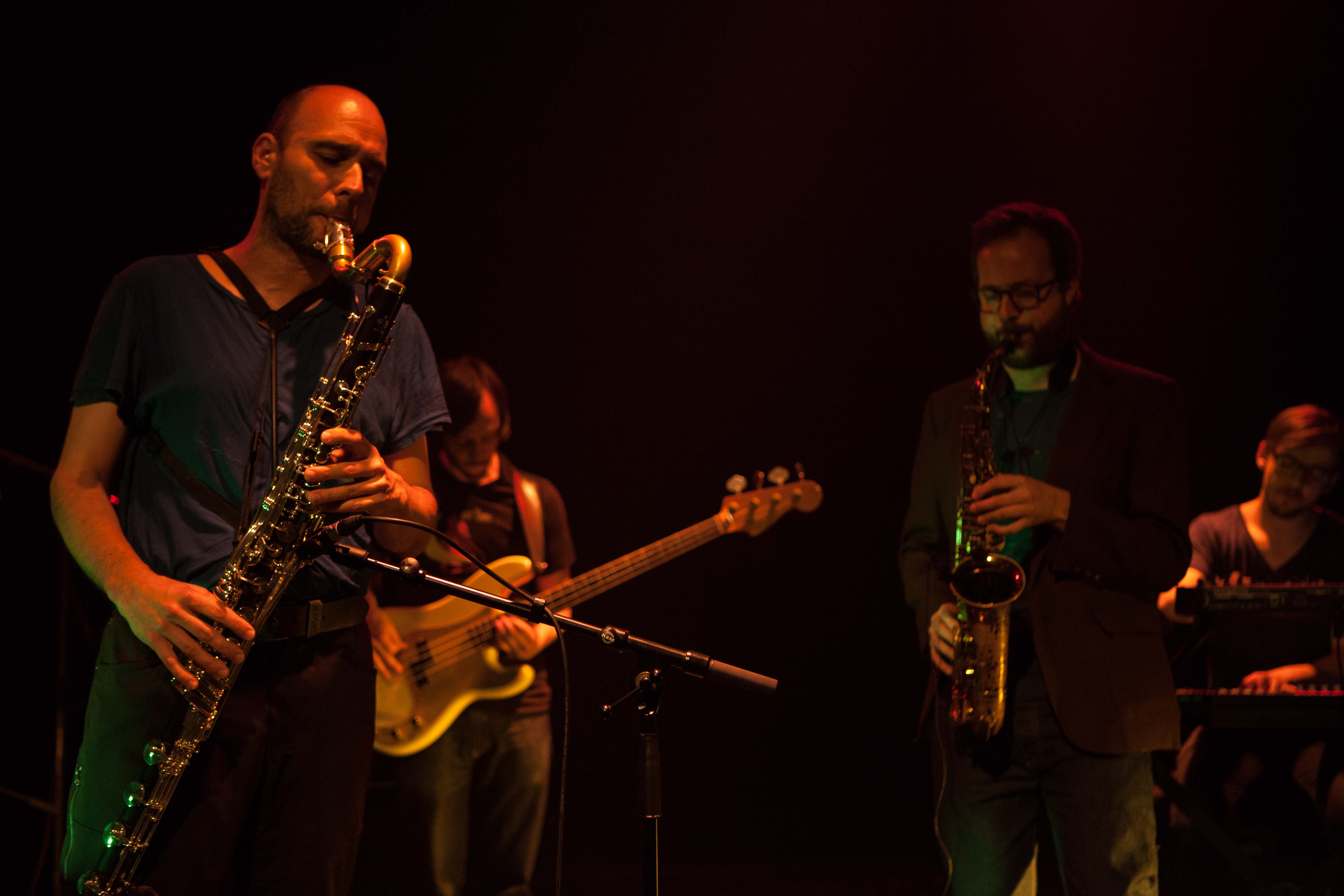
Quant à PommelHORSE, leur fonds de commerce est l’expression en musique de sentiments peu ordinaires : le stress d’un homme devant passer un scanner, les rythmiques techno qui continuent de résonner dans la tête d’un fêtard qui n’arrive pas à s’endormir à l’aube, les frémissements d’un cerf pourchassé. Pour expliquer ce monde de sensations primaires avec beaucoup d’humour, le clarinettiste Lukas Roos joue de son accent suisse-allemand avec décontraction. Lui vient plutôt du classique, le batteur à la rythmique métronomique du heavy metal, le clavier qui est aussi celui d’Evelinn Trouble aime le rock, l’électronique et à peu près toutes les musiques que vous lui nommez…. Vous l’aurez compris chez PommelHORSE, le jazz est un état d’esprit placé sous le signe de l’innovation, de la sensation, de l’énergie, de l’humour. Personnes sérieuses s’abstenir.
Hors de leurs murs, originaires de différentes régions de la Suisse et sans qu’ils ne se connaissent les uns les autres, ces sessions musicales de trois soirs ont permis de faire passer un courant entre ces différents groupes, d’affirmer haut et fort que la scène suisse se porte de mieux en mieux. « J’ai découvert des musiciens extraordinaires et des projets vraiment originaux. C’est excitant et ça donne envie d’en connaître plus ! » s’exclame le pianiste français Alexis Anerilles (qui office entre autres aux côtés de Sophie Hunger), spectateur assidu de ces trois soirées de concerts. Merci à Evelinn Trouble, Puts Marie, Larytta, Egopusher, Orioxy et PommelHORSE pour ces moments enthousiasmants et fédérateurs.
You get the sense Florian Favre is wringing as much out of some wood, metal strings, hammers, pedals and keys as he can. Using what he refers to as, ‘his first love’, the grand piano, he works melodies in with rhythmic punches, varying qualities of tone and a rich variety of ideas. His solo album, Dernière Danse (A-Nuk) is an engaging listen and shows off his clear talent and skills, although that could be a point of criticism too.
He has a wonderfully mournful touch
The tracks I favour are those where Florian is getting into a melancholic mood, as in the title track. Maybe it’s the ‘last dance’ in a romantic sense – but as if the affair is over, not beginning. The tempo perfectly captures a dragging feeling of loss, and he broodily uses the deeper end of the piano whilst tinkling high notes almost try to soothe it. ‘Träume Einer Wachspuppe’ (‘Dreams of a Wax Doll’) is just as touching whilst again using this tension between the two ends of a piano to weave a strange and evocative atmosphere. He has a wonderfully mournful touch.
“It was a nice brain training”
When I first met Favre he talked excitedly about his ideas of creating dance-like beats on the piano at the same time as musical tunes. These ideas formed when he was the only member of a backing ‘band’ for a pop singer. Favre says, “I tried the challenge to ‘split the keyboard’ into many different functions, having the end three fingers of my left hand playing bass and the other two playing drum, while my right hand was playing the harmony and melody. It was a nice brain training.” You can hear this clearly when he does a brief cover of Earth, Wind & Fire’s ‘Let’s Groove’ – it’s clever but doesn’t touch me like his original compositions do.
Florian’s timing is impeccable
He can definitely pen a tune, as ‘Jambo’ and ‘Comme de J’aimeu’ testify. The latter uses delicate harpsichord stabs to create an unusual texture underneath the bluesy melody. Again Florian’s timing is impeccable, and with his original twists of melody he makes the piece captivating whilst allowing for groove, swing, and feeling. ‘Oh Lord’ expands on his ability to play southern-style blues and I love the drunken and warped ‘Interlude: The Lonely Turntable’ – it reminds me (in a positive way) of the 1970s English comedian, Les Dawson who crafted sophisticated off-key versions of classics. Florian used a quarter-tone piano to create the effect.
In fact throughout the whole of this album there is a sense of exploration, fun and playfulness. It’s just better when he invests a spirituality as opposed to the moments when I feel there is focus on technique. Florian’s trio recently played a coveted gig at Jazzahead, the huge ‘jazz trade fair’ in Bremen, and when Joshua Redman heard him play in Zurich he asked him to join his band onstage for a jam. There is no doubt that this is a musician to watch for – his passion and emotion when he plays are obvious, and that can count for a lot.
I met Andreas Schaerer two years ago almost to the day, when he was on a week-long course for jazz musicians in the UK. It was about 10pm and he was the last of seven interviews I was doing, we were both pretty exhausted. There’s a softness to people zapped of the energy to be nervous or erect the usual social barriers. The room was lit only by the evening sky outside and Andreas was slumped forward, his head rested in his hands. “I’m a bit f***ed up,” he said. Lack of planning and things going better than expected meant everything was coming at him at the same time, “Too much work, pressure and expectations,” he explained.
In a way he didn’t need to tell me. When I’d checked his website for my research I could see this was a man who liked to say, ‘Yes’ and play ball with everyone who asked. He wasn’t shy of taking responsibility, but that evening it felt like there was a truly heavy weight on his shoulders.
On May 28th of this year, Andreas will be walking up the ‘red carpet’ of the ECHO Jazz Awards to collect International Vocalist of the Year, a prize won by Gregory Porter in 2014. This is massive, not only for Andreas, but dare I say, for Switzerland. Another building block increasing the country’s reputation for distinctive music of quality. It was just as well Schaerer didn’t take my advice to slim down his commitments! Instead he developed bigger muscles to face the challenges, releasing four albums in just over a year. Admirably he also scheduled in time for a proper long holiday with his young family.
As I write this, Andreas is at home in Bern surrounded by sheets of scores he’s composing for his band Hildegard Lernt Fliegen and the Lucerne Festival Orchestra, no less. That’s music for almost 70 musicians from two harps to eighteen violins and a tuba. “There’ll be some Beatboxing meets classical percussion meets three marimbas,” he told me, “there’ll be fairytale-ish harmonic moments and lots of madness….” That sounds about right. It will be a prestigious, one-off concert in Lucerne on September 5th and I can’t wait.
I know it’s not a Swiss characteristic to ‘blow your own trumpet’ (shout about yourselves) so I like to do it for you. Along with the ECHO Award, Schaerer was nominated for the Swiss Music Prize and voted International Newcomer of 2014 by French magazine, JazzMan. Hildegard Lernt Fliegen won the BMW World Jazz Award – both the jury and the audience prizes (!) and their album, The Fundamental Rhythm Of Unpolished Brains was voted as Best Vocal Release of 2014 by New York City Jazz Record. The album Arcanum with Lucas Niggli won the Deutscher Schallplattenpreis and was chosen as a ‘CHOC’ by JazzMan Magazine in 2014. So not a bad year then. And one that clarifies the importance of originality and drive in a highly competitive and crowded market. I think it helps that Schaerer can have an audience giggling whatever their language, we all need a laugh every so often.
“It’s more like being a company than being a musician”
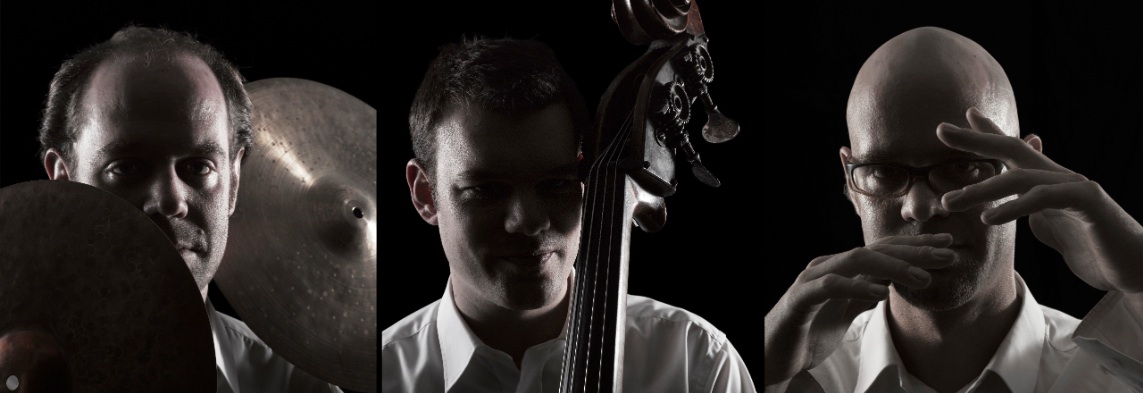
Vein know the business of music. Having met their drummer, Florian Arbenz and pianist, Michael (his twin brother) one thing is clear to me, they have a quiet but effective strategy for being a working band. Stay focused on the goal, don’t be afraid of the dirty work and take risks. Along with double bass player, Thomas Lähns, they also work hard. “Today as a musician you can’t say, ‘I just want to have my fee and that’s it,’ explains Michael, “you have to invest some money sometimes and if you do it right you get it back. It’s more like being a company than being a musician just practising and dreaming – that would be very nice!”
Vein are building their career, brick by brick. Jazz Talks is Vein’s ninth album and features legendary American saxophonist, Dave Liebman. His career includes stints with Miles Davis and Chick Corea – a tangible link to the heritage of jazz of which Vein are clearly so passionate when you hear ‘Walking With a Start’ or ‘Black Tortoise’. Live, Michael ripples with influences from Stravinsky to Bill Evans, but Vein are so steeped in the jazz tradition that they are able to weave in their own voices. Not an overnight achievement. “I think it’s more honest to find something personal and stay with it,” says Michael when we discuss their music style.
Hooking up with celebrated artists has been useful, it nurtures their skills and can connect them to foreign audiences. However, it takes some guts (and talent) to achieve. Greg Osby of the infamous M-Base Collective was the first Michael approached when he was just 23 years old. “It was back in the old days – there was a fax number on the back of one of his CDs and I faxed him and he was very open to play with young musicians, he still is.”
“The good thing was that it was normal to be a musician”
Vein not only make these approaches (a collaboration with a UK saxophonist is next in the pipeline) they also do all the administration and manage themselves. If you check their tour dates below you’ll see what they achieve. Also when you have someone like Liebman in the band, the hotels and travel need to be well organised. Did having parents involved in music (they are both musicians and teachers) help them to understand the business? “The good thing was that it was normal to be a musician,” he says, as musicians can face opposition from their own family, “but it’s more like we’re not afraid to do the dirty work, to call people, it’s a lot of work that’s not nice to do.”
Their curiosity for the piano their father played had them starting music as early as 4 or 5 years old. “The music education was very present but my parents didn’t push us, so it was very natural to get into it.” They also both learnt drums and Michael recalls that making music together was a form of playtime for the brothers, “And after, in our teenage years, it became more serious and it was great to have someone who was the same age and had the same interests.”
“I think we were attracted by the very positive mood of it”
They began listening to their parent’s jazz records and heard Louis Armstrong, Art Tatum and Fats Waller. “I think we were attracted by the very positive mood of it, also it’s kind of virtuoso, and rhythmical with the drums…but I think when we were kids we weren’t analysing it…Louis Armstrong: it’s almost like a celebration or something and we were attracted by that.”
For me, there is almost a telepathy between Michael and Florian onstage but Thomas is an equal member of the crew. “Vein is a collective and this is an important philosophy of the trio…We try to develop to find more possibilities and more freedom on how to play together on an equal level.” The band are always looking for how they can break the traditional roles of a piano trio and be truly multi-dimensional. When I ask what he wants to work on he replies, “Everything…I don’t like to relax and think, ‘Oh now I can do what I want,’ this is dangerous for music. I like to go on and improve everything: to compose better, play better and have more to say – that’s the most difficult”.
16. April VEIN feat. Greg Osby, De Singer, Antwerpen/BE 17. April VEIN feat. Greg Osby, Jazz Celebrations Gorzow/PL 19. April VEIN feat. Greg Osby, Künstlerwerkstatt Pfaffenhofen/DE 20. April VEIN feat. Greg Osby, Jazzkongress Freiburg/DE 21. April St. Ives Jazzclub/UK 22. April Grimsby Jazz/UK 23. April Newcastle/UK 24. April Capstone Theatre. Liverpool/UK 2. Mai Jazzkeller Frankfurt/DE 8. Mai Jazzfestival Schaffhausen/CH 26. Mai VEIN feat. Dave Liebman, Band on the Wall/UK 27. Mai VEIN feat. Dave Liebman, Porgy and Bess, Wien/A 28. Mai VEIN feat. Dave Liebman, Vortex London/UK 29. Mai VEIN feat. Dave Liebman, Jazzlines Birmingham/UK 30. Mai VEIN feat. Dave Liebman, Porgy en Bess, Zeeland/NL 31. Mai EIN feat. Dave Liebman, Platformtheater Groningen/NL 27. Juni Glasgow Jazz Festival/SCO 10. July Montreux Jazz Festival, Château de Chillon
 Vor vier Jahren erschien das Debut-Album des Yves Theiler Trio und wurde von der SRF2-Kulturredaktion gleich zum Trio-Album des Jahres gekürt. Eigentlich hätte er schon früher nachdoppeln wollen, sagt der 28jährige Pianist aus Zürich, aber ein Personal-, beziehungsweise Instrumentenwechsel hatte eine Verzögerung zur Folge. Statt dem Fretless-Ebass von Valentin Dietrich ist nun der Kontrabass von Luca Sisera zu hören, mit dem Theiler auch in der Band Roofer zusammenspielt. Der Klang des Instrumentes zusammen mit Siseras fluid-melodischem Stil verleihen dem rhythmisch explosiven und doch kristallklar präzisen Sound des Trios eine geradezu sonnige, neue Wärme.
 So viel wird bereits im ersten Stück des von Radio SRF2 ko-produzierten Zweitlings “Dance in a Triangle” klar. Es heisst “For Bass” und beginnt mit einer fast zweiminütigen Einführung, wo eine fein gesponnene Bassmelodie von einer insistenten, einzelnen Pianonote und Perkussion vorwärtsgetrieben werden, ehe Theiler einen druckvollen Groove und eine labyrinthartige Melodie ins Geschehen einführt, die irgendwo zwischen Afrika und Erik Satie angesiedelt ist.
 Mit dem Perkussionisten Lukas Mantel arbeitet der Pianist seit zehn Jahren zusammen. Das daraus resultierende telepathische Verständnis erlaubt es dem Trio, die überaus subtile Komplexität von Theilers Kompositionen – sie beginnen zumeist mit einer Improvisation allein am Klavier – mit einer rhythmischen Dynamik auszuleuchten, welche der atemberaubenden Virtuosität des Gebotenen einen starken, emotionellen Rückhalt gibt. Mit jugendlicher Verspieltheit jongliert Theiler mit Techniken und Stilen aus der ganzen Welt zwischen Eritrea, Ahmad Jamal und Post-Rock. Dennoch tritt nie das Gefühl auf, man habe es mit einer Elster zu tun, denn jeder Musiker hat seine eigene Stimme und schreckt nicht dafür zurück, sie laut und deutlich einzusetzen. Ein Album voller Witz, Energie und kühnen Kurven.
 Someone else shaped by a dramatic early life is trumpeter Mandla. Brought up in a turbulent Soweto by a young, single mother after his lawyer father was murdered, he admits, “I had to find coping mechanisms. I went to see psychologists, but I didn’t know how to deal with it, I was a troubled child and I was always in trouble.” His childhood is hazy but he remembers sitting on his dad’s shoulders, hearing music at political rallies, and a small, blue piano he brought Mandla from London when working on a case concerning South Africa’s ‘hit squads’.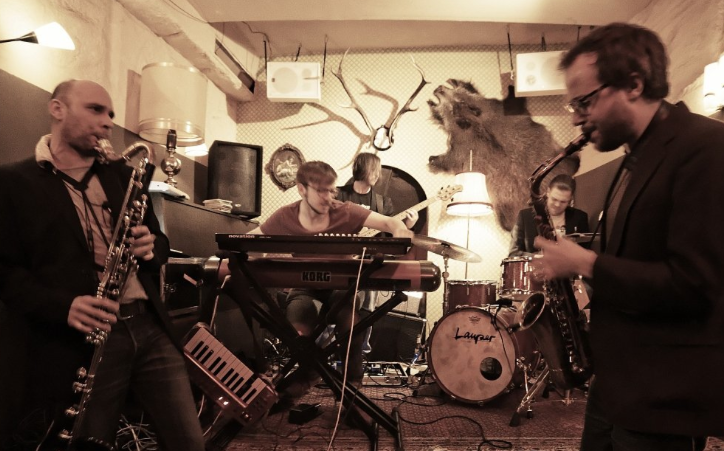
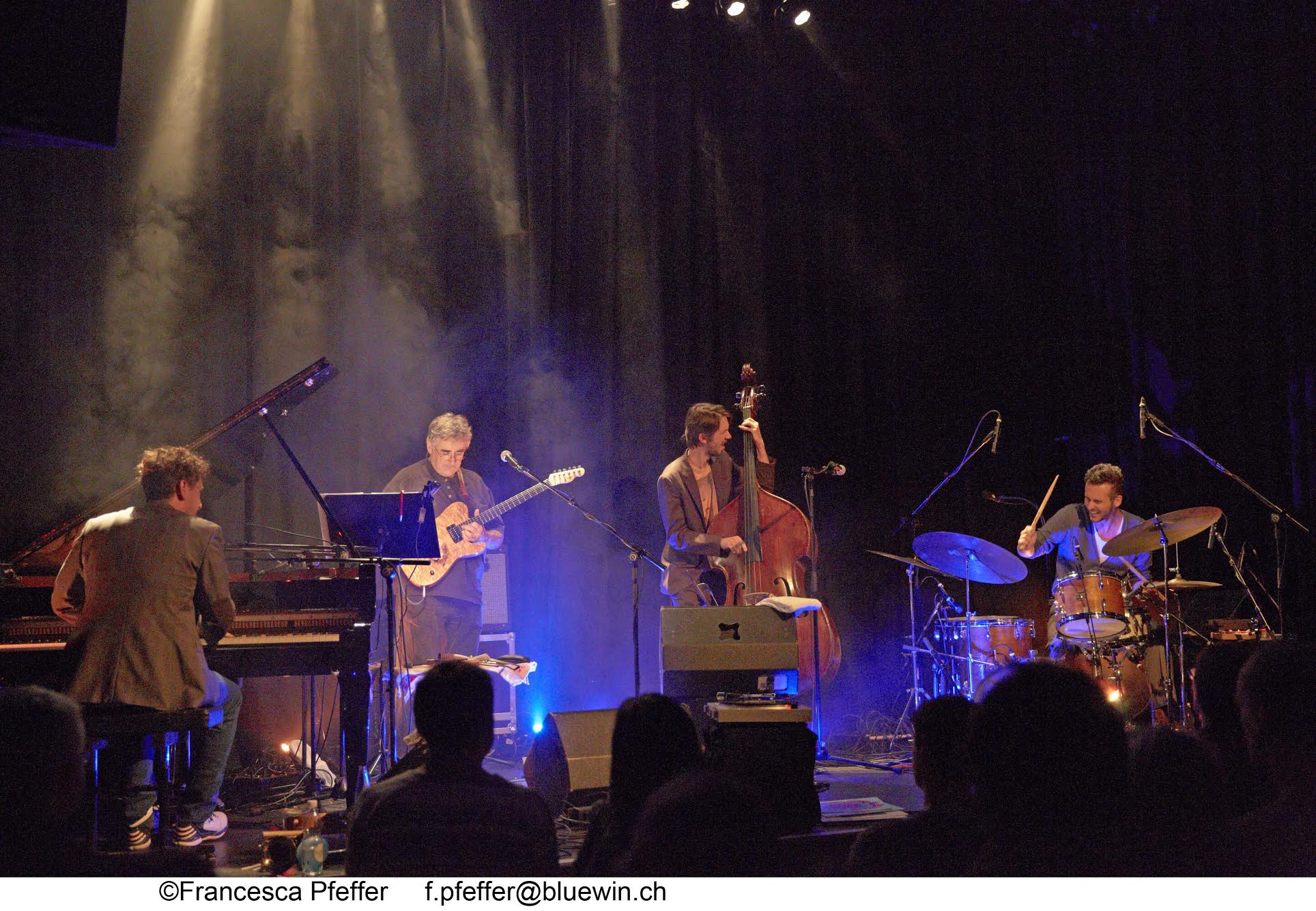
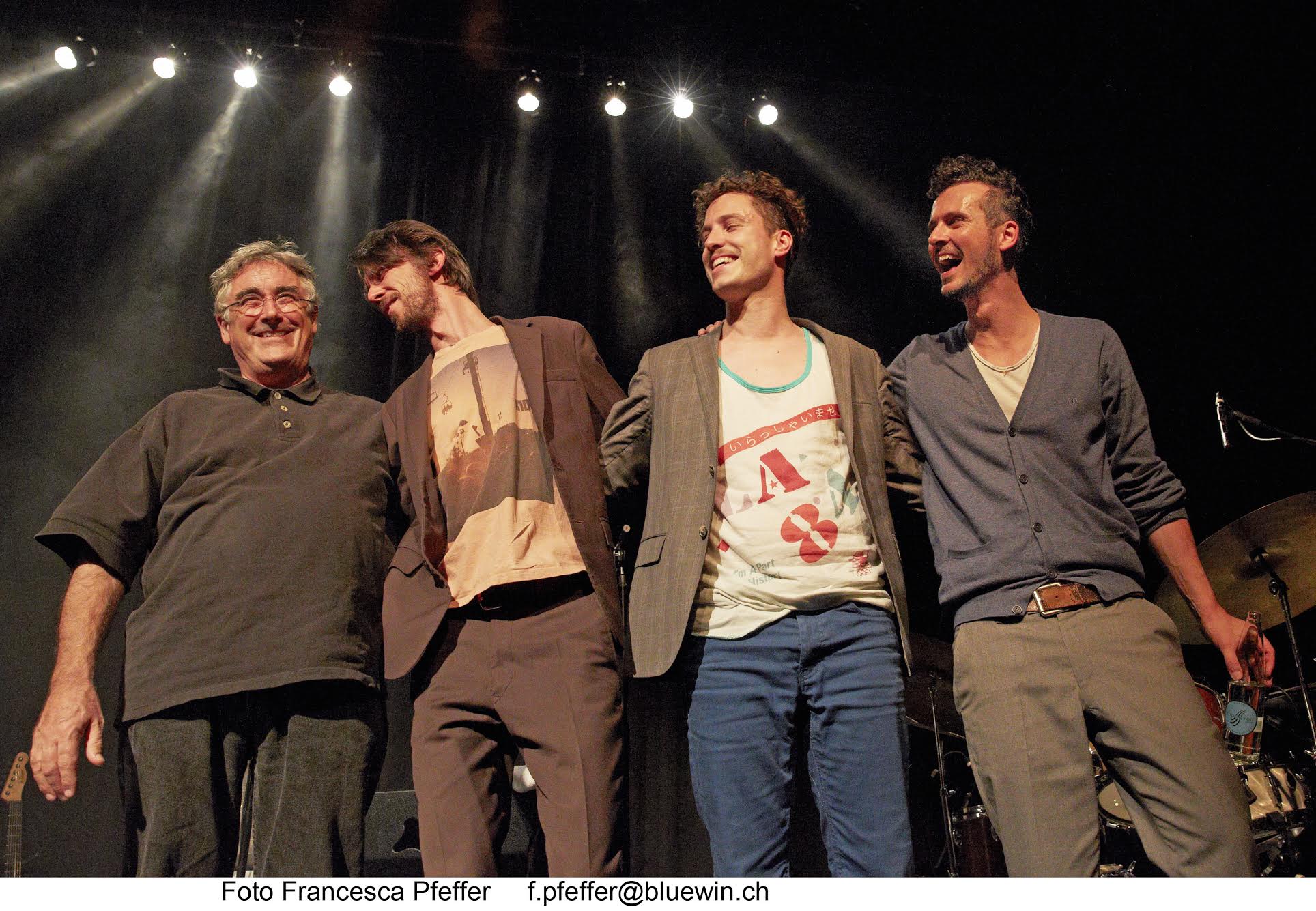 Stefan Rusconi Nein, wir hatten etwa ein Jahr Pause dazwischen. In der hat Fabian immer mehr Gitarre gespielt, weil wir durch Fred gemerkt hatten, wie sehr wir diesen Sound gebrauchen können. Da kamen wir auf die Idee, mit ihm ein paar Konzerte zu spielen. Es hat sich also ganz natürlich ergeben, war kein Festivalprojekt – was auch toll sein kann -, und war deshalb total entspannt.


 Pff….voilà près de vingt ans que je n’étais pas venue au
 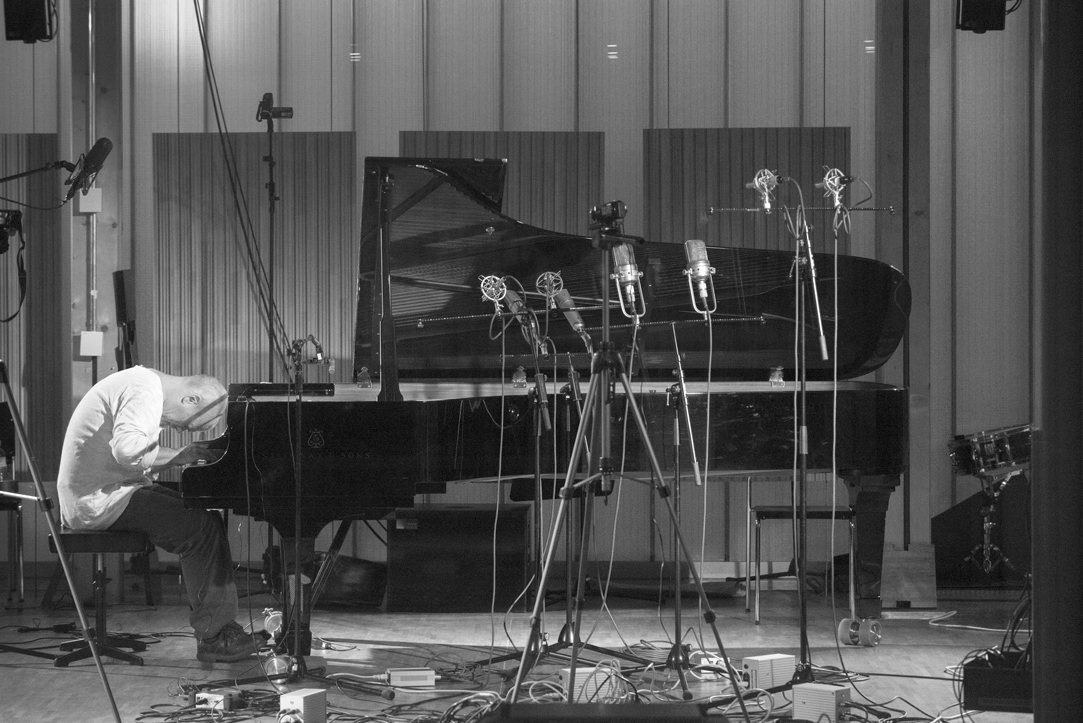 Aujourd’hui, Michel Wintsch va plus loin et cherche à donner vie à son piano sans lui ajouter d’effets. Grâce à une impressionnante batterie de micros savamment installés par Benoît Piccand, son instrument est amplifié subtilement. Michel Wintsch peut ainsi non seulement jouer des notes, mais, aussi des clicks que font les touches effleurées mais non jouées, de la frappe de ses mains sur les différentes parties du piano à sa portée (dessus-dessous..) et même du son de l’air que déplace ses mains.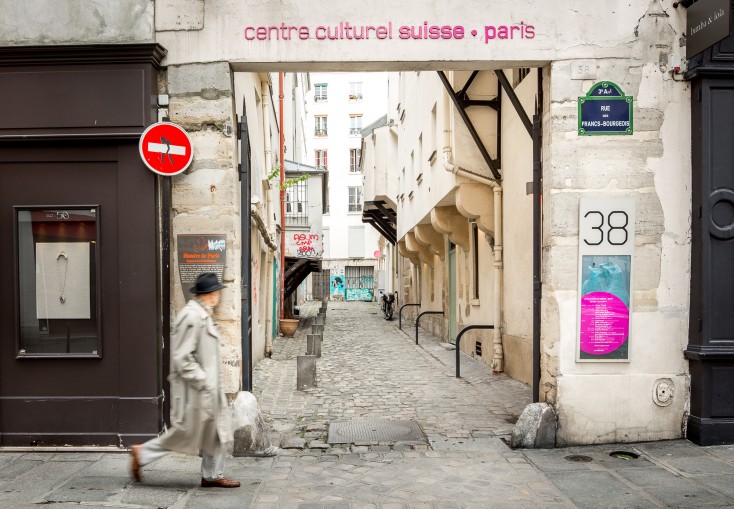
 En cette première semaine du mois de juin,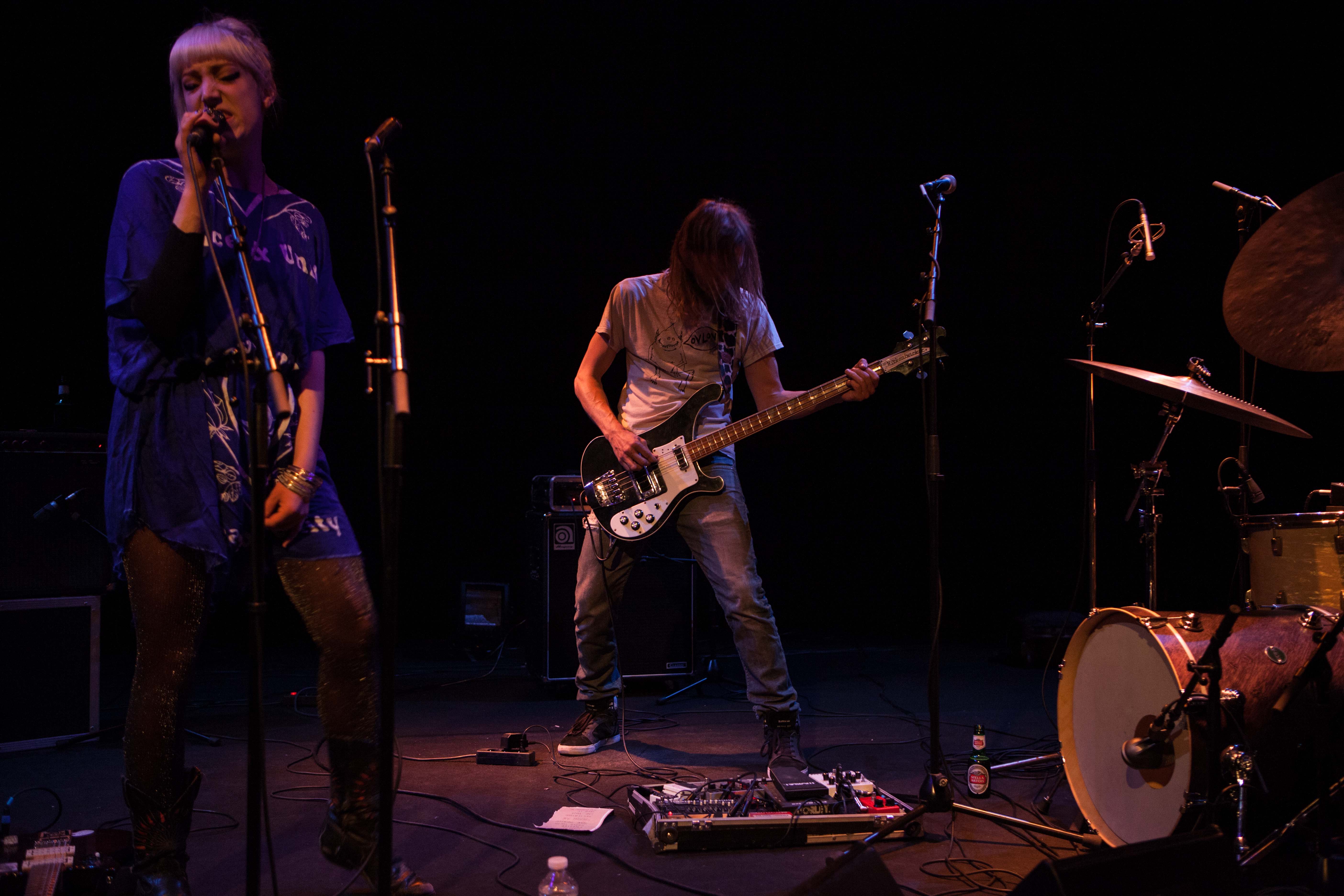
 Vein are building their career, brick by brick.