“Are we selling candles or are we selling light?”

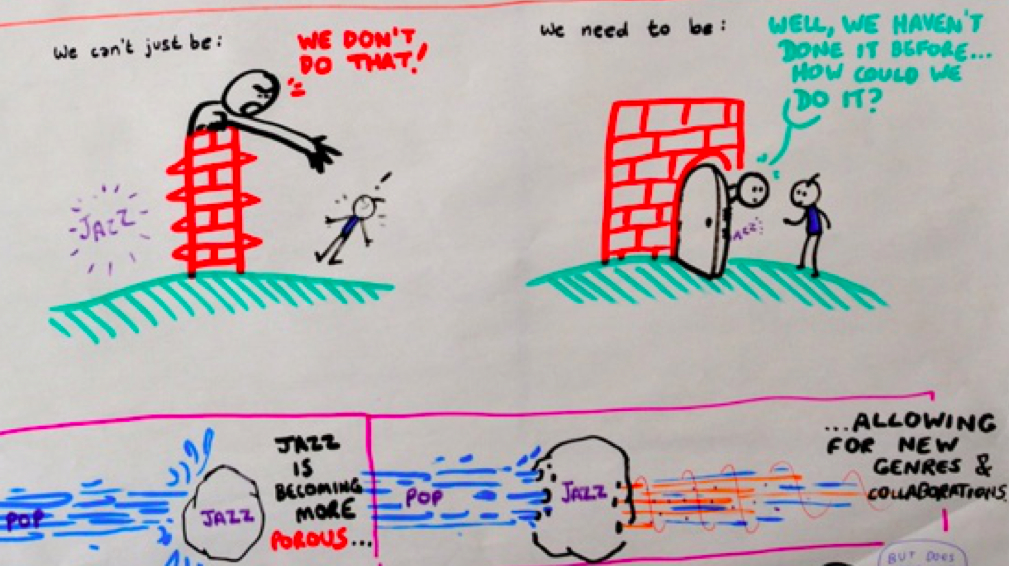
When I reviewed the Schaffhausen Jazz Festival, questions emerged – is Rusconi‘s new album, jazz? What should jazz be in 2014? Gerry Godley of the Improvised Music Company and 12 Points festival worked with cartoonist Patrick Sanders on a presentation that made some vital points for the industry. I particularly liked the analogy – are we selling candles or are we selling light? Put crudely if we carry on focusing on traditional forms of jazz we may go out of business.
© Patrick Sanders Let's be more open to innovation, especially as jazz has become  more porous and collaborative ©Patrick Sanders
© Patrick Sanders
Let’s be more open to innovation, especially as jazz has become more porous and collaborative ©Patrick Sanders

Godley referred to America’s major arts survey of 2012 and although I don’t see Europe in the same grip of the “heritage” of jazz, it’s probably a similar picture here: audience numbers are declining and they are growing older (as I saw at Schaffhausen and see in London). As Terry Teachout of the Wall Street Journal wrote, “Jazz musicians who want to keep their own…beautiful music alive…have got to start thinking hard about how to pitch it to young listeners.”

“What is jazz about & who is it for? – grows unclear.” Phil Johnson

To be frank, jazz has lost its hipness. Young urban ‘gunslingers’ are more likely to listen to new folk or the myriad forms of electronica. Last year journalist Phil Johnson wrote in the The Independent, “The essential narrative and context – what is jazz about and who is it for? – grows unclear. An increasing lack of visibility in the mainstream media contributes to a growing credibility gap…” This is an issue; print and radio (let’s not even go there with TV) influence tastes and with diminishing support it’s difficult for promotors to take risks. The respected critic, John Fordham commented on the lack of press coverage for jazz in 2010, “…the most routine performances by an orchestra, or the most mundane gigs by fading pop stars will usually grab the space from innovative jazz artists who may well be shaping the future of music…”
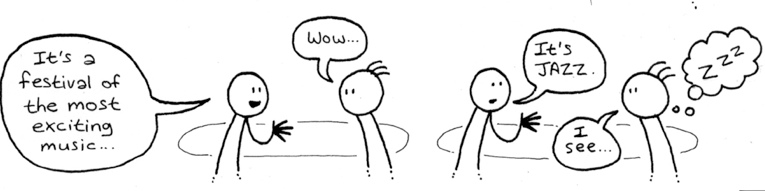
 

©Patrick Sanders
©Patrick Sanders


Godley also addressed the “J” word and whether it’s doing music a dis-service. I don’t feel overarching terms such as jazz, classical or rock are relevant in the age of the internet. My favourite phrase is ‘music for curious ears’ and London’s Cafe Oto bills itself as a venue for “creative new music”. Phil Johnson suggests Oto could be a good model for other European clubs as it’s found success by, “building an audience from the bottom up through artist-run co-ops and club-nights.” They are managing to attract a mix of ages, at least.

BBC Radio 3 (plays classical music and some jazz) is rightly obsessed with the phrase “replenishing audiences” as their core listeners age. Attracting new audiences requires new marketing tones. Rusconi have been so successful at building an online rapport with their fans that they won the voted-for ECHO Jazz Award for Best Live Act 2012. But the music itself needs to be relevant.

Build on traditions, but break the rules

Some promotors I spoke to felt Rusconi were being gimmicky – maybe they haven’t quite hit the right spot (as they did with Alice in the Sky) but I’m more engaged by them than I am by clever musicians desperately trying to re-create a time that has gone. Build on traditions, but break the rules, or at least put in your own life, your emotion. My musical axis has been informed by being a DJ where it’s all about the new, and I’ve always admired pioneers who faced enormous criticism but changed things up; as much as I adore Miles Davis’ Kind of Blue I’m glad he heard Hendrix and got re-inspired.

A band who is getting the balance right is Hildegard Lernt Fliegen. They played a triumphant set at Moods a few weeks ago. The music builds on traditional jazz and improvisation and yet is modern. They’ve got a strong look going on and their video for the track Don Clemenza  is perfectly pitched. OK, not everyone has to (or can) wear a breadstick on their head, but what brings it all together is that it feels utterly genuine, it’s ‘authentic’. And that’s the word Godley finished his talk with and it’s an important one.

Labels like ECM are “borders-blind”

What I’d like to see is European countries co-operating at supporting talent from a wide spectrum of ‘jazz’ and from regions beyond their own. Labels like ECM are “borders-blind”, venues could be better at this too. I believe: “If it ain’t broke, change it!” Or it dies. Keep jazz relevant, think about new ways to package it and consider who we want to promote it to. There are audiences out there who are missing out on heart-pounding, incredible music.
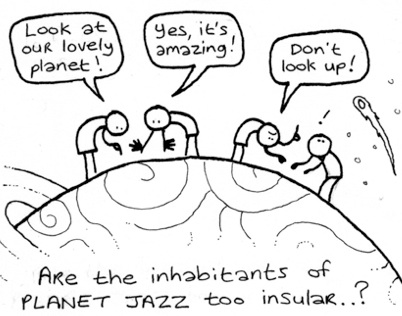
 

©Patrick Sanders
©Patrick Sanders


Truffaz et Treichler en version symphonique!

105406-erik-truffaz-mon-souci-faire“Avant l’Aube”: Erik Truffaz travaille depuis de longs mois sur ce projet ambitieux de poème symphonique pour orchestre, sampler et trompette. « L’ensemble de la pièce musicale sera décliné en huit parties qui narreront une nuit dans la vie d’un homme, du crépuscule à l’aube, en traversant des atmosphères pouvant être aussi bien romantiques qu’orientalisantes. » explique le jazzman musicophage. Originaire de France voisine, Erik Truffaz est Suisse d’adoption. Ce projet transfrontalier ne pouvait que lui plaire.

« Concevoir un disque ou un concert, c’est comme un bon film, il est important d’alterner les moments de tension et de détente.»

Pour l’Ensemble symphonique de Neuchâtel, pour l’Orchestre Victor Hugo Franche-Comté, Erik Truffaz a composé un programme qui s’inspire de Steve Reich, Bèla Bartòk mais aussi d’Ennio Morricone parce qu’il réussit à car il réussit à « concilier des airs populaires avec une musique plus savante ». Ses parties de trompette seront quant à elles largement improvisées.

Side by Side

Last but not least, participe à ce projet un autre de nos héros nationaux, Franz Treichler qui, bien que les pieds fermement ancrés dans le rock, partage le même éclectisme musical que Truffaz. Ses séquences seront autant de surprises pour viendront sous-tendre ou s’opposer aux mouvements de l’orchestre.

franztryptiquecouleur

Cette création sera présentée sur les scènes nationales de Besançon et Montbéliard, au Théâtre du Jorat de Mézières et à Festi-Neuch. Elle est soutenue par l’union européenne dans le cadre d’un projet intitulé Side by Side et dont vous devriez bientôt en savoir plus sur ce blog. Hautement recommandé.

« Concevoir un disque ou un concert, c’est comme un bon film, il est important d’alterner les moments de tension et de détente. Il peut y avoir des passages complexes, pouvant déconcerter. Mais pour que l’ensemble soit accessible sur la durée, il faut aussi des temps où l’auditeur peut être transporté par une mélodie, par un rythme. Je fais très attention à cet aspect quand je compose, parce que c’est bel et bien la mélodie et le rythme qui relient la musique aux émotions. »

27 mai, Scène Nationale de Besançon

2 juin, Scène Nationale de Montbéliard

8 juin, Théâtre du Jorat, Mézières

15 juin, Festi-Neuch

[vimeo http://vimeo.com/91602713]


Colin Vallon speaks about “Le Vent”

Colin Vallon © Petra Cvelbar“Le Vent” is Colin Vallon‘s second album for the prestigious label ECM. Listening to it, or to him speak, you might think he’s a bit soft – a gentle soul. There’s a distinct aesthetic to his playing, it’s mindful and sombre as if remembering a lost love. Interviewing him, I found an assured and fiery spirit; a pianist with a clear intelligence, driven to carving out his own, individual path.

“From the moment I could stand I tried to press down the keys”

Music was always around Vallon – when most families were arguing at Christmas, his was gathering at the ever-present piano, singing hymns and Gospel. “I loved the sound of the instrument, from the moment I could stand I tried to press down the keys”. Despite this, he quit piano at the age of 12 because he could no longer play by ear and reading music frustrated him. Then two things happened: his uncle taught him some blues chords that he could play, “Without paper in front of me” and he saw a solo concert of Keith Jarrett, “It was really amazing to hear that.”

He returned to music lessons at 14 and began composing. By 19 he was at the University of Arts in Bern and had his own trio. Here he found the American theory of copying the standards until you could imitate them too restrictive. “But this was also very good for me,” he says, “because it meant that if I wanted to do something of my own then I had to do it really on my own and to be more didactic in terms of composing. I was really independent.”

“It’s a music that has something very raw about it”

However the composition tutor, Frank Sikora, inspired Colin and for his class he recorded, “A huge fence or gate that was screeching, making harmonics and noises.” By 2002 he developed this interest in strange sounds with prepared piano techniques and had begun an enduring curiosity for Eastern European music. “It has something very raw about it and, like this fence maybe [that he’d recorded], it’s a very different sound and it’s something that caught me immediately.” He joined a band with the saxophonist Sascha Schönhaus playing Balkan music and discovered one of his “desert island records”, Le Mystère des Voix Bulgares.

A journey in Albania

Meeting Elina Duni provided fertile creative soil as Albanian music opened up to him and the Trio’s third album, (their first for ECM) was entitled Rruga, the word for “path” or “journey” in Albanian. It was critically acclaimed, so did this make it hard to follow? “There was a bit of pressure,” admits Colin, “not from the label, but from myself..it’s hard to come with a second album…and changing the drummer [from Rohrer to Sartorius], but in the end I’m really happy with the results.”

“There are a few goodbyes, a tribute to Asita Hamidi”

Colin found his material came naturally as he dealt with several deaths and saw a suicide jump from a bridge. “Le Vent was an elegiac album, a lot to do with death…and the passing of time and life. It sounds really dark but it’s not just about that…There are a few goodbyes, a tribute to Asita Hamidi [the harp player] who died…things that are a part of life but I needed to express somehow.” It’s Vallon’s careful listening for, then stating his own truth, that makes him a compelling artist.

Colin Vallon “Le Vent” (ECM)

On tour:

26/04/14 Jazzahead, Bremen DE
27/04/14 A-Trane, Berlin DE
29/04/14 Mokka, Thun CH
30/04/14 Bee-Flat, Bern CH
03/05/14 L’Azimut, Estavayer-Le-Lac, CH
13/05/14 Mokka, Thun CH
17/05/14 AMR Genève, CH
27/05/14 Mokka, Thun CH
01/06/14 Green Hours Festival, Bucarest RO
07/06/14 Paris Jazz Festival, Paris FR

Rusconi at Cully Jazz Festival

ImageI was reminded of the story of the Sorcerer’s Apprentice watching this trio perform. Keen to make magic and mischief, Rusconi sometimes found themselves unable to control the proceedings. This was the first gig of the tour and I think their playfulness will win over audiences, they just needed more child-like energy, a sort of innocent conviction, to pull it off at Cully. However, the band were most captivating when they painted afresh their best compositions from the new album, History Sugar Dream.

‘Psychedelia for Laika’
Ankor was a trademark piece, with Stefan Rusconi’s mournful yet sweet piano, rich with echo and thought, sensitively interlaced with Fabian Gisler’s handsome bass notes. The sparse, crispy drum beats of Claudio Strüby balanced the sound perfectly. Sojus Dream used a repetitive theme as its foundation before a synth keyboard sneaked in, providing Herbie Hancock-like funky accents. The track grew in stature as it built a platform for Fabian’s electric guitar to glide through, providing, as they tell us, ‘psychedelia for Laika,’ the dog who was sent out to orbit the earth in 1957 (and died within hours of lift off). I didn’t feel Fabian pierced deeply enough, so it was down to Stefan’s collapse into a warped and weird circus-style piano to trip the track out.

Bowie’s Life on Mars? started up
So, to the ‘high jinks’ – such as swapping instruments amongst themselves, as in Change (Part One), with Claudio on piano, Fabian on drums and Stefan on guitar, and stopping everything for Fabian to put a record on the Technics deck set up onstage. Bowie’s Life on Mars? started up, complete with vinyl crackles to re-enforce the theme of History Sugar Dream – childhood memories, “A time when dreams and hopes, fantasy and illusion, were reality,” as they write in their press release.

This trio is capable of subtle and complex emotions
I like the way Rusconi seem to feel their way through unknown landscapes in their music, playing with fantasy. At one point I thought of dark, rainy scenes in the film Blade Runner with its sense of nostalgia, loss and romance. This trio is capable of subtle and complex emotions. I’d like to have been taken more deeply into these worlds, that’s where the real playfulness lives.


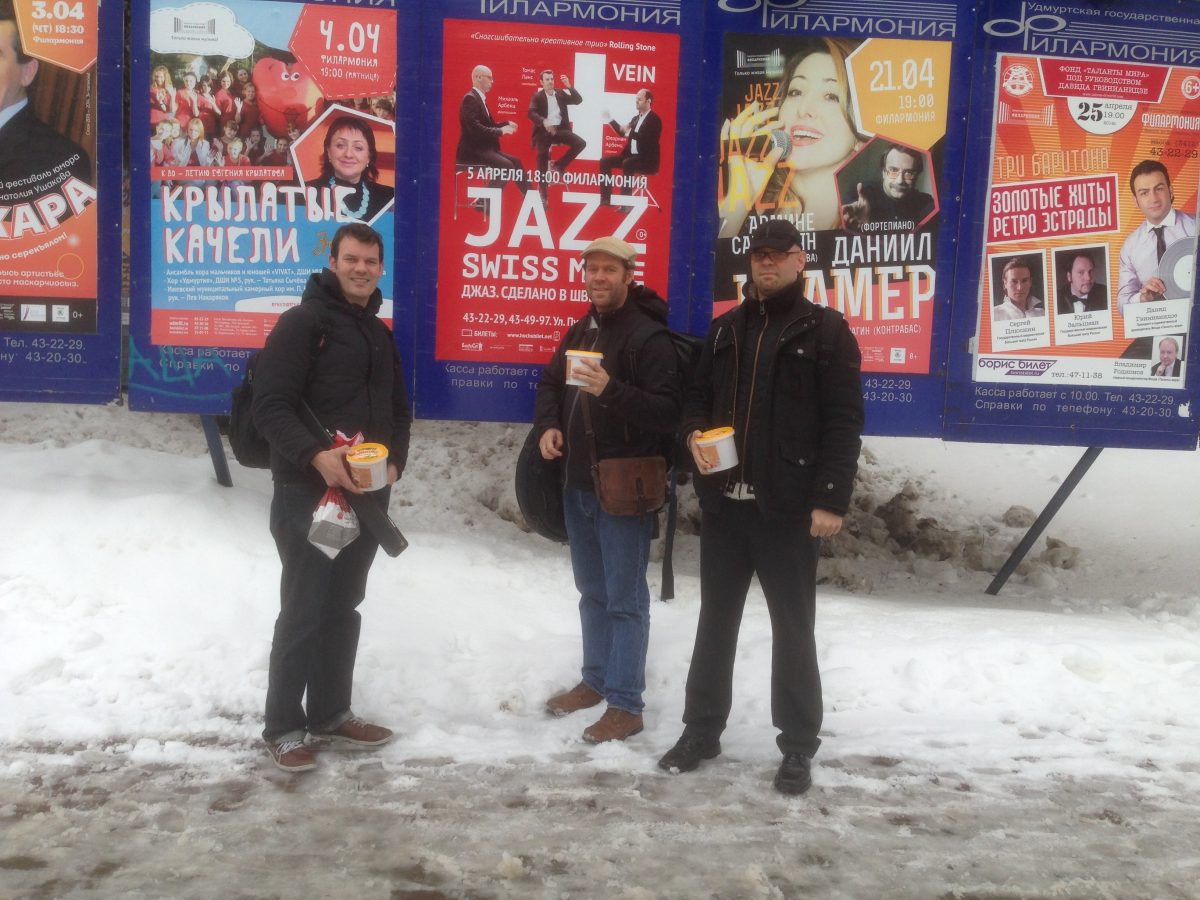
VEIN, Russland-Tagebuch (Teil 1)

VEIN‘s music is unclichéd and highly original, seemingly oscillating somewhere between M-Base, Cecil Taylor and Debussy, mainly carried by heavy and highly energetic binary grooves” said  Journalist Christoph (Tagesanzeiger, 14.05.07). VEIN is now on tour in Russia and has sent a postcard to Swiss Vibes…. 

Izhevsk, Sonntag den 06.04.2014

izhevsk

Kommen um 12 Uhr mittags am Flughafen an. Werden sogleich überraschenderweise in eine “Plattenbauten-Wohnung” mit 3 Sofas anstatt in ein Hotel gebracht. Für Florian wird ein Traum Wirklichkeit. Er wollte schon immer mal im Dostojevski-Styl übernachten. Leider bleibt nicht genug Zeit um das Kalashnikov-Museum zu besuchen, wo man mit dem legendären Gewehr schiessen darf (Der Erfinder der Kalashnikov wurde in Izhevsk geboren).
Nach einem grossartigen Microwellen-Essen geht’s sogleich weiter zum Soundcheck in die Philharmonie. Leider ist der Flügel in einem wirklich schlechten Zustand, aber nach einer Weile erinnert sich der Promoter, dass gleich hinter der Vorhang auf der Bühne noch einen sehr guten Steinway steht. Das Konzert startet bereits um 18.00 Uhr. Es ist eine grosse Freude vor diesem sehr enthusiastischen Publikum zu spielen. Nach ein paar Bieren geht’s gleich wieder zurück in die Wohnung, denn die Reise nach Dubna am nächsten Tag startet bereits um 4.30 Uhr in der Früh.

Thomas Lähns
(double bass player)

Julian Sartorius en mode random

On l‘a vu un peu partout ces derniers mois, en solo ou auprès de Merz ou Colin Vallon, dans les club de jazz, les galeries d’art contemporain ou à l’affiche de festivals indie, le jeune batteur bernois Julian Sartorius ouvre ce soir le 32ème CullyJazz Festival avant Avishai Cohen et Rusconi sous un chapiteau sold out.

ImageFriand d’atmosphères intimistes, la batterie à même le sol pour être au plus proche du public, on l’a vu plusieurs fois émouvoir et faire se lever les foules. A Cully, le dispositif sera tout différent : 900 personnes en rang d’oignon, lui bien loin, sur un large piédestal et sous un gros logo jaune. Il est curieux de voir ce que cela va donner. Le jazz ? Une formation aux conservatoires de Berne puis Lucerne. « J’aime Coltrane, Monk, ce qui a du spirit. » Avant de rajouter gaiement dans l’immense sourire qui le caractérise « Mais j’aime autant Schubert que Madlib ! », et citer encore Awesome tapes from Africa ou le label Sublime Frequencies.

Beat diary

Julian Sartorius est un chercheur, et c’est grâce à un travail titanesque, son « Beat Diary », qu’il a véritablement développé son jeu : pendant une année, il s’est donné pour contrainte de produire et prendre en photo un beat par jour afin de le publier sur un blog, devenu un livre album. « La contrainte est toujours un procédé créatif intéressant, où tu peux aller au fond des choses. Regarde par exemple la gravité, et comme les gens ont été inventifs pour tenter d’y échapper, de l’escalade au base-jump… J’aime les règles, comme dans un jeu. Si elles sont bonnes, il y a beaucoup de fun. Attention, je ne dis pas que la musique juste est un jeu, mais qu’il faut jouer avec les limites. »

“Les nuances sont infinies…”

Ce qui étonne et éblouit dans son solo, c’est la gamme d’harmonies qu’il parvient à faire sortir de son instrument, l’inventivité de sa proposition, et un groove toujours en mouvement. « J’essaie de garder les jambes dans la pulsation et de faire aller mes mains ailleurs. Quand tu arrives à faire bouger les choses tout en restant dans le tempo, cela donne quelque chose de très fort. Et puis les nuances que tu peux apporter selon comment tu touches les choses sont infinies. »

“J’adore quand je ne sais pas ce qui va arriver”

S’il écrit la musique, des plans plutôt que des partitions, il aime se laisser surprendre et s’inspirer de tout ce qui l’entoure : nature, animaux, machine à laver, frottement des vêtements, tout ce qui peut produire un rythme, qu’il soit régulier ou non. « J’ai toujours des images dans la tête, c’est très narratif, et souvent j’entends des synthétiseurs ». Il a lu John Cage qui lui a « ouvert l’esprit », et a peu à peu développé un élan vers le random, l’imprévisible : « J’adore quand je ne sais pas ce qui va arriver, quand il se passe des choses qu’on ne peut pas penser. Cela me rend vraiment heureux ! »

[youtube=https://www.youtube.com/watch?v=MVLNRLnqTI8]

A l’automne, il sort un album du solo, parce qu’on lui l’a souvent demandé, et un autre album fait de duo entre lui et un train, un frigo, ou une caisse à la Migros. Et puis encore un single 7’’ avec des beats dessus. Dans l’intervalle, il réfléchit à comment optimiser les sous qu’il vient de recevoir pour sa nomination au premier Prix de Musique Suisse. Les idées ne manquent pas.

Le site de Julian Sartorius

Dernier disque en date: Merz, “No Compass Will Find Home” (Julian Sartorius drum and vocal renditions), Everest records

Bänz Oester and The Rainmakers @Chorus Club

Bass maestro, Bänz Oester and his friends The Rainmakers are a joyful union of Swiss and South African musicians who grouped together after a chance encounter at the Grahamstown National Arts festival in 2011. Rainmakers_photo 1Spontaneous cameraderie and a deeply felt musical intention are what unite this group and deliver an immediate, powerful jazz punch. Tonight at Lausanne’s Chorus Club they perform the final date of their 2 week tour, show-casing their first LP, Bänz Oester and The Rainmakers ‘Playing at the Bird’s Eye’ – an album that took just four days to put down and that captures an intimate sense of wonderment, spirituality and emotion.
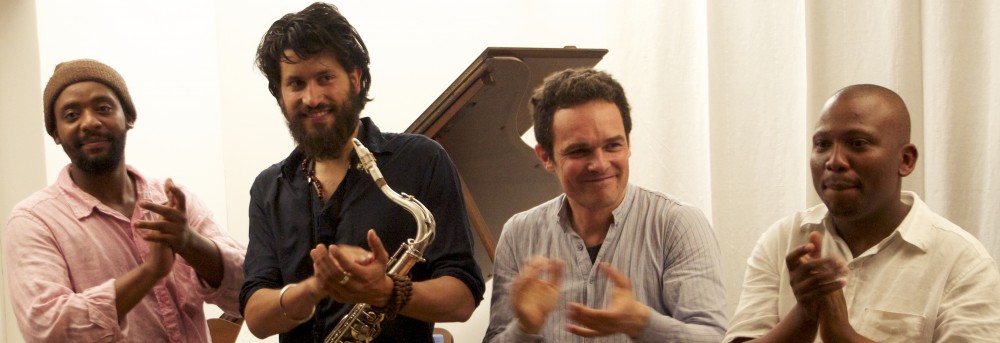
Only two days of rehearsals

Live, their style and content vary from the languid jazz standard, African polyrhythms, seductive funky blues, obscure Swiss and Bulgarian folklore to blinding improvisation. Whether introspective or gregarious, all styles are drenched in emotional depth and meaningful purpose. This is a band who describe themselves as playing “the music of intention” after only two days of rehearsals.

Spectacularly lithe piano playing

Afrika Mkhize’s spectacularly lithe piano playing is a constant joy, over-brimming with the gospel, blues and afro-jazz colours you’d expect after 10 years on the road as Myriam Makeba’s musical director. His instrument is cropped-DSC01181jumping as he scats, sings and cajoles it into action, rolling out the pretty melodies and interplaying beautifully with the often darker hues of the sax. Shame there’s no microphone, I’m curious to hear more of his singing voice but am later informed that his vocalese is not an imitation of Keith Jarrett, just a special way of entering into communication with a foreign piano that is ever-changing whilst on tour.
It’s a miracle we don’t all start stripping

The track “The Rainmakers” is a wonderfully sunshiny example of lilting African rhythms, dynamic and strong, rising and falling with a jovial ambiance that has the band and entire audience smiling from ear to ear. Similarly heart-warming is “Land’s End”, a silky smooth and teasingly bluesy number, full of such playful sexy pacing it’s a miracle we don’t all start stripping. Between the achingly seductive beats, drummer Ayanda Siukande amuses us with his larking about while pianist continues to speak Ray Charles-inspired volumes. There is joy on stage and in the room!

A weight of emotion

From the Swiss camp is Ganesh Geymeier on the saxophone with a style uncontainable as it is delicate, full of DSC6546-189x126emotional fire as well as delicate spaciouness. Whether building up a frantic storm as in “The Elevator” à la 60s Blue Note soundtrack or hinting at the sinister grey fog in the traditional Swiss-German folksong ‘Wie di graue Näbel schlyche”, his sound carries a weight of emotion and accompanies the listener into a spiritual musical dimension.
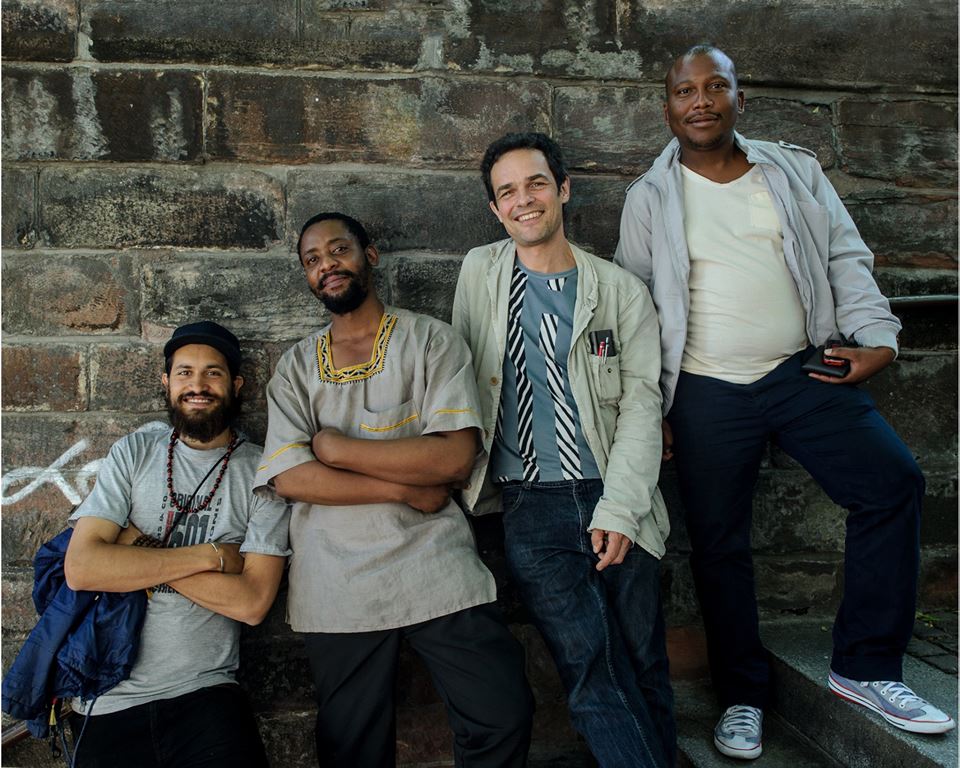
Bänz, looking splendid in his African shirt and red pixie shoes, is by no means the understated member of the band. His presence is, as usual, smilingly masterful and his exhuberant musical creativity proving  once again that he’s not considered “one of Europe’s leading jazz-bassists” for nothing.

Bänz Oester & The Rainmakers, « Playing at The Bird’s Eye » (Unit Records)

[youtube=http://www.youtube.com/watch?v=N14DMUAVRWQ]

Bänz Oester et les faiseurs de pluie

Rain, O Rainmaker.
Because when you rain, the soul of mankind will rejoice
Leaving the spirit of the ancestors to sleep in peace
Again, rain!

(Extrait d’un poème de Darko Antwi, Ghana)

Rainmakers_2Le disque de Bänz Oester & The Rainmakers s’ouvre sur ces mots. Une belle introduction à ces quelque six morceaux enregistrés en quatre jours à Bâle, au Bird’s Eye. Ils préfigurent d’une musique fulgurante où l’ont reconnaît des bribes de folklores, un piano sud-africain mais surtout un sens de l’improvisation forcené. Les Rainmakers sont la rencontre  de deux musiciens sud-africains – Africa Mkhize, Ayanda Sikade – et de deux musiciens suisses, le contrebassiste Bänz Oester et son ami saxophoniste Ganesh Geymeier.

 J’aime ce groupe pour son esprit démocratique” (Africa Mkhize)

L’histoire a commencé en 2011 au National Arts Festival de Grahamstown. Bänz Oester y est invité avec son ami Andreas Schaerrer. Les rencontres avec les musiciens locaux sont multiples, mais le coup de foudre avec Africa Mkhize et Ayanda Sikade est immédiat. « C’est drôle, on peut ne pas se voir pendant une année. On se met à répéter et en trente minutes, nous sommes en sueur. Cela ne m’était jamais jusque-là » s’exclame le contrebassiste connu aussi pour être un membre du Who Trio.

Un an plus tard, ces quatre-là se retrouvent en Suisse, tournent et enregistrent. Pour célébrer la sortie de ce premier opus des Rainmakers, les musiciens sont repartis à la conquête des scènes de Suisse.

Ils terminaient leur tournée à Lausanne au Chorus, pour deux sets magistraux où le piano percussif de Africa Mkhize se plongeait dans les folies d’une rythmique qui semblait libre de toute contrainte et d’un sax aussi séducteur que surprenant. « J’aime ce groupe pour son esprit démocratique. Chacun contribue. Une idée peut amener dans n’importe quelle direction. Dans mon quartet sud-africain, on a plus tendance à maîtriser les idées. » explique le sourire aux lèvre Africa Mkhize à la sortie du dernier concert de la tournée, au Chorus de Lausanne.

« Nous ne cherchons pas à faire un morceau de yodel avec un rythme africain » (Bänz Oester)

Rainmakers_photo 1Des compositions originales (signées de lui ou de Bänz Oester), des standards de jazz, des morceaux issus du folklore bulgare ou suisse, toutes les musiques sont à portées d’instrument. «Ce n’est pas un concept de producteur, précise Bänz Oester. « Nous ne cherchons pas à faire un morceau de yodel avec un rythme africain. Tout part d’abord du cœur. On ne peut jouer le morceau à notre manière que si on aime le morceau. »

 « C’est ma voix qui me permet d’entrer en contact avec le piano» (Africa Mkhize)

La musique de ces quatre-là est porteuse, porteuse d’émotions, porteuse d’univers musicaux en constante mutation, du free à la ballade. A Chorus, penché sur son piano, Africa Mkhize semble absorbé par son instrument, sa voix laissant échapper parfois cris, murmures, scat. «Je joue tous les soirs sur des pianos différents, sur lesquels tant de mains sont passées. Ma voix est la seule façon d’entrer en contact avec eux» explique celui qui joua pendant près de dix ans avec Miriam Makeba. » Ses doigts effleurent, voltigent, frappent les touches blanches et noires, ouvrent la porte de la spiritualité, une porte par laquelle, ses trois comparses s’empressent de s’engouffrer.

[youtube=http://www.youtube.com/watch?v=mEJ-34vtJTo]

Bänz Oester & The Rainmakers, « Playing at The Bird’s Eye » (Unit Records)


Sartorius @NODE Festival, Lausanne, 25/01/14

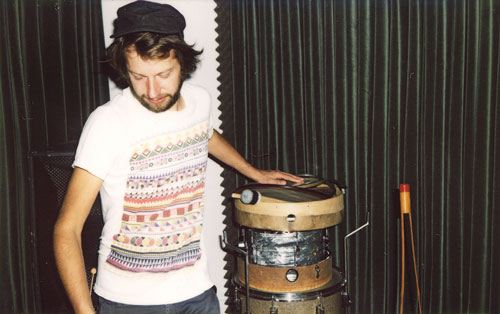
20130303_ch_bern_bee-flat_juliansartoriusdrperc_breite800px_72dpi_scb8286I’m tempted to describe Julian Sartorius as an OBE (no, not an Order of the British Empire, even though he’s very gentlemanly), but an Olympic Beat Explorer: boldly going into any environment, natural or urban, and discovering the potential percussive sound habitat that lies therein. Well-known in his hometown of Bern as the nutty guy who goes around banging on stuff – and has done since the age of 2.

Sound Forager

Calling himself a ‘Sound Forager’, as well as an artist, musician and composer, Sartorius began his quest into the world of alternative sound over 10 years ago when intrigued by the aesthetics of electronic music he wanted to imitate the sound accoustically. Often on tour without his drum kit in the day, he began using whatever he could get his hands on to make beats: ashtrays, small bells, electric toothbrushes, walls, sides of rocks, etc…,hugely inspired by the varied likes of JDilla, Madlib, Aphex Twins, Elvin Jones and Tony Williams.

Pure, improvised, minimalist
02

Known for his collaborations with Merz, Sophie Hunger, Dimlite and many more, Julian’s most talked about project has been last year’s ‘Beat Diary’ on Everest Records. 12 12inch vinyl records containing a total of 365 analogue beats, all real sounds played by him, a beat a day accompanied 365 images (because Sartorius is as visual as he is aural). A true indication of his musical penchant : pure, improvised, minimalist, pushing boundaries.

Tonight, he’s kicking off the Saturday evening session of the innovative NODE Festival, a yearly gathering in Lausanne featuring workshops and concerts to expand your listening habits. Theremin of all shapes and sizes, circuit bending, Gameboy music and electronic toys all form part of this ‘unusual sound’ event.

Like a baby throwing its rattle out of the pram…

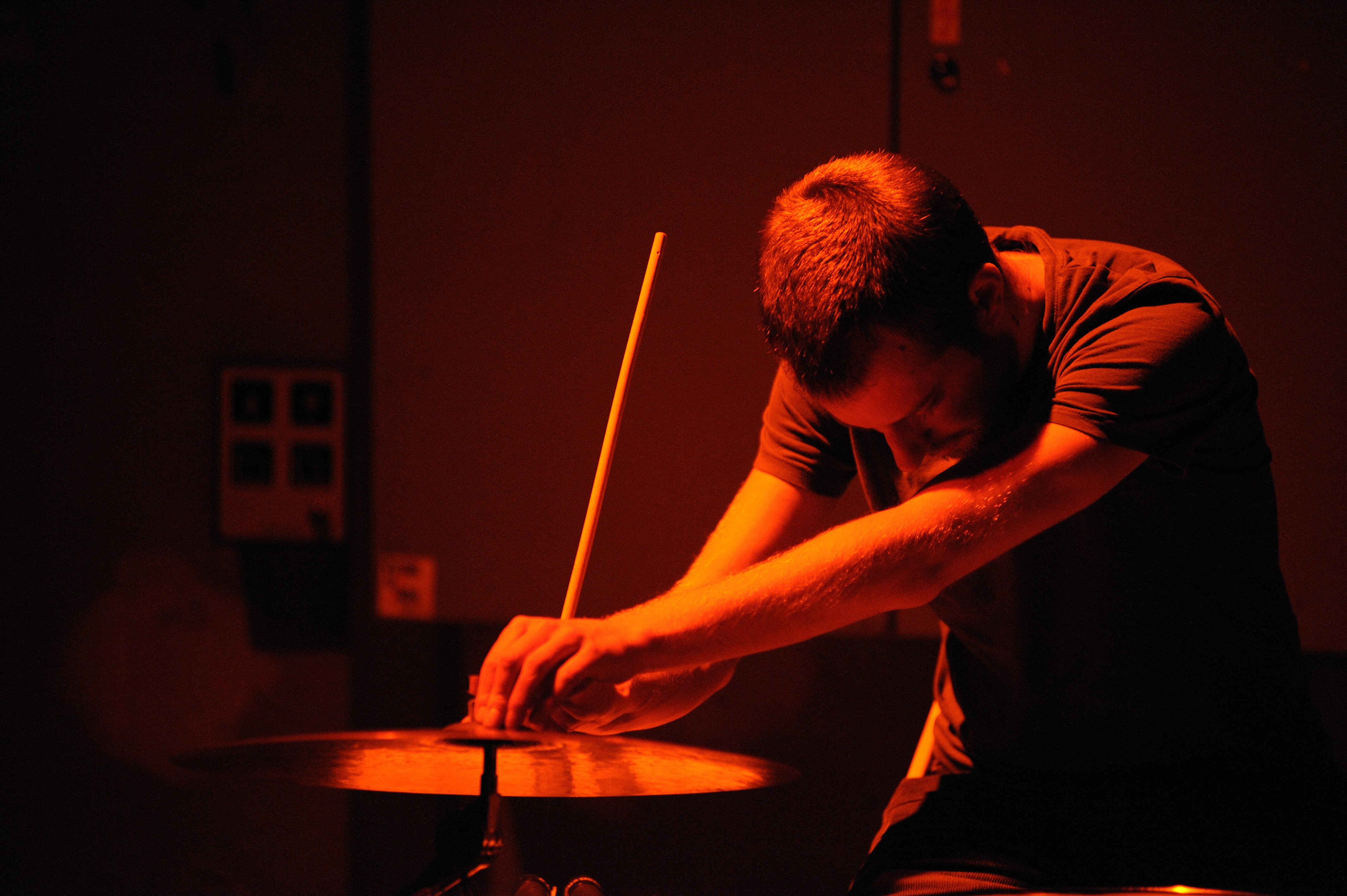
Sartorius and his drum kit are on a rug in the audience pit surrounded by a vast array of sound accesories. For a moment you could think you’re at a car boot sale, but it doesn’t take long to realise that actually you’re in a subtly woven beat infrastructure full of richly differing tempos and textures.

Dexterous playing of the cymbals creates a wall of sound from which the only way is up. It’s a fast and frantic climb atop hard sounds with very little let-up. Julian’s physical agilty is a sight to behold, moving with such feline economy and using every inch of his kit – what could be considered just messing around has never been such an art form or spectacle. A variety of props magic themselves onto the kit (Ikea hot plates, kitchen towels, broken off bits of xylophone, bowls and bells) momentarily adding depth and texture to the soundtrack to then quickly get chucked away like a baby throwing its rattle out of the pram.

Exciting atmosphere of new sounds being created

Sticks are used in every way imaginable: hitting, tapping, scraping, prodding. Not all sounds are easy on the ear, some vary from resembling big drops of rain on a tin roof to a dying walrus or a rusty train pulling into a station, yet all contribute to the rich, exciting atmosphere of new sounds being created in this room.

In fact what we’ve just heard is the main body of his forthcoming album due out later on this year. A solo drum project full of carefully crafted live sounds, no overdubs, no processing, no collaborations, just the simple fruit of all his experimentation in sound. For more intriguing examples of his daily beats and images, go to the ‘morph’ section on the Julian Sartorius website and also visit the Raun No-15 exhibition in Bern which features his installation till 22nd Feb 2014.

[youtube=http://www.youtube.com/watch?v=UKqZ1Dlwe5I]

Forthcoming live dates:

Julian Sartorius Solo:
8.2.2014 Netwerk, Aalst (B)
21.2.2014 Dampfzentrale, Bern
21.3.2014 Naturhistorisches Museum, Bern
30.3.2014 Kunstmuseum, Thun
4.4.2014 Cully Jazz Festival, Cully

Merz feat. Sartorius Drum Ensemble:
30.1.2014 Étage St. Gervais, Biel / Bienne
31.1.2014 Sedel, Luzern
1.2.2014 Festival Antigel, Genève
27.2.2014 Bad Bonn, Düdingen

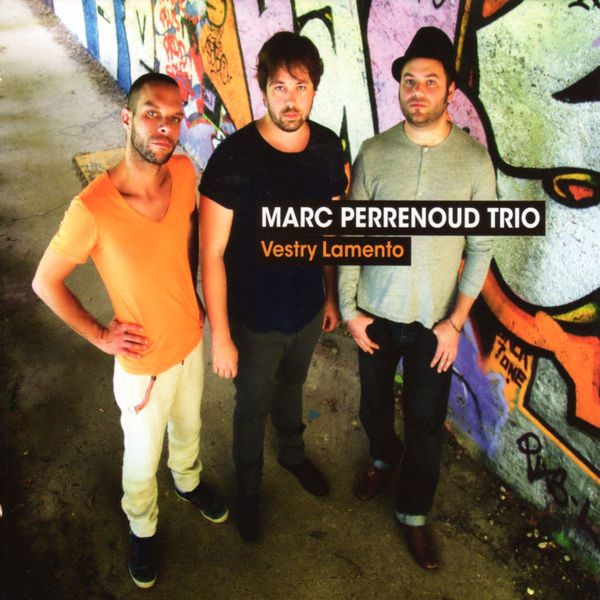
Disque du mois: Marc Perrenoud Trio “Vestry Lamento”

0608917112627_600Cet automne paraissait en Suisse Vestry Lamento, le troisième opus du pianiste Marc Perrenoud, un disque brillant, inspiré, fluide, lyrique….. Marc Perrenoud m’avait informée que le disque devait faire son apparition dans les bacs des disquaires français (un pays où il reste encore quelques disquaires….) en janvier. J’avais donc mis au frigo pendant trois mois mon enthousiasme, en prévision d’une critique “disque du mois” sur Swissvibes.org. Seulement voilà, entre-temps, Vestry Lamento semble avoir séduit les journalistes de la terre entière, ou presque….
“It’s an 8-minute ride that makes you want to hit repeat as soon as it’s over”

A commencer par le saint des saints, le magazine américain Downbeat qui s’enflamme : “The title track opens the set with an incredible bass solo by Marco Müller that kicks off a high-wire groove. Müller and drummer Cyril Regamey lock the rhythm down tight, allowing Perrenoud to glide over the piano with extreme soul in his heart and classical chops in his fingertips. It’s an 8-minute ride that makes you want to hit repeat as soon as it’s over.“

03-Marc-SoloLes Allemands ne sont pas en reste qui affirment dans le dernier numéro de Jazzthetik: „Die Stücke auf Vestry Lamento finden Ruhepole. Sie treiben meist zügig voran, lassen den Zuhörer in leuchtende pianistische Klangfarben eintauchen – und haben dem Rezensenten beim Anhören schon viel treibenden Schwung und Wärme vor allem bei regnerischen Autofahrten durch die Dunkelheit gegeben.“  (Stefan Pieper)

“Même dans ses ballades, il parvient à vous décoiffer”

Quant au quotidien genevois Le Temps, dans son édition du 31 octobre 2013,  il expliquait: “Le pianiste genevois, 32 ans, laisse tomber ses phalanges de compétition, ses gammes à toute bombe: l’odeur du silence sans son goût pesant. Pour tout dire, Marc est un prodige. Parce que, même dans les ballades, il parvient à vous décoiffer.“ (Arnaud Robert).

” Vestry Lamento, c’est à la fois le mouvement vers l’orgasme et la redescente…”

Que dire après cette déferlante d’éloges? si ce n’est que Vestry Lamento n’est pas aussi compliqué que son nom pourrait le laisser supposer. Aux dires de son auteur les choses sont mêmes extrêmement simple: « Vestry Lamento, c’est à la fois le mouvement vers l’orgasme et la redescente…» Pour revenir à l’essentiel, Vestry Lemento est revenu à l’essence de bien des musiques: la gamme pentatonique. Virtuose sans avoir plus besoin de le montrer, Marc Perrenoud ose avancer à visage découvert, ose pousser à bout la puissance de son power trio, ose la mélancolie. Une musique qui ouvre des portes, tire des liens, embarque comme une lame de fond. Un disque vivement recommandé à toutes les oreilles, des spécialistes aux néophytes.

Vestry Lamento | Marc Perrenoud Trio – Télécharger et écouter l’album. Label Doublemoon

Prochains concerts et émissions de radio:

France Musique (F)  “Un mardi idéal”, mardi 21, 22 h 30

Munich (D), Unterfarht, 28.01.14

Berne (CH), Bejazz Club, 31.01.14.

Genève (CH), AMR, 01.02.14

Sion (CH), La Ferme Asile, 08.02.14

Paris (F), Le Duc des Lombards, 13.02.14