‘Levitation’ by Tobias Preisig & Stefan Rusconi – Le Temple, Cully, 9/4/16
@J-C Arav
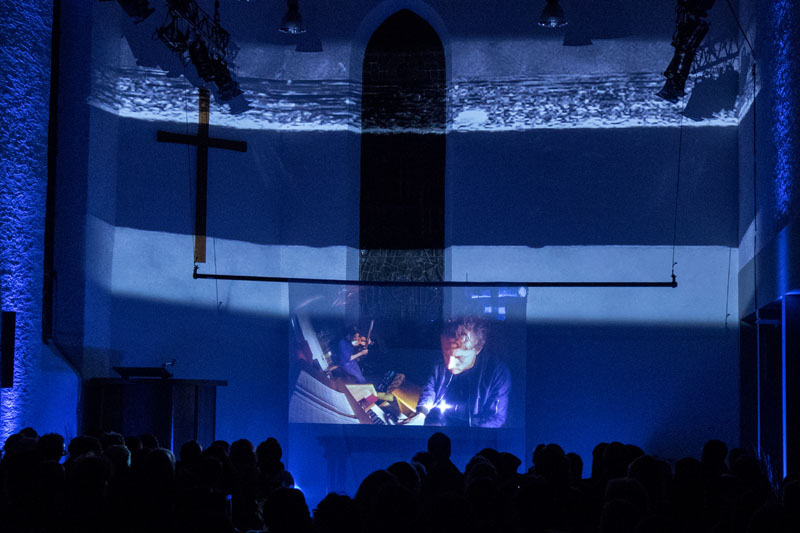
Tobias Preisig and Stefan Rusconi are Swiss pillars of the Cully Jazz musical institution. Their Saturday night performance at Le Temple church marked a return to sacred ground that the duo had already trodden a few years ago. This is the venue that inspired and housed their Levitation project that tonight is played out to an eager audience, most of whom are already familiar with the powerful, intimate exchange between violinist and pianist.
The key feature of the Levitation project is the sensitive, gradually drawn out soundscape created in great part by Rusconi on the church organ which is then supported and teased out by the strings. In practical terms this means having the two musicians play upstairs in the church gallery, heard but not seen from the audience down below. Deciding that this year’s jazz audience needed something to look at, the entire concert was projected on screen at ground level, which, ironically – because of the very bright projector light that was aimed right at the audience – meant that many of us listened with eyes tightly shut, (it was a bit like staring at the solar eclipse without eye protection). Possibly the best way to appreciate the moody, almost Gothic sounds raining down from above.
Some questions and answers with violinist Tobias Preisig:
What’s your relationship to the Cully Jazz festival?
Tobias Preisig: I have a special attachment to Cully Jazz. I’ve been playing here for the last 6 years, I started off in a small caveau as part of the ‘OFF’ programme, then they offered me residency, then larger stages as part of the main programme. There’s a extremely open-minded attitude here and strong commitment to push the next generation. Young and unestablished musicians find a stage here, right next to the superstars. Playing at Cully is definitely the highlight of the year for me. It’s become almost a family gathering with musical professionalism.
Was the material for ‘Levitation’ tailor-made for Cully?
Tobias Preisig: We played as a duo here at Le Temple in Cully a few years ago, performing for the first time with the church organ. Again, it was an opportunity that the festival gave to us. We fell in love with the sound and came back one summer to record at Le Temple for 5 nights. This music is now released as an LP called ‘Levitation’ and yes, it’s definetely tailor-made. So what’s nicer than to celebrate a recording that was actually made in this enviroment?!
Will there be more live gigs with the ‘Levitation’ project?
Tobias Preisig: This is a special side project for both Rusconi and I whose friendship and collaborations go back a long time. So far we’ve only played the material from Levitation live twice! There are a lot of underplayed organs and oversized churches, so we are looking forward to exploring them and awakening them with new music.
Kaleidoscope String Quartet – Le Temple, Cully, 8/4/16
@J-C Arav
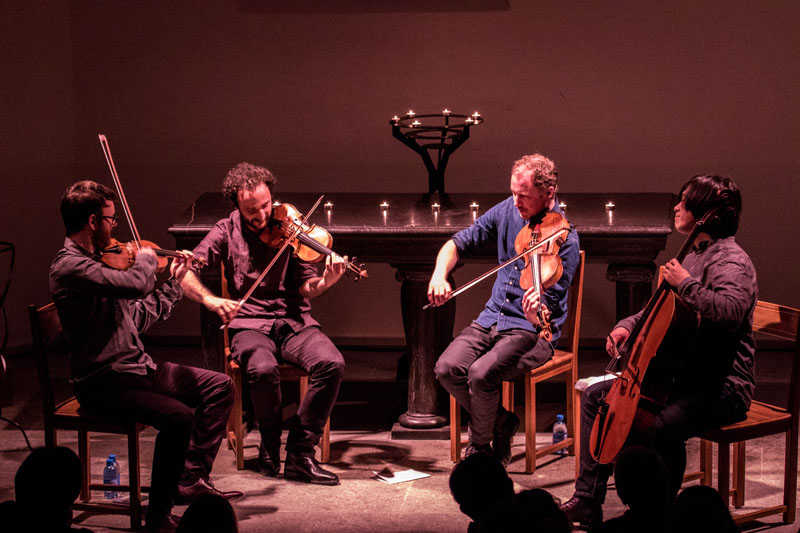
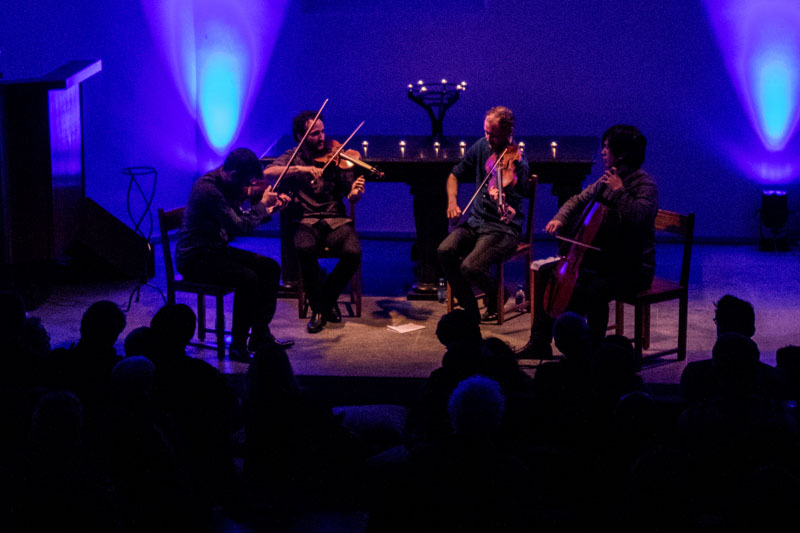
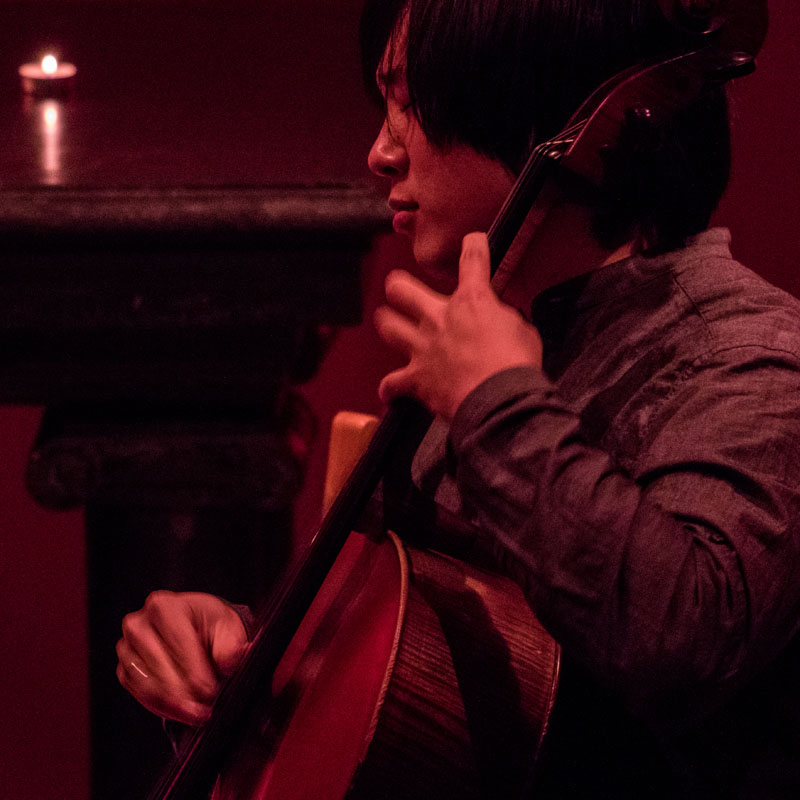
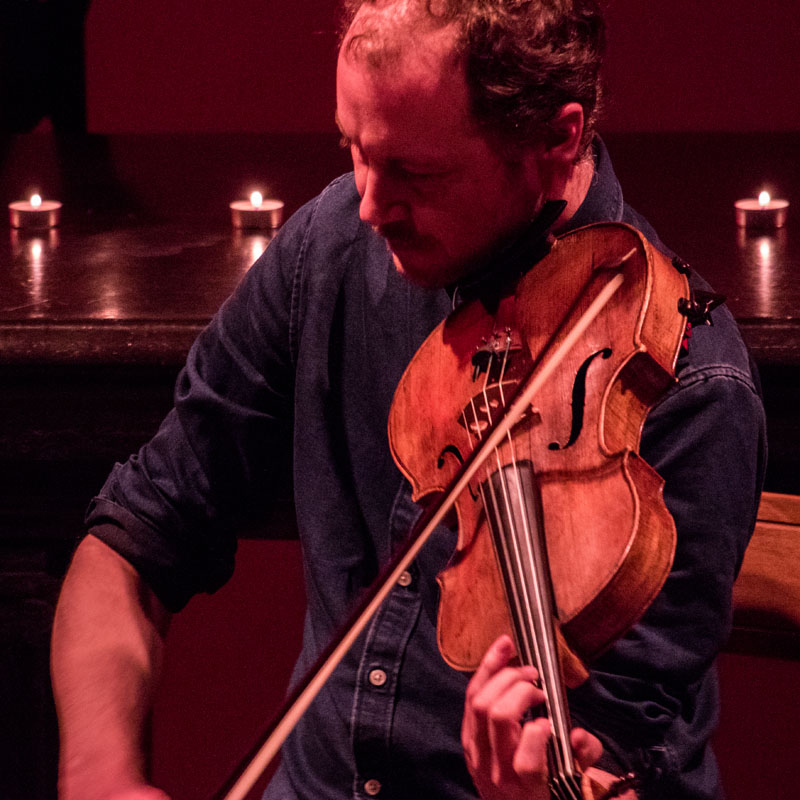
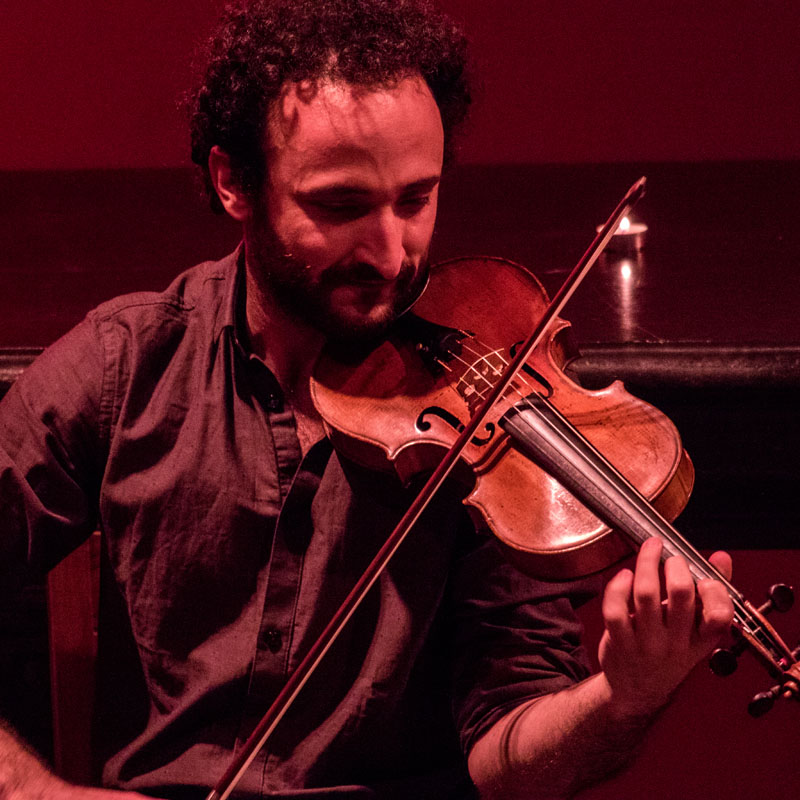
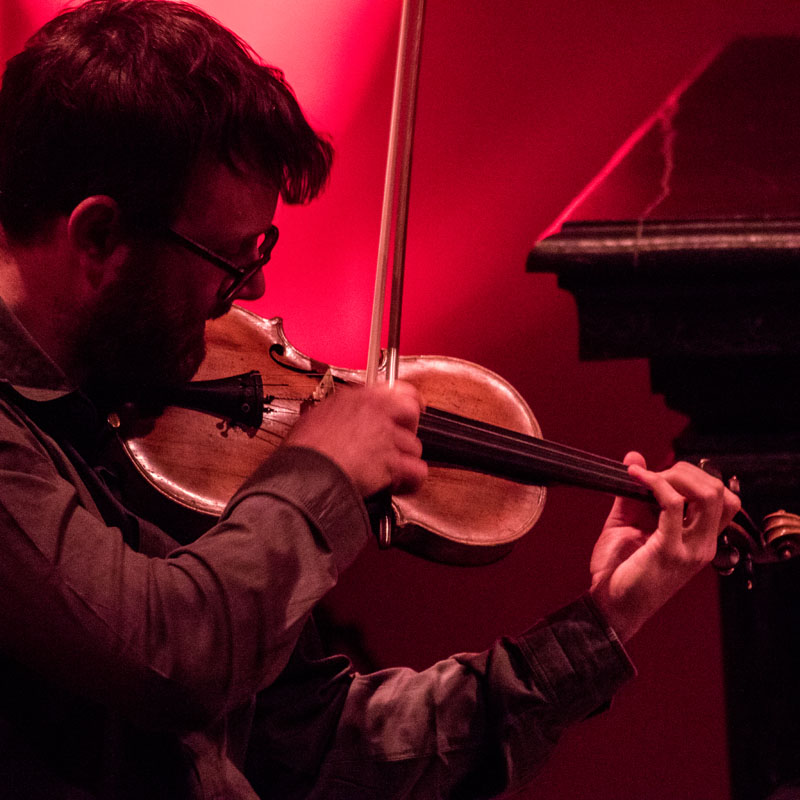
Two violins, one viola and a cello make up the unconventional Kaleidoscope String Quartet who kicked off the first night of Swiss musical contributions at the prestigious Cully Jazz festival. Performing material from their second LP, ‘Curiosity’, their strictly acoustic set up was a perfect fit to the meditative church setting of Le Temple.
I was lucky to bump into violinist Tobias Preisig just before the band came on, he tipped me off with a few insights into the quartet: « I used to play with them in the early days. What they do is technically very hard, you have to be really connected as musicians. Their forte is how they swerve tradition, always looking for new ways to play their instruments ».
@JC-Arav
These words proved a useful interpretation tool. A string quartet inevitably conjures up very rigid ideas of genre, hence what makes this group interesting is how a variety of styles, rhythms and tones are woven into the classical string infrastructure. There’s a feeling of the experimental and the improvised even though they’re clearly a tightly rehearsed unit. Seamlessly the ball is passed from one member to the other as the violin is bent and shaped in all directions. Closing my eyes I could have sworn someone had sneaked in some Japanese pipes during track 3. Quasi pop refrains and folkloric riffs creep up when least expected to add colour and vibrancy.
@J-C Arav
Admittedly, there were moments when some the barren plucking overstayed its welcome, (at a critical point in the musical tension I overheard someone muttering «sounds a bit like a swarm of mosquitoes » ), the bass tones of the cello proving a welcome contrast to the higher pitches of the violins. Possibly too many sparsely clad moments where the rowdy festival crowd outside the venue added more rhythmic movement to the music than the quartet itself.
@J-C Arav
The higlights for me were the warm, swirling melodies that sprang suddenly out of the languid tones. Nothing gives the feeling of lift off and transportation quite like a set of strings, so to hear them setting off into fourth gear with dynamic, frenetic synchronisation was a delight – one track culminating with a joyful vocal shout! Amazing that a string didn’t break in the process.
Some questions and answers with KSQ bandleader and composer, Simon Heggendorn:
Is it important for KSQ to be seen as more than just a classical outfit?
@J-C Arav
Simon Heggendorn: In many ways, yes. From our point of view, a ‘classical’ string quartet mostly interpretes music, whereas we create the music ourselves – rather like a band – and are completely free in the style of interpretation. This gives us the possibility to have a unique ensemble sound defined by the music we write for it.
Did the fact you were playing in a church impact your choice of what material to play?
Simon Heggendorn: Not primarily, maybe the fact we played in a church had an influence on ‘how’ we played (tempi, improvisations, dynamics). We like to play completely acoustic, so Le Temple was a perfect set-up for us.
What’s your relationship to Cully Jazz?
Simon Heggendorn: We played at Cully Jazz in 2012 for the first time. Spots are limited so it’s always very special to be chosen. Since it’s a big festival, you get more press attention than with standard gigs. It’s important to get known on the scene and be exposed to a wider audience, maybe even internationally. Not to mention the unique atmosphere in the village during the festival and the effort of everybody working here – just amazing!
[youtube=https://youtu.be/YTYVvcAsda8]
Band members:
Simon Heggendorn – violin & composition
Ronny Spiegel – violin
David Schnee – viola & composition
Solme Hong – cello
Pianist Stefan Rusconi über die Entwicklung seines Trios und das neue Live-Album mit Fred Frith
Mit Rusconi, seinem Trio mit dem Bassisten Fabian Gisler und dem Schlagzeuger Claudio Strüby, reiht sich der Zürcher Pianist Stefan Rusconi seit bald 15 Jahren in die Riege der Erneuerer des klassischen Klaviertrios im Jazz ein. „Garagen-Jazz“ nannten Kritiker ihren charakteristischen, sehr zugänglichen und bis 2012 bei Sony erscheinenden Mix aus Jazz, Rock und Pop, der Einflüsse aus der elektronischen Musik bis hin zum Noise-Rock einer Band wie Sonic Youth – deren Kompositionen sie 2010 auf dem Album „It’s A Sonic Life“ interpretierten – verarbeitet. Nun ist beim eigenen „Qilin“-Label das Album „Live in Europe“ erschienen, das die gemeinsame Tour mit dem amerikanischen Avantgarde-Gitarristen Fred Frith dokumentiert.
Wie habt ihr und Fred Frith euch gefunden? Stefan Rusconi Wenn man seit ein paar Jahren unterwegs ist, denkt man über Gäste nach. Wir haben uns zuletzt immer wieder mal mit verschiedenen Leuten getroffen und sie zum Mitspielen eingeladen. Bei manchen hat es wider Erwarten nicht gepasst, bei anderen sehr gut. Ich glaube, es geht natürlich um Geschmack und eine ähnliche ästhetische Ausrichtung, aber auch sehr viel um Haltung. Was will ich in der Musik oder sogar im Leben? Was ist es, das mich da fasziniert, was ich leben möchte?
Da seid ihr euch mit Fred Frith ebenso einig wie in der Liebe zu extravaganten Sounds? Stefan Rusconi Ja, da decken wir uns mit ihm exakt. Nicht im Musikalischen, die Musik seiner Bands ist ganz anderes als unsere, und das hat ihn ebenso gereizt wie uns. Aber die Grundeinstellung, auf der Bühne in einem definierten Kontext Dinge zu wagen und so anzuspielen, dass sie scheitern könnten, aber dann doch die Kurve kriegen, dieses Spielerische, das teilen wir. Wir kennen ihn inzwischen besser, er ist öfter bei Fabian in Basel zu Besuch, weil er ja in Basel unterrichtet. Wir spielen dann alle mit Fabians drei Kindern.
Einfach einmal geklingelt
Ihr habt ihn also einfach gefragt, ob er mitmachen will? Stefan Rusconi Naja, es war auch ein bisschen Zufall. Wir waren für unsere „Revolution“-Platte in dem Haus, in dem wir immer aufnehmen. Wir bauen uns da immer selbst ein Studio zusammen und nehmen uns selber auf, ganz ohne diesen Strukturdruck, dass Techniker da sind, die gerne nach Hause möchten. Nur aufnehmen, das ist echt einfach. Wir haben einen Techniker, der richtet uns alles ein, und dann darf er wieder gehen. Das ist für den und für uns schön. In dieser Atmosphäre kam uns dann bei einem Track, bei „Alice In The Sky“, die Idee, dass da der Sound von Fred Frith perfekt passen könnte. Und er arbeitete quasi nebenan. Wir haben geklingelt, ihn gefragt, und er war sofort dabei.
So einfach geht das manchmal. Stefan Rusconi Ja, und das ist schon sehr schön, denn zu der Zeit hatten wir noch einen Manager. Und es lief bei solchen Features normalerweise so, dass der Manager einer Agentur oder irgendeinem Assistenten eine Mail schreibt, und dann die Anfrage hin und her geht. Das ist oft ein bisschen verkrampft und komisch. So hieß es halt: Ja klar, lasst uns ein bisschen spielen gehen, in den Keller runter. So ist das Ganze dann entstanden.
Das war dann direkt vor den Konzerten, bei denen das Album entstanden ist? Stefan Rusconi Nein, wir hatten etwa ein Jahr Pause dazwischen. In der hat Fabian immer mehr Gitarre gespielt, weil wir durch Fred gemerkt hatten, wie sehr wir diesen Sound gebrauchen können. Da kamen wir auf die Idee, mit ihm ein paar Konzerte zu spielen. Es hat sich also ganz natürlich ergeben, war kein Festivalprojekt – was auch toll sein kann -, und war deshalb total entspannt.
Ihr tourt jetzt aber gar nicht mit Fred? Stefan Rusconi Nein, im Moment spielen wir ohne ihn. Ich weiß, das ist jetzt nicht im Sinne eines klassischen Marketings. Aber wir hatten viele Gastfeatures zuletzt, und es ist jetzt schön, mal wieder auf einer Tour zu sein, wo wir mal wieder den ganzen Abend nur für uns haben (lacht).
„Die Schweiz ist so klein“
Du hast in Zürich studiert, Fabian in Basel und Claudio aus Luzern. Wie habt ihr euch denn gefunden, damals vor bald 15 Jahren? Stefan Rusconi Die Schweiz ist so klein. Da ist dann halt die eine Jam Session in Bern, die nächste in Luzern, da bist du eine Stunde unterwegs. In Berlin, wo ich seit einiger Zeit wohne, brauche ich die fast, nur um in den Übungsraum zu kommen.
Kann man sagen, dass die klaren Strukturen, das Rhythmische und das Hymnische eurer alten Alben jetzt in einen starken Kontrast zu Noise- und freien Improvisationsphasen treten? Dass also eure Ästhetik offener ist als früher? Stefan Rusconi Ja, das Gefühl habe ich auch. Das hat sich aber schon mit dem „History Sugar Dream“-Album und in den vergangenen zwei Tour-Jahren so entwickelt. Die Funktion von Fred kann auch immer jemand von uns übernehmen. Ich spiele dann halt mehr Synthi-Bass und Fabian Gitarre. Wir haben dann freilich immer noch den Kontext einer quasi konventionellen Band; bei Fred konnten wir wieder auf unsere Ur-Instrumente zurückkommen, gleichzeitig ergab sich sehr viel Raum, eine Spielwiese zum Ausprobieren. Die Stücke sind verschachtelter. Das ist, wo wir jetzt stehen, denke ich.
Esbjörn Svensson hat von seinem Trio mal gesagt: „Wir sind eine Rock-Band, die Jazz spielt“. Trifft das auch für euch zu? Stefan Rusconi Das würde ich nicht sagen. Der Claudio etwa spielt schon ein sehr distiguiertes Jazz-Schlagzeug. Esbjörn Svensson war so zehn Jahre vor uns, aber wir haben das schon mitbekommen: Es war damals richtig, sich ein bisschen zu distanzieren, zu sagen: Wir sind eine neue Generation, wir schauen auf die Geschichte ein bisschen anders, wir haben andere Höreinflüsse. Aber trotzdem: Für uns bleibt Jazz immer ein wichtiger Bezugspunkt. Es gibt halt viele Schnittstellen, auch bei der Film- und Theatermusik, die ich schreibe. Auch für Claudio und Fabian, wir loten unsere eigene Welt aus, eine sehr bildhafte.
„Wir fühlen uns Leuten verbunden, die an den Rändern arbeiten“
Dazu passen die Licht- und Videobegleitung eurer Konzerte. Ihr denkt Musik wohl sehr interdisziplinär? Stefan Rusconi Ja, wir haben an der „Art Basel“ sogar mit einer Modedesignerin gearbeitet, was aber nichts mit „Germans Next Top Model“ zu tun hatte oder an was man so denken könnte. Wir fühlen uns sehr verbunden mit Leuten, die an den Rändern arbeiten, ob die nun vom Film, von der Kunst oder aus der Mode kommen.
Ihr wart früher bei Sony, jetzt habt ihr „Live in Europe“ wie schon zuvor „History Sugar Dream“ beim eigenen „Qilin“-Label herausgebracht, das auch eine Plattform für befreundete Künstler sein soll. Ist die Zeit der Majors für Jazzmusiker vorbei? Stefan Rusconi Ich weiß nicht. Es muss einfach passen, und bei uns hat’s nicht mehr gepasst. Große Labels schauen sich Musik nach einem Verkaufsargument an, und dann läuft die Maschine Major auch. Es gibt immer noch Jazz, den man so unter die Leute bringen kann. Unser Sonic-Youth -Album wurde damals in den Magazinen besprochen, die beim Friseur liegen. Das ist einfach nicht unser Publikum. Wir haben uns auseinanderbewegt bei dem, was so ein Major gut kann, mit uns aber gar nicht mehr umsetzen konnte. Am Anfang war das noch anders, da war alles noch offen. Das hätte Zukunft haben können, das haben wir dann irgendwie anders entwickeln lassen. Bei einem Till Brönner zum Beispiel, ein toller Musiker, mit dem ich auch schon gespielt habe, kann das prima funktionieren. Für uns aber sind gewisse konkrete Erwartungshaltungen inzwischen ein Horror. Wir fühlen uns sehr wohl, wo wir sind. Auch wenn die Konsequenz ist, dass alles etwas länger dauert, und die Leute dich ein bisschen suchen gehen müssen. Das ist aber auch was Schönes, das hat für uns viel mit einer Lebenshaltung zu tun, bei der wir alles an uns genommen und unter Kontrolle haben. Das färbt auch auf die Musik ab: Es ist dann etwas konsequent Eigenformuliertes.
The EFG London Jazz Festival is a big annual affair running for ten days in the middle of November. This year Swiss and Swiss-based artists, represented by Nik Bärtsch’s Ronin and Mobile, Elina Duni, Samuel Blaser, Basel Rajoub, Marc Perrenoud, Christophe Fellay and the Russian/Swiss collaboration, Jazzator, had well-attended gigs (two were sold out). Phew. Clashing with big-name artists, and the overwhelming number of events can be an issue at such festivals.
The UK can be a tough and weird market
Consider this list of musicians – you couldn’t get a more diverse bunch. There isn’t a Swiss sound like there was a Norwegian one, but the artists are building individual reputations via their quality. The UK can be a tough and weird market, but when people hear something they like they will always give a warm and enthusiastic response.
Nik Bärtsch has a definite fanbase and had a two-day residency at King’s Place as part of the Minimalism Unwrapped season with Mobile Extended and Ronin Rhythm Clan. I saw the latter on the opening night of the festival with an added 3-part brass section and guitarist Manuel Troller, whose sensitive but spirited playing made him a natural part of the clan. I first heard Ronin two years ago in the same hall. I was entranced by their intense yet grooving sound and still am.
You live for such moments with Ronin
There were the sparkles of Nik’s compelling piano work and superior conversations between the Ronin members whilst other phases had the extended band heading into an alt-funk fest with James Brown’s spirit shimmying around the room (well, almost). But ‘Modul 32’ was the highlight for me: Kaspar Rast played a small shaker – no fuss, just simple but killer in its repetition, and clever in the textural canvas it gave saxophonist, Sha, and Manuel on which to paint subtle but deeply personal musical thoughts. You live for such moments with Ronin.
He can evoke memories of J. J. Johnson
The small, shabby Club Inégales is in the bowels of an office building but was set aglow by the quality of the musicians in Samuel Blaser‘s quartet. I’ve already waxed lyrical about the wisdom of pianist Russ Lossing’s playing on Spring Rain, Blaser’s tribute to Jimmy Guiffre. He approaches music as an horizon, it’s not about him, but the entire landscape. I love his touch. Equally fine are bassist Masatoshi Kamaguchi and legendary Gerry Hemingway. A key drummer on the avant garde circuit he caresses and cajoles rhythm out of his kit, able to be economical yet inventive. I particularly like Blaser when he drawls his sound as if part of a deep South funeral march, his soulfulness peeping through. He can evoke memories of J. J. Johnson then veer off elsewhere. It was a promising show cut short by the venue’s format of a final set improvising with the house band.
Luckily I’d got to hear the crisp interplay between this quartet at Adventures in Sound, a feast of music recorded for BBC Radio’s Jazz on 3 programme earlier that day. Each of them also improvised with renowned UK artists such as John Edwards (bass) and rising keyboardist, Elliott Galvin (in photo). Unfortunately it meant I missed Marc Perrenoud‘s set as part of ‘Seriously Talented’ – an afternoon of musicians that had been on Serious’ Take Five course. The Clore Ballroom of the Royal Festival Hall was packed and I heard that Marc’s joyful and bonded trio were an uplifting addition to the line up.
Elina’s expression taps into our universal goosebumps
Elina Duni Quartet are equally notable and their Dallëndyshe album had good reviews, one in The Guardian. Live, Norbert Pfammatter stands out as a sublime drummer. His pulse-like work encourages a sensual interplay between vocals and rhythm. There is an almost mantra-like progression as Elina leads us through the emotive themes of Albanian folk songs. Lyrics such as, “My dear boy in front of the flag oh, my heart’s engulfed in worrisome flames,” (from ‘Me on a Hill, You on a Hill’) feel horribly relevant and even if they weren’t Elina’s expression taps into our universal goosebumps. At first her tone seems warm and smooth, but then a quiver or cry renders me helplessly emotional.
Colin Vallon is simply captivating, and fierce too, making his mark. Along with new, fearless bassist, Lukas Traxel, they stand their ground at the side of Elina’s power. I like the brave move the quartet made of paying great respect to the Albanian folk tradition whilst interlacing it with a form of ethereal jazz. It left the audience spellbound.
It was a similar story for another Swiss émigré. The concert of Basel Rajoub‘s Soriana (‘Our Syria’) was the evening after the Paris attacks and as the review Classical Source expressed, it could not have made for a more eloquent night of music. Made so by the skill and personality of Basel in a magical alchemy with the type of welcoming audiences that can be found in London.
A unique view of free music
Finally, Jazzator are a Russian/Swiss quartet with quirky intentions conveyed with talent. I particularly liked saxophonist Oleg Mariakhin who delicately integrated himself with the vivid vocals of Marina Sobyanina. I sensed underlying eastern folk traditions that had been pulled apart leaving ragged edges and broken threads. Drummer Sergey Balashov on drums and bass player Maximilian Grossenbacher provided an ear-pricking rhythm section, and together Jazzator offered a unique view of free music. One UK reviewer declared them a highlight of the festival.
Update 02.2016: “Soundwave”, the fifth album of US/Swiss trio Grand Pianoramax will be released internationally on 29 January by the German Word and Sound label. Grand Pianormax will also be playing at Cully Jazz Festival on the 08.04.2016. Take this opportunity to read our review again!
Reading over my notes taken while listening to the latest Grand Pianoramax LP just released on Mental Groove Records, the word ‘bouncy’ makes a frequent appearance. This may seem a trite concept to use when describing a band that over the years has become known as the Swiss heavyweight supergroup of post jazz, art rock and hip hop. But it does go to show that the aim of being “lighter, brighter, more fun” – to quote bandleader Leo Tardin – has been accomplished.
A fresh and spontaneous approach
Produced and mixed by ‘pugnacious’ drummer, Dom Burkhalter, the LP was recorded in his studio in an almost live situation with a fresh and spontaneous approach. “We wanted to keep it direct and imperfect somehow: upright piano with creaky pedals, old Fender Rhodes, analogue synths – a chilled attitude, nothing too perfect” explains Tardin. Following on from the Big Easy EP released last May, SOUNDSCAPE continues the “more accessible, less dark” theme that the band had already prepared us for. And why not? Nothing wrong with a bit of sunny Steely Dan-inspired melodies to help the foot-tapping along even when you’re an experimental bunch of musical giants.
There’s as much rule-breaking here as there is on the earlier ‘darker’ albums
But to define the LP simply in terms of fluffy adjectives is far from half the story. Yes, it’s the perfect soundtrack for a sun-roof-down drive along the south of France, but there are challenging twists and turns around every corner. Tempos come and go, unsuspecting chopped up beats hit you in the face, lyrics are sharp and cutting – in brief, there’s as much rule-breaking here as there is on the earlier ‘darker’ albums. Tardin is keen to emphasize: “It’s actually easier to be dark and dramatic than it is to be simple but solid. This is not straight music, there’s experimentation happening on every track. ‘No Doubt’, for example, is essentially a disco track set to a very unusual 7/4 beat”.
Fans of his pretty, lyrical touch will not be disappointed
There’s a good ratio of vocal and instrumental tracks here, the latter giving space to more journeying on behalf of the keyboards. The old Fender Rhodes gets quite a bashing on ‘Tight Rope’ recalling a funky mid 70s Herbie Hancock/George Duke style that suits Tardin rather well and could do with further exploration in the future. Fans of his pretty, lyrical touch will not be disappointed, there are some gorgeous sweeping moments where being carried away on the wave of Tardin’s dexterous style is nothing other than a pleasure.
Charismatic experimentation and radio-friendly sparkle
But essentially, Grand Pianoramax are known for their foray into beats and hip hop which Black Cracker‘s edgy, poetic vocal style encapsulates so well. Totally enveloping and slightly less razor sharp than usual, his timbre is just perfectly suited to the jazzy, understated, choppy groove. Nothing in his lyrical content is ever over-done or insincere. The trio are famous for being a powerhouse live act, all bark AND bite, but on this album the slightly more laid back, crossover attitude is in no way a detracting dumbing down. On the contrary, warm and colorful like the cover, it’s an album full of charismatic experimentation and radio-friendly possibility.
Band line up:
Leo Tardin – piano & keyboards
Black Cracker – vocals
Dom Burkhalter – drums
Swiss trio, Kaos Protocoll are fond of sweeping statements: « Punk-jazz provocators », « No concept as concept », « No track ends as it begins » – these are just some of their cheeky mantras aimed at focussing your listening toward the left-field attitude they strive to cultivate. Freshly released on the Prolog Music label, Questclamationmarks is their second LP which the band describe as being more mature, complex and mysterious than its previous little brother, largely inspired by a recent tour across Eastern Europe and Russia during which they excelled in their live performances, honing their various radical free-jazz, funk and electronic influences.
« Rough in attitude but very well structured »
The driving wheel behind this LP is British pianist and composer, Django Bates, a familiar name on the Swiss German jazz scene since his appointment as Professor of Jazz at HKB school in Bern. His role as producer came about after stumbling across the band during a live gig. Vague inflections of Loose Tubes-inspired mayhem sit well next to the chaotic, busy style that has become the band’s trademark, especially appreciated in live situ. But Prof Bates’ presence is gratefully felt here in the clarity of composition, arrangement and production, resulting in a body of work that is « rough in attitude but very well structured » to quote bass player Benedikt Wieland. The beast has not been totally tamed, just steered in a direction where the mish-mash of influences and barrage of sound have been refined, organised and, to some degree, conceptualized. As a result, it’s more of an unpredictable but elegant carousel ride, rather than a dirty punk collision course.
A good case in point is the track « Ein Stück zum Mitsingen » – lots going on here: crazy bebop singing melodies, pounding wall of sound beats, furious sax à la Greg Osby, all chunky and funky with a definite giggle going on, wrapped up in a perfect package and just the right duration for the laugh to tickle. The sound is enthusiastic, clean and fresh. “Maybe you” is equally playful with its hide and seek game of tempo and style. Unusual, but not unsuitable German rap makes an appearance in “Pathos Ratlos featuring Baze”, a place where wobbly jazz synths and broken beat melodies suit the grave but not too serious poetic narrative. Winding down the ride is the melodica-friendly “Wiegelied”, a warm and soothing lullaby ending their enigmatic, confident journey.
A mercurial piece inspired by their concert in the secret Russian city
A short film has just been released to accompany “In the Secret City”, a mercurial piece inspired by their concert in the secret Russian city, K26. Benedikt Weiland explains: “A man runs through the secret city at night. He sees scenes that are independent of each other, very abstract and without clear identification. For example, a woman holding a flowerpot while a man is floating in the air! A horse, led by a non-recognizable prancing creature, a corpulent elderly man walks out of his house carrying a briefcase. Just as the song unravels different moods, so do the images which feature different worlds that somehow have a relationship and are linked together by the runner. The images are also a little bit chaotic, abstract and analogous to our sound!”
Avec son nom loufoque (PommelHORSE signifie le cheval d’arçon en allemand et s’écrit en minuscule et en majuscule), PommelHORSE fait partie de ces groupes qui empêchent de tourner en rond. Etiqueté jazz, sélectionné à la grande messe de Jazz Ahead l’an dernier, on se demande souvent à l’écoute de sa musique ce qu’il reste de jazz dans cette affaire. Si l’orchestration – basse. batterie, synthétiseurs, clarinette et sax – est relativement orthodoxe, chacun des musiciens semble pris dans la tempête d’un vent libertaire. Musicophages, ils semblent littéralement avoir « bouffé » du rock, du heavy metal, de la dance music de la musique classique et, accessoirement, du jazz.
« Wintermadness », paru en 2014, deux ans après un premier album éponyme, a gagné en intensité et en force. Il nous entraîne dans une drôle de transe hypnotique dans laquelle on s’imagine entrain de « chasser le lapin blanc », d’ouvrir une boîte de Pandore ou de marcher sur un trottoir mouvant. Bref autant d’activités qu’on ne fait pas tous les jours, mais que ces cinq musiciens bernois semblent avoir le don d’évoquer. Leur sensibilité musicale leur permet d’être à fleur de peau des sensations et des émotions les plus subtiles. Avec PommelHORSE, n’hésitez plus et embarquez dans un grand huit musical!
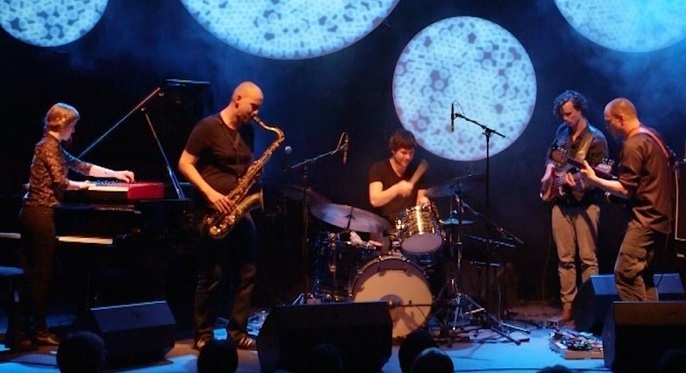
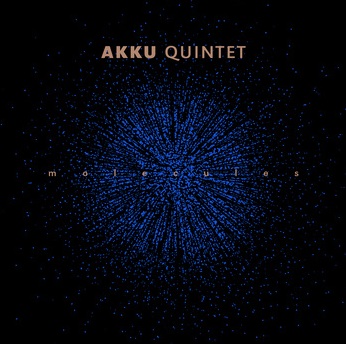
Maja Nydegger’s delicate piano sets up a repetitive motif As readers may know, I like space in music. When I first saw a group of Swiss artists jam with the legendary saxophonist, John Surman, the most impressive were those who knew when to ‘shut it’, to avoid an ugly cacophony. Akku Quintet share this sensitivity and aren’t afraid to step away from the mic. Formed by drummer, Manuel Pasquinelli in 2010, Molecules is the quintet’s second release on Pasquinelli’s own label, Morpheus. It’s an EP more than an album and my sense is they are a band in development.
They carefully creep into each track, as in ‘Fluid’ and ‘Schneeman’ when Maja Nydegger’s delicate piano sets up a repetitive motif, almost acting as a mantra for the piece. This is perfectly balanced by the tenor saxophone of Thierry Lüthy who has an assured and warm tone. His notes waft around the piano melody as if the two are in a quiet conversation. When he builds to a sort of circular breathing in ‘Phase Transitions’ it brings a ripple of excitement.
Guitarist Markus Ischer soars through with a woozy-stoned solo
Despite being Pasquinelli’s project he keeps his crisp beats sparse, playing a supportive role and taking time before coming in with off beats, mini-patterns, or simple, unadorned snare and bass drums. Considering the power an electric bass can wield I was rarely aware of it, Andi Schnellmann excels at enmeshing his sound into the others’ like a soft echo of the music.
The best moments come when they suddenly switch the vibe, such as in ‘Schneemann’ when six minutes in, guitarist Markus Ischer soars through with a woozy-stoned solo and Maja subtly responds with low church organ chords and pithy alien-like beeps. Markus Ischer’s guitar is the strongest voice, it resembles Lüthy’s consciousness but with extra drive. He interrupts ‘Phase Transitions’ with a warbling and affected guitar before changing his touch with metallic stabs and long haunting notes, keeping you entranced.
There’s a need to develop grit and emotional vulnerability
Akku are creating soundscapes with tracks lasting 10 to 15 minutes (apart from the quirky and jaunty, ‘Freeze’), however, at times I wanted them to turn up the intensity, the music could become so laid back I became disengaged. There’s a need to develop grit and emotional vulnerability in their themes and playing. They are working with media artist Jonas Fehr for their live shows and I liked the cover artwork by Sandro Galli. Pasquinelli has invested in a limited edition of hand-printed covers for the vinyl edition but his next focus should be developing the band’s voice so it stays relevant and is not shy of demanding to be heard.
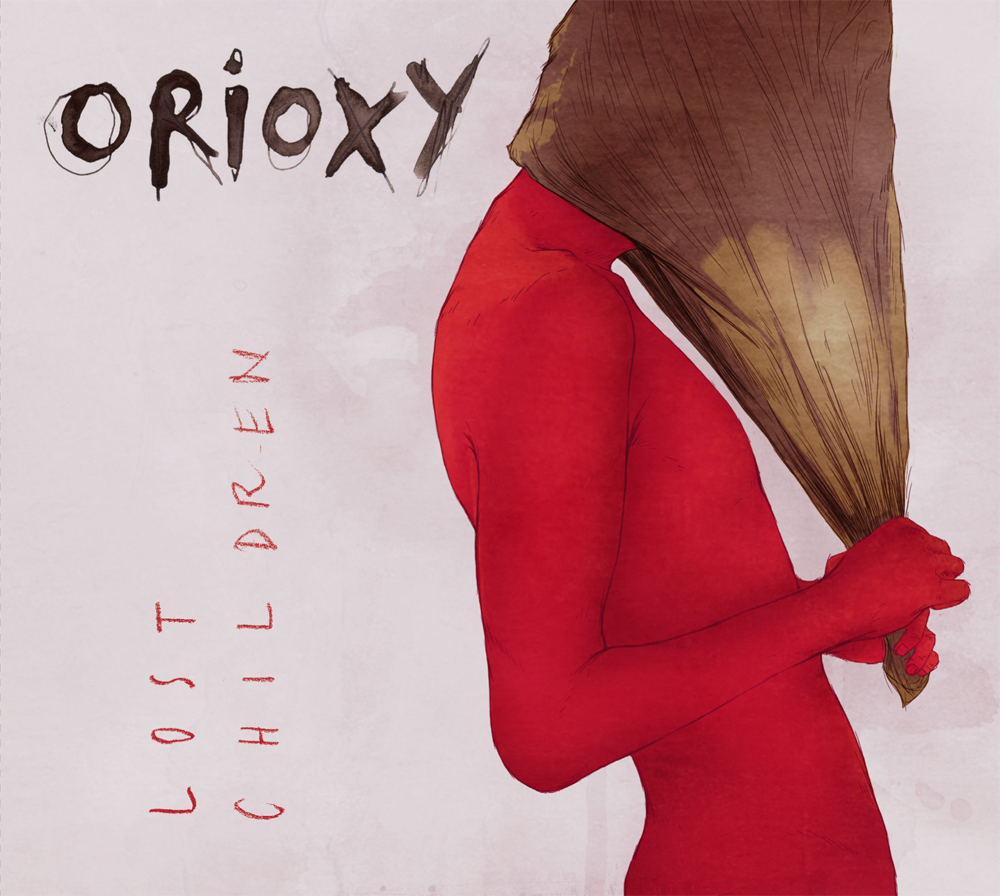
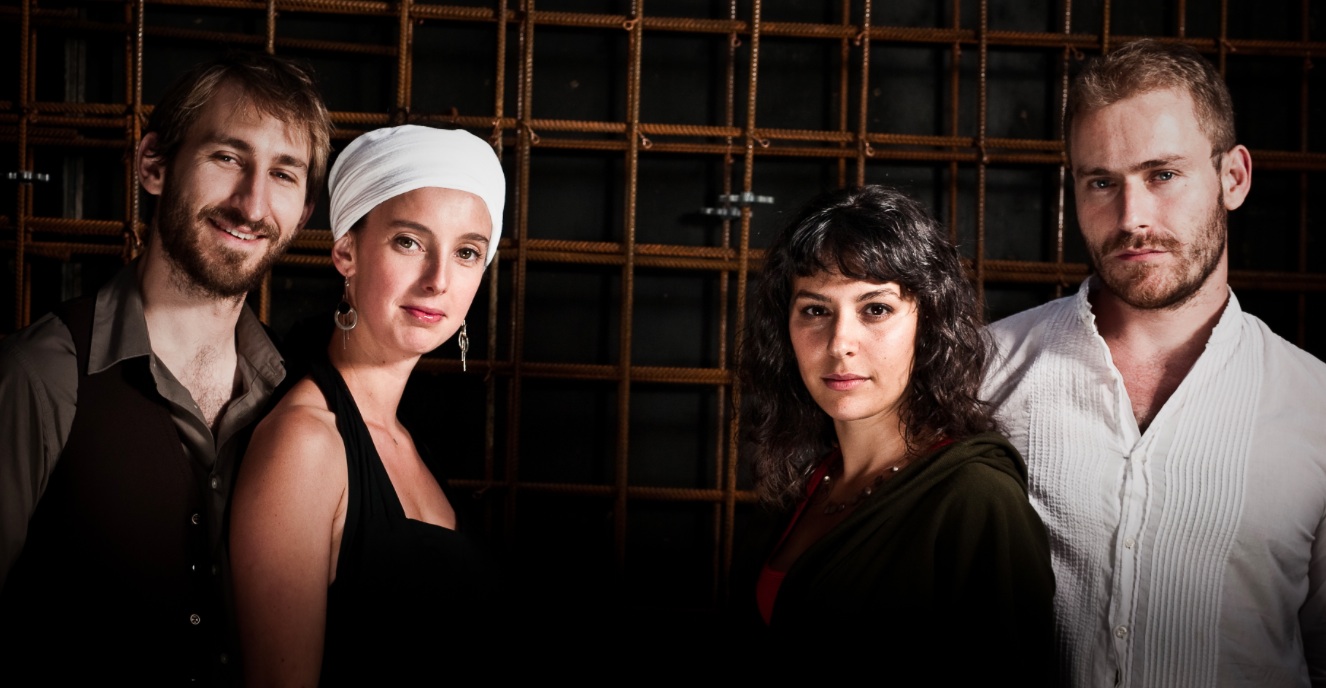
Evocative storytelling perfectly suits this quartet Orioxy’s third album resonates most when it re-imagines the template of simple folk music. Evocative storytelling perfectly suits this quartet of Manu Hagmann on double bass, Roland Merlinc on drums, harpist Julie Campiche and Yael Miller’s voice which at best is pure and unadorned, yet rich with the flavour of her mother tongue, Hebrew.
These stories have a modern accent though. Princeless is Yael’s re-telling of the Cinderella tale, it’s riven with longing and bereft of the happy ending. Soft electronic cries, a melancholic double bass and bare drum taps use a delicacy that binds the whole piece together. Yael Miller’s voice flips between innocence and sensuous knowing throughout, calling on her natural ability for drama. Song of Love is wonderfully accompanied by a percussive typewriter as if the singer is dictating her letter. Some type of squeeze box murmurs sadly and drops of electronica fold into a sympathetic bass solo, all the while the fountain-like harp sparkling light and fresh.
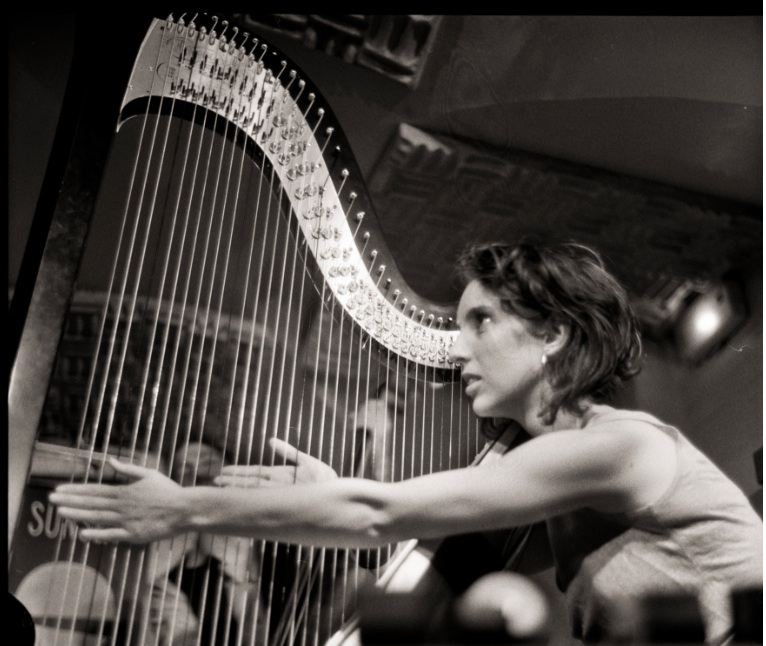
Campiche’s timing seems to fly directly from her heart The harp is really the heroine of this album with Julie Campiche’s myriad of subtle colours and styles perfectly placed again and again. Her solo in Isha is spine-tingling. This track is ranging and borderless, a landscape of yearning vocals and grooving rhythms helped by tape rewinds and effects. At first the harp captivates with Middle Eastern vibes amid deep double bass twangs that fall into dark scrapes, before the harp emerges in a solo full of soul and expression. Campiche’s timing seems to fly directly from her heart.
I don’t mind Yael’s rapping or the use of the Sami Darg Team (rappers from Gaza) on Bachour Meshouamam (A Bored Boy) but it does break the spell of the delicate web of lovelorn melodies. As an album, Lost Children does face the danger of its gentle downtempo mood coming to a lethargic halt so I welcome a bit more spit and verve. However, this is best done with their own instruments such as in Old World. Using a bow on the double bass and suitable electronics they bring a free rock track together without a whiff of lead guitar.
There could be a further clarity of the unique Orioxy sound ‘Music doesn’t have a style,’ Yael sings and it’s true this album does not fit into a neat genre. But music does need to have a clear identity, and although this is a decent third album I feel there could be a further clarity of the unique Orioxy sound gained through exploring further musical depth and developing musicianship and songwriting skills.
Interestingly, Orioxy do a captivating interpretation of Paul McCartney’s Blackbird. But in a way that cover serves to show what a truly stunning song can do. It’s the track that has stayed in my head. Orioxy have a good line up of gigs, often a chance for a band to get to know itself on a deeper level. Grab a chance to hear them play as I’m sure there will be some wonderful moments of magic.
« Vous êtes là pour Blixa ? » se demande-t-on poliment au sein d’une foule compacte d’où émerge, en connaisseur, la tête du géant (au sens propre) de l’électro analogique parisienne, Arnaud Rebotini. Blixa Bargeld, donc, fait l’attraction de ce premier concert de rentrée au centre culturel suisse. Le fondateur d’Einstürzende Neubauten vient prêter sa voix caverneuse au nouveau projet de KIKu, le duo d’indus jazz romand. Mais, comme pour rester fidèle au titre de leur album, « Marcher sur la tête », Yannick Barman, à la trompette et Cyril Regamey, à la batterie, s’amusent d’emblée à brouiller les pistes. En introduisant le slammeur lausanno-new-yorkais Black Cracker et leur guitariste David Doyon, ils démarrent par une impressionnante session de hip hop noise, tandis que sur l’écran sont projetés les dandinements d’une caméra entre deux murs léprosés. Regamey, métronomique sur sa batterie électronique et Barman, toujours entre miaulements de trompettes et mélodies fugaces orchestrent l’ensemble avec toute leur science du micro silence et du groove impossible.
Quelques morceaux plus tard, après cet échauffement emballant, frémissements : « Blixa », impassible dans son costume trois pièces impeccables, débarque en fauteuil. A peine le temps d’un « Bonjour ! » tonitruant, et déjà les meilleurs morceaux de « Marcher sur la tête » s’enchaînent. Avec « Nuages », longue composition labyrinthique, KIKu tempête sur drone; sur « Belehrung », poème de Herman Hesse contée d’une voix profonde, la trompette chuinte du free jazz; sur le classique new wave des Korgis, « Everybody’s got to learn sometime », d’incongrus apartés pop font leur apparition. Parfois, Blixa lâchera un cri ou soulèvera un sourcil rageur, Régamey laissera l’impression d’être le Tony Martin du free-drone; Barman, la trompette dans la bouche, fricotera avec ses machines (la sainte trinité sampler-ipad-laptop). Mais toujours, sauf peut-être pour le final, qui, à défaut de marcher sur la tête, piétinera les tympans, toujours KIKu, Blixa et Black Cracker réussiront à rester imprévisibles.
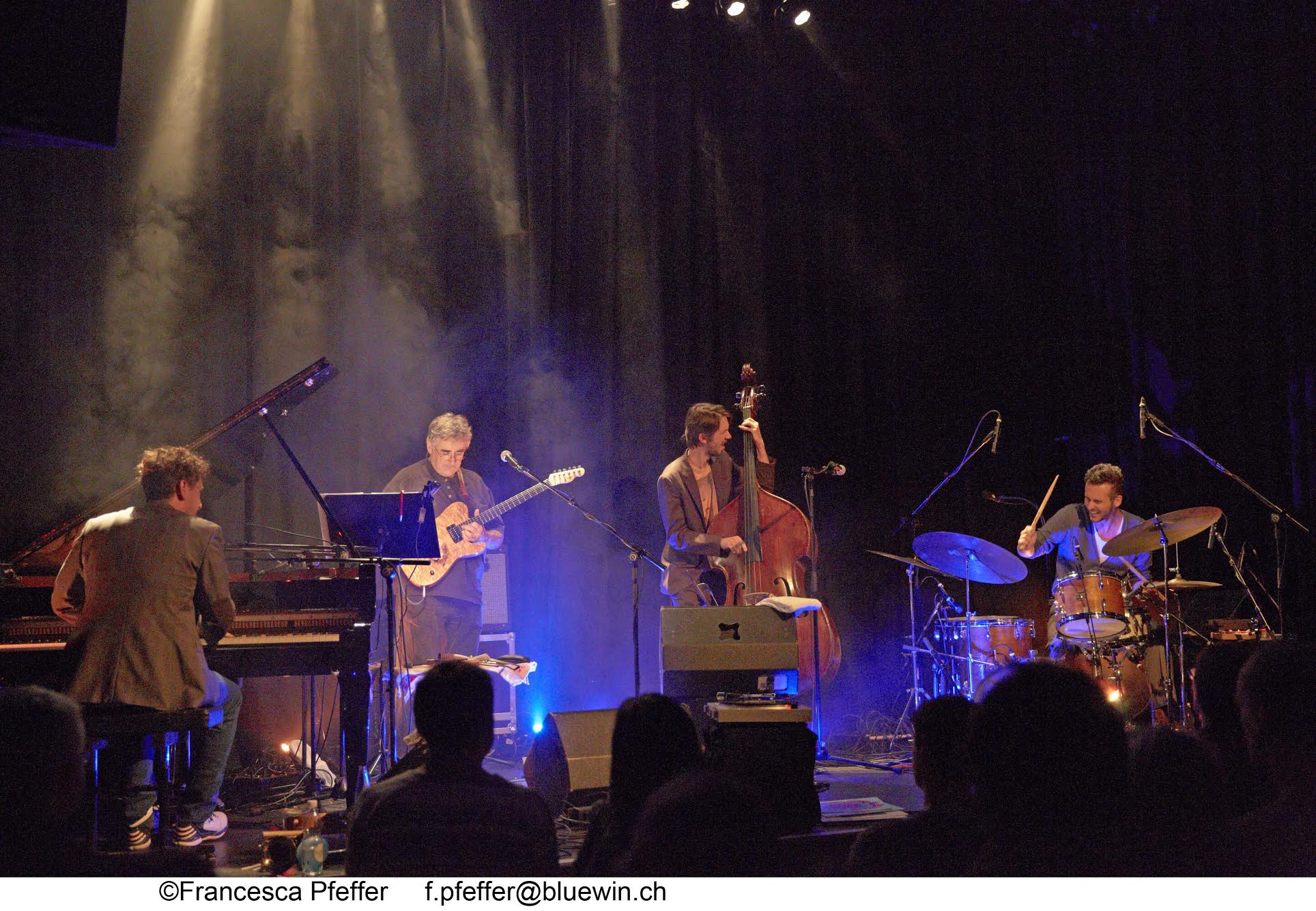
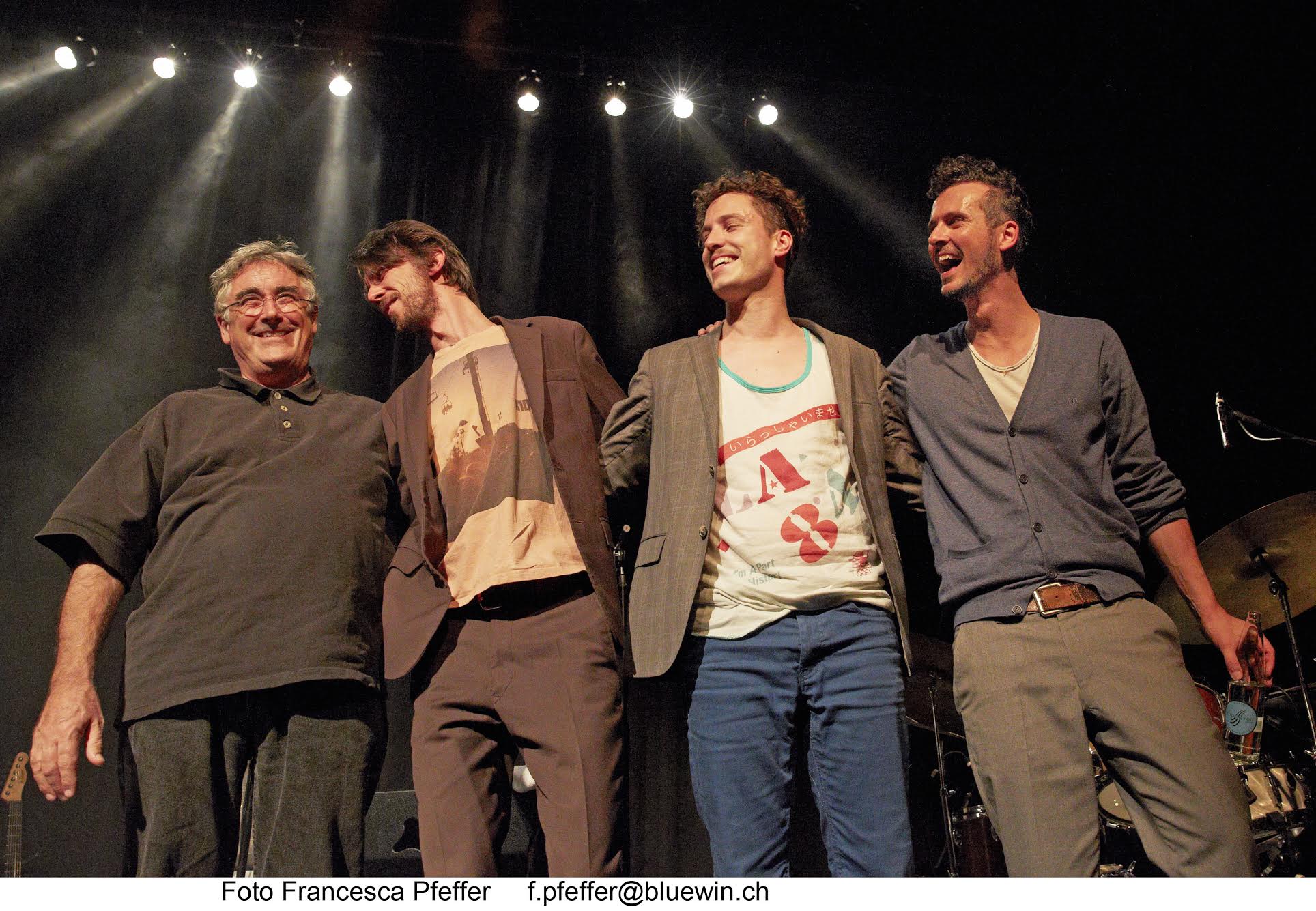 Stefan Rusconi Nein, wir hatten etwa ein Jahr Pause dazwischen. In der hat Fabian immer mehr Gitarre gespielt, weil wir durch Fred gemerkt hatten, wie sehr wir diesen Sound gebrauchen können. Da kamen wir auf die Idee, mit ihm ein paar Konzerte zu spielen. Es hat sich also ganz natürlich ergeben, war kein Festivalprojekt – was auch toll sein kann -, und war deshalb total entspannt.
 The
The 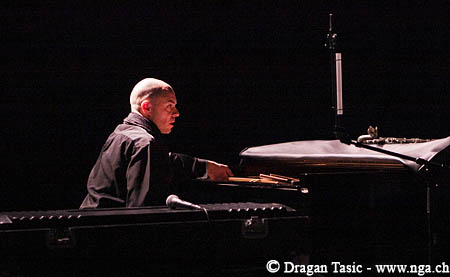 There were the sparkles of Nik’s compelling piano work and superior conversations between the Ronin members whilst other phases had the extended band heading into an alt-funk fest with James Brown’s spirit shimmying around the room (well, almost). But ‘Modul 32’ was the highlight for me: Kaspar Rast played a small shaker – no fuss, just simple but killer in its repetition, and clever in the textural canvas it gave saxophonist, Sha, and Manuel on which to paint subtle but deeply personal musical thoughts. You live for such moments with Ronin.
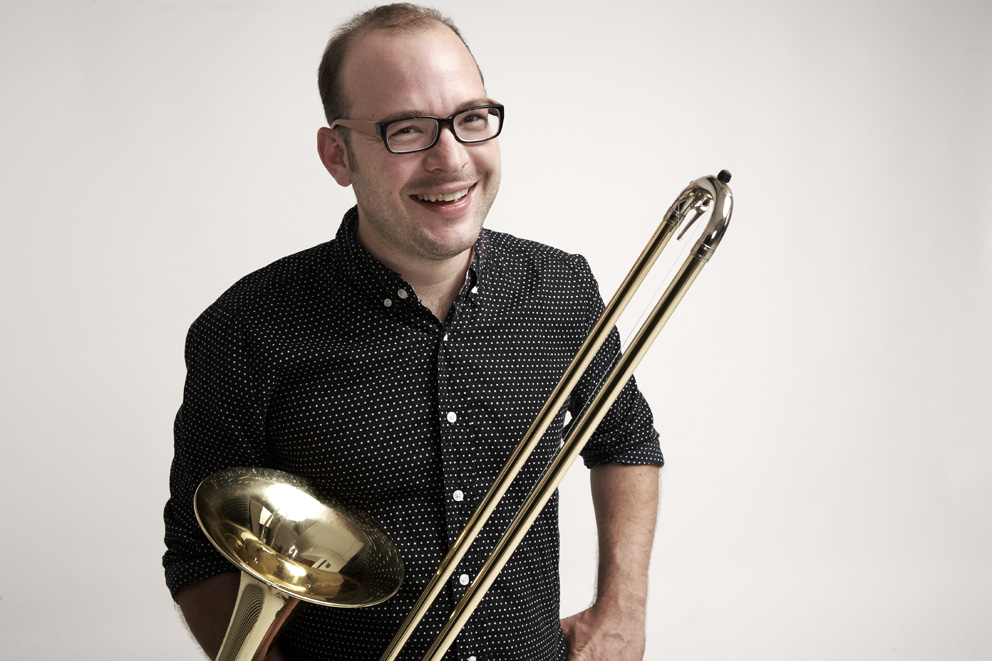 The small, shabby Club Inégales is in the bowels of an office building but was set aglow by the quality of the musicians in

 It was a similar story for another Swiss émigré. The concert of
  Finally,
 Reading over my notes taken while listening to the latest

 Avec son nom loufoque (PommelHORSE signifie le cheval d’arçon en allemand et s’écrit en minuscule et en majuscule),