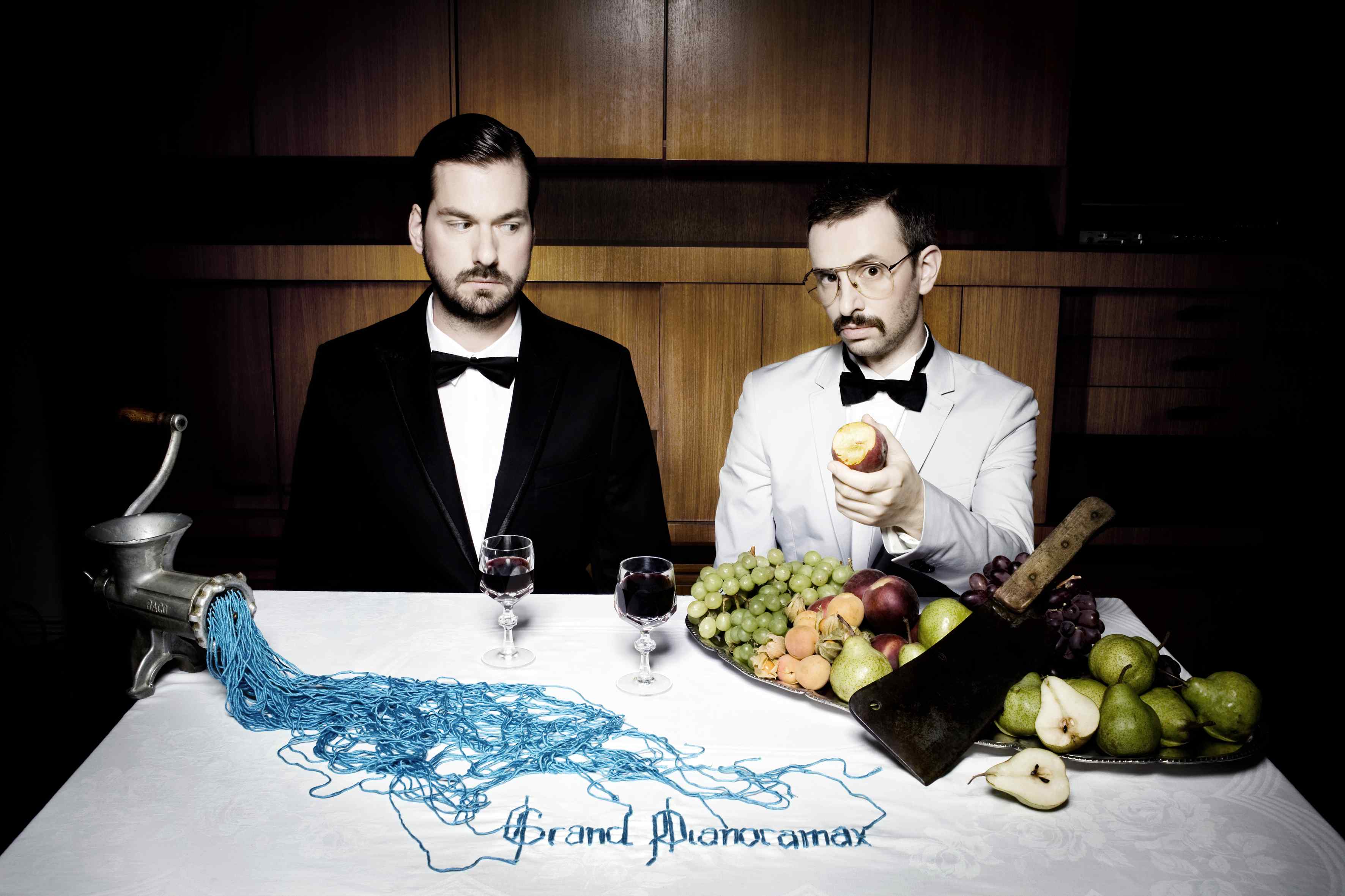
The Who Trio presents “The Who Zoo”

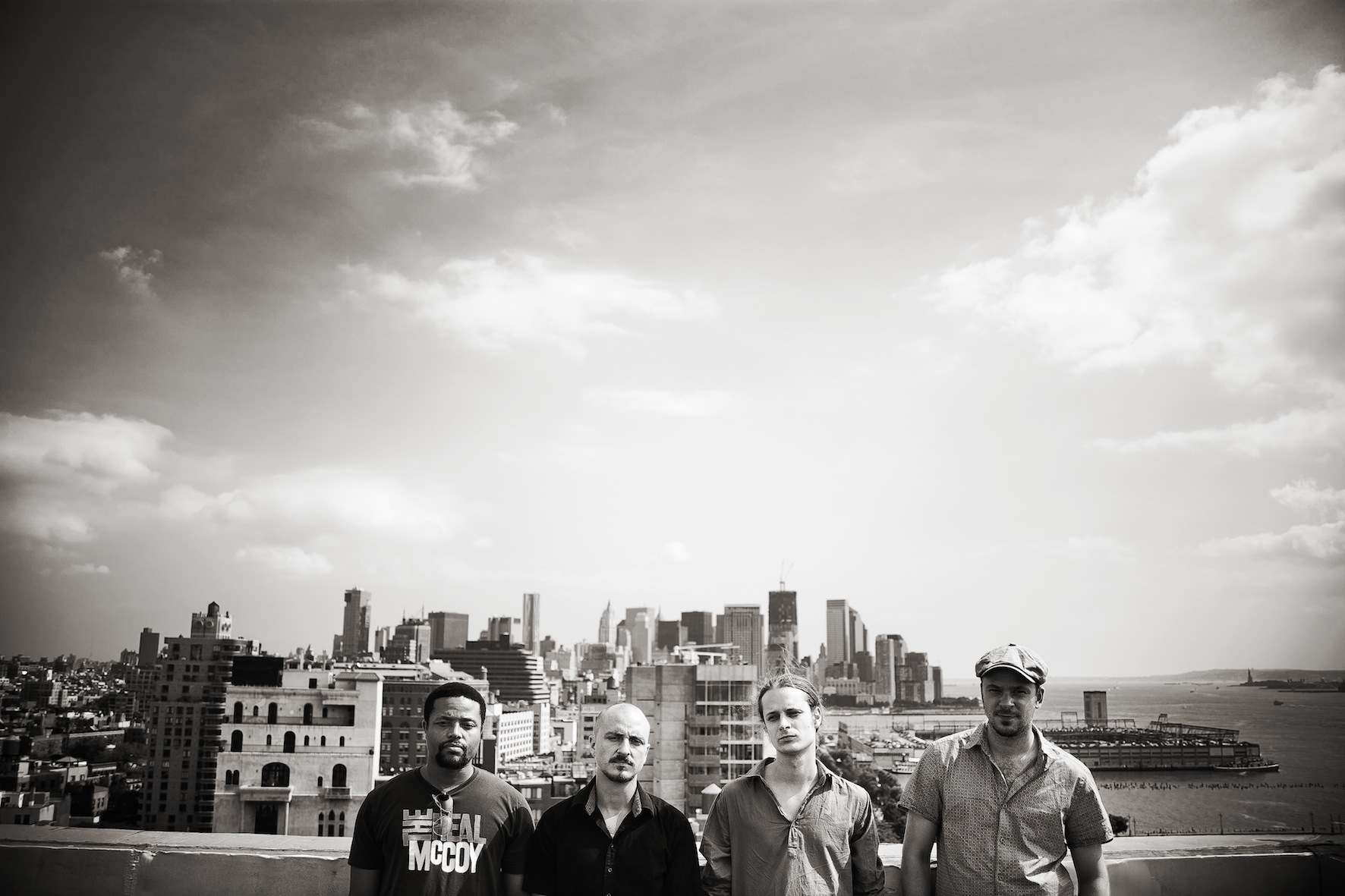
The Who ZooFrom the opening, assured double bass note and urgent cymbal tapping to piano notes peeking shyly out, the quality of The Who Zoo is apparent. The acoustic side of this limited release, double album uphold the trio’s aim: to respectfully work on the art of improvisation.

It sounds like a whale singing of unrequited love

The track Rembellarun stands out for feeling like an actual composition, all be it a dreamlike one with Michel Wintsch at his melancholic best and Gerry Hemingway providing an edge by literally scraping the side of a cymbal. It sounds like a whale singing of unrequited love. Just when the percussive ideas begin to dominate, in rides a piano rebuff – a few notes delivered with confidence and defiance.

Hemingway is a constant imaginative presence sensitively patting out ideas and allowing cymbals to whisper sweet nothings around the hook line in Demmpa. Bänz Oester tunes in, but asserts his own ideas with an intimate knowledge of strokes, caresses and pulls of his bass strings. The inventiveness of his playing borders on the magical.

I like it when they get raw and primal

I didn’t like Sloeperr to begin with, then at nine minutes in, on maybe the third listen, I got goosebumps and almost tears in my eyes as the warped hymn lines and piano poundings, bass vibrations and beatings and rattling drum funk entangled me in an emotional net. I like it when they get raw and primal. They can handle it without resorting to cliché. There are times when I’m certain Hemingway could get in chops and licks but he keeps it organic, all three staying riveted to the present moment. This favouring of the integrated ‘group solo’ enables an uninterrupted onslaught.

Hemingway was a name in the ‘loft scene’ of 1970s New York where free jazz had laid the foundation and was developed by new creatives such as Joe McPhee, Don Pullen and David Murray. His presence is powerful but his depth of experience is matched by Oester and Wintsch. Michel embroiders the music with runs that sound like glass beads scattering and exquisite melodies that seem to trickle from a Peter Greenaway film soundtrack.

How I’d love to hear Oester on electric bass

The second CD is mis-titled as ‘Electric’. I was expecting Wintsch on Fender Rhodes and how I’d love to hear Oester on electric bass, but in fact at the core of these longer improvisations are the acoustic instruments with what seems to be decorative strokes of synthesiser, electric sound effects and noodlings. ‘Acoustic Plus’ may have been a better description.

This release has a multitude of textures and thoughts: dry, scraping grief, assertive fury and vulnerable beauty. Although I wouldn’t have complained at even more variety, it’s quite an achievement to capture improvised music as it should be heard – live. The Who Zoo is an exploration of the potency of improvisation and all venues interested in such music should book them now.

The WHO Trio, The Who Zoo (Auricle Records / Nagual Music)
The Who Trio
Auricle Records
Disque du mois: Lucien Dubuis, le New-Yorkais

Lucien Dubuis Trio coverLucien Dubuis pourrait être né dans le Lower East Side et avoir grandi au Stone de John Zorn où on l’aurait biberonné au son des Beastie Boys. Au lieu de quoi, il a vu le jour à Porrentruy en 1974 et son trio est basé à Bienne. Musicalement, disons que le saxophoniste est New-Yorkais d’adoption. Après y avoir enregistré son précédent album en compagnie de Marc Ribot (Ultime Cosmos, Enja Records, 2009), une résidence new-yorkaise de six mois, en 2011, a accouché du cinquième album de son trio que complètent Roman Nowka (basse et guitare électrique) et Lionel Friedli (batterie). En choisissant un titre, Future Rock, qui sonne comme une déclaration d’intention, Lucien Dubuis continue de creuser le sillon d’un jazz contemporain sur une assise binaire. Si le fond est ambitieux, la forme sait aussi être sexy voire ludique : clins d’oeil exotiques (« Lançang »), surf music (« 4 Wände »), solo de guitare digne de Michael Hampton (« Yiwu Shan »), rap nerveux (« En descendant de la montagne » qui évoque la collaboration Saul Williams-Trent Reznor). Brillant à la clarinette basse, Lucien Dubuis signe un album qui fourmille d’idées. New York n’a qu’à bien se tenir.

Lucien Dubuis Trio, Future Rock (Unit Records)

Welcome to New York Bonaparte!

A gig on a Tuesday night can be a lonely experience in New York City for a punk rocker, who made a name for himself with his large multi-ethnic band across the Atlantic. But Bonaparte aka Tobias Jundt took on that challenge this month at Pianos in the Lower East Side of Manahattan and there already are some signs that Big Apple will enjoy the eccentric and energetic Swiss artist’s solo act and residency there in the coming weeks. The lead singer of the quiet folk band St.Claire opening for him on February 19, told the crowd that it would get loud after her show, because “it’s what happens after 10.00 pm in Manhattan”. And loud it got. Bonaparte, who recently moved to New York to write his 4th album, showed his crowd how to make  punk music with just a guitar, pedals and a computer.

IMG_5939

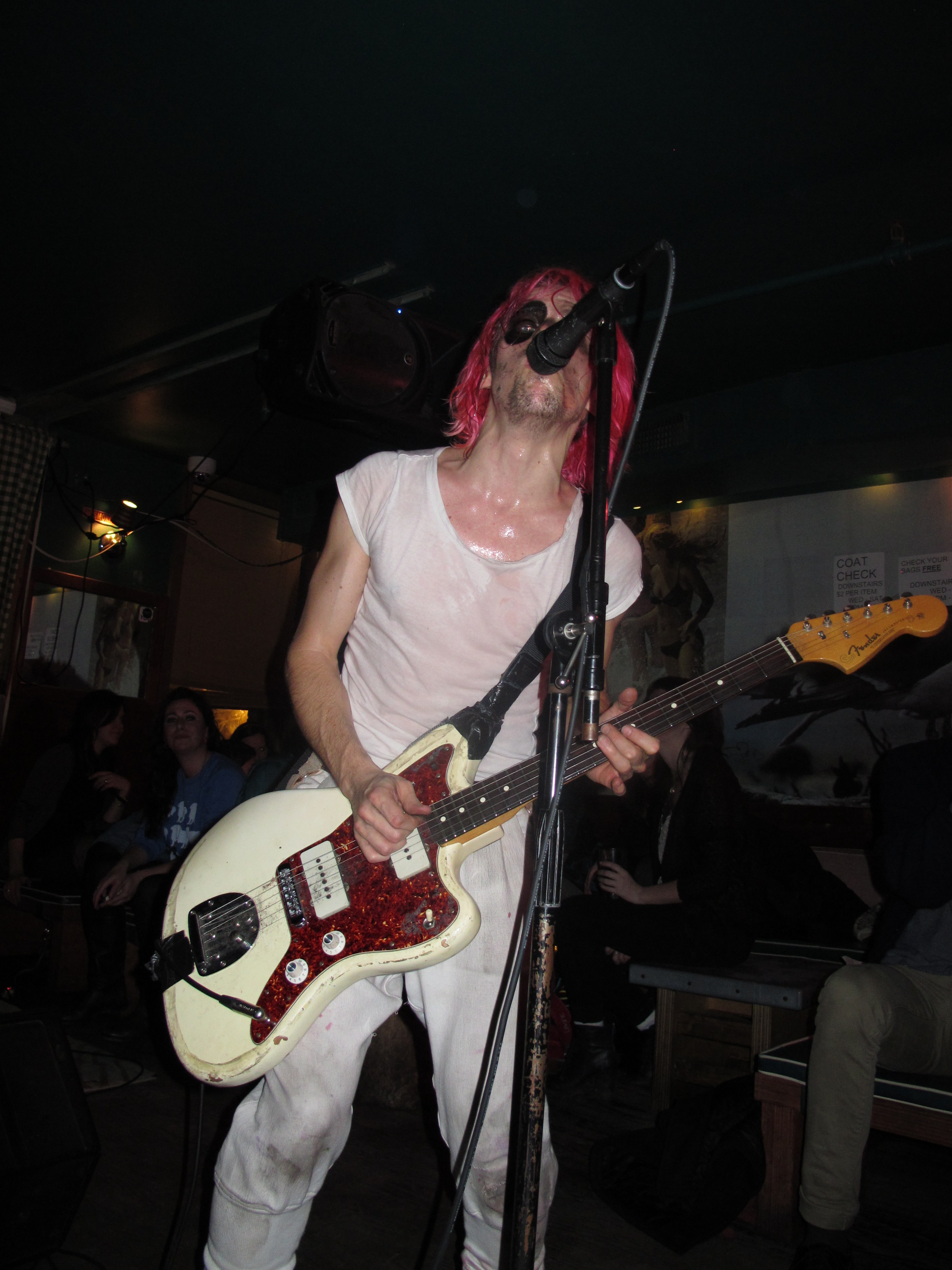
Sporting his usual black eye and half-cow half-horse hat, he quickly brought the crowd to its feet with his powerful guitar riffs and his clever lyrics. He opened his show with”Wrygdwylife” aka “What are you gonna do with your life” and filled the room with his energy. One could feel that the crowd did not know what to think of this wild troubadour throwing lines at her such as “No I’m not drunk, I’m just dancing” and “No I’m not dead, I’m just sleeping”. But one guy started dancing crazily in the packed room and he helped Bonaparte break the ice. The slightly drunk dude, who had never heard of Bonaparte before and kept screaming “that’s right motherf…..r”, got his reward at the end of the gig. The rocker invited  him to his next show at the Knitting Factory in Brooklyn the following night.

[vimeo 60116532 w=500 h=281]

Bonaparte played several songs from “Sorry we are open”, his band’s latest record that will be released in France in April. He also played tracks from his previous record, “My Horse likes you” (2010). Among them was the energetic “Boycott Everything”. “I boycott everything that’s not made by my hands”, he sung. During his 45-minute show, he rolled on the floor, sweat, drank from somebody’s drink, jumped into the crowd, unleashed his guitar, ran with it around the place and ultimately got the crowd to convince the deejay to grant him an encore. He closed his show with the electro-punk track “Computer Love”.

Bonaparte has another solo gig at Pianos on February  26 before being joined by his “divas” at Pianos on March 5 and then moving on to Austin for the cool South by Southwest festival. The whole band will be with Tobias Jundt for 5 shows in Texas and two more shows in New York at Union Hall and Pianos.

Bonaparte’s upcoming shows

BONAPARTE SOLO – “PIANOS RESIDENCY”
26.02 | USA – NYC, Pianos (upstairs) – solo set | 10pm
05.03 | USA – NYC, Pianos (downstairs) – solo w/divas | 10pm
26.03 | USA – NYC, Pianos (downstairs) – solo w/divas | 10pm

BONAPARTE – “MAÑANA FOREVER TOUR” (full band)
13.03 | USA – Austin, SXSW – The Belmont
14.03 | USA – Austin, SXSW – Javelina
15.03 | USA – Austin, SXSW – Iron Bear
16.03 | USA – Austin – Marching Down 6th Street
17.03 | USA – Austin – Gay Bi Gay Gay
18.03 | USA – Brooklyn, NY – Union Hall
19.03 | USA – NYC – Pianos

09.04. | CH – Stans – Musiktage Stans

10.04. | F – Tourcoing – Festival Paradis Artificiels
11.04. | F – Lyon – Marché Gare
12.04. | F – Blois – Chatodo
13.04. | F – Paris – Festival Chorus
14.04. | LUX – Luxembourg – Rockhal
15.04. | D – Münster – Skaters Palace
18.04. | IT – Torino – Lapsus
19.04. | IT – Roma – Traffic
20.04. | IT – Vicenza – E20

No Reduce in New York

Dave Gisler  travels through New York  with a big suitcase full of guitar pedals. The 29 year-old jazzman from Zurich is currently in the United States for a tour with his band, No Reduce. Swissvibes caught up with him on rainy Monday afternoon, 2 hours before his first show in Brooklyn.

Dave, tell us about Jaywalkin’, your band’s first record.

Dave Gisler We recorderd it in New York last year. I got a residency from Switzerland and I stayed here for 4 months. Nasheet Waits is one of my favorite drummers. I called him up and asked him if he would like to play with us (Nasheet Waits is based in New York and drums for Jason Moran & the Bandwagon among others). My friend Christoph Imiger, who plays saxophone, was in New York at the time as well. And Raffaele Bosshard (Bass) flew in from Switzerland to record the album. Christoph, Raffaele and I had written the songs in Switzerland. We rehearsed them for one and a half days here and recorded the record at Nasheet’s studio. It all worked out well. It is really impressive how Nasheet made the songs come alive.

Why did you call your band No reduce as it sounds grammatically incorrect?

Dave GislerIt is always hard to find a band’s name. The “n”, the “r”, the “d” and the “c” are the first letters of our first names. We put them together and then looked for a way to fill up the blanks. We came up with “No reduce” and liked that. We know it’s not grammatically correct as it should be “No reduction”, but we thought this would be a name people would not forget. And it also sums up the music we do. We really go for it. There is a lot of energy coming from our band.

What are your influences?

Dave Gisler I listen to old jazzmen like Coltrane. But I am mostly influenced by the people I play with and by places like New York. It’s always very inspiring to be here. In the last six years I have come to New York every year and I somehow always end up at the 4 a.m. live session at the Fat Cat. I also love going to the Stone, John Zorn’s club. I have alwas loved both classical jazz and free jazz.

You only have played a couple of gigs before doing this US tour. How important is it for you to play at several venues in New York and Pittsburgh?

Dave GislerIt is a very important experience for us. We try to see if our music works. This tour will make us grow as musicians.

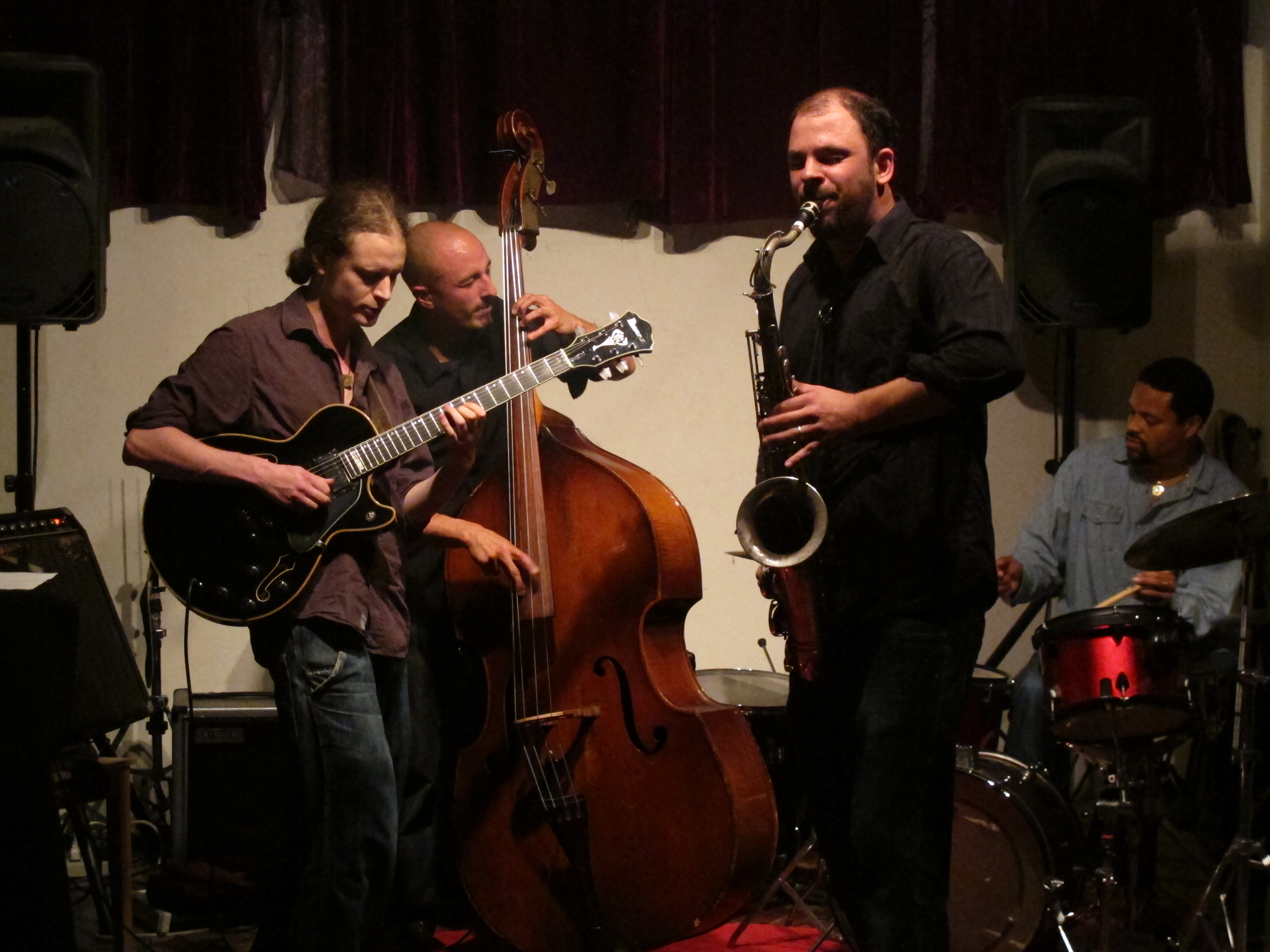
No Reduce on stage at Douglass Street Music Collective in Brooklyn on Septembre 18, 2012.

No reduce’s US tour

18.9. Douglass Street Music Collective, Brooklyn/NY

19.9. Seeds, Brooklyn, Brooklyn/NY

20.9. The Shrine, New York City

21.9. Ibeam, Brooklyn/NY

22.9. Dance Alloy Theater, Pittsburgh/PA

Jaywalkin’ was released on NWOG Records.

For more information: www.noreduce.com

Grégoire Maret Quartet at Jazz Standard in New York

Image

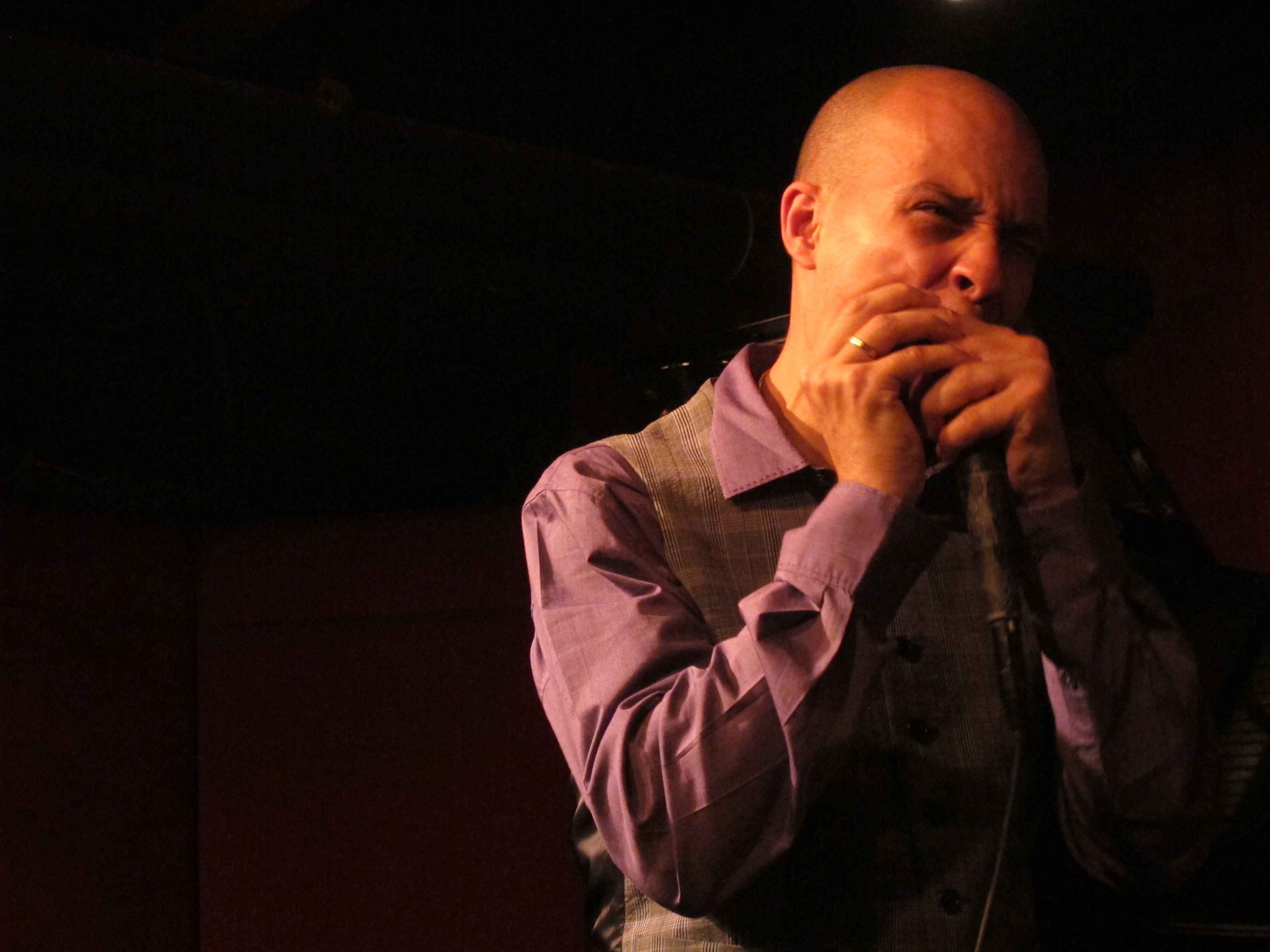
Herbie Hancock once called Grégoire Maret “one of the most creative musicians  around”. The Geneva-born harmonica sensation lived up to his reputation last week at Jazz Standard, one of the best venues for jazz In New York. He took the stage with his band for a series of 8 shows between May 3rd and May 6th to present his long anticipated self-titled debut album, after spending the past 10 years playing virtually every musical style with many different artists such Pat Metheny, Youssou N’Dour or George Benson.

On May 4th, Grégoire Maret joked on stage about an album, which has been “extremely long to accomplish” . But this sleek musical journey, on which he is joined by harmonica legend Toots Thielemans for a beautiful cover of Ivan Lins’ “O Amor E o Meu Pais”, was definitely worth the wait. With the impeccable support of Frederico Gonzales Peña on piano, an artist he calls his “brother from another mom”, the sytlish Clarence Penn on drums percussions, and the extremely talented Ben Williams on bass, Grégoire Maret offers a modern mix of jazz, soul, blues, pop and Brazilian sounds.

He opened up the show with the percussion-driven Crepuscule Suite, in which his passionate and physical harmonica solos set the tone of the performance. His duet with Frederico Gonzales Peña on “My Loved Ones” was a moment of sheer magic. The Swiss artist was then joined on stage by Raul Midon, a blind guitarist known among other talents for his velvet voice and vocal mouth trumpet sounds. Midon, who worked with Sharika, Stevie Wonder and Little Louie Vega, makes a cameo appearance  alongside Cassandra Wilson on Maret’s album.

At Jazz Standard, Raul Midon provided the vocals for an inspired cover of “The Secret Life of Plants” by Stevie Wonder. On the atmospheric Manha du Sol, he echoed Maret’s harmonica with his vocal mouth trumpet sounds before a sublime finale that lit up the stage and galavanized the crowd. That night, Grégoire Maret powerfully proved once more that the underutilized harmonica can be one of the most beautiful instruments in jazz.

Grand Pianoramax : retour au bercail

Qui dit Leo Tardin pense immédiatement piano et slam. Au sein de son laboratoire Grand Pianoramax, le piano est décliné sous de multiples formes: Fendher Rhodes, Moog ou tout autre clavier aux sons intéressants. En quelques années, Leo Tardin a ainsi su intéresser autant les amateurs de jazz que d’electro. Signé sur le prestigieux label américain ObliqSound, il fit des débuts remarqués. Sur le premier volume de Swiss Vibes figurait un morceau extrait de son deuxième album,  «Blue Gold»: des rythmes quasi tribaux sur lesquels se calait la voix féminine de Celena Glenn.
Un morceau à découvrir ci-dessous tel que joué au Festival Jazz à la Villette avec Black Cracker dans le rôle du slammer et son compatriote Domink Burkhalter à la batterie.

[youtube=https://www.youtube.com/watch?v=y0OQhX2S0KQ]

Dans la même formation, Leo Tardin a poussé ses expérimentations sonores au maximum au Cully Jazz festival. Rencontré au Buffet de la Gare de Lausanne quelques jours avant que ne démarre sa tournée suisse. Léo Tardin fait le point.

Votre dernier album, «Smooth Danger», semble encore plus expérimental que les deux premiers?
Leo Tardin. J’ai déménagé à Berlin pour créer ce nouvel album. J’avais besoin d’une nouvelle source d’inspiration. J’ai passé plusieurs années à New York. J’ai évolué au sein de la scène jazz. Là j’ai effectué un changement de décor et d’ambiance radical ! J’ai enregistré à la Funkhaus de Berlin. Cette grande bâtisse-bunker abritait les studios de la radio allemande. Il s’en dégage une ambiance très industrielle. Les couloirs étaient tellement grands qu’on a songeait à utiliser une trottinette pour aller aux toilettes! L’album est plus produit, il est empreint d’un humour noir un peu grinçant. Mais maintenant, j’ai déjà évolué vers une autre direction : revenir à une forme de piano plus universel, revenir à quelque chose de plus essentiel, sans travail de sound design.

Vous collaborez avec Black Cracker et Mike Ladd. Pourquoi ces deux slammers-là en particulier ?
Leo Tardin Je voulais amener une dimension de plus à cet album. Il y a une énorme scène de slam et de poésie à New York. Je m’y rendais régulièrement. J’appréciais beaucoup ce qui se faisait sur scène, mais je ne trouvais pas mon compte au niveau des textes. Tout le monde me parlait de Black Cracker, mais il était très difficile à joindre. Le genre de personne qui n’a pas de téléphone et pas d’adresse fixe. Finalement nous nous sommes rencontrés. C’était vraiment le choc des cultures : moi le petit blanc qui vient du jazz et lui le Noir d’Alabama issu du milieu des arts visuels et du slam. J’ai tout de suite adoré ce qu’il faisait. Ça allait plus loin. Son univers est plus abstrait. Il est incroyablement fort au niveau de la forme et il a un charisme dingue. C’est lui qui m’a ensuite présenté Mike Ladd et Karsh Kale.

Dès la sortie de votre premier disque, certains de vos morceaux ont été téléchargés à plus de 40’000 exemplaires sur ITunes. Comment expliquez-vous ce succès numérique ?
Leo Tardin Je n’ai eu qu’un morceau «Starlite» qui a été un succès en termes de téléchargement. Je ne sais pas pourquoi. Le fait que je sois sur le label ObliqSound, qui était alors très présent aux Etats-Unis a très certainement aidé. Cela dit la vie de la musique sur Internet est parfois drôle. J’ai un autre morceau, «The Race», un morceau instrumental batterie-piano, pas forcément super facile d’accès qu’on retrouve sur pas mal de vidéos de vacances de particuliers. Je ne sais pas comment il a atterri là, probablement à cause d’un «free download». C’est drôle de voir un morceau créé dans sa chambre à coucher à New York se met soudain à vivre sa vie. Sur mon dernier album, il y aussi ce morceau «Infidel». Il a inspiré à une artiste berlinoise une vidéo entière de dessins. J’ai trouvé ça génial.

[youtube=https://www.youtube.com/watch?v=3oZhG12zZAU]

Grand Pianoramax on Tour
(Leo Tardin : keyboards, Black Cracker (vocals, Dom Burkhalter (drums)

Vevey, Espace Guinguette, 15 novembre
Zurich, Exil (avec en invité spécial Mike Ladd), le 17 novembre
Bâle, Erster Stock, le 18 novembre
Nyon, Usine à Gaz, le 19 novembre
Milan, Cox 18, le 25 novembre
Sierre, Hacienda, le 26 novembre
Berlin, Kantine am Berghain, le 3 décembre