Swiss artists @EFG London Jazz Festival 2015

EFG_London Jazz logoThe EFG London Jazz Festival is a big annual affair running for ten days in the middle of November. This year Swiss and Swiss-based artists, represented by Nik Bärtsch’s Ronin and Mobile, Elina Duni, Samuel Blaser, Basel Rajoub, Marc Perrenoud, Christophe Fellay and the Russian/Swiss collaboration, Jazzator, had well-attended gigs (two were sold out). Phew. Clashing with big-name artists, and the overwhelming number of events can be an issue at such festivals.
The UK can be a tough and weird market

Consider this list of musicians – you couldn’t get a more diverse bunch. There isn’t a Swiss sound like there was a Norwegian one, but the artists are building individual reputations via their quality. The UK can be a tough and weird market, but when people hear something they like they will always give a warm and enthusiastic response.

Nik Bärtsch has a definite fanbase and had a two-day residency at King’s Place as part of the Minimalism Unwrapped season with Mobile Extended and Ronin Rhythm Clan. I saw the latter on the opening night of the festival with an added 3-part brass section and guitarist Manuel Troller, whose sensitive but spirited playing made him a natural part of the clan. I first heard Ronin two years ago in the same hall. I was entranced by their intense yet grooving sound and still am.

You live for such moments with Ronin
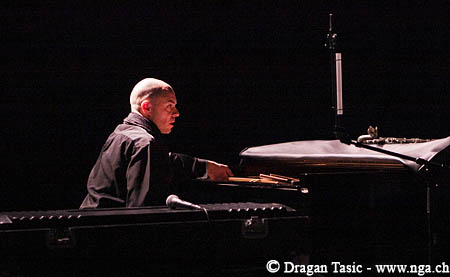
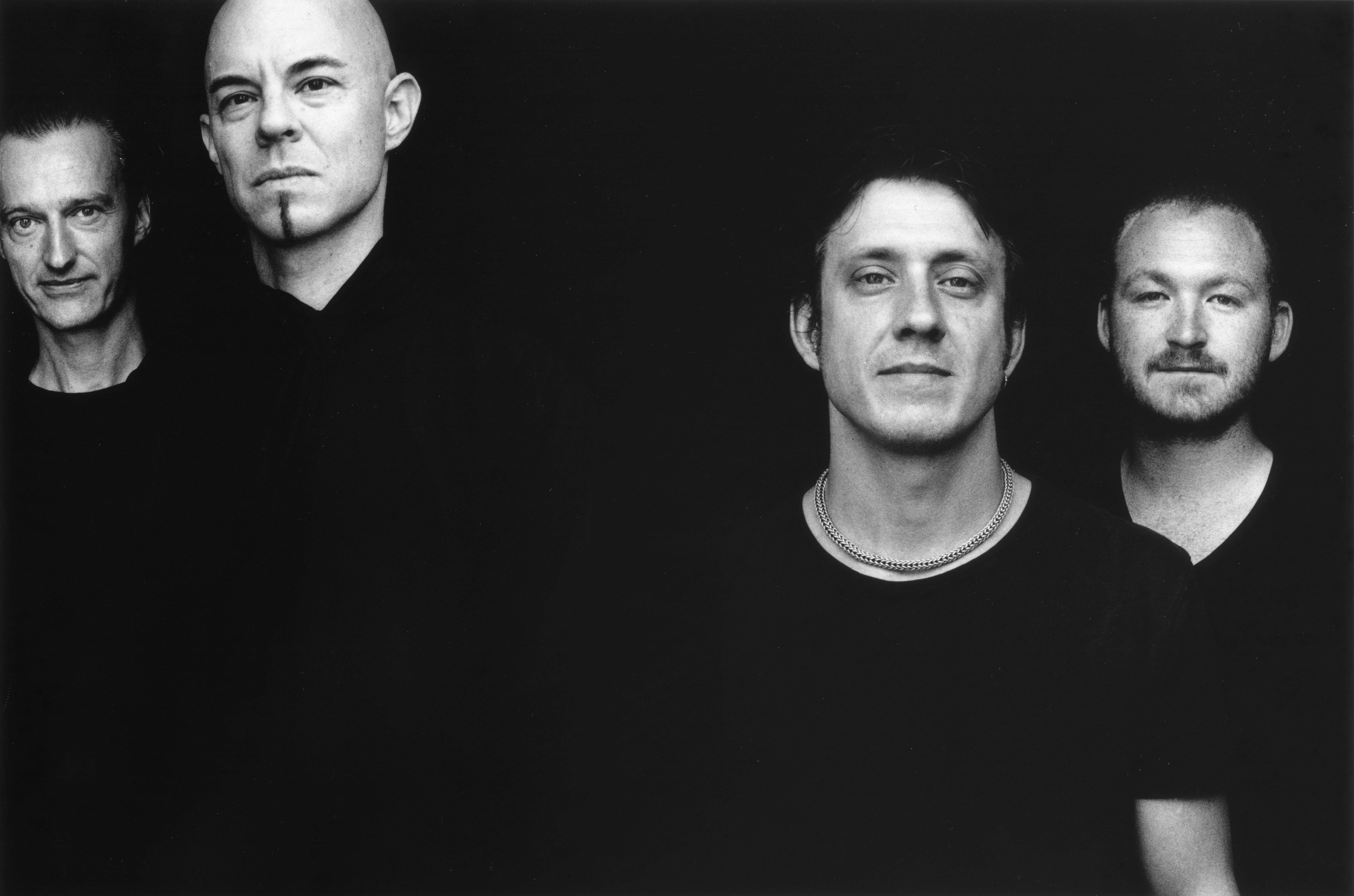
nik_baertschs_feat_roninThere were the sparkles of Nik’s compelling piano work and superior conversations between the Ronin members whilst other phases had the extended band heading into an alt-funk fest with James Brown’s spirit shimmying around the room (well, almost). But ‘Modul 32’ was the highlight for me: Kaspar Rast played a small shaker – no fuss, just simple but killer in its repetition, and clever in the textural canvas it gave saxophonist, Sha, and Manuel on which to paint subtle but deeply personal musical thoughts. You live for such moments with Ronin.

He can evoke memories of J. J. Johnson
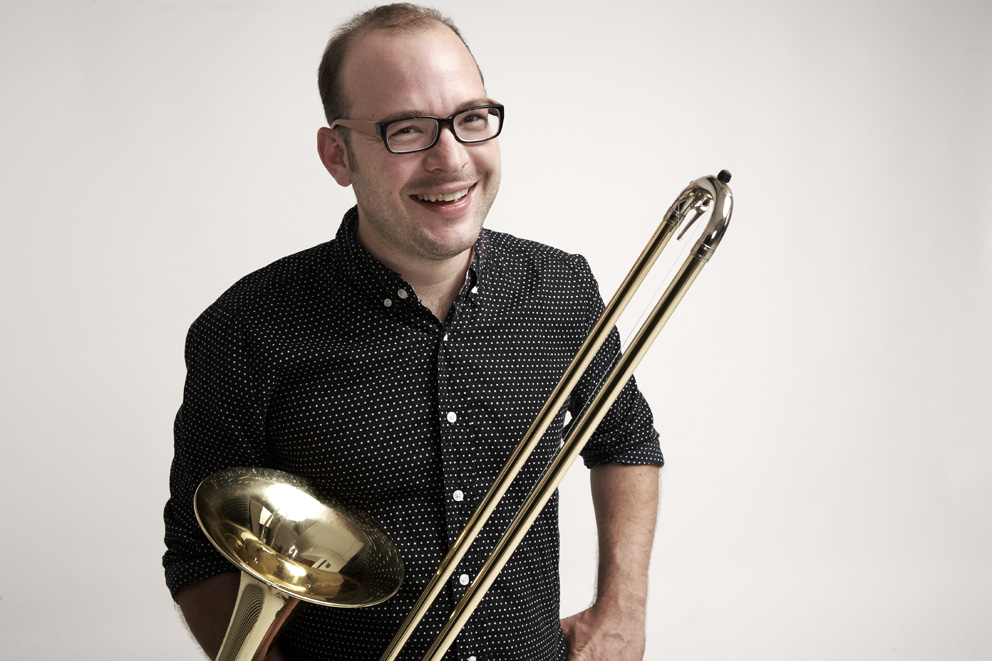
©Alex TroeschThe small, shabby Club Inégales is in the bowels of an office building but was set aglow by the quality of the musicians in Samuel Blaser‘s quartet. I’ve already waxed lyrical about the wisdom of pianist Russ Lossing’s playing on Spring Rain, Blaser’s tribute to Jimmy Guiffre. He approaches music as an horizon, it’s not about him, but the entire landscape. I love his touch. Equally fine are bassist Masatoshi Kamaguchi and legendary Gerry Hemingway. A key drummer on the avant garde circuit he caresses and cajoles rhythm out of his kit, able to be economical yet inventive. I particularly like Blaser when he drawls his sound as if part of a deep South funeral march, his soulfulness peeping through. He can evoke memories of J. J. Johnson then veer off elsewhere. It was a promising show cut short by the venue’s format of a final set improvising with the house band.


marc_perrenoud_feat_marc_perrenoud_trio

Luckily I’d got to hear the crisp interplay between this quartet at Adventures in Sound, a feast of music recorded for BBC Radio’s Jazz on 3 programme earlier that day. Each of them also improvised with renowned UK artists such as John Edwards (bass) and rising keyboardist, Elliott Galvin (in photo). Unfortunately it meant I missed Marc Perrenoud‘s set as part of ‘Seriously Talented’ – an afternoon of musicians that had been on Serious’ Take Five course. The Clore Ballroom of the Royal Festival Hall was packed and I heard that Marc’s joyful and bonded trio were an uplifting addition to the line up.

Elina’s expression taps into our universal goosebumps

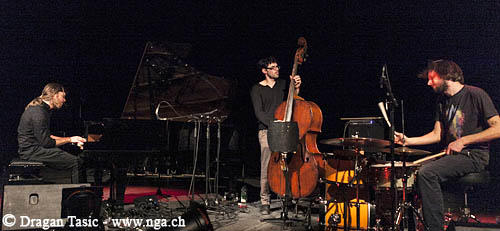
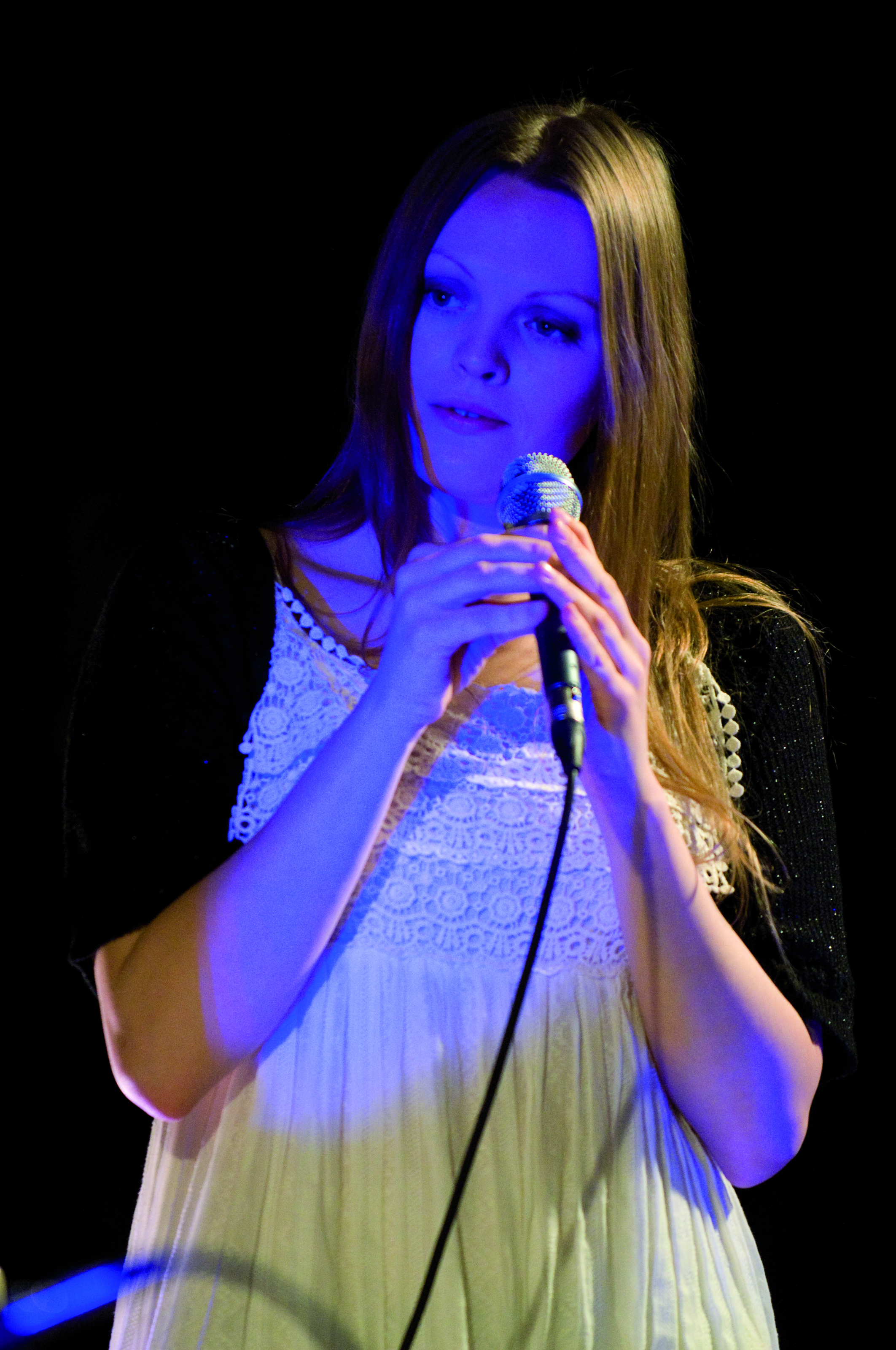
Elina Duni Quartet Elina Duni Quartet are equally notable and their Dallëndyshe album had good reviews, one in The Guardian. Live, Norbert Pfammatter stands out as a sublime drummer. His pulse-like work encourages a sensual interplay between vocals and rhythm. There is an almost mantra-like progression as Elina leads us through the emotive themes of Albanian folk songs. Lyrics such as, “My dear boy in front of the flag oh, my heart’s engulfed in worrisome flames,” (from ‘Me on a Hill, You on a Hill’) feel horribly relevant and even if they weren’t Elina’s expression taps into our universal goosebumps. At first her tone seems warm and smooth, but then a quiver or cry renders me helplessly emotional.

Colin Vallon is simply captivating, and fierce too, making his mark. Along with new, fearless bassist, Lukas Traxel, they stand their ground at the side of Elina’s power. I like the brave move the quartet made of paying great respect to the Albanian folk tradition whilst interlacing it with a form of ethereal jazz. It left the audience spellbound.

richmixbaselrajoubnov15_26It was a similar story for another Swiss émigré. The concert of Basel Rajoub‘s Soriana (‘Our Syria’) was the evening after the Paris attacks and as the review Classical Source expressed, it could not have made for a more eloquent night of music. Made so by the skill and personality of Basel in a magical alchemy with the type of welcoming audiences that can be found in London.


 A unique view of free music

Jazzator2_M&FNov2015Finally, Jazzator are a Russian/Swiss quartet with quirky intentions conveyed with talent. I particularly liked saxophonist Oleg Mariakhin who delicately integrated himself with the vivid vocals of Marina Sobyanina. I sensed underlying eastern folk traditions that had been pulled apart leaving ragged edges and broken threads. Drummer Sergey Balashov on drums and bass player Maximilian Grossenbacher provided an ear-pricking rhythm section, and together Jazzator offered a unique view of free music. One UK reviewer declared them a highlight of the festival.

 

2e Grand Prix suisse de musique : derrière les feux de la rampe

10835315_427611730733058_1175974439816194667_oAlors que la remise du Grand Prix suisse de musiques aura lieu le 11 septembre à Bâle, Swiss Vibes s’interroge. Et revient sur le casse-tête auquel est confronté tout musicien suisse cherchant à mener une carrière professionnelle. Une série en plusieurs épisodes dont voici le premier chapitre.
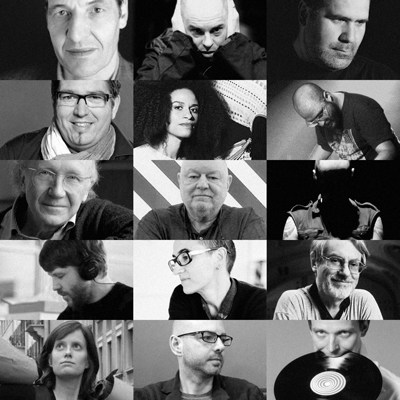
En 2014, le Grand Prix suisse de musique, organisé par l’Office Fédéral de la Culture (OFC) avait récompensé le leader des Young Gods et pionnier des musiques électroniques Franz Treichler. C’était une première, qui plus est pour une figure de l’underground. L’événement avait largement été plébiscité par le secteur musical, d’ordinaire habitué à travailler beaucoup, longtemps, et pour peu. La démarche, qui est reconduite de façon pérenne, s’avère en effet généreuse : 25’000 CHF par nomination (15 en tout) et un prix de 100’000 CHF pour le lauréat, tous étant sélectionnés par des comités d’experts musicaux venus des quatre coins du pays.

82219f7ff14253cffc2f6b56aeff241b_f128

 Une récompense qui soulève beaucoup de questions

La communication du Grand Prix suisse de musique est classe sans être pompeuse, son organisation sérieuse mais décontractée, il y a de quoi impressionner.

Comme l’an dernier, sont nominées 15 personnalités ayant pour horizon commun le territoire helvétique, la pratique musicale et un succès d’estime plus ou moins national. Le site du Grand Prix suisse de musique, offre une bonne porte d’entrée à qui souhaiterait découvrir ces musiciens. A l’orée de cette deuxième édition, il semble intéressant de mener une réflexion sur les enjeux d’un tel prix et les problèmes qu’il soulève. Sous son beau vernis, quelques choses moins reluisantes apparaissent,

Une sélection compliquée au sein d’une scène protéiforme

« Le Grand Prix suisse de musique a pour objectif de récompenser la création musicale suisse exceptionnelle et novatrice et de la mettre en lumière. » Si l’intention est louable, elle n’en est pas moins brumeuse. Comment faire une sélection exhaustive parmi le foisonnement de genres musicaux que vit notre époque, dans une scène musicale aussi protéiformes que l’est notre petit pays ? Plusieurs zones linguistiques impliquent un certain cloisonnement, malgré le travail de relais qu’opère Pro Helvetia depuis des années en encourageant financièrement à sauter les barrières, de Roesti entre autres. Il n’est pas question de considérer la célébrité des musiciens, ni leur rayonnement international, d’ordinaire si cher aux politiques culturelles. Ceci explique l’absence de noms comme Stephan Eicher ou Sophie Hunger dans les listes de ces deux premières années.

Même la musique n’échappe pas au compromis helvétique…

Il semble plutôt question d’encouragement de nouveaux venus (Joy Frempong, Bit-Turner, Christian Pahud), de récompenses émérites (Philippe Albera, Heinz Holliger, Daniel Humair) et de soutiens de carrières déjà bien avancées (Nik Bärtsch, Malcolm Braff, Christian Zender). Les questions de genres musicaux, zones géographiques et parité hommes-femmes ont été savamment soupesées afin de fournir un panel tout helvétique : des acteurs dans les domaines des musique électroniques, expérimentales, contemporaines, classiques et du jazz par une majorité de Suisse alémaniques, bon nombre de Romands, quelques expatriés, et un Tessinois. Une cérémonie en 2014 à Lausanne, la suivante à Bâle. Si l’on suit cette logique, puisque le lauréat 2014 était un homme romand plutôt en fin de carrière, serait-ce une jeune femme suisse-allemande qui remportera le pactole le 11 septembre prochain ? C’est du moins le seul raisonnement qui pourrait permettre au jury de départager ces artistes aux musiques et carrières incomparables, qui méritent tous largement le soutien qui leur est offert.

Un cataplasme sur une jambe de bois ?

La formule est un peu méchante, car ce Grand Prix de musique Suisse n’est pas inutile, c’est même un effort bienvenu, et il faut éviter de cracher dans la soupe. Mais tant qu’à dire les choses tout de go : mener une carrière de musicien en Suisse est un vrai casse-tête. La politique de subventionnement culturel pose à l’artiste des difficultés pratiques que ce Grand Prix met à nouveau à l’ordre du jour. La suite au prochain épisode!

Nik Baertsch’s Ronin @ The London Jazz Festival

©Martin Moell
©Martin Moell

This is Ronin’s first London gig since their latest recorded-in-concert ECM release simply entitled “LIVE”. New to this Swiss quartet, I had heard them described in terms such as ‘zen, meditative, minimalist and hypnotic’, and am hence expecting to quietly relax in my seat and possibly drift off into some pleasant la-la-land reverie. Fat chance.

Then comes the master’s cry

The opening number, a piece commissioned by the London Jazz Festival to celebrate their 21st edition, admittedly sets out the minimalist framework from which many of Nik Baertsch’s compositions emerge: a small sequence of notes played out repeatedly until an almost humming, vibrational plateau is reached. Then comes the shout – akin to a quantum leap – the master’s cry which signals the change in direction, and it’s never the direction you’re expecting. Enter the spikey-edged groove that creates an exciting synergie among the four musicians as the humming vibration is maintained but layered and combined with idiosyncratic funk-jazz rhythms. At once I understand the beguiling statement featured on the band’s press page: “creating the maximum effect by minimal means”. This is music that makes space within a limited space, yet manages to sound intense and massive. “From self-imposed restriction stems freedom” explains Nik on his website.

In between anything can happen
©Martin Moell
©Martin Moell

The twists and turns inside the strict aesthetic infrastructure are varied, unexpected and occasionally brutal. Tracks merge in and out of one another with liquid low-key starts and scary built-up endings; in between anything can happen. Just as you begin to think you’ve seized the pattern – bang! – here comes a sharp corner ushering in a brisk tempo change, a pregnant pause, an unexpected motive, an anti-pattern or perhaps just a slight percusiive tap on the inside of the piano. The yin and yang of tension and release are constant key elements, (brilliantly exemplified by a loud, almost orgasmic, gasp from an audience member during an unusually abrupt stop mid-flow in track 5). To quote a You Tube comment “It goes right in the body. Ronin can sometimes feel like a drug”, no snoozing on this risky rollercoaster, Nik himself describes his musical thinking as “ecstasy through asceticism”.

What’s clear though is that Nik is having fun…

A big engaging smile encourages the interlocking rhythms between him and his band members. There’s a lot of playfulness going on in the groove habitat despite the apparent strict code of conduct. Sha on the bass clarinet shuffles and whispers like a discreet background vocalist, yet is in fact unifying the electrical force field. Kaspar Rast on drums is raw and explosive when pushing outwards from the framework . Thomy Jordi on bass is the funk master from whom the mesmerising groove stems. This is a band that meets every Monday at 2pm in Zurich to play in a workshop environment open to all members of the public, so to assume that Ronin is a musical concept best appreciated by the brainy and pretentious is a total fallacy. Tonight’s audience is made up of novices as well as diehard fans, and both types leap to a rapturous standing ovation once released from the deliciously dramatic tension.

Nik Baertsch: piano, Fender Rhodes

Sha: bass clarinet, alto saxophone

Thomy Jordi: bass

Kaspar Rast: drums

Nik Baertsch’s Ronin played @ The London Jazz Festival (Kings Place), 23rd November 2013.

Ouverture en beauté de Swiss Diagonales Jazz

Créé au début des années 2000, Swiss Diagonales Jazz est une association qui réunit 25 clubs suisses. L’idée étant de permettre, pendant 5 semaines, à 10 jeunes formations prometteuses de tourner hors de leur bastion. La plupart d’entre eux peuvent être découverts par vidéo sur la chaîne de Swiss Diagonales Jazz sur Youtube. En voici deux exemples:

[youtube=http://www.youtube.com/watch?feature=player_detailpage&v=2vP-2Omx7wo]


[youtube=http://www.youtube.com/watch?v=P-3A7tk9aQA]

Débats

Pour lancer le coup d’envoi de l’édition 2013, le club Südpol de Lucerne accueillait membres, invités et public samedi 12 janvier.

Après une table ronde évoquant les enjeux et les possibilités de développement du jazz suisse actuel, le long cocktail dinatoire permit aux uns et aux autres de prolonger les thèmes évoqués. A savoir : comment rendre la une scène helvétique plus unie intra-muros ? Comment s’exporter ? Comment développer de nouvelles sources de revenus pour les artistes pour remplacer celles que l’industrie du disque ne rapporte plus ? Une première dans l’histoire de Swiss Diagonales Jazz qui a permis beaucoup d’échanges entre Romands, Suisse-allemands et Tessinois. Dommage pourtant que, malgré la grande affluence, plusieurs clubs membres de l’association Swiss Diagonales Jazz n’aient pas été présents.

Concerts

colin_valon_trioLe soir, place à la musique, avec trois concerts de haut vol. Après la rencontre impressionnante entre les deux batteurs, Pierre Favre et Lukas Niggli, le premier étant le maître du second, le trio du pianiste Colin Vallon a fait sensation. Depuis longtemps, il n’est plus question ici de leader et d’accompagnateurs : Patrice Moret (contrebasse), Julian Sartorius (batterie) et Colin Vallon sont soudés, comme un hydre à trois têtes qui aurait préféré aux pouvoirs maléfiques ceux de la séduction. Structurant puis déstructurant leurs compositions aux titres explicites  «( Telepathy »), ces trois-là peuvent passer de la berceuse la  plus nostalgique à des tourbillons de rythmes et d’impressions. Julian Sartorius a fait le choix d’une batterie minimale, recouvrant parfois ses cymbales d’un torchon. Colin Vallon fait voltiger les notes de son piano, s’arrêtant soudain, comme s’il interrompait une conversation.

nik_baertschs_feat_roninAprès eux, le public est en orbite sur la planète jazz. Nik Bärtsch et RONIN s’imposent rapidement avec leur musique exigeante, précise et percutante.

Les concerts de Swiss Diagonales Jazz se poursuivent dans toute la Suisse jusqu’au 17 février 2012. Infos précises sur diagonales.ch

Les judicieux mélanges de Label Suisse

RoninDu 13 au 15 décembre,  Label Suisse a frappé un grand coup en investissant les clubs Lausannois. Plus que jamais le festival gratuit bisannuel a mélangé les genres. A signaler en particulier une soirée jazz qui a démarré au D’Club avec l’incroyable Nik Bärtsch et son groupe Ronin. Jouant sur les répétitions, les modulations, les combinaisons infinies de phrases musicales, ce groupe tient sur l’incroyable précision de ses musiciens. Mention spéciale au leader de l’ensemble ainsi qu’au batteur Kaspar Rast et à la personne aux lumières, dont les changements d’éclairage semblaient être calculés au centième de seconde.

Guillaume PerretA peine le temps de souffler et de s’extraire du temple de la dance music qu’il faut se précipiter de l’autre côté de la rue, à la Mecque du rock (Le Romandie) pour voir Guillaume Perret se déchaîner sur son sax et ses pédales d’effets. Que dire ? Par moment on a l’impression que son souffle part de ses tripes, le transperce et se transmet comme une onde à l’entier du public, sous le choc. La classe. « En plus du mélange des styles, cette édition a mélangé les publics, souligne Marc Ridet coordinateur et âme pensante de ce Festival dans lequel on croise aussi des programmateurs de haut vol (Jazz à Montréal, les Eurockéennes, les Nuits du Botanique). A l’église Saint-François le samedi la prestation de Francesco Salis et de la chanteuse de gospel La Velle Duggan puis celle d’Olivia Pedroli furent remarquées. « Le festival a prouvé que la musique suisse fédérait le public suisse. Avant les Romands avaient tendance à se tourner culturellement vers la France. Maintenant, ils sont plus sensibles à ce qui se fait en Suisse allemande. Paradoxalement, les Suisses allemands chantent d’ailleurs désormais pour la plupart en anglais ! »
Pas étonnant dès lors, que deux des groupes les plus remarqués furent deux groupes hybrides, tous deux originaires de Genève. The National Fanfare Kadebostany et son mélange de cuivres, de techno et les Mama Rosin qui conjuguent bayou et énergie punk !

>Ecoute et extraits des concerts sur le site de la RTS.
>Ecoute de la compilation numérique Label Suisse ici!
>Et encore le festival vu par les Français avec le reportage audio de Solnix écoutable sur le site Internet de Télérama.

“You need to have discipline to create freedom for your band”

Swiss composer Nik Bärtsch and his band Ronin just wrapped up a US tour to present their new two-disc set called “Live”. Everywhere they go, music critics are raving about the groove of a music that is flirting with rock and pop. Swissvibes talked to Nik Bärtsch in New York.

Nik, tell us about your recent US tour with your band Ronin.

Nik Bärtsch We played in Oakland and Portland, where we had already played in the past. We also played at Earshot Jazz Festival in Seattle. It was our first time there and it is a very good festival. Finishing the tour in New York was great. The headquarters of our label ECM are there. We played there last year and it was named by Jim Fusilli, the Wall Street Journal music critic, one of the best live shows of 2011 alongside Radiohead, Patti Smith and Björk. For us, it was amazing to be named with artists like them.

How did your new live album come about?

Nik Bärtsch We recorded about 50 shows. We made a first selection of about 30 tracks from all these shows. We reduced the number to 11 and worked with Manfred Eicher, our producer at ECM, to end up with a final selection of 9 tracks from different shows. The idea was to show the deveopment and activity of the band. It is a funny mix of small venues and bigger ones. For instance, we played in a theater in Lörrach. It was organized by a friend of mine and they had built a lounge. So we had young people lying in front of us when we played. It was kind of strange but also a really special show.

When you talk about Ronin, you often highlight the discipline of your band. Why?

Nik Bärtsch When you listen to great bands like Radiohead or musicians like Herbie Hancock, you can feel they have a lot of discipline. You need to have discipline to create freedom for your band. Our discipline come from our Swiss roots. Our sound is clean and precise. But we only do that to give ourselves freedom during our shows. You could compare us to an experimental pop and rock band. We are precise with our message. But the structure we have in our music allows us to have fun on stage. Music is the message.

Tell us about your relationship to New York.

Nik Bärtsch We played 4 times there. It is always important to play there because it is where most music is developped. We always have had inspiring audiences there. New Yorkers know a lot about bands. We were totally happy because they made us feel that they wanted to hear something special. It is a good feeling.

You are releasing a two-disc set at a time when people listen to more music online. Does this rapidly-changing environment have an impact on how you create an album?

Nik Bärtsch We always did what we thought was right. You have to work on the long run and show people you can surprize them. Ronin sold 50 000 records, which is amazing for a jazz band. The business model changes, the media change, but the message stays the same. I don’t only think myself as a musician. I am also an entrepreneur, because you need to sell records to be able to keep playing.

For more information:

Ronin’ s “Live” two-disc set is out. Label: ECM

Nik Bärtsch and Ronin play every Monday at Exil music club, Hardstrasse 245 21,  in Zurich.

Ronin will perfom at Label Suisse in Lausanne on December 14th, 2012.

For more information: http://www.nikbaertsch.com/konzerte/

Ingrid Lukas – In Estland ein Popstar, in der Schweiz noch ein Geheimtipp

20121025-152858.jpg

Die Schweiz/Estnische Jazz-Sängerin Ingrid Lukas hat vor ca. 1 Jahr ihr viel beachtetes Album “Silver Secret” veröffentlicht, welches sie zusammen mit dem Norwegischen Jazz-Pianisten Bugge Wesseltoft und dem langjährigen Sound Engineer von Björk, Valgeir Sigurosson produziert hat.
In Estland holte sie sich damit vor kurzem den 2. Platz beim estnischen Music Award was ihr zum entgültigen Durchbruch in ihrem ursprünglichen Heimatland verhalf. In der Schweiz noch ein Geheimtipp – was sich aber bald ändern dürfte – ist die 27-Jährige Sängerin zur Zeit auf Deutschland Tour.


Vor kurzem hast du den sagenhaften 2. Platz am Estnischen Music Award belegt. Was hat sich seitdem in Bezug auf deine Person in Estland verändert?

Ingrid Lukas: In Estland läuft es mittlerweile sehr gut. Die Leute schätzen meine Musik, was mich natürlich sehr freut. Die Medienpräsenz ist stark angestiegen, die Radios spielen meine Songs. Ein tolles Gefühl, wenn man bedenkt, dass Estland ja nicht mein Lebensmittelpunkt ist.

Als Ende 2011 dein neues Album “Silver Secret” veröffentlicht wurde, gab es ja eine Art Seilziehen zwischen den Esten und den Schweizern, wer denn nun mehr Anteil an Ingrid Lukas hat. Mit dem 2. Platz in Estland hast du dich ja dort mittlerweile zum heimischen Popstar mutiert, während man dich in der Schweiz wohl noch eher zu den viel gelobten Geheimtipps zählst. steht es nun 1:0 im Seilziehen für Estland?

Ingrid Lukas: (Lacht) Ja das könnte man vielleicht so sagen. Seit meinem 2. Platz am Estnischen Music Award ist der Medienrummel um meine Person tatsächlich stark angestiegen. Ich freue mich einfach sehr über diesen 2. Platz. Es ist eine tolle Wertschätzung für meine Arbeit, die ich ja mittlerweile schon seit ca. 15 Jahren mache. Höhen und Tiefen sind in meinem Beruf alltäglich und auch wenn ich in erster Linie Musik für mich selbst mache, tut es immer wieder gut Bestätigung zu bekommen. Das spornt an und gibt dir Energie um weiter zu machen.
Dass die Schweiz jeweils etwas länger braucht, und erst dann auf ihre Künstler aufmerksam wird, wenn das Ausland schon längst am schwärmen ist, hab ich auch schon bei anderen Künstlern so wahrgenommen, aber trotzdem ist dies für mich sekundär.
Natürlich wünscht man sich, dass du mit deiner Musik immer mehr Leute erreichen kannst, deine Konzerte besucht werden, aber es darf nicht der Anstoss sein Musik zu machen.

Du bist zur Zeit in Deutschland auf Tour. Wie sind dort die Reaktionen auf Ingrid Lukas?

Ingrid Lukas: Die Reaktionen hier sind toll. Die meisten haben ja vorher wahrscheinlich noch nie von Ingrid lukas gehört. Die Konzerte sind gut besucht und die CD-Verkäufe laufen ebenfalls super. Den Deutschen gefällt unsere Musik und die für ihr Empfinden eher exotische Mischung aus Estnisch und Englisch.

Während du auf deinem 1. Album “We need to repeat” noch mit Nick Bärtsch zusammen gearbeitet hast, hat es dich für deinen Zweitling “Silver Secret” in den Norden zu Bugge Wesseltoft verschlagen. Wie kam es zu dieser Zusammenarbeit?

Ingrid Lukas: Wenn möglich arbeite ich jedes Jahr freiwillig am Jazz Festival in Willisau. Bugge hatte dort im Jahr 2008 gespielt und ich wollte ihn unbedingt kennen lernen. Ich hab dann versucht den Job als Beifahrer zu bekommen – leider hab ich immer noch keine autofahrprüfung – was mir glücklicherweise auch gelang. so war ich also dabei, als wir den Bugge in Zürich am Flughafen abholten. Da sein Gepäck aber Verspätung hatte, mussten wir 5 Std. warten. Um die Zeit totzuschlagen gingen wir in ein Kaffe. Da hab ich natürlich die Gelegenheit beim Schopf ergriffen und ihm von meiner Band erzählt. Dies war sozusagen der Beginn unserer Zusammenarbeit.

Was sind deine nächsten Ziele, wie wird es mit Ingrid Lukas weitergehen?

Ingrid Lukas: Demnächst werden wir uns, wahrscheinlich in einer abgelegenen Hütte in Estland, einrichten, um unser 3. Album aufzunehmen.
Darauf freue ich mich natürlich sehr!

Webpage Ingrid Lukas ingridlukas.com
Tourdaten

20121025-161002.jpg

Ingrid Lukas: coeur à choeur

Quand on entend pour la première fois la voix d’Ingrid Lukas, on peine à la situer dans la panorama suisse: onirique, évanescente, elle prend parfois les contours d’une langue incompréhensible (du romanche? Une langue inventée?). On pense à Björk avec un ancrage acoustique, jazz ou traditionnel et parfois même classique. L’explication est simple. Ingrid Lukas est née en Estonie et réside en Suisse depuis l’âge de 10 ans. De sa terre d’origine, elle a gardé le goût du chant. En Suisse, elle a peaufiné ses talents de pianiste classique et de composition au conservatoire de Zurich. Elle rencontre le musicien Nik Bärtsch alors qu’elle vient de finir ses études. Celui que l’on a étiqueté Monsieur «zen-funk» (!) lui offre son premier enregistrement sur son label.

Aujourd’hui, Ingrid Lukas vient de terminer son deuxième CD avec son propre chœur et des cordes. Le désormais incontournable Valgeir Sigurösson (arrangeur du dernier disque d’Olivia Pedroli, mais surtout de Björk, Coco Rosie…) y a dirigé les opérations. Ingrid Lukas nous résume ses choix en trois questions.
En quoi votre nouvel album est différent du précédent?
Ingrid Lukas. J’ai fait «We Need to Repeat» alors que j’étais très jeune. Un premier album est un point de départ pour un artiste. On y va et on regarde ce qui se passe. Ce n’est pas un acte très réfléchi. La seule chose qui me préoccupait alors était de ne pas trop «charger» le disque. En allemand on dit: «wenig ist genug». Pour le deuxième CD, j’avais plus d’idées. L’été dernier, j’ai été mandatée par la ville de Zurich pour un projet original qui devait avoir lieu pendant l’été. J’ai alors décidé de monter mon propre chœur et de travailler avec des cordes. Mon nouvel album s’inscrit dans la continuité de ce projet.
Pourquoi avoir voulu travailler avec un chœur?
Ingrid Lukas. Je m’inspire beaucoup de la musique de mon pays. L’Estonie n’est indépendante que depuis 1991. La culture détient une place très importante dans notre société. Nous sommes un peuple de chanteurs. D’ailleurs, ma mère chante dans mon chœur. Quand j’ai commencé à écrire de la musique pour chœur et à l’intégrer dans ma musique, j’ai trouvé ça très passionnant. Parfois je réarrange des morceaux traditionnels, mais le plus souvent j’écris ma propre musique que je chante en anglais et en estonien.
Votre musique évoque un univers aux confins de la réalité et de l’imaginaire. Comment l’avez-vous élaboré?
Ingrid Lukas. Je compose mes propres chansons depuis que je suis adolescente. A un âge où on se pose beaucoup de questions. Composer m’a permis de formuler des choses que je ressentais plus ou moins inconsciemment. Mon inspiration me vient toujours du cœur. Je raconte des histoires de tous les jours qui font état de ce que je vois et je sens. Et ces histoires me conduisent souvent vers un monde imaginaire.

La prochain album d’Ingrid Lukas paraîtra chez Universal. Vernissage du CD à Zurich, Club Exil, le 28 octobre. A Mannheim, Enjoy Jazz Festival (D), le 31 octobre. A Graz (A), le 2 novembre. Tournée estonienne du 24-28 novembre. Infos www.ingridlukas.com