Ephrem Lüchinger: «Are You Prepared?»

are you prepared

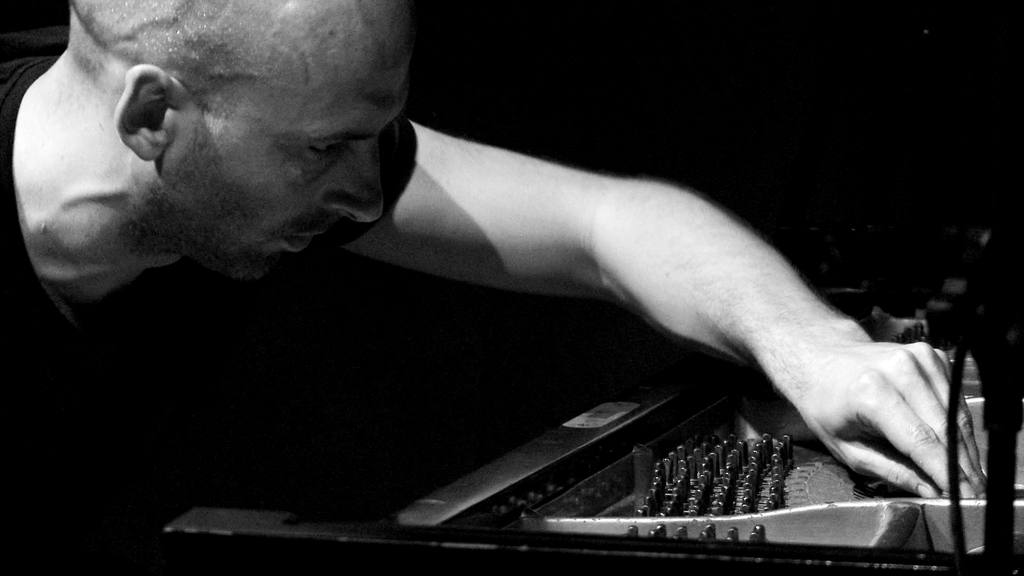
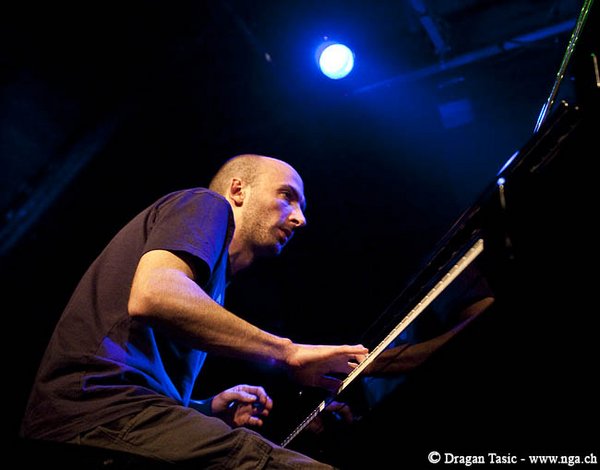
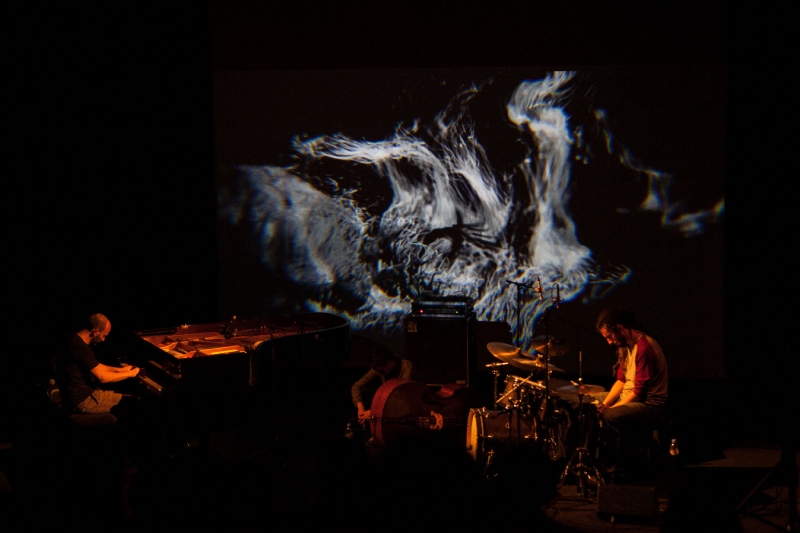
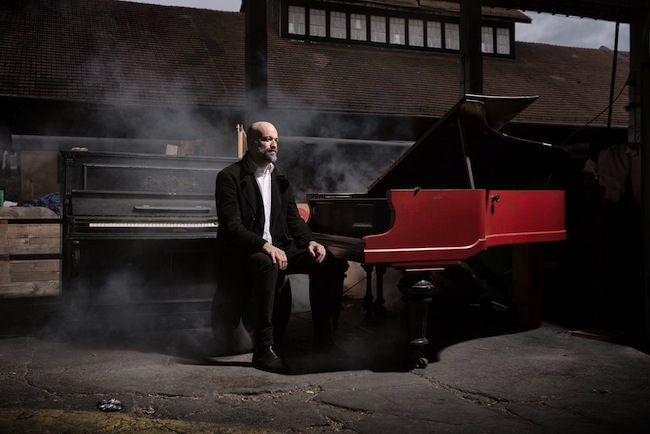
Vor sieben Jahren ging der Pianist Ephrem Lüchinger für zwei Tage ins Studio, improvisierte und experimentierte alleine mit seinem Instrument, das der Zürcher mit allerlei Gegenständen präparierte. Das Material, das in diesen Tagen entstanden ist – zeitweise in Begleitung des Posaunisten Michael Flury – jagte Lüchinger später durch den Laptop, verfremdete und arrangierte die Klaviersounds neu und setzte sie zu 34 Stücken zusammen, die nun, auf der CD-Trilogie «Are You Prepared?» zu hören sind.

[vimeo 56098064 w=500 h=292]

Ephrem Lüchinger – Are you prepared from ephrem lüchinger on Vimeo.

Entstanden ist eine reichhaltige Sammlung an neugierigen Klängen, die wahlweise technoid schimmern, romantisch schillern und auch popnah dahinschlendern können. Soundclips, Tracks und auch Songs sind auf «Are You Prepared?» zu hören – und die Trilogie entpuppt sich mit dieser Formenvielfalt auch als Suche nach den sonischen Grenzen des Klaviers, eine Suche, die allerdings scheitert. Denn Lüchinger, der in zahllosen Bands seine Spuren hinterlassen hat, entdeckt in seinem Instrument zuweilen Sounds, die man auch beim dritten Hördurchgang nicht mit einem Klavier in Verbindung bringt. So ist «Are You Prepared?» eine überaus lohnenswerte Reise in den Saitenkasten eines Instruments der unbegrenzten Möglichkeiten. Möglichkeiten, die Ephrem Lüchinger verspielt und doch konzentriert auslotet.

Ephrem Lüchinger, “Are You Prepared?” (Dist CH Irascible)

[soundcloud url=”https://api.soundcloud.com/playlists/72104018″]


Interview: Johann Bourquenez of Plaistow

©Janice Siegrist
©Janice Siegrist
Johann Bourquenez is hardcore

As Johann walked into the hotel for our first meeting, I got Plaistow‘s music. Dressed in black, head shaved, lean – he is stripped back. There’s an aroma of smoke and an intensity quivering a hair’s breadth beneath the surface, a rapid rhythm. The albums, Citadelle and Lacrimosa, with their trance-inducing repetition, microscopic detail and Johann’s rounds of claustrophobic piano notes, feel driven by a desire for the raw and pure. It didn’t surprise me when he said in preparing for the next album (due out in April 2015) he woke at 6am, worked 8 hours at the piano, then took a bike ride in the evening…every day for a month. It could be said Johann Bourquenez is hardcore.

‘…maybe it’s better not to go too far with this’

French-born and studying jazz in Toulouse, he met drummer Cyril Bondi doing a gig in Geneva. Their connection is the cornerstone of Plaistow, you can hear it on the albums. Johann moved to a squat in Geneva (‘a big house full of crazy people’) and he played regularly with Cyril, but not seriously (‘I was partying a lot.’). Eventually they felt there was something worthwhile, ‘I said to Cyril, OK but I’m a very crazy guy so if I do a band…I will do it very seriously, very deeply, and I will expect people around me to do the same, so maybe it’s better not to go too far with this, and he said, ‘No, no, no, no, you don’t know me, if I do a band it’s going to be a mother******.’ So we decided to do it.’ That was in 2007 when they recruited, Raphaël Ortis on bass, though more recently, Vincent Ruiz on double bass.

johann_bourquenez_feat_plaistow‘You have to be physically be in the present’

Their musical angle comes from Johann’s early years of immersing himself in drum ‘n’ bass and techno (he has currently got Rrose on rewind), using machines and synths, ‘I had many years of this kind of experimentation with electronics…and computer noise stuff.’ At one gig, pre-Plaistow, fed up of lugging equipment around, Johann decided to play acoustic piano – opening it up to use the strings to create a more powerful sound. ‘I can play this piano the way I played all those machines, but I found the significance of every move I make is very important , if I don’t move there is nothing, if I do a very small thing it is very meaningful…The movement – that is very important…you have to be physically be in the present. So, I said with Plaistow let’s pretend we are just a jazz trio but we actually are filled with techno and noise walls…let’s make that music but with acoustic instruments.’

‘I will take your brain, trust me…’
Plaistow au Centre Culturel Suisse (Paris) ©Simon Letellier

To take these ideas further the art and animations of Nicolas Berger will be integral to the new album. Johann understands that visuals [on a cinema-sized screen] can divert attention from the music so they need to be justified by making the performance an immersive experience. ‘It’s an old fantasy of mine, I would like to have a two hour concert the way you would do with a DJ set – I will take your brain, trust me, and then I give it back to you at the end.’ This best sums up Plaistow’s raison d’être, it reminds me of the theatre of Artaud or Stravinky’s Rite of Spring – primal yet with a care for the concept of ceremony, event, people.

In fact Johann’s next project is the Great Noise Choral which will debut in December. It will feature, ’20 to 30 people only using voice and making some noise’. I’m certain it will be something pretty hardcore.

Plaistow live @ London, Pizza Express, 20 November (London Jazz Festival)
Liepaja (Latvia), Hiks Hall, 27 nov
Cesis (Latvia), Vidzeme Concert Hall, 28 novembre
Daugavpils (Latvia), Mark Rothko Art Center, 29 novembre

The Great Noise Choral at AMR Jazz Club in Geneva, 19 & 20 December

 
“Lacrimosa” to be released on vinyl, November here!
Plaistow on Facebook

Plaistow on YouTube:

http://youtu.be/ctoFHbz8wWY

Colin Vallon speaks about “Le Vent”

Colin Vallon © Petra Cvelbar“Le Vent” is Colin Vallon‘s second album for the prestigious label ECM. Listening to it, or to him speak, you might think he’s a bit soft – a gentle soul. There’s a distinct aesthetic to his playing, it’s mindful and sombre as if remembering a lost love. Interviewing him, I found an assured and fiery spirit; a pianist with a clear intelligence, driven to carving out his own, individual path.

“From the moment I could stand I tried to press down the keys”

Music was always around Vallon – when most families were arguing at Christmas, his was gathering at the ever-present piano, singing hymns and Gospel. “I loved the sound of the instrument, from the moment I could stand I tried to press down the keys”. Despite this, he quit piano at the age of 12 because he could no longer play by ear and reading music frustrated him. Then two things happened: his uncle taught him some blues chords that he could play, “Without paper in front of me” and he saw a solo concert of Keith Jarrett, “It was really amazing to hear that.”

He returned to music lessons at 14 and began composing. By 19 he was at the University of Arts in Bern and had his own trio. Here he found the American theory of copying the standards until you could imitate them too restrictive. “But this was also very good for me,” he says, “because it meant that if I wanted to do something of my own then I had to do it really on my own and to be more didactic in terms of composing. I was really independent.”

“It’s a music that has something very raw about it”

However the composition tutor, Frank Sikora, inspired Colin and for his class he recorded, “A huge fence or gate that was screeching, making harmonics and noises.” By 2002 he developed this interest in strange sounds with prepared piano techniques and had begun an enduring curiosity for Eastern European music. “It has something very raw about it and, like this fence maybe [that he’d recorded], it’s a very different sound and it’s something that caught me immediately.” He joined a band with the saxophonist Sascha Schönhaus playing Balkan music and discovered one of his “desert island records”, Le Mystère des Voix Bulgares.

A journey in Albania

Meeting Elina Duni provided fertile creative soil as Albanian music opened up to him and the Trio’s third album, (their first for ECM) was entitled Rruga, the word for “path” or “journey” in Albanian. It was critically acclaimed, so did this make it hard to follow? “There was a bit of pressure,” admits Colin, “not from the label, but from myself..it’s hard to come with a second album…and changing the drummer [from Rohrer to Sartorius], but in the end I’m really happy with the results.”

“There are a few goodbyes, a tribute to Asita Hamidi”

Colin found his material came naturally as he dealt with several deaths and saw a suicide jump from a bridge. “Le Vent was an elegiac album, a lot to do with death…and the passing of time and life. It sounds really dark but it’s not just about that…There are a few goodbyes, a tribute to Asita Hamidi [the harp player] who died…things that are a part of life but I needed to express somehow.” It’s Vallon’s careful listening for, then stating his own truth, that makes him a compelling artist.

Colin Vallon “Le Vent” (ECM)

On tour:

26/04/14 Jazzahead, Bremen DE
27/04/14 A-Trane, Berlin DE
29/04/14 Mokka, Thun CH
30/04/14 Bee-Flat, Bern CH
03/05/14 L’Azimut, Estavayer-Le-Lac, CH
13/05/14 Mokka, Thun CH
17/05/14 AMR Genève, CH
27/05/14 Mokka, Thun CH
01/06/14 Green Hours Festival, Bucarest RO
07/06/14 Paris Jazz Festival, Paris FR

Rusconi at Cully Jazz Festival

ImageI was reminded of the story of the Sorcerer’s Apprentice watching this trio perform. Keen to make magic and mischief, Rusconi sometimes found themselves unable to control the proceedings. This was the first gig of the tour and I think their playfulness will win over audiences, they just needed more child-like energy, a sort of innocent conviction, to pull it off at Cully. However, the band were most captivating when they painted afresh their best compositions from the new album, History Sugar Dream.

‘Psychedelia for Laika’
Ankor was a trademark piece, with Stefan Rusconi’s mournful yet sweet piano, rich with echo and thought, sensitively interlaced with Fabian Gisler’s handsome bass notes. The sparse, crispy drum beats of Claudio Strüby balanced the sound perfectly. Sojus Dream used a repetitive theme as its foundation before a synth keyboard sneaked in, providing Herbie Hancock-like funky accents. The track grew in stature as it built a platform for Fabian’s electric guitar to glide through, providing, as they tell us, ‘psychedelia for Laika,’ the dog who was sent out to orbit the earth in 1957 (and died within hours of lift off). I didn’t feel Fabian pierced deeply enough, so it was down to Stefan’s collapse into a warped and weird circus-style piano to trip the track out.

Bowie’s Life on Mars? started up
So, to the ‘high jinks’ – such as swapping instruments amongst themselves, as in Change (Part One), with Claudio on piano, Fabian on drums and Stefan on guitar, and stopping everything for Fabian to put a record on the Technics deck set up onstage. Bowie’s Life on Mars? started up, complete with vinyl crackles to re-enforce the theme of History Sugar Dream – childhood memories, “A time when dreams and hopes, fantasy and illusion, were reality,” as they write in their press release.

This trio is capable of subtle and complex emotions
I like the way Rusconi seem to feel their way through unknown landscapes in their music, playing with fantasy. At one point I thought of dark, rainy scenes in the film Blade Runner with its sense of nostalgia, loss and romance. This trio is capable of subtle and complex emotions. I’d like to have been taken more deeply into these worlds, that’s where the real playfulness lives.


Grenzenlos – Ein Festival rund um das Piano, von Beethoven über Boulez bis Monk

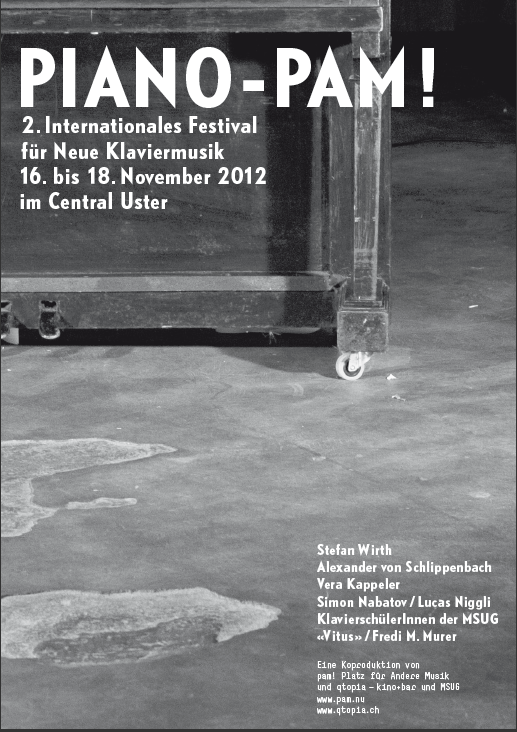
Das Piano-PAM Festival (Platz für andere Musik) geht dieses Jahr in die Zweite Runde. Vom  16.11. – 18.11.12 dreht sich in Uster alles um das Piano. Eintönig? Im Gegenteil. Der Schlagzeuger und Gründer des PAM Festivals Lucas Niggli erklärt uns, warum gerade ein Festival in dieser Form ein besonders grosses Entdeckungspotential birgt und zu einem erfrischenden Kulturerlebnis wird.

Während das PAM Festival 2010 zum ersten Mal stattfand, veranstaltest du ebenfalls unter dem Namen PAM aber schon seit über 9 Jahren Konzerte in Uster. Eine Konzertreihe die du selbst ins Leben gerufen hast. Was war der Ursprungsgedanke dafür?

Lucas Niggli: Zum einen liegt dies am musikalischen Angebot In Uster. Wir haben zwar den Jazzclub und die Kulturgemeinschaft Uster, die beide regelmässig Konzerte veranstalten, allerdings jeweils in Bereichen, die mich nicht immer interessieren. Zum anderen hatte ich neben meinem Atelier den “Qbus” (ein altes Kino, welches heute leider nicht mehr besteht), ein Ort also, der für solche Anlässe perfekt geschaffen war. Als Musiker reise ich viel in der Welt herum, wobei ich auch immer sehr interessante Leute treffe. Mit dem „”Qbus”“ hab ich einen Raum gefunden, um diese Leute nach Uster zu bringen. Ein Experimentierfeld, ein Spielplatz um Sachen auszuprobieren, und Grenzen zu überschreiten. Aber natürlich hab ich auch darum die Konzertreihe PAM gegründet, um meiner Community hier in Uster etwas zurück geben zu können, von dem was ich auf all meinen Reisen erlebe.

Dass ich das Konzerprogramm jeweils voll und ganz nach meinem Geschmack gestalten konnte und kann, liegt natürlich auch daran, dass ich die Musiker alle persönlich kenne, mit ihnen zusammen arbeite, was natürlich ein grosser Vorteil ist. Dass die Konzertreihe PAM allerdings bis heute andauert – mittlerweile haben wir schon über 44 Konzerte veranstaltet, jeweils ca. 4 pro Jahr – hätte ich mir damals allerdings nicht erträumt.

Als ich vor über 10 Jahren damit begonnen habe, war alles noch sehr im Low Budget Bereich. Die ersten beiden Jahre habe ich sogar noch draufgelegt, aber meine Frau ,die mich dabei immer unterstützte, meinte jeweils: ” Andere gönnen sich teure Weine oder Essen oft auswärts und wir leisten uns eben die Konzerte.”

Das Piano PAM Festival findet dieses Jahr bereits zum zweiten Mal,nach der Erstausführung im Jahre 2010 statt. Was hat dich dazu bewogen, nebst der Konzertreihe noch ein Festival zu lancieren?

Lucas Niggli: Der Ursprungsgedanke war eigentlich der, dass ich so viele interessante Pianisten gerne nach Uster geholt hätte, dies aber nie möglich war, da es im “”Qbus” ” keinen Flügel hatte. Diesen jeweils für ein einziges Konzert zu mieten, hätte sich finanziell nicht gelohnt. Für ein 3-tägiges Festival allerdings schon und so beschloss ich deshalb ein Festival zu gründen, bei dem das Piano im Zentrum steht. Das Piano war also der ausschlaggebende Punkt. Die erste Ausgabe des Piano-PAM Festivals im Jahre 2010 kam dann so gut beim Publikum an, dass ich dachte, komm das mach ich wieder.

Mit den ebenfalls im Kanton Zürich stattfindenden Festivals Taktlos und Unerhört, gibt es ja bereits Veranstaltungen mit einer ähnlichen Ausrichtung. Inwiefern unterscheidet sich da das PAM Festival von den anderen?

Lucas Niggli: Da unterscheidet sich sehr viel. Zum einen nur schon die Geschichte und die Grösse der Festivals. das Taktlos ist ein Festival mit internationalem Renommée und war in der Schweiz ein wichtiger Impulsgeber für Neue Musik vor allem in den 80er  – und 90er Jahren . Allerdings hat das Taktlos in den letzten Jahren eine Krise durchgemacht, weshalb es etwas an Relevanz verloren –  und mit dem Unerhört Festival starke Konkurrenz erhalten hat, was wiederum auch dem  Taktlos gut tut . Die Festivals bemühen sich vermehrt um Profil und das hat einen positiven Effekt auf die Programmation. Während das Taktlos sich vor allem auf die improvisierte Musik im Zusammenhang mit Jazz und Rock fokussiert, dreht sich beim „Piano – PAM“ alles um ein Instrument und kennt dabei keine stilistischen Grenzen. Ein Festival bei welchem an einem Abend Musik von Thelonious Monk, Beethoven und Pierre Boulez zu hören ist, das muss man in der Schweiz sicherlich suchen.

Auf welche Leckerbissen dürfen wir uns ganz speziell bei dieser Ausgabe des PAM Festivals freuen?

Lucas Niggli: Persönlich freue ich mich sehr auf den Zürcher Pianisten Stefan Wirth, der Musik von Beethoven und Pierre Boulez spielen wird und natürlich Alexander von Schlippenbach, eine grosse Legende des Freejazz in Europa. Dass diese zwei Pianisten den gleichen Abend bestreiten ist sehr toll. Ich als Konsument wünschte mir mehr oder zumindest regelmässiger solche Abende. Aber dies ist ja auch mit ein Grund weshalb ich das PAM Festival veranstalte. Ich mache mir dabei selbst ein Geschenk, in dem ich ein Programm zusammenstelle mit Musik von Komponisten, die ich am liebsten höre. Also Thelonious Monk, Pierre Boulez und Ludwig van Beethoven.

Findest du, dass es in der Schweiz genügend Platz für andere Musik gibt, gerade in der freien Improvisation?

Lucas Niggli: Nein, es gibt nie genügend solche Orte. Aber dies hat auch gewisse Vorteile. So müssen sich die jungen Musiker aus der Not heraus selber ihre Plattformen schaffen. Die jüngere Schweizer Generation macht dies anhand des Beispiels der Jazzwerkstatt in Bern. Eine Bewegung, die im übrigen in ganz Europa stattfindet. Sie definieren sich so ihren ganz eigenen Spielplatz. Wenn du etwas selber aufziehst, in deiner Szene, deinem Umfeld, kannst du es so gestalten und prägen, wie du es möchtest und das, gehört auch zur künstlerischen Arbeit und Identität eines Musikers. Es steckt zwar jeweils viel Arbeit, dahinter, ist aber zugleich auch sehr befriedegend. Ich kann gleichzeitig Gastgeber sein – was ich als ein sehr schönes Gefühl empfinde – und die Musik aufführen und spielen, die ich möchte.

Ich glaube auch, dass in einem Konzertbetrieb wie das PAM ihn führt, eine interessante Zukunft steckt. Heute hören oder konsumieren die Leute ein viel breiteres Musikangebot als früher. Warum aber führt man Musik meistens nur in den dafür traditionsgemäss üblichen Räumlichkeiten auf? Wie z.b. Beethoven nur in der Tonhalle, Boulez nur im Kontext von Neuer Musik, oder Monk nur in einem Jazzclub? Diese Tradition zu brechen ist mir ebenfalls ein grosses Anliegen. Und darum geht es bei PAM auch, in dem man Traditionen, Vorstellungen und Gewohnheiten aufbricht.

Das PAM Festival findet vom 16.11.12 – 18.11.12 in Uster statt. Die Konzerte beginnen jeweils um 20:30 Uhr. Eintrit 20.-/30.-
Grand Pianoramax : retour au bercail

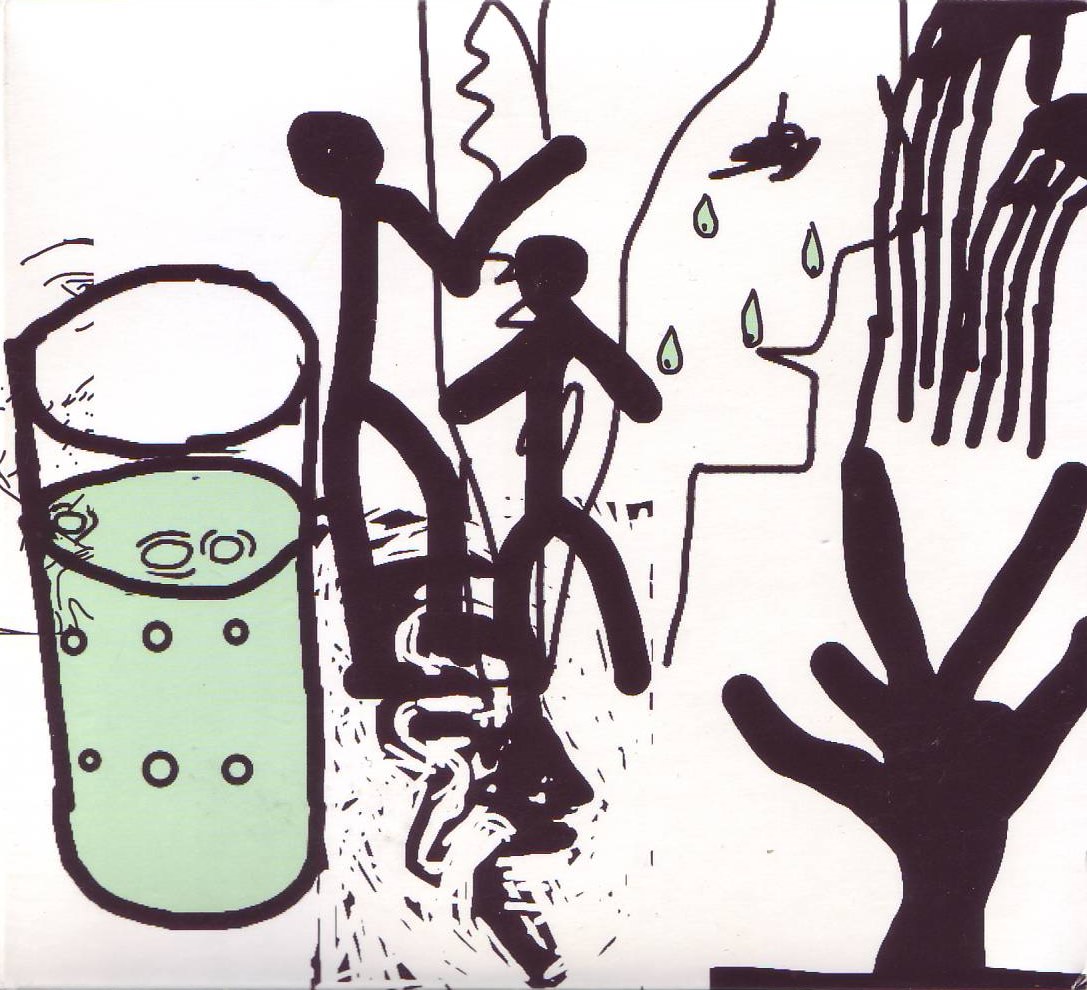
Qui dit Leo Tardin pense immédiatement piano et slam. Au sein de son laboratoire Grand Pianoramax, le piano est décliné sous de multiples formes: Fendher Rhodes, Moog ou tout autre clavier aux sons intéressants. En quelques années, Leo Tardin a ainsi su intéresser autant les amateurs de jazz que d’electro. Signé sur le prestigieux label américain ObliqSound, il fit des débuts remarqués. Sur le premier volume de Swiss Vibes figurait un morceau extrait de son deuxième album,  «Blue Gold»: des rythmes quasi tribaux sur lesquels se calait la voix féminine de Celena Glenn.
Un morceau à découvrir ci-dessous tel que joué au Festival Jazz à la Villette avec Black Cracker dans le rôle du slammer et son compatriote Domink Burkhalter à la batterie.

[youtube=https://www.youtube.com/watch?v=y0OQhX2S0KQ]

Dans la même formation, Leo Tardin a poussé ses expérimentations sonores au maximum au Cully Jazz festival. Rencontré au Buffet de la Gare de Lausanne quelques jours avant que ne démarre sa tournée suisse. Léo Tardin fait le point.

Votre dernier album, «Smooth Danger», semble encore plus expérimental que les deux premiers?
Leo Tardin. J’ai déménagé à Berlin pour créer ce nouvel album. J’avais besoin d’une nouvelle source d’inspiration. J’ai passé plusieurs années à New York. J’ai évolué au sein de la scène jazz. Là j’ai effectué un changement de décor et d’ambiance radical ! J’ai enregistré à la Funkhaus de Berlin. Cette grande bâtisse-bunker abritait les studios de la radio allemande. Il s’en dégage une ambiance très industrielle. Les couloirs étaient tellement grands qu’on a songeait à utiliser une trottinette pour aller aux toilettes! L’album est plus produit, il est empreint d’un humour noir un peu grinçant. Mais maintenant, j’ai déjà évolué vers une autre direction : revenir à une forme de piano plus universel, revenir à quelque chose de plus essentiel, sans travail de sound design.

Vous collaborez avec Black Cracker et Mike Ladd. Pourquoi ces deux slammers-là en particulier ?
Leo Tardin Je voulais amener une dimension de plus à cet album. Il y a une énorme scène de slam et de poésie à New York. Je m’y rendais régulièrement. J’appréciais beaucoup ce qui se faisait sur scène, mais je ne trouvais pas mon compte au niveau des textes. Tout le monde me parlait de Black Cracker, mais il était très difficile à joindre. Le genre de personne qui n’a pas de téléphone et pas d’adresse fixe. Finalement nous nous sommes rencontrés. C’était vraiment le choc des cultures : moi le petit blanc qui vient du jazz et lui le Noir d’Alabama issu du milieu des arts visuels et du slam. J’ai tout de suite adoré ce qu’il faisait. Ça allait plus loin. Son univers est plus abstrait. Il est incroyablement fort au niveau de la forme et il a un charisme dingue. C’est lui qui m’a ensuite présenté Mike Ladd et Karsh Kale.

Dès la sortie de votre premier disque, certains de vos morceaux ont été téléchargés à plus de 40’000 exemplaires sur ITunes. Comment expliquez-vous ce succès numérique ?
Leo Tardin Je n’ai eu qu’un morceau «Starlite» qui a été un succès en termes de téléchargement. Je ne sais pas pourquoi. Le fait que je sois sur le label ObliqSound, qui était alors très présent aux Etats-Unis a très certainement aidé. Cela dit la vie de la musique sur Internet est parfois drôle. J’ai un autre morceau, «The Race», un morceau instrumental batterie-piano, pas forcément super facile d’accès qu’on retrouve sur pas mal de vidéos de vacances de particuliers. Je ne sais pas comment il a atterri là, probablement à cause d’un «free download». C’est drôle de voir un morceau créé dans sa chambre à coucher à New York se met soudain à vivre sa vie. Sur mon dernier album, il y aussi ce morceau «Infidel». Il a inspiré à une artiste berlinoise une vidéo entière de dessins. J’ai trouvé ça génial.

[youtube=https://www.youtube.com/watch?v=3oZhG12zZAU]

Grand Pianoramax on Tour
(Leo Tardin : keyboards, Black Cracker (vocals, Dom Burkhalter (drums)

Vevey, Espace Guinguette, 15 novembre
Zurich, Exil (avec en invité spécial Mike Ladd), le 17 novembre
Bâle, Erster Stock, le 18 novembre
Nyon, Usine à Gaz, le 19 novembre
Milan, Cox 18, le 25 novembre
Sierre, Hacienda, le 26 novembre
Berlin, Kantine am Berghain, le 3 décembre