Swiss artists @EFG London Jazz Festival 2015

EFG_London Jazz logoThe EFG London Jazz Festival is a big annual affair running for ten days in the middle of November. This year Swiss and Swiss-based artists, represented by Nik Bärtsch’s Ronin and Mobile, Elina Duni, Samuel Blaser, Basel Rajoub, Marc Perrenoud, Christophe Fellay and the Russian/Swiss collaboration, Jazzator, had well-attended gigs (two were sold out). Phew. Clashing with big-name artists, and the overwhelming number of events can be an issue at such festivals.
The UK can be a tough and weird market

Consider this list of musicians – you couldn’t get a more diverse bunch. There isn’t a Swiss sound like there was a Norwegian one, but the artists are building individual reputations via their quality. The UK can be a tough and weird market, but when people hear something they like they will always give a warm and enthusiastic response.

Nik Bärtsch has a definite fanbase and had a two-day residency at King’s Place as part of the Minimalism Unwrapped season with Mobile Extended and Ronin Rhythm Clan. I saw the latter on the opening night of the festival with an added 3-part brass section and guitarist Manuel Troller, whose sensitive but spirited playing made him a natural part of the clan. I first heard Ronin two years ago in the same hall. I was entranced by their intense yet grooving sound and still am.

You live for such moments with Ronin
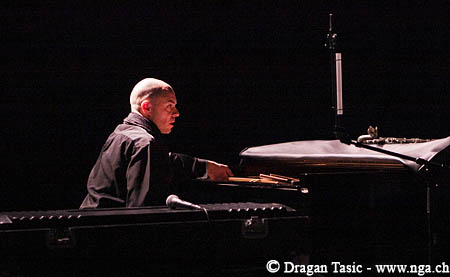
nik_baertschs_feat_roninThere were the sparkles of Nik’s compelling piano work and superior conversations between the Ronin members whilst other phases had the extended band heading into an alt-funk fest with James Brown’s spirit shimmying around the room (well, almost). But ‘Modul 32’ was the highlight for me: Kaspar Rast played a small shaker – no fuss, just simple but killer in its repetition, and clever in the textural canvas it gave saxophonist, Sha, and Manuel on which to paint subtle but deeply personal musical thoughts. You live for such moments with Ronin.

He can evoke memories of J. J. Johnson
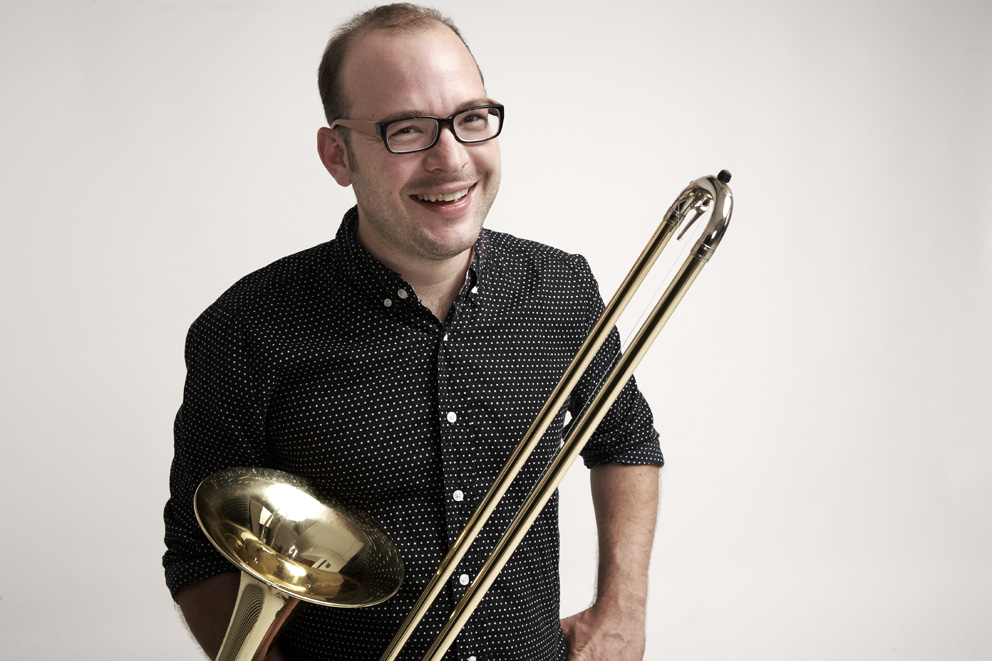
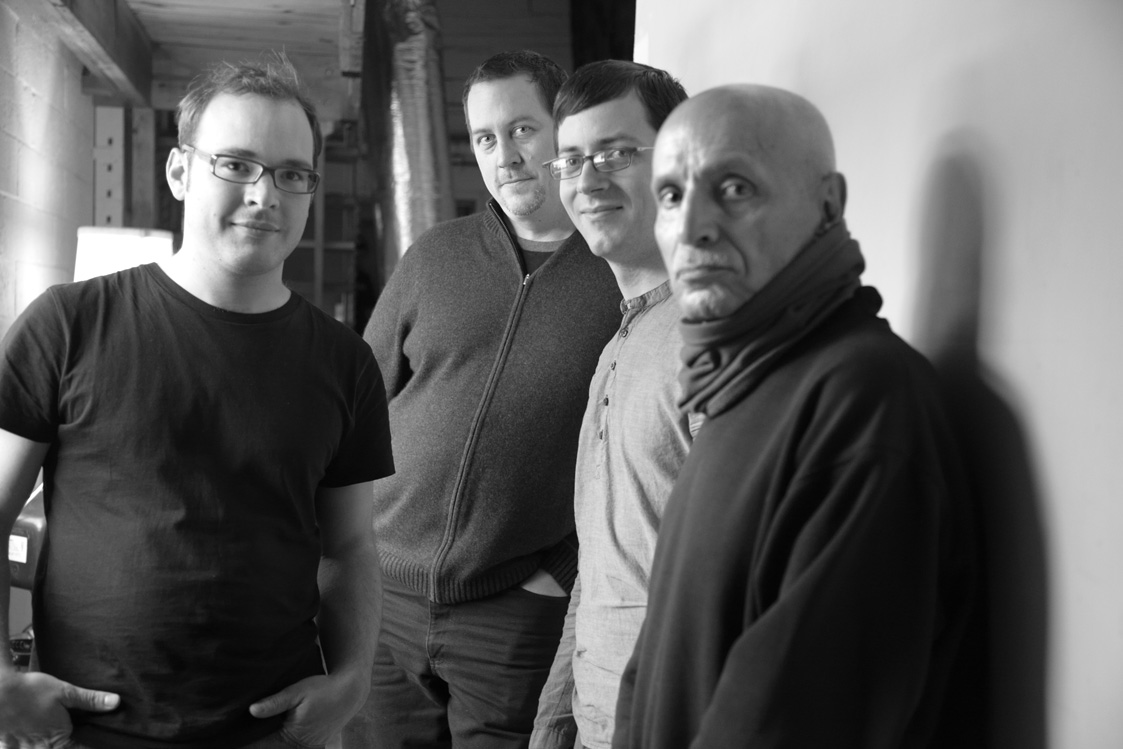
©Alex TroeschThe small, shabby Club Inégales is in the bowels of an office building but was set aglow by the quality of the musicians in Samuel Blaser‘s quartet. I’ve already waxed lyrical about the wisdom of pianist Russ Lossing’s playing on Spring Rain, Blaser’s tribute to Jimmy Guiffre. He approaches music as an horizon, it’s not about him, but the entire landscape. I love his touch. Equally fine are bassist Masatoshi Kamaguchi and legendary Gerry Hemingway. A key drummer on the avant garde circuit he caresses and cajoles rhythm out of his kit, able to be economical yet inventive. I particularly like Blaser when he drawls his sound as if part of a deep South funeral march, his soulfulness peeping through. He can evoke memories of J. J. Johnson then veer off elsewhere. It was a promising show cut short by the venue’s format of a final set improvising with the house band.


marc_perrenoud_feat_marc_perrenoud_trio

Luckily I’d got to hear the crisp interplay between this quartet at Adventures in Sound, a feast of music recorded for BBC Radio’s Jazz on 3 programme earlier that day. Each of them also improvised with renowned UK artists such as John Edwards (bass) and rising keyboardist, Elliott Galvin (in photo). Unfortunately it meant I missed Marc Perrenoud‘s set as part of ‘Seriously Talented’ – an afternoon of musicians that had been on Serious’ Take Five course. The Clore Ballroom of the Royal Festival Hall was packed and I heard that Marc’s joyful and bonded trio were an uplifting addition to the line up.

Elina’s expression taps into our universal goosebumps

Elina Duni Quartet Elina Duni Quartet are equally notable and their Dallëndyshe album had good reviews, one in The Guardian. Live, Norbert Pfammatter stands out as a sublime drummer. His pulse-like work encourages a sensual interplay between vocals and rhythm. There is an almost mantra-like progression as Elina leads us through the emotive themes of Albanian folk songs. Lyrics such as, “My dear boy in front of the flag oh, my heart’s engulfed in worrisome flames,” (from ‘Me on a Hill, You on a Hill’) feel horribly relevant and even if they weren’t Elina’s expression taps into our universal goosebumps. At first her tone seems warm and smooth, but then a quiver or cry renders me helplessly emotional.

Colin Vallon is simply captivating, and fierce too, making his mark. Along with new, fearless bassist, Lukas Traxel, they stand their ground at the side of Elina’s power. I like the brave move the quartet made of paying great respect to the Albanian folk tradition whilst interlacing it with a form of ethereal jazz. It left the audience spellbound.

richmixbaselrajoubnov15_26It was a similar story for another Swiss émigré. The concert of Basel Rajoub‘s Soriana (‘Our Syria’) was the evening after the Paris attacks and as the review Classical Source expressed, it could not have made for a more eloquent night of music. Made so by the skill and personality of Basel in a magical alchemy with the type of welcoming audiences that can be found in London.


 A unique view of free music

Jazzator2_M&FNov2015Finally, Jazzator are a Russian/Swiss quartet with quirky intentions conveyed with talent. I particularly liked saxophonist Oleg Mariakhin who delicately integrated himself with the vivid vocals of Marina Sobyanina. I sensed underlying eastern folk traditions that had been pulled apart leaving ragged edges and broken threads. Drummer Sergey Balashov on drums and bass player Maximilian Grossenbacher provided an ear-pricking rhythm section, and together Jazzator offered a unique view of free music. One UK reviewer declared them a highlight of the festival.
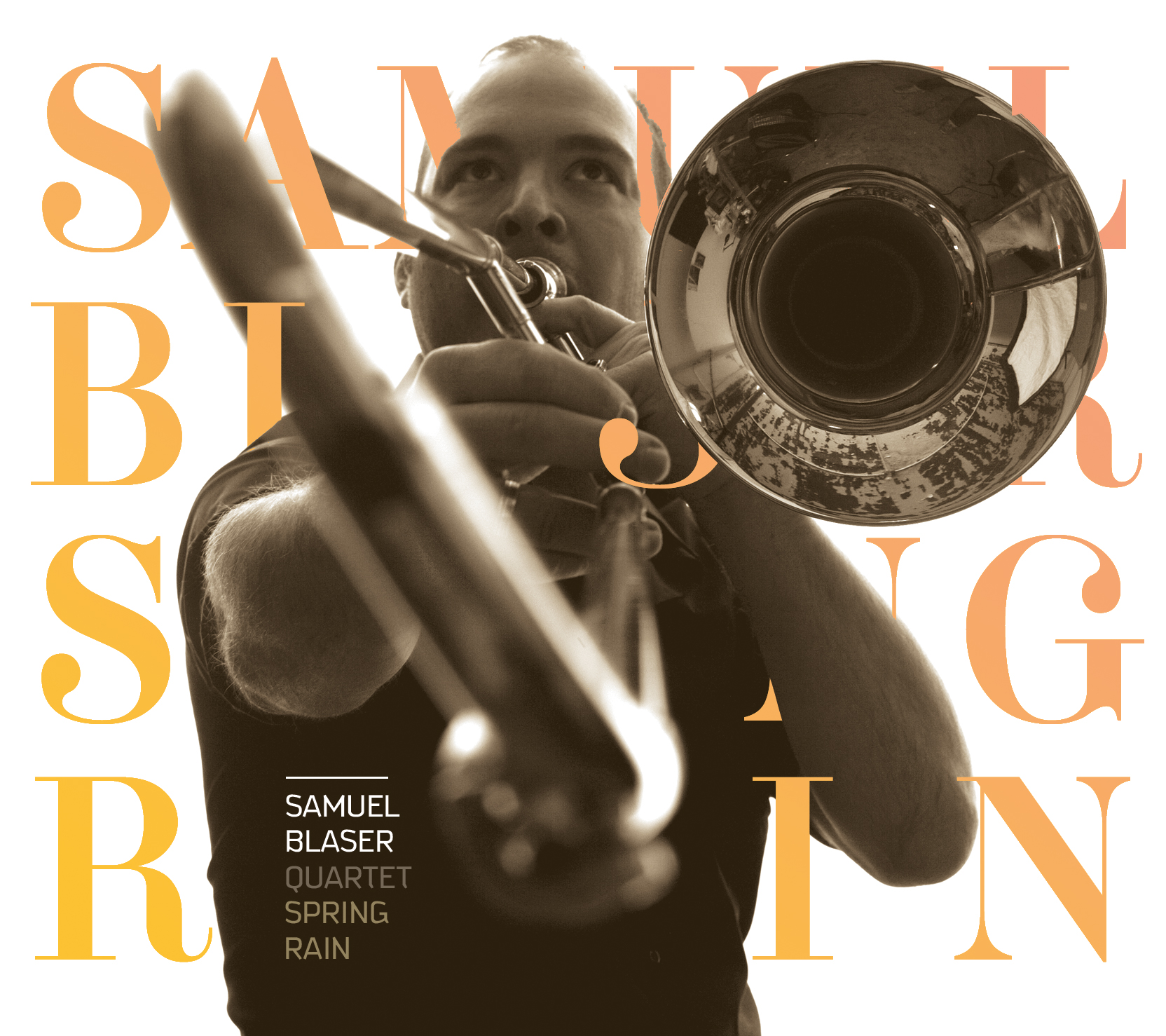
 

Record of the month: “Spring Rain” by Samuel Blaser

Samuel Blaser's Spring RainBlaser trills and sways with a wonderful, inebriated tone
Samuel’s opening notes of ‘Jesus Maria’ emit a tone of skewed warmth, imperfect but aglow. What follows is an almost heartbreaking conversation between Blaser, Russ Lossing whose piano notes fall as clear spring raindrops, and the ghostly double bass of Drew Gress. Gerald Cleaver locks into this sensitivity brushing drums or rustling cymbals and I drifted into a meditation that I didn’t want to leave. It’s a gorgeous piece written by Carla Bley and was featured on the Jimmy Giuffre 3‘s album Fusion, 1961. Spring Rain is a tribute to Giuffre, specifically his now-revered, explorative work with Paul Bley and Steve Swallow and combines covers with original compositions in a conducive listen.

Lossing makes the difference in ‘Missing Mark Suetterlyn’: as Blaser trills and sways with a wonderful, inebriated tone, Russ brings the double joy of piano and keyboards (he plays Minimoog, Fender Rhodes and Wurlitzer on this album). His electronic runs and chord stabs funk it up, space it out and take us into a thrilling, lawless landscape. All the time Cleaver is finding off-beats with laudable subtlety; he’s finely integrated but always notable.

A warm ’60s jazz homecoming
This track leads straight into the lucid melody of ‘Temporarily’ (another Carla Bley composition). There’s a sense of the recognisable here, like a warm ’60s jazz homecoming. Blaser hits the spot in the way a trumpet can – with soulful, cool sensibilities. Spring Rain has been directed by Robert Sadin, a classical conductor (a vital point as there are flavours of classical expressionism in Blaser’s playing) who also arranged and produced output such as Gershwin’s World by Herbie Hancock. From the musical themes to the sequencing, this feels a quality production.

I adored Blaser’s short solo ‘Homage’, its romantic grief like a modernist ‘Last Post’. If it was played with Blaser’s late manager, Izumi Uchida in mind, I can’t think of a more touching goodbye. ‘The First Snow’ is a free-for-all improv that again shows how this quartet is greater than the sum of its parts. They entangle themselves yet create space for ideas to breathe a fresh air.

Blaser: “Beautiful melodies and no boundaries”
If I’m honest I don’t find the trombone an easy listen, but the combination, especially with Lossing’s exquisite electronic touches, creates both an engaging tension and harmony. Blaser says, “I want people to know that there is jazz, blues, classical music, beautiful melodies and no boundaries,” and maybe that’s why I like this album. However I also think taking Guiffre as inspiration has given Blaser permission to incorporate five interpretative covers as well as provide a fertile direction for composing.

The Giuffre 3 are now recognised for their crucial contribution to free jazz, but disbanded in 1962 after the avant-garde album Free Fall and a gig where they earned 35 cents each. I’m certain there are quite a few musicians out there now who can relate to that.

Spring Rain will tour in November and December 2015.
Whirlwind Recordings

Samuel Blaser: Trombone Man

SamuelBlaserLacPosterSamuel Blaser doesn’t mess around. The 32 year old formed the Samuel Blaser Trio with Marc Ducret and Peter Bruun six months ago and they’re already on their third tour touching down at the Festival Jazz Onze+ in Lausanne, London Jazz Festival and playing Poland and Italy in the next couple of months.

You need Sherlock Holmes to deduce which bands he was, is, or will be, performing in

In the last few months he’s toured as a duo with Ducret in Brazil (“There is an opening market there,” he says, due to the SESC cultural centres), released a CD with Consort in Motion, the international outfit that included revered drummer Paul Motion until his death in 2011 and has been to Japan with his new solo venture, “It’s like a marathon for trombone,” he tells me of the hour-long performances.

“A lot of time I don’t like the way the trombone is played…

When I ask him how he keeps his ‘creative well’ topped up, with so many projects on the go, he looks at me questioningly, “I don’t feel like I need to be inspired.” He just listens to music every day, “Yesterday I listened to…Burning Spear, Dennis Bovell [with whom Samuel also plays] then some Polish pop, and today Maria Callas, Beethoven and Joe Henderson, all kinds of music, yeah.” And it was Vinco Globokar and Berlioz that originally fired his love of trombone, “Those guys really pushed the boundaries of the instrument and that was really inspiring.” He moved into jazz through his mum’s love of the music but says, “A lot of time I don’t like the way the trombone is played…I try to keep the natural way of the trombone to express myself and to have new extended techniques.”

He refesamuelblaser3rs to his trombone as ‘her’

It’s a true romance (he refers to his trombone as ‘her’) that began after seeing marching bands when he was two years old. He couldn’t say the word, ‘trombone’, so tried to make a sliding movement to his parents then held onto his dream until he was nine when his arms were (almost) long enough to play. He progressed rapidly at the local conservatory in La Chaux-de-Fonds, winning awards, praise and a Fullbright scholarship to study in America.

“Maybe if I call myself ‘Trombone Chubby’…”

It’s when I ask whether he has to ‘compose to order’ that he remembers the tribute to Jimmy Giuffre he’s recording next year with, due to his own suggestion to Fortune Records, Ravi Coltrane. “I don’t like to record an album only with material written by someone else. I need to add my touch so that I feel it is mine,” Blaser comments. Last month saw the release of a recording made with Benoît Delbecq and Who Trio’s Gerry Hemingway that charted in Billboard’s top 50 jazz albums. “Maybe if I call myself Trombone Chubby…” he quips with reference to Trombone Shorty’s chart success.

He keeps his spirit light

It’s not all fast and plain sailing as Blaser explains, “I still cannot really break through into France and I’ve been playing with French musicians since 2002.” He also has to find a label for a solo recording made with ‘sound designer’ Martin Ruch in various rooms of the ex-DDR radio station in Berlin. He knows it’s not an easy sell, but says it with his ever-optimistic smile. It’s the Blaser secret: he doesn’t spend time on things that don’t work or he doesn’t like to do (a good manager helps) and he keeps his spirit light. While he has a smile on his face, a shiny trombone in his hands and a song in his heart, I’m sure Blaser will maintain this incredible workload and find out who he really is as a musician.

Samuel Blaser is playing London Jazz Festival (Oto Café), the 17th of November.

How Do I Look? Image in the Digital Era

Forget Twitter’s 140 character limit and just post a photo, or 15 second video – and you’ve got the new digital craze, Instagram (16 million active users per day). It’s responsible for the widespread ‘selfie’ (taking a picture of yourself and posting it) and along with Facebook, YouTube and camera/video devices within our smartphones, tablets and consoles has blown the importance of our own image into a monstrous size. This is impacting society and culture, and that includes jazz.

“You can take a stand and decide what emphasis you will apply to your image”  Elina Duni

Elina1(1)There is resounding evidence that Dr Catherine Hakim was bang on the money when she wrote a book asserting that those who use beauty, physical fitness, charm and sexiness will find success (Honey Money: The Power of Erotic Capital) and it’s especially true in the music industry. “I am so sad about what I see today, what are the role models for young girls? Mostly women stars who don’t represent the feminist way of thinking, but represent the sexual object,” says vocalist Elina Duni when I ask her about women’s image in music, “but you can take a stand and decide what emphasis you will apply to your image, if any, or what it says about you.”
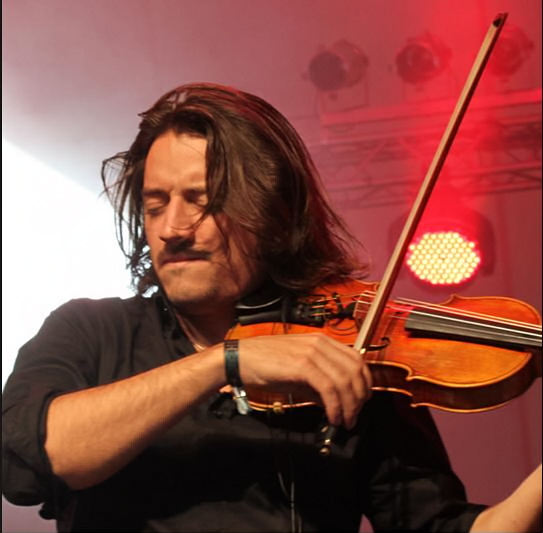
Duni instinctively realized the importance of engaging visuals from the start of her career, but it was when she found a kindred spirit in the Albanian photographer Blerta Kambo that she could realize her ideas. “Some things can be sensual or sublime without being cheap or sexual,” comments Duni, “she represents me very well.” Trombonist Samuel Blaser didn’t have the same issues to face but admitted he’d changed his thoughts on his image, “Now I’ve hired a fashion consultant. We went shopping for a day together. I spent way too much money, but I think it’s important to present yourself well.

“In some parts of Europe music is more connected to hipness than to good music”  Florian Arbenz

In my own career I witnessed how having a strong visual identity helps people remember you (I had dreadlocks for many years), but as pianist Rusconi notes, it has to be genuine, “If it comes from you and who you are as a band then great, but there’s no need to force it.” Some people have a natural visual intelligence, such as Tobias Preisig. He plays violin and in a subtle way, plays upon the look of a free and fiery but very modern gypsy. He forges a clear identity, very useful tobias1when establishing a ‘brand’. If any artists out there are flinching as I use the word ‘brand’, consider the creative accomplishments of Björk, one of the most magical musicians of my generation whilst being one of the strongest brands. Brands enable people to get who you are and, if it’s strong or unique, remember it. You may not say Eric Vloeimans’ indulgence in colourful clothes and ‘funky’ shoes launched his career, but you could see how his image, along with his playing has set him apart.

Florian Arbenz of Vein commented that not everywhere was infected by “fashion”, “In some parts of Europe music is more connected to hipness than to good music. In Eastern parts [of Europe] you are still judged very hard when you play and I like that.” He found that his band’s classical training and passion for vintage jazz, not their choice of clothes, had given Vein a strong profile in those regions.

Image in music isn’t just about personal appearance

Bebop and modernist jazz was helped by the daring graphics of Reid Miles at Blue Note in the 50s and 60s, whilst Manfred Eicher’s audio vision for ECM was perfectly interpreted by designers Barbara Wojirsch in the ’70s and Dieter Rehm who nurtured the photographic style of windswept trees and monochrome landscapes. On the other hand you could argue that GRP Records sold a lot of albums despite some of the ugliest record sleeves ever (though they were operating in the ‘style-free’ era of the 1980s). As digital downloads and streams find their feet there’s less attention paid to album covers, but a few of the Swiss artists I interviewed confirmed their audiences were still buying CDs. In the wider picture of music, however, the music video, once the marketing tool of pop alone, has taken on increasing weight. Use of YouTube as a device for discovering music is mostly responsible.

“We did it like a piece of art”, Samuel Blaser

samuel1(1)Samuel Blaser has found himself experimenting more with visuals such as photos and videos and, like Duni, recognizes their importance as publicity. They also have both relished these added dimensions to their creativity. Blaser met Polish video maker, Ewa Kozanecka in New York and asked her to shoot something for a shorter version of Pieces of Old Sky. “I don’t know if it was totally useful because we did it like a piece of art.” From a listener’s point of view that video held the music more firmly in my memory. And that’s where videos and photos can really assist musicians – by etching their sound into the consciousness of the public. Rusconi are a band that have also naturally partnered with video to explore ways to extend their expression.
“The video thing opened up our music to a totally different crowd” Stefan Rusconi

[youtube=http://www.youtube.com/watch?v=XDdzOFYnLuo]

They have forged a successful pairing with the film collective,  Zweihund, producing engaging and professional work for comparably small budgets. Stefan Rusconi told me, “The video thing opened up our music to a totally different crowd. What we’re interested in as an audience is people that are interested in different fields of culture. Doing the video got people interested that would never have come to a Rusconi jazz gig,” and it enabled them to crossover to contemporary music festivals outside of the ‘jazz’ genre.

“You need good clothes…” Marc Perrenoud

This has proved useful as a piano trio, because as Marc Perrenoud, the leader of another piano trio, noted, “You have to find something different form other trios, find another visual identity.” Some of the artists I interviewed were also filming their gigs, tours and recording sessions as ‘documentaries’ in order to extend their ‘visual presence’. The digital world is forcing the hands of musicians, “You have to be very connected on the web, you have to have very good presentation and have very good pictures [and] you need good clothes,” noted Marc Perrenoud.

A few months ago I went to a jazz festival. One of the bands I came away very firmly etched in my mind were Snarky Puppy – they had great stage presence (helped by the fact there were so many of them) but also their fans were wearing well-branded T-shirts, with a print of a dog’s head wearing headphones. Jazz musicians may not feel the pressure to look like George Clooney, yet, but the world is changing rapidly and visual intelligence or ‘erotic capital’ if you like, won’t be diminishing their influence in the near future.

Made in Switzerland (the pros and cons of being a Swiss jazz artist)

Swiss Vibes 2013_01_Mix 4“You can tap into resources and support and it’s there”  Leo Tardin
The Swiss jazz scene is evolving and has been for some time. Music education at institutions such as the Bern University of the Arts, professional support for artists and an expansion of the term jazz, have helped the emergence of new and award-winning talent. I asked musicians who’ve had help from Pro Helvetia, how being Swiss has impacted their music and careers and if any changes could be made for the better.

They unanimously acknowledged the funding system that exists. Drummer Florian Arbenz said financial help was a huge advantage, “Because of the spare time we have for our heads to create something…(and) work on our own concepts.” Leo Tardin, who spent a significant time building his reputation whilst living in New York, said that being abroad gave him perspective on being Swiss, “You can tap into resources and support and it’s there. It’s shrinking just like everywhere else but we’re still very privileged and that’s a fact.”

It will always be diverse, musically”  Stefan Rusconi

Several artists did refer to the Nordic scene as an example to follow, with its huge investment in jazz and organic creation of an almost tangible ‘brand’, encompassing artists from Jan Garbarek to E.S.T. However, the journalist Arnaud Robert said recently, “Switzerland creates individuals, not schools or movements of music,” and musician Stefan Rusconi agrees, “It will always be diverse, musically, I don’t think it will be like the Nordic sound, I think it will be an approach, an attitude that could come out of Switzerland.”

I would agree; as a DJ visiting Switzerland, I was drawn to the open-minded spirit of people less concerned with being cool, than being free (whilst getting things done, of course!). Humour and a spattering of crankiness are somewhere in the mix and as the Zurich-born violinist, Tobias Preisig, says, “I’m pretty amazed how small this country is but how rich it is music and cultural-wise.” Maybe this is entangled with the make up of Switzerland as noted in Wikipedia, it’s not, ‘a nation in the sense of a common ethnic or linguistic identity’ and over one fifth of the population are immigrants.

“Switzerland, for me, is a big chance”  Elina Duni

Vocalist Elina Duni says of her quartet, “This music wouldn’t exist without Switzerland because it is the fruit of bringing together my Albanian roots and my Swiss culture.” Having moved to Geneva when she was ten, Duni sees her music as building bridges between people and acknowledges the support she’s had with that, “Switzerland, for me, is a big chance.”

Andreas Schaerer also feels that being Swiss has informed his compositions and vocal work in an interesting way. He refers to the Swiss obsession with detail, “We work so long to make things better and better until every last corner of the product is perfect…What is good is if you can be brave and destroy it…so that you see these pieces of complexity (and detail) but the environment is complete chaos.”

Schaerer also observed that the Swiss are good at technology and high quality products that take the spotlight, as it allows ‘their creator’ to stay in the shadows. Elina Duni also commented on this Swiss characteristic of humility, “It allows people to learn further and go further,” but too much of it prevents the Swiss from exporting itself with pride. Rusconi pointed to the same issue, that it’s not ‘Swiss’, “to stand there and say we’re proud of ourselves, we want to get out there, we’re great.” Self-promotion is a pre-requisite in the music world today and Schaerer has had to confront his discomfort with that, “You need to get rid of it without becoming arrogant or losing respect for others.”

“It’s hard to cross borders in music and life”  Tobias Preisig

Several of the artists have lived or are living abroad. Samuel Blaser now resides in Berlin but spent time in New York. Although none of them felt that ‘being Swiss’ made them particularly exotic, Blaser felt, “It’s stronger if you live in New York because you can then ‘export’ your music back into the EU market (from the US).” Being an ‘export’ is vital to these musicians because as they pointed out Switzerland is not a big enough market for them to survive there alone. “It’s hard to cross borders in music and life,” reflected Preisig, and it’s why support to tour is key. Pianist Marc Perrenoud saw this as a positive, “I use the obligation to export yourself as a way to travel, meet people and experience other cultures.”

Being a Swiss musician is packed with advantages, not least because being brought up in a culture of excellence, passion and professionalism has impacted the standard of playing. Being a jazz musician anywhere is not an easy choice but that can’t be changed, neither can the size of Switzerland. However the discomfort with ‘blowing your own trumpet’ can be discarded along with the Swiss milkmaid. These musicians are cultivating a confidence in their own unique ‘voices’ and this needs to be reflected in the way they are promoted. I’m certain cheese and chocolate will always sell but now there’s a chance to add a new and more emotionally expressive export to the table.

Take 5: Switzerland

Take 5_Swiss team

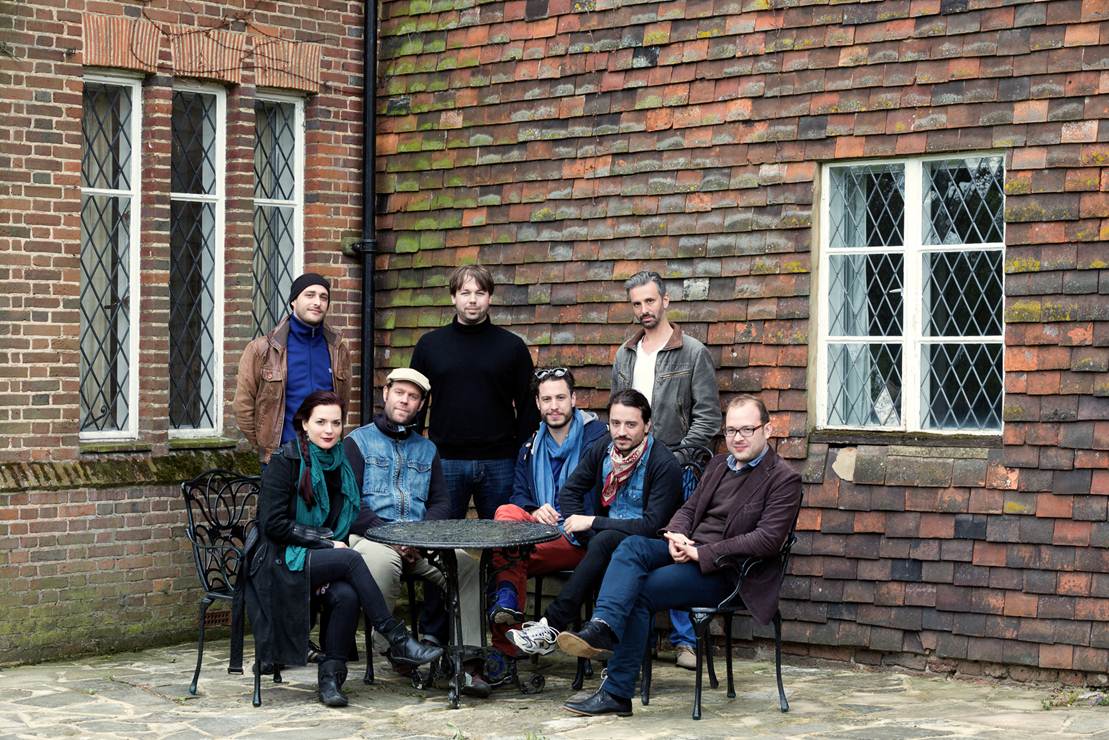
(Left to Right) Andreas Schaerer, Elina Duni, Florian Arbenz, Marc PerrenoudStefan Rusconi, Tobias Preisig. Leo Tardin, Samuel Blaser. ©Emile Holba

The heated kitchen for innovative artists

Take Five is a “heated kitchen” for innovative, young jazz artists, with five concentrated days of coaching, learning, sharing and networking (along with some fun and seriously good food). Created by the UK’s foremost jazz producer, Serious, and funded by Pro Helvetia, Take Five:Switzerland was designed to isolate eight Swiss musicians in the lush setting of Bore Place in Kent – think bluebell woods, gardens bursting with wisteria and mock orange, slouchy sofas and log fires – and lead them through sessions with a performance coach (Mary McCusker), music promoters from across Europe, as well as, digital, legal and industry experts including Wulf Muller of Sony.

“It’s been a rich experience,” said Tobias Preisig, as a comment on the variety of “inside information” they could garner, even when that meant facing tedious home truths. Musicians, such as Florian Arbenz, were aware they could improve their social networking and online presence, and some learnt the value of visual presentation, possibly helped by the photo shoot with experienced portraitist, Emile Holba. Scott Cohen of The Orchard gave a blistering session on aggressive digital distribution and ways to make money from music in an era of sporadic CD sales, with pianist Leo Tardin commenting, “He was the one to shake our ground the most, not someone to pat us on the head, but kick us in the butt, and he did that very well.”

“We need some space for our dreams” Andreas Schaerrer

Sometimes the message from promoters was dour, “We’re learning about the business, but there is no business”, said Marc Perrenoud noting that, “You have to build your audience because, apparently, no audience is interested in jazz.” However, as the vocalist Andreas Schaerer explained, “We need some space for our dreams,” and without exception they were resilient to negative messages. They have to be.

Jazz will need to go on beyond the passing of the classic “greats” and continue sculpting its own relevant identity whilst earning a living. Schaerer felt supported by some promoters learning that, “It’s not only our job to build up our career but it’s also that everybody is interested in having a future generation of active people.”

“We are a community, we are coming from the same place” Stefan Rusconi

What became achingly clear was the wall of work that faces these artists on a daily basis and that as they’d been given this break away from emails, calls, rehearsals, travelling, organising, etc, they were keen to squeeze every drop of tangible use out of the time with little patience for anything deemed irrelevant. Although Take Five is an extremely organised and detailed affair, thanks in part to the sterling work of Martel Ollerenshaw, it also tried to be flexible. So when the Swiss crew stood up to say they wanted time to simply hang out to share concepts, contacts and knowledge with each other, they were given it.

Something I was most struck by was the honesty with which the artists spoke to me about issues they were facing. Somehow the bombardment of information along with the intimate environment and maybe the odd glass of wine had enabled them to face up to their personal challenges: do they follow their business head or artistic heart, how can they deal with the amount they should be doing whilst having focused rehearsal/practise days, or time for their family, what step should they take next?

A Tribe Called Swiss

On the last day there was an extraordinary jam session led by one of the UK’s most exquisite saxophonists, John Surman. And there was an impromptu game of “football-piggy-in-the-middle”. It was actually in the kick about that I most clearly saw a key triumph of Take Five: the founding of a connected, bonded and inspired group. Let’s call it, A Tribe Called Swiss. Without exception each artist echoed Stefan Rusconi’s sentiment, “I knew all of them at least by name, but it’s been great to meet the other musicians. Also, to see we are a community, we are coming from the same place.”

Take Five can shake things up and it will take a while for the musicians to digest it all. I agreed with Rusconi when he said, “We need to be proud of what we’re doing. Swiss music is the new thing – chaotic, strange but rooted too.” Now all they need to do is buck the Swiss trend and force the spotlight onto themselves. As John Surman noted after their music session together, “I won’t forget you guys in a hurry,”  and if they utilise their newly found esprit de corps, they stand a chance of the music world saying the same thing.

Take 5 Switzerland website

Samuel Blaser on records

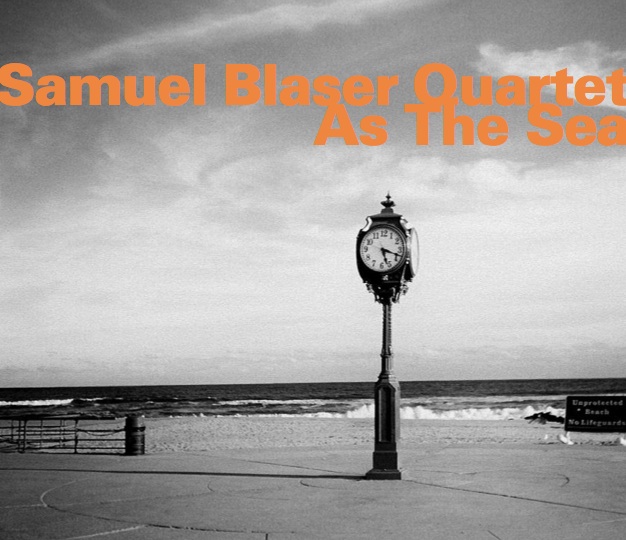
Samuel Blaser "As The Sea"Samuel Blaser released his new CD, “As The Sea”, on HatHut records ont the 26th of February. You can listen to “As The Sea Part One” and download the full album on his bandcamp page.

Samuel Blaser with Paul Motian

Two years ago at Cully Jazz Festival, he was the opening act for Wayne Shorter. He played his cards magnificently well. With an original concert-concept, he gave a jazz interpretation to Baroque and Renaissance music. It was a première before the launch of his CD in New York. Since he had a plane to catch for New York at the crack of dawn, it’s via mail that he explained to us the why’s and wherefore’s of his project « Consort in Motion » with Paul Motian.

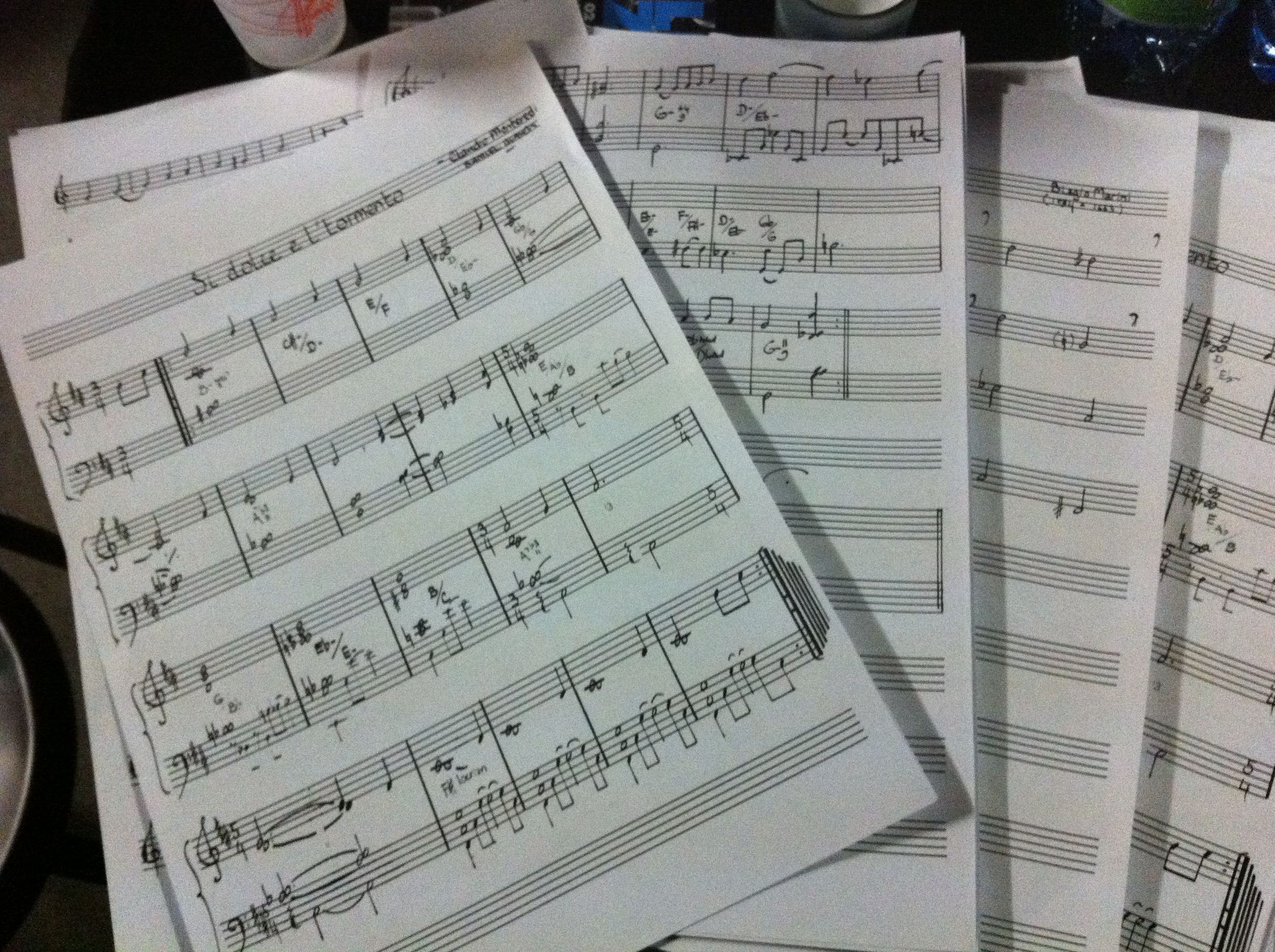
 “I’ve always been influenced by baroque music. My professor at the Conservatory at La Chaux-de-Fonds, Pierre Henry, was an excellent teacher, but at that time I used to only listen with one ear because the only thing I could think about was playing jazz. Today I play jazz and I find myself immersed in classical music. For this record, I reworked a lot of Claudio Monteverdi’s material because he is an innovative person, the inventor of opera. It seemed important to me to set off from someone like him in order to build something new. I’ve also reworked some compositions by Marini and Frescobaldi.

 Each track was approached differently. Sometimes, as with the track that’s on the Swiss Vibes compilation, (« Lamento della Ninfa »), I kept the melody intact. In the original version, the melody is played by a soprano and 3 tenors, whereas in this case it’s played by piano. In other instances, I only took the beginning and end of a composition and played around with it. Each time I try to extract the original material and to simplify it.

Samuel Blaser_cover The record « Consort in Motion» was recorded in 5 hours in New York with Paul Motian. I wanted to work with him because he’s played with everyone and because his very particular cymbal sound suited the project. The other musicians are a mix of people I knew well and some who had previously played with Motian.
It was important to record the CD in these conditions. For the Cully concert, I played with a different bassist and drummer (Gérald Cleaver). We rehearsed for an hour the day before, that was enough for us because my music is largely improvised and we’re used to playing together. I was really proud to get up on stage at Cully Jazz with this music, improvised music of the day!”

 Samuel Blaser

PS. This article was first published on swissvibes.org in french in April 2011. Translation Beatrice Venturini.

Le carnet de bord de Samuel Blaser

Les partitions de Samuel Blaser pour son concert au Cully Jazz Festival

En concert mardi 29 mars au Cully Jazz Festival, en ouverture de la prestation très attendue de Wayne Shorter, Samuel Blaser a magnifiquement tiré son trombone du jeu. Avec un concert-concept étonnant où il réinterprète en version jazz des pièces de la musique baroque et et de la Renaissance. Une première avant le vernissage de son CD à New York le 6 juin prochain. Comme il prenait son vol pour New York le lendemain à l’aube, c’est par courrier, si tôt arrivé, qu’il nous explique le pourquoi du comment de son projet « Consort in Motion ».
«J’ai toujours été influencé par les musiques baroques. Mon professeur au Conservatoire de La-Chaux-de-Fonds, Pierre Henry, a été un excellent formateur. A l’époque, je l’écoutais d’une oreille car je ne pensais qu’à une chose: faire du jazz. Aujourd’hui, je fais du jazz et je me retrouve plongé dans la musique classique. Pour ce disque, j’ai repris beaucoup de matériel de Claudio Monteverdi. Parce que Claudio Monteverdi est une personnalité novatrice, l’inventeur de l’opéra. Il me semblait important de partir de quelqu’un comme lui pour construire quelque chose d’autre. J’ai aussi repris des compositions de Marini et de Frescobaldi.
Le travail a été différent selon les morceaux. Parfois, comme dans le morceau qui est sur la compilation Swiss Vibes (« Lamento della Ninfa ») j’ai gardé intacte la mélodie. Dans la composition d’origine, elle est jouée par un soprano et 3 ténors et là, elle est jouée au piano. Dans d’autres cas, je n’ai pris que le début et la fin d’une composition et je m’amuse avec. A chaque fois j’ai essayé d’extraire la matière originale, de la simplifier.
Le disque « Consort in Motion» a été enregistré en 5 heures à New York en compagnie de Paul Motian. Je voulais travailler avec lui, parce qu’il a joué avec tout le monde et parce que son « son » de cymbale si caractéristique convenait bien à ce projet. Les autres musiciens sont à la fois des gens proches et des gens qui ont joué avec Motian. C’était important pour pouvoir enregistrer ce CD dans ces conditions. Pour le concert de Cully, je jouais avec un autre bassiste et un autre batteur (Gérald Cleaver). On a répété une heure la veille. C’est suffisant car ma musique est largement improvisée et nous avons l’habitude de jouer ensemble. J’étais vraiment fier de monter sur cette scène du Cully Jazz avec cette musique, la musique improvisée d’aujourd’hui!»

Samuel Blaser