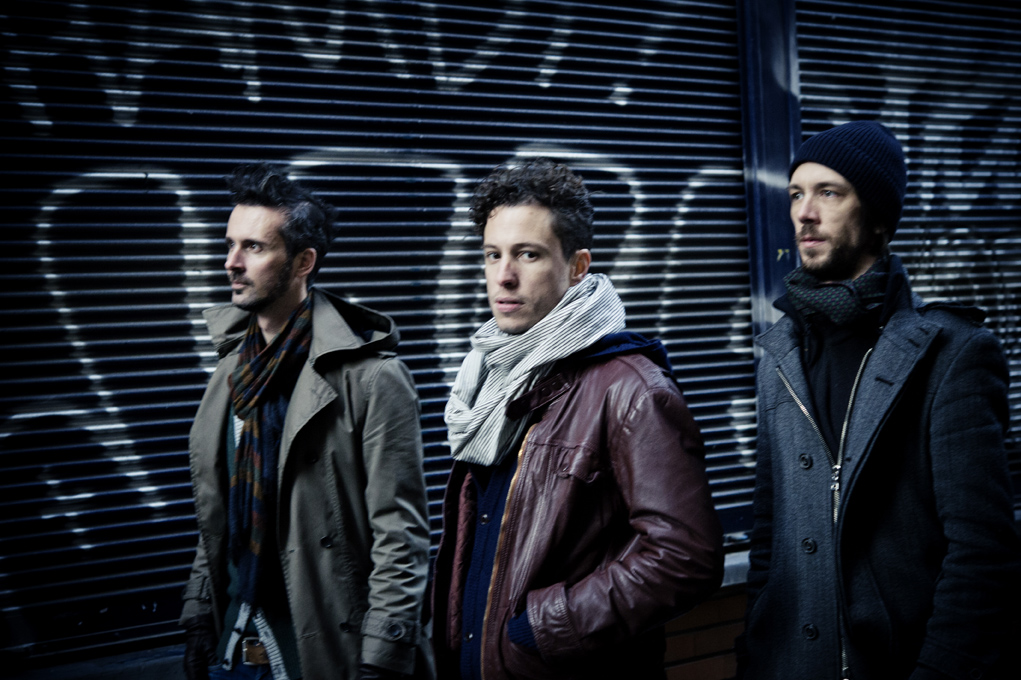
Rusconi at Cully Jazz Festival

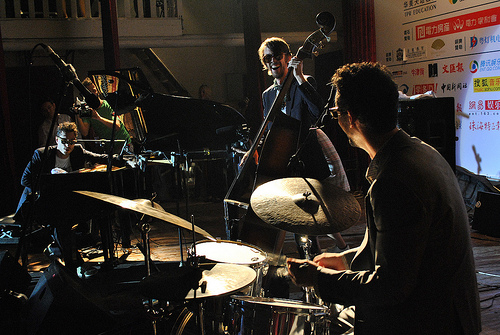
ImageI was reminded of the story of the Sorcerer’s Apprentice watching this trio perform. Keen to make magic and mischief, Rusconi sometimes found themselves unable to control the proceedings. This was the first gig of the tour and I think their playfulness will win over audiences, they just needed more child-like energy, a sort of innocent conviction, to pull it off at Cully. However, the band were most captivating when they painted afresh their best compositions from the new album, History Sugar Dream.

‘Psychedelia for Laika’
Ankor was a trademark piece, with Stefan Rusconi’s mournful yet sweet piano, rich with echo and thought, sensitively interlaced with Fabian Gisler’s handsome bass notes. The sparse, crispy drum beats of Claudio Strüby balanced the sound perfectly. Sojus Dream used a repetitive theme as its foundation before a synth keyboard sneaked in, providing Herbie Hancock-like funky accents. The track grew in stature as it built a platform for Fabian’s electric guitar to glide through, providing, as they tell us, ‘psychedelia for Laika,’ the dog who was sent out to orbit the earth in 1957 (and died within hours of lift off). I didn’t feel Fabian pierced deeply enough, so it was down to Stefan’s collapse into a warped and weird circus-style piano to trip the track out.

Bowie’s Life on Mars? started up
So, to the ‘high jinks’ – such as swapping instruments amongst themselves, as in Change (Part One), with Claudio on piano, Fabian on drums and Stefan on guitar, and stopping everything for Fabian to put a record on the Technics deck set up onstage. Bowie’s Life on Mars? started up, complete with vinyl crackles to re-enforce the theme of History Sugar Dream – childhood memories, “A time when dreams and hopes, fantasy and illusion, were reality,” as they write in their press release.

This trio is capable of subtle and complex emotions
I like the way Rusconi seem to feel their way through unknown landscapes in their music, playing with fantasy. At one point I thought of dark, rainy scenes in the film Blade Runner with its sense of nostalgia, loss and romance. This trio is capable of subtle and complex emotions. I’d like to have been taken more deeply into these worlds, that’s where the real playfulness lives.


Take 5: Switzerland

Take 5_Swiss team

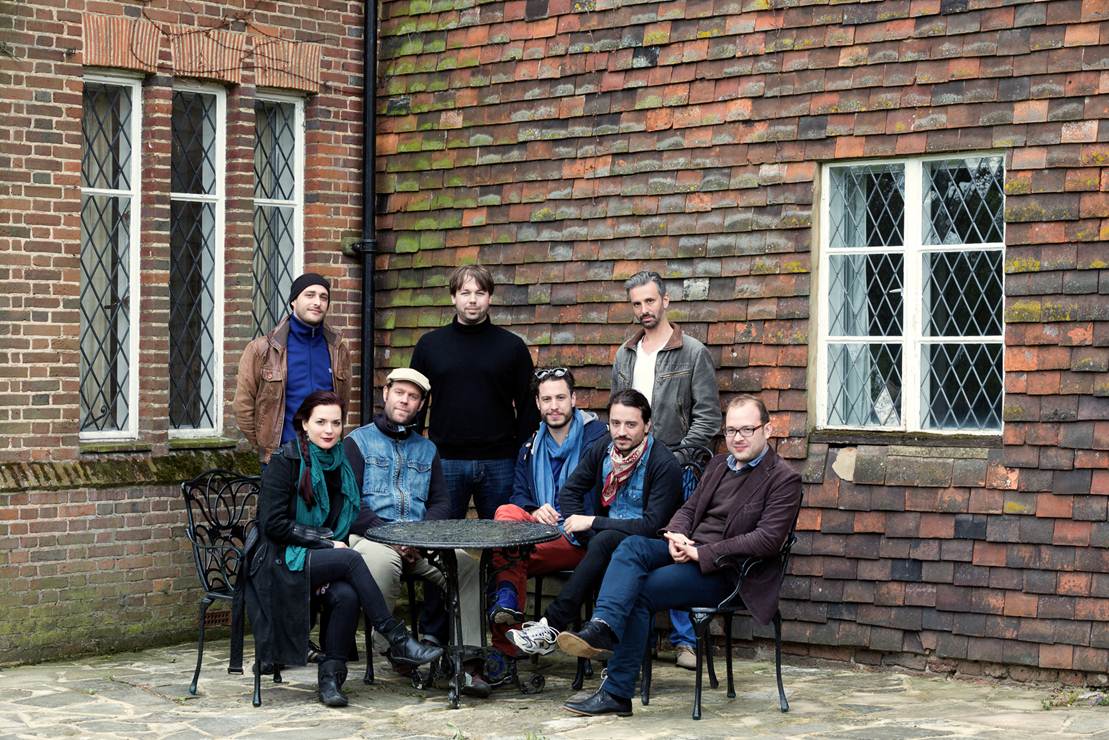
(Left to Right) Andreas Schaerer, Elina Duni, Florian Arbenz, Marc PerrenoudStefan Rusconi, Tobias Preisig. Leo Tardin, Samuel Blaser. ©Emile Holba

The heated kitchen for innovative artists

Take Five is a “heated kitchen” for innovative, young jazz artists, with five concentrated days of coaching, learning, sharing and networking (along with some fun and seriously good food). Created by the UK’s foremost jazz producer, Serious, and funded by Pro Helvetia, Take Five:Switzerland was designed to isolate eight Swiss musicians in the lush setting of Bore Place in Kent – think bluebell woods, gardens bursting with wisteria and mock orange, slouchy sofas and log fires – and lead them through sessions with a performance coach (Mary McCusker), music promoters from across Europe, as well as, digital, legal and industry experts including Wulf Muller of Sony.

“It’s been a rich experience,” said Tobias Preisig, as a comment on the variety of “inside information” they could garner, even when that meant facing tedious home truths. Musicians, such as Florian Arbenz, were aware they could improve their social networking and online presence, and some learnt the value of visual presentation, possibly helped by the photo shoot with experienced portraitist, Emile Holba. Scott Cohen of The Orchard gave a blistering session on aggressive digital distribution and ways to make money from music in an era of sporadic CD sales, with pianist Leo Tardin commenting, “He was the one to shake our ground the most, not someone to pat us on the head, but kick us in the butt, and he did that very well.”

“We need some space for our dreams” Andreas Schaerrer

Sometimes the message from promoters was dour, “We’re learning about the business, but there is no business”, said Marc Perrenoud noting that, “You have to build your audience because, apparently, no audience is interested in jazz.” However, as the vocalist Andreas Schaerer explained, “We need some space for our dreams,” and without exception they were resilient to negative messages. They have to be.

Jazz will need to go on beyond the passing of the classic “greats” and continue sculpting its own relevant identity whilst earning a living. Schaerer felt supported by some promoters learning that, “It’s not only our job to build up our career but it’s also that everybody is interested in having a future generation of active people.”

“We are a community, we are coming from the same place” Stefan Rusconi

What became achingly clear was the wall of work that faces these artists on a daily basis and that as they’d been given this break away from emails, calls, rehearsals, travelling, organising, etc, they were keen to squeeze every drop of tangible use out of the time with little patience for anything deemed irrelevant. Although Take Five is an extremely organised and detailed affair, thanks in part to the sterling work of Martel Ollerenshaw, it also tried to be flexible. So when the Swiss crew stood up to say they wanted time to simply hang out to share concepts, contacts and knowledge with each other, they were given it.

Something I was most struck by was the honesty with which the artists spoke to me about issues they were facing. Somehow the bombardment of information along with the intimate environment and maybe the odd glass of wine had enabled them to face up to their personal challenges: do they follow their business head or artistic heart, how can they deal with the amount they should be doing whilst having focused rehearsal/practise days, or time for their family, what step should they take next?

A Tribe Called Swiss

On the last day there was an extraordinary jam session led by one of the UK’s most exquisite saxophonists, John Surman. And there was an impromptu game of “football-piggy-in-the-middle”. It was actually in the kick about that I most clearly saw a key triumph of Take Five: the founding of a connected, bonded and inspired group. Let’s call it, A Tribe Called Swiss. Without exception each artist echoed Stefan Rusconi’s sentiment, “I knew all of them at least by name, but it’s been great to meet the other musicians. Also, to see we are a community, we are coming from the same place.”

Take Five can shake things up and it will take a while for the musicians to digest it all. I agreed with Rusconi when he said, “We need to be proud of what we’re doing. Swiss music is the new thing – chaotic, strange but rooted too.” Now all they need to do is buck the Swiss trend and force the spotlight onto themselves. As John Surman noted after their music session together, “I won’t forget you guys in a hurry,”  and if they utilise their newly found esprit de corps, they stand a chance of the music world saying the same thing.

Take 5 Switzerland website
Rusconi et Preisig créent l’événement Cully Jazz Festival

[youtube=http://www.youtube.com/watch?v=nyQwTX2msFg&feature=youtu.be]

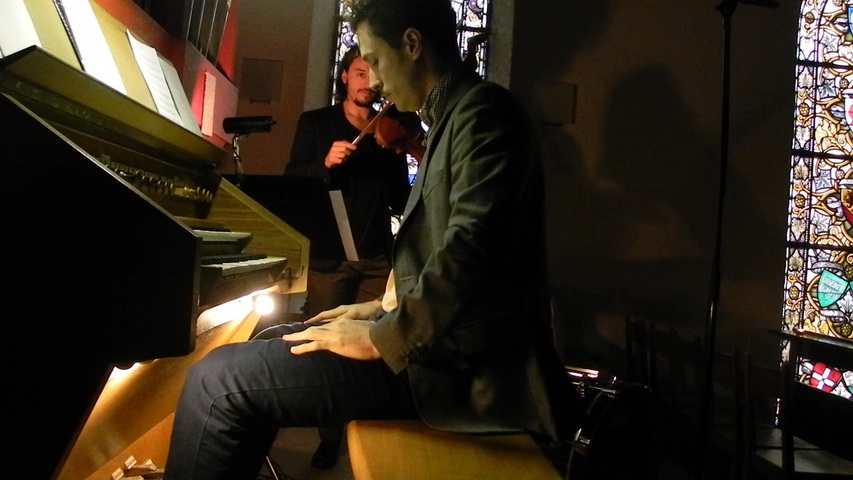
Le projet était audacieux et deux des musiciens de jazz suisse les plus aventureux du moment ont relevé le défi. En janvier dernier le violoniste Tobias Preisig et le pianiste Stefan Rusconi ont investi le temple protestant de Cully pendant trois jours pour préparer une création. Trois mois et quelques répétions plus tard, ils sont de retour dans le cadre Cully Jazz Festival. Samedi 14 avril 2012, à 18 h, alors que le public est sagement assis sur les bancs du parterre de l’église, ils s’installent au balcon, invisibles d’en bas. Une drôle d’idée? “C’est le concept de base de la musique d’église, s’exclame un peu avant le concert Stefan Rusconi, ne pas voir les musiciens permet de mieux se concentrer sur les sons et, dans un contexte religieux, de se rapprocher de Dieu“.

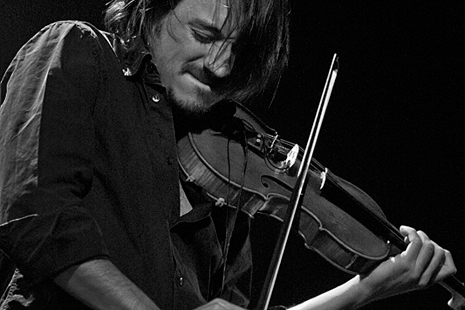
Les deux musiciens complices ont quant à eux choisi d’expérimenter. Tobias Preisig tire des sons étonnants de son violon avec lequel il semble danser et frappe parfois de son pied droit une caisse-tambour posée au sol. Stefan Rusconi tente de dompter le vieil orgue du temple. La vidéo ci-dessous montre le tout premier morceau du concert. Le public, en bas, est encore un peu déconcerté par cette prestation “à l’aveugle”. Après quelques morceaux il est conquis et se met à applaudir à tout rompre. A signaler également l’apparition de la chanteuse Evelinn Trouble dans un gospel fort peu orthodoxe en final. Un autre moment intense de cette prestation malheureusement non-filmable vu le manque de lumière.

En 2012, le Cully Jazz fait la part belle aux artistes suisses

Tobias Preisig

Le Cully Jazz Festival a trente ans. Depuis 1982, le festival vaudois a su grandir s’en prendre la grosse tête. Il a d’ailleurs décidé de ne pas se lancer dans une opération de commémoration aussi coûteuse que pompeuse. Fidèle à son esprit, fidèle à la passion qui l’anime, il a décidé de laisser la place à la musique; tout simplement..

Du côté des artiste suisses, il y aura beaucoup de très bonnes choses, à commencer par un vieux de la vieille, Al Comet (l’homme des samplers des Young Gods) qui investit le caveau HBBC les deux weekends du festival.

Autre moment fort, samedi 14 avril au Temple le Kaléidoscope String Quartet, à mi-chemin entre musique classique, contemporaine et jazz. Un projet emmené par le violoniste Tobias Preisig. Ce-dernier poursuivra la soirée en duo avec son ami Stefan Rusconi qui martèlera pour l’occasion les touches de l’orgue du Temple.

Mercredi 18 avril, le pianiste Marc Perrenoud viendra présenter son tout nouvel album sur la grande scène en première partie de Branford Marsalis. Un challenge qui fera sans doute monter son taux d’adrénaline à des hauteurs intéressantes …

Quant au Tessinois Frank Salis, il fut la révélation du festival Off l’an dernier. Il fera valser son orgue Hammond et son groove lors de la soirée d’ouverture du 13 avril en première partie de Amp Fiddler !

Sevdah Dragi Moj

Beaucoup de musiciens suisses seront également présents dans les caveaux.Carte blanche au label biennois de musique électronique Oh My au Jardin. Dans le tout nouveau caveau Weber, l’association Addis Sounds propose un parcours du blues qui passe de l’Afrique à la Grèce et à la Bosnie. Le tout orchestré uniquement par des musiciens suisses ou résidents en Suisse. Nous y reviendrons.

Cinq questions à Stefan Rusconi

Rusconi: un trio de jazz? Oui et… non. Le dernier opus en date, «It’s a Sonic Life» de ces trois Suisses allemands ne comporte que des reprises de… Sonic Youth. Un enregistrement étonnant, captivant. Stefan Rusconi, pianiste est compositeur du groupe, a remporté il y a deux jours le prestigieux Echo Jazz 2011 dans la catégorie « meilleur instrumentaliste national». «It’s a Sonic Life» sortira en France en septembre 2011 et le groupe sera en tournée dans l’Hexagone en octobre.

Ce weekend, le film documentaire sur le sculpteur Tinguely de Thomas Thümena est sur les écrans de Suisse-romande. Sa bande-son est encore l’œuvre de Rusconi. Explications.

Comment avez vous travaillé bande-son du film sur Tinguely?

Stefan Rusconi Le réalisateur, Thomas Thümena, avait déjà choisi trois chansons extraites de nos différents albums. Il nous à proposé d’aller en studio pour créer le reste de la bande-son. Mais le film n’était pas terminé et je sentais que ça allait être compliqué de travailler sur des scènes qui étaient encore en cours de production. Comme j’ai énormément de musique et de samples sur mon ordinateur, je lui ai proposé de travailler à partir du matériel que j’avais déjà. J’ai donc enregistré les parties additionnelles plus atmosphériques ainsi que des  beats. J’ai été puisé dans ce que nous avions fait avec le trio Rusconi ainsi que dans un autre projet plus electro, un duo de piano (Monster Piano Sessions).

[youtube= http://www.youtube.com/watch?v=OnlI5OU4wGA]

Pourquoi avoir choisi de faire un album de reprises de Sonic Youth?

Stefan Rusconi J’ai toujours été un fan de Sonic Youth que j’écoute depuis 12 ou 13 ans. Cela dit, cet enregistrement n’était pas prévu. Nous étions partis sur autre chose, mais deux semaines avant l’enregistrement, nous nous sommes rendus compte que cela n’allait pas fonctionner. J’ai proposé à Fabian Gislers (double basse) et à Claudio Strüby (batterie-percussions) ce concept. Fabian et Claudio ne connaissaient pas tout Sonic Youth. Parfois, ils découvraient le morceau quand je le jouais au piano. Du coup cela amenait une approche beaucoup plus fraiche, plus décontractée. Sonic Youth a une approche très ouverte de la musique, qui laisse énormément d’espace. De faire un travail comme celui-ci, nous a donné beaucoup de confiance. Finalement, nous nous sentons plus libres maintenant que nous avons travaillé ce répertoire.

Pourquoi avoir choisi le jazz si vous étiez fan de Sonic Youth?

Stefan Rusconi C’était une erreur! Non, sérieusement, je pense qu’on trouve dans le jazz des moments de liberté que l’on ne trouve pas dans d’autres musiques. Je n’aime pas jouer du jazz comme le faisaient nos parents. J’aime improviser, changer, transformer pour arriver à ma vision musicale.

[youtube= http://www.youtube.com/watch?v=V0ag1cHPL10]

Vous vivez depuis deux ans à Berlin. Pourquoi?

Stefan Rusconi A Zurich, j’avais atteint un point où j’avais l’impression que mon environnement me bloquait. Je suis convaincu qu’il ne faut pas chercher à être toujours efficace. A Berlin, je trouve un peu de cette folie dont j’ai besoin. Le rapport à la musique est différent. Tout le monde va au concert. Même sans connaître les groupes, par curiosité. Ça coûte 5 € et ce n’est pas compliqué. Vous pouvez allez voir un concert et trouvez ça archi-nul ou être transporté et cela ne porte pas à conséquence. On est dans un espace non-planifié, parfois chaotique, parfois sublime. Il y a une liberté que je n’ai vu nul part ailleurs. Et pourtant j’ai pas mal voyagé.

Dans quel contexte, aimez-vous jouer?

Stefan Rusconi Nous jouons dans les circuits traditionnels, festivals etc. Mais ce que nous préférons c’est sortir de ces circuits pour jouer dans des théâtres désaffectés ou autres lieux incongrus. Cela demande plus de boulot, plus de promotion, mais cela attire aussi un autre public.

 Rusconi, «It’s a Sonic Life» (Sony Music en Allemagne et en Suisse). Sortie française prévue début septembre

Tinguely (le film). Jusqu’au 19 avril aux Galeries du Cinéma et au Cinéma Scala de Genève