Made in Switzerland (the pros and cons of being a Swiss jazz artist)

Swiss Vibes 2013_01_Mix 4“You can tap into resources and support and it’s there”  Leo Tardin

The Swiss jazz scene is evolving and has been for some time. Music education at institutions such as the Bern University of the Arts, professional support for artists and an expansion of the term jazz, have helped the emergence of new and award-winning talent. I asked musicians who’ve had help from Pro Helvetia, how being Swiss has impacted their music and careers and if any changes could be made for the better.

They unanimously acknowledged the funding system that exists. Drummer Florian Arbenz said financial help was a huge advantage, “Because of the spare time we have for our heads to create something…(and) work on our own concepts.” Leo Tardin, who spent a significant time building his reputation whilst living in New York, said that being abroad gave him perspective on being Swiss, “You can tap into resources and support and it’s there. It’s shrinking just like everywhere else but we’re still very privileged and that’s a fact.”

It will always be diverse, musically”  Stefan Rusconi

Several artists did refer to the Nordic scene as an example to follow, with its huge investment in jazz and organic creation of an almost tangible ‘brand’, encompassing artists from Jan Garbarek to E.S.T. However, the journalist Arnaud Robert said recently, “Switzerland creates individuals, not schools or movements of music,” and musician Stefan Rusconi agrees, “It will always be diverse, musically, I don’t think it will be like the Nordic sound, I think it will be an approach, an attitude that could come out of Switzerland.”

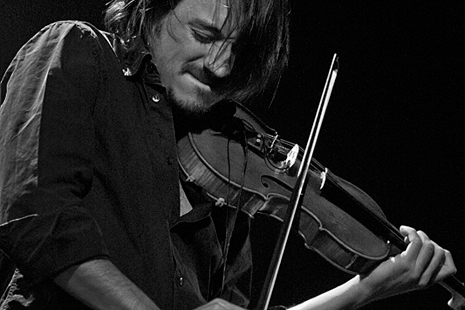
I would agree; as a DJ visiting Switzerland, I was drawn to the open-minded spirit of people less concerned with being cool, than being free (whilst getting things done, of course!). Humour and a spattering of crankiness are somewhere in the mix and as the Zurich-born violinist, Tobias Preisig, says, “I’m pretty amazed how small this country is but how rich it is music and cultural-wise.” Maybe this is entangled with the make up of Switzerland as noted in Wikipedia, it’s not, ‘a nation in the sense of a common ethnic or linguistic identity’ and over one fifth of the population are immigrants.

“Switzerland, for me, is a big chance”  Elina Duni

Vocalist Elina Duni says of her quartet, “This music wouldn’t exist without Switzerland because it is the fruit of bringing together my Albanian roots and my Swiss culture.” Having moved to Geneva when she was ten, Duni sees her music as building bridges between people and acknowledges the support she’s had with that, “Switzerland, for me, is a big chance.”

Andreas Schaerer also feels that being Swiss has informed his compositions and vocal work in an interesting way. He refers to the Swiss obsession with detail, “We work so long to make things better and better until every last corner of the product is perfect…What is good is if you can be brave and destroy it…so that you see these pieces of complexity (and detail) but the environment is complete chaos.”

Schaerer also observed that the Swiss are good at technology and high quality products that take the spotlight, as it allows ‘their creator’ to stay in the shadows. Elina Duni also commented on this Swiss characteristic of humility, “It allows people to learn further and go further,” but too much of it prevents the Swiss from exporting itself with pride. Rusconi pointed to the same issue, that it’s not ‘Swiss’, “to stand there and say we’re proud of ourselves, we want to get out there, we’re great.” Self-promotion is a pre-requisite in the music world today and Schaerer has had to confront his discomfort with that, “You need to get rid of it without becoming arrogant or losing respect for others.”

“It’s hard to cross borders in music and life”  Tobias Preisig

Several of the artists have lived or are living abroad. Samuel Blaser now resides in Berlin but spent time in New York. Although none of them felt that ‘being Swiss’ made them particularly exotic, Blaser felt, “It’s stronger if you live in New York because you can then ‘export’ your music back into the EU market (from the US).” Being an ‘export’ is vital to these musicians because as they pointed out Switzerland is not a big enough market for them to survive there alone. “It’s hard to cross borders in music and life,” reflected Preisig, and it’s why support to tour is key. Pianist Marc Perrenoud saw this as a positive, “I use the obligation to export yourself as a way to travel, meet people and experience other cultures.”

Being a Swiss musician is packed with advantages, not least because being brought up in a culture of excellence, passion and professionalism has impacted the standard of playing. Being a jazz musician anywhere is not an easy choice but that can’t be changed, neither can the size of Switzerland. However the discomfort with ‘blowing your own trumpet’ can be discarded along with the Swiss milkmaid. These musicians are cultivating a confidence in their own unique ‘voices’ and this needs to be reflected in the way they are promoted. I’m certain cheese and chocolate will always sell but now there’s a chance to add a new and more emotionally expressive export to the table.
La scène suisse est dans la place!

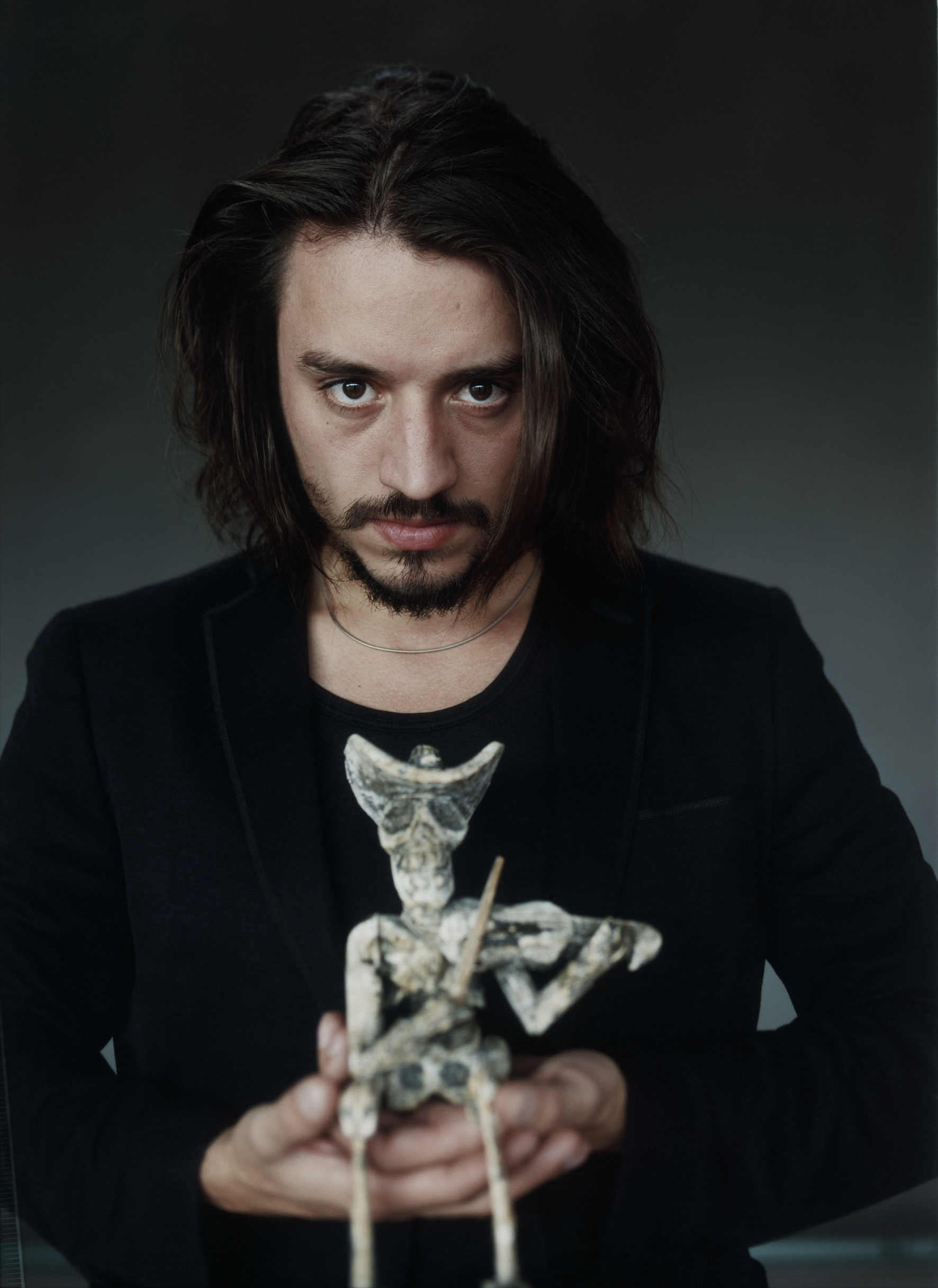
Savez-vous qui a déclenché le déluge de pluie hier soir au Cully Jazz? Tobias Preisig et son violon qui parle aux esprits. Alors que le musicien zurichois se lançait dans un de ces crescendos dont il a le secret, la pluie s’est mis à battre à tout rompre sur la tente qui recouvre la scène du Jardin. Une minute de folie. A croire que les dieux de la pluie avaient décidé d’être de la fête. Tobias Preisig et son band recommencent ce soir (toujours au Jardin), mais à en juger par le ciel, les dieux de la pluie ont décidé d’aller voir ailleurs. Il était temps.

[soundcloud url=”http://api.soundcloud.com/tracks/32579485″ params=”” width=” 100%” height=”166″ iframe=”true” /]

Egalement dans le off du Cully Jazz Pierre Omer et ses Stewarts Garages Conspiracy cow-boys ont installé leurs quartiers dans l’antre du THBBC. Des looks et des riffs de tueur, un chanteur ambianceur hors pair et le batteur d’Imperial Tiger Orchestra perdu dans des expérimentations sonores improbables sur une planche tendue de cordes. Eux ne craignent ni le vent, ni la pluie et peuvent même envisager de balancer leur rock-country-blues par beau temps si vous leur payer un verre…

[soundcloud url=”http://api.soundcloud.com/tracks/49028382″ params=”” width=” 100%” height=”166″ iframe=”true” /]

Dans le festival IN, c’est aux Bernois de PommelHORSE que revient l’insigne honneur d’ouvrir la soirée sous le chapiteau avant Mr Steve Coleman en personne. PommelHorse, c’est du jazz sans être du jazz. Autrement dit quatre jeunes musiciens formés aux canons du jazz, mais qui écoutent aussi du rock, du heavy metal, de la drum’n’bass ou de la fusion. Une musique chargée d’atmosphères qui, partant d’instruments acoustiques, jouent avec pas mal de feeling des effets de distorsion,  des décalages sonores et rythmiques.

[youtube=http://www.youtube.com/watch?feature=player_embedded&v=GJMdXkK8k3U]

Quant au musicien, compositeur et arrangeur romand Christophe Calpini (Stade, Mobile in Motion) il viendra défendre les couleurs de son projet avec le chanteur anglais Wayne Paul. La rencontre entre cette voix soul qui sait vous tirer des larmes et le maestro des amples a déjà accouché d’un disque “Between The Lines”. Au Next Step samedi soir, les deux amis vous feront découvrir leur live. Encore un must.

[youtube=http://www.youtube.com/watch?v=cuPlGudW7VU]

Le disque de juin de Swissvibes: Tobias Preisig “In Transit”

Tobias Preisig © Likta Hanzkova

Dès les première notes, on pressent que la musique de Tobias Preisig est intense, de celle qui vous prend et vous emporte comme une lame de fond avant de vous redéposer sur une berge, repus et heureux. Tobias Preisig est un surdoué du violon, doublé d’un boulimique. Jugez plutôt: A 31 ans, il a déjà enregistré trois CDs dont deux sous son nom sur des labels internationaux, joué au Montreux Jazz, à la Mecque du free jazz de Willisau et au Menuhin Festival de Gstaad. Dirigeant son quartet depuis 2003, il n’en multiplie pas moins les projets spéciaux avec Georges Gruntz, Dieter Meier, Christian Zehnder ou Rusconi.

Evidemment, avec un tel pedigree, sa musique n’est plus vraiment classable. Ni jazz, ni classique, ni théâtrale, ni free, mais un peu de tout ça en même temps. Pour définir son dernier CD, «In Transit », il parle d’un « voyage à travers un pays dont l’apparence se transforme continuellement ». De fait son violon nous emporte sur des thèmes archiconnus (« Hallelujah » de Leonard Cohen) comme sur des compositions de son cru. Serein ou tempétueux, il joue des montées en puissance, passe des sonorités acoustiques à des stridences presque intenables. En transit entre passion et séduction, ferveur et démon, sa musique est de celle qui sont là pour rester.

Tobias Preisig, « In Transit » (Traumton)

Rusconi et Preisig créent l’événement Cully Jazz Festival

[youtube=http://www.youtube.com/watch?v=nyQwTX2msFg&feature=youtu.be]

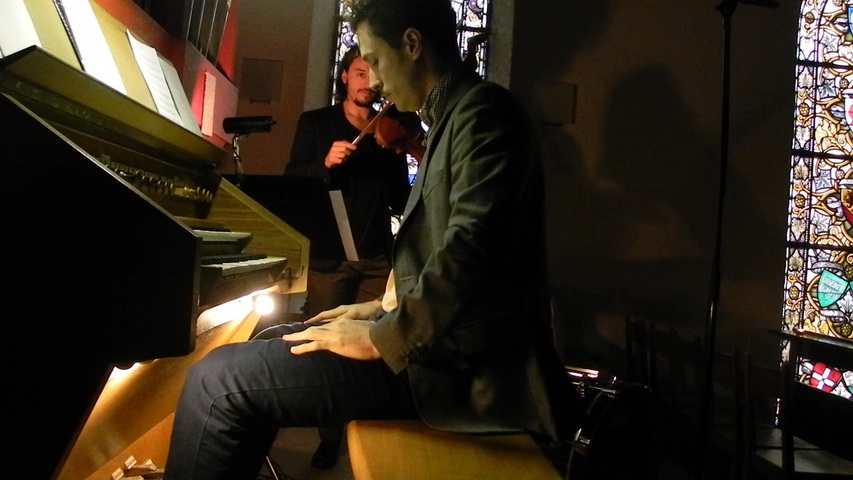
Le projet était audacieux et deux des musiciens de jazz suisse les plus aventureux du moment ont relevé le défi. En janvier dernier le violoniste Tobias Preisig et le pianiste Stefan Rusconi ont investi le temple protestant de Cully pendant trois jours pour préparer une création. Trois mois et quelques répétions plus tard, ils sont de retour dans le cadre Cully Jazz Festival. Samedi 14 avril 2012, à 18 h, alors que le public est sagement assis sur les bancs du parterre de l’église, ils s’installent au balcon, invisibles d’en bas. Une drôle d’idée? “C’est le concept de base de la musique d’église, s’exclame un peu avant le concert Stefan Rusconi, ne pas voir les musiciens permet de mieux se concentrer sur les sons et, dans un contexte religieux, de se rapprocher de Dieu“.

Les deux musiciens complices ont quant à eux choisi d’expérimenter. Tobias Preisig tire des sons étonnants de son violon avec lequel il semble danser et frappe parfois de son pied droit une caisse-tambour posée au sol. Stefan Rusconi tente de dompter le vieil orgue du temple. La vidéo ci-dessous montre le tout premier morceau du concert. Le public, en bas, est encore un peu déconcerté par cette prestation “à l’aveugle”. Après quelques morceaux il est conquis et se met à applaudir à tout rompre. A signaler également l’apparition de la chanteuse Evelinn Trouble dans un gospel fort peu orthodoxe en final. Un autre moment intense de cette prestation malheureusement non-filmable vu le manque de lumière.

En 2012, le Cully Jazz fait la part belle aux artistes suisses

Tobias Preisig

Le Cully Jazz Festival a trente ans. Depuis 1982, le festival vaudois a su grandir s’en prendre la grosse tête. Il a d’ailleurs décidé de ne pas se lancer dans une opération de commémoration aussi coûteuse que pompeuse. Fidèle à son esprit, fidèle à la passion qui l’anime, il a décidé de laisser la place à la musique; tout simplement..

Du côté des artiste suisses, il y aura beaucoup de très bonnes choses, à commencer par un vieux de la vieille, Al Comet (l’homme des samplers des Young Gods) qui investit le caveau HBBC les deux weekends du festival.

Autre moment fort, samedi 14 avril au Temple le Kaléidoscope String Quartet, à mi-chemin entre musique classique, contemporaine et jazz. Un projet emmené par le violoniste Tobias Preisig. Ce-dernier poursuivra la soirée en duo avec son ami Stefan Rusconi qui martèlera pour l’occasion les touches de l’orgue du Temple.

Mercredi 18 avril, le pianiste Marc Perrenoud viendra présenter son tout nouvel album sur la grande scène en première partie de Branford Marsalis. Un challenge qui fera sans doute monter son taux d’adrénaline à des hauteurs intéressantes …

Quant au Tessinois Frank Salis, il fut la révélation du festival Off l’an dernier. Il fera valser son orgue Hammond et son groove lors de la soirée d’ouverture du 13 avril en première partie de Amp Fiddler !

Sevdah Dragi Moj

Beaucoup de musiciens suisses seront également présents dans les caveaux.Carte blanche au label biennois de musique électronique Oh My au Jardin. Dans le tout nouveau caveau Weber, l’association Addis Sounds propose un parcours du blues qui passe de l’Afrique à la Grèce et à la Bosnie. Le tout orchestré uniquement par des musiciens suisses ou résidents en Suisse. Nous y reviendrons.