‘Levitation’ by Tobias Preisig & Stefan Rusconi – Le Temple, Cully, 9/4/16
@J-C Arav
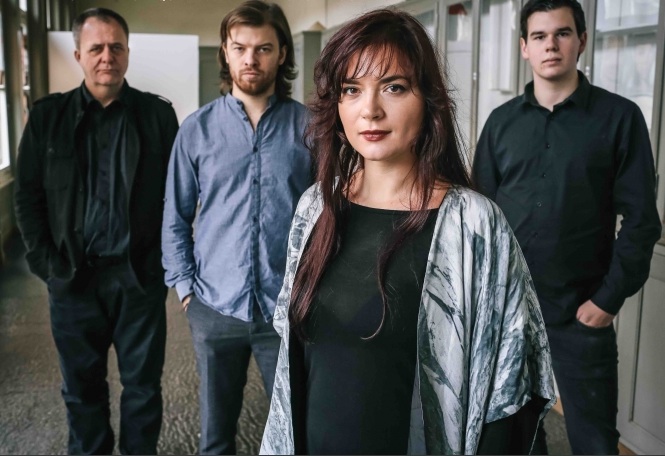
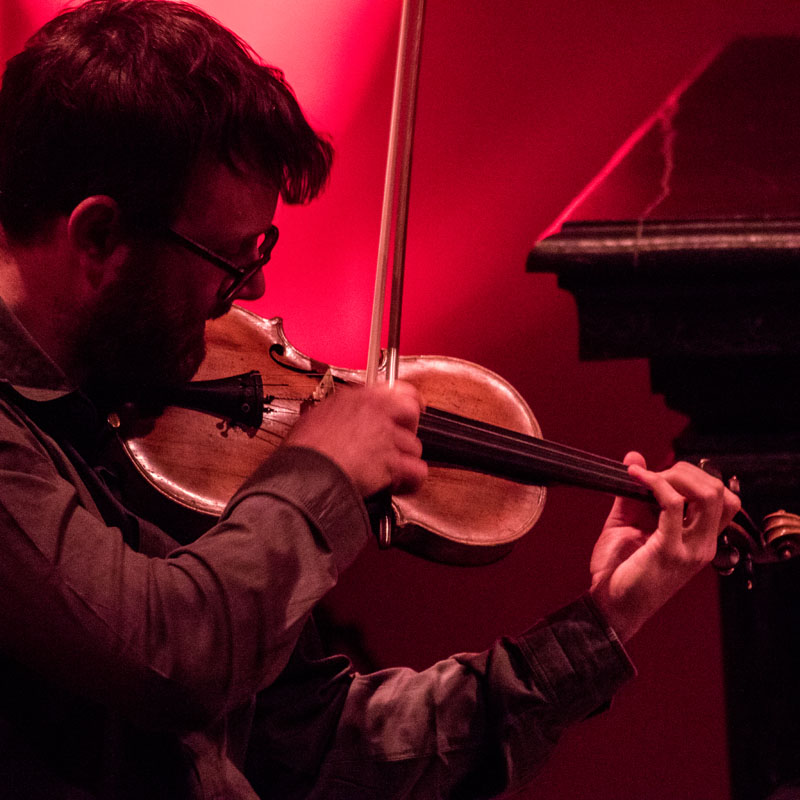
Tobias Preisig and Stefan Rusconi are Swiss pillars of the Cully Jazz musical institution. Their Saturday night performance at Le Temple church marked a return to sacred ground that the duo had already trodden a few years ago. This is the venue that inspired and housed their Levitation project that tonight is played out to an eager audience, most of whom are already familiar with the powerful, intimate exchange between violinist and pianist.
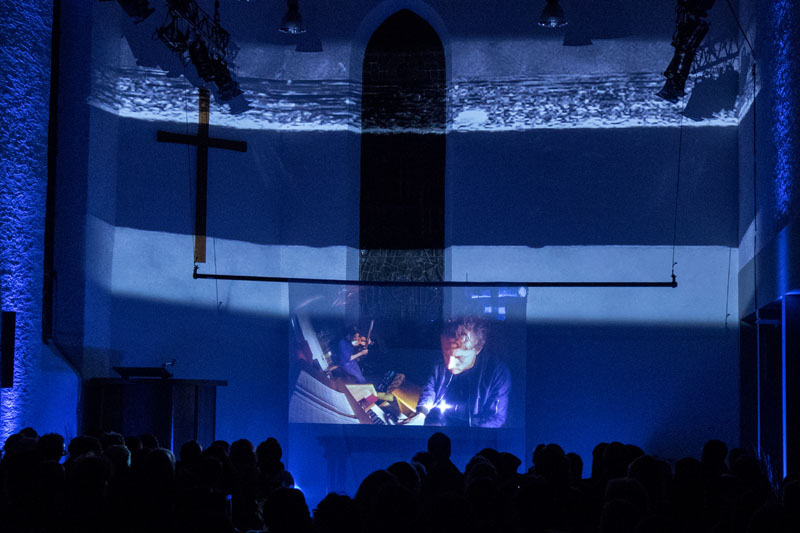
The key feature of the Levitation project is the sensitive, gradually drawn out soundscape created in great part by Rusconi on the church organ which is then supported and teased out by the strings. In practical terms this means having the two musicians play upstairs in the church gallery, heard but not seen from the audience down below. Deciding that this year’s jazz audience needed something to look at, the entire concert was projected on screen at ground level, which, ironically – because of the very bright projector light that was aimed right at the audience – meant that many of us listened with eyes tightly shut, (it was a bit like staring at the solar eclipse without eye protection). Possibly the best way to appreciate the moody, almost Gothic sounds raining down from above.
Some questions and answers with violinist Tobias Preisig:
What’s your relationship to the Cully Jazz festival?
Tobias Preisig: I have a special attachment to Cully Jazz. I’ve been playing here for the last 6 years, I started off in a small caveau as part of the ‘OFF’ programme, then they offered me residency, then larger stages as part of the main programme. There’s a extremely open-minded attitude here and strong commitment to push the next generation. Young and unestablished musicians find a stage here, right next to the superstars. Playing at Cully is definitely the highlight of the year for me. It’s become almost a family gathering with musical professionalism.
Was the material for ‘Levitation’ tailor-made for Cully?
Tobias Preisig: We played as a duo here at Le Temple in Cully a few years ago, performing for the first time with the church organ. Again, it was an opportunity that the festival gave to us. We fell in love with the sound and came back one summer to record at Le Temple for 5 nights. This music is now released as an LP called ‘Levitation’ and yes, it’s definetely tailor-made. So what’s nicer than to celebrate a recording that was actually made in this enviroment?!
Will there be more live gigs with the ‘Levitation’ project?
Tobias Preisig: This is a special side project for both Rusconi and I whose friendship and collaborations go back a long time. So far we’ve only played the material from Levitation live twice! There are a lot of underplayed organs and oversized churches, so we are looking forward to exploring them and awakening them with new music.
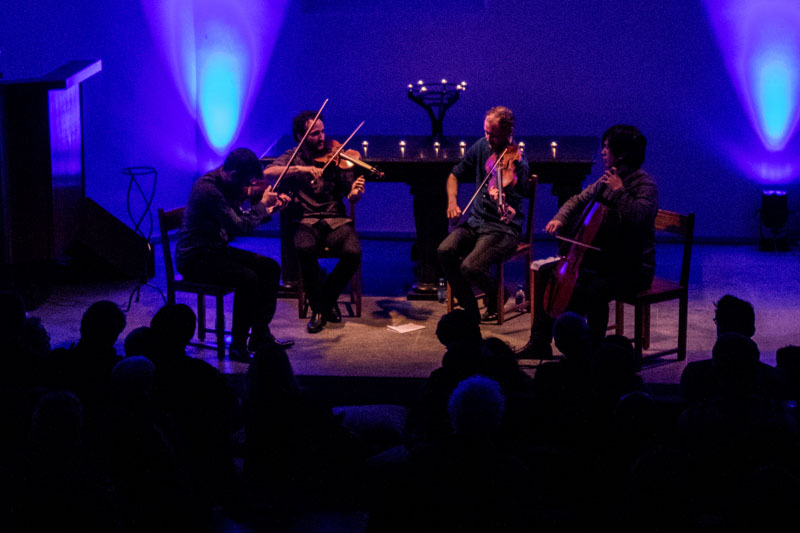
Kaleidoscope String Quartet – Le Temple, Cully, 8/4/16
@J-C Arav
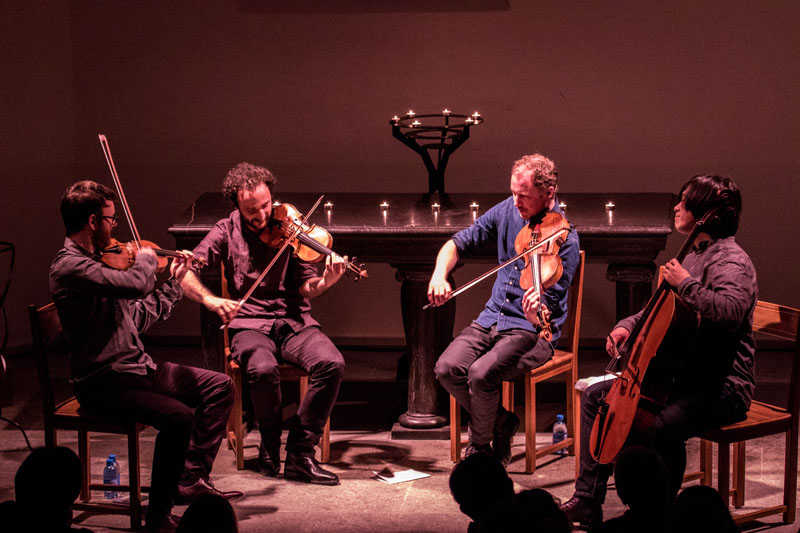
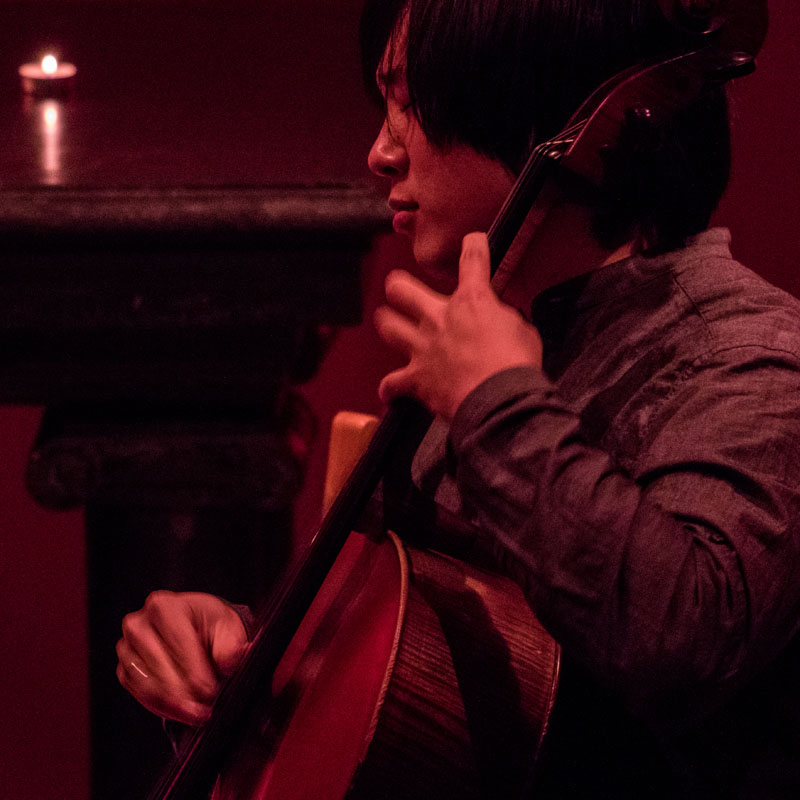
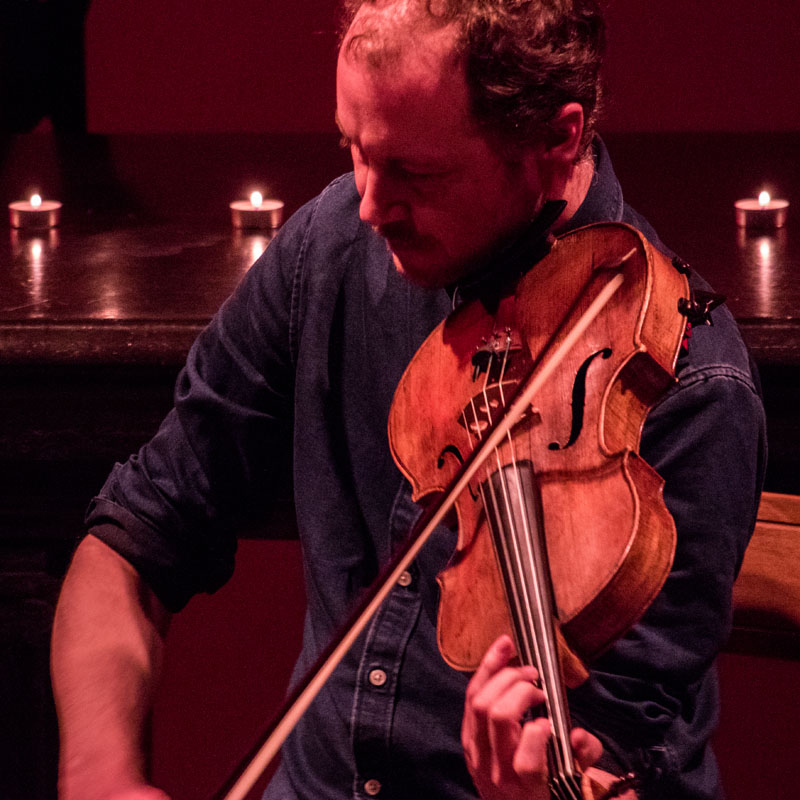
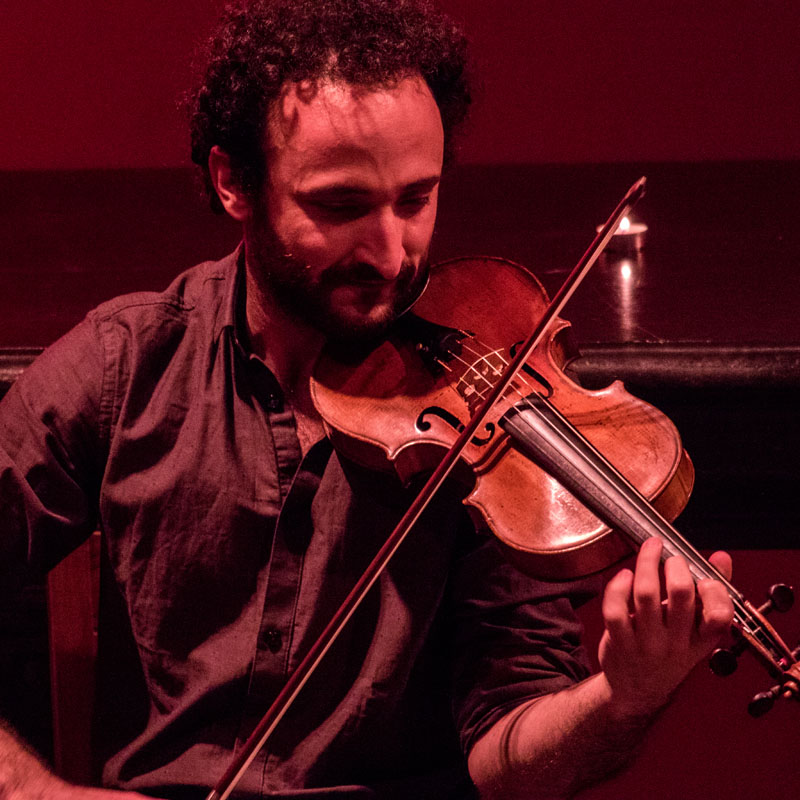
Two violins, one viola and a cello make up the unconventional Kaleidoscope String Quartet who kicked off the first night of Swiss musical contributions at the prestigious Cully Jazz festival. Performing material from their second LP, ‘Curiosity’, their strictly acoustic set up was a perfect fit to the meditative church setting of Le Temple.
I was lucky to bump into violinist Tobias Preisig just before the band came on, he tipped me off with a few insights into the quartet: « I used to play with them in the early days. What they do is technically very hard, you have to be really connected as musicians. Their forte is how they swerve tradition, always looking for new ways to play their instruments ».
@JC-Arav
These words proved a useful interpretation tool. A string quartet inevitably conjures up very rigid ideas of genre, hence what makes this group interesting is how a variety of styles, rhythms and tones are woven into the classical string infrastructure. There’s a feeling of the experimental and the improvised even though they’re clearly a tightly rehearsed unit. Seamlessly the ball is passed from one member to the other as the violin is bent and shaped in all directions. Closing my eyes I could have sworn someone had sneaked in some Japanese pipes during track 3. Quasi pop refrains and folkloric riffs creep up when least expected to add colour and vibrancy.
@J-C Arav
Admittedly, there were moments when some the barren plucking overstayed its welcome, (at a critical point in the musical tension I overheard someone muttering «sounds a bit like a swarm of mosquitoes » ), the bass tones of the cello proving a welcome contrast to the higher pitches of the violins. Possibly too many sparsely clad moments where the rowdy festival crowd outside the venue added more rhythmic movement to the music than the quartet itself.
@J-C Arav
The higlights for me were the warm, swirling melodies that sprang suddenly out of the languid tones. Nothing gives the feeling of lift off and transportation quite like a set of strings, so to hear them setting off into fourth gear with dynamic, frenetic synchronisation was a delight – one track culminating with a joyful vocal shout! Amazing that a string didn’t break in the process.
Some questions and answers with KSQ bandleader and composer, Simon Heggendorn:
Is it important for KSQ to be seen as more than just a classical outfit?
@J-C Arav
Simon Heggendorn: In many ways, yes. From our point of view, a ‘classical’ string quartet mostly interpretes music, whereas we create the music ourselves – rather like a band – and are completely free in the style of interpretation. This gives us the possibility to have a unique ensemble sound defined by the music we write for it.
Did the fact you were playing in a church impact your choice of what material to play?
Simon Heggendorn: Not primarily, maybe the fact we played in a church had an influence on ‘how’ we played (tempi, improvisations, dynamics). We like to play completely acoustic, so Le Temple was a perfect set-up for us.
What’s your relationship to Cully Jazz?
Simon Heggendorn: We played at Cully Jazz in 2012 for the first time. Spots are limited so it’s always very special to be chosen. Since it’s a big festival, you get more press attention than with standard gigs. It’s important to get known on the scene and be exposed to a wider audience, maybe even internationally. Not to mention the unique atmosphere in the village during the festival and the effort of everybody working here – just amazing!
[youtube=https://youtu.be/YTYVvcAsda8]
Band members:
Simon Heggendorn – violin & composition
Ronny Spiegel – violin
David Schnee – viola & composition
Solme Hong – cello
Pianist Stefan Rusconi über die Entwicklung seines Trios und das neue Live-Album mit Fred Frith
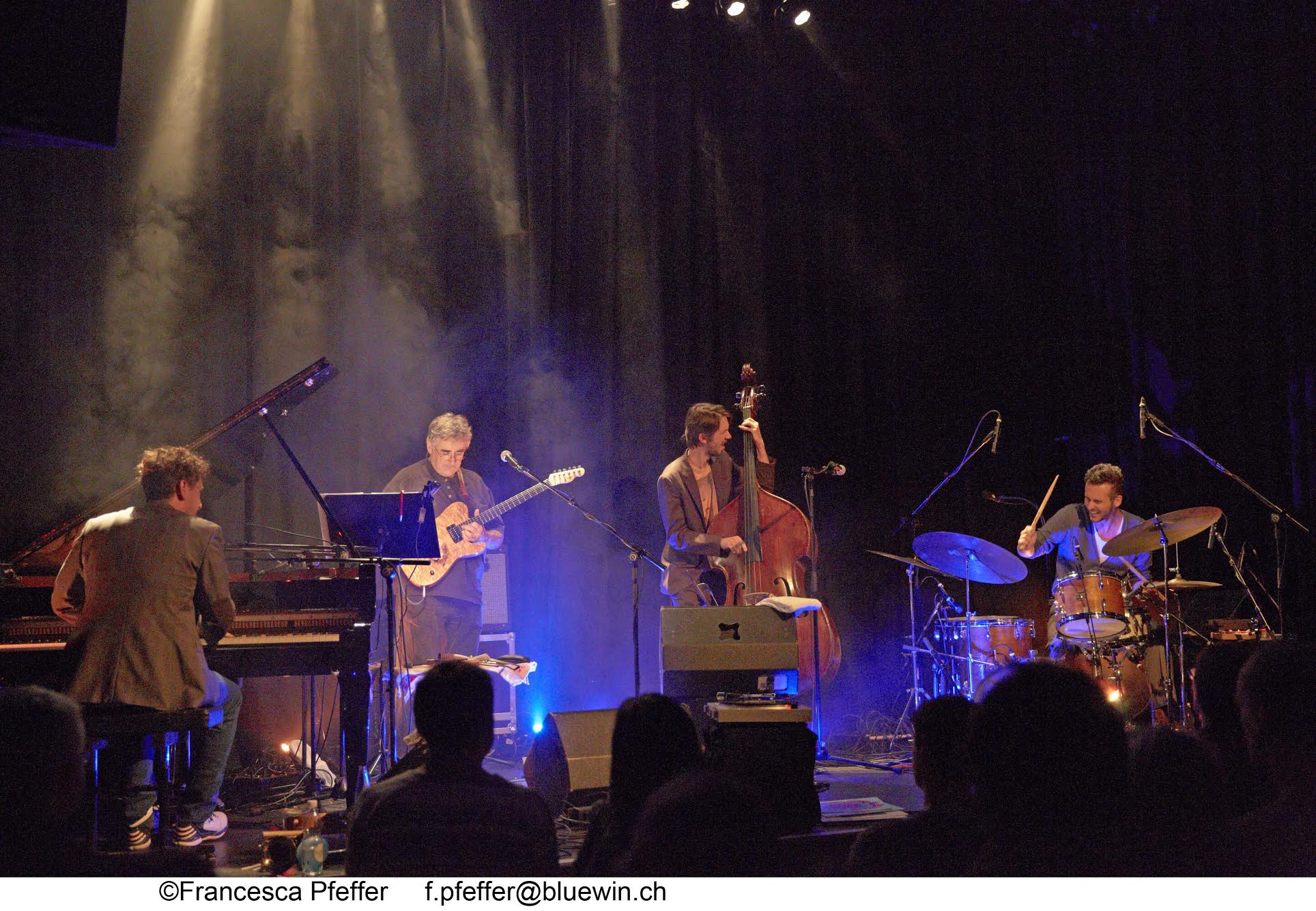
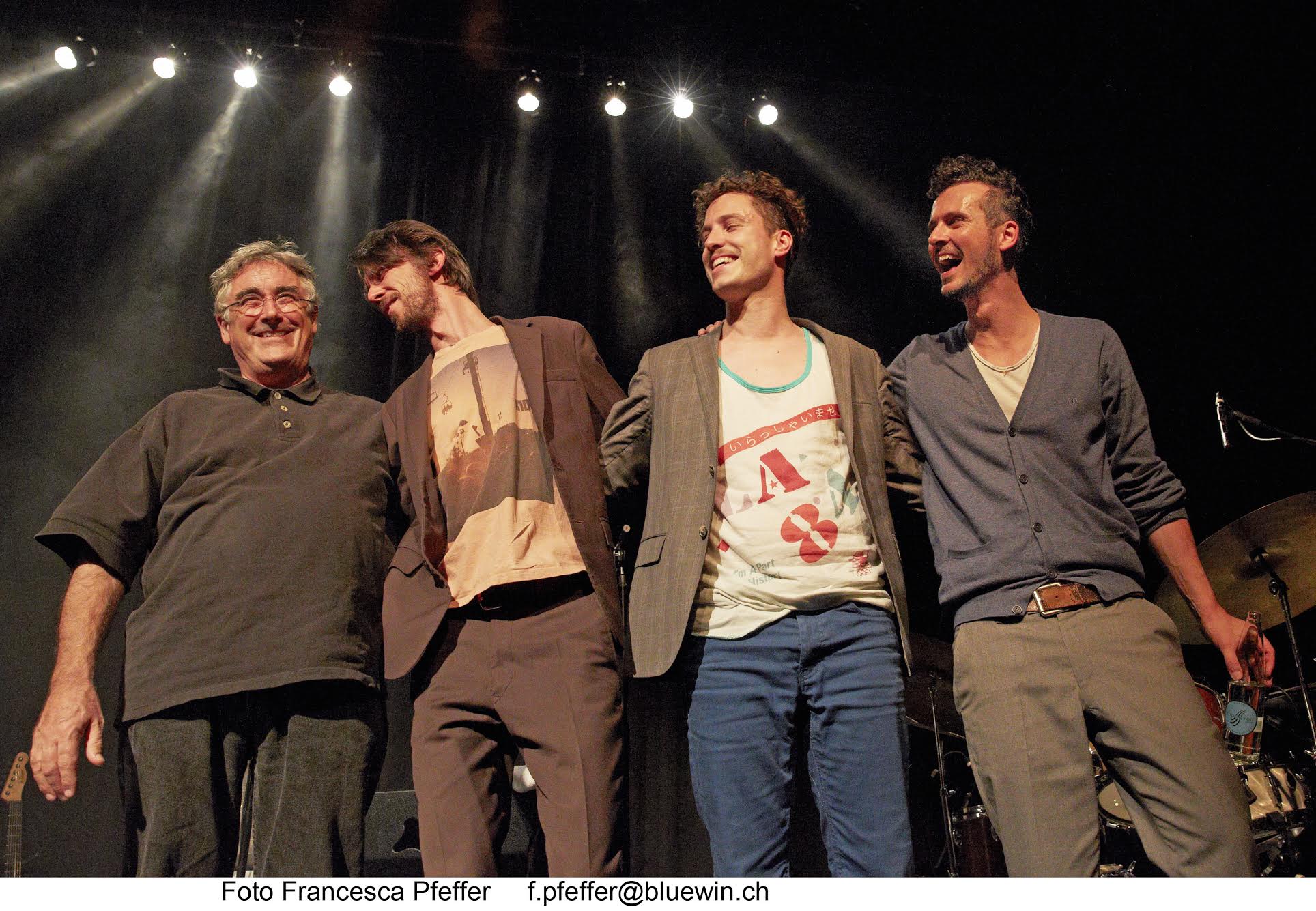
Mit Rusconi, seinem Trio mit dem Bassisten Fabian Gisler und dem Schlagzeuger Claudio Strüby, reiht sich der Zürcher Pianist Stefan Rusconi seit bald 15 Jahren in die Riege der Erneuerer des klassischen Klaviertrios im Jazz ein. „Garagen-Jazz“ nannten Kritiker ihren charakteristischen, sehr zugänglichen und bis 2012 bei Sony erscheinenden Mix aus Jazz, Rock und Pop, der Einflüsse aus der elektronischen Musik bis hin zum Noise-Rock einer Band wie Sonic Youth – deren Kompositionen sie 2010 auf dem Album „It’s A Sonic Life“ interpretierten – verarbeitet. Nun ist beim eigenen „Qilin“-Label das Album „Live in Europe“ erschienen, das die gemeinsame Tour mit dem amerikanischen Avantgarde-Gitarristen Fred Frith dokumentiert.
Wie habt ihr und Fred Frith euch gefunden? Stefan Rusconi Wenn man seit ein paar Jahren unterwegs ist, denkt man über Gäste nach. Wir haben uns zuletzt immer wieder mal mit verschiedenen Leuten getroffen und sie zum Mitspielen eingeladen. Bei manchen hat es wider Erwarten nicht gepasst, bei anderen sehr gut. Ich glaube, es geht natürlich um Geschmack und eine ähnliche ästhetische Ausrichtung, aber auch sehr viel um Haltung. Was will ich in der Musik oder sogar im Leben? Was ist es, das mich da fasziniert, was ich leben möchte?
Da seid ihr euch mit Fred Frith ebenso einig wie in der Liebe zu extravaganten Sounds? Stefan Rusconi Ja, da decken wir uns mit ihm exakt. Nicht im Musikalischen, die Musik seiner Bands ist ganz anderes als unsere, und das hat ihn ebenso gereizt wie uns. Aber die Grundeinstellung, auf der Bühne in einem definierten Kontext Dinge zu wagen und so anzuspielen, dass sie scheitern könnten, aber dann doch die Kurve kriegen, dieses Spielerische, das teilen wir. Wir kennen ihn inzwischen besser, er ist öfter bei Fabian in Basel zu Besuch, weil er ja in Basel unterrichtet. Wir spielen dann alle mit Fabians drei Kindern.
Einfach einmal geklingelt
Ihr habt ihn also einfach gefragt, ob er mitmachen will? Stefan Rusconi Naja, es war auch ein bisschen Zufall. Wir waren für unsere „Revolution“-Platte in dem Haus, in dem wir immer aufnehmen. Wir bauen uns da immer selbst ein Studio zusammen und nehmen uns selber auf, ganz ohne diesen Strukturdruck, dass Techniker da sind, die gerne nach Hause möchten. Nur aufnehmen, das ist echt einfach. Wir haben einen Techniker, der richtet uns alles ein, und dann darf er wieder gehen. Das ist für den und für uns schön. In dieser Atmosphäre kam uns dann bei einem Track, bei „Alice In The Sky“, die Idee, dass da der Sound von Fred Frith perfekt passen könnte. Und er arbeitete quasi nebenan. Wir haben geklingelt, ihn gefragt, und er war sofort dabei.
So einfach geht das manchmal. Stefan Rusconi Ja, und das ist schon sehr schön, denn zu der Zeit hatten wir noch einen Manager. Und es lief bei solchen Features normalerweise so, dass der Manager einer Agentur oder irgendeinem Assistenten eine Mail schreibt, und dann die Anfrage hin und her geht. Das ist oft ein bisschen verkrampft und komisch. So hieß es halt: Ja klar, lasst uns ein bisschen spielen gehen, in den Keller runter. So ist das Ganze dann entstanden.
Das war dann direkt vor den Konzerten, bei denen das Album entstanden ist? Stefan Rusconi Nein, wir hatten etwa ein Jahr Pause dazwischen. In der hat Fabian immer mehr Gitarre gespielt, weil wir durch Fred gemerkt hatten, wie sehr wir diesen Sound gebrauchen können. Da kamen wir auf die Idee, mit ihm ein paar Konzerte zu spielen. Es hat sich also ganz natürlich ergeben, war kein Festivalprojekt – was auch toll sein kann -, und war deshalb total entspannt.
Ihr tourt jetzt aber gar nicht mit Fred? Stefan Rusconi Nein, im Moment spielen wir ohne ihn. Ich weiß, das ist jetzt nicht im Sinne eines klassischen Marketings. Aber wir hatten viele Gastfeatures zuletzt, und es ist jetzt schön, mal wieder auf einer Tour zu sein, wo wir mal wieder den ganzen Abend nur für uns haben (lacht).
„Die Schweiz ist so klein“
Du hast in Zürich studiert, Fabian in Basel und Claudio aus Luzern. Wie habt ihr euch denn gefunden, damals vor bald 15 Jahren? Stefan Rusconi Die Schweiz ist so klein. Da ist dann halt die eine Jam Session in Bern, die nächste in Luzern, da bist du eine Stunde unterwegs. In Berlin, wo ich seit einiger Zeit wohne, brauche ich die fast, nur um in den Übungsraum zu kommen.
Kann man sagen, dass die klaren Strukturen, das Rhythmische und das Hymnische eurer alten Alben jetzt in einen starken Kontrast zu Noise- und freien Improvisationsphasen treten? Dass also eure Ästhetik offener ist als früher? Stefan Rusconi Ja, das Gefühl habe ich auch. Das hat sich aber schon mit dem „History Sugar Dream“-Album und in den vergangenen zwei Tour-Jahren so entwickelt. Die Funktion von Fred kann auch immer jemand von uns übernehmen. Ich spiele dann halt mehr Synthi-Bass und Fabian Gitarre. Wir haben dann freilich immer noch den Kontext einer quasi konventionellen Band; bei Fred konnten wir wieder auf unsere Ur-Instrumente zurückkommen, gleichzeitig ergab sich sehr viel Raum, eine Spielwiese zum Ausprobieren. Die Stücke sind verschachtelter. Das ist, wo wir jetzt stehen, denke ich.
Esbjörn Svensson hat von seinem Trio mal gesagt: „Wir sind eine Rock-Band, die Jazz spielt“. Trifft das auch für euch zu? Stefan Rusconi Das würde ich nicht sagen. Der Claudio etwa spielt schon ein sehr distiguiertes Jazz-Schlagzeug. Esbjörn Svensson war so zehn Jahre vor uns, aber wir haben das schon mitbekommen: Es war damals richtig, sich ein bisschen zu distanzieren, zu sagen: Wir sind eine neue Generation, wir schauen auf die Geschichte ein bisschen anders, wir haben andere Höreinflüsse. Aber trotzdem: Für uns bleibt Jazz immer ein wichtiger Bezugspunkt. Es gibt halt viele Schnittstellen, auch bei der Film- und Theatermusik, die ich schreibe. Auch für Claudio und Fabian, wir loten unsere eigene Welt aus, eine sehr bildhafte.
„Wir fühlen uns Leuten verbunden, die an den Rändern arbeiten“
Dazu passen die Licht- und Videobegleitung eurer Konzerte. Ihr denkt Musik wohl sehr interdisziplinär? Stefan Rusconi Ja, wir haben an der „Art Basel“ sogar mit einer Modedesignerin gearbeitet, was aber nichts mit „Germans Next Top Model“ zu tun hatte oder an was man so denken könnte. Wir fühlen uns sehr verbunden mit Leuten, die an den Rändern arbeiten, ob die nun vom Film, von der Kunst oder aus der Mode kommen.
Ihr wart früher bei Sony, jetzt habt ihr „Live in Europe“ wie schon zuvor „History Sugar Dream“ beim eigenen „Qilin“-Label herausgebracht, das auch eine Plattform für befreundete Künstler sein soll. Ist die Zeit der Majors für Jazzmusiker vorbei? Stefan Rusconi Ich weiß nicht. Es muss einfach passen, und bei uns hat’s nicht mehr gepasst. Große Labels schauen sich Musik nach einem Verkaufsargument an, und dann läuft die Maschine Major auch. Es gibt immer noch Jazz, den man so unter die Leute bringen kann. Unser Sonic-Youth -Album wurde damals in den Magazinen besprochen, die beim Friseur liegen. Das ist einfach nicht unser Publikum. Wir haben uns auseinanderbewegt bei dem, was so ein Major gut kann, mit uns aber gar nicht mehr umsetzen konnte. Am Anfang war das noch anders, da war alles noch offen. Das hätte Zukunft haben können, das haben wir dann irgendwie anders entwickeln lassen. Bei einem Till Brönner zum Beispiel, ein toller Musiker, mit dem ich auch schon gespielt habe, kann das prima funktionieren. Für uns aber sind gewisse konkrete Erwartungshaltungen inzwischen ein Horror. Wir fühlen uns sehr wohl, wo wir sind. Auch wenn die Konsequenz ist, dass alles etwas länger dauert, und die Leute dich ein bisschen suchen gehen müssen. Das ist aber auch was Schönes, das hat für uns viel mit einer Lebenshaltung zu tun, bei der wir alles an uns genommen und unter Kontrolle haben. Das färbt auch auf die Musik ab: Es ist dann etwas konsequent Eigenformuliertes.
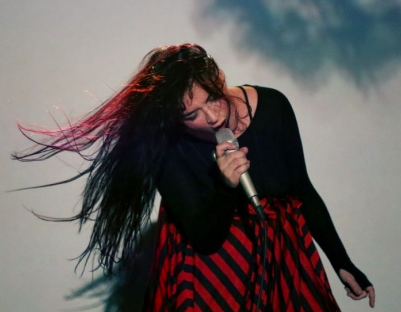
Presque dix ans se sont écoulés depuis son premier album, « Bagages ». Pourtant, la plume du rappeur genevois Jonas n’a pas perdu sa verve. Une plume qui se dévoile aujourd’hui à travers un nouvel album sobrement intitulé « Oxymore ». Une plume précise, où chaque mot est réfléchi et prononcé avec minutie. Une plume qui manie avec tact des thèmes comme l’homosexualité, les dérives du commerce de cacao et de l’esclavage qui en découle ou encore le deuil. Réelle explosion de saveurs musicales, « Oxymore » s’émancipe des contours du hiphop pour exporter le rap de Jonas sur des harmonies voyageuses, entre rock et jazz, orient et sonorités expérimentales. Rencontre.
Peux-tu nous expliquer le choix du titre de ton album, « Oxymore » ?
Jonas Lors de la période de vie où j’ai composé cet album, je ressentais beaucoup de tiraillements intérieurs. J’avais l’impression que chaque position que l’on a, chaque chose que l’on fait, charrie son contraire. Chaque fois que l’on fait quelque chose, on attire son opposé. Cela montre également que tout est un tout. Ces tiraillements intérieurs se retrouvent dans chaque texte. Un oxymore est une figure de style qui rassemble deux termes a priori contradictoires.
Qu’est-ce qui t’a donné le déclic de reprendre la plume, près de dix ans après ton premier album ?
Jonas Je n’avais plus rien à dire. J’ai tout quitté lors de l’enregistrement d’un disque avec le Taxi Brousse Orchestra et l’inspiration n’était plus là. Puis, petit à petit, les choses se sont remisent en place et le besoin de parler et de remonter sur scène sont revenus. Mon épouse m’a alors conseillé d’aller voir le pianiste Maël Godinat. Ensemble, on a commencé à composer des morceaux. Il a signé un peu près la moitié des compositions de l’album. Maintenant j’ai un groupe avec Mathieu Kracher (guitare), Maxence Sibille (batterie), Christophe Chambet (contrebasse) et Cédric Schaerer qui a remplacé Maël (piano).
Le titre « Génération » donne l’impression d’autobiographie tapissée de critiques de notre société. On sent un basculement dans le texte et dans la musique, juste avant ton couplet sur les années 2000. Mise à part le contexte international de cette époque, est-ce que cela a aussi été, pour toi, un basculement ?
Jonas « Génération » est composé de quatre couplets dédiés à des périodes de vies différentes. Mais, toute cette période de politique islamophobe, d’hégémonie des USA sur le reste du monde avec l’Europe qui se cache dessous a provoqué des questionnements. Je trouve toujours bizarre de penser qu’on arrive à faire tomber des tours avec des avions sans charges explosives et de retrouver un passeport saoudien dans les décombres. Cela m’a poussé à me renseigner et à user de mon esprit critique. J’ai l’impression que c’est travail insidieux qui vise à amplifier toute cette haine contre les musulmans. Il y a vraiment cette scission dans le monde. Je suis récemment allé au Mali et en revenant on m’a questionné car ce pays est considéré comme terroriste. Au bout d’un moment, on ne sait plus ce qui est terroriste et ce qui ne l’est pas. Si on regarde l’histoire, les résistants face à l’Allemagne nazi étaient considérés comme des terroristes. Si on reprend la définition de la terreur, tout le monde s’y retrouve. Tout est noir ou blanc. Tu es chrétien ou tu ne l’es pas. T’es un noir, t’es un blanc. Ce basculement dans le texte et la musique est peut-être aussi dû au fait que c’est une période où tu commences à devenir vraiment indépendant, à t’assumer seul. Après, ce n’est pas qu’une critique contre la société. C’est une autobiographie qui parle aux gens. Les gens qui ont vécu à la même période que moi, se reconnaissent. C’était une façon de recontextualiser le lieu d’où je viens au travers de références genevoises et parisiennes avec mes vinyles achetés à Tikaret. Je parle aussi de l’arrivé des roms à Genève, de l’arrivé des identitaires. A mon adolescence, tout cela n’était pas présent.
Qui se cache derrière la « Rose des Sables » ?
Jonas C’est un petit homosexuel que j’ai rencontré à Nouakchott (Mauritanie). On était sur un festival de rap où je donnais un atelier d’écriture. Un jeune est venu me voir pour me poser une question. Je m’attendais à ce qu’il me demande comment est la vie en Europe. Mais, il a commencé à me poser des questions sur l’homosexualité. J’ai trouvé cela vraiment touchant. Au bout d’une demi-heure, sentant qu’il pouvait me faire confiance et que je n’allais pas en parler ou le juger, il m’a annoncé qu’il était homosexuel. « Rose » car c’est la couleur qu’on attribue aux homosexuels et « sable » parce que là-bas il n’y a pas de goudron mais du sable partout. Je trouvais que c’était une jolie figure de style pour parler de lui. Son histoire était vraiment touchante car l’homosexualité est très difficile à vivre là-bas. C’est quelque chose de mal vu, que l’on condamne et qui est aussi considéré comme une « maladie » importé en Afrique par les blancs. Là, on parle d’un homosexuel en pays musulman, mais tu peux aussi transposer cette discrimination à un musulman dans un pays islamophobe, à celle d’un jeune juif en 39/45. C’est une question de minorité. Cette rencontre a été un vrai cadeau de la vie et m’a donné envie de parler de son histoire.
Sur le titre « On », tu tires un portrait assez décourageant de notre monde et tu demandes même si cette situation n’est pas de notre faute. Penses-tu qu’on puisse encore changer les choses ?
Jonas Dans « On », j’ai choisi d’utiliser le pronom impersonnel. Des fois je dis, « on nous fait ça » et d’autres fois « on subit ça ». Ce que je trouve intéressant avec le « on », c’est que desfois c’est nous et des fois c’est eux. On ne sait pas qui c’est. Je voulais dire que tout le monde participe. Il y a ce côté où tout le monde se plaint. On a tous un côté Oxymore, on subit tous des choses du système mais, en même temps, on y participe tous. A la fin du titre je questionne même sur l’identité de ce « on » : « C’est qui ce On, ce con, serait-ce moi au final / La farce, le dindon, en phase terminale / Pronom à la drôle de mine, tellement impersonnelle / Qu’il en perd son latin au fond des latrines ». Et j’y fais échos sur « Oxymore » : « Un système qui est la somme de nous-mêmes / De ce que l’on sème, on verra où ça nous mène ». Je pense que le monde dépend de chacun d’entre nous. Mais, quand on est dans ce côté impersonnel et que l’on dit tous « on, on, on, on », on se décharge, on se victimise et on se déresponsabilise.
J’aimerais que tu nous parles un peu d’une phrase du titre « Oxymore » : « Les plus belles roses poussent dans la merde, terreau fertile… »
Jonas Le premier exemple est le graffiti (dont je parle d’ailleurs dans le texte) et le hiphop. Regarde le fado, le flamenco, le blues et toutes ces musiques qui ont vraiment la niaque. Elles viennent du ghetto et des lieux où c’était la merde. Donc oui, les plus belles roses naissent dans la merde. Il y a des styles de musiques qui sont nés dans des milieux où l’argent était présent et que je trouve admirable. Mais il n’y a pas cette niaque, cette envie de vivre.
Comment s’est passé la collaboration avec Gael Faye, Rox et Edgar Sekloka pour le titre « Comportement à Risque »?
Jonas On est pote depuis longtemps. On s’est rencontré à un atelier d’écriture il y a environ sept ans. Quand on les a entendu rapper, on s’est dit : « Wow, vous étiez où ?! Enfin des rappeurs qui assument qu’ils approchent la trentaine, qui peuvent avoir de la technique et des textes touchants ». On s’est senti moins seul. C’était un coup de cœur réciproque, la rencontre de nos frères de plume. Niveau fond, forme, c’est la famille. Pour moi, c’était évident de les inviter sur l’album. J’avais déjà commencé à écrire le titre et quand je leur ai envoyé il leur a tout de suite plus. On a composé le refrain en studio et on l’a gardé. En ce qui concerne le thème, c’est quelque chose que l’on a en commun : comment avancer à contre-courant (dans la société et dans le rap). J’ai été bluffé par leur performance.
D’un point de vue harmonique, c’est un album très riche avec des influences rock, jazz, orientales et des éléments plus expérimentaux comme sur « La Baleine ». Pour moi, le hiphop n’y figure que par suggestions…
Jonas Ce que j’ai gardé du hiphop, c’est le rap. Comme pour les frontières territoriales qui ne m’intéressent pas vraiment, les frontières du hiphop ne m’intéressent pas non plus.
Le tapis musical de cet album est construit de manière subtile et recherché. Quelle était ta volonté musicale première ?
Jonas Je voyais quelque chose de vraiment plus perché avec du violoncelle et pleins d’autres trucs. J’ai beaucoup été influencé par le titre « Be Brave » de My Brightest Diamond qui est l’un des meilleurs morceaux que j’ai entendu ces dernières années. Finalement, on est revenu vers quelque chose de plus rap. Par contre, j’avais cette envie d’enregistrer tout les instruments en une prise et de reposer les voix après. On a fait des concerts avant d’enregistrer pour permettre aux musiciens de vraiment roder le truc et de s’approprier les morceaux. Pour moi, il fallait de bons textes mais également de la bonne musique.
Avec cet album, tu as posé des mots sur notre époque mais tu as aussi cherché des réponses. Tu comprends un mieux le monde qui t’entoure ?
Jonas Je ne pense pas avoir des réponses mais je pense poser des questions plus précises. Je pense que c’est important de garder des questions ouvertes et de ne pas s’arrêter. « Oxymore » parce que les choses ne sont pas telles que tu le penses. Ces gens qui votent UDC mais qui, sur certains points, sont des personnes magnifiques, ces leaders politiques de gauche qui se comportent comme des connards dans le privé. Dans le titre « Sur les toits », je parle de ce besoin d’aller là où je peux mieux voir les étoiles. Quand tu sors d’un concert, tout le monde est ton pote. Quand tu galères un peu, tu vois comment les gens se comportent avec toi. Chaque chose est vraiment une source d’apprentissage. Je pense qu’on est dans une société qui veut donner des réponses toutes faites. Il faut entrer dans des cases. Mais, on est pas dans une époque où il faut donner ce type d’explications. Il faut rester ouvert au questionnement. Ce disque est une invitation à réapprécier le monde pour ce qu’il est. Il y a aussi le deuil, le deuil de la désillusion. C’est pour cette raison que la pochette à un côté carte de condoléances. Il y a des choses qui meurent. Mais, quand cela arrive, d’autres choses naissent.
Genève, Disco Club (en duo), 30 octobre 2015 Nyon, Usine à Gaz, le 7 novembre Neuchâtel, Bar King, le 21 novembre Delémont, SAS, le 4 décembre 2015 Fribourg, La Spirale, le 30 janvier 2016
Pff….voilà près de vingt ans que je n’étais pas venue au Festival de Jazz de Willisau. Et pourtant rien ou presque ne semble avoir changé. Il faut dire que j’en gardai un souvenir vivace, vaguement traumatique : une orgie de jazz orchestrée de 14 :00 à minuit dans une grange au milieu d’un petit village de la campagne lucernoise augmenté d’ un camping rempli de mordus de jazz, un stand de disques achalandé par le label suisse de référence Plainsiphare et une cantine où n’étaient consommables que des « Wurst mit Pomme Frites »!
Bref, au bout deux jours de ce régime musical et gastronomique, j’avais fait une overdose et ne souhaitait qu’une chose : regagner mes pénates lausannoises, me plonger dans un monde de silence et manger des légumes.
Une des Mecques du jazz contemporain
Blague à part, le festival de jazz de Willisau existe depuis 42 ans. Il est considéré comme l’une des Mecques du jazz contemporain. Il a accueilli et “découvert” certains des plus grands noms du genre. Plus de 50 disques “live à Willisau” ont été publiés. Mieux, le festival ne s’est jamais dénaturé: il est toujours resté fidèle à ses fondamentaux. Keith Jarrett l’a d’ailleurs consacré de cette citation fracassante: “one of the best places for music in the world“!
Vingt ans plus tard donc, le village, la grange et le camping sont toujours là, mais la cantine s’est nettement améliorée et, signe du temps qui passe, Plainisphare, n’est plus de la partie. Reste la musique et un public toujours aussi mordu et attentif.
Une vision grand angle de la musique
Samedi soir, lors du concert de clôture, Schnellertollermeier me rappelle avec brio que jazz peut se conjuguer avec noise, heavy metal et rock’n’roll (voir l’article en allemand que lui a consacré Benedikt Sartorius sur ce blog). Mais je suis venue pour voir Michel Wintsch, dont le dernier disque solo m’a éblouie. On connaît les disques de piano solo préparé, les disques de multi-piano solo (piano acoustique, synthétiseurs, orgue hammond ou autres) amplifiés d’effets électroniques. Il y a cinq ans le pianiste genevois nous avait d’ailleurs gratifié d’un enregistrement de cette veine intitulé « Metapiano ».
Un instrument savamment amplifié
Aujourd’hui, Michel Wintsch va plus loin et cherche à donner vie à son piano sans lui ajouter d’effets. Grâce à une impressionnante batterie de micros savamment installés par Benoît Piccand, son instrument est amplifié subtilement. Michel Wintsch peut ainsi non seulement jouer des notes, mais, aussi des clicks que font les touches effleurées mais non jouées, de la frappe de ses mains sur les différentes parties du piano à sa portée (dessus-dessous..) et même du son de l’air que déplace ses mains.
Ses mains qui cavalcadent ou effleurent les touches, aspirant ici le son qui reste en suspens, évoquant là le frottement des ailes d’un oiseau. Michel Wintsch orchestre ainsi une fantasmagorie musicale dans laquelle le spectateur peut sans peine imaginer des petits animaux détalant dans tous les sens, des grands mouvements pachydermiques, le vent qui souffle, sentir la jubilation ou l’effroi…. Le concert est constitué de trois longs morceaux de 20 minutes en forme de plongée introspective lumineuse. Le public est en osmose.
Rencontré le matin du concert dans un tea-room où il prend son petit-déjeuner, Michel Wintsch s’est plié au jeu des 5 questions.
Comment improvise-t-on en solo ?
Michel Wintsch Je procède de façon semi-improvisée, semi-écrite. J’ai des bouts de thèmes, des harmonies, une gestuelle et je construis les agencements entre ces différents éléments. J’aime bien comparé cette façon de procéder à celle d’un conteur qui a ses personnages, son fil rouge, et qui construit une histoire à partir de ces éléments.
En quoi l’improvisation en solo est-elle différente de l’improvisation en groupe que vous pratiquez aussi ?
Michel Wintsch Les deux choses n’ont pas grand chose à voir ensemble. En solo, on est vraiment seul, un demiurge en quelque sorte. En groupe, ça respire. Chacun est impliqué dans le processus d’improvisation et je peux attendre que l’énergie me revienne. On est plus dans le registre de la conversation.
Pourquoi est-ce que cet album s’intitule « Roof Fool » ?
Michel Wintsch Ah les titres, c’est toujours difficile! Dans mon cas, ils viennent s’ajouter à la fin quand la musique est faite. Je trouvais que celui-ci sonnait bien. J’aime bien l’idée du « fou du toit ». Certaines personnes pensent que je suis fou. C’est clair que ma musique est un peu hors-norme. J’aime bien monter sur les toits ; je suis un montagnard…
Quant aux titres des morceaux, ils sont parfois étranges, comme « Pytihob Clochery ». Votre intention était de créer de nouveaux mots ?
Michel Wintsch Pas du tout. Ce sont des titres de travail. Par exemple Pytihob Clochery est un morceau où j’ai utilisé des petits objets sonores. Au cours de sa composition j’ai pensé au clocher au-dessus de ma maison. J’ai donc utilisé ça phonétiquement. Le titre « Si c’est assez, cessez » m’a été inspiré suite à la lecture d’un article sur la pollution
Vos sources d’inspiration ?
Michel Wintsch La vie. Je me sens inspiré par la verticalité, par le vide, par le vent, par la chaleur, par l’effort, par le mouvement, par les oiseaux. Une sorte de chorégraphie animalière. L’inspiration est faite de tout ce que l’on est. J’adore me balader en montagne, observer la course d’un chamois par exemple. On peut comparer ça au travail de l’abeille qui butine toutes les fleurs qu’elle trouve. Je peux être inspiré par Ligeti comme par Prince comme par le Mont Jalllouvre….
Not a great fan of distorted digital noises of any kind, I was not prepared to like the work of Blaise Caillet – AKA Sknail – the main perpetrator of the nu-electronica subgenre called ‘glitch jazz’. However, one must always be ready to eat one’s hat. In the intelligent hands of Caillet, the Sknail project is carried off with such graceful modernity and beauty that no one could begrudge him a few mechanical distortions here and there.
A mercurial soundscape
« Snail Charmers » is the second LP that spearheads this sci-fi fusion of jazz and the dark side of modern electronics. Listening to the album is like stepping into a mercurial soundscape where drums are replaced by subtle, finely-tuned scratches and digital malfunctions. Thanks to Caillet’s gifted production skills, they actually are made to sound beautiful, sitting perfectly at ease next to six professional jazz musicians and their elegant experimentation. The LP is a seamless work, fabulously suited to the soundtrack of a would-be Nordic thriller set in a misty land of half human, half robotic jazz warriors.
This Mad Max journey of confrontation between man and machine.
The chilly, not-quite-human electronic glitches are woven with great craftmanship into the sinuey hues of voice, trumpet, bass clarinet, piano and double bass. The result is a silvery, thin blanket of sound that is far warmer and more welcoming than expected. ‘Snail Charmers’ and ‘Something’s got to give’ are probably my favourite tracks of the year so far. Rapper/narrator/singer, Nya, works wonders with his languid, lilting vocals, adding the needed human guidance along this Mad Max journey of confrontation between man and machine. This work is cleverly thought-out and studied from every angle: concept, sound and visuals. Glitch jazz is indeed a product of our digital times, proving that the conquering and innovative spirit of jazz can be merged with anything, even “the aesthetic of failure”.
In conversation with Blaise Caillet:
Did you come up with the term ‘glitch jazz’?
Blaise Caillet: Glitch jazz is a subgenre of electronica. When I checked it on google, the term “glitch jazz” already existed. There are mostly DJ productions, in other words an electro beat with jazz samples and some little glitchy sounds thrown in. When I created the “Sknail” project, I wanted to take the word “glitch jazz” quite literally, ie: real glitches with real jazz! It felt really new. Now when you google “glitch jazz”, the first result that appears is sknail.com.
How was your first LP, ‘Glitch Jazz’ received?
Blaise Caillet: Some listeners were shocked and still are now! The first time I heard Alva Noto (pure glitch music) I was shocked too but it’s good to be troubled or affected when listening to new music. Personally, I always look for this sensation when listening to music. The first Sknail LP was generally well received by people looking for these kind of sensations. I prefer developing an original musical project, taking a path where nobody has gone before, even if it’s something shocking or displeasing.
Drums? Is this the role of the glitches?
Blaise Caillet: Yes, you can look at it this way. The glitches are micro samples and micro sounds stemming from machine failures, electronic malfunctions. When these micros samples are cut, clipped, treated, stuck together, you can get a very smart and definite percussion sound. In the end, the way to give a pulse to a track doesn’t matter, the important thing is getting the pulse, feeling the vibe. Also, using glitch rhythms in electronic music gives a different, finer sound than the “classical” electro drum machines. It results in a different aesthetic.
A lot of the tracks on both LPs have a very filmic, soundtracky quality. Do you plan to work in this domain?
Blaise Caillet: Yes I do. I worked last year with a French producer to adapt a Sknail track for a short movie that was featured in the “Nuit des Images” at Lausanne’s Elysée photography museum.
The timbre of the music has a beautiful melancholic quality. Do you think glitch jazz can ever be upbeat and joyful?
Blaise Caillet: I always use minor and modal (without harmonic changes) tonalities in this project. That gives a very specific mood to the music with a melancholic timbre. This timbre is specific to a certain kind of avant-garde jazz and, when it’s mixed with a cold and clinical electronica glitch music, it transcends itself. This is what I’m into: mixing the timbre and the styles, finding new aesthetics. At the beginning, I tried to make some tracks that were joyful and upbeat, but that didn’t work. They had a kitschy side, a kind of a hopping experimental electrojazz house sound which wasn’t what I was after.
Your rapper, Nya, touches on some relevant points about today’s decaying society, (especially in ’Slow Poison’). Is the band more a celebration or an attack on the digital age and what’s it’s brought to the world?
Blaise Caillet: I’ll let Nya answers this question: “It’s neither an attack nor a celebration of the digital age. It’s a balancing act, as with so many things in life. Trying to stay true to our human selves while at the same time evolving and adapting to our environment. Never losing sight of the essential things.”
How important are the visuals to your music? Who’s in charge of them?
Blaise Caillet: It’s very important. When you listen to music, you automatically create images and scenes in your mind. So I think it’s a very smart way to deliver the sound and the image of the music together, to suggest an entire artistic concept to the listener. And the aim is the same as the music: to create something innovative. Online, I met Efrain Becerra from Phoenix, Arizona, I stumbled upon his FB page and was very impressed with his 3D graphical work. I contacted him with the instruction: “Imagine how a jazz club might be in the year 3147 ». We had a lot of brainstorming ideas and exchanges via e-mail, Facebook, Whatsapp but I still haven’t seen, touched or talked to him yet face to face. Welcome to the 2015 dematerialized world!
What’s the Sknail live experience like?
Blaise Caillet: It’s important to understand that my musicians have never met (for both albums!). I recorded each musician one by one and created the tracks layer by layer because I’ve got only one microphone and because I really didn’t know where this project was going at the start. My objective was to realize an entire project by myself: artistic concept, creation, composition, arrangement, recording, mixing, promotion. The only thing I haven’t done myself is the mastering. I’m now working on how to produce the live show. First I have to find the adapted hardware and software, then, figure out how to perfectly synchronize the glitches with the double bass player to make the perfect rhythm section. In a live situation, I want the musicians to be very free like in a “classic” jazz concert, we play the theme and/or the vocal part very straight and arranged, and then the improvisations take off with great interaction between musicians.
Do you have any other music projects outside of Sknail?
Blaise Caillet: I did all the electronic musical arrangements for the last album of Ultra Dieez from Geneva, (Mathieu Delieutraz: composer, singer and guitarist who plays French rock/folk). When we decided to work together, I mixed the electronica glitch timbres to his roots bluesy French rock music and the result was great.
The TWO have been making waves on the Swiss blues scene for the past three years, bringing depth, integrity and colour to what sometimes feels like a long-lost musical tradition. Made up of Mauritian Yannick Nanette (lead vocals, guitar, harmonica) and Swiss Thierry Jaccard (lead guitar, backing vocals), this tight unit is highly thought of in the Swiss blues community and has even caused ripples abroad by reaching the semi-finals of the International Blues Challenge in Memphis earlier this year.
The blues musical tradition has never felt so alive
Watching them play live at La Fête de la Musique at Lausanne’s The Great Escape, I was struck by how authenticity and simplicity are key to their success. Totally committed to their honest, organic sound without a hint of flim-flam to embellish all that is beautiful in its raw and rootsy state. Inhabited by some past life blues ghost once guitars are in hand, The TWO postively levitate with a feel-good factor even when the timbre is plaintive and sombre. The enthusiasm for their musical mission is palpable. The audience are with them, behind them, for them. The blues musical traditon in their hands has never felt so alive. « I’ve got blues in my bones, I’ve got groove in my soul » wails Yannick with a fire-breathing intensity and a voice that bridges the distant Creole with the Delta. It’s a haunting voice that cannot fail to penetrate, transmitting despair in a way that’s more unique than rare, thankfully it is equally uplifting in parts reminding us that the blues is also a music of hope and dreams.
“The blues is an enormous canvas to paint on”
I recently came across this quote from Roger Daltrey talking about his early influences with The Who: « Because it’s so simple and heartfelt, the blues is an enormous canvas to paint on ». Much from little is exactly the tradition that The TWO are carrying forward with effective heart and spirit. Their album ‘Sweet, Dirty, Blues’ was released last November off their own backs and is an honest, raw, relevant work reminding us that all forms of popular music stem from the stripped down simplicity of a nifty guitar riff and a pained, sincere voice. They’ve also just put out an 7-inch single on Lausanne’s Rocafort Records which can only be purchased at their live gigs. I have a hunch that more people will be talking about this vibrant, engaging duo after their first official appearance at Montreux Jazz this summer.
Some questions and answers with The TWO:
How and where did you meet? How long have you been playing together?
The TWO: We met five years ago in Sierre. Thierry was playing at the Hacienda concert hall with the funk band, Brainless. I loved their sound so much that I (Yannick) asked if I could join in for a jam session at the end of the show. They agreed, I rushed home, got dressed nicely, took my harmonica and the story began. Since then I’ve been touring with the Brainless band. Thierry and I quickly saw we had a special feel for the blues and soon decided to work together. Three years have gone by since then and we’ve been grooving restlessly wherever the music takes us.
Name some of the blues inspirations that have impacted on your sound and style of playing.
The TWO: Eric Bibb, Keb Mo, Ray Charles, Eric Triton, Menwar, Zanzak, Baster, Kaya.
There’s not a lot of Swiss blues music around, do you feel like a rare breed?
The TWO: The blues can be everywhere as long as the music is honest, as long as one drives it out from one’s soul, as long as the music is vital, as long as it is an urge to sing or die. What we mean is that the blues is not an aesthetic, some kind of drawer where one is categorised to suit a music market. In the beginning black people were singing to find a light, to cheer up and encourage themselves to bear the conditions of slavery. The blues was a prayer, a cry to come together, to be one, united to face hardship and suffering. Our blues comes from here and we sing with our soul, this same desire to make people come together and move for change. In Switzerland artists like Mark Kelly, Sophie Hunger and many more sing with this fervour, honesty and soul, which for us is the blues.
How did your trip to Memphis affect you?
The TWO: We were really happy to go there, proud to sing our blues where the blues was born. It was some kind of pilgrimage but there in Memphis, many questions came up. We realised that the blues cannot be imprisoned in a place. Music is art and if try to hold it for yourself, keep it in a museum, it withers and dies. The blues is everywhere! No matter where you are, no matter who you are and where you’re from, you can have the blues. It is not an American thing, it is a human thing.
Are The Two always going to be just you two?? Will there be more musicians featured on your forthcoming work?
The TWO: Music is about meeting people and sharing. From time to time we play with a drummer, Felix Bergeron and a violinist, Bastoun. In any case, The TWO is more than just two guys playing their guitars. So many people work behind the scenes, are unseen and these people help our music to be what it is. For now we are touring with our album ‘Sweet, Dirty, Blues’ that came out last year. Time, music and crossroads will tell what happens next.
“It’s more like being a company than being a musician”
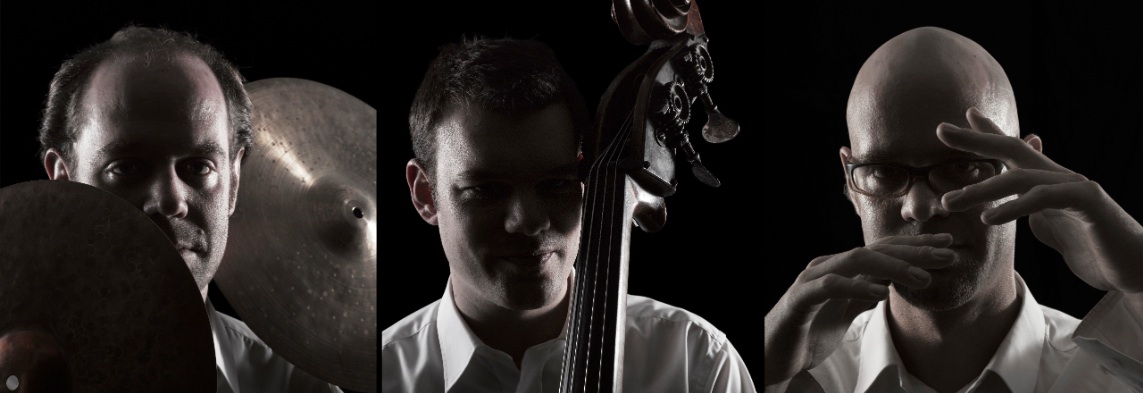
Vein know the business of music. Having met their drummer, Florian Arbenz and pianist, Michael (his twin brother) one thing is clear to me, they have a quiet but effective strategy for being a working band. Stay focused on the goal, don’t be afraid of the dirty work and take risks. Along with double bass player, Thomas Lähns, they also work hard. “Today as a musician you can’t say, ‘I just want to have my fee and that’s it,’ explains Michael, “you have to invest some money sometimes and if you do it right you get it back. It’s more like being a company than being a musician just practising and dreaming – that would be very nice!”
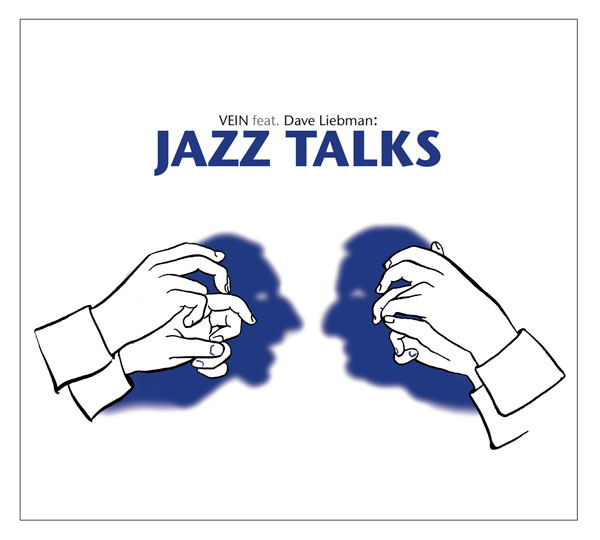
Vein are building their career, brick by brick. Jazz Talks is Vein’s ninth album and features legendary American saxophonist, Dave Liebman. His career includes stints with Miles Davis and Chick Corea – a tangible link to the heritage of jazz of which Vein are clearly so passionate when you hear ‘Walking With a Start’ or ‘Black Tortoise’. Live, Michael ripples with influences from Stravinsky to Bill Evans, but Vein are so steeped in the jazz tradition that they are able to weave in their own voices. Not an overnight achievement. “I think it’s more honest to find something personal and stay with it,” says Michael when we discuss their music style.
Hooking up with celebrated artists has been useful, it nurtures their skills and can connect them to foreign audiences. However, it takes some guts (and talent) to achieve. Greg Osby of the infamous M-Base Collective was the first Michael approached when he was just 23 years old. “It was back in the old days – there was a fax number on the back of one of his CDs and I faxed him and he was very open to play with young musicians, he still is.”
“The good thing was that it was normal to be a musician”
Vein not only make these approaches (a collaboration with a UK saxophonist is next in the pipeline) they also do all the administration and manage themselves. If you check their tour dates below you’ll see what they achieve. Also when you have someone like Liebman in the band, the hotels and travel need to be well organised. Did having parents involved in music (they are both musicians and teachers) help them to understand the business? “The good thing was that it was normal to be a musician,” he says, as musicians can face opposition from their own family, “but it’s more like we’re not afraid to do the dirty work, to call people, it’s a lot of work that’s not nice to do.”
Their curiosity for the piano their father played had them starting music as early as 4 or 5 years old. “The music education was very present but my parents didn’t push us, so it was very natural to get into it.” They also both learnt drums and Michael recalls that making music together was a form of playtime for the brothers, “And after, in our teenage years, it became more serious and it was great to have someone who was the same age and had the same interests.”
“I think we were attracted by the very positive mood of it”
They began listening to their parent’s jazz records and heard Louis Armstrong, Art Tatum and Fats Waller. “I think we were attracted by the very positive mood of it, also it’s kind of virtuoso, and rhythmical with the drums…but I think when we were kids we weren’t analysing it…Louis Armstrong: it’s almost like a celebration or something and we were attracted by that.”
For me, there is almost a telepathy between Michael and Florian onstage but Thomas is an equal member of the crew. “Vein is a collective and this is an important philosophy of the trio…We try to develop to find more possibilities and more freedom on how to play together on an equal level.” The band are always looking for how they can break the traditional roles of a piano trio and be truly multi-dimensional. When I ask what he wants to work on he replies, “Everything…I don’t like to relax and think, ‘Oh now I can do what I want,’ this is dangerous for music. I like to go on and improve everything: to compose better, play better and have more to say – that’s the most difficult”.
16. April VEIN feat. Greg Osby, De Singer, Antwerpen/BE 17. April VEIN feat. Greg Osby, Jazz Celebrations Gorzow/PL 19. April VEIN feat. Greg Osby, Künstlerwerkstatt Pfaffenhofen/DE 20. April VEIN feat. Greg Osby, Jazzkongress Freiburg/DE 21. April St. Ives Jazzclub/UK 22. April Grimsby Jazz/UK 23. April Newcastle/UK 24. April Capstone Theatre. Liverpool/UK 2. Mai Jazzkeller Frankfurt/DE 8. Mai Jazzfestival Schaffhausen/CH 26. Mai VEIN feat. Dave Liebman, Band on the Wall/UK 27. Mai VEIN feat. Dave Liebman, Porgy and Bess, Wien/A 28. Mai VEIN feat. Dave Liebman, Vortex London/UK 29. Mai VEIN feat. Dave Liebman, Jazzlines Birmingham/UK 30. Mai VEIN feat. Dave Liebman, Porgy en Bess, Zeeland/NL 31. Mai EIN feat. Dave Liebman, Platformtheater Groningen/NL 27. Juni Glasgow Jazz Festival/SCO 10. July Montreux Jazz Festival, Château de Chillon
Elina Duni moved to Switzerland when she was ten, five years after she’d first stepped on a stage to sing in her homeland, Albania. Later, studying music in Bern led to a crucial meeting – with pianist and composer, Colin Vallon. It’s Vallon, along with drummer Norbert Pfammatter and now Patrice Moret on bass, who held a mirror up to Elina so she could see who she is and be free to draw on the rich cultural soil of the Balkans.
Elina’s second album for the major label ECM is Dallëndyshe (The Swallow) and listening to it immersed me in a bubble of ancient and distant lives where women call their loves ‘Ylber’ (rainbow) as they watch them leave green hills for work or, war. With titles such as ‘Nënë moj’ (O, Mother) and ‘Kur të pashë’ (When I Saw You), Elina describes them as ‘songs of love and exile’ but somehow the purity of the melodies and simplicity of delivery make them timeless.
What were you driven to express and explore in this album?
Elina Duni I think the word ‘timeless’ is very important in this case…You can feel the songs’ strength because they’ve crossed centuries and the melodies are archaic and deep. It’s this mixture of the contemporary perception each one of us has being a musician living in today’s world and the fact [the songs] are related to something that concerns all of us – we are all migrants, it’s the fate of all human beings: leaving behind something you love, going abroad, going from countryside to city, themes that are universal.
Where and how are did you find these traditional songs?
Elina Duni You may be surprised or maybe not, I found them on YouTube! Albanian friends are always suggesting songs and a friend of mine living in Greece put ‘Fëllënza’ on my wall on Facebook.
‘Fëllënza’ has a melody that has my dopamine triggers firing like Dirty Harry and Elina’s voice is so intimate you feel she’s singing with her head next to yours on a single pillow. Colin Vallon’s tangential arrangement steers it clear of saccharine-slush whilst on ‘Unë në kodër, ti në kodër’ (Me on a Hill, You on a Hill) he hypnotises, plucking piano strings like a cimbalom.
Elina Duni This is one of the songs where Colin wrote the arrangement with the bassline and the ‘mantra’, I had the melody and rhythm but he takes the song to another level…The three of them are wonderful musicians, they never play ‘1st degree music’. For me, art is the distance we take from things, it’s playing or looking at them in the 2nd, 3rd and 4th degree…Balkan music can be so pathetic [evoking pity] and it’s really a trap, somehow this distance from the pathos is the art.
When I started singing these songs Colin told me to imagine how Miles Davis would sing these themes – as simple as possible. When I do an ornament then it’s really thought out, I try not to do too much so when I do something it stands out. It’s the manner for the whole quartet.
You said that we live in a time where there is a need for poetry, say more about this.
Elina Duni Poetry has its own music, you can listen to a poem that you don’t understand and still cry with it… [the language] Albanian has something very interesting, it has a lot of sounds in it and it is a very, very old European language. It has Latin and Turkish words and, they say, also from the Celts, and it has something very deep and at the same time, strange.
Tell me about your childhood in Albania and how you feel about your homeland now.
Elina Duni There is a phrase, ‘there are two tragedies in life: to have a wonderful childhood and to have an awful childhood’. So, I had a wonderful childhood. In Albania it was another time that doesn’t exist anymore, there were no cars, no consumerism, no Coca Cola, no aluminium…we used to be happy when we could eat a chewing gum because it was very rare, or chocolate. We were raised in the neighbourhoods, everybody was going to everybody’s houses…and we were free. We grew up jumping, climbing the trees and running and fighting and being outside all the time…the imagination played a very important role. Everyone was writing poetry and reading…I think this was a golden time.
For me Albania is always inspiring, I go very often, it’s like all the countries that are transforming themselves, they have something alive there. Unfortunately Albanian society is still macho and patriarchal, it’s changing slowly, but there is a lack of models for women…The best thing is to educate women…and to show that being free is not being a sexual object which is hard because the media promotes this – and the singers too. There are so many in Albania, every good-looking girl puts on a mini skirt, makes a video clip and she’s a ‘singer’. I try to do my best to promote another model of woman.
What other projects are you doing?
Elina Duni I’ve been doing a solo project where I sing Albanian songs with guitar but I also did an album a year ago as a singer/songwriter where I wrote songs in Albanian so I’m going on writing, in French and English too…I love the quartet but I am trying to diversify so I’m writing as much as possible to find my way into music – which is not as simple when so many things have been done and you want to find your own original way at looking at things.
I still don’t know where all this is going to lead, the thing is I love acoustic music so maybe this can be a duo with voice and piano, it depends on who your partners are on the adventure, who you find. I would like to go more electric because it is a sound that really attracts me. These days there are no boundaries and you can explore without losing your identity. I love to sing my songs, that’s my biggest dream.
Elina Duni Solo
12.04.15 Cully Jazz Festival – Cully, CH Elina Duni Quartet
21.04.2015 Jazzkaar Festival – Tallinn, Estonia
22.04.2015 Viljandi Folk Music Center, Estonia
24.04.2015 Salle des Fêtes de Carouge – Genève, CH
26.04.2015 Dampfschiff – Brugg CH
29.04.2015 Centralstation – Darmstadt, Germany
09.05.2015 Treibhaus – Innsbruck, Austria
10.05.2015 Bee-Flat im Progr – Bern, CH
27.05.2015 Moods – Zürich, CH
29.05.2015 Paradox – Tilburg, Netherlands
31.05.2015 Rote Salon – Berlin, Germany
13.06.2015 Schloss – Thun, CH
21.06.2015 Bibliothéque Universitaire et cantonale – Lausanne, CH
Bringing a myriad of verve, elegance and exotic rhythms to the Swiss jazz scene is Havana-born Yilian Cañizares. Classically trained violinist, singer, songwriter, dancer, teacher – there are many feathers to her cap. With a highly acclaimed 2nd album, ‘Invocación’, recently released on Naïve Records and an anticipated live performance at this year’s Cully Jazz festival, Yilian talks about the music that has shaped her and the important role that Switzerland has played in her musical evolution.
How did the violin become part of your life?
Yilian Cañizares: I come from a sporty, musical family and a country where music, singing and dancing are a big part of the cultural identity. As a three year old, singing came first followed by dancing. At music school aged 7, I was directed towards the piano but the minute I saw the violin I felt such a pull towards it that I knew it had to be MY instrument, even though my family thought I was crazy. I still use the piano for composing but then transfer everything to the violin. I’ve had a very strong classical training, but thankfully through the songwriting I’ve been able to develop my own style. At 16, I went to Caracas, Venezuela, to study with the ‘El Sistema’ youth orchestra where violin tuition was more developed than in Cuba. There I had a French violin teacher who told me that Europe was the epicenter for classical violin studies, so I came to Switzerland especially because of Gyula Stuller, (no.1 solo violinist with the Lausanne Chamber Orchestra). The technical and musical level was just of another standard, I benefitted from all the rich musical heritage that had formed Gyula.
How has moving to Switzerland impacted your musical career?
Yilian Cañizares: The impact has been enormous! There is more cultural diversity happening in Switzerland than people think. Geographical centrality is a key element which means that all that’s happening musically and artistically in Europe is within easy reach. Cuba is culturally rich but is locked inwards, not many international artists go there to play, you can’t always hear or get immediate access to what’s happening musically in the world, the learning curve gets cut short. My 15 years in Switzerland have exposed me to so many different styles of playing, listening, learning and teaching. Being here has made me the musician I am today, my style of playing has grown in a way that would have been impossible to imagine in Cuba. There are so many gifted artists in this small country, I feel very lucky to be part of the dynamic Swiss jazz scene. My cultural heritage is respected and welcomed as a richness that can be ploughed back into this multicultural scene. I’m also touched that major Swiss institutions such as Pro Helvetia, La Ville de Lausanne and Swiss Music Export are helping me develop my career, taking me on as a newcomer and helping me transform into a headline act. They believe I am a good ambassador for the young Swiss scene, as well for Cuban music.
How has being in a Francophone environment affected you?
Yilian Cañizares: I once heard someone say that every time you learn a new language you gain a ‘new soul’. Becoming a French speaker has developed a new sensibility in me and a different aesthetic, it’s all part of the person I’ve become. I can now sing and write in French even if it’s harder for me compared to Spanish, but very much part of my musical direction. I feel an affinity with the language and would like to touch as much of the French-speaking audience as possible, so it’s no coincidence that I’ve signed to a French label, Naïve Records in Paris.
Why did you go to Sweden to record your latest LP?
Yilian Cañizares: Compared to my first LP, I knew I wanted to go onto the next level with regards to my sound. I noticed that a lot of great current music I’ve been listening to has been recorded in Sweden. They have such great studios, such savoir faire, their culture of sound is really unique. So I was very clear about wanting to use Lars Nilsson at Nilento Studios.
What are the musical genres that have shaped you and your style?
Yilian Cañizares: I come from a very classical background where Santería music was coming from next door and Cuban jazz from down the street. Then here in Europe I discovered Stéphane Grapelli and what can be done with the violin especially in the jazz context. I’d say that jazz, as opposed to ‘world music’, is what defines me best because of its power of rebirth, improvisation and freedom. I don’t want to be classified as strictly ‘Afro-Cuban’ since musical evolution and transformation is key to what I do and my aim is to be open to many different spheres.
How would you describe your latest LP, ‘Invocacion’?
Yilian Cañizares: This is my most honest work to date, a real portrait of myself, my lived experiences and all that has shaped me. Above all it’s a homage to loved ones no longer here: my grandfather, family friends, slave ancestors, singers and poets who have taught me so much. Clearly it’s a very personal, heart-felt work with lots of different influences ranging from a Yoruba traditional prayer to Edith Piaf’s ‘Non, je ne regrette rien’. I hope people can feel the Cuban influence in my work, but also all the other important musical journeys that have helped me evolve. I feel a certain responsibility to represent the ‘new Cuba’, a country with a fragmented population struggling to open up to the world. I am so very Cuban, but for now my place is in Europe.
 Stefan Rusconi Nein, wir hatten etwa ein Jahr Pause dazwischen. In der hat Fabian immer mehr Gitarre gespielt, weil wir durch Fred gemerkt hatten, wie sehr wir diesen Sound gebrauchen können. Da kamen wir auf die Idee, mit ihm ein paar Konzerte zu spielen. Es hat sich also ganz natürlich ergeben, war kein Festivalprojekt – was auch toll sein kann -, und war deshalb total entspannt.
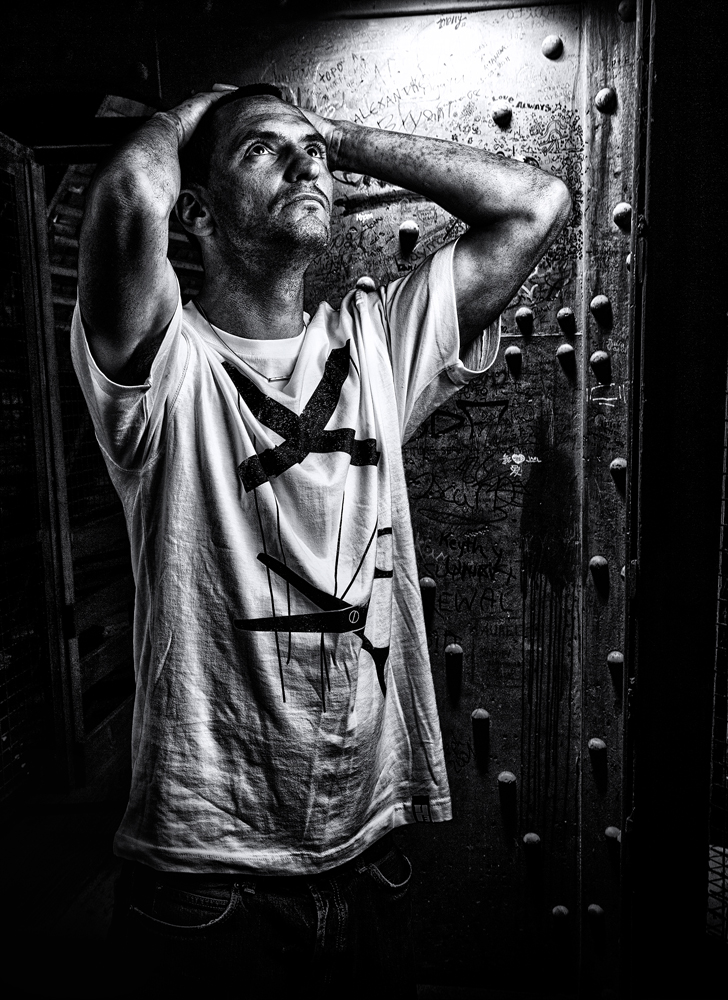 Presque dix ans se sont écoulés depuis son premier album, « Bagages ». Pourtant, la plume du rappeur genevois
 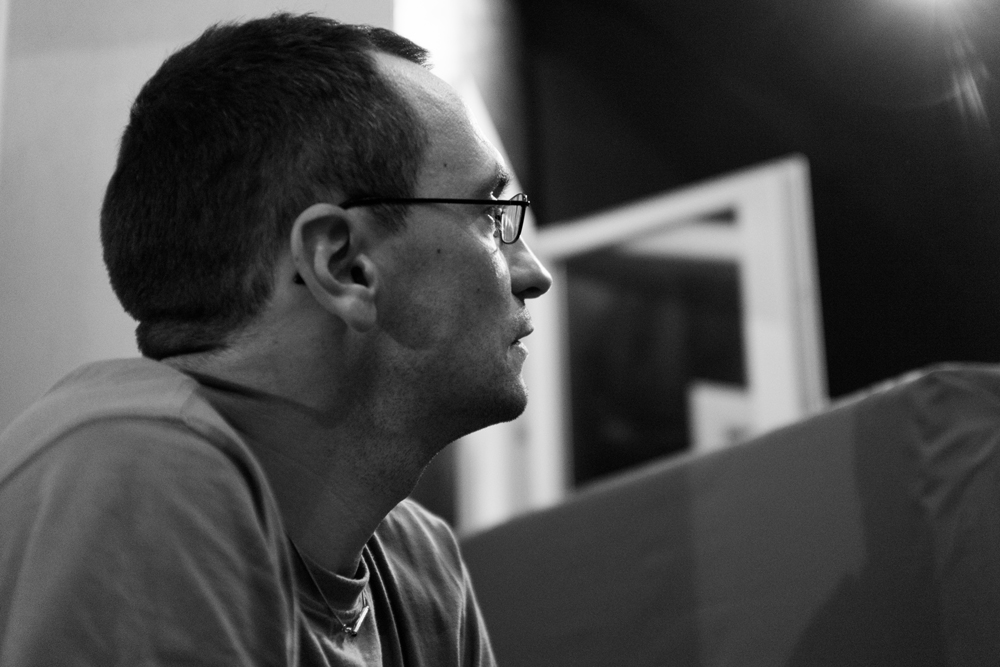 Jonas « Génération » est composé de quatre couplets dédiés à des périodes de vies différentes. Mais, toute cette période de politique islamophobe, d’hégémonie des USA sur le reste du monde avec l’Europe qui se cache dessous a provoqué des questionnements. Je trouve toujours bizarre de penser qu’on arrive à faire tomber des tours avec des avions sans charges explosives et de retrouver un passeport saoudien dans les décombres. Cela m’a poussé à me renseigner et à user de mon esprit critique. J’ai l’impression que c’est travail insidieux qui vise à amplifier toute cette haine contre les musulmans. Il y a vraiment cette scission dans le monde. Je suis récemment allé au Mali et en revenant on m’a questionné car ce pays est considéré comme terroriste. Au bout d’un moment, on ne sait plus ce qui est terroriste et ce qui ne l’est pas. Si on regarde l’histoire, les résistants face à l’Allemagne nazi étaient considérés comme des terroristes. Si on reprend la définition de la terreur, tout le monde s’y retrouve. Tout est noir ou blanc. Tu es chrétien ou tu ne l’es pas. T’es un noir, t’es un blanc. Ce basculement dans le texte et la musique est peut-être aussi dû au fait que c’est une période où tu commences à devenir vraiment indépendant, à t’assumer seul. Après, ce n’est pas qu’une critique contre la société. C’est une autobiographie qui parle aux gens. Les gens qui ont vécu à la même période que moi, se reconnaissent. C’était une façon de recontextualiser le lieu d’où je viens au travers de références genevoises et parisiennes avec mes vinyles achetés à Tikaret. Je parle aussi de l’arrivé des roms à Genève, de l’arrivé des identitaires. A mon adolescence, tout cela n’était pas présent.
 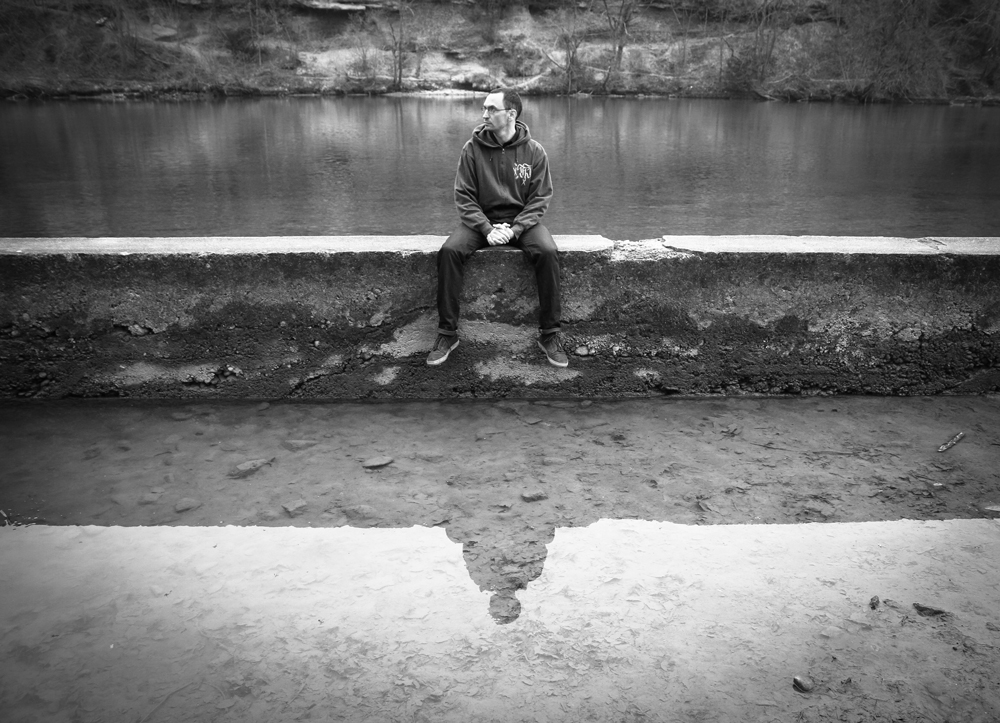 Jonas Le premier exemple est le graffiti (dont je parle d’ailleurs dans le texte) et le hiphop. Regarde le fado, le flamenco, le blues et toutes ces musiques qui ont vraiment la niaque. Elles viennent du ghetto et des lieux où c’était la merde. Donc oui, les plus belles roses naissent dans la merde. Il y a des styles de musiques qui sont nés dans des milieux où l’argent était présent et que je trouve admirable. Mais il n’y a pas cette niaque, cette envie de vivre.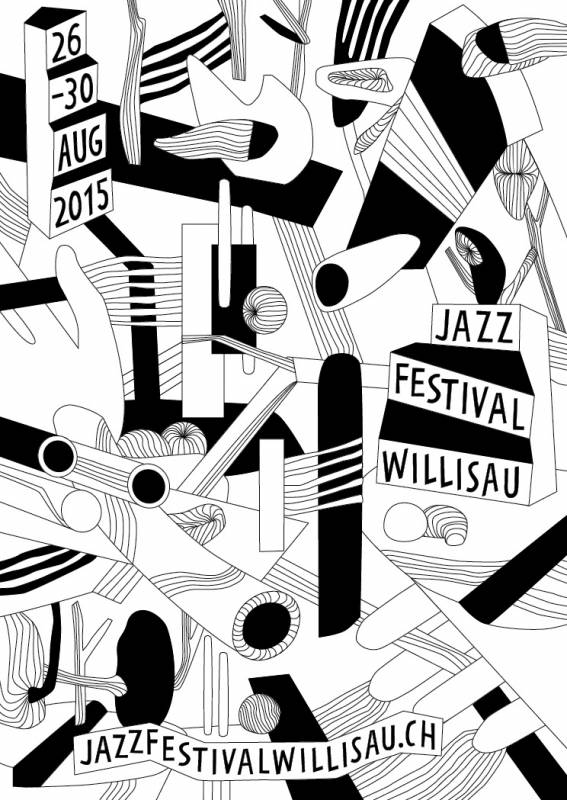
 Pff….voilà près de vingt ans que je n’étais pas venue au
 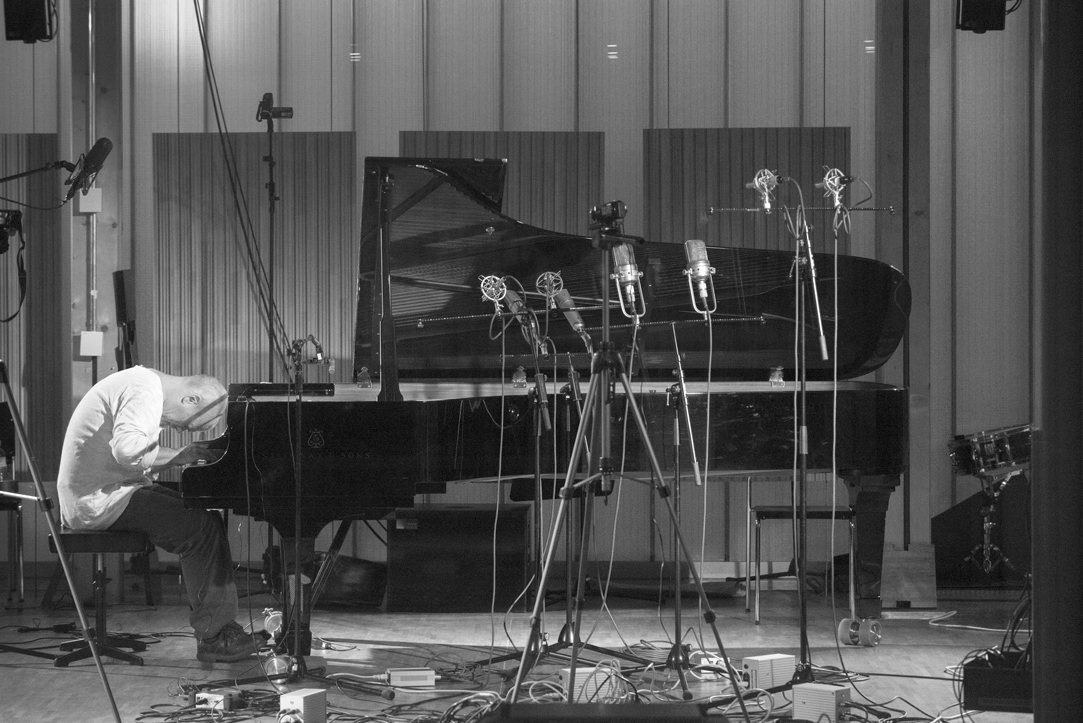 Aujourd’hui, Michel Wintsch va plus loin et cherche à donner vie à son piano sans lui ajouter d’effets. Grâce à une impressionnante batterie de micros savamment installés par Benoît Piccand, son instrument est amplifié subtilement. Michel Wintsch peut ainsi non seulement jouer des notes, mais, aussi des clicks que font les touches effleurées mais non jouées, de la frappe de ses mains sur les différentes parties du piano à sa portée (dessus-dessous..) et même du son de l’air que déplace ses mains.
 Not a great fan of distorted digital noises of any kind, I was not prepared to like the work of Blaise Caillet – AKA

 Vein are building their career, brick by brick.