Serge Wintsch à propos de la scène jazz suisse

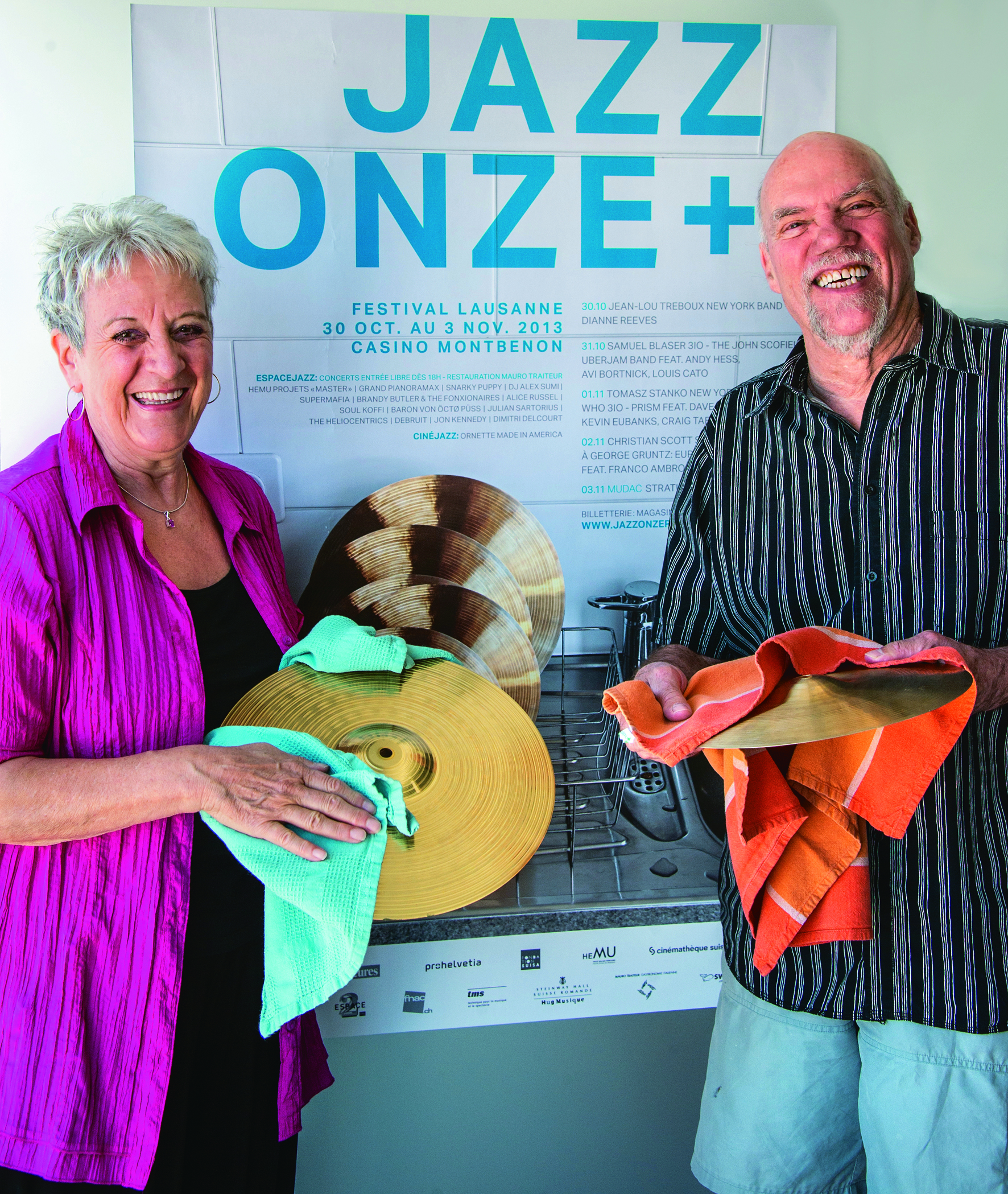
Francine et Serge Wintsch

Directeur du JazzOnze+ Festival avec son épouse Francine depuis plus de vingt ans, Serge Wintsch est aussi un musicien à ses heures perdues. Il connaît la scène suisse sur le bout des doigts. D’autant qu’Onze+ était à l’origine une association de musiciens lausannois, rassemblés pour donner plus de visibilité « aux musiques d’improvisation, à la musique contemporaine ». Du haut de ses 25 éditions, Onze+ s’impose aujourd’hui comme un rendez-vous incontournable du jazz suisse  comme international ainsi que des musiques actuelles. Les concerts de jazz ont lieu dans la salle Paderewski alors que depuis 2001, la salle des Fêtes du Casino de Montbenon se transforme en EspaceJazz et propose des concerts gratuits destinés à un public plus jeune, amateur de musiques africaines, de soul-funk ou d’electro.

Le festival a toujours accueilli des musiciens suisses. Parlez-nous de ceux que vous avez invités en 2013 ?
Serge Wintsch Le Who Trio est une valeur sûre. Michel Wintsch (mon homonyme sans être un parent) joue depuis de nombreuses années avec Gerry Hemingway et Bänz Oester. Ce trio s’est rarement produit à Lausanne. Idem pour le guitariste genevois Christian Graf dont le côté rock me plaît beaucoup. Et comme cette année, nous voulions mettre l’accent sur les guitaristes, l’occasion était toute trouvée.

Qu’en est-il de Samuel Blaser et Jean-Lou Treboux ?
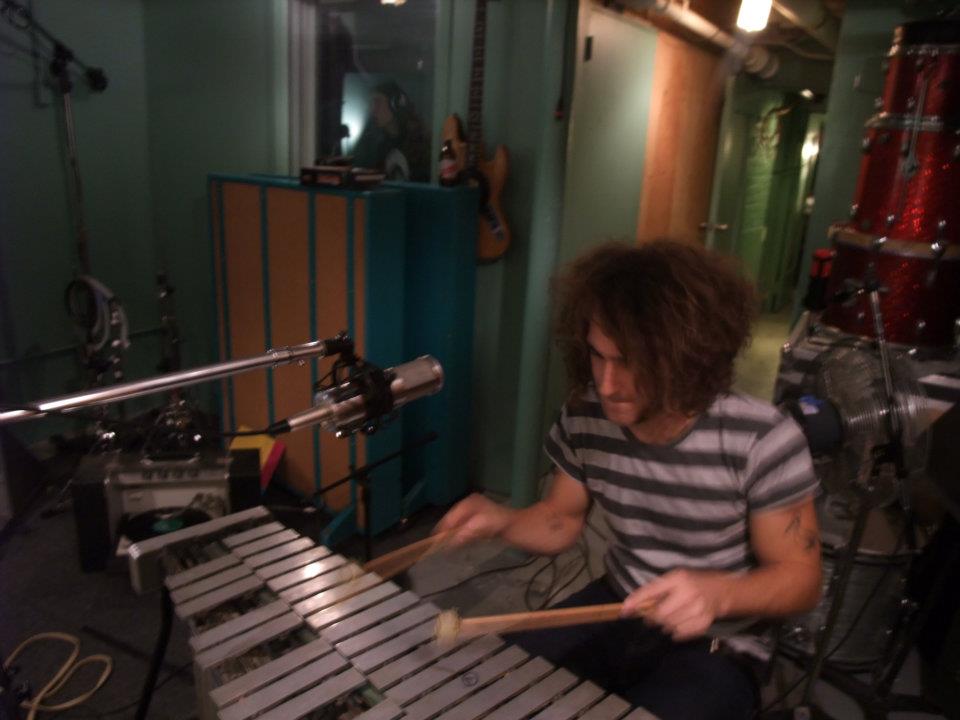
Serge Wintsch Samuel Blaser est un extraordinaire inventeur de musiques. Il trace sa propre voie dans la musique improvisée sans s’inscrire dans un genre particulier. Sa formation autant classique que jazz lui a permis d’acquérir des bases techniques solides pour créer avec la plus grande liberté formelle. Jean-Lou Treboux est un jeune vibraphoniste que nous suivons de près. Il a décroché une aide financière institutionnelle pour résider à New York pendant six mois. Cette invitation à Onze+ constitue son premier concert en Suisse avec cette nouvelle formation. Nous ne savons pas du tout ce que cela va donner, mais nous lui faisons entièrement confiance.

Que pensez-vous du jazz en Suisse en 2013 ?
Serge Wintsch Cette scène est extrêmement intéressante et riche. Rappelons qu’en Suisse il y a une longue tradition du jazz. Avant elle existait sans doute plus à l’intérieur des frontières qu’à l’extérieur. Je pense en particulier au Zürcher Jazz Festival qui de 1951 à 1973 fut un lieu de rendez-vous incontournable des musiciens alémaniques comme romands. Mais peu de musiciens s’exportèrent. On peut citer, parmi ceux-ci, Pierre Favre, Daniel Humair, George Gruntz, Irène Schweizer, Matthieu Michel ou Mathias Rüegg (Vienna Art Orchestra). Dans la nouvelle génération, il suffit d’écouter les pianistes, Colin Vallon, Stefan Aeby, Gabriel Zufferey, Léo Tardin ou Marc Perrenoud pour être convaincu que la relève est là et qu’elle possède un haut niveau créatif.

Les musiciens que vous mentionnez se sont souvent intégrés à d’autres scènes, comme Daniel Humair en France ou Pierre Favre en Allemagne. On oublie presque que ce sont des Suisses.
Serge Wintsch Oui, les Suisses sont discrets ! Peu nombreux sont ceux qui se sont exportés et ceux-là se sont fondus dans l’internationalisme du jazz. Ce qui manque, c’est un mouvement spécifiquement helvétique. Il me semble toutefois que les musiciens circulent plus qu’avant, qu’ils collaborent plus entre eux, peut-être aussi grâce à l’apparition d’écoles comme l’HEMU (Haute Ecole de Musique) de Lausanne).

Les conditions seraient donc réunies pour un mouvement spécifiquement helvétique ?
Serge Wintsch Ce serait drôle d’imaginer des tournées internationales avec des ensembles suisses en alternance. Un peu comme le Chicago Blues en son temps. Cela permettrait de montrer le foisonnement de cette scène suisse au reste du monde.

Festival JazzOnze +, Lausanne, du 30 octobre au 3 novembre. www.jazzonzeplus.ch

Trois questions à Tobias Preisig

Tobias Preisig band @Corinne Kramer

En 2012, le CD “In transit” de Tobias Preisig figure parmi les meilleures ventes de disques jazz au Japon. Le violoniste suisse est sur le point de repartir avec son band pour une tournée de six concerts sur l’île nippone. Interview exprès.

Alors que ta carrière décolle à l’étranger, pourquoi être resté à Zürich et ne pas avoir déménagé, à Berlin ou Paris  ?
Tobias Preisig  Etonnamment, c’est plus pratique pour moi de rester par ici. Mon groupe est éparpillé un peu partout en Suisse, entre Bâle, Bern et Lausanne, et je peux les retrouver en un clin d’oeil. Pareil pour voyager à l’étranger : Zürich a une position tellement centrale en Europe que l’on peut se rendre partout sans problème. Enfin, c’est bête à dire, j’ai la chance d’avoir mon bureau et mon espace de répétition dans un club d’ici, l’Exil, et cela me permet de me concentrer sur mon travail. En plus, je peux profiter des conseils d’un ancien d’ici, Nik Bärtsch, et évoluer dans un environnement où les musiciens prennent des risques, et c’est la seule chose que je recherche.

Comme le pianiste Stefan Rusconi, par exemple, avec qui tu partages une approche originale de vos instruments respectifs?
Tobias Preisig Et oui, non seulement je m’essaie au jazz au violon, ce qui est très rare (à part Stéphane Grappelli, j’aurais du mal à citer d’autres violonistes de jazz!), mais en plus j’essaie d’exploiter mon instrument au-delà des canons du genre, sinon je m’ennuie. Il y a tellement de gens qui savent jouer du violon parfaitement, cela ne sert à rien de d’être un nouveau disciple appliqué. A vrai dire, j’ai eu de la chance de pouvoir rencontrer un professeur au conservatoire et à l’école de jazz suffisamment ouvert pour me dire :  « ce n’est pas grave si tu joues la tête en bas, du moment que tu joues bien… » Ca m’est resté… et effectivement ca me fait un grand point commun avec Stefan Rusconi. Lui, c’est comme c’est comme un frère pour moi, nous formons une petite communauté à nous deux. On a énormément joué ensemble pour d’autres musiciens et maintenant, nous avons un drôle de duo, à l’orgue et au violon, qui nous ouvre un espace pour explorer de nouveaux sons.

[youtube=http://www.youtube.com/watch?v=N3JW83f-0hQ]

Justement, comment peut se dérouler le processus créatif qui amène à dénicher ces nouveaux sons ?
Tobias Preisig Comme pour tout le monde : avec beaucoup de travail, et un peu de chance. Prenons l’exemple de « Transforming », l’un des morceaux les plus connus de « In Transit ». Au départ, j’ai eu huit mesures en tête, dans la rue, et je me suis empressé de les noter sur le carnet où je note toutes mes idées. Plus tard, en répétant, je me replonge dans mon carnet et je me rend compte que ces mesures pourraient bien s’accorder avec d’autres, que j’avais notées plusieurs pages plus tôt. En les réarrangeant, j’avais la base de mon morceau… mais ce n’est pas tout ! Un peu plus tard, je me suis mis en tête d’apprendre à jouer du theremin, alors je me rend sur youtube pour trouver un tutoriel… et je tombe sur la vidéo d’un type qui joue le thème principal de « Transforming »  – sans le savoir, j’avais repris un morceau de Gabriel Fauré ! C’était moins une : la pochette de l’album partait le lendemain à l’impression, j’ai appelé le label en catastrophe pour qu’ils  « créditent » Fauré sur le livret …

il paraît que « In Transit » est rentré dans les tops albums au Japon…
Tobias Preisig Oui, c’est incroyable, n’est-ce-pas ? Il y a deux ans, le bureau export nous a permis de faire une petite tournée à Tokyo et Kyoto; une excellente expérience. Non seulement les ingénieurs du son ont été formidables, mais notre mélange de rock, de jazz et de musique expérimentale a paru complètement avant-gardiste aux oreilles du public japonais… et ils en redemandaient ! En exagérant à peine, les filles étaient en pleurs à la fin des concerts. Du coup, nous avons prévu d’y retourner cet automne pour flatter nos nouveaux fans hystériques (il rit ).

En concert au Japon: Shikori Fukuoka, sa 12 octobre 2013. Hiroshima, Speak Low, di 13. Osaka, Mister Kelly’s, lu 14. Kyoto, Live Spot Rag, me 16. Tokyo, Spiral Lay, je 17. Kyoto, Left Alone, ve 18.

In Fai Baba’s cave

On stage at Lephoto_fai_baba_01 Bourg, Fabian Sigmund, alias Fai Baba, surprises us with a trio that’s as minimal as it is powerful. He is back at Paléo Festival Nyon, Friday the 26th of July.

First of all, there’s the voice that can scale great heights in an empowered register, something which doesn’t really go with the willowy physique and jerky body moves. An intriguing mismatch which strikes a chord straight away.

The accompanying bassist and drummer amplify and play around with these noisy blues, tinged with flashes of rock and punk.

The rhythms are broken up to make way for long instrumental sections. Thanks to two guitars, (one simple and one 12 string), and a few pedals for effects, Fai Baba puts his guts into his music without batting an eyelid.

A cover version of Townes Van Zandt and a nod in the direction of many different rock styles, all of which confirms that the man is a music freak.

Fai Baba says goodbye, announces that his CDs are on sale and gets straight to business by pulling out a suitcase from the side of the stage. Inside are his two CDs releases, including the latest “She’s the guru”. It’s a lot more orchestral than what the Zurichois has just delivered on stage despite being a work that he designed entirely on his own. Here are some insights into his work:

How did you set about making « She is My Guru » ?

Fai Baba: This LP was made in six months. I shut myself away in a rehearsal studio in Zurich and started working on some loops, experimenting with sounds on an eight-track. Within six months all the ground work was done. I then went to New York to finish the rest. I worked in the studio with Tony Maimone who was Père Ubu’s bass player for a long time.

How did you meet Tony Maimone ?

Fai Baba: By chance. I was helping a friend organise a kids’ second-hand market and whilst chatting to a woman I mentioned that I was a musician. She happened to be Tony Maimone’s sister-in-law and she hooked us up. In him I discovered a nerd who like me enjoys organic music and working with analogue sound.

Since when have you been working on your own?

Fai Baba: When I was 14, I started playing in a band and hanging out with an older friend who was clued up. He taught me how to record onto a tape deck and I immediately thought it was more cool than working with a computer.

How do you work?

Fai Baba: I’ve always played my rhythm section plus guitar. As soon as I touch an instrument I know there’s a specific sound for me to make. For example, I can make a kick drum sound with my foot, then I sample it and play it back and this gives me a base on which to build. It’s often as basic as just one simple note. This is a hip-hop technique but its origins come from the blues.

How did you get into the blues ?

Fai Baba: I used to play in a band where we went through all different styles of playing: rock à la Radiohead, then Pink Floyd style, and then Sonic Youth! Next I went off to India with my guitar, it was some travellers there who initiated me into the blues. When I got back I found myself playing the first half of a set all alone on the guitar. It was then that I realised that I wanted to play solo.

You seem to have an impressive collection of instruments and synths?

Fai Baba: I don’t know how many instruments I’ve got. They fill up a whole room, rather stressful because I’ve got to move house soon. I’ve always loved vintage sounds, the instruments used back in the day, but I’m not rich enough to have them all. Recently a friend of mine unearthed an Ace Tone organ, (a portable organ used a lot in 60s American rock), which featurs on the LP.

 You invited some musicians to join you on the LP, what did they contribute to the sound?

Fai Baba: When I ask someone to play on my record I know exactly what I want from them and the kind of sound that they’ll bring. But I also like for the process to be spontaneous and radical.

 Your album is entitled « She is my Guru ». Who is your guru?

Fai Baba: Once the recording was over, I noticed that I’d only done love songs. When we think of a guru our first thoughts are often of a man, but it amused me to say “She’s my guru”; a ‘she’ that refers to ‘woman’ in general, my muse as much as my guru.

“Julia”, a track from Fai Baba’s first LP (“Snake Snake”) is available for download on bandcamp at Swiss Vibes and can heard here:

[soundcloud url=”http://api.soundcloud.com/tracks/88381394″ params=”” width=” 100%” height=”166″ iframe=”true” /]

PS. This text was originally published in French on the 31st MAY 2013 on this blog

Dans la caverne de Fai Baba

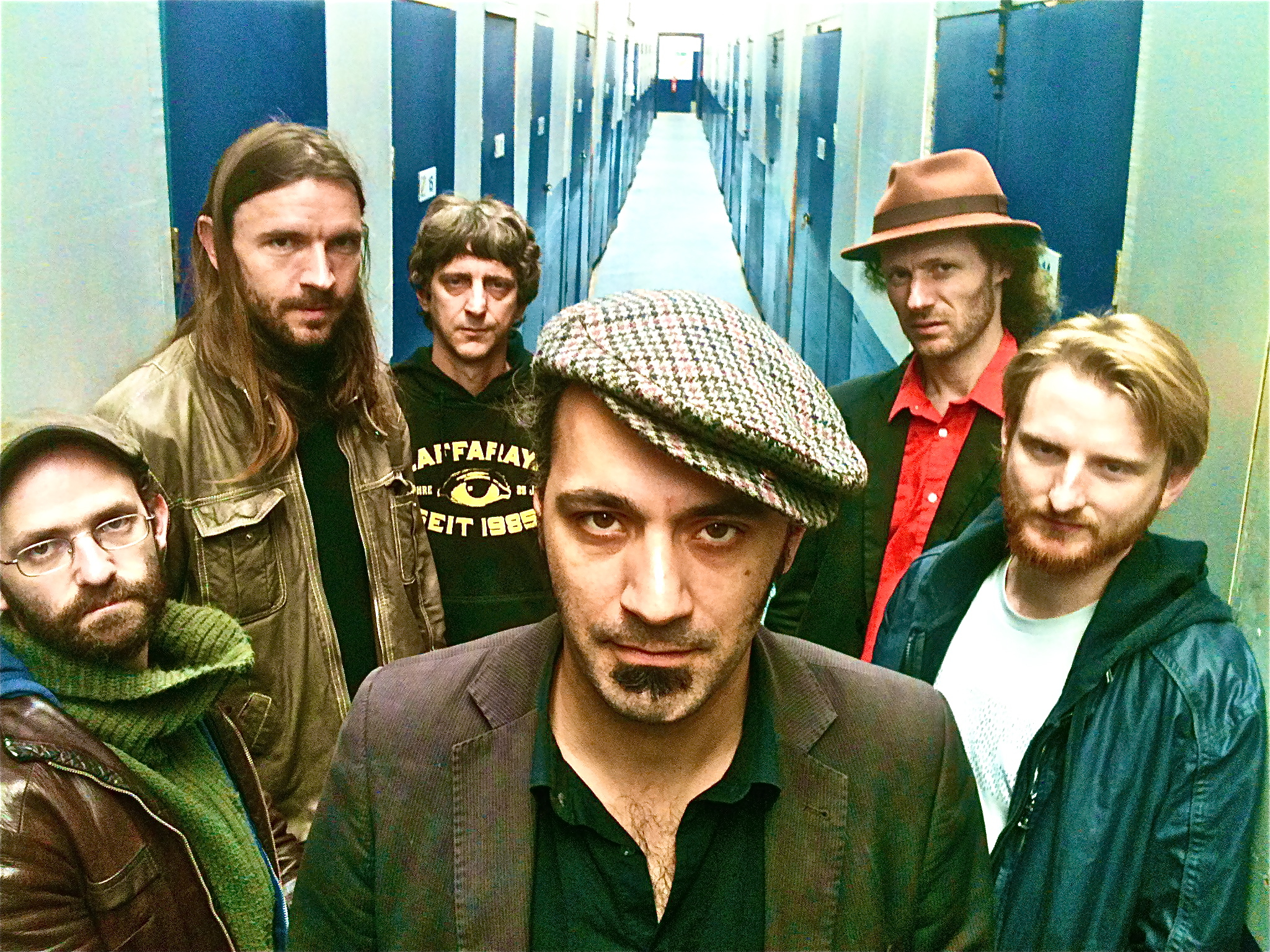
photo_fai_baba_01Sur la scène du Bourg, Fabian Sigmund, alias Fai Baba surprend avec sa formation trio aussi minimale que puissante. D’abord il y a la voix, une voix qui peut partir très haut, dans un registre habité et qui ne colle pas forcément avec la silhouette longiligne et les mouvements de ce corps nerveux. Un décalage intrigant qui accroche d’emblée. A ses côtés, bassiste et batteur suivent, amplifient et bousculent ce blues bruitiste traversé de fulgurances rock et punk. Les rythmes se cassent pour faire place à de longues parties instrumentales. Deux guitares (une simple et une douze cordes), quelques pédales d’effets, Fai Baba met ses tripes à l’air sans avoir l’air d’y toucher. Une reprise de Townes Van Zandt et des clins d’œil à beaucoup de tendances rock confirment que l’homme est un fou de musiques.  Fai Baba salue, annonce qu’il vend ses CDs et passe illico à l’acte en extirpant une mallette planquée sur un des côtés de la scène. A l’intérieur ses deux CD dont le deuxième, « She’s The Guru », vient de paraître. Il fait état d’une musique nettement plus orchestrée que ce que le Zurichois vient d’envoyer sur scène. Pourtant Fai Baba l’a conçu presque entièrement seul. Explications.

Comment avez-vous réalisé « She is My Guru » ?

Fai Baba Cet album s’est fait en six mois. Je me suis enfermé dans un local de répétition à Zurich et j’ai commencé à faire des loops, à expérimenter des sons avec une table de mix huit pistes. En six mois les bases du disque étaient faites. Puis je suis parti à New York pour le terminer. J’ai travaillé dans le studio de Tony Maimone, qui a été longtemps le bassiste de Père Ubu.

Comment avez-vous rencontré Tony Maimone ?

Fai Baba Par hasard. J’aidais un ami à organiser un marché d’habits d’occasion pour enfants. En discutant avec une femme, je lui ai dit que j’étais musicien. C’était la belle sœur de Tony Maimone et elle m’a mis en contact ave lui. J’ai découvert un nerd qui aimait comme moi la musique organique et travailler en analogique.

Fai Baba_02Depuis combien de temps travaillez-vous tout seul ?
Fai Baba  A 14 ans, j’ai commencé à jouer dans un groupe et je traînais pas mal avec un ami plus âgé et plus au courant. C’est lui qui m’a appris à m’enregistrer sur un magnéto à bandes et j’ai tout de suite trouvé ça plus cool que de bosser avec un ordinateur.

Comment procédez-vous?

Fai Baba J’ai toujours joué avec les rythmes en plus de la guitare. Dès que je touche un instrument, il y un son spécifique pour moi. Je vais par exemple faire un son de grosse caisse avec le pied. Je le sample et je le rejoue. Ça me donne une base à partir de laquelle je construis. Ce sont des choses très simples parfois une simple note. La technique s’inspire du hip hop, mais l’esprit vient du blues.

Comment avez-vous découvert le blues ?

Fai Baba Je jouais dans un groupe. On est passé par tous les style, du hip hop à du rock façon Radiohead, puis façon Pink Floyd, puis façon Sonic Youth ! Je suis ensuite parti en Inde avec ma guitare. Ce sont des travellers qui m’ont initié au blues. Quand je suis rentré, je me suis retrouvé à faire une première partie de concert tout seul à la guitare. C’est là que j’ai réalisé que je voulais jouer solo.

Vous semblez avoir une collection impressionnante d’instruments et de synthétiseurs?

Fai Baba Je ne sais pas combien j’ai d’instruments. Ça remplit une pièce chez moi. Ça me stresse d’ailleurs car je vais devoir déménager bientôt… J’ai toujours aimé les sons vintage, les instruments. Mais je ne suis pas assez riche… Récemment mon amie a déniché un orgue Ace Tone (orgue portable électronique beaucoup utilisé dans le rock américain des années 60). Je l’ai utilisé sur ce disque

Puis vous avez convié d’autres musiciens à vous rejoindre, quels ont été leurs apports ?

Fai Baba Quand je demande à quelqu’un de venir jouer sur mon disque, je sais exactement ce que je veux, le son qu’il va m’amener. Mais j’aime que le processus soit instantané, radical.

Votre dernier album s’intitule « She is the Guru ». Qui est votre gourou ?

Fai Baba Une fois l’enregistrement terminé, j’ai remarqué que je n’avais fait que des chansons d’amour. Quand on pense à un gourou, on pense d’abord à un homme. Ça m’a amusé de dire : « Elle est mon gourou ». Un « elle «  qui renvoie à la femme en général, ma muse autant que mon gourou.

“Julia”, chanson qui figurait sur le premier album de Fai Baba (“Snake Snake”) est téléchargeable sur le bandcamp de Swiss Vibes et écoutable ici:

[soundcloud url=”http://api.soundcloud.com/tracks/88381394″ params=”” width=” 100%” height=”166″ iframe=”true” /]


Nouvel album: Fai Baba, “She Is My Guru” (A Tree in a Field Record/Irascible)

Pierre Omer, Cully Jazz Interview

From a distance Pierre Omer‘s appearance is reminiscent of a compelling shadowy figure in a Jim Jarmusch film. His attire is dark, well-worn and elegantly dishevelled. His sound is a film noiresque Django Reinhardt meets Link Wray via The Clash.

London-born, Geneva-based Omer spent his youth listening to 80s UK pop, new wave and punk. Then came American roots music, large doses of Delta Blues, Hank Williams, Jimmy Rodgers, Bob Dylan, Shellac records and all things swinging from the 30s, 40s and 50s. Very much a vintage kinda guy.

His first band was a cabaret outfit immersed in the Berlin/Paris tradition. Omer then became a founding member of the Dead Brothers – an infamous funeral band known for their punk garage band ethic of rock’n’roll and other old school styles like swing, Bluegrass and hillbilly folk.

Pierre Omer & Stewarts Garages Conspiracy Crew_lowAfter 10 years of cult status, Omer moved into writing music for theatre, cinema and dance, as well as producing the first Mama Rosin LP, setting up his own label, ‘Radiogram Records’ and bringing out 3 solo albums.
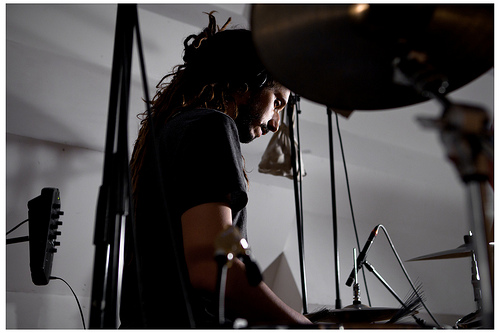
By autumn 2011, a new band had organically come together out of disparate elements. Rob Butler – bass player from LA, now resident in Berne and part of the Voodoo Rhythm/Beatman scene. Christian Aregger (banjo) and Roly Bucher (drums) had asked Omer to play with them once and then automatically became his backing band. And lastly, the free radical, Julian Israelian – percussionist and noise-maker who plays his own handmade ‘Samsonite Orchestra’, (an out of this world lap-steel contraption that fits perfectly into a Samsonite suitcase). Together they produce a bluesy, rootsy, vintage sound with a post punk twist which is quite often dark but never sad.

Last year saw the release of “Stewart’s Garages Conspiracy Crew'”on Radiogram Records to critical acclaim. It was recorded at Space Echo Studios above Stewart’s old red-brick car garage in Fulham. The cockney twang in Omer’s singing voice is ever-present as is the up-tempo, jivey, Pogues-style sense of manic rhythm. Omer describes his guitar style as “raw, strange, dangerous and fun. I like to get people moving nowadays to music which has tragic and comic juxtapositions”. Judging by the full house at The Hundred Blue Bottle Club where Omer was resident this year at Cully Jazz, his filmic cocktail of folk-noir, roots, jive and swing is just what the Blues doctor ordered.

Plaistow, video and interview…

Cyril Bondi
Cyril Bondi

Three questions to Cyril Bondi, drummer of Plaistow, a  band formed in 2007, currently kicking up a storm everywhere they play. Plaistow’s next album, “Citadelle”, will be released on Two Gentlemen Records in April.

[vimeo http://vimeo.com/52917016]

Interview first published in french in May 2011. Translation: Beatrice Venturini. Photographer: Raphaelle Mueller

What does Plaistow mean?

Cyril Bondi : Plaistow means two things. Firstly, it’s a disused metro stop in London. Many of our compositions refer to the metro because we love everything that is underground. It’s another way of saying that we can always dig. Plaistow is also a track by Squarepusher. We later found out that it’s also a playground, which fits in nicely with the spirit of the band.

Why have you chosen such a classic format as the jazz trio?

Vincent Ruiz
Vincent Ruiz

Cyril Bondi: We have fun with it. We act as if we were a jazz trio but in fact we transcend this format by bringing to it a dub, punk or electro side. There has always been this desire to gather up extremes, to bring together all our basic different influences. Johann Bourquenez, the pianist, comes from electronic music. Raphaël Ortis, our former bassist, from metal. Vincent Ruiz, our new bas player, comes from jazz. As for me, they say I come from jazz, but I think I come more from improvised music. All three of us have strong personalities and the formula ‘piano-bass-drums’ is the most comfortable for us, it allows us the most freedom to play. We never play any of our tracks the same way twice.

You’re often labelled with the term ‘post-jazz’, does it suit you?

Cyril Bondi: This ‘post-jazz’ idea actually came from us; it’s handy because it doesn’t really mean anything and it allows us to go far and wide with it. In the same track there are moments where we try to just improvise together, others where we try to play the same thing over a long stretch, and others again where we slow things down to the max. And then we might decide to throw ourselves into pure noise…..


Johann Bourquenez
Johann Bourquenez

Cowboys From Hell mit neuem Album

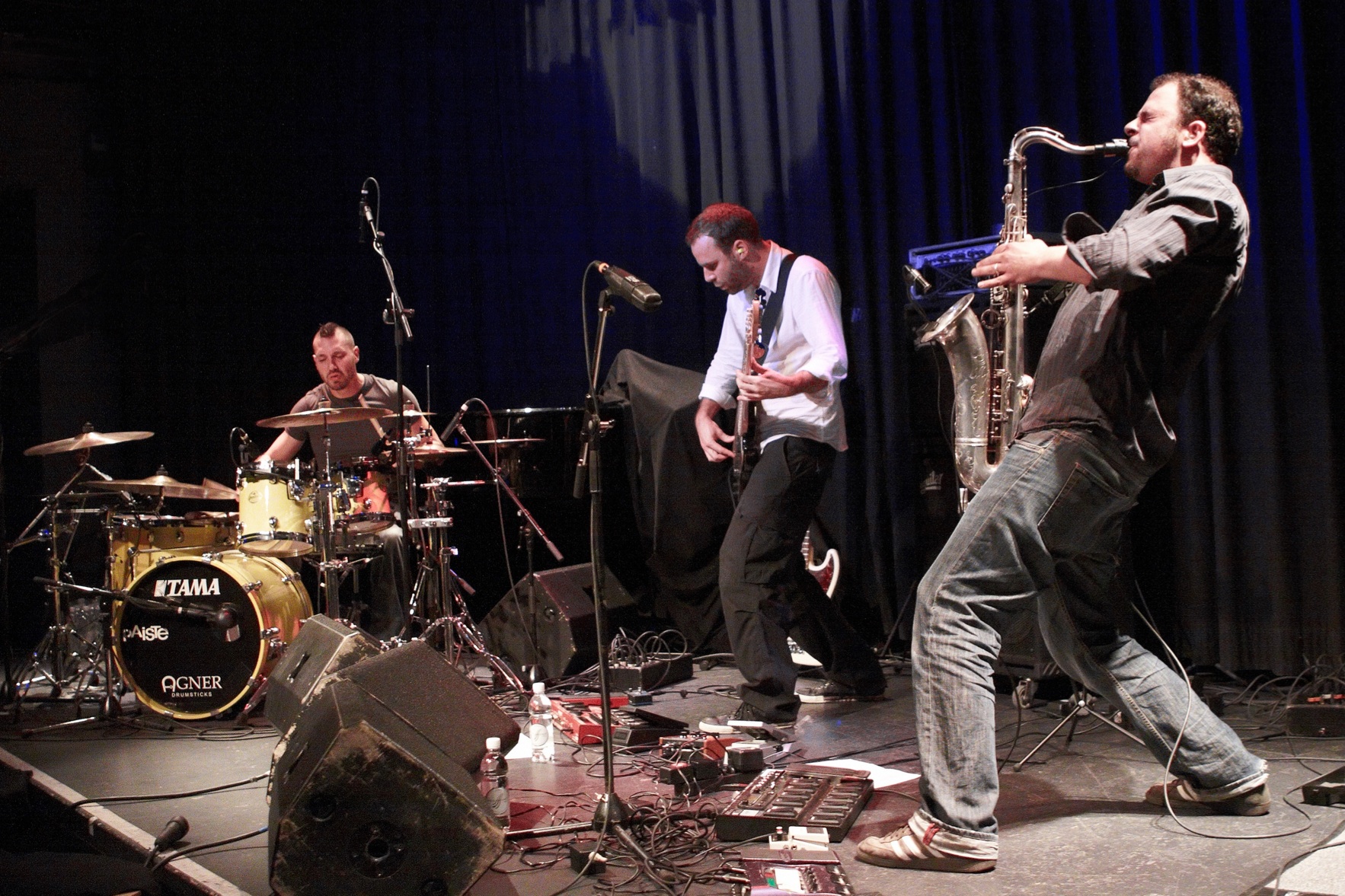
cfh_live_farbigWild, furios und rotzig, das sind die Cowboys From Hell. Das selbsternannte „Jazz-Core“ Trio hat vor kurzem sein zweites Album „Big Fish“ veröffentlicht und knüpft damit in bekannter Manier an seinen Erstling an. Nach erfolgreicher Album-Release Tour geht’s im Februar wieder nach Deutschland und im April nach Russland. Ein Erfolg der hart erkämpft werden musste, denn die Schweizer Band stand zwischenzeitlich sogar vor dem Aus, wie uns Christoph Irniger, Saxophonist und Komponist der Cowboys From Hell im Interview erzählt.

Im Jahre 2008 erschien euer erstes Album „Monster Rodeo“, mit dem ihr die schweizer Musikszene mit eurem unverkennbaren Sound schon mal gehörig aufgemischt habt. Es folgten einige Konzerte im In – und Ausland. Doch es dauerte trotzdem 4 Jahre, bis ihr euren Zweitling „Big Fish“ im Herbst 2012 veröffentlicht habt. Weshalb dauerte das so lange?

Christoph Irniger: Wir standen kurz vor der Auflösung. Unser ursprüngliche Bassist Richi Pechota hatte andere Pläne und ist ausgestiegen. Unser Drummer Chrigel Bosshard spielte in dieser Zeit gleichzeitig bei Drei erfolgreichen Schweizer Bands, Lunik, Bonaparte und Marc Sway und hatte deshalb einfach keine Zeit mehr für die Cowboys. Dies führte dazu dass wir einfach keine Zeit mehr fanden für unsere Band und Gigs absagen mussten, was letztendlich auch sehr an der Motivation gekratzt hat überhaupt noch weiter zu machen. Dass wir dann aber schlussendlich doch noch die Kurve bekommen haben, ist eigentlich dem ZKB Jazzpreis zu verdanken. Wir wurden da quasi aus heiterem Himmel dazu eingeladen daran teilzunehmen, was uns natürlich wieder schub und Motivation für unsere Band gegeben hat. Daraufhin suchten wir uns einen neuen Bassisten und stiessen dabei auf Marco Blöchlinger und das hat sofort unglaublich toll funktioniert. Marco ist ein Perfektionist mit einem unglaublich guten Gespür für Sounds. Die Cowboys waren wieder da. Für den Gig am ZKB haben wir uns dann auch vorgenommen neue Stücke zu schreiben was letztendlich auch dazu führte wieder eine neue Platte aufzunehmen. Deshalb hat dies alles so lange gedauert.

Eure Musik ist geprägt von Gegensätzen. Stilistisch schwer einzuordnen. Ihr selbst nennt es “Jazz-Core”, also eine Mischung aus Jazz und Hardcore. Wobei es stilistisch bei euch noch viel bunter zu und her geht.Wo holt ihr euch eure Inspirationen für eure Stücke jeweils her?

Christoph Irniger: Uns stilistisch einzuordnen, da tun auch wir uns eher schwer. Wir drei haben alle ganz unterschiedliche musikalische Backgrounds. Ich z.b. bewege mich mehr oder weniger nur in der Jazzmusik und dabei oft auch in der freien Improvisation. Der Chrigel hat seine Wurzeln sicherlich im Rock, aber er ist ebenso ein unglaublich toller Pop Drummer. Ausserdem spielt er oft mit Don Li und ist fester Bestandteil der Touns’ Szene. Er ist eigentlich der Musiker mit dem grössten Radius in unserer Band. Marco ist absolut der Pop Bassist, der u.a bei Bands wie Lunik, Myron spielt. Die Stücke werden vor allem von Chrigel und mir geschrieben. Marco ist dann derjenige, der ein gutes Gespür hat, wie man das interessant umsetzen könnte. Er geht da jeweils sehr pragmatisch an heran und tüftelt so lange bis er zufrieden ist. Diese Kombination dieser drei Musiker bringt sehr viel Spannung mit sich.

Ein herausstechendes Merkmal eurer Musik ist bestimmt der Sound deines Tenor Saxophons der jeweils so stark verändert wird, dass man teilweise sogar meint eine verzerrte Gitarre zu hören. Dann glaubt man aber wieder eine Art Synthesizer zu hören, aber selten bis nie den originalen Sax sound. Du selbst bist ja vor allem auch in der freien Szene verankert, wo Effekte in dieser Art eher unüblich sind. Was hat dich dazu getrieben, dich trotzdem so intensiv mit den Effekten auseinander zu setzen?

Christoph Irniger:Eigentlich muss ich gestehen, dass ich überhaupt kein Soundtüftler bin. Ich habe zwei Multieffektgeräte, eine Filterbank und eine Loopstation. Daran schraube ich jeweils so lange herum, bis ich einen Sound gefunden habe der mir gefällt. Natürlich kenn ich mich mittlerweile mit diesen Geräten schon ganz gut aus. Aber fragt mich einfach nicht nach solchen Fachbegrfiffen wie „Envelope“ oder „Decay“ usw. davon hab ich keine Ahnung. Durch das ausprobieren mit diesen Effekten und den vielen Proben mit den Cowboys hat sich mein Sound immer weiter entwickelt. Und natürlich hör ich mir nach wie vor Bands an, die mich musiaklisch sehr geprägt haben, wie z.b. Rage against the Machine, Massive Attack oder AC/DC die für mich zu den wichtigsten Bands überhaupt gehören. Mit den Cowboys wollte ich einfach lauten und wilden Rock spielen und so hab ich mich auf die Suche nach dem passenden Saxophon Sound gemacht.

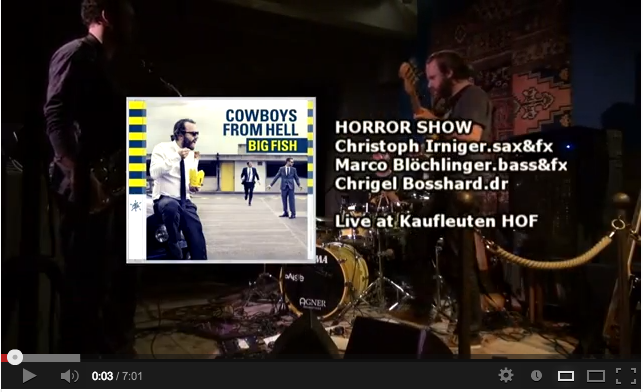
Einer eurer Songs trägt den Titel „Horror Show“. Gibt es da eine Geschichte dazu?

Christoph Irniger:Ja da gibt es eine Geschichte. Ich war mit meiner Familie in den Ferien in Irland. Wir haben uns dort ein Haus gemietet, sozusagen im Niemandsland. In der Nacht war es dort jeweils so dunkel, dass man überhaupt nichts sehe konnte. Kein Licht, alles war Schwarz. Man konnte nicht mal den Himmel von der Erde unterscheiden. Und als ich da so aus dem Fenster ins Schwarze rausstarrte habe ich mir vorgestellt in mitten einem Horror Film wie z.b. Blair Witch Project zu sein. Die Geräusche die ich wahrnahm hab ich so interpretiert, dass da draussen nun irgendwelche Banden um unser Haus schleichen und uns beobachten. Naja, nicht gerade der beste Moment um sich solche gruselige Szenen vorzustellen. Das war schon gespenstisch. Und dabei ist mir dann irgendwann die Idee für diese Basslinie von „Horror Show“ eingefallen und so ist dann eben der Song entstanden.

Demnächst seid ihr wieder auf Tour. Auf welchen Cowboys Ritt in die Hölle freust du dich besonders?

Christoph Irniger: Wir sind gerade daran neue Stücke zu erarbeiten, worauf ich mich natürlich sehr freue diese bald live zu präsentieren. Und Natürlich freue ich mich sehr auf unsere gemeinsame Deutschland –Tour. Das ist immer etwas spezielles, wenn man einige Tage zusammen weg ist und jeden Tag spielt, daraus ergibt sich eine ganz andere Dynamik, als wenn man jeweils einzelne Gigs spielt. Und das ist auch 10 mal mehr Wert als zu proben. Im April geht’s dann nach Russland auf Tour und darauf freu ich mich natürlich auch sehr, nicht zu letzt, weil es für uns absolut Neuland ist.

Upcoming Dates in Switzerland:

31.01.13 Moods, Zürich

01.02.13 Bejazz, Bern

2.02.13 Treibhaus Luzern

Weitere Tourdaten

Album “Big Fish” reinhören

Bildschirmfoto 2013-01-25 um 12.56.25

From Louisiana to New York via …..Geneva.

Mama Rosin New York 10These three are decidedly untenable. No sooner had Mama Rosin got back from New York where they’d recorded their new studio album under the aegis of Jon Spencer, that they announced the release of three screen-printed limited editon singles. The first recording by the Souchet brothers (same line-up but without drummer Xavier Bray) is also awaited before Christmas. Guitarist and banjo player, Robin Girod, is very chatty on skype – it’s kind of normal since his head is still a bit in the USA.
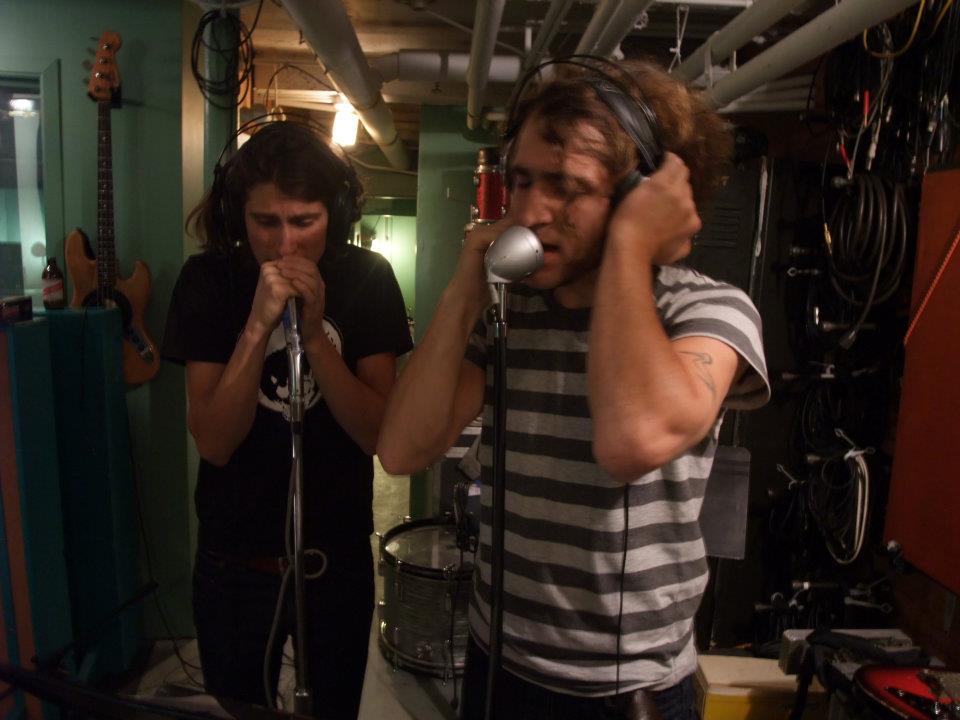
How did you meet Jon Spencer?
Robin Girod : Jon Spencer plays with Matt Verta-Ray in an incredible rockabilly band called Heavey Trash. It’s real rockabilly, fine and subtle, never vulgar. His Swiss tour manager, David Schindler, gave him a bunch of Swiss CDs to listen to including ours. Once back home, Jon Spencer called him to say that he’d really liked our stuff. He suggested that we do the start of a small German tour with him as part of Blues Explosion. We had a great time together. On the last day, Jon asked us to do some recording with him at his studio in New York. We weren’t expecting any of this since up until then our relationship had been very professional.
Mama Rosin New York_3Are you scared about working with someone of this stature?
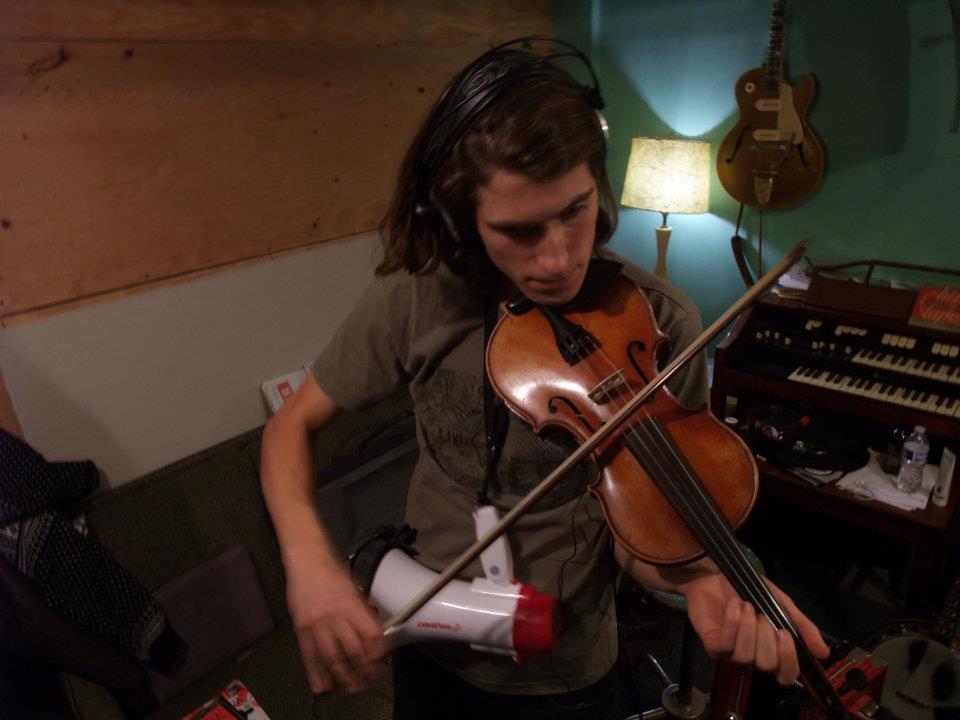
Robin Girod : We were scared beforehand, but we were also very excited about recording and playing together. Once we saw the place we were even more excited. Jon Spencer has a studio from back in the day, everything is analogue just like we like it and he shares it with Matt Vera-Ray and Iggy Pop’s drummer. We were stunned to be hanging out with people of this calibre. They were very modest, much more so than the Europeans. Jon behaved like a surgeon or possibly more like an old savant. He let us climb on board a truly fantastic ship. There was a piano and a vibraphone. He told us to try out whatever we liked. We worked nine hours non-stop everyday with a short pause and then it was over. Even if we felt like staying longer in order to work on a difficult part, he’d force us to sleep on it and come back the next day with a rested head.
The result?
Robin Girod: We’d gone with the idea of making a really different album. Whereas in fact, we made something which is an extension of our “Voodoo Rhythm” LP, but with two years of experience added on, a few rock tracks and also some rather sad ballads.
Why do you keep on bringing out limited edition vinyl tracks at the same time?
Mama Rosin New York 8Robin Girod: It’s a bit of a joke we’ve got going on with MP3 and downloading. Of course we download stuff too, but we like to put out these little hidden gems that would otherwise get lost. They bear witness to a tour or to a specific moment in our group’s existence.
(Translation Beatrice Venturini)

The new Mama Rosin, “Bye Bye Bayou” is out since november and will be released in France early 2013. You can listen and buy their music on bandcamp.

Mama Rosin will tour France and Europe at the same period.

“You need to have discipline to create freedom for your band”

Swiss composer Nik Bärtsch and his band Ronin just wrapped up a US tour to present their new two-disc set called “Live”. Everywhere they go, music critics are raving about the groove of a music that is flirting with rock and pop. Swissvibes talked to Nik Bärtsch in New York.

Nik, tell us about your recent US tour with your band Ronin.

Nik Bärtsch We played in Oakland and Portland, where we had already played in the past. We also played at Earshot Jazz Festival in Seattle. It was our first time there and it is a very good festival. Finishing the tour in New York was great. The headquarters of our label ECM are there. We played there last year and it was named by Jim Fusilli, the Wall Street Journal music critic, one of the best live shows of 2011 alongside Radiohead, Patti Smith and Björk. For us, it was amazing to be named with artists like them.

How did your new live album come about?

Nik Bärtsch We recorded about 50 shows. We made a first selection of about 30 tracks from all these shows. We reduced the number to 11 and worked with Manfred Eicher, our producer at ECM, to end up with a final selection of 9 tracks from different shows. The idea was to show the deveopment and activity of the band. It is a funny mix of small venues and bigger ones. For instance, we played in a theater in Lörrach. It was organized by a friend of mine and they had built a lounge. So we had young people lying in front of us when we played. It was kind of strange but also a really special show.

When you talk about Ronin, you often highlight the discipline of your band. Why?

Nik Bärtsch When you listen to great bands like Radiohead or musicians like Herbie Hancock, you can feel they have a lot of discipline. You need to have discipline to create freedom for your band. Our discipline come from our Swiss roots. Our sound is clean and precise. But we only do that to give ourselves freedom during our shows. You could compare us to an experimental pop and rock band. We are precise with our message. But the structure we have in our music allows us to have fun on stage. Music is the message.

Tell us about your relationship to New York.

Nik Bärtsch We played 4 times there. It is always important to play there because it is where most music is developped. We always have had inspiring audiences there. New Yorkers know a lot about bands. We were totally happy because they made us feel that they wanted to hear something special. It is a good feeling.

You are releasing a two-disc set at a time when people listen to more music online. Does this rapidly-changing environment have an impact on how you create an album?

Nik Bärtsch We always did what we thought was right. You have to work on the long run and show people you can surprize them. Ronin sold 50 000 records, which is amazing for a jazz band. The business model changes, the media change, but the message stays the same. I don’t only think myself as a musician. I am also an entrepreneur, because you need to sell records to be able to keep playing.

For more information:

Ronin’ s “Live” two-disc set is out. Label: ECM

Nik Bärtsch and Ronin play every Monday at Exil music club, Hardstrasse 245 21,  in Zurich.

Ronin will perfom at Label Suisse in Lausanne on December 14th, 2012.

For more information: http://www.nikbaertsch.com/konzerte/

Grenzenlos – Ein Festival rund um das Piano, von Beethoven über Boulez bis Monk

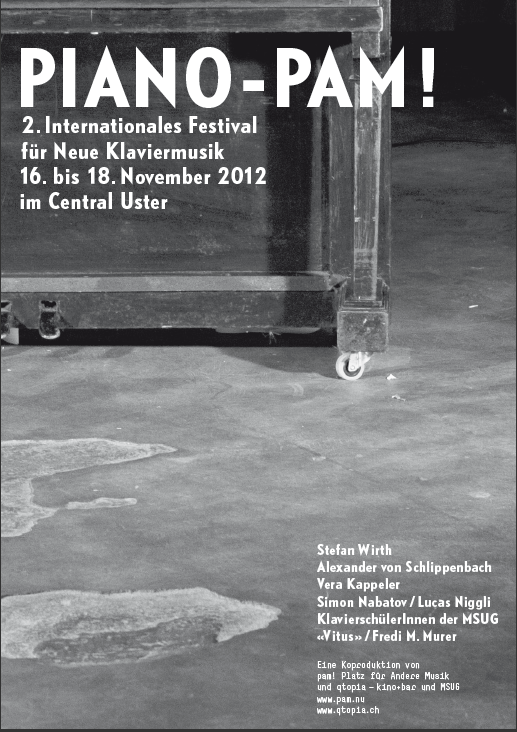
Das Piano-PAM Festival (Platz für andere Musik) geht dieses Jahr in die Zweite Runde. Vom  16.11. – 18.11.12 dreht sich in Uster alles um das Piano. Eintönig? Im Gegenteil. Der Schlagzeuger und Gründer des PAM Festivals Lucas Niggli erklärt uns, warum gerade ein Festival in dieser Form ein besonders grosses Entdeckungspotential birgt und zu einem erfrischenden Kulturerlebnis wird.

Während das PAM Festival 2010 zum ersten Mal stattfand, veranstaltest du ebenfalls unter dem Namen PAM aber schon seit über 9 Jahren Konzerte in Uster. Eine Konzertreihe die du selbst ins Leben gerufen hast. Was war der Ursprungsgedanke dafür?

Lucas Niggli: Zum einen liegt dies am musikalischen Angebot In Uster. Wir haben zwar den Jazzclub und die Kulturgemeinschaft Uster, die beide regelmässig Konzerte veranstalten, allerdings jeweils in Bereichen, die mich nicht immer interessieren. Zum anderen hatte ich neben meinem Atelier den “Qbus” (ein altes Kino, welches heute leider nicht mehr besteht), ein Ort also, der für solche Anlässe perfekt geschaffen war. Als Musiker reise ich viel in der Welt herum, wobei ich auch immer sehr interessante Leute treffe. Mit dem „”Qbus”“ hab ich einen Raum gefunden, um diese Leute nach Uster zu bringen. Ein Experimentierfeld, ein Spielplatz um Sachen auszuprobieren, und Grenzen zu überschreiten. Aber natürlich hab ich auch darum die Konzertreihe PAM gegründet, um meiner Community hier in Uster etwas zurück geben zu können, von dem was ich auf all meinen Reisen erlebe.

Dass ich das Konzerprogramm jeweils voll und ganz nach meinem Geschmack gestalten konnte und kann, liegt natürlich auch daran, dass ich die Musiker alle persönlich kenne, mit ihnen zusammen arbeite, was natürlich ein grosser Vorteil ist. Dass die Konzertreihe PAM allerdings bis heute andauert – mittlerweile haben wir schon über 44 Konzerte veranstaltet, jeweils ca. 4 pro Jahr – hätte ich mir damals allerdings nicht erträumt.

Als ich vor über 10 Jahren damit begonnen habe, war alles noch sehr im Low Budget Bereich. Die ersten beiden Jahre habe ich sogar noch draufgelegt, aber meine Frau ,die mich dabei immer unterstützte, meinte jeweils: ” Andere gönnen sich teure Weine oder Essen oft auswärts und wir leisten uns eben die Konzerte.”

Das Piano PAM Festival findet dieses Jahr bereits zum zweiten Mal,nach der Erstausführung im Jahre 2010 statt. Was hat dich dazu bewogen, nebst der Konzertreihe noch ein Festival zu lancieren?

Lucas Niggli: Der Ursprungsgedanke war eigentlich der, dass ich so viele interessante Pianisten gerne nach Uster geholt hätte, dies aber nie möglich war, da es im “”Qbus” ” keinen Flügel hatte. Diesen jeweils für ein einziges Konzert zu mieten, hätte sich finanziell nicht gelohnt. Für ein 3-tägiges Festival allerdings schon und so beschloss ich deshalb ein Festival zu gründen, bei dem das Piano im Zentrum steht. Das Piano war also der ausschlaggebende Punkt. Die erste Ausgabe des Piano-PAM Festivals im Jahre 2010 kam dann so gut beim Publikum an, dass ich dachte, komm das mach ich wieder.

Mit den ebenfalls im Kanton Zürich stattfindenden Festivals Taktlos und Unerhört, gibt es ja bereits Veranstaltungen mit einer ähnlichen Ausrichtung. Inwiefern unterscheidet sich da das PAM Festival von den anderen?

Lucas Niggli: Da unterscheidet sich sehr viel. Zum einen nur schon die Geschichte und die Grösse der Festivals. das Taktlos ist ein Festival mit internationalem Renommée und war in der Schweiz ein wichtiger Impulsgeber für Neue Musik vor allem in den 80er  – und 90er Jahren . Allerdings hat das Taktlos in den letzten Jahren eine Krise durchgemacht, weshalb es etwas an Relevanz verloren –  und mit dem Unerhört Festival starke Konkurrenz erhalten hat, was wiederum auch dem  Taktlos gut tut . Die Festivals bemühen sich vermehrt um Profil und das hat einen positiven Effekt auf die Programmation. Während das Taktlos sich vor allem auf die improvisierte Musik im Zusammenhang mit Jazz und Rock fokussiert, dreht sich beim „Piano – PAM“ alles um ein Instrument und kennt dabei keine stilistischen Grenzen. Ein Festival bei welchem an einem Abend Musik von Thelonious Monk, Beethoven und Pierre Boulez zu hören ist, das muss man in der Schweiz sicherlich suchen.

Auf welche Leckerbissen dürfen wir uns ganz speziell bei dieser Ausgabe des PAM Festivals freuen?

Lucas Niggli: Persönlich freue ich mich sehr auf den Zürcher Pianisten Stefan Wirth, der Musik von Beethoven und Pierre Boulez spielen wird und natürlich Alexander von Schlippenbach, eine grosse Legende des Freejazz in Europa. Dass diese zwei Pianisten den gleichen Abend bestreiten ist sehr toll. Ich als Konsument wünschte mir mehr oder zumindest regelmässiger solche Abende. Aber dies ist ja auch mit ein Grund weshalb ich das PAM Festival veranstalte. Ich mache mir dabei selbst ein Geschenk, in dem ich ein Programm zusammenstelle mit Musik von Komponisten, die ich am liebsten höre. Also Thelonious Monk, Pierre Boulez und Ludwig van Beethoven.

Findest du, dass es in der Schweiz genügend Platz für andere Musik gibt, gerade in der freien Improvisation?

Lucas Niggli: Nein, es gibt nie genügend solche Orte. Aber dies hat auch gewisse Vorteile. So müssen sich die jungen Musiker aus der Not heraus selber ihre Plattformen schaffen. Die jüngere Schweizer Generation macht dies anhand des Beispiels der Jazzwerkstatt in Bern. Eine Bewegung, die im übrigen in ganz Europa stattfindet. Sie definieren sich so ihren ganz eigenen Spielplatz. Wenn du etwas selber aufziehst, in deiner Szene, deinem Umfeld, kannst du es so gestalten und prägen, wie du es möchtest und das, gehört auch zur künstlerischen Arbeit und Identität eines Musikers. Es steckt zwar jeweils viel Arbeit, dahinter, ist aber zugleich auch sehr befriedegend. Ich kann gleichzeitig Gastgeber sein – was ich als ein sehr schönes Gefühl empfinde – und die Musik aufführen und spielen, die ich möchte.

Ich glaube auch, dass in einem Konzertbetrieb wie das PAM ihn führt, eine interessante Zukunft steckt. Heute hören oder konsumieren die Leute ein viel breiteres Musikangebot als früher. Warum aber führt man Musik meistens nur in den dafür traditionsgemäss üblichen Räumlichkeiten auf? Wie z.b. Beethoven nur in der Tonhalle, Boulez nur im Kontext von Neuer Musik, oder Monk nur in einem Jazzclub? Diese Tradition zu brechen ist mir ebenfalls ein grosses Anliegen. Und darum geht es bei PAM auch, in dem man Traditionen, Vorstellungen und Gewohnheiten aufbricht.

Das PAM Festival findet vom 16.11.12 – 18.11.12 in Uster statt. Die Konzerte beginnen jeweils um 20:30 Uhr. Eintrit 20.-/30.-